
Zhong Guo Jing Ying Bao

Search documents
春节购车遇“政策换挡”车企掀促销热潮能否迎来“开门红”
Zhong Guo Jing Ying Bao· 2026-01-26 04:21
中经记者夏治斌石英婧上海报道 豪华品牌阵营亦反应迅速,纷纷"亮剑"。宝马中国在2026年年初宣布对旗下多达31款车型的官方指导价 进行下调,此举迅速成为行业焦点,引发了市场的广泛关注与热议。 进入2026年,车市迎来政策与市场的双重"换挡"。1月1日起,新能源汽车全额免征购置税政策退坡为减 半征收,与此同时,国家及地方新一轮"以旧换新"补贴陆续启动,以消费券、保险补贴等形式刺激购车 需求。但相关数据显示,目前国内市场仍处于调整期。 乘联分会数据显示,1月1—11日,全国乘用车市场零售同比下滑32%,环比下降42%。面对挑战,各大 车企并未重蹈简单降价的价格战覆辙,而是迅速打出一套涵盖金融方案、用户权益、服务保障等多维度 的"价值组合拳",试图在稳定销量的同时,构建新的竞争壁垒。 对于2026年开年车市掀起促销热潮的背后原因,汽车行业资深分析师、资深顾问梅松林告诉《中国经营 报》记者,这是在新政策、新形势下企业采取的市场积极应对策略,也是带有进攻性的进取策略。"能 经受过去几年市场价格战洗礼,还能进一步提供购车优惠给消费者的厂家,要么是真有实力借此抢占市 场,要么是打肿脸充胖子也要保销量。" 中国汽车流通协会专 ...


韧性领导力:在失控中被团队“坚定选择”
Zhong Guo Jing Ying Bao· 2026-01-26 04:18
江南春虽然是广告业的"教父"级人物,拥有很强的个人直觉,但他从未陷入"经验主义"的陷阱。当浑水 做空时,他没有固执己见,而是审视中美资本差异,果断回A;当移动互联网来袭,他承认自己在互联 网基因上的短板,果断引入阿里进行改造;当需要出海时,他信任老将,充分放权。 正如案例所示,"拓心界"要求领导者超越自身的局限,时刻准备拥抱变化。江南春通过不断的学习 和"借力",让分众始终保持着对新技术的敏感度,从而避免了被时代淘汰。 复盘分众传媒20余年的发展史,我们看到的不仅是商业模式的胜利,更是一个组织在面对各种不确定性 时展现出的强大生命力。 我们将这种生命力总结为"韧性领导力飞轮",它包含三个核心维度,为中国企业提供了宝贵的管理样 本。 韧性的起点,在于领导者能否在危机中保持认知的开放。 分众拥有超过5000名员工,但组织架构惊人地扁平,包括各区域销售负责人在内的60—70位高管,直接 向江南春汇报。这种设计看似违背管理学常识,实则最大化了信息的流动效率。江南春自述,在没客人 时进他的办公室不需要预约,即使在深夜2点也可以在微信上和他讨论工作。 更重要的是,江南春通过"共情"凝聚人心。用"持续性的小赢"——一系列可 ...

八部门发文深化交通物流与产业融合 推动数智化协同发展
Zhong Guo Jing Ying Bao· 2026-01-26 01:14
Core Viewpoint - The "Action Plan for Accelerating the Cultivation of Leading Enterprises in Transportation Logistics" aims to enhance the service capabilities of the transportation logistics industry, promote integration with supply chains, and foster digital transformation by supporting the development of comprehensive logistics integrators [1][2]. Group 1: Goals and Objectives - By 2030, the plan targets the establishment of around 100 comprehensive logistics integrators, including over 10 leading transportation logistics enterprises with global influence and international competitiveness [1]. - The plan emphasizes the improvement of the transportation logistics service network and encourages the cross-regional flow of market elements [1]. Group 2: Digital Transformation - The plan supports enterprises in developing and applying advanced technologies, including smart ports, airports, and digital freight trains, while promoting the integration of big data, IoT, AI, blockchain, and 5G technologies [2]. - The logistics industry is shifting focus towards digitalization and intelligence, moving away from traditional cost-reduction measures [2][3]. Group 3: Industry Integration - The plan encourages close cooperation between transportation logistics enterprises and manufacturing, trade, and other sectors to enhance supply chain services and optimize business processes [3]. - It promotes the establishment of long-term strategic partnerships between logistics companies and key material owners and manufacturers, facilitating collaborative international expansion [3].
印度暴发疫情!可人传人,死亡率最高达75% 尚无疫苗和有效疗法
Zhong Guo Jing Ying Bao· 2026-01-25 23:39
尼泊尔《共和报》23日援引尼卫生部官员表述称,各口岸一旦发现出现相关症状的旅客,须按规定送往 指定医院治疗。卫生部同时要求全国各地医院及时上报尼帕病毒感染疑似病例或相关死亡病例。 据泰国《曼谷邮报》1月24日报道,由于有大量印度游客入境观光,普吉国际机场已加强对来自印度游 客的健康监测。 近日,印度西孟加拉邦暴发尼帕病毒疫情。 据英国《独立报》1月23日报道,印度当局正采取措施应对西孟加拉邦暴发的尼帕病毒疫情。当地媒体 报道称,感染者在加尔各答及周边地区医院接受治疗,其中一名病患病情危重,已有近百人被要求居家 隔离。 世界卫生组织将尼帕病毒列为一种致命的人畜共患病毒,主要由果蝠携带。该病毒可通过被污染的食物 传播给人类,或直接人传人,死亡率在40%到75%之间。目前尚无专门针对尼帕病毒的疫苗和有效疗 法。感染者最初会出现发烧、头痛、呕吐等症状,严重病例会发生脑炎和癫痫。部分感染者在康复后会 留下神经系统后遗症。 在与尼泊尔东部接壤的印度西孟加拉邦出现尼帕病毒确诊病例后,尼泊尔卫生部1月23日下令加强机场 及边境口岸检查站的检疫监测。 (文章来源:中国经营报) ...
全球通信软件供应商整合加速 代理AI成行业破局关键
Zhong Guo Jing Ying Bao· 2026-01-25 16:27
代理AI成为主要趋势 近日,市场研究机构Omdia发布的最新行业报告显示,全球通信软件业务支撑系统(BSS)与运营支撑 系统(OSS)供应商的整合趋势正持续升温。报告同时指出,在供应商整合引发的供应链风险加剧背景 下,代理式AI(Agentic AI)正突破传统技术局限,成为通信行业数字化转型的核心引擎,其市场规模 预计将实现爆发式增长。 多位业内人士在接受《中国经营报》记者采访时表示,代理AI技术的崛起并非偶然,其通过模拟人类 决策过程实现自主优化,正在重构通信软件供应链的协作模式。相比传统AI工具,代理AI具备更强的 环境感知能力与动态调整机制,能有效应对供应商整合过程中产生的数据孤岛、系统兼容性等复杂问 题,这种技术特性使其成为破解行业转型困局的关键支点。 老牌供应商加速整合 随着5G规模化应用、算力网络建设提速及数字经济融合发展,BSS/OSS领域的供应商整合正在加速。 2025年开始多起并购交易密集落地,2025年10月,NEC株式会社宣布以29亿美元现金收购软件运营服务 平台公司CSG Systems International,交易预计于2026年正式完成。 同月,高性能模拟和混合信号半导体领域 ...
收费“堵点”打通:手术机器人、远程手术等临床应用将全面提速
Zhong Guo Jing Ying Bao· 2026-01-25 16:01
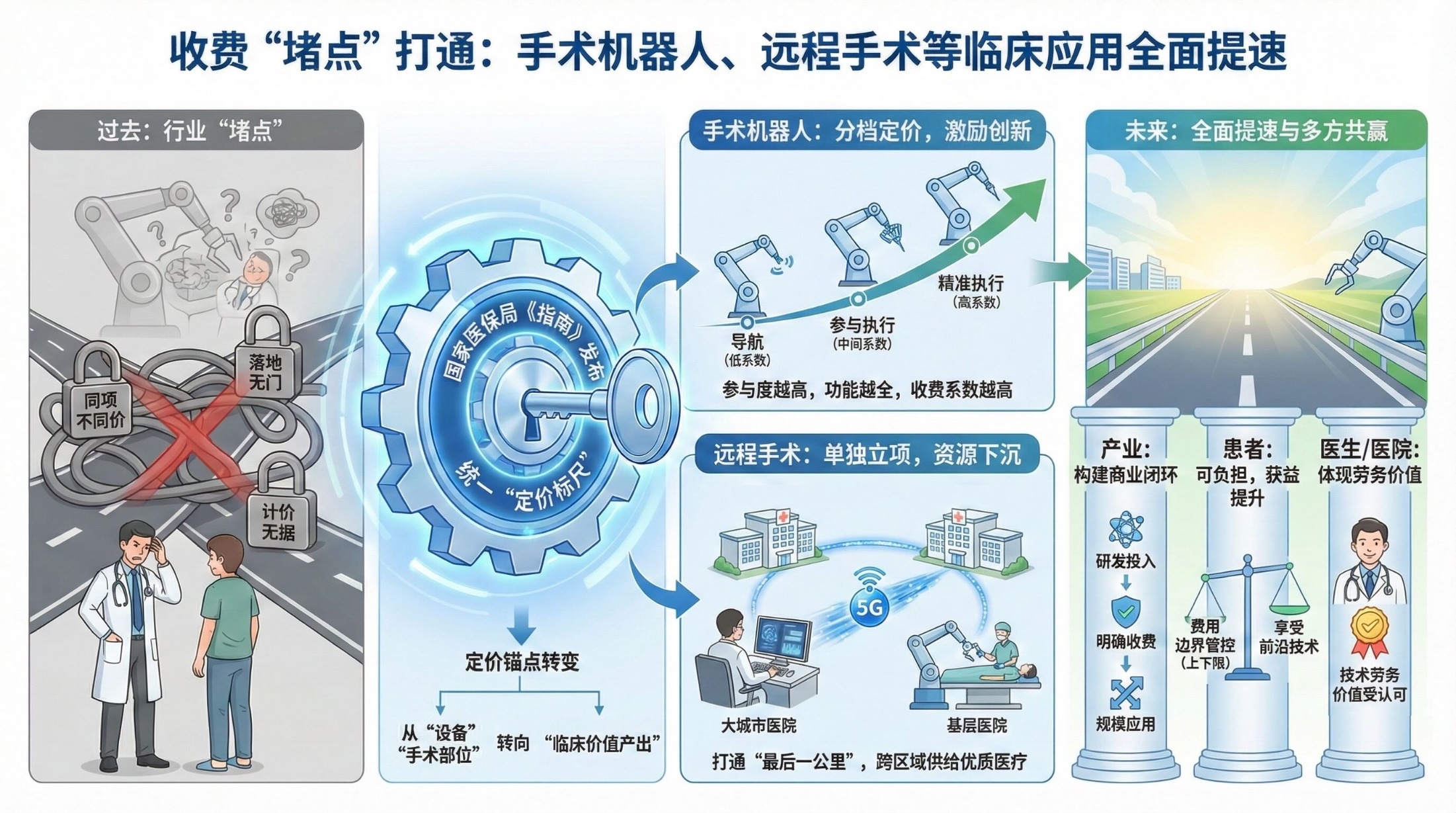
Core Viewpoint - The National Medical Insurance Administration has released a guideline to standardize pricing for surgical robots and other advanced medical technologies, aiming to facilitate the clinical application of innovative medical technologies and promote a shift towards precision medicine [3][4]. Group 1: Pricing Guidelines - The guideline establishes 37 pricing items, including 5 additional charges and 1 expansion item, covering key technologies such as 3D printing, imaging enhancement, energy devices, intraoperative guidance, surgical robots, and remote surgery [3]. - The pricing framework focuses on the clinical value of new technologies rather than the equipment or surgical site, allowing for a more equitable and transparent pricing model [6][22]. - The guideline introduces a tiered pricing system based on the level of participation and precision of surgical robots, encouraging their use in complex surgeries while preventing misuse in low-value scenarios [6][25]. Group 2: Impact on Remote Surgery - The guideline includes a separate pricing item for remote surgery, facilitating its transition from exploration to practical application [7]. - Remote surgery is particularly significant in emergency situations, such as cardiovascular diseases, where timely intervention is critical [8]. - The establishment of a payment framework for remote surgery is expected to enhance access to quality medical resources across regions, benefiting patients significantly [10][21]. Group 3: Encouragement of Innovation - The release of the guideline signals a clear intent from the government to incentivize continuous innovation in the high-end medical equipment sector [11][12]. - Companies are expected to gain confidence in investing in research and development due to the stable policy environment created by the guideline [12]. - The guideline aims to create a commercial logic loop that supports the sustainable development of innovative medical technologies [11][14]. Group 4: Market Dynamics - The market for surgical robots in China is expected to grow significantly, with domestic market share projected to increase from 32.61% in 2023 to 48.89% in 2024 [17]. - Despite the growth, the overall penetration of robotic surgeries remains low compared to countries like the United States, indicating substantial room for expansion [17]. - The establishment of a unified payment framework is anticipated to activate the existing market for surgical robots, leading to potential growth for companies already holding market share [17]. Group 5: Balancing Costs and Innovation - The guideline aims to balance the need for high-level innovation with the financial burden on patients by establishing pricing boundaries [22][25]. - It specifies that devices with multiple functionalities will be charged based on the highest service price, ensuring fair compensation for advanced capabilities [23][24]. - The National Medical Insurance Administration will guide local agencies in setting reasonable pricing standards, reflecting the value of technical services [26][27].

汽车金融格局生变:两家银行罕见推出七年期贷款
Zhong Guo Jing Ying Bao· 2026-01-25 14:53
Group 1 - Tesla China has launched a limited-time long-term car purchase plan called "Te You Xiang," offering a rare 7-year low-interest loan service in the Chinese market, with two banks participating as loan providers [1] - Traditional new car loan terms typically range from 1 to 5 years, and the introduction of a 7-year auto finance loan presents three challenges for banks: risk assessment and pricing difficulties, profitability and cost management challenges, and pressure on funding term matching [1][2] - The extension of loan terms from 5 to 7 years requires banks to enhance their product design capabilities, necessitating more precise identification of target customers and evaluation of their long-term repayment abilities [3] Group 2 - In the context of policies aimed at boosting consumption, banks are beginning to explore 7-year auto loan products, following a directive from the National Financial Supervision Administration that allows for the extension of personal consumption loan terms [2] - Banks have a competitive advantage in the auto finance market due to lower funding costs, enabling them to offer more competitive loan rates compared to auto finance companies [4] - The automotive finance market is becoming increasingly competitive, with commercial banks emerging as significant competitors to auto finance companies, particularly as the market saturation increases [5]

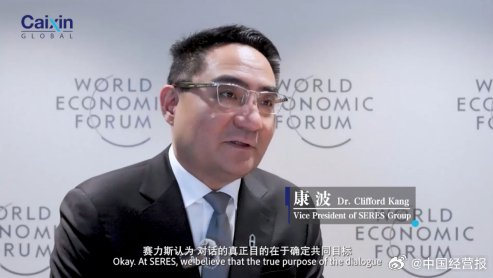
赛力斯康波达沃斯发声,全球汽车产业需对话共建
Zhong Guo Jing Ying Bao· 2026-01-25 13:56
Core Viewpoint - The global automotive industry has reached a stage where "dialogue and co-construction" are essential for sustainable development and collaboration [1][2]. Group 1: Globalization and Industry Trends - The automotive industry is undergoing a deep restructuring of global supply chains, influenced by geopolitical factors, technological barriers, and market fragmentation [1]. - The transition from unilateralism and zero-sum games to mutual respect and dialogue is crucial for long-term development and cross-border cooperation [1]. - The Chinese new energy vehicle (NEV) industry has experienced rapid development over the past five years, shifting its competitive logic from electrification to intelligence, system capabilities, and user experience [2]. Group 2: Company Strategy and Achievements - The company has focused on embedding itself deeply into the global industrial system, enhancing collaboration with world-class suppliers, technology partners, and users [2]. - The brand "Wenjie" has achieved significant market validation, with cumulative deliveries exceeding 1 million units, and the Wenjie M9 leading the luxury car market in its price segment for 21 consecutive months [3]. - The company aims to continue its focus on globalization, brand premiumization, and AI integration, while expanding its high-end brand presence overseas and fostering innovation through collaboration with global partners [3].

2025年中国化妆品市场交易额突破1.1万亿元
Zhong Guo Jing Ying Bao· 2026-01-25 07:00
Core Insights - The Chinese cosmetics market is projected to exceed 1.1 trillion yuan (approximately 1104.245 billion yuan) by 2025, with a year-on-year growth of 2.83% [1] - Domestic brands have seen their market share grow for five consecutive years, surpassing 50% in 2022 and expected to reach 57.37% by 2025 [1] - In terms of brand competition, Chinese brands are expected to generate a total transaction amount of 268.863 billion yuan by 2025, significantly outpacing brands from other countries [1] Market Dynamics - The top 1000 brands in online transactions show that French brands rank second with a transaction amount of 75.541 billion yuan, holding a market share of 16.12% [1] - American, Japanese, and South Korean brands rank third to fifth with transaction amounts of 55.033 billion yuan, 29.931 billion yuan, and 18.724 billion yuan, respectively, with market shares of 11.74%, 6.39%, and 4.00% [1] - Other countries' brands collectively account for 4.38% of the market [1] Channel Performance - Online channel transactions are expected to reach 721.773 billion yuan by 2025, reflecting a year-on-year growth of 4.45% and a market share of 65.36% [1] - Offline channel transactions are projected at 382.472 billion yuan, showing a slight decline of 0.08% and a market share of 34.64% [1] Industry Trends - The "Matthew Effect" is intensifying, with over 60% of the top 500 brands experiencing positive growth, while only about 26% of brands ranked below 500 show growth [2] - The number of brands expected to be eliminated in 2025 is 26,941, representing 41.08% of the total active brands, while 17,076 new brands are anticipated to enter the market [2] - The industry is at a critical transformation point, shifting from "total expansion" to "structural optimization," indicating a move towards deeper competition and higher quality development [2]
英伟达H200相关PCB组件被传已暂停生产
Zhong Guo Jing Ying Bao· 2026-01-25 03:41
Group 1 - Nvidia's founder and CEO Jensen Huang visited China in January 2026, engaging with employees and attending New Year events in Shanghai, Beijing, and Shenzhen [1] - The H200 chip, launched in November 2023, features a groundbreaking 141GB HBM3e memory system, significantly enhancing the capability to process large models [2] - The U.S. government approved Nvidia's export of the H200 chip to China under certain conditions, including a 25% sales revenue fee, despite opposition from hawkish lawmakers [2] Group 2 - The production of key components for the H200 chip, such as printed circuit boards (PCBs), has been halted due to uncertainties surrounding U.S. export controls [2] - PCBs are essential for GPU/AI chips, providing physical support, signal transmission, and power distribution [3] - Different GPU models may require specific PCB designs based on their pin configurations and intended applications, leading to multiple differentiated PCB versions for the same GPU [3] Group 3 - Domestic GPU companies, including Moer Technology, Muxi Co., Biran Technology, and Tianshu Zhixin, rely on PCBs as a crucial raw material [4] - Shenghong Technology is identified as a core PCB supplier for domestic GPU manufacturers, holding over 50% of the global graphics card PCB market share [5] - Huadian Co. is another significant supplier, focusing on high-layer boards for UBB motherboards and data center computing boards [5]
