
Zhong Guo Qing Nian Bao

Search documents
两部门发文健全存管规则 加强养老机构预收费监管
Zhong Guo Qing Nian Bao· 2025-11-19 23:18
Core Viewpoint - The Ministry of Civil Affairs and the Financial Regulatory Administration have issued guidelines to strengthen and standardize the supervision of prepayment deposits in elderly care institutions, ensuring the protection of the legal rights of the elderly [1][2]. Group 1: Guidelines for Elderly Care Institutions - Elderly care institutions must select a bank from a list provided by the Ministry of Civil Affairs to open a dedicated prepayment deposit account and sign a custody agreement [1]. - Institutions are required to report to the regulatory authority before closing the dedicated account and cannot collect deposits or membership fees thereafter [1]. - Deposits and membership fees should primarily be collected through the custody bank, and any other collection methods must transfer funds to the dedicated account by the next day [1]. Group 2: Fund Management and Usage - Institutions must submit expenditure requests to the custody bank, detailing the purpose and providing supporting documents [1][3]. - In emergencies, funds can be used for medical expenses, but supporting documents must be submitted within seven working days after the event [1]. Group 3: Refund Procedures - Institutions must promptly submit refund requests to the custody bank for fees that are due for refund, which should be processed within one day [2]. - The custody bank is prohibited from processing expenditures for accounts with suspicious or abnormal transactions and must report such cases to the relevant regulatory authorities [2]. Group 4: Responsibilities of Custody Banks - Custody banks are responsible for managing the deposited funds and cannot charge additional service fees [3]. - Banks must develop a management system for tracking the funds and ensure data integration with the Ministry of Civil Affairs [3]. - All transactions must be conducted through designated platforms, and banks must alert institutions if their balance falls below the required risk guarantee amount [3].
专家详解学生体质强健计划“二十条”
Zhong Guo Qing Nian Bao· 2025-11-19 23:03
Core Points - The Ministry of Education and four other departments have jointly issued the "Opinions on Implementing the Student Physical Fitness Strengthening Plan," which includes eight key tasks and twenty measures aimed at ensuring sufficient physical education time for students [1][2] - The plan emphasizes that students should engage in at least two hours of comprehensive physical activity daily, particularly during the basic education phase, to enhance their physical fitness [1][4] - By 2027, the plan aims to significantly improve the physical health pass rate and good rate among students, as well as the rate of graduates developing exercise habits [2] Group 1: Implementation Strategies - The plan outlines a clear path for implementation, including increasing physical education class hours, promoting physical activities during breaks, and enhancing after-school sports services [1][4] - A scientific monitoring system will be established to track student fitness, transitioning from one-time assessments to continuous dynamic tracking, ensuring data authenticity and effective intervention [3][4] - The plan calls for a collaborative approach across various educational levels, ensuring that all students, regardless of their physical fitness background, benefit from the initiatives [3][4] Group 2: Teacher Development - The plan emphasizes the importance of building a strong physical education teacher workforce, with new requirements for the recruitment, training, and evaluation of coaches in schools [4][5] - Continuous professional development for teachers is highlighted as essential for the successful implementation of the physical fitness plan, fostering a collaborative network among educational institutions [5]
以科产融合推动数字化智能化转型,数字电网研究院上市
Zhong Guo Qing Nian Bao· 2025-11-19 14:54
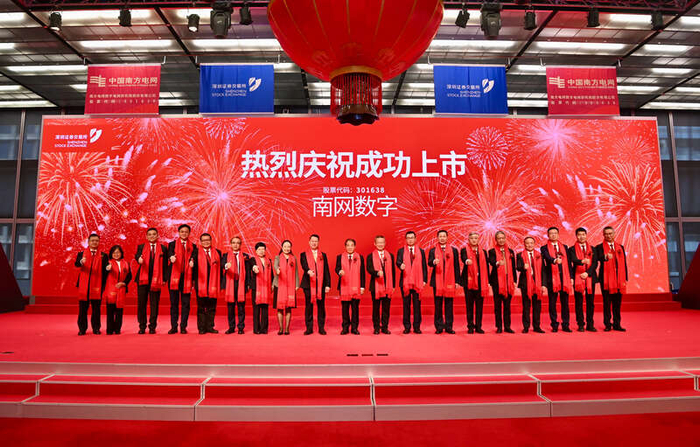
Core Viewpoint - The successful listing of Southern Power Grid Digital Power Research Institute Co., Ltd. marks a significant step in the company's digital transformation and its integration into the capital market, aiming to become a leading player in the digital grid industry [2][5]. Company Overview - Southern Power Grid Digital Power Research Institute is the fourth listed company cultivated by Southern Power Grid, following Southern Power Grid Energy, Southern Power Grid Technology, and Southern Power Grid Energy Storage [1]. - The company aims to leverage its technological innovations and industry leadership to support the intelligent, green, and integrated transformation of the energy and power industry [2]. Market Context - The listing comes at a crucial time as China's power energy system is undergoing a green and low-carbon transition, with the "14th Five-Year Plan" emphasizing the acceleration of a new energy system and the establishment of a unified power market [2]. - The digital grid is identified as a key vehicle for achieving these goals, with expectations for the company to become a prominent player in the Greater Bay Area's digital landscape [2]. Business Strategy - Southern Power Grid Digital has developed a comprehensive product system that spans all scenarios and stages, focusing on digitalization of power grids, enterprise digitalization, and digital infrastructure [2]. - The company is expanding its services beyond the power sector into transportation, water and gas utilities, public administration, and smart city initiatives, leveraging its technological expertise and practical experience [2]. Listing Achievement - The company submitted its listing application to the Shenzhen Stock Exchange on June 26, 2025, and achieved a successful listing in just 145 days, marking it as one of the fastest companies to list on the Growth Enterprise Market in recent years [5]. - This listing is seen as a major breakthrough for Southern Power Grid in its efforts to integrate into the capital market and signifies a new phase in its comprehensive digital transformation [5].

吉利、雷诺在巴西“牵手”,中国新能源车加速落地南美市场
Zhong Guo Qing Nian Bao· 2025-11-19 14:40
Core Viewpoint - The strategic partnership between Geely and Renault marks a significant step in their collaboration, focusing on the Brazilian market for electric vehicles and local production [2][3]. Investment and Production Plans - Geely and Renault will invest 3.8 billion Brazilian Reais (approximately 5.1 billion RMB) to establish Renault Geely do Brasil, aimed at localizing production of two new models based on Geely's GEA electric architecture, set to launch in the second half of 2026 [2]. - A new electric vehicle technology platform will be developed, with a Renault model expected to be produced by 2027 [2]. Market Potential and Strategy - Brazil's automotive market is projected to reach approximately 2.486 million units in 2024, reflecting a 14% year-on-year growth, positioning it as a key market for Chinese electric vehicles [4]. - The partnership adopts a "light asset" model, which may serve as a reference for other Chinese companies looking to expand into international markets [4]. Collaborative Goals - The collaboration aims to integrate manufacturing capabilities, marketing networks, and advanced electric platforms to create a competitive product matrix and drive sales growth [3]. - Both companies emphasize the importance of exploring new markets and opportunities, aiming for a win-win situation through strategic collaboration and resource complementarity [3].



浙江诸暨四县市区文旅门票互免优惠促消费
Zhong Guo Qing Nian Bao· 2025-11-19 10:10
Core Points - The establishment of a regional consumption promotion alliance among four counties in Zhejiang Province aims to boost tourism and consumer enthusiasm [1] - The initiative includes mutual exemption of ticket fees for residents of the participating areas, enhancing accessibility to various tourist attractions [1] - The promotional activities will last until December 31, 2025, covering a wide range of cultural and tourism sectors [1] Summary by Categories Regional Collaboration - Four counties, Zhuji, Fuyang, Tonglu, and Pujiang, have formed a consumption promotion alliance to stimulate local tourism and spending [1] Consumer Benefits - Residents from Fuyang, Tonglu, and Pujiang can enjoy free admission to all scenic spots under the Zhuji Cultural Tourism Group with valid ID [1] - Zhuji, Tonglu, and Fuyang residents can access discounts for attractions in Pujiang, including Xianhua Mountain [1] - Fuyang offers free admission to Huang Gongwang's retreat and Longmen Ancient Town, while Tonglu implements a "buy one get one free" ticket policy for Qinxixiang Valley [1] Duration and Scope - The promotional activities are set to continue until the end of 2025, aiming for integrated development of regional cultural and tourism consumption [1]
在校大学生试水直播,别随“播”逐流
Zhong Guo Qing Nian Bao· 2025-11-19 01:30
Core Viewpoint - The article discusses the rising trend of college students engaging in live streaming, particularly from dormitories, highlighting both the opportunities and challenges they face in this new form of income generation [11][12][19]. Group 1: Live Streaming as a Source of Income - College students are increasingly turning to live streaming as a way to earn money, with some reporting significant earnings from gifts during their broadcasts [11][14]. - For instance, a student named Wang Mengli earned 3,000 yuan in one night after initially making 85 yuan from her first live stream [11]. - The demographic of viewers includes a large portion of peers aged 18-24, while wealthier viewers tend to be older, often over 31 years old [14]. Group 2: Challenges Faced by Student Streamers - Many students lack the necessary skills or experience, leading to inconsistent income and potential academic issues, with some even considering dropping out to focus on streaming [12][19]. - The pressure to perform and maintain viewer engagement can lead to physical and emotional strain, as exemplified by Wang Mengli's experiences of discomfort and anxiety related to her streaming [17][23]. - Legal issues arise as many students face challenges with MCN (Multi-Channel Network) contracts, which often contain hidden clauses that can lead to financial exploitation [20][21]. Group 3: The Impact of Live Streaming on Academic Life - The pursuit of streaming can interfere with academic responsibilities, as students may prioritize live broadcasts over their studies, leading to poor academic performance [12][19]. - Some educators express concern over the impact of streaming on students' social interactions and academic focus, suggesting that students should balance their streaming activities with their educational commitments [28]. Group 4: The Future of Student Streamers - While some students find success and enjoyment in streaming, others realize it may not align with their long-term career goals, leading to a reevaluation of their choices [25][26]. - The article suggests that students should view streaming as a temporary experience rather than a long-term career path, emphasizing the importance of education and personal development [27][29].

北京发布新举措加速科技成果转化落地
Zhong Guo Qing Nian Bao· 2025-11-19 00:10
Core Points - Beijing has launched the "Action Plan for Promoting the Transformation of Scientific and Technological Achievements (2025-2027)" aimed at accelerating the implementation of technological achievements in the city [1] - The main goal of the Action Plan is to establish an efficient and dynamic transformation system by 2027, facilitating the creation of 1,000 cooperation platforms, 5,000 technology development projects, and the incubation of 3,000 technology-based enterprises and 600 specialized enterprises [1] - The Action Plan emphasizes the role of enterprises, proposing a collaborative research model where enterprises propose challenges and research institutions respond, alongside the establishment of enterprise-led cooperation platforms [1] Summary by Sections Action Plan Objectives - By 2027, the plan aims to form a collaborative transformation system with specific targets: 1,000 cooperation platforms, 5,000 technology projects, and 3,000 technology enterprises [1] - The plan also seeks to address national strategic needs and support Beijing's economic and social development through significant technological achievements [1] Key Tasks - The Action Plan includes 20 key tasks, highlighting the importance of enterprise involvement in the transformation process [1] - It proposes the establishment of a research organization model that encourages joint efforts between enterprises and research institutions [1] Regional Development - The plan includes the establishment of regional technology transfer centers in areas like Haidian, Fangshan, and Changping [1] - The "2024 Annual Report on China's Technology Achievement Transformation" indicates that last year, capital universities completed 30,332 contracts for technology transfer, with a total value of 20.19 billion yuan, reflecting an annual growth rate of approximately 15% [1] AI Technology Transfer Center - The Haidian District has established a national AI technology transfer center, which has identified 2,100 quality projects through collaboration with multiple universities [2] - The center aims to enhance innovation supply by focusing on projects co-created by university faculty and students [2]
435个“青春驿站”扎根革命老区 “青”注吕梁 驿暖青春
Zhong Guo Qing Nian Bao· 2025-11-18 23:12
秋日傍晚,农产品电商主播小周刚结束一场直播,脸上洋溢着收获的喜悦。"今天又卖出了200多 单!"他兴奋地说。此前,由于缺乏货源渠道和直播经验,小周的直播间人气低迷。转机出现在他走进 山西吕梁"青春驿站"后——驿站不仅请来直播达人手把手教学,还帮助对接中国联通电商扶持政策,申 请免费流量扶持,为他的创业铺就坚实的"资源路"。 各共建单位立足自身优势,精准对接青年需求。建设银行吕梁分行升级"劳动者港湾",满足青年歇脚、 充电、咨询等即时需求;农业银行吕梁分行开展金融知识讲座等多维服务;中国联通吕梁分公司依托 5G与VR技术设置科技体验区,组织数字技术分享会,并设置就业创业政策屏,同步企业需求;交通银 行吕梁分行为青年创业提供金融支持……从基础服务到专业支持,一个满足青年多元化需求的服务体系 日臻完善。 作为第二批共建单位,中国电信吕梁分公司将驿站打造为"微型数字生态系统"。"我们以'数字赋能青 春'为核心,依托全市1287个5G基站和千兆光纤网络,为青年提供在线职业培训、创业项目路演等数字 化场景支持,更通过视频会议系统连通市县分会场,助力构建'市级统筹-县域联动-网格触达'三级服务 体系。"分公司党委委员、副总 ...
巴菲特,谢幕
Zhong Guo Qing Nian Bao· 2025-11-18 23:11
Core Points - Warren Buffett, the "Oracle of Omaha," has announced his retirement after 60 years at the helm of Berkshire Hathaway, marking the end of an era in investment management [1][2] - Buffett's investment philosophy emphasizes long-term holding and understanding businesses, avoiding trends he does not comprehend, such as technology stocks during the dot-com bubble [3][4] - He has committed to donating 99.5% of his wealth to charity, accelerating his philanthropic efforts post-retirement [5][6] Group 1: Retirement Announcement - Buffett, at 95 years old, will step down as CEO and cease writing annual reports, concluding his active role in the company [1] - His retirement has been a topic of discussion for decades, especially after the passing of his close friend Charlie Munger [2] Group 2: Investment Philosophy - Buffett is known for his long-term investment strategy, preferring to hold stocks indefinitely and focusing on companies with competitive advantages [3] - He has consistently avoided investments in sectors he does not understand, such as real estate and cryptocurrencies, emphasizing the importance of knowledge in investment decisions [4] Group 3: Philanthropy and Legacy - Buffett has pledged to donate 99% of his wealth to charitable causes, with plans to increase the pace of his donations after retirement [5] - He reflects on his life and career in his farewell letter, acknowledging his mistakes and emphasizing the importance of learning from them [4][6]
国家使命淬炼为青春信仰
Zhong Guo Qing Nian Bao· 2025-11-18 23:01
Core Viewpoint - The exhibition "Mission Not Forgotten, Youth and Rivers" at Beijing Language University showcases the contributions of 183 faculty and students in supporting the 80th anniversary of the victory in the Chinese People's Anti-Japanese War and the World Anti-Fascist War, highlighting their training, growth, and dedication [1][2][9]. Group 1: Event Overview - The exhibition features three main modules: "Time Corridor" narrative boards, "Glorious Imprints" exhibit display, and "Immersive Space" interactive experience [1]. - A total of 183 participants were selected, with 81 joining the choir and 102 serving as volunteers [2]. Group 2: Training and Preparation - The university established a dedicated task force and efficient command system immediately upon receiving the task [2]. - The selection process emphasized quality, assessing students' political awareness, professional skills, and physical fitness [2]. - Training included four months for the choir and two months for volunteers, focusing on systematic skill development [2]. Group 3: Personal Experiences - Participants shared their emotional experiences during training and performances, emphasizing the historical significance of their roles [3][6]. - The training process fostered a sense of responsibility and teamwork among volunteers, enhancing their emergency response and coordination skills [7]. Group 4: Exhibition Highlights - The "Glorious Imprints" section features thoughtfully designed volunteer gear, showcasing the attention to detail in meeting various service needs [4]. - The exhibition includes various identification badges representing different roles and responsibilities, highlighting the volunteers' commitment to safety and organization [5]. Group 5: Future Initiatives - The university plans to extend the educational impact of the event through a series of initiatives, including a speaking team, a commemorative exhibition, and a series of micro-class sessions [8].