
Zhong Guo Qing Nian Bao

Search documents
向租房陷阱亮剑 司法护航“住有所居”
Zhong Guo Qing Nian Bao· 2025-11-21 07:14
Core Viewpoint - The rapid increase in housing rental disputes in Beijing's Tongzhou District highlights significant issues in the rental market, particularly involving intermediary companies and illegal subletting practices [1][2]. Group 1: Rental Disputes and Court Findings - The Tongzhou District People's Court has received over 8,500 housing rental dispute cases from January 2022 to June 2025, with more than 70% of these cases involving intermediary companies as defendants [1]. - In a specific case, a tenant discovered an unauthorized fourth room in a rental property, leading to a court ruling that the landlord must refund the deposit due to a significant change in rental conditions [2]. - The court emphasized that the landlord's actions constituted a breach of contract, resulting in the obligation to return the full deposit [2]. Group 2: New Housing Rental Regulations - The implementation of the Housing Rental Regulations aims to address long-standing issues in the rental market, including safety, deposit refunds, and rental stability [2][3]. - The regulations prohibit the separate rental of non-residential spaces, such as kitchens and balconies, which is crucial for curbing illegal subletting practices [2]. - The regulations clarify the nature of rental deposits, stating that landlords cannot arbitrarily deduct from deposits without valid reasons, thus protecting tenant rights [3]. Group 3: Common Disputes and Legal Interpretations - Deposit disputes are a frequent source of conflict in the rental sector, with courts addressing issues such as the reasonableness of penalty clauses and the relationship between deposits and penalties in cases of tenant default [3][4]. - In a notable case, a tenant's early termination of a lease led to a court ruling that adjusted the landlord's excessive penalty claim, reinforcing the need for reasonable compensation [4]. - The court's decision to return the deposit underscores the importance of substantiating claims for damages with adequate evidence [4]. Group 4: Tenant Rights and Legal Guidance - Tenants are advised to verify the type of rental agency and scrutinize contract details to ensure proper recourse for deposit claims [5]. - The regulations mandate that rental contracts be signed using real names to prevent disputes arising from informal agreements [5]. - The collaboration between judicial and administrative bodies is emphasized as essential for maintaining a fair rental market, allowing tenants to report illegal practices and seek legal remedies [5].
让古老遗产长出文旅“新”模样
Zhong Guo Qing Nian Bao· 2025-11-21 06:28
Core Insights - The "2025 Ancient Architecture New Language" contemporary art exhibition in Jincheng, Shanxi, showcases the reinterpretation of ancient architecture through modern artistic expressions, fostering a dialogue between youth and cultural heritage [1][2][7] Group 1: Exhibition Overview - The exhibition is organized by UCCA Lab and attracted over 30,000 visitors in its first week, indicating strong public interest [2] - It features works that blend ancient architectural elements with contemporary art, creating immersive experiences that connect viewers with historical narratives [3][4] Group 2: Cultural Significance - The exhibition aligns with the "14th Five-Year Plan" which emphasizes the preservation and promotion of traditional Chinese culture, aiming to integrate cultural heritage with tourism [1][6] - Artists explore themes of humanity's relationship with nature and the universe, using ancient architectural structures as a foundation for their creative expressions [2][5] Group 3: Audience Engagement - A team of local university student volunteers provides relatable explanations of the artworks, making the exhibition more accessible to younger audiences [3][4] - The integration of cultural elements into everyday life is highlighted through the creation of cultural products inspired by ancient architecture, appealing to younger demographics [4][5] Group 4: Long-term Vision - The Jincheng cultural tourism department plans to develop "art exhibition + ancient architecture tour" routes, enhancing the connection between contemporary art and historical sites [6][7] - Future exhibitions are anticipated to continue this trend of merging ancient culture with modern expressions, ensuring the vitality of cultural heritage [7]
非遗+旅游:超越“打卡”的创新之道
Zhong Guo Qing Nian Bao· 2025-11-20 23:13
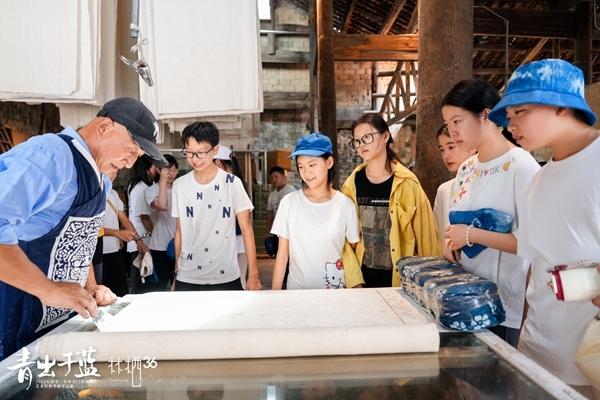
Core Insights - The integration of intangible cultural heritage (ICH) and tourism is gaining momentum, driven by government policies and local initiatives aimed at revitalizing traditional crafts and enhancing cultural tourism [2][10] Group 1: Cultural Heritage and Tourism Integration - The "14th Five-Year Plan" emphasizes the protection and active transmission of historical cultural cities, streets, and villages, promoting the deep integration of culture and tourism [2] - Innovative practices in various regions, such as the revival of blue printed cloth in Zhejiang and immersive experiences in Fujian, showcase the potential of ICH and tourism integration [3][4] - The success of these initiatives demonstrates the vibrant life force of ICH when combined with tourism, leading to economic growth and cultural preservation [3][4] Group 2: Case Studies of Successful Integration - In Zhejiang's Dongyang, the Linqi Thirty-Six Courtyard project revitalizes the blue printed cloth craft by creating a unique rural performance space, engaging local villagers in cultural activities [4][5] - The ancient city of Zhangzhou has transformed into a "living heritage garden," attracting millions of visitors and generating significant revenue through diverse cultural tourism offerings [6][7] - The Chinese Xuan Paper Town in Anhui exemplifies how ICH can be integrated into tourism through interactive experiences, leading to substantial economic benefits [8][9] Group 3: Economic Impact and Visitor Engagement - Zhangzhou ancient city is projected to receive 53.84 million visitors from January 2024 to September 2025, with ICH directly contributing over 7.45 million yuan in revenue [6] - The introduction of innovative business models, such as the "Minnan Small Theater," has successfully combined cultural performances with local cuisine, enhancing visitor experiences and generating revenue [7] - The Xuan Paper Town has achieved nearly 2 million yuan in direct economic benefits from over 400,000 visitors in 2024, showcasing the financial viability of ICH tourism [8] Group 4: Challenges and Future Directions - The integration of ICH and tourism faces challenges, including the need for skilled personnel who understand both heritage and tourism management [11] - There is a call for collaborative efforts among government, educational institutions, and heritage practitioners to create a platform for innovative integration of ICH and tourism [11]

四十年,让科技星火燎遍江淮沃野
Zhong Guo Qing Nian Bao· 2025-11-20 23:13
Core Insights - The article highlights the transformative impact of agricultural education and technology in the Dabie Mountain area, showcasing the journey from poverty to agricultural innovation and productivity [2][3][4]. Group 1: Historical Context - The Dabie Mountain region faced significant poverty and food insecurity in the 1980s, prompting the establishment of the first agricultural cooperative program between Anhui Agricultural University and Jinzhai County in 1985 [2]. - Over 13 years, the program produced 565 local talents who contributed to agricultural development in the region, emphasizing practical knowledge over theoretical education [2]. Group 2: Technological Advancements - The "Dabie Mountain Road" has evolved to incorporate technology-driven agricultural practices, moving from traditional methods to data-driven approaches, including the use of drones and IoT devices for real-time monitoring [4][5]. - Specific technological interventions have led to significant increases in crop yields, such as a 15% increase in strawberry production and a record rice yield of 1,148.2 kg per mu in 2022 [5][7]. Group 3: Economic Impact - The integration of technology in agriculture has resulted in substantial economic benefits for local farmers, with reported increases in income and productivity across various crops [5][6][7]. - The establishment of agricultural demonstration zones and the promotion of new farming techniques have contributed to the economic revitalization of rural areas, with collective incomes in some villages exceeding 1.86 million yuan [7][8]. Group 4: Future Directions - Anhui Agricultural University aims to continue its commitment to rural revitalization and food security by fostering collaboration with other educational institutions and local governments [8][9]. - The university has established numerous research stations and alliances to address agricultural challenges and enhance the application of innovative technologies in farming practices [9].
动态调配教育资源 让每一个孩子“上好学”
Zhong Guo Qing Nian Bao· 2025-11-20 22:58
Core Viewpoint - The article emphasizes the need to establish an education resource allocation mechanism that aligns with population changes to address the mismatch between educational resource supply and demand in China [2][3]. Group 1: Population Dynamics and Education Resource Mismatch - China's current demographic transition is characterized by a significant decline in birth rates leading to a sharp decrease in school-age population, while urban areas are experiencing an influx of this demographic [2][3]. - The mismatch in educational resources manifests as both shortages in areas with population inflow and surpluses in areas with outflow, creating structural contradictions in teacher availability and school infrastructure [3][4]. Group 2: Proposed Solutions for Education Resource Allocation - The article outlines four core initiatives to optimize education resource allocation: 1. **Optimize Degree Supply and Layout**: Enhance data coordination among various departments to improve the prediction of school-age populations and plan educational facilities accordingly [4]. 2. **Optimize Teacher Supplementation and Mobility Mechanisms**: Innovate teacher management systems to address both surplus and shortage issues, including market-based solutions for teacher gaps and improved mobility systems [5]. 3. **Optimize Financial Support and Usage Mechanisms**: Establish a funding system that follows the population flow, ensuring that educational funding is allocated effectively between inflow and outflow regions [5][6]. 4. **Optimize Resource Coordination Mechanisms**: Improve both intra- and inter-regional management systems to ensure equitable educational opportunities for all students, particularly those from migrant families [6].
智能驾驶与电混双擎进阶,一汽丰田全面焕新谋未来
Zhong Guo Qing Nian Bao· 2025-11-20 14:16
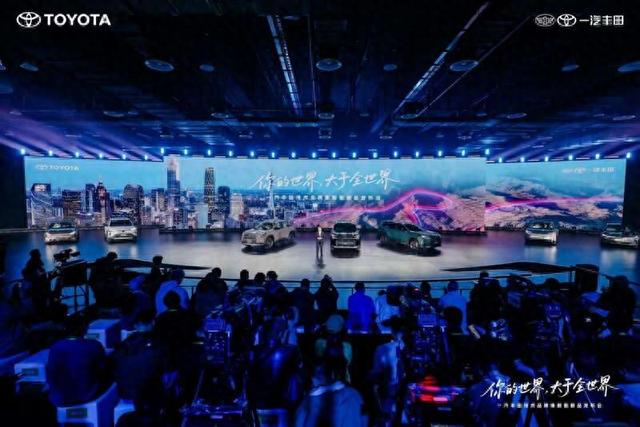
Core Viewpoint - FAW Toyota aims to enhance its competitiveness in the fields of intelligence, electrification, and premium offerings with the launch of the upgraded IT'S TiME 3.0 technology brand and new vehicle models [2][6] Group 1: Technology and Product Launch - FAW Toyota held a product launch event in Guangzhou, introducing the upgraded IT'S TiME 3.0 technology brand along with three new models: the all-new intelligent hybrid Corolla, the new bZ3 electric vehicle, and the all-new RAV4 [2] - The IT'S TiME technology brand has evolved to its 3.0 stage, focusing on smart driving through a dual approach of "in-house development + open collaboration" [3] - The Toyota Pilot intelligent driving assistance system is based on the TSS safety system 4.0, enhancing its ability to predict and respond to complex driving scenarios [3] Group 2: Vehicle Specifications and Features - The all-new RAV4 features significant upgrades in design, intelligence, and power, with a global cumulative sales of over 15 million units [4] - The RAV4 offers two intelligent hybrid versions (2.0L and 2.5L) and a 2.0L gasoline version, achieving a fuel consumption of 3.99 liters per 100 kilometers and a range exceeding 1400 kilometers [5] - The new Corolla hybrid version has an improved wheelbase and body length, with a fuel consumption as low as 4.13 liters per 100 kilometers [5] Group 3: Strategic Direction - FAW Toyota is responding to diverse market demands by adopting multiple technology routes, transitioning from hybrid to pure electric vehicles and from sedans to SUVs [6]
规模红利逐渐见顶 电池产业如何突围
Zhong Guo Qing Nian Bao· 2025-11-20 06:15
Core Insights - The Chinese battery industry has transitioned from a phase of scale expansion to a new cycle of value creation, facing challenges such as ongoing price wars, increasing international trade barriers, and fluctuations in raw material prices [1][4] - The 12th China (Suzhou) International Summit Forum on Battery New Energy Industry gathered over 500 representatives from the global battery supply chain to discuss technological breakthroughs, ecological restructuring, and sustainable development [1] Group 1: Technological Developments - Sodium batteries and solid-state battery technology are critical areas that need to be addressed for industry growth, with companies exploring new growth drivers amid deep adjustments [2] - Solid-state batteries are seen as the ideal next-generation battery type due to their high safety and energy density, with a projected global demand of 156 GWh by 2030, although current penetration in the liquid lithium-ion battery market is below 1% [2] - The production of solid-state batteries requires phased achievement of quality, cost, and delivery standards, with a focus on material innovation and process upgrades for long-term scalability [2][3] Group 2: Market Trends and Opportunities - Sodium batteries are entering a window of industrialization, with predictions that their costs could be 30% lower than lithium batteries, making them suitable for electric two-wheelers and three-wheelers [3] - The integration of new materials with new energy sources is crucial for industry development, with a focus on the coexistence of silicon-based and carbon-based technologies [3] - The lithium battery technology is diversifying, with a long-term coexistence of ternary and iron-lithium technologies, and a focus on 800V ultra-fast charging technology and high energy density batteries for high-end electric vehicles [3] Group 3: Industry Collaboration and Strategy - The global technology and industrial landscape is undergoing profound changes, with a clear hierarchy of technological breakthroughs in sodium, semi-solid, and solid-state batteries [4] - The Chinese battery new energy industry must adhere to principles of technology-driven, market-oriented, supply chain-based, and ecosystem-focused strategies to enhance resilience and contribute to global energy transition [4]
一线调研“现代化产业体系”怎么建
Zhong Guo Qing Nian Bao· 2025-11-20 03:04
Core Viewpoint - The article emphasizes the importance of integrating technological innovation with industrial development to build a modern industrial system in China, particularly in the context of the 14th and 15th Five-Year Plans [1][2]. Group 1: Traditional Industry Transformation - Traditional industries, such as steel and pharmaceuticals, are undergoing significant digital and intelligent transformations, with companies like Hunan Huazhong Steel Co. implementing automated systems that enhance efficiency and reduce labor costs [3][4]. - The Ministry of Industry and Information Technology reports that over 230 excellent smart factories and 1,260 5G factories have been established since the 14th Five-Year Plan, with China's industrial robot installations accounting for over 50% of the global total [4]. - The traditional industries contribute approximately 80% of the added value in manufacturing, highlighting their critical role in China's competitive advantage and the need for quality upgrades [4][5]. Group 2: New and Future Industries - The 15th Five-Year Plan focuses on developing emerging pillar industries, including new energy, aerospace, and advanced manufacturing clusters, while also laying the groundwork for future industries like quantum technology and brain-computer interfaces [7][10]. - Companies like Xidi Intelligent Driving Technology Co. are capitalizing on market demands for automation in hazardous environments, such as mining, supported by government policies aimed at increasing the adoption of intelligent technologies [10][11]. - The humanoid robot market in China is projected to reach approximately 870 billion yuan by 2030, indicating rapid growth in the new industry sector [11][12]. Group 3: Collaborative Innovation - The establishment of a collaborative innovation ecosystem involving government, enterprises, and research institutions is essential for building a modern industrial system, with policies aimed at fostering industry clusters and supporting technological breakthroughs [13][14]. - The North Star industry cluster in Zhuzhou has attracted over 170 related enterprises, indicating a successful model for industrial integration and collaboration [14]. - The government is encouraged to create a supportive environment for innovation, including financial incentives for basic research and the development of a skilled workforce to facilitate the transition from technology to industry [15][16].

青年的“侨批”:寄向祖国也寄向未来
Zhong Guo Qing Nian Bao· 2025-11-20 01:34
Core Viewpoint - The exhibition "Fires of War: The Heart of Overseas Chinese and National Sentiment from the Perspective of Overseas Chinese Letters during the War" showcases the emotional and historical significance of letters sent by overseas Chinese during the Anti-Japanese War, highlighting their patriotism and familial bonds [4][6][13]. Summary by Sections Exhibition Overview - The exhibition is organized into four chapters: "Broken Mountains and Rivers: The Awakening Voice," "Bloody Family Letters: Witness to Suffering," "National Duty: Sacrificing Family for the Nation," and "Fighting to the End: The Faith of Victory," featuring over a hundred precious letters and historical photos [6]. Youth Perspective - The letters from young overseas Chinese reflect a complex mix of emotions, including anger towards the Japanese military and deep concern for their families' safety, showcasing their strong sense of national responsibility [7][9]. - Youth letters often express a desire for national strength and modernization, contrasting with older generations' focus on family matters [8][10]. Support for the War - Overseas Chinese youth supported the war through financial contributions, with many participating in fundraising efforts despite their own financial struggles [10]. - They also engaged in boycotting Japanese goods and promoting anti-Japanese sentiment, demonstrating their commitment to the cause [10][11]. Contributions to the War Effort - The exhibition highlights the contributions of overseas Chinese youth in the "Flying Tigers," showcasing their roles in combat and support during the war [11][12]. - The letters reveal a growing awareness among overseas Chinese youth of the interconnectedness of personal and national destinies, influencing their future choices and educational aspirations [12][14]. Emotional Resonance - The personal letters provide a vivid portrayal of the emotional landscape of overseas Chinese during the war, emphasizing their genuine love for their homeland and the impact of war on families [13][15]. - The exhibition aims to foster a deeper understanding of the cultural and historical significance of these letters, encouraging collaboration in promoting their legacy [13].

温向红:唤醒迷途者
Zhong Guo Qing Nian Bao· 2025-11-20 01:21
Core Viewpoint - The article highlights the impactful work of Wen Xianghong, a prison officer dedicated to the rehabilitation of inmates, emphasizing the importance of education and personal transformation in helping former prisoners reintegrate into society [2][7]. Group 1: Rehabilitation Efforts - Wen Xianghong has helped over 4,000 inmates find their way back to society through education and skill training [2]. - The approach to inmate rehabilitation is not merely about control but about awakening and individualizing education strategies for each inmate [3]. - Wen emphasizes the significance of building trust and rapport with inmates, often starting conversations with casual topics to uncover their underlying issues [3][4]. Group 2: Personal Stories of Transformation - Chen Man, an inmate, transformed her life by obtaining a chef's certificate and eventually opened a restaurant after her release, showcasing the potential for change through support and guidance [1]. - Li Huan, another inmate, expressed gratitude towards Wen for her encouragement and support during her time in prison, which helped her reflect on her mistakes and actively engage in self-improvement [4][5]. Group 3: Leadership and Innovation - Wen has implemented innovative practices in the prison system, such as a centralized case handling model for parole and sentence reductions, ensuring transparency and efficiency in the process [7]. - She has also focused on the well-being of her colleagues, establishing programs to support young officers and enhance their work-life balance [8]. - Wen's leadership style is characterized by her hands-on approach and commitment to nurturing her team, fostering a supportive environment within the prison [8].