
Zhong Guo Hua Gong Bao

Search documents
沃特股份去年业绩预喜
Zhong Guo Hua Gong Bao· 2026-01-28 02:45
Core Viewpoint - Shenzhen Water New Materials Co., Ltd. (referred to as Water Co.) forecasts a significant increase in net profit for 2025, projecting a growth of 55.75% to 91.28% year-on-year, with expected net profit attributable to shareholders ranging from 57 million to 70 million yuan [1] Financial Performance - The company anticipates a net profit after deducting non-recurring items between 28 million and 35 million yuan, reflecting a year-on-year growth of 0.62% to 25.77% [1] Growth Drivers - The strong performance is attributed to the increase in sales of specialty polymer materials, including Liquid Crystal Polymers (LCP), Special Nylon (PPA), and Polyphenylene Sulfide (PPS) [1] - Water Co. has established a comprehensive platform for specialty polymer materials, covering LCP, Polyether Ether Ketone, PPA, PPS, and Polytetrafluoroethylene [1] Technological Advancements - The company has developed a complete technology chain and industrial ecosystem for "polymerization-modification-finished product manufacturing," achieving full autonomy in core technologies, which lays a solid foundation for long-term performance growth [1]

隆基绿能2025年亏损收窄
Zhong Guo Hua Gong Bao· 2026-01-28 02:45
Core Viewpoint - Longi Green Energy Technology Co., Ltd. is expected to report a net loss of 6 to 6.5 billion yuan for 2025, indicating a significant improvement compared to a loss of 8.618 billion yuan in 2024 [1] Group 1: Financial Performance - The anticipated loss for 2025 reflects a recovery trend despite remaining in the red [1] - The company faced challenges due to persistently low product prices and cost pressures, particularly from rising costs of silver paste and silicon materials in the fourth quarter of the previous year [1] Group 2: Market Position and Strategy - Despite financial pressures, Longi Green Energy continues to focus on high-value, scenario-based solutions to create a differentiated competitive advantage [1] - The company maintains a leading market share in component products, supported by its long-term accumulation of leading products, global channels, and brand advantages [1] - The yield of the high-efficiency BC second-generation products has met expectations, with rapid growth in shipment volume [1]

联科科技拟投5.1亿元建硅酸钠项目
Zhong Guo Hua Gong Bao· 2026-01-28 02:45
Core Viewpoint - LianKe Technology announced an investment of 510 million yuan in a project to expand and upgrade the production of high-dispersible silica raw materials, which is a key step in the company's differentiated development strategy [1] Group 1: Investment and Project Details - The investment aims to achieve self-supply of key raw materials, specifically sodium silicate, which directly impacts the quality of the final silica products [1] - The project will utilize existing land at LianKe Chemical's facility and includes the construction of a sodium silicate production workshop, a rice husk ash resource utilization workshop, and storage facilities for finished products and raw materials [1] - Upon completion, the project is expected to have an annual production capacity of 450,000 tons of high-purity solid sodium silicate, with a construction period estimated at 72 months [1] Group 2: Company Background and Capabilities - LianKe Chemical, a subsidiary of LianKe Technology with a 98.51% ownership stake, has established production experience in sodium silicate and related products, providing a solid technical and capacity foundation for the project [1] - LianKe Technology is one of the few domestic companies with balanced production capabilities in both silica and carbon black, currently having a designed annual production capacity of 230,000 tons for silica [1]
东部原油储运新兴产业营收涨八成
Zhong Guo Hua Gong Bao· 2026-01-28 02:45
该公司在深耕集团内部市场的同时,多渠道拓展外部市场,严格把控产品质量,持续优化售后服务。 2025年,智能测试桩销量达7158套,同比增长200%。同时,该公司承接了徐州数据中心建设维护、油 气储运站场控制系统集成等新一代信息技术产业服务项目,实现营业收入5371万元;在管道地质灾害及 应力监测等节能环保产业服务领域也取得积极进展。 该公司聚焦新一代信息技术、高端装备制造、节能环保三大板块精准发力。在高端装备制造领域,构建 起全链条转化体系,已完成多功能阴极保护智能测试桩等系列产品研发制造,通过强化推广、精准对接 需求,产品成功用于西部管道、华南公司、华中公司等单位。 中化新网讯 2025年,国家管网集团东部原油储运公司在新兴产业领域实现突破,全年战略性新兴产业 营业收入达9412.66万元,同比增长80.3%。 ...
甲醇:供需失衡缓解可期
Zhong Guo Hua Gong Bao· 2026-01-28 02:38
Core Viewpoint - The domestic methanol market is gradually strengthening amid rising international geopolitical tensions, but the rebound in prices is expected to be limited due to insufficient demand support [1] Supply and Demand Analysis - The methanol market in 2025 is projected to experience a supply-demand imbalance due to increased supply and weak demand, leading to a price decline of over 15% by year-end compared to the beginning of the year [2] - Supply-side factors include high operating rates of coal and natural gas methanol production facilities at 80% and 49% respectively, with an overall industry operating rate exceeding 78%, resulting in ample production [2] - The demand side is constrained by weak traditional downstream demand and insufficient growth in emerging demand, particularly in the methanol-to-olefins (MTO) sector, which is affected by negative margins [2] External Influences - International geopolitical situations and changes in imports significantly impact the methanol market, with Iranian methanol production currently at a low operating rate of around 16% due to domestic issues, leading to a substantial decrease in exports to China [3] - In January, China's methanol import volume is estimated to be between 1.05 million and 1.1 million tons, a decrease of approximately 400,000 tons from the previous month, which may boost market confidence [3] Market Dynamics - The current methanol spot market is characterized by platform consolidation, with expectations of inventory reduction at ports, but weakened demand from sectors like MTO may limit price movements [4] - In 2026, methanol prices may exhibit seasonal volatility, with potential price increases in the first half due to lower import pressure, while the second half may face significant import challenges [4] - Long-term prospects indicate that green methanol could become a core focus due to its applications in shipping and electric vehicles, driven by EU carbon border adjustment mechanisms, leading to a shift towards higher industry concentration and green transformation [4]
2025年农药监督抽查结果公布
Zhong Guo Hua Gong Bao· 2026-01-28 02:32
Core Viewpoint - The 2025 pesticide supervision sampling results indicate a high compliance rate of 97.8%, reflecting an overall improvement in industry quality awareness and the effectiveness of supply-side structural reforms in ensuring agricultural product safety [1][2]. Group 1: Sampling Results - A total of 4,199 pesticide samples were tested, with 4,105 passing, resulting in a compliance rate of 97.8% [1]. - Among the non-compliant samples, 94 were identified, including 31 counterfeit pesticide samples and 2 samples treated as counterfeit, making up 0.8% of the total samples and 35.1% of the non-compliant samples [1][2]. - The compliance rates for specific categories include 100% for biological pesticides, 99.1% for fungicides, and 98.4% for specialty crop pesticides [2]. Group 2: Industry Challenges - Counterfeit pesticides account for 35.1% of non-compliant samples, with over 30% of these samples failing due to "undetected active ingredients" and "unauthorized added hidden ingredients," indicating a lack of legal awareness and ethical standards among some companies [2]. - The compliance rates for certain products, such as Acetochlor and Amino Acid Ester, were notably low at 78.9% and 68.4%, respectively, highlighting weaknesses in quality control for niche products [2]. - The compliance rate for commissioned processing products was 97.2%, lower than the 98.1% for self-processed products, suggesting potential supply chain management risks [2]. Group 3: Recommendations for Improvement - Companies are encouraged to focus on technological innovation, as exemplified by Taiyixin's "Gujian Jiyin Salt," which utilizes five patented inventions to set a quality benchmark [3]. - Strengthening supply chain management through the establishment of a comprehensive traceability system, particularly in the commissioned processing segment, is crucial [3]. - Companies should internalize the requirements of the "Pesticide Management Regulations" into their production standards to eliminate illegal practices such as "adding hidden ingredients" and "forging registration certificates" [3]. Group 4: Industry Initiatives - The association will continue to promote industry self-discipline and conduct quality improvement training to safeguard national food security [4].
钾肥:保障有力 创新有为 开放有度
Zhong Guo Hua Gong Bao· 2026-01-28 02:25
Core Insights - The potassium fertilizer industry in China has made significant achievements during the 14th Five-Year Plan, establishing a more reliable supply system to ensure food security [1][4] Group 1: Resource Exploration and Supply Capacity - New breakthroughs in resource exploration have been achieved, with new deposits discovered in Qinghai and Xinjiang, adding 15% to existing reserves and predicting up to 250 million tons of potential potassium resources [1] - Domestic potassium fertilizer production capacity reached 6.541 million tons (K2O) with a production of 5.255 million tons, maintaining a capacity utilization rate of 76%-85% in major production bases [2] Group 2: International Expansion and Supply Chain - The "going out" strategy has led to the establishment of an overseas potassium supply base in Laos, with a production capacity of 3.5 million tons of potassium chloride, enhancing international supply capabilities [2] - The potassium fertilizer apparent consumption in China has grown at an annual rate of 5.1%, supported by effective national policies to stabilize prices amid international market fluctuations [4] Group 3: Technological Innovation and Product Diversification - Technological advancements have shifted potassium fertilizer production from traditional methods to more precise and green processes, enhancing self-sufficiency and international competitiveness [3] - The industry has diversified its product offerings, expanding from traditional potassium chloride to high-end products like water-soluble potassium sulfate, with a market share exceeding 80% for certain products [3] Group 4: Supply Chain Resilience and Future Outlook - The logistics and reserve systems have improved significantly, forming an efficient domestic and international supply chain network, which enhances risk resistance [4] - Looking ahead to the 15th Five-Year Plan, the industry aims to focus on high-quality development, leveraging both domestic and international markets to strengthen self-sufficiency in potassium supply [4]
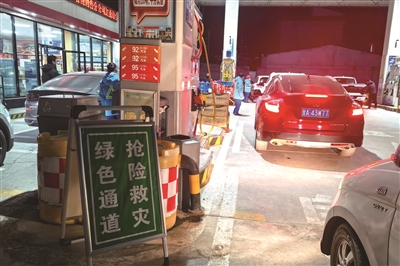
石化企业驰援甘南迭部县震区
Zhong Guo Hua Gong Bao· 2026-01-28 02:25
Core Viewpoint - The oil and petrochemical companies in Gansu province swiftly activated emergency responses to ensure the stability of fuel supply and the normal operation of gas stations in the earthquake-affected areas following a 5.5 magnitude earthquake in Gannan Prefecture. Group 1: Emergency Response Actions - China Petroleum Gansu Sales Company established an emergency command leadership group and completed safety inspections of three gas stations within a 50 km radius of the epicenter within 10 minutes, confirming all equipment was intact and there were no oil leaks, with zero casualties among employees and customers [2] - The three gas stations opened a green channel for earthquake relief, prioritizing fuel supply for rescue vehicles, and have maintained full inventory operations [2] - China Petrochemical Gansu Petroleum Company activated its earthquake emergency plan, conducting thorough inspections of key facilities to ensure safety and security of personnel and property [2] Group 2: Fuel Supply Assurance - Gansu Petroleum opened green refueling channels along highways and major roads in the earthquake-affected areas to prioritize fuel supply for emergency rescue and civilian transport vehicles, providing robust energy support for disaster relief efforts [2] - The first mobile refueling vehicle has arrived in Diebu for support, with eight backup mobile refueling vehicles on standby, ready to respond at any time [2]



福建省政协委员、中国科学院院士郑南峰:大力发展氢能破解能源困局
Zhong Guo Hua Gong Bao· 2026-01-28 02:25
"发展氢能产业,不仅能够有效降低我国油气对外依存度,保障能源安全,还能为'双碳'目标实现、打 造未来产业新经济增长点提供有力支撑。"郑南峰说,氢能还可转化为绿色液体燃料,为破解当前能源 困局提供了新的战略路径。 中化新网讯 1月26日,福建省政协十三届四次会议在福州开幕。福建省政协委员、中国科学院院士郑南 峰表示,基于福建发展氢能产业的诸多优势,将在本次会议上提交"支持平潭建设氢能零碳示范岛""高 质量建设具有福建特色的全国高校区域技术转移转化中心(福建)海洋氢能分中心"等提案,为氢能产业 发展建言献策。 郑南峰表示,在绿色转型浪潮下,大力发展氢能产业已成为我国推动能源结构深刻变革、培育发展新质 生产力、促进可持续发展的重大战略。 在郑南峰看来,福建发展氢能产业拥有诸多优势。福建坐拥台湾海峡"狭管效应"资源禀赋,加上厦门大 学、福州大学等高校院所的科研实力,以及福建能化集团等龙头企业的产业能力,形成了较完整的产学 研用体系。同时,在福建省委、省政府的高度重视和统筹推进下,福建氢能产业发展稳步推进,形成涵 盖交通、储能、工业等多元应用场景的产业体系。 ...
大庆油田采油二厂:以实干实绩践行全会精神
Zhong Guo Hua Gong Bao· 2026-01-28 02:25
该厂将深化政治引领、基层治理、典型示范与传承"三老四严"优良传统相结合,打响"责任心"提升攻坚 战,围绕典型案例,全厂上下不分层级、不分岗位、不分前后线,全维度深度剖析,把"当老实人、说 老实话、办老实事"的作风融入生产经营各环节,为油田发展积蓄奋进力量、厚植坚实根基。聚焦全年 产量目标,该厂各级干部深入一线"亮身份、办实事",全面摸排、仔细梳理一线生产痛点堵点,切实解 决制约生产的难题。 全会提出"增强绿色发展动能",为"十五五"时期新型能源体系建设指明了方向。该厂锚定新能源融合替 代主责主业,全面构建清洁高效的油气生产体系,实现节气增效、降碳减排;构建"立体节能"模式,油 藏、采油、注水、集输四大系统联动调整、整体优化,提升了系统效率和用能效率。该厂还加快新能源 项目建设步伐,倒排工期、挂图作战,动态优化施工方案,强化物资供应保障,为项目高质量推进提供 坚实支撑。 党的二十届四中全会召开以来,大庆油田采油二厂高度重视、迅速行动,深入学习贯彻全会精神,以实 干实绩践行全会精神,在党建引领、原油生产、绿色转型等领域多点突破,努力将思想共识转化为推动 油田高质量发展的强劲动能。 该厂构建起"领导带头学、基层全面 ...