
Zhong Guo Hua Gong Bao

Search documents
创新驱动 数智赋能——巨化集团培育“十四五”新质生产力全景实践
Zhong Guo Hua Gong Bao· 2025-12-31 08:03
Core Viewpoint - Juhua Group, a leading chemical enterprise in China, is undergoing a significant transformation through technological innovation and digitalization to address challenges in the chemical industry, including green transformation and high-end material production [1][2][3]. Group 1: Technological Innovations - Juhua Group has developed a core technology for immersion cooling liquids, significantly reducing the Power Usage Effectiveness (PUE) from 1.5 to 1.07, achieving over 80% energy savings [2]. - The company has successfully created a domestic cooling liquid that matches international competitors, filling a gap in the market for high-performance cooling liquids for data centers [3]. - Juhua Group's patented production method for 2,3,3,3-tetrafluoropropene, a refrigerant alternative, has shown a 97% reduction in greenhouse gas emissions, supporting China's international commitments [4]. Group 2: Industry Leadership and Market Position - As a leader in the domestic fluorine refrigerant industry, Juhua Group focuses on low-carbon fluorochemical innovation and production, leading the development of environmentally friendly refrigerants [5]. - The successful launch of a 150,000 tons/year PDO/PTT integrated facility marks a significant breakthrough in breaking foreign monopolies in core production technologies for high-end polyester materials [6]. - Juhua Group's strategic extension of its industrial chain has resulted in a significant increase in product value, establishing a dominant position in the fluorochemical value chain [7]. Group 3: Digital Transformation and Efficiency Improvements - The "Zero Manual" initiative aims to fully automate production operations, reducing the number of operators per unit from 4 to 1 and decreasing the accident rate by 80% [8][10]. - The "Zero Backup" reform has improved equipment reliability, achieving a compressor availability rate of 98% and reducing maintenance costs by 15 million yuan annually [9][10]. - The "Zero Distance" project focuses on breaking down information silos and enhancing data sharing across departments, resulting in a 20% reduction in unplanned purchases and a 10% decrease in manual workload through automation [10]. Group 4: Organizational and Talent Development - Juhua Group is implementing a "Bonsai-Scenery-Panorama" model for organizational transformation, streamlining management layers and enhancing operational efficiency [13]. - The "8631" talent program promotes cross-skill training, enabling employees to master multiple roles, thereby enhancing workforce flexibility and capability [14]. - The establishment of a national-level pilot platform for fluorine and chlorine high-performance synthetic resins demonstrates Juhua's commitment to innovation and industry leadership [15]. Group 5: Future Outlook - Juhua Group plans to invest 41 billion yuan in a high-performance silicon-fluorine integrated project in Gansu, marking a significant industrial expansion and a key step in its strategic development [15][16]. - The company aims to become a world-class leader in the petrochemical industry by leveraging cross-regional collaboration and multi-base operations [16].

山东能源新材料公司:产业成型起势 数智赋能领航
Zhong Guo Hua Gong Bao· 2025-12-31 07:56
Core Viewpoint - The "14th Five-Year Plan" period is a critical phase for state-owned enterprises to deepen reforms and cultivate new productive forces, with a significant opportunity for the new materials industry to advance towards high-end, intelligent, and clustered development [1] Group 1: Strategic Development - Shandong Energy New Materials Company aims to become a leading new materials industry group, focusing on a dual-driven strategy of extending, supplementing, and strengthening the industrial chain while optimizing existing resources and pursuing mergers and acquisitions for growth [2][4] - The company has achieved a 217% increase in total assets since its establishment, demonstrating significant growth and development in the new materials sector [1] Group 2: Industry Clusters and Innovations - The company has successfully established four major industrial clusters: high-end chemical new materials, fiber composite new materials, calcium-based new materials, and optoelectronic new materials, contributing to the high-quality development of the new materials industry [2][3] - The introduction of advanced projects, such as a 300,000-ton high-performance glass fiber manufacturing project and a megawatt-level perovskite solar cell production line, showcases the company's commitment to seizing opportunities in high-end markets [2][4] Group 3: Capital Operations and Mergers - During the "14th Five-Year Plan," the company has actively engaged in capital operations, successfully completing the restructuring of Qixiang Group, which added a platform with nearly 30 billion yuan in total assets to the new materials sector [5][6] - The restructuring process involved strategic decision-making and effective communication with stakeholders, demonstrating the company's ability to turn challenges into opportunities [6][7] Group 4: Digital Transformation and Smart Manufacturing - The company is prioritizing digital transformation as a strategic choice to gain competitive advantages, integrating new information technologies with manufacturing processes to create intelligent manufacturing models [8][9] - The implementation of smart factories, such as the "black light factory" model, has significantly improved production efficiency and reduced labor costs, exemplifying the shift from traditional manufacturing to intelligent manufacturing [9] Group 5: Reform and Efficiency Enhancement - The company is committed to deepening reforms and enhancing efficiency by streamlining management structures and optimizing resource allocation, resulting in a 25% reduction in departmental numbers [11][12] - Non-core business integration has been a focus, with the company successfully consolidating and managing resources to strengthen its main business and improve operational efficiency [12] Group 6: Cultural and Organizational Development - The company emphasizes the integration of party leadership into corporate governance, ensuring that high-quality party building supports the overall development of the enterprise [13][14] - Initiatives to enhance employee welfare and engagement, such as financial support for struggling families and wellness programs, have contributed to increased employee satisfaction and loyalty [15] Group 7: Future Outlook - Looking ahead, the company aims to continue its focus on enhancing core functions and competitiveness, leveraging its four major clusters to contribute to the development of strategic emerging industries [16]

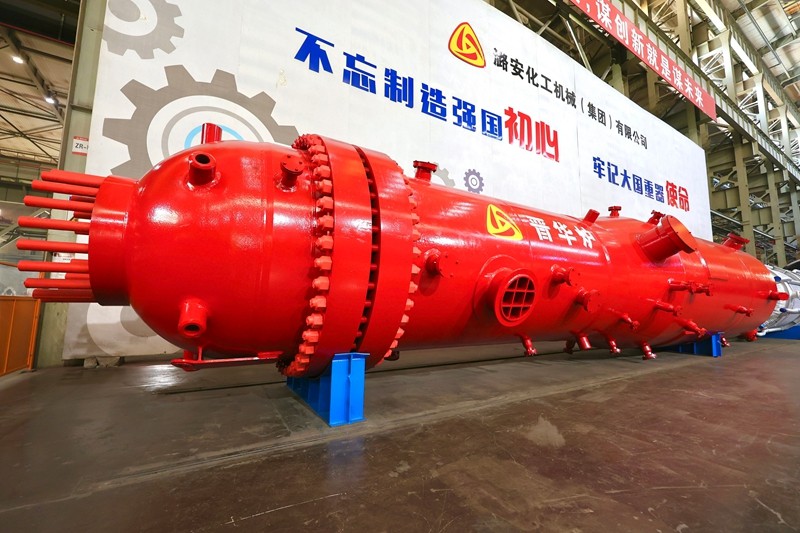
潞安化机:化工装备行业的中坚力量
Zhong Guo Hua Gong Bao· 2025-12-31 07:49
Core Viewpoint - During the "14th Five-Year Plan" period, Lu'an Chemical Machinery Group Co., Ltd. has focused on high-end, intelligent, green, and international development directions, achieving breakthroughs in various operational indicators, lean management, technological innovation, new product development, and intelligent manufacturing, solidifying its position as a leading force in the chemical equipment industry [1][20][27] Group 1: Leadership and Governance - The company emphasizes the integration of party leadership with corporate governance, establishing a governance and supervision system centered on party leadership to ensure high-quality development [4][7] - Lu'an Chemical Machinery has launched the "Party Building +" project, integrating party work with business operations, enhancing the effectiveness of party activities [4][7] - A comprehensive supervision system and risk prevention mechanism have been established, promoting strict governance and creating a positive development environment [4][7] Group 2: Innovation and Technology - The company has undertaken 255 research projects, including 1 national-level project and 6 provincial-level major topics, focusing on coal chemical and new energy sectors [11] - Lu'an Chemical Machinery has built the first domestic digital and intelligent manufacturing demonstration factory for pressure vessels, setting a benchmark for industry transformation [11][16] - The company has achieved significant breakthroughs in biomass gasification technology, with the first industrialized device based on biomass raw materials successfully operating [12][15] Group 3: Operational Performance - In 2024, the company reported a 40.13% increase in production and a 54.06% increase in output value compared to 2021, with total profits and taxes growing by 52.54% [20] - Labor productivity improved by 29.5% in 2024 compared to 2021, reflecting enhanced operational efficiency [20] Group 4: Green Development - The company adheres to green development principles, with waste emissions exceeding national standards and a solid waste recovery rate over 80% [23] - Lu'an Chemical Machinery has made significant strides in the new energy sector, successfully delivering equipment for compressed air energy storage projects [23] Group 5: International Expansion - The company has successfully entered the African market, delivering 35 pieces of equipment for projects aimed at alleviating local fertilizer shortages [26] - Lu'an Chemical Machinery has also manufactured key devices for European projects, enhancing its international market competitiveness [26] Group 6: Recognition and Awards - The company has received 11 national honors and 25 provincial and municipal industry awards, showcasing its comprehensive competitiveness and industry influence [17]

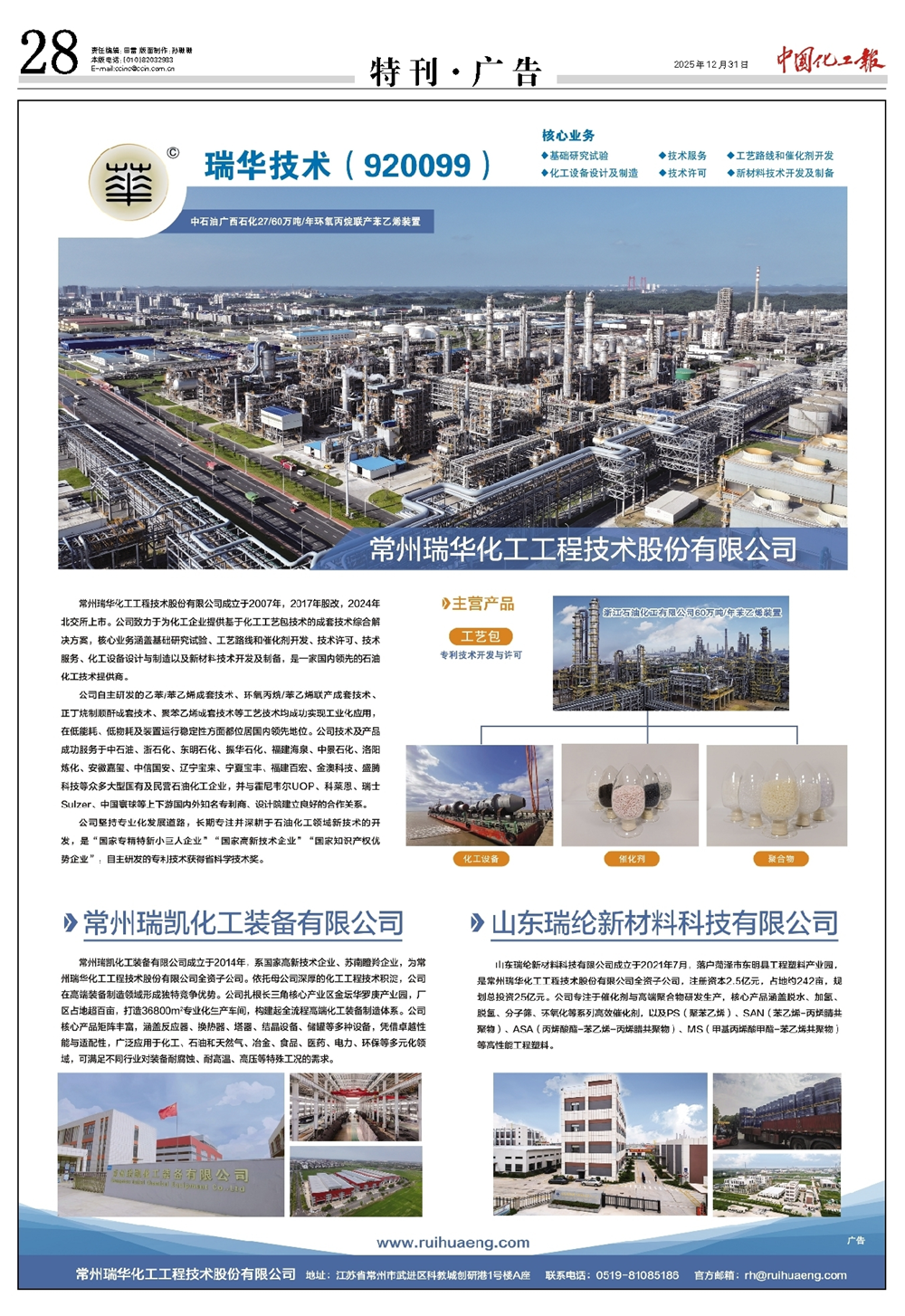
瑞华技术:国内领先的石油化工技术提供商
Zhong Guo Hua Gong Bao· 2025-12-31 07:43
Core Business - The company focuses on providing comprehensive technical solutions based on chemical process package technology, including basic research experiments, process route and catalyst development, technical licensing, technical services, chemical equipment design and manufacturing, and new material technology development and preparation [3]. Company Overview - Changzhou Ruihua Chemical Engineering Technology Co., Ltd. was established in 2007 and underwent a share reform in 2017, with plans to be listed on the Beijing Stock Exchange in 2024. It is recognized as a leading provider of petrochemical technology in China [3]. - The company has successfully industrialized its self-developed technologies, including ethylbenzene/styrene complete technology, epoxy propane/styrene co-production technology, and poly styrene complete technology, achieving domestic leadership in low energy consumption and stable operation [3]. Collaborations and Partnerships - The company has established strong cooperative relationships with numerous large state-owned and private petrochemical enterprises, including Sinopec, Zhejiang Petrochemical, and Dongming Petrochemical, as well as with well-known patent holders and design institutes such as Honeywell UOP and Sulzer [3]. Subsidiaries - Changzhou Ruikai Chemical Equipment Co., Ltd., established in 2014, is a wholly-owned subsidiary of Changzhou Ruihua, recognized as a national high-tech enterprise. It specializes in high-end equipment manufacturing and has a production facility covering over 36,800 square meters [5]. - Shandong Ruilun New Materials Technology Co., Ltd., established in July 2021, is another wholly-owned subsidiary with a registered capital of 250 million yuan and a planned total investment of 2.5 billion yuan. It focuses on the research and production of catalysts and high-end polymers [6].
圣奥化学:以蜂鸟之姿,铸远航之力
Zhong Guo Hua Gong Bao· 2025-12-31 07:42
Core Viewpoint - Sennics aims to become the preferred choice for global polymer additive users by integrating advanced technology and a commitment to green development into its strategic framework, driving high-quality growth in the polymer additive industry [1][3]. Group 1: Brand Development - Sennics initiated a strategic brand renewal in 2017, adopting the Sennics brand international image, symbolized by the hummingbird, representing agility, precision, and resilience [3]. - The brand transformation signifies a shift from being a "product supplier" to a "brand value creator" and "comprehensive service provider," establishing a competitive advantage based on technological leadership and customer value [3]. Group 2: Technological Innovation - Sennics has increased R&D investment to enhance green technology processes for polymer additives, achieving significant breakthroughs in rubber antioxidant production, including the award-winning "RT low-temperature liquid-phase catalytic hydrogenation clean production technology" [4][5]. - The company has developed a complete product matrix in rubber additives, including the green and environmentally friendly antioxidant SA6000, and has made advancements in bio-based and reactive antioxidants [5]. Group 3: Customer-Centric Approach - Sennics has established a strong market presence in over 50 countries, focusing on customer needs and enhancing brand reputation through a diverse product portfolio and deep customer engagement [8]. - The company has successfully localized the production of key intermediates like MIAK, improving the resilience and safety of China's chemical new materials supply chain [8][9]. Group 4: Global Expansion and Digitalization - In 2020, Sennics invested in a polymer additive factory in Thailand, which began operations in 2022, achieving a production milestone of 60,000 tons of rubber antioxidants by October 2025 [9]. - The company has implemented a digital platform, "Smart Sennics," to enhance customer experience and operational efficiency, achieving a 100% first-time pass rate for key products and over 95% customer satisfaction [10]. Group 5: Green Development - Sennics has integrated a co-existence philosophy into its brand core, aligning with national "dual carbon" goals and committing to carbon neutrality ten years ahead of schedule [13][14]. - The company has received the highest "platinum" rating in EcoVadis corporate social responsibility assessments and actively participates in international sustainability initiatives [14]. Group 6: Brand Communication - Sennics aims to convey a clear and professional brand message through systematic industry dialogue and value co-creation, enhancing its authority and social influence [15]. - The company has been recognized with various awards, including the "Outstanding Brand Image Award" and "New Responsibility Enterprise," reflecting its commitment to brand value and industry leadership [19]. Group 7: Future Vision - Sennics envisions a "Future City" where technology and green practices converge, focusing on the development of bio-based and biodegradable materials, and expanding its role from an industry participant to a "smart ecosystem organizer" [22][23].
鲁西集团:锚定一流 破局向新
Zhong Guo Hua Gong Bao· 2025-12-31 07:37
Core Viewpoint - Lu Xi Group has successfully transformed from a traditional chemical enterprise into a modern, international, and comprehensive chemical company, aiming for "domestic leading, international first-class" status during the 14th Five-Year Plan period, amidst various challenges such as global industrial chain restructuring and carbon neutrality goals [1][2][15]. Group 1: Transformation and Development - Lu Xi Group has evolved from a single nitrogen fertilizer producer to a high-end chemical enterprise, implementing a strategic shift from basic chemicals to new chemical materials [2][3]. - The company has invested 17.7 billion yuan in the past five years, establishing 12 key projects, including a 1 million tons/year caprolactam and nylon 6 production facility, and the world's largest single 400,000 tons/year organic silicon production unit [3][4]. Group 2: Innovation and Technology - Lu Xi Group has achieved significant breakthroughs in core technologies, including the development of high-efficiency hydrogen production technology and a complete catalyst product system with an annual output value exceeding 400 million yuan [5][6]. - The company has over 1,000 patents and has established long-term collaborations with prestigious universities and research institutes to enhance innovation [7][8]. Group 3: Management and Efficiency - The company has implemented digital management systems across production, procurement, and sales, achieving 100% online business processes and enhancing decision-making efficiency by 40% through a streamlined management structure [8][9]. - Lu Xi Group has adopted a cost control philosophy, optimizing production processes and reducing unnecessary budget expenditures, resulting in annual savings exceeding 70 million yuan [9][10]. Group 4: Safety and Environmental Protection - The company emphasizes safety as a prerequisite for development, implementing a comprehensive safety management system and achieving a 98.7% hazard rectification rate [11][12]. - Lu Xi Group is committed to building a zero-emission park, achieving 100% wastewater recycling and solid waste resource utilization, while also exceeding provincial targets for volatile organic compound emissions reduction [12][13]. Group 5: Global Cooperation and Market Expansion - Lu Xi Group has actively participated in international cooperation, notably at the China-Africa Cooperation Forum, where it discussed clean energy development with Nigerian enterprises [14][15]. - The company has seen significant growth in exports, with products reaching 68 countries and a 91% year-on-year increase in chemical and fertilizer product exports [14][15].
赛鼎:一“气”深耕“十四五”,双炉并立向新途
Zhong Guo Hua Gong Bao· 2025-12-31 07:36
Core Viewpoint - The "14th Five-Year Plan" period is crucial for the transformation and upgrading of China's coal chemical industry, with Saiding Engineering Co., Ltd. (hereinafter referred to as Saiding) showcasing significant achievements through two major independent innovation technologies [1][2]. Group 1: Technological Innovations - Saiding has developed the JM-S furnace, a pressurized moving bed gasification technology specifically for smokeless block coal, addressing the challenges of clean utilization in this niche [2][3]. - The JM-S furnace has achieved a 2.69% increase in energy conversion efficiency and can recover approximately 13 tons of medium-pressure steam per hour, significantly reducing external steam supply by over 40% [4]. - The technology has been recognized as internationally leading in the gasification of smokeless block coal, with significant reductions in coal consumption and emissions, including a 55.6 standard cubic meter reduction in oxygen consumption [9][19]. Group 2: Environmental and Safety Aspects - The JM-S furnace's design incorporates a "inherent safety" concept, optimizing structure and operation to enhance stability and reduce safety risks, leading to a significant decrease in unplanned shutdown rates [5]. - The application of JM-S furnace technology results in pollutant emissions that are better than national standards, contributing to substantial environmental benefits if existing UGI capacities are converted [4][10]. Group 3: Market Applications and Achievements - By the end of the "14th Five-Year Plan," multiple large-scale projects have adopted or modified to use JM-S furnace technology, including a 550,000-ton ammonia project in Hubei and a clean industrial gas project in Hebei [10]. - The technology has been widely applied in various coal chemical sectors, including ammonia, methanol, and coal-to-oil projects, ensuring stable gasification of various coal types [18][19]. - Saiding's innovations have garnered numerous awards, including the first prize for technological progress from the China Nitrogen Fertilizer Industry Association, highlighting the comprehensive strength of JM-S furnace technology from research to engineering implementation [9][19]. Group 4: Future Outlook - Saiding plans to continue optimizing JM-S furnace technology and expand its adaptability to different raw materials, while also venturing into biomass gasification and low-carbon energy chemical fields [11][21]. - The company aims to contribute to the high-quality and sustainable development of China's petroleum and chemical industry during the "15th Five-Year Plan" and beyond, aligning with national "dual carbon" strategies [21].

河北诚信:逐绿以进 向新而行
Zhong Guo Hua Gong Bao· 2025-12-31 07:23
Core Viewpoint - Hebei Chengxin Group is focusing on green transformation and technological innovation to evolve from traditional chemical production to a comprehensive enterprise that emphasizes green, intelligent, and high-end development [1][21]. Green Transformation and Efficiency Improvement - The "Five Satisfaction" goals serve as a strategic guide for Hebei Chengxin, reflecting its commitment to sustainable development and balancing economic and environmental benefits [2]. - The company has established a green manufacturing system covering the entire industrial chain, emphasizing energy conservation, emission reduction, and efficiency enhancement [2]. - Hebei Chengxin has implemented energy-saving technologies and upgraded existing production equipment, achieving a 20% reduction in comprehensive energy consumption compared to pre-transformation levels [7]. Circular Economy and Resource Utilization - The company is constructing a circular economy model to enhance resource utilization and reduce waste emissions, including deep treatment of wastewater for reuse in production [3]. - Hebei Chengxin has improved the comprehensive utilization rate of solid waste and is actively exploring recycling pathways for by-products [3]. Energy Structure Transformation - Hebei Chengxin is accelerating the application of renewable energy sources like solar and wind power, reducing reliance on fossil fuels [6]. - The company has established wind farms in Inner Mongolia and Cangzhou to meet part of its production electricity needs [6]. Economic Benefits of Green Transformation - The green transformation has led to significant economic returns, including savings of millions in raw material procurement costs and hundreds of thousands in energy expenses annually [7]. - The market competitiveness of green products has increased, enhancing brand value and social image [7]. Digital and Intelligent Transformation - Hebei Chengxin is prioritizing digital, networked, and intelligent development during the "14th Five-Year Plan" period, aiming to create a comprehensive intelligent operation system [8]. - The company has implemented smart upgrades in production systems, resulting in a 15% increase in labor productivity [8]. Market Expansion and Global Layout - The company is pursuing a dual domestic and international market strategy, establishing a global business network in the fine chemical industry [14]. - Hebei Chengxin has seen stable growth in exports to RCEP member countries, with over 20% of total exports in key products like cyanides and chelating agents [15]. Technological Innovation and R&D - As a national technology innovation demonstration enterprise, Hebei Chengxin emphasizes R&D and talent cultivation, with a strong focus on the cyanide industry chain [19]. - The company has obtained 91 authorized invention patents and 215 utility model patents, contributing to its industry influence [20]. Future Development Outlook - Hebei Chengxin aims to continue its focus on innovation, green development, intelligent transformation, and market expansion, with sales exceeding 40 billion yuan [21]. - The company plans to enhance its competitive edge by extending into end-product fields and optimizing its internal circular industrial chain [21].
金正大集团:以“中国方案”助世界粮安
Zhong Guo Hua Gong Bao· 2025-12-31 07:18
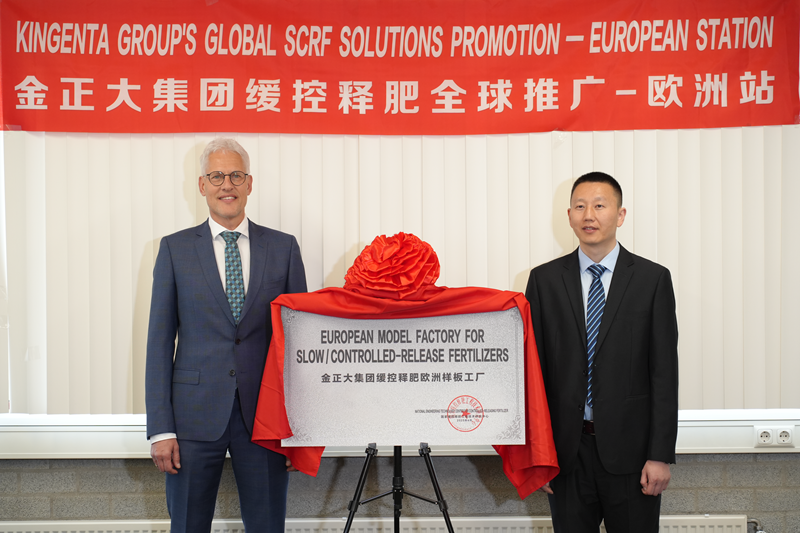
Core Viewpoint - The article emphasizes the critical role of food security in China's national prosperity and the significant contributions of Jinzhengdai Group in enhancing agricultural productivity through innovative fertilizer technologies, particularly during the 14th Five-Year Plan period [1][5][23]. Group 1: Achievements and Innovations - Jinzhengdai Group has been recognized three times with national science and technology awards, highlighting its leadership in the fertilizer industry and its successful export of proprietary fertilizer technology to Europe [5][11]. - The company has developed a bio-based membrane controlled-release fertilizer technology that addresses global challenges in fertilizer resource waste and soil quality decline, achieving international leading standards [5][7]. - The new bio-based controlled-release fertilizers can increase crop yields by over 5% and reduce fertilizer usage by 15%-20% compared to traditional petrochemical-based fertilizers [7][8]. Group 2: Global Expansion and Collaboration - Jinzhengdai Group has initiated a global promotion of its controlled-release fertilizer technology, establishing a model factory in the Netherlands and expanding into Southeast Asia [13][14]. - The company has formed strategic partnerships with agricultural enterprises in Indonesia and other regions to enhance its market presence and share its innovative technologies [14][15]. - Jinzhengdai Group has been recognized by the FAO for its contributions to global food security and has actively participated in international forums to share its agricultural technology advancements [15][18]. Group 3: Research and Development - The company has established a comprehensive R&D system, including multiple research institutes and laboratories, and has accumulated numerous awards and patents in the field of fertilizer technology [8][9]. - Jinzhengdai Group collaborates with international research institutions, such as the German Schnoor Institute, to integrate advanced agricultural technologies into the Chinese market [20][25]. - The introduction of the German Schnoor efficiency technology 2.0 is expected to significantly enhance fertilizer efficiency and contribute to sustainable agricultural practices [21][22]. Group 4: Future Outlook - Jinzhengdai Group aims to continue its mission of enhancing agricultural efficiency and farmer income while ensuring national food security and promoting sustainable agricultural development [23].

天泽集团:披荆斩棘成大道 转型发展谋新篇
Zhong Guo Hua Gong Bao· 2025-12-31 07:18
Core Insights - The article highlights the significant challenges and achievements of Tianze Group during the "14th Five-Year Plan" period, emphasizing its resilience and commitment to high-quality development despite various external pressures [1] Group 1: Company Performance - Over the past five years, Tianze Group produced 6.9114 million tons of synthetic ammonia and 11.3488 million tons of urea, achieving a profit of 2.624 billion yuan, with production volume, operating profit, and sales revenue consistently ranking among the top 20 in the industry nationwide [1] - The company’s total industrial output value and sales revenue have exceeded 5 billion yuan for four consecutive years, marking significant progress in transformation and high-quality development [1] Group 2: Political and Organizational Leadership - The company’s party committee has integrated into national and local development strategies, enhancing political awareness and ensuring effective governance through various educational initiatives [2] - Tianze Group has established multiple decision-making committees and implemented a comprehensive governance structure to address major issues, effectively merging party leadership with corporate governance [2] Group 3: Operational Efficiency - In response to market challenges and environmental policies, Tianze Group reformed its coal supply mechanisms and optimized financial management, generating over 56 million yuan in revenue through improved strategies [4] - The company achieved a 100% production-sales rate and maximized benefits through strategic customer collaborations and market analysis [5] Group 4: Environmental Initiatives - Tianze Group has committed to environmental protection as a core aspect of its development strategy, investing over 2 billion yuan in upgrading its gasification technology and enhancing its environmental management systems [9] - The company has implemented significant upgrades to its environmental capabilities, achieving a reduction in comprehensive energy consumption from 1097 kg to 1059 kg per ton of ammonia, meeting national energy efficiency benchmarks [9] Group 5: Safety and Risk Management - The company has prioritized safety in production, implementing comprehensive safety management systems and achieving a stable operational environment through rigorous safety protocols [11][16] - Tianze Group has invested 112 million yuan in safety measures, significantly reducing the occurrence of major safety incidents [16] Group 6: Employee Welfare and Corporate Culture - The company has focused on improving employee welfare, raising average annual salaries to industry-leading levels, and enhancing working conditions through various initiatives [24][25] - Tianze Group has fostered a strong corporate culture, promoting values that align with its operational goals and enhancing employee engagement through various educational and cultural activities [26][27] Group 7: Future Outlook - Tianze Group aims to achieve a "100 billion Tianze" vision, focusing on stability, rapid growth, and breakthroughs in various sectors as it embarks on a new journey of high-quality development [28]
