Huan Qiu Wang Zi Xun

Search documents
苹果芯片负责人否认离职传闻:热爱我的团队,不会离开公司
Huan Qiu Wang Zi Xun· 2025-12-09 03:55
Core Viewpoint - Apple’s chip chief, Johny Srouji, has denied rumors of his potential departure, stating he has no plans to leave the company in the near future [1][3] Group 1: Srouji's Statement - Srouji expressed his love for his team and work at Apple, emphasizing the need to clarify his intentions amidst widespread speculation about his future [3] - He takes pride in the advanced technologies developed by his team, which include displays, cameras, sensors, chips, batteries, and other areas across Apple products [3] Group 2: Context of Departure Rumors - Srouji's statement directly responds to a Bloomberg report suggesting he had expressed intentions to leave to CEO Tim Cook [3] - His role is critical for Apple, especially as the company accelerates its integration of hardware and software along with its artificial intelligence strategy [3] Group 3: Recent Executive Departures - Several high-level executives have recently announced their departures or retirements, including John Giannandrea, Alan Dye, Katherine Adams, Lisa Jackson, and Jeff Williams [4] - These changes come at a time when Apple is experiencing significant personnel shifts within its leadership [4]



韩国出口额逼近日本
Huan Qiu Wang Zi Xun· 2025-12-09 01:53
Group 1 - South Korea's export value is expected to historically approach Japan's, with the gap narrowing to less than $30 billion, raising high expectations in the South Korean industry for potentially matching or surpassing Japan for the first time [1] - From January to October this year, South Korea's total export amounted to $579.1 billion, while Japan's was $606.1 billion, marking the lowest recorded gap compared to the full year of 2024, which had a gap of $122.4 billion [1] - The improvement in South Korea's exports is heavily reliant on the semiconductor industry, as excluding this category would result in negative growth for overall exports this year [1] Group 2 - In the first eleven months of this year, South Korea's cumulative export value increased by 2.9% year-on-year, but exports of categories other than semiconductors declined by 1.5% [2] - In November, South Korea's semiconductor exports grew by 38.6% year-on-year, reaching a record high of $17.26 billion, accounting for 28.3% of total exports, the highest proportion this year [1] - The current export structure of South Korea is significantly concentrated on a single key category, with 10 out of 15 major export categories experiencing declines, indicating a potential vulnerability if the semiconductor market weakens [2]
智元第5000台通用具身机器人在上海量产下线
Huan Qiu Wang Zi Xun· 2025-12-09 01:34
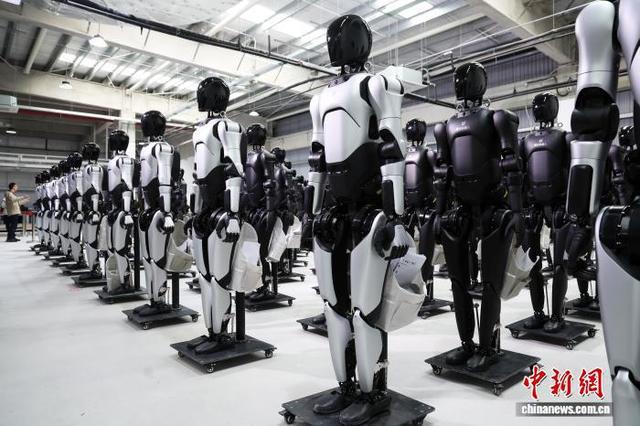
来源:中国新闻网 12月8日,智元第5000台通用具身机器人量产下线仪式在上海举行。图为:演员黄晓明(左二)作为用 户现身仪式现场。中新社记者 汤彦俊 摄 12月8日,机器人在量产工厂整装待发。当日,智元第5000台通用具身机器人——灵犀X2正式量产下 线。作为上海首家人形机器人量产企业,智元机器人出货量从2025年初的1000台跃升至5000台。这一里 程碑标志着具身机器人已从技术验证阶段全面迈入规模商用时代。中新社记者 汤彦俊 摄 12月8日,智元第5000台通用具身机器人量产下线仪式在上海举行。图为:智元联合创始人彭志辉在仪 式现场宣布第5000台通用具身机器人量产下线。中新社记者 汤彦俊 摄 12月8日,智元第5000台通用具身机器人量产下线仪式在上海举行。图为:演员黄晓明作为用户现身现 场与机器人互动。中新社记者 汤彦俊 摄 12月8日,工程师在量产工厂调试机器人。中新社记者 汤彦俊 摄 12月8日,工程师在量产工厂调试机器人。中新社记者 汤彦俊 摄 12月8日,工程师在量产工厂调试机器人。中新社记者 汤彦俊 摄 12月8日,工程师在量产工厂调试机器人。中新社记者 汤彦俊 摄 12月8日,工程师在量 ...

2025中国电信现代产业链焕新升级共链大会召开
Huan Qiu Wang Zi Xun· 2025-12-09 01:01
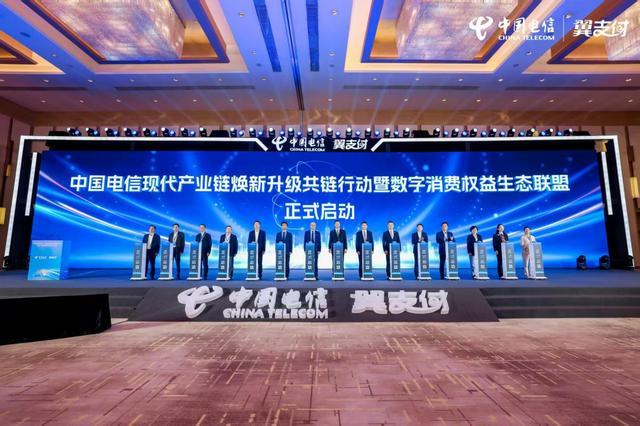
来源:央视网 央视网消息:12月5日,2025数智科技生态大会期间,中国电信现代产业链焕新升级共链大会暨AI+智 慧监管生态合作论坛在广州成功举办。论坛围绕现代产业链焕新升级的新内涵、新举措、新成果展开深 入探讨。 本次大会,中国电信翼支付联合15家产业链伙伴代表,共同成立"中国电信现代产业链焕新升级共链行 动暨数字消费权益生态联盟",期待通过持续深化产业链生态合作,更好满足用户高品质生活需求,促 进国民经济循环畅通。 据了解,中国电信翼支付基于数字消费权益生态的丰富场景,创新打造"翎泽"数字消费生态平台,该平 台已连接超70家央国企及200个行业头部品牌,构建起以央国企为核心、服务范围覆盖全国、安全可信 的数字消费权益生态。该平台已在30余家央国企落地应用并成功入选2025年国务院国资委央企人工智能 战略性高价值场景。 为进一步筑牢产业链自主可控安全防线,中国电信智慧监管御风品牌发布暨生态联盟正式启航,中国电 信翼支付携手十余家产业链伙伴展开生态合作,为产业链数据运营智能化、治理现代化转型提供有力支 撑。 在同期举办的数智科技生态展上,中国电信翼支付打造的AI+支付与数据科技生态合作展区,集中呈现 了数字消 ...

警惕!这种Wi-Fi不能连!你的手机可能会被远程操控
Huan Qiu Wang Zi Xun· 2025-12-09 00:35
Core Viewpoint - The article emphasizes the risks associated with connecting to public Wi-Fi networks, highlighting potential data theft and network attacks, and provides safety tips to mitigate these risks [1][2][3]. Group 1: Risks of Public Wi-Fi - Public Wi-Fi networks can be exploited by malicious actors, including foreign intelligence agencies, to monitor sensitive information from connected devices [1]. - Users connecting to insecure public Wi-Fi may unknowingly have malware installed on their devices, leading to remote control and threats to personal and public safety [2]. - Personal data such as browsing history and location information can be collected and analyzed by malicious entities, potentially undermining social stability and mainstream values [3]. Group 2: Prevention Measures - Users are advised to disable the "auto-connect" feature on their devices to prevent automatic connections to malicious networks [5]. - It is recommended to avoid sensitive operations, such as logging into private accounts or conducting financial transactions, while connected to public Wi-Fi [6]. - Installing and regularly updating protective software can help prevent malware attacks, and using virtual private networks (VPNs) can encrypt data transmission [7]. Group 3: Personal Information Safety - Users should be cautious about sharing personal information on social media, as seemingly innocuous posts can reveal sensitive details [8][9][10][11][12][13][14][15]. - Users should be wary of scams that offer "free benefits" through links or QR codes, as these can lead to malicious app installations that compromise personal data [17][18]. - It is important to manage app permissions to prevent unauthorized access to personal data, such as microphone and contact information [19][20][21]. Group 4: Response to Data Breaches - In the event of a suspected data breach, users should immediately disconnect from the compromised device and freeze affected accounts [22]. - Changing passwords for all related accounts and retaining evidence of the breach are crucial steps in addressing the situation [22]. - Users are encouraged to report violations to relevant platforms and authorities, and to consider legal action if financial loss occurs due to the breach [22].

澳媒:“真正的产业政策让中国科技领先”
Huan Qiu Wang Zi Xun· 2025-12-08 22:45
Core Viewpoint - China continues to dominate in various global technology and engineering sectors, showcasing its advancements in multiple fields, including artificial intelligence, advanced materials, defense, space, robotics, transportation, energy, environment, biotechnology, and vaccines [1]. Group 1: Technological Leadership - China leads in 7 out of 8 categories of artificial intelligence, all 13 categories of advanced materials and manufacturing technologies, all 7 categories of defense, space, robotics, and transportation, 9 out of 10 categories in energy and environment, and 5 out of 9 categories in biotechnology, genetics, and vaccines [1]. - The recent China International High-tech Achievements Fair in Shenzhen highlighted China's technological prowess, featuring a vast exhibition area of 400,000 square meters, showcasing humanoid robots and flying cars [1]. Group 2: Infrastructure and Policy - China has made significant investments in national industrial policies, focusing on new infrastructure projects such as 5G networks, smart cities, and industrial digital transformation [2]. - The country has shifted from a traditional innovation model to a new approach where the government coordinates interactions among academia, enterprises, and financial institutions towards unified technological goals [2]. - The government identifies technological objectives, analyzes necessary breakthroughs, and provides funding for both basic and applied research to facilitate technology transfer to enterprises, aiding in product development and commercialization [2].
破解“三怕三缺”困局,梨花教育以AI生态产品提升大众文化素养
Huan Qiu Wang Zi Xun· 2025-12-08 13:12
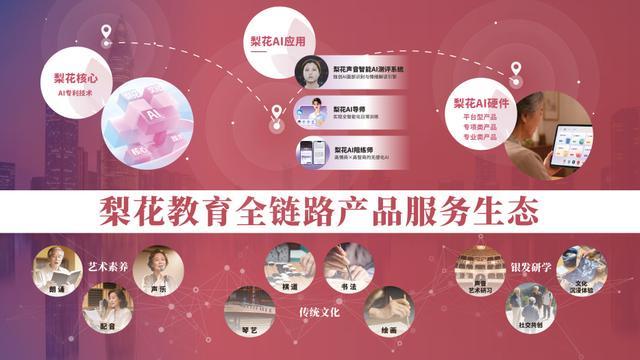
Core Viewpoint - The article discusses the innovative approach of Lihua Education in addressing the psychological barriers and shortcomings of traditional teaching methods for the elderly in art learning, through the introduction of an AI-driven acoustic learning ecosystem tailored for older adults [1][2][15]. Group 1: Psychological Barriers and Teaching Shortcomings - Elderly learners face three main psychological barriers: fear of embarrassment, fear of inconvenience, and fear of failure, which hinder their willingness to participate in art learning [2][15]. - Traditional teaching methods exhibit three significant shortcomings: lack of standardized practice partners, lack of immediate feedback, and lack of psychological support systems, which further complicate the learning experience for older adults [2][15]. Group 2: AI Acoustic Learning Ecosystem - Lihua Education has developed an AI-driven learning ecosystem that includes an AI voice practice partner, AI mentor, AI assessment system, and a dedicated hardware device called the AI acoustic learning machine, creating a closed-loop system for teaching, learning, practicing, assessing, and evaluating [1][5][15]. - The AI voice practice partner utilizes 75 acoustic algorithms and 480 million voice samples to provide personalized feedback, enabling users to improve continuously [5][15]. Group 3: Features of the AI Acoustic Learning Machine - The AI acoustic learning machine can complete a "voice CT scan" in just 15 minutes, analyzing 50 dimensions of a learner's voice and generating a comprehensive report with 19 evaluation items [6][15]. - The device is designed with user-friendly features, including clear sound capture, an eye-friendly display, and simplified operation logic, making it accessible for older adults [7][8][10][11]. Group 4: Cultural and Social Engagement - The learning machine allows users to create audio books, transforming the learning process into a creative and fulfilling experience, thus addressing the deeper needs for cultural expression and social interaction among the elderly [11][13][15]. - Lihua Education aims to enhance the cultural literacy of older adults by providing a platform that not only teaches but also empowers them to express themselves and connect with others through their learning journey [15].
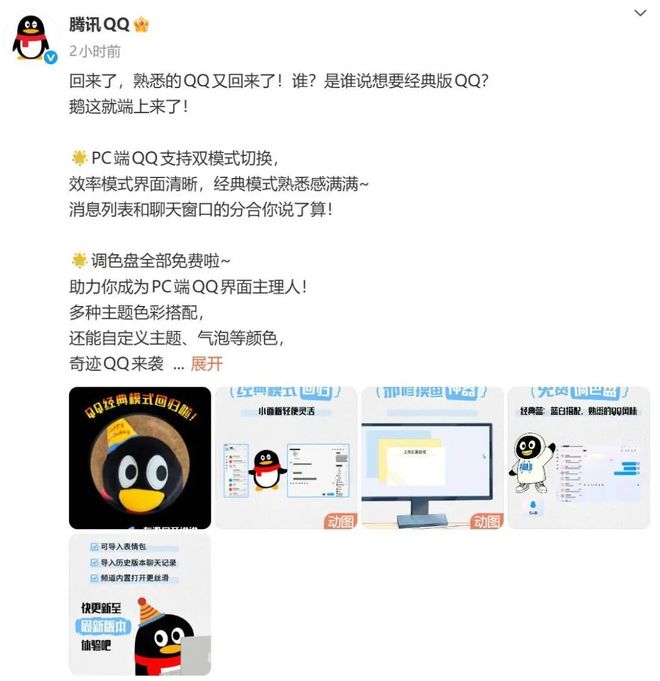
QQ经典版官宣回归,熟悉的界面回来了!PC端支持双模式切换
Huan Qiu Wang Zi Xun· 2025-12-08 11:20
Core Viewpoint - Tencent QQ has announced the return of the classic QQ mode, generating significant user interest and anticipation [1] Group 1: New Features and User Experience - The classic version of QQ on PC introduces several exciting new features and optimizations, enhancing the user experience [3] - PC QQ supports dual mode switching, allowing users to customize the message list and chat window layout [3] Group 2: Customization and Aesthetics - The classic version of QQ features bold innovations in color matching, with a fully open color palette offering various theme color schemes to meet diverse aesthetic needs [5] - Users can customize themes and bubble colors, creating a personalized QQ interface for unique chat experiences [5] Group 3: Enhanced Functionality - The optimization of the channel function aims to provide a smoother and more efficient user experience in QQ's important communication and interaction space [5] - The classic version supports batch importing of emoji packs, allowing users to import a large number of favorite emojis at once, making chats more lively [5] - Users can also import historical chat records, which is beneficial for those who have lost chat history due to device changes or accidental deletions [5]

中国11月大豆进口创四年新高,全年进口量或将破纪录
Huan Qiu Wang Zi Xun· 2025-12-08 10:12
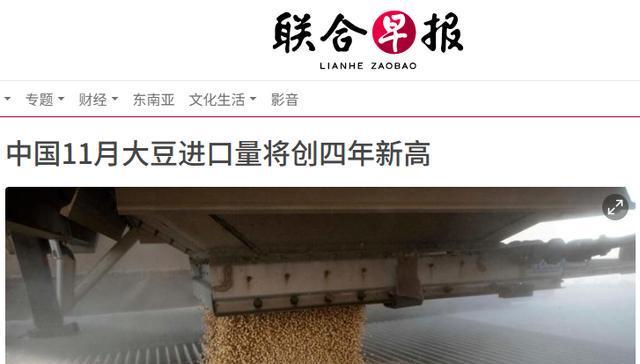
Core Insights - China's soybean imports reached 8.11 million tons in November, marking a 13.4% increase from 7.15 million tons in the same month last year, and the highest level for the same period in four years [1] - Despite a 14.5% month-on-month decline from October's 9.48 million tons, the cumulative import total for the first 11 months of the year increased by 6.9% year-on-year, reaching 13.79 million tons, setting a solid foundation for a potential record annual import volume [1] - Analysts predict that total soybean imports for the year could reach a record 110 million tons, driven by significant purchases of Brazilian and U.S. soybeans [1][4] Import Dynamics - The import landscape has been influenced by changes in international trade relations, particularly the U.S.-China trade tensions that previously halted U.S. soybean purchases for several months [4] - Following a trade truce agreement between the U.S. and China at the end of October, China has gradually resumed purchasing U.S. soybeans, with COFCO leading the way by pre-purchasing approximately 2.7 million tons [4] - This volume is still below the U.S. government's target of 12 million tons by the end of the year, although there are indications that the deadline may be extended to February next year [4] Demand Drivers - The continuous growth in China's soybean imports is driven by multiple factors, including the strong demand from the domestic pig farming industry for soybean meal and other feed proteins [4] - The stabilization of domestic pig production capacity has maintained high demand for quality feed ingredients [4] - The relative price advantage of international soybeans, particularly from Brazil, has also stimulated purchasing interest among importers [4] Future Outlook - Industry analysts generally expect China's soybean import levels to remain high, supported by ongoing consumption upgrades and the modernization of the livestock industry [5] - Adjustments in the global soybean supply chain and China's diversified import strategies to ensure food security will also contribute to stable growth in soybean import volumes [5]
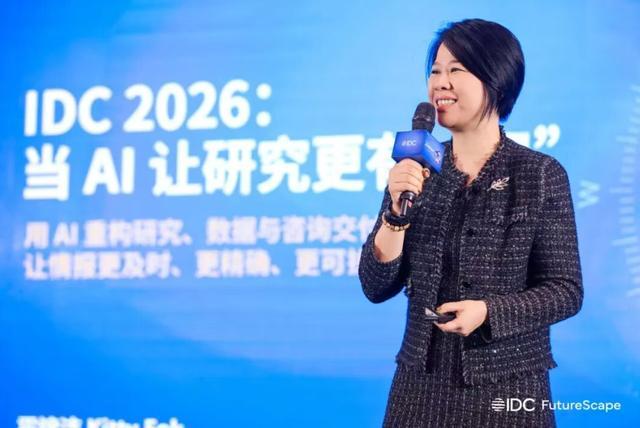
环球问策| IDC中国区总裁霍锦洁:从“上云”迈向“用算”,绿色ICT将成重要标尺
Huan Qiu Wang Zi Xun· 2025-12-08 08:58
Core Insights - The concept of "Artificial Intelligence +" is gaining traction in China, with policies driving its integration across various industries, aiming to inject strong momentum into economic growth [1][3] - IDC's President in China, Huo Jinjie, emphasizes that top-level design is creating opportunities, shifting the digitalization process from resource migration to value creation [1][3] AI Terminal Development - By 2027, the penetration rate of new intelligent terminals and AI applications is expected to exceed 70%, with rapid growth in the core industries of the intelligent economy; by 2030, this rate is projected to exceed 90% [3] - The IT terminal market is anticipated to experience a dual explosion of "stock replacement + incremental innovation" by 2026, with AI terminals becoming key productivity tools for economic transformation [3] Computing Power Trends - The industry is likely to adopt a "compute as a service" model, allowing for flexible payment and on-demand usage of high-performance computing resources [4] - The construction of an integrated computing power network will provide foundational support for value creation, with cross-domain scheduling and heterogeneous computing power delivery becoming the norm [4] Green Computing Initiatives - Green ICT is becoming a critical benchmark for enterprise transformation, with liquid cooling, energy efficiency platforms, and green electricity expected to be standard for large projects [4] - Companies must reshape their KPI systems to include green metrics such as PUE (Power Usage Effectiveness) and WUE (Water Usage Effectiveness) [4] Scene Engineering and Digital Transformation - Successful implementation of scene engineering will unlock the full value of computing power, requiring enterprises to move from fragmented pilot projects to end-to-end scene deployment [5] - Data compliance is a significant challenge in digital transformation, with the proliferation of AI-generated data complicating data governance [5] Talent Development - There is a pressing need for hybrid AI talent that possesses both depth and breadth of knowledge, understanding industry processes and effectively utilizing AI tools [5] - Companies should focus on productizing governance capabilities related to compliance, risk, and energy efficiency before scaling their operations [5]