AI导师

Search documents
助力跨越“数字鸿沟”:梨花教育打造有温度的适老服务
Huan Qiu Wang Zi Xun· 2026-02-04 10:38
Core Insights - The article emphasizes the importance of addressing the digital divide for the elderly, highlighting the need for technology solutions that are patient and wise to ensure social equity and warmth [1] Group 1: Digital Divide and Elderly Engagement - The essence of the digital divide extends beyond interface adaptation issues to the capability and psychological barriers faced by the elderly, with only 38% of elderly internet users able to independently use ride-hailing apps and a mere 25% actively using AI health management tools [2] - The report from the China Internet Network Information Center (CNNIC) indicates that as of July 2025, the number of internet users aged 60 and above reached 161 million, with an internet penetration rate of 52.0%, yet their digital engagement remains superficial [2] Group 2: AI Innovations for Elderly Services - In response to societal needs and policy guidance, tech companies are exploring deeper empowerment paths, such as Shenzhen-based AI education company Shifang Ronghai, which launched the "AI Mentor" to provide learning and emotional support for the elderly [3] - The AI Mentor utilizes 75 proprietary algorithms and professional voice models to address the physiological and psychological characteristics of the elderly, achieving a satisfaction rate of 95.81% with over 110,000 AI-generated works [3] Group 3: Human-Centric Approach to Elderly Services - The core of elderly adaptation is not merely technological iteration but a precise response to the real needs of the elderly, moving from superficial adjustments to comprehensive AI companionship [4] - Building a quality elderly ecosystem requires collaboration among policy, market, and society, with a focus on creating low-threshold, highly adaptable products that genuinely address the issues of "ability to use, willingness to use, and desire to use" [4] - Bridging the digital divide is fundamentally about safeguarding social equity, necessitating the integration of humanistic care into every design aspect to ensure the elderly feel a sense of belonging and achievement in the digital age [4]
十方融海梨花教育荣获“2025银发经济影响力十大品牌”
Cai Jing Wang· 2026-01-27 13:26
Group 1 - The 11th China Silver Economy Business Innovation Conference was held in Shanghai, where the "2025 Age Awards" were announced to recognize outstanding contributions and innovations in the silver economy sector [1] - The awards evaluation utilized a multi-disciplinary expert review mechanism to ensure credibility, with recognition of Li Hua Education for integrating cutting-edge digital technology with the cultural needs of the elderly [2] - The conference discussed trends in the silver economy during the 14th Five-Year Plan, emphasizing the transition from ecological cultivation to a strategic emerging industry characterized by essential needs, health, and self-enjoyment [2] Group 2 - Li Hua Education launched an age-friendly AI learning platform to address common challenges faced by elderly users in cultural and artistic learning, featuring an "AI tutor + AI practice coach + AI assessment system" [3] - The platform is built on 75 core AI algorithms and has processed 4.8 million voice samples, achieving over 95% user satisfaction and producing more than 110,000 AI-assisted original works [3] - The company aims to deepen the integration of "AI + culture + age-friendliness" to enhance the self-improvement and social participation of the elderly, contributing to the advancement of the silver industry towards intelligence and quality [4]
千人千面的真人级AI名师,劈开教育「不可能三角」
量子位· 2025-12-30 03:57
Core Viewpoint - The article discusses the innovative AI application in the education sector developed by a company named "Dance with Love," which provides personalized teaching experiences to millions of users, effectively addressing the challenges of scalability, quality, and cost in education [3][4][5]. Group 1: AI Application in Education - The AI tutor can deliver lessons and provide one-on-one personalized teaching, mimicking human-like interaction [2][3]. - Since its launch, the AI application has served millions of users, showcasing its ability to provide educational support [3][101]. - The company aims to break the "impossible triangle" of scale, quality, and cost in education through advanced technology [4][5]. Group 2: Technology Components - The AI system is built on three core components: model, voice, and engineering [6]. - The model leverages advancements in large language models (LLMs) to solve complex problems, significantly improving its performance in educational contexts [7][8]. - The AI's ability to understand and teach complex subjects requires a deep understanding of knowledge structures and teaching methodologies [17][18]. Group 3: Data Utilization - The company has accumulated approximately one million hours of interactive audio and video data, which is used to train the AI [21]. - This data is processed and refined by professional educators to create a comprehensive teaching methodology that the AI can emulate [23][24]. - The AI's training involves both imitation of expert teachers and reinforcement learning to enhance its teaching effectiveness [33][35]. Group 4: Speech Recognition and Interaction - The AI employs a self-developed multimodal speech understanding model to improve its ability to comprehend spoken language in noisy environments [53][54]. - The system has achieved a speech recognition accuracy of over 95%, significantly surpassing industry standards [54]. - To facilitate real-time interaction, the AI can recognize when students interrupt and respond appropriately, enhancing the classroom experience [66][67]. Group 5: Scalability and Performance - The company has developed a robust system capable of supporting thousands of concurrent users, ensuring a seamless educational experience [94]. - The architecture allows for efficient resource allocation and management, optimizing performance during high-demand periods [91][92]. - The AI's response time has been minimized to between 100ms and 1.6 seconds, ensuring timely interactions with students [78][90]. Group 6: Educational Philosophy - The company views AI not merely as a tool but as a transformative force in educational practices, enabling a shift towards a more individualized learning experience [95][96]. - The philosophy of "everyone as a super individual" empowers users to leverage data and AI capabilities for innovative educational solutions [99][100]. - The successful implementation of this AI system has the potential to fulfill the ancient educational ideal of personalized teaching [103].


诺奖得主的3个提醒:AI会办事了,世界就变了
3 6 Ke· 2025-12-28 03:44
Core Insights - AI is transitioning from merely providing answers to actively thinking, generating data, and executing tasks, indicating a fundamental shift in its capabilities [1][4][11] Group 1: AI's Evolving Capabilities - AI is developing reasoning abilities, leading to a reduction in hallucinations, which were a significant issue in chatbots [5][11] - The reasoning process involves understanding language contextually rather than converting sentences into logical symbols, allowing for more natural connections between words [6][9] - AI is moving from passive response to active execution, creating a new collaborative relationship between humans and machines [4][11] Group 2: Self-Learning and Data Generation - The next generation of AI will not rely on human-provided data but will generate its own training data through self-learning [15][20] - Hinton cites AlphaZero as an example of AI that learns through self-play, suggesting that AI could excel in fields like mathematics by generating infinite training data [16][17] - This shift represents a fundamental change in training paradigms, moving from external data input to internal self-driven learning [20][21] Group 3: Role Transformation in Collaboration - The concept of "agents" is emerging, where AI can understand tasks, break down processes, and execute them autonomously [23][29] - In fields like healthcare and education, AI is beginning to take over roles traditionally held by humans, enhancing efficiency and accuracy [25][26] - As AI becomes more proactive, the human role shifts from execution to decision-making, requiring a redesign of collaborative frameworks [31][32]
破解“三怕三缺”困局,梨花教育以AI生态产品提升大众文化素养
Huan Qiu Wang Zi Xun· 2025-12-08 13:12
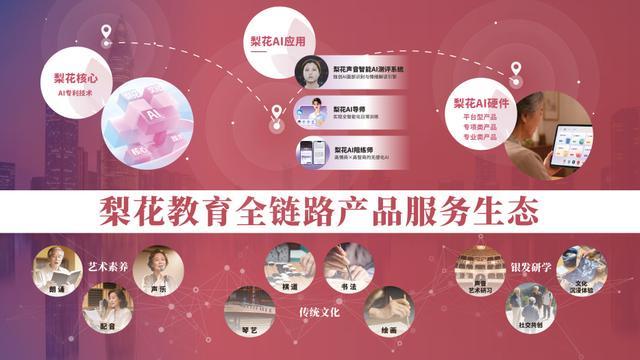
Core Viewpoint - The article discusses the innovative approach of Lihua Education in addressing the psychological barriers and shortcomings of traditional teaching methods for the elderly in art learning, through the introduction of an AI-driven acoustic learning ecosystem tailored for older adults [1][2][15]. Group 1: Psychological Barriers and Teaching Shortcomings - Elderly learners face three main psychological barriers: fear of embarrassment, fear of inconvenience, and fear of failure, which hinder their willingness to participate in art learning [2][15]. - Traditional teaching methods exhibit three significant shortcomings: lack of standardized practice partners, lack of immediate feedback, and lack of psychological support systems, which further complicate the learning experience for older adults [2][15]. Group 2: AI Acoustic Learning Ecosystem - Lihua Education has developed an AI-driven learning ecosystem that includes an AI voice practice partner, AI mentor, AI assessment system, and a dedicated hardware device called the AI acoustic learning machine, creating a closed-loop system for teaching, learning, practicing, assessing, and evaluating [1][5][15]. - The AI voice practice partner utilizes 75 acoustic algorithms and 480 million voice samples to provide personalized feedback, enabling users to improve continuously [5][15]. Group 3: Features of the AI Acoustic Learning Machine - The AI acoustic learning machine can complete a "voice CT scan" in just 15 minutes, analyzing 50 dimensions of a learner's voice and generating a comprehensive report with 19 evaluation items [6][15]. - The device is designed with user-friendly features, including clear sound capture, an eye-friendly display, and simplified operation logic, making it accessible for older adults [7][8][10][11]. Group 4: Cultural and Social Engagement - The learning machine allows users to create audio books, transforming the learning process into a creative and fulfilling experience, thus addressing the deeper needs for cultural expression and social interaction among the elderly [11][13][15]. - Lihua Education aims to enhance the cultural literacy of older adults by providing a platform that not only teaches but also empowers them to express themselves and connect with others through their learning journey [15].
2026年值得期待的十大技术应用都有啥?
Huan Qiu Wang Zi Xun· 2025-12-04 06:38
Core Insights - The article highlights the rapid advancements in technology expected by 2026, including emotional AI, wearable health devices, renewable energy innovations, and more, which are set to transform daily life and work environments [1]. Group 1: Emotional AI and Personalization - Emotional AI assistants are evolving beyond traditional voice assistants like Siri and Alexa, becoming capable of understanding human emotions through tone and expression, thus providing personalized support [2]. - These AI systems are increasingly being integrated into mental health support and personal development, marking a significant shift in the role of technology in daily life [2]. Group 2: Wearable Health Technology - Next-generation wearable devices are anticipated to monitor vital health metrics in real-time, shifting healthcare from reactive to proactive approaches [3]. - Innovations such as smart skin patches and AI watches are expected to provide early warnings for health risks, contributing to personalized health management [3]. Group 3: Renewable Energy Innovations - New night-time solar panels that capture infrared radiation are expected to overcome previous limitations of solar energy, enabling continuous power supply even in darkness [4]. - Advances in lithium-sulfur and solid-state battery technologies are projected to enhance energy storage, significantly improving electric vehicle performance and promoting sustainable transportation [4]. Group 4: Brain-Computer Interfaces - Brain-computer interface technology is moving from medical applications to everyday use, allowing users to control devices through thought, which could revolutionize rehabilitation and enhance daily life [6]. - This technology is expected to play a role in various fields, including prosthetics and augmented reality [6]. Group 5: Space Economy - The space economy is poised for growth, with reduced costs for suborbital flights and the emergence of zero-gravity hotels, indicating a new era of space exploration and commercial opportunities [7]. - Companies are exploring asteroid mining, suggesting a potential new frontier for resource acquisition [7]. Group 6: AI in Education - AI-driven personalized education is set to replace standardized teaching methods, adapting to individual learning styles and enhancing engagement for both children and adults [8]. - This transformation in education is expected to significantly impact workforce adaptability in response to industry changes [8]. Group 7: Quantum Computing - Quantum computing is anticipated to become practical by 2026, potentially solving complex problems beyond the capabilities of classical computers [9]. - Applications in pharmaceuticals and supply chain optimization could drastically reduce costs and timeframes in various industries [9]. Group 8: Smart Cities - The integration of AI and IoT technologies is expected to create smarter cities, improving traffic management, waste collection, and security systems [10]. - These advancements aim to enhance urban living by making cities cleaner, safer, and more efficient [10]. Group 9: Robotics - Robotics technology is expected to permeate everyday life, with applications in kitchens, construction, and elder care, making robots an integral part of daily routines [11]. - The decreasing costs and advancements in AI are driving this trend, leading to widespread adoption of robotic solutions [11]. Group 10: Bioprinting - The bioprinting field is projected to experience significant advancements, enabling the creation of disease models and personalized medical treatments [12]. - This technology could revolutionize organ transplantation and food production, addressing future challenges in healthcare and food security [12].
2026年值得期待的十大技术应用
Ke Ji Ri Bao· 2025-12-04 00:55
Core Insights - The article highlights the rapid advancements in technology expected by 2026, including emotional AI, wearable health devices, renewable energy innovations, and more, which are set to transform daily life and work environments. Group 1: Emotional AI - The next generation of emotional AI assistants is surpassing traditional ones like Siri and Alexa by understanding human emotions through tone, expression, and wording, providing personalized relaxation recommendations and enhancing customer care [2] - Emotional AI is becoming a partner in daily life, playing a significant role in mental health support and personal growth [2] Group 2: Wearable Devices - By 2026, wearable devices are expected to evolve into "life guardians," with smart skin patches monitoring hydration, stress hormones, and nutrition levels, while AI watches can predict heart disease risks days in advance [3] - These innovations are shifting healthcare from reactive treatment to proactive prevention [3] Group 3: Renewable Energy - New night-time solar panels will capture infrared radiation, allowing for continuous power supply even in darkness, while advancements in lithium-sulfur and solid-state battery technologies will enhance energy storage for electric vehicles [4] - 2026 may mark a historical turning point for the decline of fossil fuels as the dominant energy source [5] Group 4: Brain-Computer Interfaces - Brain-computer interface technology is moving from medical applications to everyday use, enabling paralyzed patients to control devices with their thoughts and enhancing work efficiency through instant data retrieval [6] - By 2026, these interfaces will be integrated into daily life, impacting prosthetics, rehabilitation, and augmented reality experiences [6] Group 5: Space Economy - The space economy is set to flourish, with suborbital flight prices dropping below $100,000 and companies developing zero-gravity hotels, indicating a new era of space exploration and commercialization [7] Group 6: AI in Education - AI-driven personalized education is emerging, adapting courses to individual learning styles and helping adults with career transitions, fundamentally reshaping educational approaches [9] Group 7: Quantum Computing - Quantum computing is expected to solve complex problems beyond the capabilities of classical computers, significantly reducing drug development timelines and optimizing supply chains [10] Group 8: Smart Cities - Cities will become smarter by 2026, with AI traffic systems alleviating congestion, IoT-enabled waste management, and predictive security systems enhancing urban living [11] Group 9: Robotics - Robotics will become ubiquitous in households and various work environments, with cooking robots, construction robots, and personal care robots transforming daily tasks [12][13] Group 10: Bioprinting - The bioprinting field is anticipated to achieve significant advancements, enabling the creation of disease models, personalized medicine, and potentially addressing organ donation shortages [14]
AI 意识争议沸腾!2040 年改写日常,关键底线无人敢碰
Sou Hu Cai Jing· 2025-11-29 14:11
Core Viewpoint - The article discusses the ongoing debates surrounding AI, particularly the "AI bubble theory" and "AI consciousness panic," emphasizing that AI is a valuable technological breakthrough rather than a bubble, and it will serve humanity without self-awareness [1][3]. AI Value and Impact - The skepticism regarding the "AI bubble" is fundamentally a short-term misjudgment of technological value, with AI being a tool that condenses human intelligence into accessible and low-cost solutions, expected to create immeasurable value in the next 5 to 10 years [3]. - AI's essence is not to replace but to liberate human time by handling mundane tasks, allowing individuals to engage in more meaningful activities such as artistic creation and personal development [17][19]. AI in Daily Life and Professional Fields - By 2040, AI is predicted to be integrated into daily life through wearable devices, enhancing environmental awareness and automating tasks like grocery ordering and transportation [10]. - In healthcare, a $20 monthly AI service could provide everyone with access to top-tier medical guidance, addressing long-standing resource distribution issues [12]. - The education sector will shift away from traditional degree systems, with AI tutors customizing learning experiences, transforming classrooms into spaces for practical application and critical thinking [15][25]. Societal Implications and Human Adaptation - The widespread adoption of AI is expected to reduce social disparities by providing equal opportunities for development, showcasing the positive potential of technology [19]. - The competition in the AI era will be between those who master AI tools and those who are replaced by them, highlighting the importance of creativity, emotional intelligence, and value judgment as human advantages [27]. - It is crucial to cultivate self-learning abilities and critical thinking in children to prevent over-reliance on AI, ensuring they can face challenges independently [22].

2025年Q3回顾:1.5亿、1.2亿美元… 巨额融资背后,教育科技正迎来AI平台时代
3 6 Ke· 2025-10-09 08:59
Core Insights - The third quarter of 2025 saw significant financing events in the global edtech sector, indicating a return of market confidence and outlining the industry's development trajectory [1] - Capital is prioritizing platform companies that deeply integrate artificial intelligence into their core products and have global operational ambitions, while innovative models addressing key pain points in vertical niches are also gaining market favor [1] Group 1: Major Financing Trends - Several financing rounds exceeding $100 million have set the tone for the industry, highlighting a capital preference for platform companies with scale effects and ecosystem-building capabilities [2] - Lingokids raised $120 million, solidifying its position as a leading interactive application for children aged 2-8, marking a strategic shift from a "single IP application" to a "multi-IP platform" [3] - Eruditus, supported by SoftBank, completed a $150 million refinancing, demonstrating that later-stage companies with stable cash flows and strong partner networks can still attract significant support [4] - MyEdSpace secured €12.8 million in A-round financing, aiming to expand into the U.S. market with a hybrid model combining top teachers, scalable technology, and social media [5] Group 2: AI Integration and Innovation - AI applications are becoming diverse and deeply integrated, serving as the core driving force behind this round of financing [6] - Startups focusing on AI-driven personalized tutoring, such as Arivihan and Edumentors, have also attracted considerable funding, showcasing the demand for automated and highly interactive AI tutors [7] - Companies like Paddy and The Invigilator are leveraging AI to empower educators and institutions, addressing issues like teacher workload and academic integrity [8] Group 3: Global Expansion and Vertical Innovation - Companies are increasingly adopting globalization as a core strategy, with examples like MyEdSpace entering the U.S. market and Evulpo expanding into seven countries [9] - Vertical innovation is also prominent, with companies like Honor Education and Seekho utilizing AI and short video formats to enhance learning outcomes and engagement [10] Group 4: Capital Market Dynamics - The financing landscape reflects a more rational and focused attitude in the capital market, with funds concentrating on leading companies with validated business models [11] - Investors are increasingly prioritizing measurable metrics such as user engagement and financial health, indicating a shift towards sustainable growth and profitability [11] - The competitive landscape in the edtech sector is evolving towards a comprehensive contest of "AI core × globalization capability × vertical depth," with companies excelling in these areas poised to reshape global education [11]
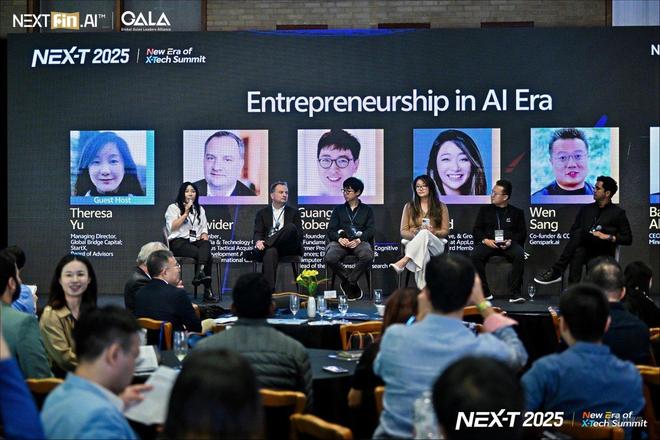
AI创业浪潮席卷全球,如何避免陷阱,抓住机遇?| NEX-T Summit 2025
Tai Mei Ti A P P· 2025-10-09 08:20
Core Insights - The AI wave is reshaping every industry, leading to a surge in AI-related startups that present both opportunities and challenges for entrepreneurs [1][2]. Opportunities in AI - Key opportunities lie in addressing inefficiencies in various sectors, particularly in areas that remain "low efficiency" despite AI applications [4][5]. - Entrepreneurs should focus on practical implementations of AI to drive meaningful revenue growth rather than chasing the elusive "trillion-dollar company" dream [5][19]. - The concept of "results-oriented AI" is emphasized, highlighting the need for effective application of AI tools to achieve tangible outcomes [6][17]. - Vertical market efficiency is identified as a significant opportunity, where startups can solve niche problems that larger companies may overlook [6][18]. Traps in AI Entrepreneurship - A major trap is the failure to apply AI in a way that delivers useful results, with a high failure rate of current AI applications indicating many remain in the "toy" phase [6][9]. - The competitive landscape is increasingly dominated by tech giants, raising concerns about the viability of new startups becoming the next major players [6][18]. - The rapid pace of AI development means that traditional competitive advantages, or "moats," may not be sustainable, necessitating continuous innovation and adaptation [7][24]. Industry Transformation - AI is fundamentally transforming industries, with media moving towards AI-generated content and personalized content aggregation [9][26]. - In advertising, AI is enhancing recommendation systems and creative intelligence, leading to more effective ad placements and faster iterations [10][29]. - The gaming industry is also experiencing significant efficiency gains through AI, allowing smaller teams to compete with larger companies by leveraging AI tools [10][35]. Commercialization of AI - The commercialization of AI requires bridging the gap between technological vision and practical business models, as many startups struggle to monetize their innovations effectively [11][28]. - Entrepreneurs are encouraged to focus on solving real problems and improving efficiency rather than solely pursuing grand technological ambitions [11][27].