Qian Zhan Wang

Search documents
收藏!一文读懂2025年兰州市发展情况(民生篇)城镇化率高 人均可支配收入增速超全国水平
Qian Zhan Wang· 2025-11-05 02:16
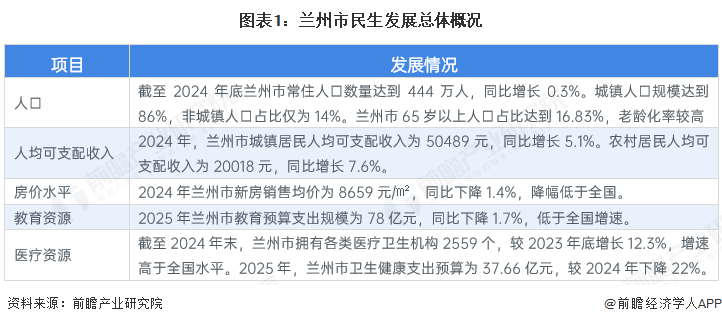
Group 1: Overview of Lanzhou's Development - As of the end of 2024, Lanzhou's permanent resident population reached 4.44 million, with a year-on-year growth of 0.3% [2][8] - The urban population accounts for 86%, indicating a high urbanization rate, while the elderly population (65 years and older) constitutes 16.83% [2][8] - Lanzhou's per capita disposable income for urban residents in 2024 is 50,489 yuan, a year-on-year increase of 5.1%, while rural residents' income is 20,018 yuan, increasing by 7.6% [2][19] Group 2: Housing Market - The average new housing price in Lanzhou for 2024 is 8,659 yuan/m², reflecting a year-on-year decrease of 1.4%, which is lower than the national average [4][24] - Housing prices in the Chengguan and Qilihe districts exceed 10,000 yuan/m², while prices in Gaolan County and Yongdeng County are below 5,000 yuan/m² [28] Group 3: Education Resources - Lanzhou's education budget for 2025 is projected to be 7.8 billion yuan, a decrease of 1.7% compared to the previous year, which is lower than the national growth rate [31][32] - Yongdeng County leads in education budget expenditure, with over 700 million yuan allocated for 2025 [35] Group 4: Healthcare Resources - By the end of 2024, Lanzhou has 2,559 medical and health institutions, marking a 12.3% increase from 2023, which is higher than the national growth rate [37] - The healthcare budget for Lanzhou in 2025 is set at 3.766 billion yuan, a decrease of 22% from 2024 [39][43]

意外!全国唯一房价暴涨的小县城,找到逆天改命的终极路子
Qian Zhan Wang· 2025-11-04 11:41
Group 1: Market Performance - The housing prices in Dingbian County have increased significantly, with new residential property prices surpassing 5000 yuan per square meter by October 2025, up from less than 4000 yuan per square meter in 2022, marking a cumulative increase of over 25% in three years [1] - This price surge occurs amidst a nationwide real estate market adjustment, where most first and second-tier cities are experiencing price declines [1] Group 2: Demographic Trends - Dingbian County is one of the few counties in China with a continuously growing population, having added 30,000 residents since 2011, contrasting with the population decline in approximately 1480 counties across the country [5] - The county has a relatively young population, with 63.93% of residents aged between 15 and 59, which is higher than the national average, indicating a strong potential home-buying demographic [7] Group 3: Urbanization and Economic Factors - Dingbian County's urbanization rate is at 53%, significantly below the national average of 67%, suggesting ongoing housing demand as rural populations transition to urban areas [9] - The county is a leading oil and gas production area, contributing 3% of China's total oil and gas output, which has created substantial wealth and economic growth [10][11] Group 4: Industrial Development - The local government is actively diversifying the economy to reduce reliance on oil and gas, focusing on renewable energy development, particularly wind and solar power [14] - Dingbian County has successfully attracted major companies in the renewable energy sector, establishing a complete supply chain from power generation to equipment manufacturing [15][17] Group 5: Future Opportunities - The county is positioning itself to capitalize on the storage sector, particularly lithium-ion battery technology, which is crucial for the sustainable development of the renewable energy industry [21][22] - Dingbian County aims to develop a comprehensive energy storage ecosystem, focusing on system integration and specific application scenarios to enhance its competitive edge in the energy transition [25][27]
马斯克预言:5年后不再有手机和App,AI将在1-2年内大规模取代编程和内容创作类工作【附人工智能行业市场分析】
Qian Zhan Wang· 2025-11-04 07:06
Group 1 - Elon Musk predicts that in the next five to six years, most content consumed by humans will be AI-generated, leading to a transformation of smartphones into AI reasoning "edge nodes" [2] - Musk envisions a future where traditional operating systems and apps will be obsolete, with devices primarily serving to display content generated through real-time interaction between server-side and device-side AI [2] - Alibaba CEO Wu Yongming shares a similar vision, stating that natural language will become the source code of the AI era, allowing anyone to create their own agents using natural language [2] Group 2 - Jobs such as email processing and customer service are rapidly disappearing, while programming and content creation are expected to be largely replaced within 1-2 years [3] - Amazon plans to lay off approximately 14,000 employees globally while increasing AI deployment, indicating a shift in workforce needs [3] - A recent study from Stanford economists shows that generative AI has significantly lowered employment rates for young people in highly automatable job types in the U.S. [3] Group 3 - The global AI industry market size reached $538.1 billion in 2023, with a compound annual growth rate of 19.21% over three years [5] - The rapid penetration of AI across various industries is attributed to the maturity of technology, supply of computing power, and capital investment, creating a feedback loop that accelerates market growth [6][9] - Industries such as internet, telecommunications, government, finance, and manufacturing are leading in AI penetration, with significant investments also seen in transportation, services, and education [4]


2025年全球OLED行业发展现状分析 柔性OLED出货量增长迅速【组图】
Qian Zhan Wang· 2025-11-03 04:33
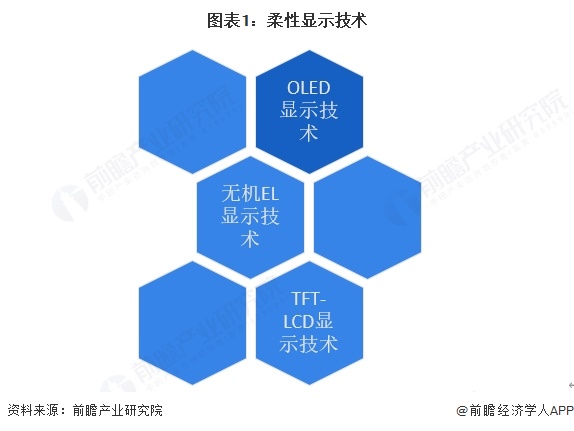
Core Insights - The flexible OLED technology is currently the most ideal flexible display technology, with various other technologies also being explored in the display field [1] Market Overview - The global AMOLED panel market reached a size of $42 billion in 2021, marking a year-on-year growth of 37.7%. However, in 2023, the market experienced a slight decline due to weak overall demand in consumer electronics, particularly in the high-end segment like large OLED TVs. A strong rebound is expected in 2024, with the market size projected to exceed $48 billion [2] Shipment Growth - Global shipments of OLED smartphone panels are expected to reach 850 million units in 2024, representing a year-on-year increase of 25.3%. Among these, flexible OLED shipments are projected to be 633 million units, reflecting a growth of 19.2% [5] Chinese Market Dynamics - In the flexible OLED shipment landscape, BOE leads with 71 million units, followed by Tianma and Huaxing Optoelectronics with 43.2 million and 41 million units respectively, indicating strong competition among Chinese manufacturers [6] Global Competitive Landscape - Samsung Display and BOE are the leading players in the global flexible OLED market, with Samsung's shipment volume reaching 86.6 million units and BOE's at approximately 71 million units in the second quarter of 2025 [9]


收藏!一文带你看2025年兰州市发展情况(经济篇)2024年GDP增速领跑全国,城关区优势明显
Qian Zhan Wang· 2025-11-03 02:50
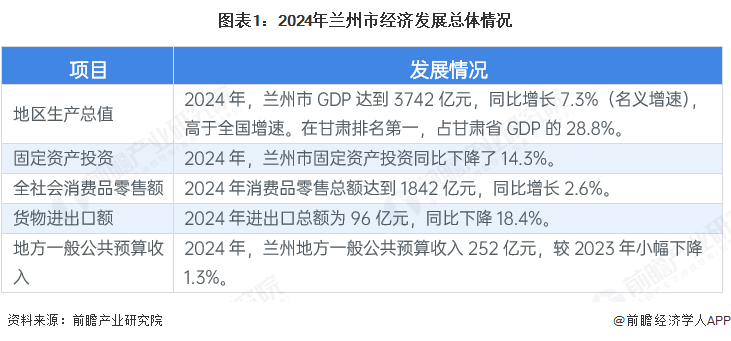
Economic Development Overview - In 2024, Lanzhou's GDP reached 374.2 billion, with a nominal growth rate of 7.3%, surpassing the national growth rate of 4.2% and the average growth rate of new first-tier cities at 5.1% [2][11] - Lanzhou's fixed asset investment decreased by 14.3% year-on-year in 2024, indicating a slowdown compared to previous years [3][20] - The total retail sales of consumer goods in Lanzhou reached 184.2 billion in 2024, with a year-on-year growth of 2.6% [3][29] - The total import and export volume in Lanzhou was 9.6 billion in 2024, down 18.4% year-on-year, but the city has significant potential for future growth due to its trade platforms [3][34] - Lanzhou's local general public budget revenue was 25.2 billion in 2024, showing a slight decline of 1.3% compared to 2023 [3][39] Regional Economic Performance - The Chengguan District led Lanzhou with a GDP of 125.3 billion in 2024, growing by 5.2% year-on-year [5][7] - The Lanzhou New Area exhibited the highest GDP growth rate at 19.8% in 2024 [5][14] - The retail sales in Chengguan District reached 96.76 billion in 2023, marking a significant year-on-year increase of 12.7% [7][30] - The local public budget revenue in Chengguan District was 3.61 billion in 2024, ranking first among all districts [7][41] Investment Trends - Fixed asset investment in Lanzhou has shown volatility since 2019, with a notable decline of 14.3% in 2024, which is below the average growth rate of new first-tier cities [20][22] - In 2023, Yongdeng County and Gaolan County reported higher fixed asset investment growth rates, while several districts experienced negative growth [23][20] Consumer Market Dynamics - Lanzhou's retail sales of consumer goods have shown a fluctuating growth trend, with a total of 184.2 billion in 2024, indicating room for further development compared to new first-tier cities [27][29] - Chengguan District led in retail sales, while Anning District and Yuzhong County recorded impressive growth rates of 14% in 2023 [30][30] Trade and Export Potential - Lanzhou's import and export volume has shown a declining trend, with a total of 9.6 billion in 2024, but the city has strong potential for future trade growth due to its strategic location [34][35] - The trade deficit has been gradually narrowing since 2022, indicating improvements in export performance [36][34] Public Budget Revenue - Lanzhou's local general public budget revenue has remained above 22 billion since 2019, with a total of 25.2 billion in 2024, reflecting a slight decline [39][41] - Chengguan District had the largest budget revenue, while Anning District achieved the highest growth rate in 2024 [41][41]
【行业深度】洞察2025:中国代糖行业竞争格局及市场份额(附营收排名、企业竞争力评价等)
Qian Zhan Wang· 2025-10-31 04:32
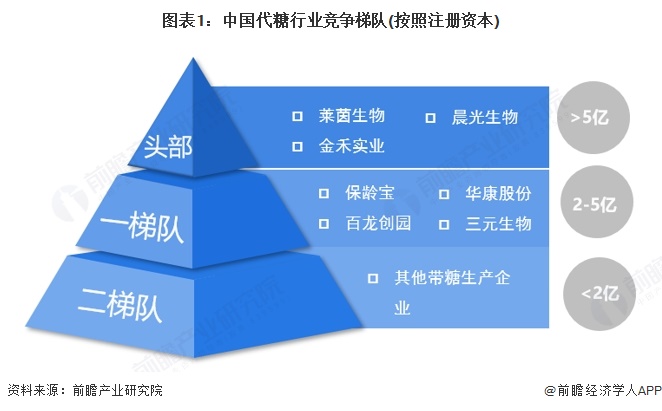
Group 1: Industry Overview - The Chinese sugar substitute industry has a competitive hierarchy, with companies having registered capital exceeding 500 million yuan, such as Rhein Biotech, Jinhui Industrial, and Morning Light Biological, while those with capital between 200 million to 500 million yuan include Baolingbao and Bailong Chuangyuan [1] - The primary production regions for sugar substitute companies in China are Shandong, Hebei, and Anhui provinces, with Shandong housing the most companies, including Sanyuan Biological, Baolingbao, and Bailong Chuangyuan [1] Group 2: Revenue Rankings - In 2024, Huakang Co., Ltd. leads the revenue ranking among listed sugar substitute companies in China, with sales exceeding 1.9 billion yuan. Baolingbao, Rhein Biotech, and Sanyuan Biological follow, each with revenues exceeding 500 million yuan [5] Group 3: Industry Concentration - The concentration levels in the sugar substitute industry are high for products like sucralose, aspartame, and sugar alcohols. Major manufacturers of sucralose include Jinhui Industrial and Shandong Kangbao, while aspartame is primarily produced by companies like Hanguang Sweeteners and the Vito Company [8] Group 4: Company Layout - Companies like Sanyuan Biological and Huakang Co., Ltd. have a high proportion of their business in sugar substitutes. Many companies focus on sugar alcohol products, with Huakang Co., Ltd. producing over 170,000 tons of crystalline sugar alcohol [9][11] - Key sales markets for Chinese sugar substitute companies include China, the Americas, Europe, and Japan and South Korea [9] Group 5: Competitive Analysis - The competitive state of the sugar substitute industry in China shows moderate competition among existing firms, with a significant threat from potential new entrants due to growing health demands [12] - The bargaining power of upstream suppliers is strong, as the main raw materials are sourced from starch and chemical raw material companies, which are generally larger than the sugar substitute manufacturers [12] - The bargaining power of downstream customers is relatively weak, especially for small clients, while industry leaders maintain some pricing power [12]


未来10年再造一个中国高技术产业,生物制造重磅入选“十五五规划”未来产业【附合成生物学行业市场分析】
Qian Zhan Wang· 2025-10-29 07:47
Core Insights - The Chinese government has officially recognized biomanufacturing as one of the seven key future industries, alongside quantum technology and hydrogen energy, aiming to establish a high-tech industrial framework [2] - Biomanufacturing is positioned as a critical driver for industrial upgrading and high-quality economic development in China, comparable in importance to semiconductor manufacturing [2] Biomanufacturing Overview - Biomanufacturing utilizes industrial biotechnology to transform living cells into production facilities, converting renewable raw materials into high-value products such as pharmaceuticals, vaccines, biodegradable plastics, and synthetic fuels [2] Gene Editing Industry Analysis - Gene editing is a core technology supporting biomanufacturing, with applications in agriculture and disease treatment [3][4] - In agriculture, gene editing has been successfully applied to develop high-yield, disease-resistant crop varieties and improve livestock breeds [4] - In the medical field, gene editing shows potential in treating genetic diseases and cancers, providing new therapeutic options [4] Synthetic Biology Industry Analysis - Synthetic biology acts as an accelerator for biomanufacturing, impacting various sectors including energy, materials, and pharmaceuticals [8] - It is projected that 35% of petrochemical and coal chemical products could be replaced by biomanufactured products in the next decade, leading to significant economic implications [8] - The global market for synthetic biology in China was approximately $937 million in 2022, with expectations for rapid growth [11] Future Impact and Market Potential - Biomanufacturing is expected to revolutionize manufacturing processes, agricultural practices, and natural product sourcing [13] - By the end of the century, biomanufacturing could account for one-third of global manufacturing output, creating a market valued at $30 trillion [14]

遥遥领先!比尔·盖茨:中国核能投资额是全球其他国家总和两倍,核裂变有望成为最经济发电方式【附核电行业发展趋势分析】
Qian Zhan Wang· 2025-10-29 07:02
Core Insights - Bill Gates highlighted China's growing challenge to the U.S. and other countries in the nuclear energy sector, particularly in nuclear fusion and fission research, with China's investment in nuclear fusion being twice that of the rest of the world combined [2] - The U.S. is facing a surge in electricity demand, with nuclear power spending projected to increase by $350 billion due to rising needs from data centers, AI, heat pumps, and electric vehicles [2] - Nuclear energy is seen as a viable solution to meet the electricity demands of data centers while reducing power costs, with nuclear fission or fusion potentially becoming the most economical power generation method in the long term [2] Nuclear Energy Characteristics - Nuclear power, driven by nuclear fission, is characterized by zero carbon emissions, high energy density, and stable output, making it a key energy source for sustainable development [3] - The three main methods for achieving nuclear fusion include solar fusion (gravitational confinement), magnetic confinement fusion, and laser inertial confinement fusion, with the latter two being crucial for controlled nuclear fusion [3] China's Nuclear Power Development - China's nuclear power journey began in the mid-1950s and has evolved through various stages, currently focusing on independent research and development, achieving world-leading levels in third-generation nuclear technology [4] - As of January 2024, China leads globally with over 20,000 MWe of nuclear power capacity under construction, significantly ahead of other regions [6] - By the end of 2023, China had 55 operational nuclear reactors with a total capacity of 57,031.34 MWe, with Guangdong, Fujian, and Zhejiang being the top three provinces in terms of capacity [8] Future Outlook - China's rise in the nuclear energy sector reflects both technological strength and successful national strategic planning, with continued investment in nuclear research and innovation expected to contribute to global energy development [10]
前瞻全球产业早报:全面实施“人工智能+”行动
Qian Zhan Wang· 2025-10-28 23:08
Group 1: National Economic and Technological Development - The 15th Five-Year Plan emphasizes strengthening original innovation and key core technology breakthroughs in critical areas such as integrated circuits, industrial mother machines, high-end instruments, and advanced materials [2] - The plan aims to enhance the strategic, forward-looking, and systematic layout of basic research, increasing the proportion of investment in basic research and providing long-term stable support [2] - It highlights the need for a new type of national system to promote decisive breakthroughs in key core technologies across various sectors [2] Group 2: Artificial Intelligence and Digital Economy - The plan includes a comprehensive implementation of the "Artificial Intelligence +" initiative, aiming to integrate AI with various industries, cultural development, and social governance [3] - It focuses on deepening the integration of the real economy and digital economy, promoting industrial internet innovation, and enhancing the supply of computing power, algorithms, and data [3] - The initiative seeks to establish a robust regulatory framework for AI governance, including laws, policies, and ethical guidelines [3] Group 3: Emerging Technologies and Economic Growth - The plan outlines a forward-looking layout for future industries, promoting quantum technology, biomanufacturing, hydrogen energy, nuclear fusion, brain-computer interfaces, and sixth-generation mobile communication as new economic growth points [3] - It encourages the development of innovative regulatory methods and venture capital to support the growth of future industries and the cultivation of unicorn companies [3] Group 4: Energy and Infrastructure Developments - The world's highest pumped storage power station, with a total installed capacity of 1.35 million kilowatts, has been fully commissioned in Jiangsu, China, enhancing clean energy regulation in the Yangtze River Delta [4] - The station is designed to store energy during low demand and release it during peak demand, with an estimated annual power generation of 1.35 billion kilowatt-hours [4] Group 5: Investment and Strategic Partnerships - Foxconn plans to invest up to $1.37 billion in an AI computing cluster and a supercomputing center, indicating a significant commitment to AI infrastructure [7] - Longqi Technology and Zhiyuan Robotics have formed a strategic partnership to enhance the application of embodied intelligent robots in industrial settings [8] - Xiaomi has established a new department focused on the next generation of smart electric vehicle technology architecture, reflecting its commitment to R&D [9] Group 6: Market Developments and International Trade - India has approved projects worth approximately $6.26 billion to boost its electronic components manufacturing industry, including multiple projects from Kaynes Circuits India [11] - A new multi-modal transport route has been established between the Beijing-Tianjin-Hebei region and Greece, enhancing international logistics efficiency [6]

【投资视角】启示2025:中国农业机械行业投融资及兼并重组分析(附投融资事件、产业园和兼并重组等)
Qian Zhan Wang· 2025-10-28 03:09
Core Insights - The article discusses the financing, investment, and merger and acquisition activities within the Chinese agricultural machinery industry, highlighting key players and trends in the sector. Financing Activities - Listed companies in the agricultural machinery sector primarily use financing to supplement working capital and repay debts. Major financing events from 2021 to 2023 include: - Jifeng Technology raised 612 million yuan through a private placement in April 2025 for working capital [1] - Zoomlion issued short-term financing bonds worth 12 billion yuan in March 2023 for working capital [1] - Yiteng Technology borrowed 10 million yuan from non-related parties in June 2022 for daily operations [1] Investment Activities - As of 2025, representative companies have conducted over 100 investment events, with Zoomlion and Leo Group leading in the number of investments, exceeding 40 and 30 events respectively [2] - Notable investments include: - Jifeng Technology invested in multiple subsidiaries, including a 51% stake in Shenzhen Jifeng Intelligent Equipment Co., Ltd. [3] - Leo Group has made significant investments in various sectors, including a 100% stake in Zhejiang Leo Medical Equipment Co., Ltd. [4] Purpose of Investments - The primary objectives of external investments by agricultural machinery companies are to expand business scale and diversify operations. Examples include: - Leo Group's investment in Zhejiang Leo Medical Equipment Co., Ltd. for diversification [8] - Jifeng Technology's investment in Chengdu Nongjihui Agricultural Technology Co., Ltd. to expand its business scale [9] Industry Park Development - The number of agricultural machinery-related industrial parks in China is increasing, with significant investments exceeding 6 billion yuan from companies like Xingguang Agricultural Machinery and Zoomlion [10] - Notable projects include: - The establishment of the Hubei Agricultural Machinery Equipment Recycling Industrial Park with a total investment of 500 million yuan [12] - The construction of the Dazhou Hilly Area Modern Agricultural Equipment Industrial Park, which began in September 2023 [12] Mergers and Acquisitions - The agricultural machinery industry has seen numerous mergers and acquisitions aimed at expanding the scale of midstream enterprises. Key events include: - Jifeng Technology's acquisition of a 48.9943% stake in Liaoning Huifeng Agricultural Machinery City to enhance control and operational efficiency in Northeast China [15] - Kubota's acquisition of Bloomfield Robotics to integrate advanced AI imaging technology into its agricultural equipment [15] Summary of Investment and M&A Trends - The financing activities of listed companies are primarily aimed at supplementing working capital. External investments focus on expanding business scale and diversifying operations. The industry is also witnessing a rise in mergers and acquisitions, primarily for scale expansion and diversification [17]