Qian Zhan Wang

Search documents
卖不动了?保时捷销售利润暴跌99%,一季度亏损80亿元!国人更爱国产科技豪华车【附新能源汽车行业市场分析】
Qian Zhan Wang· 2025-10-27 11:56
Core Viewpoint - Porsche is experiencing a significant decline in sales and profits, particularly in the Chinese market, which has shifted from being its largest market to its biggest burden, leading to a critical moment for the brand [2][3]. Financial Performance - In the first three quarters of 2025, Porsche reported revenues of approximately €26.86 billion, a year-on-year decrease of 6% [2]. - The operating profit plummeted to €40 million, down 99% from €4.035 billion in the same period last year [2]. - The third quarter alone recorded a loss of €966 million, equivalent to about 8 billion RMB [2]. Market Challenges - The decline in the Chinese market is attributed to challenging market conditions and intense competition, with sales dropping 28% from 29,551 units in 2024 to 21,302 units in 2025 [3]. - Porsche's product strategy is lagging in the face of the smart and electric vehicle transition, resulting in a lack of competitiveness in the Chinese market [3][8]. - The company is facing pressure from domestic brands like BYD and NIO, which are offering high-performance, intelligent, and rapidly iterating electric vehicles [3][8]. Strategic Adjustments - To address the downturn, Porsche plans to delay the launch of electric models, terminate its battery production plans, and incur a restructuring cost of €2.7 billion [2]. - The company anticipates a tariff expenditure of €700 million this year and intends to raise prices in the U.S. to cope with these tariffs [2]. Industry Trends - The Chinese electric vehicle market is rapidly growing, with a penetration rate reaching 31.6% in 2023, and expected to rise to 40.3% in 2024 [4]. - The market for smart electric vehicles, AI technology, and digital automotive platforms is identified as key growth areas for the future [6]. - Traditional luxury brands must adapt to the evolving market trends in China, focusing on product and technology innovation to maintain competitiveness [8].

【最全】2025年农业机械行业上市公司全方位对比(附业务布局汇总、业绩对比、业务规划等)
Qian Zhan Wang· 2025-10-27 09:09
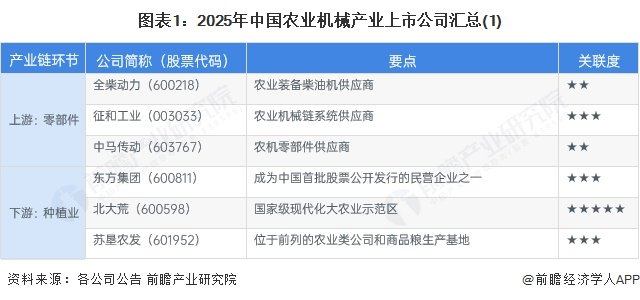
Summary of Key Points Core Viewpoint - The article provides a comprehensive overview of the agricultural machinery industry in China, highlighting key listed companies, their revenue performance, business layouts, and future planning strategies. Group 1: Overview of Listed Companies - The agricultural machinery industry in China includes upstream companies like QuanChai Power and Zhenghe Industrial, midstream companies such as Jifeng Technology and Xinguang Agricultural Machinery, and downstream companies like Dongfang Group and Beidahuang [1][2]. Group 2: Company Revenue and Performance - In 2024, major companies in the agricultural machinery sector include: - Zhonglian Heavy Industry: Revenue of 454.78 billion - Yituo Co., Ltd.: Revenue of 118.56 billion - Jifeng Technology: Revenue of 27.09 billion - Other companies have varying revenues, with the lowest being Xinguang Agricultural Machinery at 2.69 billion [4][16]. Group 3: Business Layout and Focus Areas - Companies like Yituo Co., Ltd. and Jifeng Technology have over 90% of their business focused on agricultural machinery, with a significant emphasis on tractors and harvesters [14]. - Zhonglian Heavy Industry focuses on high-end agricultural machinery, while other companies like Xinguang Agricultural Machinery specialize in specific products like combine harvesters [15]. Group 4: Employee and Patent Information - Zhonglian Heavy Industry employs over 30,000 people, with 10,724 being technical staff, and holds the most patents in the industry at 4,399 [8][9]. - Other companies have varying employee counts and patent holdings, indicating a diverse range of capabilities within the sector [10]. Group 5: Future Business Planning - Companies are focusing on new product development, expanding overseas markets, and enhancing technology. For instance, Yituo Co., Ltd. aims to improve product quality and develop export-oriented products, while Jifeng Technology plans to leverage its network for promoting high-end agricultural machinery [17]



等效扩大3倍中国森林!格力朱磊:如全球在2050年前广泛使用格力零碳源技术,我们有望为地球降温0.5度【附白色家电行业市场分析】
Qian Zhan Wang· 2025-10-27 08:29
Group 1 - Gree Electric Appliances emphasizes technology innovation as the core driver of its development, having received 99 significant awards and holding 96,626 domestic and international patents, including over 49,549 invention patents [3] - The company achieved a research and development investment of 6.529 billion yuan in 2021, marking a year-on-year increase of 5.07%, which supports its technological advancements [3] - Gree's participation in the global cooling competition aimed to reduce air conditioning energy consumption by over 80%, winning a prize of 500,000 USD and potentially contributing to a 0.5-degree reduction in global temperatures by 2050 if its zero-carbon technology is widely adopted [2] Group 2 - The Chinese white goods industry has transitioned from imitation to leading global trends, with the country being the largest home appliance manufacturing nation, producing over 50% of global refrigerators and washing machines, and approximately 80% of air conditioners [5] - The industry is undergoing a transformation driven by dual carbon goals and smart manufacturing, leading to a necessary shift towards green, intelligent, and high-end upgrades [7] - The average research and development intensity in the air conditioning sector reached 3.8% in 2023, significantly exceeding the overall level of the home appliance manufacturing industry [2]

前瞻全球产业早报:中国发现亿吨级新页岩油增储阵地
Qian Zhan Wang· 2025-10-24 15:58
Group 1 - The 20th Central Committee of the Communist Party of China emphasizes the need to boost consumption and expand effective investment to build a strong domestic market and accelerate the construction of a new development pattern [2] - The meeting highlights the importance of integrating investment in goods and people, promoting a virtuous cycle between supply and demand, and enhancing the internal dynamics and reliability of domestic circulation [2] - The meeting calls for breaking down barriers to the construction of a unified national market [2] Group 2 - A new shale oil reserve with a resource volume of over 100 million tons has been discovered in the Sichuan Basin, with the test well producing 38.64 cubic meters of shale oil and 10,000 cubic meters of natural gas per day [3] - The first domestically developed large dual-fuel passenger and roll-on/roll-off ship has been delivered, capable of using both fuel oil and cleaner liquefied natural gas, with a capacity for 1,800 passengers and over 550 vehicles [3] - XINWANDA has launched a new generation of solid-state batteries with an energy density of 400Wh/kg and a cycle life of 1,200 weeks under ultra-low external pressure [5] Group 3 - ByteDance has introduced a 3D generative model, Seed3D 1.0, which can create high-quality simulation-level 3D models from a single image using an innovative Diffusion Transformer architecture [6] - Cainiao has officially entered the "hourly delivery" era, expanding its services to provide "warehouse and delivery within an hour" in major cities across China [7] - JD.com has announced the name of its new car model, "Aion UT super," which features a range of 500 kilometers and is the first to be equipped with the "GAC Huawei Cloud Car Machine" [8] Group 4 - Huawei's product release roadmap has been revealed, with the Pura 90 series expected to debut in April 2026, marking the 20th anniversary of the original iPhone [9] - A new chip based on resistive random-access memory has been developed, achieving high precision and scalability, with a computational throughput and energy efficiency significantly improved over current top digital processors [10] - Tesla plans to build a production line for 1 million Optimus robots, with the prototype expected to be showcased in early 2024 [10] Group 5 - OpenAI and Oracle have announced the construction of a data center in Wisconsin as part of the "Stargate" project to maintain a competitive edge in the global AI race [11] - JERA has agreed to acquire upstream assets in the Haynesville shale basin in Louisiana for $1.5 billion [17] - The Shanghai Stock Exchange has updated the IPO review status of China Electronics Technology Blue Sky Technology Co., Ltd. to "inquired" [18]
美国车企拆完小米SU7承认做得不错,却点破中国电动车不可复制:零资本成本+低人力 【附新能源汽车产业链分析】
Qian Zhan Wang· 2025-10-24 09:27
Core Insights - The article highlights the increasing interest of American electric vehicle (EV) companies, particularly Rivian, in China's automotive technology, as evidenced by Rivian's CEO dismantling a Xiaomi SU7 to study its technology and cost structure [2] - It emphasizes China's robust automotive supply chain, particularly in the EV sector, which has led to significant cost advantages and technological advancements [2][6] Group 1: Industry Development - China's automotive industry has evolved rapidly, achieving a per capita vehicle ownership of approximately 225 vehicles by 2020, compared to the longer time taken by countries like the US to reach similar levels [5] - As of mid-2024, the number of new energy vehicles (NEVs) in China reached 24.72 million, with pure electric vehicles accounting for over 73% of this total [5] Group 2: Cost Structure and Market Dynamics - The average price of Chinese NEVs has dropped below 160,000 yuan, a decrease of over 8% from the previous year, while battery costs have fallen by 15% compared to 2022 [6] - The reduction in prices is attributed to the maturity of the supply chain and favorable government policies, including subsidies and tax exemptions, which have made NEVs more accessible to consumers [6] Group 3: Competitive Advantages - China's NEV sector benefits from a strong supply chain, high industry concentration, and a large market scale that fosters rapid technological iteration [8]

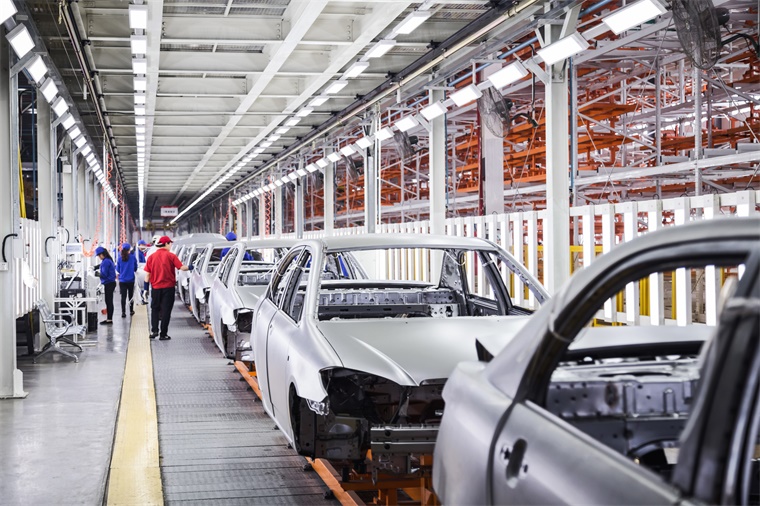
买电车还是油车?院士:火灾发生率相差不大,但新能源汽车起火强度远超传统燃油车【附新能源汽车行业市场分析】
Qian Zhan Wang· 2025-10-24 07:51
Group 1 - The core viewpoint of the article highlights the fire risk associated with electric vehicles (EVs) compared to traditional fuel vehicles, noting that while the fire occurrence rate for EVs is similar to that of fuel vehicles, the intensity and difficulty of extinguishing fires in EVs are significantly higher [2] - The battery is identified as a critical component in the safety and overall structure of the EV industry, with battery manufacturing holding a dominant position in the supply chain, accounting for over 40% of the value in the Chinese EV industry chain by 2024 [3][5] - China holds a leading position in the global EV battery market, supplying two-thirds of the world's demand, with companies like CATL and BYD establishing comprehensive advantages in technology, production capacity, cost, and supply chain [7] Group 2 - The market for EVs has experienced explosive growth, with a penetration rate of 31.6% in 2023, projected to rise to 40.3% in early 2024, and a retail growth rate of 24.4% in the first nine months of the year [8] - Despite the rise of EVs, fuel vehicles remain relevant, particularly in long-distance transport and low-temperature environments, indicating a coexistence of both vehicle types in the market [9] - Industry leaders predict that within the next decade, electric vehicles will dominate the market in China, with an expected 90%-95% share of new car sales, outpacing the global transition to electrification [9]



前瞻全球产业早报:首颗“雄安造”卫星完成生产下线
Qian Zhan Wang· 2025-10-23 10:47
Economic Performance - Beijing's GDP for the first three quarters grew by 5.6%, reaching 38,415.9 billion yuan, with the primary industry decreasing by 1.1%, the secondary industry increasing by 4.0%, and the tertiary industry growing by 5.8% [3] - Shanghai's GDP for the same period increased by 5.5%, totaling 40,721.17 billion yuan, with the primary industry growing by 0.9%, the secondary industry by 3.9%, and the tertiary industry by 5.9% [6] Infrastructure and Technology Development - The first "Xiong'an-made" satellite, "Xiong'an No. 1," has completed production, marking a significant advancement in the intelligent manufacturing capabilities of the aerospace information industry in Xiong'an New Area [4] - Foxconn's energy storage project has achieved mass production, with an annual capacity expected to reach 3 GWh [8] Trade and Market Trends - The price of 92-octane gasoline is expected to drop back to the 6 yuan mark, marking a four-year low since 2021, as domestic oil prices are set to decrease by 320 yuan per ton [5] - The Hong Kong-Zhuhai-Macao Bridge has seen cumulative import and export values reach 1.24 trillion yuan since its opening, with monthly averages increasing from 4.1 billion yuan to over 25.4 billion yuan [7] Corporate Developments - Yushu Technology has changed its name to "Yushu Technology Co., Ltd." as part of its ongoing business development [8] - Meta has formed a joint venture with Blue Owl Capital to develop a data center project in Louisiana, with a total development cost of approximately 27 billion dollars [12] - Samsung and SK Hynix showcased their latest HBM4 chips, indicating fierce competition in the sixth-generation AI chip market [11] Investment and Financing - Guoyan New Energy has completed a 50 million yuan Series B financing round, which will be used for capacity expansion and product development [13] - The company "Saina Biotechnology" has successfully completed a new round of financing exceeding 100 million yuan [13] Stock Market Performance - A-shares saw a collective decline, with the Shanghai Composite Index down by 0.07%, the Shenzhen Component Index down by 0.62%, and the ChiNext Index down by 0.79% [14]
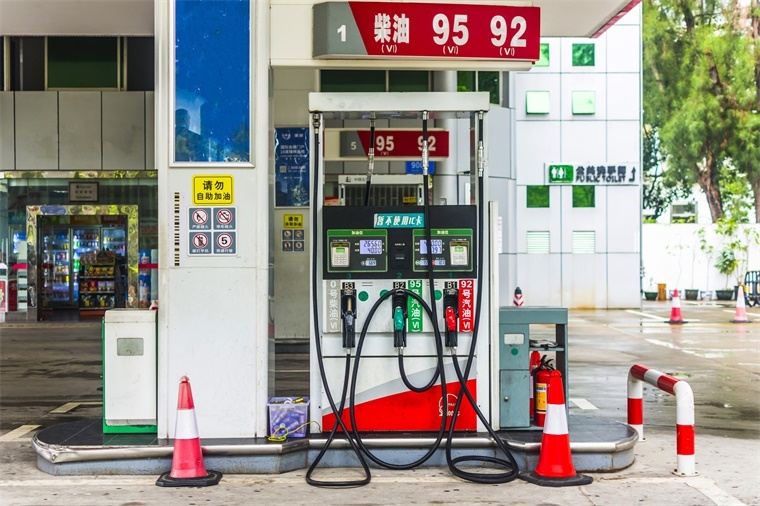
油价下跌!92号汽油有望重返6元时代,创下四年新低纪录【附石油化工产业链分析】
Qian Zhan Wang· 2025-10-23 06:24
Core Viewpoint - The upcoming domestic fuel price adjustment is expected to result in a significant decrease in gasoline and diesel prices, driven by a sharp decline in international crude oil prices and increased supply from OPEC+ [2][3]. Group 1: Price Adjustments - As of October 21, the crude oil price change rate has dropped to -7.93%, leading to an estimated reduction of approximately 320 yuan per ton for gasoline and diesel, translating to a decrease of 0.24 to 0.27 yuan per liter for 92-octane gasoline [2]. - If this price adjustment is realized, most regions in China will see 92-octane gasoline prices fall back into the "6 yuan range," marking the lowest level since 2021, with an annual cumulative decline exceeding 0.4 yuan per liter [2][3]. Group 2: Market Dynamics - The primary factors contributing to the oil price drop include OPEC+'s new production increase of 1.65 million barrels per day, which has disrupted the existing supply-demand balance, and the seasonal maintenance period for U.S. refineries, which has significantly reduced crude oil demand [2][3]. - The decline in crude oil prices is expected to lower refinery procurement costs, improve refining profits, and impact the entire petrochemical industry chain [3][5]. Group 3: Industry Impact - The current oil price drop primarily benefits the midstream refining sector, as lower crude costs and delayed adjustments in product prices expand profit margins for refineries, particularly for integrated large petrochemical companies like Sinopec and PetroChina [5]. - China's petrochemical industry has a comprehensive supply chain, with significant concentrations of companies in eastern regions like Shandong and Jiangsu, which are crucial for domestic oil production [5]. Group 4: Economic Implications - The return of 92-octane gasoline to the "6 yuan era" is anticipated to lower logistics costs across society and stimulate automotive consumption, contributing positively to economic growth and inflation control [9]. - However, the petrochemical industry faces long-term challenges, including overcapacity, the need for a green low-carbon transition, and the pursuit of technological self-sufficiency [9].
【行业深度】洞察2025:中国投影机行业竞争格局及市场份额(附市场集中度、企业竞争力等)
Qian Zhan Wang· 2025-10-23 02:18
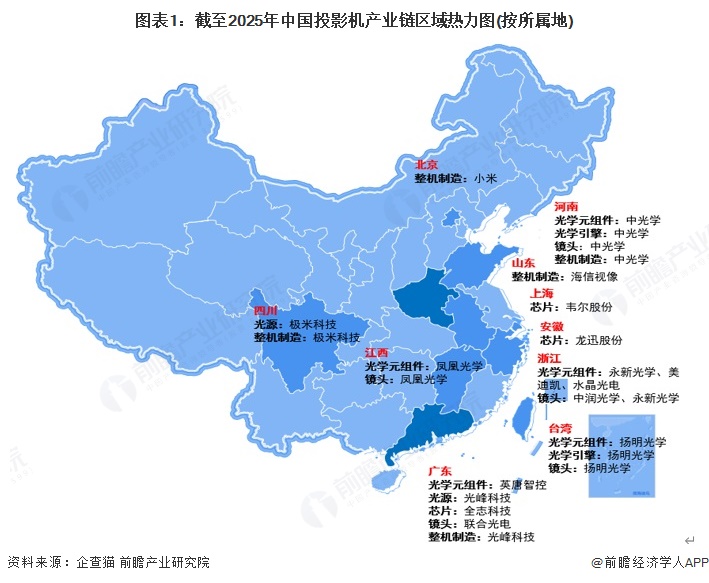
Group 1: Regional Competitive Landscape - The distribution of companies in the Chinese projector industry is concentrated in the southeastern coastal regions, with central regions (Henan, Sichuan) and major cities like Beijing and Shanghai developing in coordination [1]. Group 2: Company Competitive Landscape - In 2024, the top ten brands in the domestic projector retail market are led by XGIMI, with 1LCD brands holding half of the market share. Xiaomi has entered the top ranks due to the success of its Redmi Lite product, while Konka has gained a leading position on Douyin through significant investment [2]. - The market concentration in the projector retail market is moderate, with CR3 at 27.8%, CR5 at 38.7%, and CR10 at 56.0%. The increasing number of brands entering the market intensifies competition, putting weaker brands at risk of elimination [7]. Group 3: Brand Popularity Ranking - According to data from May 2025, "Epson" appears most frequently among over 600 projector products listed on JD.com, indicating high brand influence. Other brands like "BenQ" and "Konka" are less frequent but still significant [5]. Group 4: Competitive Clusters - The Chinese projector industry can be categorized into four competitive clusters: leaders, challengers, followers, and niche players. The number of challengers is high, while visionaries are few, reflecting the industry's low market penetration and significant growth potential [9]. Group 5: Competitive Strategy Layout - The strategic layout among representative companies in the projector industry shows a strong emphasis on horizontal integration, forward integration, and product development strategies, indicating a focus on industry chain integration and market expansion [11]. Group 6: Competitive State Summary - Supplier bargaining power is relatively strong due to high product differentiation and market concentration, while buyer bargaining power is weak due to low buyer concentration and small business volume [14]. - The threat of potential entrants is moderate, with existing companies controlling key resources and market share, creating barriers to entry, but the industry's attractiveness and opportunities for new entrants remain [14]. - The threat from substitutes is moderate, with alternatives like LCD TVs and tablets posing competition, although projectors have advantages in price and user experience [15]. - Competition among existing players is strong, driven by increasing market share and sales volume, despite the absence of overcapacity [15].
2025年中国电感器件产业市场主体分析 中国电感器件行业企业约3.2万家【组图】
Qian Zhan Wang· 2025-10-22 11:00
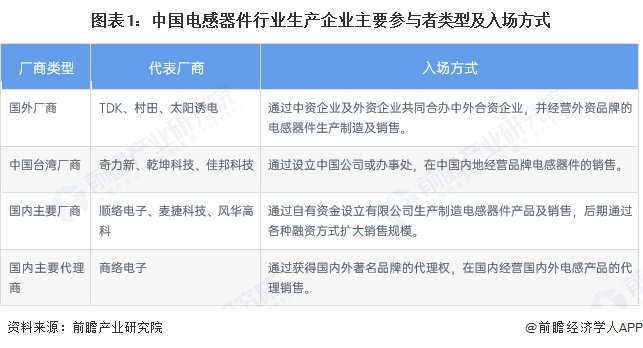
Core Insights - The Chinese inductive components industry is experiencing steady growth, with approximately 37,000 registered enterprises as of August 2025, and over 18,000 new companies established between 2021 and 2025 [2][3]. Industry Overview - The major players in the inductive components industry are predominantly from Japan and Taiwan, with Murata and TDK being the largest global suppliers. Murata leads in RF inductors, while TDK and Panasonic excel in automotive power inductors [1]. - Domestic manufacturers include Shunluo Electronics, Fenghua Advanced Technology, and Maijie Technology, with some companies acting as agents for various brands [1]. Company Registration and Status - As of August 2025, there are approximately 32,000 active or operational enterprises in the inductive components sector, accounting for 84% of the total number of companies. More than 5,000 companies have been deregistered or revoked, representing 15% of the total [3]. - The majority of companies in the industry are privately owned, with 28,856 private enterprises making up 96.6% of the total. Foreign-invested enterprises, Hong Kong, Macau, and Taiwan-invested enterprises, and state-owned enterprises number 322, 416, and 278 respectively [9]. Capital Distribution - The registered capital of inductive component companies is primarily below 1 million yuan, with 9,593 companies in this category, representing approximately 29.52%. Companies with registered capital between 10 million and 50 million yuan total 7,506, accounting for 23.10%. There are 3,518 companies with capital exceeding 50 million yuan, making up 10.83% [4][7].