Qian Zhan Wang

Search documents
预见2025:《2025年中国粉末冶金行业全景图谱》(附市场现状和发展趋势等)
Qian Zhan Wang· 2025-08-05 03:08
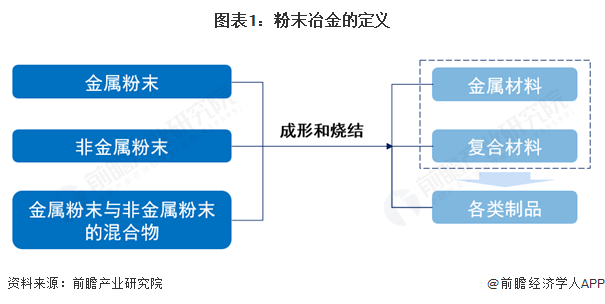
Industry Overview - Powder metallurgy is a technology for producing metal materials and components using metal powders, characterized by energy efficiency, material savings, and high precision, making it suitable for mass production [1][12] - The industry is classified into nine categories based on usage and characteristics, including structural materials, friction materials, porous materials, tool materials, refractory materials, corrosion-resistant materials, electrical materials, magnetic materials, and others [3][4] Industry Chain Analysis - The powder metallurgy industry chain consists of upstream raw materials and equipment, midstream product manufacturing, and downstream applications in automotive, aerospace, medical devices, and engineering machinery [6][7] - Leading companies in the industry include upstream material suppliers like Yuyuan New Materials and midstream manufacturers like Antai Technology and Dongmu Co., which are increasingly integrating their operations [7] Current Industry Status - The average production and sales rate of representative companies in the powder metallurgy sector has shown a fluctuating growth trend, increasing from 96.6% to 98.7% from 2021 to 2023, indicating a balance between supply and demand [20][22] - The Chinese powder metallurgy market is projected to exceed 16 billion yuan in 2024, driven by diverse applications across various sectors, particularly in the automotive industry [22][23] Competitive Landscape - The industry is divided into three tiers based on revenue, with Antai Technology leading at over 2.9 billion yuan, followed by Dongmu Co. with approximately 2.2 billion yuan, and other companies like Tianyi Shangjia and Haichang New Materials in the 100 million to 500 million yuan range [23][26] - The market share for Antai Technology and Dongmu Co. was 18.2% and 13.8% respectively in 2023, while other companies held less than 4% [26] Future Development Trends - The powder metallurgy industry is expected to see significant growth in applications, particularly in high-end markets such as new energy, medical devices, and aerospace, with a projected market size of 24.4 billion yuan by 2030, reflecting a compound annual growth rate of 6.9% [34] - Technological innovations, including metal powder injection molding and 3D printing, are anticipated to enhance product performance and expand application boundaries [31][33]





洞察2025:中国医药流通行业竞争格局及排名情况(附市场集中度、企业排名等)
Qian Zhan Wang· 2025-08-04 06:33
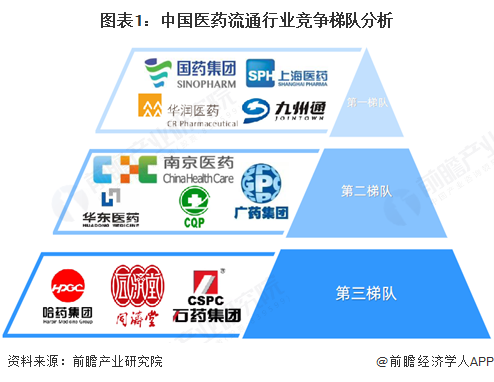
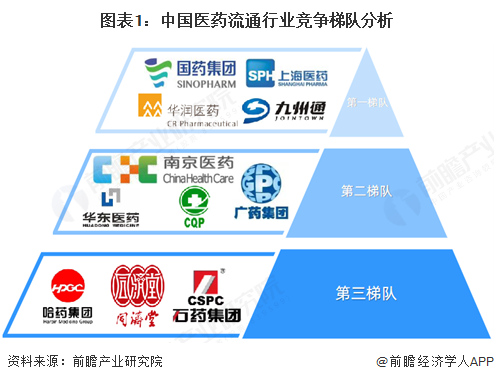
Group 1: Industry Overview - The Chinese pharmaceutical distribution market can be divided into three competitive tiers, with the first tier consisting of national wholesale giants such as China National Pharmaceutical Group, Shanghai Pharmaceuticals, China Resources Pharmaceutical, and Jiuzhoutong, all generating over 100 billion in revenue [1] - The retail pharmacy rankings show Dazhenlin at the top, followed by Guoyao Pharmacy and Yifeng Pharmacy, indicating significant changes in the top five rankings compared to the previous year [3] - The e-commerce segment is led by Ark Health's online pharmacy, which is pioneering a new H2H (Hospital To Home) smart healthcare model [4] Group 2: Strategic Analysis - The strategic cluster analysis of listed companies in the pharmaceutical distribution industry indicates that leaders such as China Resources Pharmaceutical, Shanghai Pharmaceuticals, Jiuzhoutong, and China National Pharmaceutical Group have revenues exceeding 100 billion and are well-established in the market [5] - The competitive landscape is characterized by intense competition, with numerous participants including wholesale and retail pharmaceutical companies, as well as brand operators entering the supply chain [7] Group 3: Competitive Forces - The analysis using Porter's Five Forces model reveals a highly competitive environment in the pharmaceutical distribution industry, with a quantification of competitive forces ranging from 0 (minimum) to 1 (maximum) [7]






【行业深度】洞察2025:中国医药流通行业竞争格局及排名情况(附市场集中度、企业排名等)
Qian Zhan Wang· 2025-08-04 06:09
Core Insights - The Chinese pharmaceutical distribution market is segmented into three competitive tiers, with major players like China National Pharmaceutical, Shanghai Pharmaceuticals, and China Resources Pharmaceutical leading the first tier with revenues exceeding 100 billion [1] - The retail pharmacy rankings show Dazhenlin at the top, followed by Guoda Pharmacy and Yifeng Pharmacy, indicating significant changes in the rankings from 2022-2023 [3][4] - In the e-commerce sector, Fangzhou Jianke leads the online pharmacy rankings, emphasizing the shift towards technology-driven healthcare solutions [5] Competitive Landscape - The pharmaceutical distribution industry is characterized by intense competition, with numerous participants including wholesale, retail, and brand operation companies, as well as e-commerce platforms entering the market [7] - The five forces analysis indicates a high threat from potential entrants and moderate bargaining power from downstream medical institutions and patients [7] - The strategic cluster analysis reveals that leading companies like China Resources Pharmaceutical and Shanghai Pharmaceuticals are positioned as market leaders due to their extensive experience and comprehensive business layouts [5][6] Retail Pharmacy Rankings - The top five retail pharmacies are Dazhenlin, Guoda Pharmacy, Yifeng Pharmacy, Laobaiyi, and Yixintang, reflecting a dynamic market with significant shifts in rankings [3][4] - Other notable pharmacies in the top 25 include Henan Zhang Zhongjing Pharmacy and Shandong Yanjitang, showcasing a diverse competitive landscape [3] E-commerce Pharmacy Rankings - Fangzhou Jianke leads the online pharmacy sector, followed by 1Yao.com and JD Health, highlighting the growing importance of digital platforms in the pharmaceutical distribution market [5] - The focus on technology and innovation is evident as companies aim to connect patients with medical services more effectively [5]
【干货】2025年医疗美容行业产业链全景梳理及区域热力地图
Qian Zhan Wang· 2025-08-04 04:08
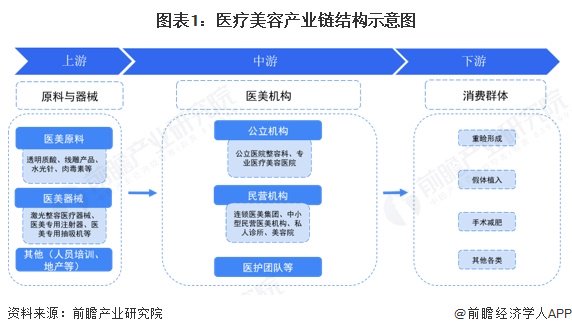
Industry Overview - The medical beauty industry in China has developed rapidly despite its late start, with a comprehensive industry chain that includes upstream raw material suppliers and medical equipment providers, midstream public and private institutions, and downstream consumers [1][2]. Key Players - Major upstream raw material manufacturers include Huaxi Biological, Aimeike, Haohai Biological, Huadong Pharmaceutical, and Jiao Dian Biological, while medical equipment is primarily supplied by foreign leading manufacturers [2]. - Midstream medical institutions consist of well-known entities such as Huahan Plastic Surgery, Lido Plastic Surgery, and Ruile Medical, along with emerging platforms like Xinyang and Gem [2]. Regional Distribution - The coastal regions of China have a dense distribution of representative enterprises in the medical beauty industry, with significant concentrations in Beijing, Shanghai, and Guangzhou, which are home to top research institutions and production companies [5]. - These regions attract numerous renowned medical beauty hospitals and clinics, providing comprehensive and high-quality services to consumers [5]. Business Layout of Representative Companies - Companies like Aimeike and Huaxi Biological focus on domestic sales, while others like Langzi and Huahan have diversified regional strategies across various provinces [7]. - Some companies specialize in product development, while others emphasize service delivery, with notable examples including Aimeike and Haohai focusing on product R&D, and Aoyuan Meigu's strong hospital brand image [7]. Financial Performance - Aimeike reported a medical beauty business revenue of 3.023 billion yuan, with a business proportion of 99.90%, indicating a strong focus on medical devices [8]. - Huadong Pharmaceutical generated 2.041 billion yuan from its medical beauty segment, accounting for 4.87% of its total business [9]. Investment Trends and Future Plans - Companies are actively expanding their business layouts with a trend towards diversification and internationalization, such as Aimeike's acquisition of a Korean company and Haohai's collaboration with a U.S. firm for product innovation [10][11]. - Huadong Pharmaceutical is expanding its medical beauty business through acquisitions and partnerships, while Huaxi Biological is investing in new technologies and products [10][11].





【行业深度】洞察2025:中国生猪养殖行业竞争格局及市场份额(附市场集中度、企业竞争力等)
Qian Zhan Wang· 2025-08-02 06:09
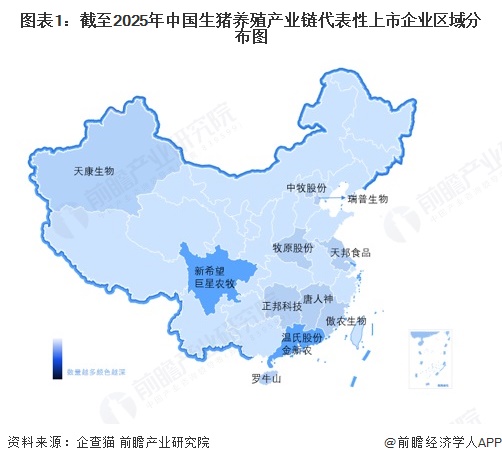
Core Insights - The article discusses the competitive landscape of China's pig farming industry, highlighting the regional distribution of listed companies and the market concentration levels [1][4][7]. Group 1: Regional Competition Landscape - The majority of listed pig farming companies are located in southern China, particularly in Guangdong and Sichuan provinces, with major players like Wen's Foodstuffs and Jinxinnong in Guangdong, and New Hope and Juxing Agriculture in Sichuan [1]. Group 2: Market Entry Progression - The entry of competitors into the pig farming market occurred primarily between 1990 and 2000, with Wen's Foodstuffs entering around 1993 and Muyuan Foods entering later in 2000 [3]. Group 3: Competitive Structure - The pig farming industry has seen accelerated entry of industrial capital, leading to a trend of smallholder exit. The scale of pig farming has surpassed 70%, with the top 20 companies expected to hold a market share of 30.7% by 2024. Notably, Muyuan Foods is projected to exceed 70 million pigs, while Wen's Foodstuffs is expected to surpass 30 million pigs in output for the first time [4]. Group 4: Market Concentration - The pig farming industry in China exhibits a "small enterprises, large market" characteristic, with a market size exceeding one trillion yuan but low concentration. The CR3, CR5, and CR10 market concentration ratios are 17.01%, 20.93%, and 25.59% respectively for 2024 [7]. Group 5: Competitive State Summary - The industry is characterized by a large number of players and intense competition, with a clear and transparent pork market price. The bargaining power of suppliers, particularly feed and breeding stock suppliers, is relatively weak. The consumer bargaining power in the pork market is also low, influenced primarily by supply and demand dynamics. The entry into the pig farming industry is heavily dependent on capital availability, with significant capital influx during price surges and exits during price declines. The threat from substitutes like chicken, duck, and beef is minimal due to the entrenched consumption habits favoring pork in China [9].



前瞻全球产业早报:我国大模型应用个人用户注册超31亿
Qian Zhan Wang· 2025-08-01 12:23
Group 1: Manufacturing and Economic Indicators - In July, the manufacturing PMI was reported at 49.3%, a decrease of 0.4 percentage points from the previous month, indicating a decline in manufacturing activity [2] - Large enterprises had a PMI of 50.3, down 0.9 percentage points, while medium-sized enterprises saw an increase to 49.5, up 0.9 percentage points, and small enterprises dropped to 46.4, down 0.9 percentage points [2] - The production index and supplier delivery time index were above the critical point, while new orders, raw material inventory, and employment indices were below the critical point [2] Group 2: AI and Technology Developments - The number of registered personal users for large model applications in China has exceeded 3.1 billion, with API call users surpassing 159 million [3] - Huawei has officially open-sourced its self-developed programming language "Cangjie," which includes a compiler, runtime, and standard library, aimed at intelligent applications [7] - OpenAI's annualized revenue has reached $12 billion, with an adjusted cash burn forecast of approximately $8 billion for 2025 [15] Group 3: Corporate Actions and Market Developments - Nvidia was summoned by China's internet regulator to explain security risks related to its H20 computing chip sold in China [4] - Energy Capital Partners and KKR announced plans to build a 190 MW data center in Texas, with an investment close to $4 billion, marking the first investment of their $50 billion strategic partnership [11] - Chevron has received limited permission from the U.S. government to operate in Venezuela, contingent on ensuring oil revenues do not benefit the Maduro government [17] Group 4: Financial Market Updates - The A-share market saw all three major indices close lower, with the Shanghai Composite Index down 1.18% [18] - The Hong Kong GDP for Q2 2025 increased by 3.1% year-on-year, slightly up from a 3.0% increase in Q1 [4] - U.S. stock indices showed mixed results, with the Dow Jones down 0.38% and the Nasdaq up 0.15% [19]






蔚来坚守纯电!李斌:电动汽车终极技术路线是纯电动,增程和插混只是过渡期产品【附新能源汽车行业市场分析】
Qian Zhan Wang· 2025-08-01 08:57
Group 1 - The core viewpoint of the articles emphasizes that the ultimate technological route for electric vehicles is pure electric, which is widely accepted in the automotive industry [2][3] - NIO's chairman, Li Bin, stated that the company has consistently adhered to the pure electric route and has not deviated from it, despite the strong sales performance of range-extended and plug-in hybrid vehicles since 2022 [2] - Data shows that from 2018 to 2022, China's pure electric vehicle market experienced rapid growth, with production and sales increasing significantly, reaching 5.467 million units produced and 5.365 million units sold in 2022, representing year-on-year growth of 98.01% and 96.23% respectively [3] Group 2 - As of the first half of 2024, the total number of new energy vehicles in China reached 24.72 million, with pure electric vehicles accounting for 73.35% of this total [4] - Experts suggest that while pure electric technology is optimal for performance, plug-in hybrid technology offers advantages in weight and efficiency, particularly in specific applications like pickups and off-road vehicles [4] - The development of new energy vehicle technologies is expected to see a coexistence of various routes, including pure electric, range-extended, and plug-in hybrid technologies, as advancements continue and market dynamics evolve [4]


【行业深度】洞察2025:全球及中国应急指挥调度系统市场规模及竞争格局(附市场规模、竞争格局等)
Qian Zhan Wang· 2025-08-01 03:10
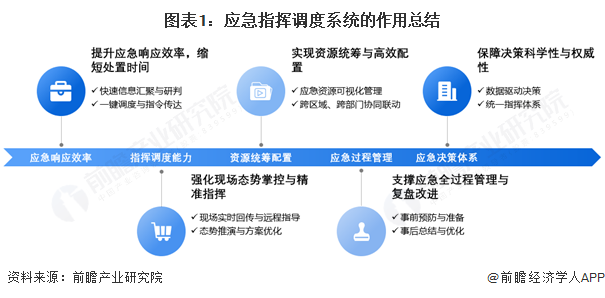
Overview of Emergency Command and Dispatch Systems - Emergency command and dispatch systems provide a unified emergency communication system capable of handling voice, image, and data during emergencies and disasters, enhancing response speed and resource coordination [1] Global Emergency Command and Dispatch Systems Market Analysis - The global market size for emergency command and dispatch systems is projected to approach $1.9 billion by 2024, growing from $1.67 billion in 2022, with a compound annual growth rate (CAGR) of 6.5% [3][6] - The market is driven by the increasing frequency and severity of natural disasters, prompting governments to adopt advanced dispatch products for improved warning and response capabilities [3][6] Global Market Application Areas - Key application areas for emergency command and dispatch systems include government affairs (10% market share) and public utilities (13% market share), which together account for 23% of the market [6][7] - The market size for these key areas is expected to grow from 2.58 billion yuan to 3.1 billion yuan from 2022 to 2024 [7] Global Market Regional Situation - North America holds the largest market share at 32.2%, followed by China at 30%, and Europe at 21% [9] - The Chinese market is significant due to frequent natural disasters and a strong emphasis on modernizing emergency management systems [9] Global Market Competitive Landscape - Motorola is a leading player in the global emergency command and dispatch systems market, followed by Zhenyou Technology and ZTE [12] - The market is characterized by a stable competitive landscape, with larger companies having a significant advantage over smaller firms due to their established market presence and technological capabilities [12] China Emergency Command and Dispatch Systems Market Size - The market size for emergency command and dispatch systems in China is projected to reach 930 million yuan by 2024, up from 770 million yuan in 2022 [15][16] - The growth is supported by strong government policies, funding, and increasing demand in public safety and industrial sectors [15] China Market Competitive Landscape - Zhenyou Technology leads the domestic market, leveraging advanced communication technologies to create a comprehensive emergency command system [16] - The market is still developing, with many companies facing challenges due to technological limitations and competition from larger firms [16]

汽车密封条行业市场分析
Qian Zhan Wang· 2025-07-31 14:22
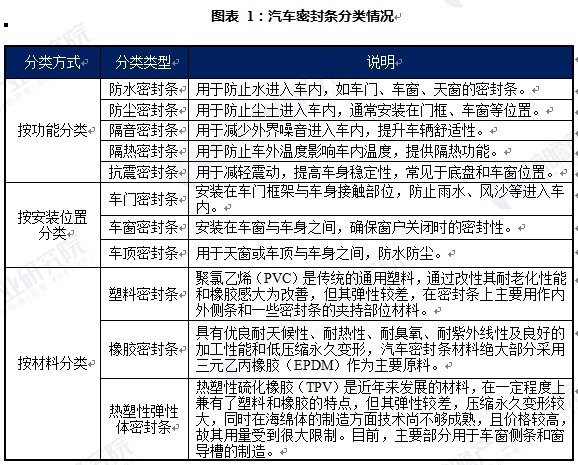
Industry Overview - The automotive sealing strip industry is crucial for vehicle performance, providing functions such as waterproofing, sound insulation, dust prevention, and energy efficiency [1][2] - Sealing strips are the largest rubber component used in vehicles, primarily applied in doors, windows, engine hoods, and trunk lids [1] - The industry has evolved with advancements in technology and increasing performance requirements, focusing on environmental friendliness, comfort, safety, and aesthetics [1] Industry Development Stages - The industry began in the 1980s, relying heavily on imports due to limited domestic production capabilities [4] - In the 1990s, domestic companies started to emerge, improving product quality through technology imports and expanding market presence [4] - The 21st century saw rapid growth in domestic production, with companies enhancing R&D and brand recognition, leading to a competitive market landscape [4] - Post-2010, the industry has focused on upgrading materials and manufacturing processes to meet the demands for lightweight and environmentally friendly products [5] Current Industry Status - The global automotive parts industry is essential for the automotive sector, with a trend towards globalized production and procurement [6] - Major automotive parts suppliers are concentrated in Japan, the US, and Germany, with China showing significant growth in recent years [6][8] - The automotive sealing strip market is expected to grow from $5.357 billion in 2020 to $6.745 billion by 2024, driven by increasing vehicle production [11] Market Demand and Growth - In China, the sealing strip demand is projected to reach 1.313 billion meters in 2024, with a compound annual growth rate (CAGR) of 6.05% from 2025 to 2029 [14][16] - The market size for China's automotive sealing strips is expected to grow from 12.691 billion yuan in 2020 to 18.196 billion yuan in 2024, with a CAGR of 3.23% [16] Industry Chain Analysis - The automotive sealing strip industry has a complete supply chain, with upstream materials including PVC, EPDM, and TPV [19] - The production of sealing strips primarily uses EPDM and TPV, with downstream applications in vehicle manufacturing and aftermarket services [19] Competitive Landscape - The market is fragmented, with a shift towards domestic brands as they gain market share from foreign companies [34] - The industry features a tiered structure, with leading companies like Zhejiang Xingyu and Zhejiang Xiantong at the top, followed by mid-tier and smaller firms [35] Driving Factors and Trends - The growth of the automotive sealing strip industry is supported by steady economic growth and increasing vehicle ownership in China [36] - National policies promoting the automotive industry and the shift towards domestic sourcing of components are also significant growth drivers [37] - Trends include increasing value per vehicle for sealing strips and a rise in demand for frameless sealing strips, particularly in electric vehicles [38][39]
2025年山东省阿胶行业发展现状 发源地东阿县具有较好的产业集群化优势【组图】
Qian Zhan Wang· 2025-07-31 07:19
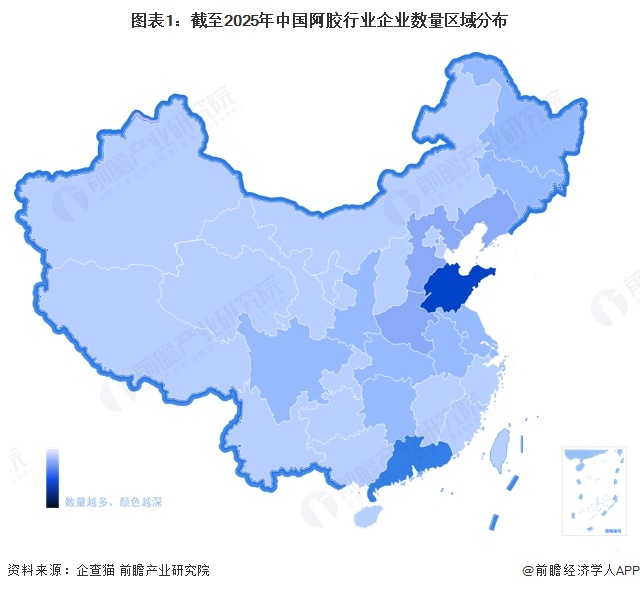
Core Insights - The article highlights the significance of Shandong Province as the primary region for the Chinese ejiao (donkey-hide gelatin) industry, with a concentration of registered companies and production capacity [1][11]. Industry Overview - The ejiao industry in China is predominantly located in Shandong Province, with major companies also found in Guangdong, Henan, Hebei, and Jilin [1]. - Shandong Province is home to over 200 ejiao production enterprises, with a duopoly market structure led by Dong'e Ejiao and Fupai Ejiao, while other brands compete in the market [7][11]. Production and Supply - The total number of donkeys in Shandong Province is projected to decline to 21,000 by 2024, with the province accounting for only 1.83% of the national donkey population as of the end of 2023 [3][4]. - The donkey breeding regions in Shandong are concentrated in seven cities, which account for over 95% of the province's donkey population [4]. Development Plans - The "Shandong Province Donkey Industry High-Quality Development Plan (2024-2035)" aims to double the donkey population by 2030 and establish 3-5 leading ejiao production enterprises, with a target of over 100 billion yuan in industry output value by 2035 [4][12]. - Dong'e County is recognized as a key area for ejiao production, contributing over 60% of the national ejiao output [12]. Key Companies - Dong'e Ejiao Co., Ltd. is a major player in the ejiao market, established in 1952 and known for its high-quality products and significant market presence [10]. - Fupai Ejiao Co., Ltd. has a long history dating back to 1950 and has developed into a comprehensive health industry group [10]. - Other notable companies include Jinan Guben Tang Biotechnology Co., Ltd., Jinan Qian Nian Biological Engineering Co., Ltd., and Shandong Hongjitang Pharmaceutical Group Co., Ltd., each contributing to the diverse ejiao product offerings [10].