Di Yi Cai Jing Zi Xun

Search documents
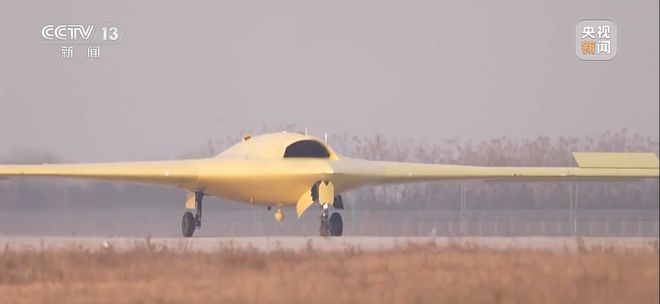
彩虹-7,首飞成功!
Di Yi Cai Jing Zi Xun· 2025-12-15 01:32
Core Viewpoint - The successful maiden flight of China's new high-altitude, high-speed long-endurance drone, Rainbow-7, marks a significant advancement in the country's drone technology and capabilities [1][3]. Group 1: Drone Specifications and Capabilities - Rainbow-7 features an advanced high-aspect-ratio flying wing aerodynamic layout, allowing it to carry various high-performance payloads, including visible light and infrared sensors [3]. - The drone is designed for long endurance, high altitude, fast cruising speed, and strong mission capabilities, meeting high-end demands for ground observation and data support under complex conditions [3]. Group 2: Future Developments - Future tests for the Rainbow-7 will include flight performance envelope and payload functionality verification [3].

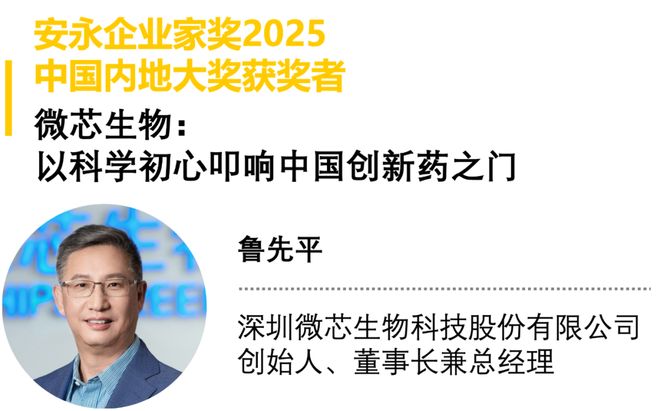
“安永企业家奖”2025出炉,十二位企业家上榜
Di Yi Cai Jing Zi Xun· 2025-12-15 01:32
Group 1 - The 20th "Ernst & Young Entrepreneur Award" results were announced, highlighting 12 winners from mainland China and Hong Kong/Macau, including notable entrepreneurs in life sciences, precision manufacturing, artificial intelligence, and chip design [1] - Lu Xianping, founder and CEO of Microchip Biotech, and Li Peiliang, chairman of Dongjiang Group, received the awards for mainland China and Hong Kong/Macau respectively [1] Group 2 - Lu Xianping emphasized the responsibility to change the situation of high-priced or unavailable drugs in China, leading to the establishment of Microchip Biotech, which has developed two globally innovative drugs [4] - Microchip Biotech has created a drug discovery platform based on chemical genomics, resulting in the successful launch of the first original anti-tumor drug and the first PPAR full agonist in China [4][5] - The company faced significant challenges during commercialization, including unprecedented reviews and market recognition issues, highlighting the need for a supportive innovation ecosystem in China [4][6] Group 3 - Li Peiliang's philosophy of "profit is a byproduct of healthy operations" has guided Dongjiang Group through various industry cycles, emphasizing the importance of internal capabilities over short-term profits [8] - The company has proactively embraced smart manufacturing since 2015, leading to improved production efficiency and quality [9][10] - Li Peiliang believes that AI will be essential for future competitiveness, with plans to strengthen AI capabilities in high-end consumer electronics and medical precision manufacturing [10] Group 4 - Chen Ning founded Yuntian Lifa in Shenzhen after recognizing the potential of AI inference chips, aiming to address the growing demand for inference computing power [14] - The company has developed a "computing power building block" architecture to meet diverse product needs while maintaining compatibility with existing ecosystems [15][16] - Yuntian Lifa is focused on enhancing AI inference capabilities and has established partnerships with various industry players [15] Group 5 - Zhang Shilong, founder of Shengbang Microelectronics, has led the company from zero to over 40 billion chips shipped, establishing a significant presence in the global analog chip market [20] - The company faced initial challenges in gaining market acceptance despite having advanced technology, but secured key orders in 2005 that marked a turning point [20][21] - Shengbang Microelectronics continues to innovate and expand its product offerings, focusing on high-performance and high-quality solutions [21] Group 6 - Huang Wei, founder of Cloud Wisdom, recognized the potential of AI in 2012 and has since led the company to significant milestones, including the launch of its first AI chip [25][26] - The company aims to solve core industry problems with its AI technologies, positioning itself as a specialized provider rather than a generalist [26][27] - Cloud Wisdom is focused on creating measurable commercial value and ensuring a positive feedback loop between investment and returns [27] Group 7 - Jia Jiaya, founder of Simo Technology, is pioneering the integration of AI large models with robotics to create industrial intelligent systems [31][32] - The company has developed a comprehensive product ecosystem that includes AI models and industrial robots, achieving significant market penetration [32] - Simo Technology emphasizes the importance of integrating technology into complex industrial environments to create value [31] Group 8 - Jiang Haitao founded Macau Network Media Development to address the lack of digital services in Macau, leading to the creation of the "Aomi" app [36][37] - The company faced challenges in talent acquisition and infrastructure but successfully adapted mainland experiences to the local market [36][37] - Aomi has evolved into a comprehensive local service platform, leveraging high-frequency services to maintain user engagement [37] Group 9 - Jiang Xueming established Dongxin Semiconductor to address China's semiconductor needs, recognizing the significant import costs associated with chips [40][41] - The company faced initial challenges in talent and technology but made strategic acquisitions to gain a foothold in the industry [41][42] - Dongxin Semiconductor is focused on continuous innovation and development of a comprehensive technology matrix to meet future demands [42] Group 10 - Li Hong, chairman of Weisheng Information Technology, has positioned the company in the energy IoT sector, anticipating its importance in the energy revolution [45][46] - The company is exploring international markets while ensuring product localization to meet regional needs [45][46] - Weisheng Information is committed to long-term investments in technology and standards to support global energy transitions [46] Group 11 - Li Ping, co-founder of Zhi Zi Cheng Technology, emphasizes local decision-making in global markets to navigate cultural and operational differences [50][51] - The company has established a localized organizational structure to enhance its global operations and product offerings [50][51] - Zhi Zi Cheng Technology is leveraging AI to optimize product creation and operational processes, aiming for sustainable local operations [51]
双向奔赴提升企业获得感
Di Yi Cai Jing Zi Xun· 2025-12-15 00:01
2025.12.15 本文字数:1712,阅读时长大约3分钟 作者 |一财评论员 企业获得感正成为评价政府实绩的一个重要指标。 12月10日至11日,中央经济工作会议在北京举行。会议提出了对做好新形势下经济工作新的认识和体 会,即"五个必须",并确定了坚持内需主导等明年经济工作的八大重要任务。这些为各部门各单位明年 的工作提供了按图索骥式的便利。 会议明确指出要增强居民和企业的获得感。如果说围绕做强国内大循环,拓展内需增长新空间,是明年 经济工作的关键着力点,那么增强居民和企业的获得感,则是贯通会议精神的灵魂。 企业的获得感,在中央经济工作会议中专门提出,这本身就投射出一种守定力、深扎根、务实功的知行 合一,并正在成为度量政府新政绩观的一项重要内容,成为治国理政的一个重要实绩。 当前中国经济发展中老问题、新挑战不少,外部环境变化影响加深,国内供强需弱矛盾突出,重点领域 风险隐患较多。这些问题大多是发展中、转型中的问题,需通过转思路、换思维,改革攻坚等加以应 对,需要通过将明年经济工作的政策取向调整为稳中求进、提质增效来笃定航向。 近年来针对企业在经济转型升级、爬坡过坎中出现的诸多问题,政府频繁出台政策和制定修 ...

多部门部署财政资金“投资于人”
Di Yi Cai Jing Zi Xun· 2025-12-15 00:01
Core Viewpoint - The Central Economic Work Conference has outlined the policy direction for China's economic work in 2026, emphasizing the need for both incremental and stock policies to stabilize and improve the economy [2][4]. Group 1: Policy Implementation - Various government departments, including the National Development and Reform Commission (NDRC), Ministry of Finance, and People's Bank of China, are detailing measures to implement the conference's directives, focusing on investment stabilization and new growth drivers [2][4]. - Incremental policies will be introduced based on changing circumstances, aiming to enhance the effectiveness of existing policies and promote economic stability [3][4]. Group 2: Economic Growth Strategies - The conference highlighted the importance of maintaining a necessary fiscal deficit and total debt scale while optimizing expenditure structure to support major national strategies [4][5]. - The focus will be on enhancing domestic demand and improving the quality of economic growth, with an emphasis on consumer spending and investment in human resources [6][9]. Group 3: Investment and Infrastructure - Fixed asset investment growth has turned negative due to various factors, prompting the need for measures to stabilize investment and increase central budget investment scale [7][8]. - The government plans to increase the central budget investment from 4-5 trillion yuan to 7.3 trillion yuan by 2025, with potential further increases in 2026 [8]. Group 4: Innovation and Industry Development - The conference underscored the significance of technological innovation and industrial development, with a focus on nurturing new growth drivers and enhancing the quality of key industries [9][10]. - Central enterprises are expected to play a crucial role in leading the development of strategic emerging industries and ensuring the stability of industrial chains [11].
消费贷贴息百日,更多地方性银行加入“地补”
Di Yi Cai Jing Zi Xun· 2025-12-14 15:06
Group 1 - The core viewpoint of the article highlights the implementation of the consumer loan interest subsidy policy, referred to as "financial national subsidy," which has been in effect for over a hundred days, showing increased bank lending but limited recovery in consumer credit demand [2][6] - Major state-owned and joint-stock banks have significantly increased their personal consumption loan issuance since September, with China Bank issuing 47.4 billion yuan in September alone, marking a 26.11% increase year-to-date [3][4] - Regional banks are also joining the initiative, raising loan limits to 500,000 to 1 million yuan, with some small banks offering up to 2 million yuan, promoting loans for various consumer purposes [4][5] Group 2 - Despite the increased loan limits, many banks maintain strict customer screening, with loans over 300,000 yuan primarily available to stable income groups, limiting the impact on broader consumer segments [5] - The overall demand for consumer loans remains weak, with a net decrease of 206 billion yuan in household loans in November, indicating a sluggish recovery in consumer credit [5][6] - The shift from "national subsidy" to "local subsidy" is evident as local governments begin to implement their own consumer loan interest subsidy policies, aiming to stimulate local consumption and activate regional markets [6][7]

多部门部署明年经济工作,推动更多财政资金“投资于人”
Di Yi Cai Jing Zi Xun· 2025-12-14 13:04
Group 1: Economic Policy Direction - The Central Economic Work Conference has outlined the policy direction for 2026, emphasizing the need for incremental policies to stabilize the economy and optimize expenditure structures [1][2] - The government aims to enhance the effectiveness of macroeconomic governance by integrating stock and incremental policies, focusing on both counter-cyclical and cross-cyclical adjustments [2][3] Group 2: Investment and Consumption - The government plans to implement measures to boost investment and consumption, including increasing central budget investments and optimizing the use of local government special bonds [5][6] - There is a focus on enhancing consumer spending through various initiatives, including the promotion of consumption in sectors like e-commerce and artificial intelligence [5][6] Group 3: Innovation and Industry Development - The emphasis on innovation and industry development is critical, with plans to strengthen key industrial chains and promote high-quality development actions [7][9] - State-owned enterprises are expected to play a significant role in leading these initiatives, focusing on strategic industries such as new materials, renewable energy, and advanced manufacturing [8][9] Group 4: Financial Policy Adjustments - The monetary policy will remain moderately loose, with a focus on maintaining liquidity and supporting the real economy through various financial tools [3][4] - The government aims to ensure fiscal sustainability while optimizing the structure of fiscal spending to support major national strategies [2][3]
11月居民存贷数据透露这些信号
Di Yi Cai Jing Zi Xun· 2025-12-14 12:31
Core Insights - The financial data for November indicates a significant divergence in credit demand, with corporate loans increasing while household credit demand remains weak [2][11]. Group 1: Loan Data Overview - In November, new RMB loans totaled 390 billion yuan, a year-on-year decrease of 190 billion yuan, falling short of market expectations [3][4]. - Corporate loans increased by 610 billion yuan, a year-on-year rise of 360 billion yuan, with short-term loans contributing significantly [3][4]. - Household loans decreased by 206.3 billion yuan, a year-on-year decline of 476.3 billion yuan, indicating a weakening demand for consumer credit [4][5]. Group 2: Corporate Loan Dynamics - Corporate short-term loans rose by 100 billion yuan, while medium to long-term loans saw a decrease of 400 billion yuan year-on-year [3][4]. - The decline in medium to long-term loans is attributed to ongoing economic pressures and reduced investment growth [3][11]. - Corporate bond financing has increased, potentially substituting for loan demand, further impacting medium to long-term loan growth [3][11]. Group 3: Household Loan Trends - Cumulatively, household loans added only 533.3 billion yuan in the first eleven months, accounting for just 3.5% of total new credit, down from 13.9% in the same period last year [5][11]. - The weak household credit demand reflects subdued consumer spending and ongoing adjustments in the real estate market [5][11]. - Factors such as the timing of consumption events and the impact of previous subsidy policies have contributed to the current state of household loans [5][11]. Group 4: Deposit Trends - In November, RMB deposits increased by 1.41 trillion yuan, a year-on-year decrease of 760 billion yuan, with all sectors showing reduced growth [6][8]. - Non-bank deposits experienced a significant slowdown, indicating a shift in household funds towards equity markets due to stock market volatility [6][7]. - The M1-M2 "scissors difference" expanded to -3.1%, highlighting weak demand for real economy financing [8][9]. Group 5: Future Outlook - The current financing demand structure, characterized by weak household demand, increasing corporate loans, and strong government financing, is expected to persist for one to two more quarters [10][12]. - Corporate financing is anticipated to grow due to factors such as export growth and government investment expansion, while household credit growth may remain stable due to ongoing challenges in the labor market and real estate sector [12].

中央明确北京、上海国际科创中心扩围
Di Yi Cai Jing Zi Xun· 2025-12-14 12:31
Core Insights - The construction of three major international technology innovation centers in China, namely Beijing, Shanghai, and the Guangdong-Hong Kong-Macao Greater Bay Area, is increasingly significant in the country's technology innovation landscape [2][3] Group 1: Development and Achievements - The central government has made significant progress in establishing these innovation centers since the 18th National Congress, aiming to accelerate the formation of original innovation sources in China [2] - According to the 2025 Global Innovation Index released by WIPO, the Shenzhen-Hong Kong-Guangzhou cluster has surpassed the Tokyo-Yokohama cluster to rank first globally, with Beijing and the Shanghai-Suzhou cluster ranking fourth and fifth, respectively [3] - Beijing's original innovation capability has strengthened, with basic research funding accounting for over 16% of its total R&D expenditure [3] Group 2: Regional Collaboration and Innovation - The collaborative innovation effects among major city clusters have improved, with the Beijing-Tianjin-Hebei region showing continuous strengthening in collaborative innovation development [4] - The Yangtze River Delta's innovation community is accelerating its formation, and the Guangdong-Hong Kong-Macao Greater Bay Area maintains strong innovation development momentum [4] Group 3: Rankings and Investment - Beijing ranks second nationally in comprehensive technology innovation level, with R&D expenditure intensity reaching 6.73%, the highest in the country [5] - Shanghai has risen to first place in comprehensive ranking, with R&D expenditure intensity ranking second, and leading in technology international income per unit GDP and labor productivity [5] Group 4: Future Directions and Strategies - The Beijing International Technology Innovation Center aims to establish a basic framework this year, focusing on enhancing the technology innovation source function and integrating technology with industrial innovation [6] - Shanghai's strategy emphasizes deepening systemic reforms and focusing on high-risk, high-value basic research, particularly in integrated circuits, biomedicine, and artificial intelligence [6][7] - The Guangdong-Hong Kong-Macao Greater Bay Area is working to leverage its unique advantages to build a tighter innovation community and optimize the regional technology innovation layout [7]

IPO周报:新增受理2单申请,国仪量子年度研发投入占比下滑
Di Yi Cai Jing Zi Xun· 2025-12-14 11:52
Core Viewpoint - The recent week saw the acceptance of two new IPO applications from the Sci-Tech Innovation Board, with both companies focusing on advanced technology sectors and seeking significant funding. Group 1: New IPO Applications - Two companies, Guoyi Quantum Technology Co., Ltd. and Shanghai Pinzhun Laser Technology Co., Ltd., have applied for IPOs, aiming to raise 1.169 billion yuan and 1.410 billion yuan respectively [1] - Guoyi Quantum specializes in high-end scientific instruments and has not yet turned a profit, applying for listing under the "market value + revenue" standard [1] - Guoyi Quantum's projected revenues for 2022 to 2025 are 151 million yuan, 399.6 million yuan, 501 million yuan, and 171 million yuan, with net losses expected to narrow by 2026 [2] Group 2: Financial Performance and Projections - Guoyi Quantum's R&D expense ratio has been declining, from 75.34% in 2022 to 29.78% in the first half of 2025 [2] - Pinzhun Laser's revenue has shown rapid growth, with a compound annual growth rate of 90.49% from 2022 to 2024, but it still faces risks due to its relatively small scale [2] Group 3: Risks and Challenges - Pinzhun Laser has not yet secured land for its fundraising projects, which poses a risk to its operational plans [3] - Guoyi Quantum's management anticipates a significant reduction in losses by 2025, but acknowledges potential discrepancies in these forecasts due to various influencing factors [2] - Both companies face challenges related to their growth strategies and market conditions, which could impact their financial stability [2][3] Group 4: Other IPO Developments - In addition to the new applications, seven other companies have passed the review process, with three having submitted registration and four still under review [3] - Two companies, Chuangzheng Electric Co., Ltd. and Harbin Dongsheng Jin Materials Technology Group Co., Ltd., have had their IPO applications terminated, with Chuangzheng Electric facing issues related to financial audits [3][4] - Dongsheng Jin Materials reported a significant decline in revenue and net profit in 2023, attributed to market conditions and customer inventory adjustments [5]
货拉拉等平台被调查
Di Yi Cai Jing Zi Xun· 2025-12-14 11:11
Core Insights - The rapid growth of China's online freight market has surpassed 93 billion yuan in 2024, but issues such as unclear pricing and vehicle information chaos are affecting consumer experiences [1] - Consumers often find discrepancies between the service they expect and what is delivered, leading to complaints about service quality and transparency [2][4] - Drivers are facing income reductions and unclear commission structures, raising concerns about their earnings and the fairness of platform fees [13][19] Group 1: Consumer Experience Issues - A consumer reported a mismatch between the ordered vehicle type and the one that arrived, causing logistical issues [2][4] - Complaints about service discrepancies are common, with a significant number of complaints filed against online freight services in the past six months [10][12] - The lack of transparency in pricing and service delivery has led to consumer distrust and concerns about safety [8][9] Group 2: Driver Challenges - Drivers have expressed frustration over unclear commission rates and reduced earnings, with many reporting that their income has significantly decreased [13][18] - The shift to a dual fee structure, where drivers pay membership fees in addition to commission fees, has further strained their earnings [24][26] - Drivers are increasingly concerned about the lack of transparency in pricing mechanisms, which affects their ability to predict earnings [19][50] Group 3: Regulatory and Industry Response - Local consumer protection organizations are investigating the issues within the online freight industry, focusing on both consumer and driver rights [32][36] - Recommendations have been made for platforms to improve transparency in pricing and service delivery, as well as to clarify commission structures [48][50] - Platforms are being urged to adopt more standardized practices to ensure fair treatment of both consumers and drivers, with a focus on building a healthier industry ecosystem [55]