
Zhong Guo Zi Ran Zi Yuan Bao

Search documents
滨海城市可持续发展的海洋方案工具包发布
Zhong Guo Zi Ran Zi Yuan Bao· 2025-06-23 03:28
Core Viewpoint - The article discusses the launch of the "Marine Solutions Toolkit for Sustainable Coastal City Development," aimed at addressing climate change impacts on coastal cities and promoting sustainable development through scientific collaboration and innovation [1][2][3] Group 1: Toolkit Development and Features - The toolkit consists of six core modules and 24 sub-modules, covering critical areas such as marine and climate warning, marine navigation safety, nearshore ecological health, integrated coastal management, blue economy support, and marine literacy [3] - It integrates marine big data, advanced numerical models, and artificial intelligence technologies to provide visualized products and services for end-users and decision-makers in coastal cities [3] Group 2: Global Collaboration and Participation - The toolkit was developed through collaboration among multiple countries and research institutions, emphasizing a shared design, development, and benefit approach, and is made available to global users for free [2] - Chinese research teams have been deeply involved in the "Ocean Decade" initiative, contributing to strategic planning and platform construction, and leading international scientific programs to enhance global marine governance capabilities [2][3] Group 3: Implications for Sustainable Development - The launch of the toolkit reflects China's commitment to global marine governance and the construction of a marine community with a shared future, aiming to provide technological support for the 21st Century Maritime Silk Road and the establishment of a strong marine nation [3] - The toolkit is expected to facilitate the rapid transfer of scientific knowledge to the public and decision-makers, offering cost-effective solutions for various marine management activities [2]
盐碱地里长出“海水蔬菜”
Zhong Guo Zi Ran Zi Yuan Bao· 2025-06-20 06:57
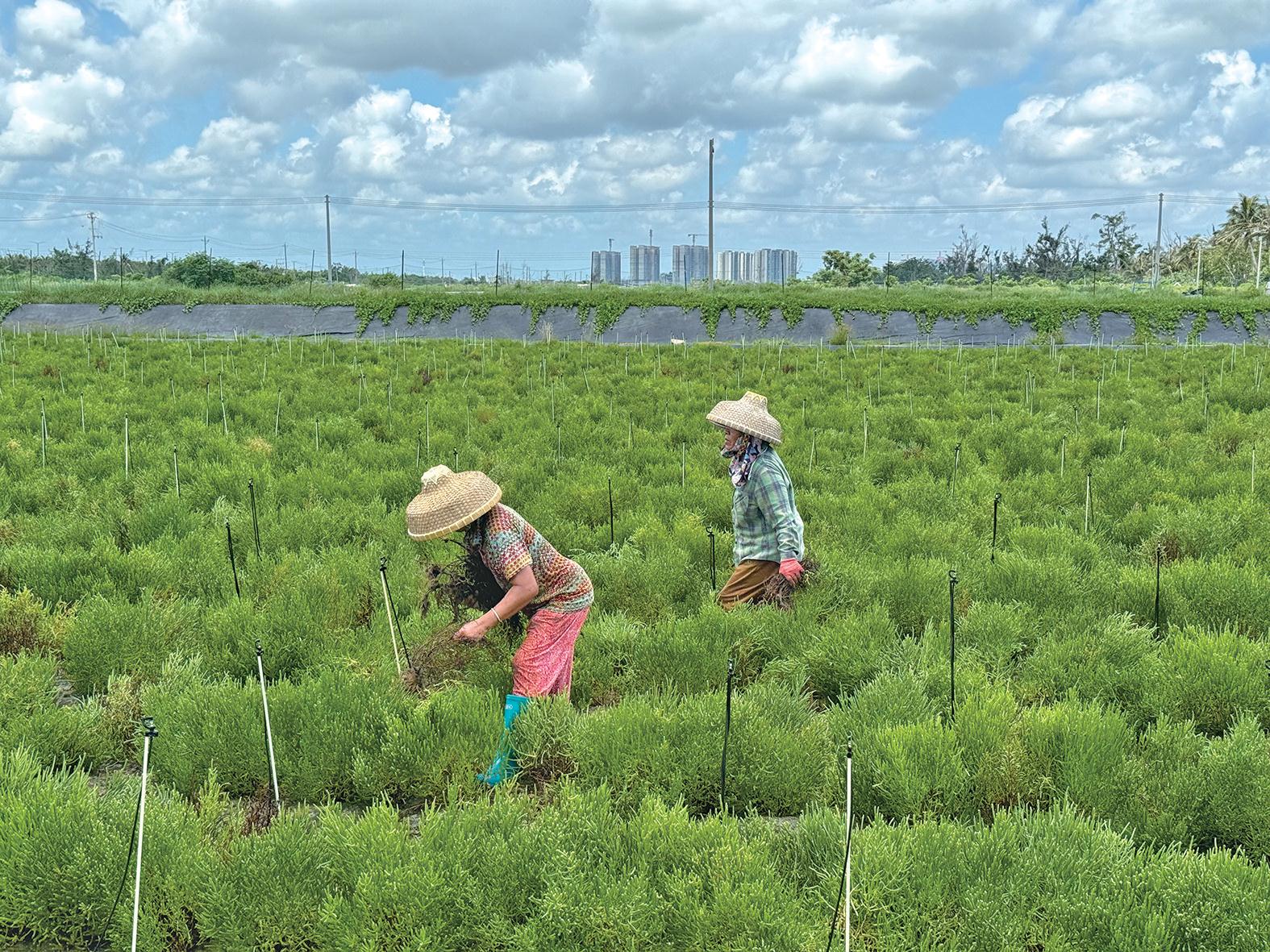
Group 1 - The article highlights the successful cultivation of sea worm grass in saline-alkali land in Hainan, showcasing a green transformation in the local agricultural sector [3][4]. - Sea worm grass is a high-value, salt-tolerant plant that can be consumed fresh or processed, with its oil being a nutritious edible health oil [3][4]. - The cultivation process utilizes seawater for irrigation, which helps purify aquaculture wastewater and addresses nutrient pollution issues [3]. Group 2 - Hainan Haiyu Biotechnology Co., Ltd. has established a breeding base for sea worm grass, covering an area of 170 acres, which includes various specialized facilities [4]. - The estimated yield from planting sea worm grass is about 40 kilograms of seeds per acre, potentially generating over 100,000 yuan in seed income based on current international market prices [5]. - The company plans to develop a range of products using sea worm grass extracts, including health supplements and functional foods, while promoting rural revitalization and sustainable agricultural practices [5].

海洋科普文创“搬”进美术馆
Zhong Guo Zi Ran Zi Yuan Bao· 2025-06-20 06:57
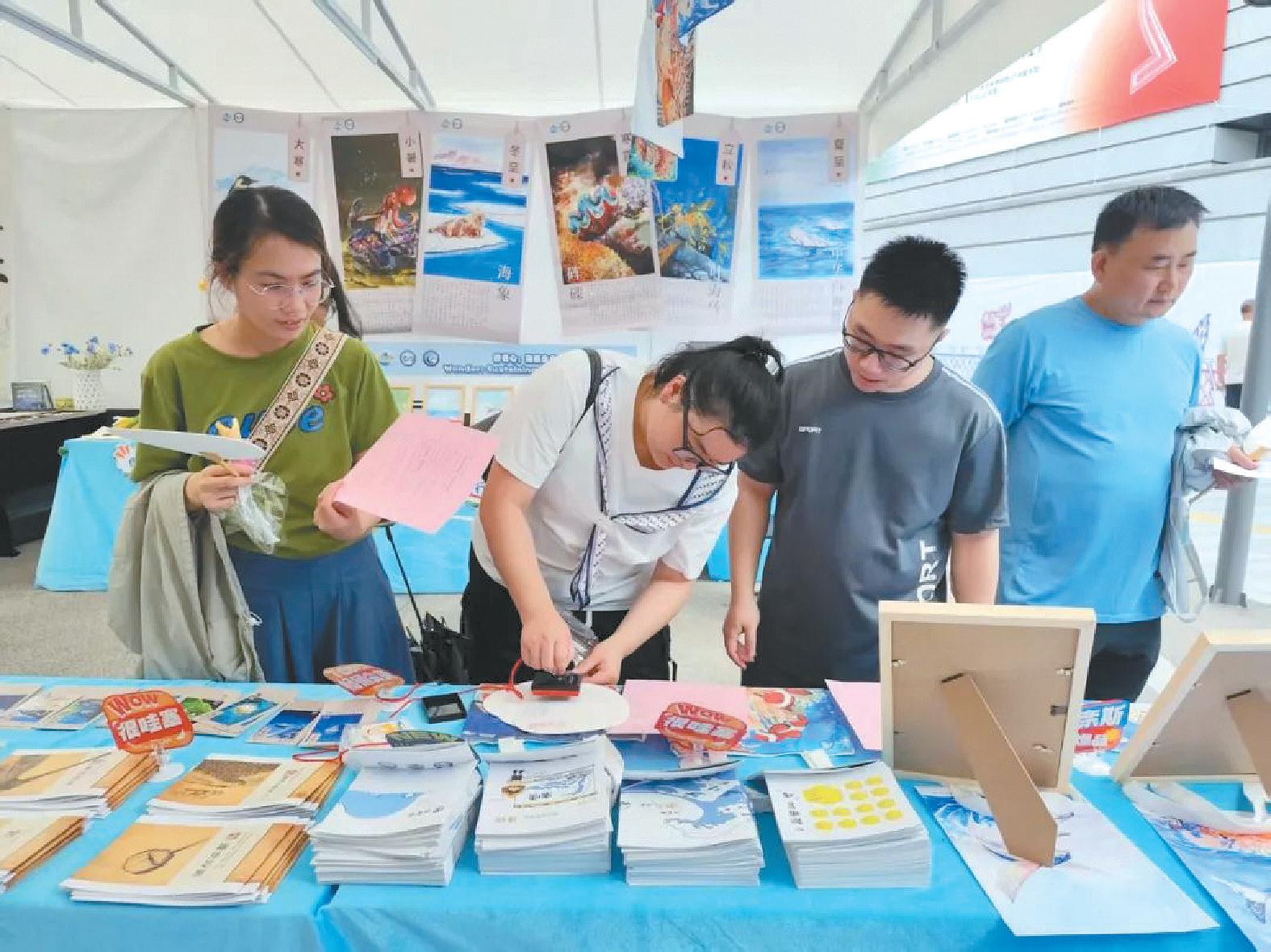
Group 1 - The event organized by the Guangdong Ocean Association and the Guangzhou Marine "Dual Carbon" Research Association aimed to raise awareness about marine ecosystem protection through a series of marine science popularization activities [1][4] - The market featured a series of watercolor paintings that combined the 24 solar terms of traditional Chinese culture with South China Sea culture, showcasing 24 unique marine species [1] - Educational materials distributed at the event included a brochure on "Protecting Biodiversity," which integrated marine culture with traditional Chinese art elements, enhancing public understanding of marine ecosystems [1] Group 2 - Various creative products such as deep-sea fish-themed hair accessories and natural resource-themed fridge magnets were popular among attendees, indicating a strong public interest in marine science [2] - The event included an interactive stamp collection activity, engaging the audience further in marine conservation efforts [3] - The use of art as a medium in the event helped to instill the message of "harmonious coexistence between humans and marine ecosystems" in the minds of participants [4]
打造蓝色科技方舟——浙江大学摘箬山海洋科技示范岛建设纪实
Zhong Guo Zi Ran Zi Yuan Bao· 2025-06-20 02:25
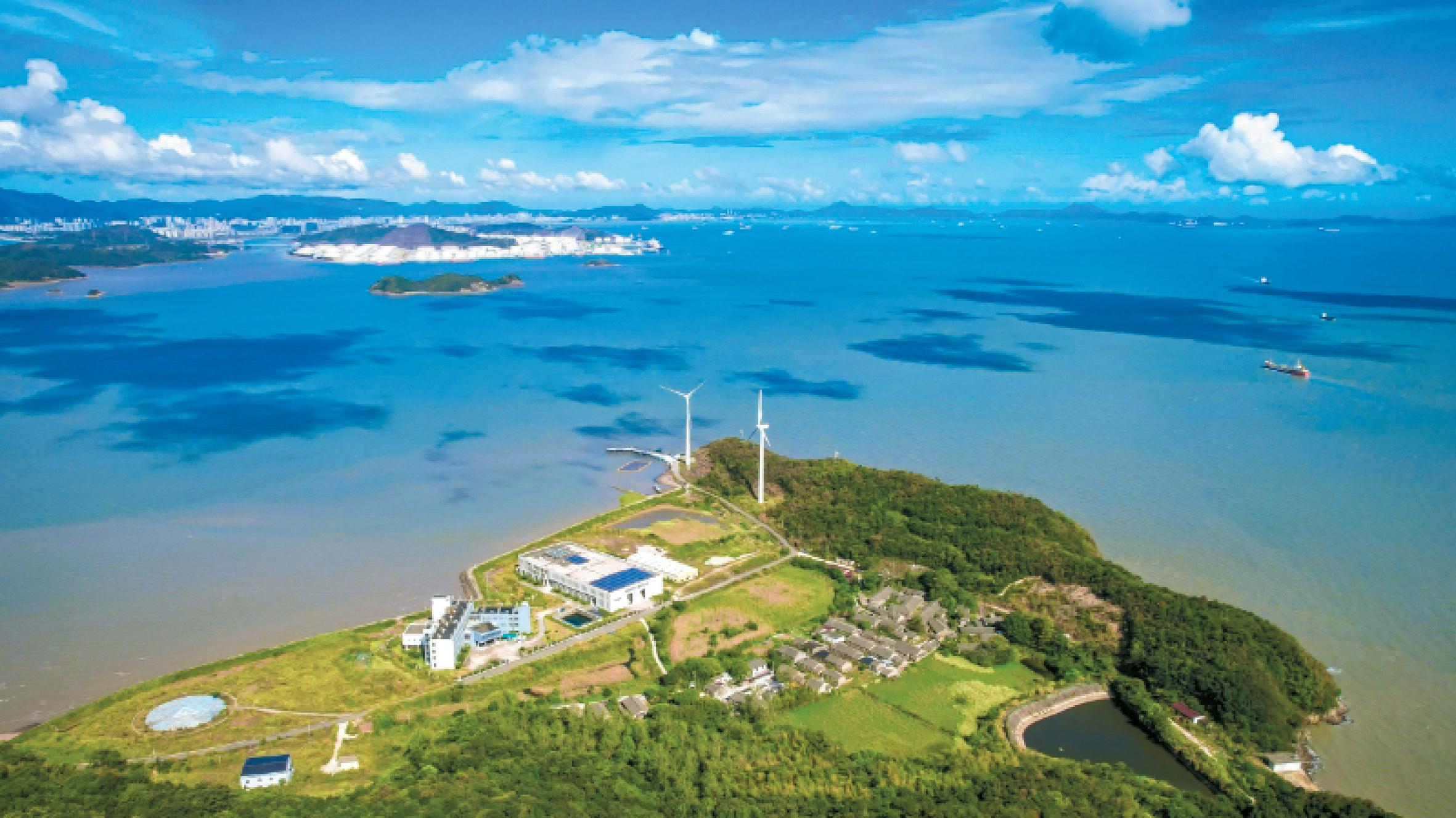
Core Viewpoint - The establishment of the National Marine Comprehensive Experimental Field in Zhoushan, supported by Zhejiang University and local government, aims to enhance marine technology innovation and industry development through collaboration among academia, research institutions, and enterprises [4][7][9]. Group 1: Infrastructure and Facilities - The Zhikua Mountain Marine Science Demonstration Island, the first of its kind in China, was officially launched in 2011 and completed a 15,430 square meter experimental base by 2014, which includes various marine research facilities [6][16]. - The base has secured a research and teaching sea area of 18.5 hectares and supports practical training and research through the "Zijin Port" vessel docked at the Zhoushan scientific research terminal [6][16]. - Additional infrastructure, such as the ferry and ramp docks, was completed in 2017 to ensure efficient operations for experimental vessels [6][16]. Group 2: Research and Development Projects - Since its opening in 2014, the facility has developed over ten marine technology demonstration projects, including the "Huajiachi" floating scientific experimental platform and a tidal energy power generation test station [9][17]. - The "Huajiachi" platform is the first floating marine test platform in China, capable of conducting various tests related to marine conditions and renewable energy [9][17]. - The tidal energy test station includes a 60 kW unit, which is the longest-running tidal energy unit in China, and a 120 kW unit that was among the first to be connected to the grid [9][17]. Group 3: Collaborative Efforts and Educational Impact - The Zhikua Mountain facility promotes collaboration among universities, research institutions, and enterprises to accelerate marine technology transfer and industrialization [9][12]. - It serves as a practical training base for marine science students, supporting various undergraduate courses and summer practice activities for both domestic and international students [12][22]. - The facility also engages in outreach activities, such as the "Big Hand Pulling Small Hand" initiative, to inspire local students and raise awareness about marine science [12][22].
科海观澜/用科技打通更多“两山”转化路径
Zhong Guo Zi Ran Zi Yuan Bao· 2025-06-20 02:05
Core Viewpoint - The article emphasizes the increasing role of technological innovation in transforming ecological advantages into economic benefits, addressing challenges in measuring, trading, and monetizing ecological products through advanced technologies like satellite remote sensing, artificial intelligence, and blockchain [1][2][19]. Group 1: Technological Innovation in Ecological Value - Technological innovation provides effective tools for precise quantification of ecological value, enabling dynamic assessment and quantification of ecosystem services [1][2][19]. - New technologies allow for the conversion of forest carbon sequestration capabilities into tradable carbon reduction credits, facilitating digital rights confirmation and value transformation of ecological resources [1][2][19]. - Digital platforms have been developed to calculate Gross Ecosystem Product (GEP) efficiently, significantly enhancing the recognition of ecological value [1][2][19]. Group 2: Market Mechanisms and Trading Platforms - Technology plays a crucial role in reshaping the trading model of ecological products, with the integration of blockchain and IoT enhancing transaction efficiency [1][2][19]. - Emerging platforms like "Two Mountains Cloud Trading" and "Forestry Carbon Supermarket" have improved the matching of supply and demand for ecological products while reducing transaction costs and ensuring traceability throughout the process [1][2][19]. Group 3: Dual Enhancement of Ecological Products - Technological advancements have effectively driven both the quantity and quality improvements of ecological products, addressing challenges in ecological restoration and promoting continuous environmental improvement [2][20]. - The application of new technologies aids in upgrading traditional green industries, leading to increased production and income, as well as extending product chains through deep processing [2][20]. Group 4: Future Directions for Technological Innovation - There is a need to accelerate breakthroughs in core technologies to solidify the technical foundation for quantifying and transforming ecological value [2][20]. - Innovations in market mechanisms and the establishment of intelligent trading platforms are essential for creating a more efficient digital trading environment [2][20]. - Strengthening interdisciplinary talent cultivation and enhancing public awareness of ecological product value are critical for fostering a green consumption mindset [3][21]. Group 5: International Cooperation and Standards - Deepening international cooperation and actively participating in the formulation of relevant international standards are necessary for advancing global ecological governance systems [4][21]. - The article advocates for leveraging technological innovation as a driving force to continuously unlock the potential of ecological product value, contributing to global green development [5][21].
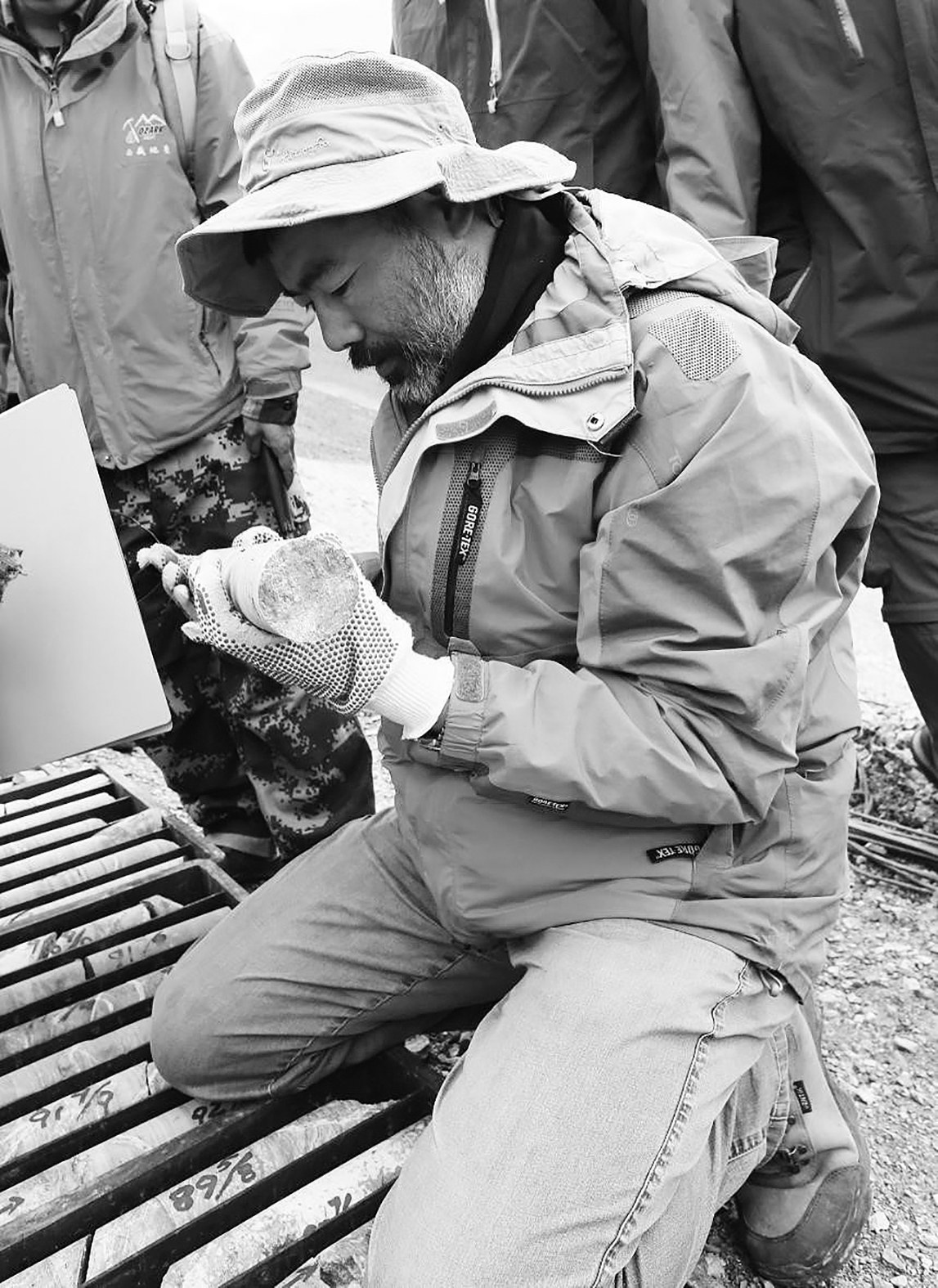
瞄准攻克找矿突破“卡脖子”难题——记自然资源部成矿作用与资源评价重点实验室
Zhong Guo Zi Ran Zi Yuan Bao· 2025-06-20 01:58
Core Viewpoint - The article discusses the advancements and innovations in mineral exploration and resource evaluation led by the Natural Resources Ministry's key laboratory, focusing on addressing critical issues in China's mineral resource dependency and enhancing self-sufficiency in strategic minerals [4][6][16]. Group 1: Innovations in Mineral Exploration - The laboratory has developed new theories and methods for mineral exploration, significantly improving the country's self-sufficiency in mineral resources [6][16]. - Innovations include the "gas-lithium dual exploration" mechanism, which has led to significant discoveries of lithium and potassium resources in various regions, including Sichuan and Yunnan [7][19]. - The laboratory has established advanced geochemical analysis instruments and remote sensing technologies to enhance mineral resource evaluation [6][18]. Group 2: Resource Discoveries and Predictions - New lithium resources of 12.84 million tons were discovered in the Markang area, and significant potassium resources were predicted in the Lop Nur region, with estimates of 1 billion tons of potassium chloride [7][19]. - The laboratory's research has led to the identification of additional manganese and copper resources in various provinces, contributing to the overall mineral resource inventory [7][19]. Group 3: Talent Development and Recognition - The laboratory has a strong team of researchers, including two academicians and numerous PhD holders, focusing on nurturing young geological talents [12][20]. - Notable achievements include the awarding of the Bolivia-China Friendship Award to Academician Mao Jingwen for his contributions to international academic exchanges and mineral exploration [12][20]. - Recent recognitions include the election of researcher Tang Juxing as an academician of the Chinese Academy of Engineering for his work on copper-gold mineral resources [13][20]. Group 4: Technological Advancements - The laboratory has made significant progress in developing new equipment, including environmentally friendly drilling technologies and advanced analytical methods for mineral exploration [10][19]. - Innovations in remote sensing and visualization techniques have improved the understanding of deep mineralization processes and geological information asymmetries [19][20]. Group 5: Future Directions - The laboratory aims to enhance international collaboration and expand research areas to address complex geological problems and foster innovative outcomes [15][20]. - Plans include implementing strict performance assessments and incentive mechanisms to promote scientific research and talent cultivation [15][20].
耸立在原点的“山峰” 记中华人民共和国水准原点管护团队
Zhong Guo Zi Ran Zi Yuan Bao· 2025-06-19 07:48
Core Points - The article highlights the significance of the Chinese vertical datum point located in Qingdao, which serves as the national reference for elevation measurements, established in 1957 and maintained by dedicated personnel over the decades [1][4][10] Group 1: Importance of the Vertical Datum Point - The vertical datum point, established on Mount Guanshan in Qingdao, is crucial for unifying elevation measurements across China, allowing for consistent mapping and engineering projects [3][4] - The height of the vertical datum point is precisely measured at 72.260 meters, which is used as the baseline for all elevation calculations in the country [2][4] Group 2: Historical Context and Development - Prior to the establishment of the unified vertical datum point, multiple reference points existed, leading to inconsistencies in elevation data across regions, sometimes differing by 50 to 60 meters [3][4] - The selection of Qingdao as the location for the vertical datum point was based on its geographical advantages, including stable geological conditions and a long history of tidal observations dating back to 1898 [3][4] Group 3: Maintenance and Management - The management of the vertical datum point has been entrusted to the Qingdao Surveying and Mapping Research Institute since 1963, with dedicated personnel ensuring its upkeep and protection [4][5] - The current caretakers utilize modern technology, including geographic information systems and big data, to enhance the management and protection of the vertical datum point [7] Group 4: Contribution to National Development - The vertical datum point has facilitated the development of a comprehensive elevation network across China, supporting various sectors including infrastructure, transportation, and urban planning [8][9] - The surveying team is actively involved in providing comprehensive surveying services for urban projects, including the Qingdao urban rail transit system, ensuring safety and efficiency in construction [9]
广西4天成功避险17起地灾
Zhong Guo Zi Ran Zi Yuan Bao· 2025-06-19 03:16
连日来,受今年第1号台风"蝴蝶"和高空槽、季风加强影响,广西壮族自治区多地迎来集中降雨过程。6 月14日至17日,地处桂东南和北部湾沿海的玉林、梧州、防城港等地先后成功避险及有效预警17起崩 塌、滑坡地质灾害,避免118人可能因灾伤亡。 6月16日下午,广西登记在册的梧州市万秀区夏郢镇北胜村天狮组、苍梧县梨埠镇华映村湾面组两处崩 塌隐患点自动监测设备先后触发预警,当地及时组织撤离群众4户17人。3分钟后两处隐患点均发生崩 塌,各造成1间房屋损毁。 6月17日10时30分,防城港市东兴市根据降雨趋势叫应马路镇政府,及时撤离马路村界牌组1户受威胁群 众,5分钟后该户屋后边坡发生崩塌,所幸叫应和组织撤离及时,避免2人伤亡。 6月14日16时57分,广西自然资源厅对外发布博白县地质灾害气象风险橙色预警,并通知当地加强巡查 监测。当地政府根据预案要求,于当日撤离受威胁的东平镇枫木村石载下屯2户、水鸣镇新和村新厚塘 屯1户人家。随后,两屯相继发生滑坡和崩塌,所幸预警精准、撤离及时,避免14人伤亡。 6月14日18时10分,监测员在巡查中发现北流市六麻镇旺坡村木古冲组1户房子屋后冒浑水,立即向上级 报告。广西厅地质灾害防治 ...
河北打好地灾防范“主动仗” 强化巡查排查、预警预报和应急处置
Zhong Guo Zi Ran Zi Yuan Bao· 2025-06-19 03:16
Group 1 - The meeting emphasized the need for enhanced geological disaster prevention measures during the flood season, particularly due to increased rainfall and the potential for extreme weather events in Hebei province [1][2] - Local authorities are required to focus on key periods of risk, specifically the "July to August" timeframe, and to initiate comprehensive meteorological risk warning systems for geological disasters [1][2] - Continuous monitoring and inspection are mandated, with a focus on disaster-prone areas, urban population centers, and sensitive regions to ensure early detection and reporting of potential hazards [1][2] Group 2 - The meeting highlighted the importance of strengthening early warning and forecasting systems, including close monitoring of severe weather conditions and timely dissemination of geological disaster warnings [2] - Local governments must implement emergency response plans effectively, ensuring preparedness and the ability to evacuate communities quickly in the event of a geological disaster [2] - There is a call for increased public awareness and preventive measures against construction activities that may trigger geological disasters, particularly in rural areas [2]
专家共议极地野外站联网建设
Zhong Guo Zi Ran Zi Yuan Bao· 2025-06-19 02:21
Core Viewpoint - The annual academic committee meetings of China's polar research stations focused on networking, scientific innovation, and international cooperation for the year 2024 and beyond [1][2] Group 1: Meeting Outcomes - The academic committees acknowledged the significant achievements of the polar research stations in scientific observation, data integration, and open sharing services for the year 2024 [1] - The 2025 work plan and open fund review results were approved, with clear goals and feasible paths outlined for the upcoming year [1] Group 2: Constructive Suggestions - The committees proposed a long-term development plan focusing on key scientific issues such as polar ecological environment changes and ice mass balance [2] - Recommendations included enhancing data quality, optimizing sensor networks, and creating a high-precision polar database recognized internationally [2] - Emphasis was placed on collaborative innovation, interconnecting data resources with national polar science data centers, and engaging in international scientific programs to enhance China's global influence in polar research [2]