
Zhong Guo Dian Li Bao

Search documents
山东:54座储能电站参与电力现货交易 总容量达689.9万千瓦
Zhong Guo Dian Li Bao· 2025-12-31 01:36
Group 1 - The core point of the articles highlights the significant growth of new energy and energy storage capacity in Shandong, with the total installed capacity of new energy reaching 10.045 million kilowatts, marking a historic milestone [1] - During the 14th Five-Year Plan period, Shandong's new energy capacity is expected to grow at an annual rate of 25%, reaching a total installed capacity of 125 million kilowatts, which will account for 50% of the total installed capacity [1] - The State Grid Shandong Electric Power Company has completed 271 independent energy storage connection studies, totaling 44.79 million kilowatts, and has reduced the number of connection steps by 50% and response time by 30% [1] Group 2 - Shandong has established the first market-oriented profit mechanism for energy storage in the country, addressing the cost recovery challenges for storage projects [1] - A total of 54 energy storage stations in Shandong are currently participating in the electricity spot market, with a total capacity of 6.899 million kilowatts [1] - The Shandong Electric Power Company has built a national grid battery storage technology laboratory to focus on technological innovation related to new energy storage and new power system construction [2] - The company is promoting distributed energy storage in areas with dense distributed photovoltaics and has developed a "cloud storage" control platform to enhance grid regulation [2] - A customized "charging and discharging strategy" has been developed for energy storage stations based on different scenarios such as power supply assurance and consumption promotion [2]
华能苏计沙地200万千瓦光伏项目全容量并网发电
Zhong Guo Dian Li Bao· 2025-12-31 01:08
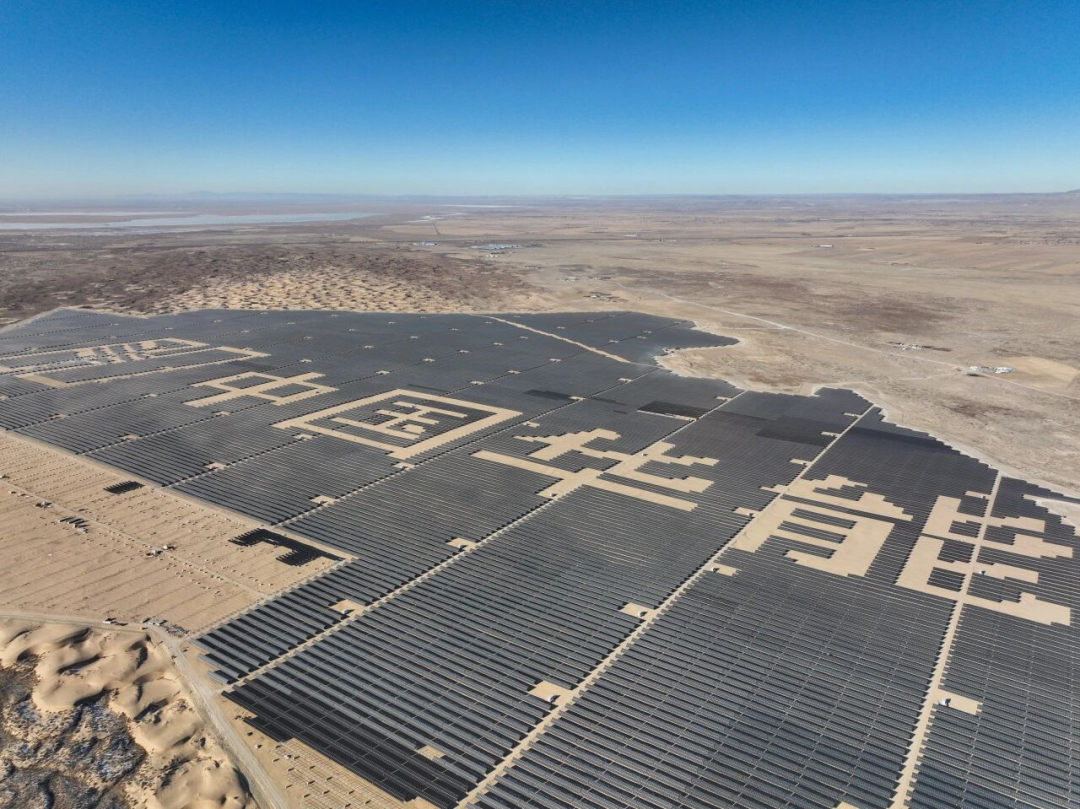
12月30日,国家第三批大型风电光伏基地重点项目——华能苏计沙地200万千瓦光伏项目全容量并网发电,首次在沙地环境内实现柔性支架光伏技术应 用。项目位于内蒙古巴彦淖尔市乌拉特前旗,总装机容量200万千瓦,其中包含30万千瓦柔性支架光伏,可通过高净空、大跨距、少基础设计,有效避免 沙地环境内传统光伏支架易陷沙、难维护等问题。项目配套建设30万千瓦储能,年发电量可达29.6亿千瓦时,每年可减少二氧化碳排放超268万吨,成为 推动地区绿色发展的强劲"引擎"。 索比光伏网 https://news.solarbe.com/202512/31/50015877.html ...


国家能源集团首个塔式光热项目并网发电
Zhong Guo Dian Li Bao· 2025-12-31 01:08
Group 1 - The core viewpoint of the article highlights the successful grid connection of the first tower solar thermal project by the National Energy Group, which utilizes an innovative "solar thermal + photovoltaic" complementary model [1] - The project, located in Qinghai, has a capacity of 100,000 kilowatts and features a 12-hour heat storage system, allowing for the storage of excess solar energy and stable power supply [1] - Upon operation, the project is expected to generate an average annual electricity output of approximately 223 million kilowatt-hours, saving 68,100 tons of standard coal and reducing carbon dioxide emissions by about 185,400 tons each year [1]
全国首个省级双碳服务平台上线试运行
Zhong Guo Dian Li Bao· 2025-12-30 07:30
Core Insights - The Hunan Province Carbon Neutrality Comprehensive Service Platform has officially launched, marking a significant step in the province's digital empowerment for green transformation and collaborative development [1] Group 1: Digitalization in Carbon Neutrality - Hunan Province is actively exploring the deep application of digital means in carbon neutrality efforts, aiming to build a unified carbon data platform across the province [1] - The platform will leverage big data and artificial intelligence technologies, focusing on two main business scenarios: comprehensive carbon governance and low-carbon development for enterprises [1] Group 2: Core Functional Modules - The carbon monitoring function establishes a comprehensive carbon emission data measurement and monitoring system from energy production to end consumption, based on energy supply and consumption data [1] - The platform has connected with over 300 key energy-consuming units, each with an annual comprehensive energy consumption exceeding 10,000 tons of standard coal, to create energy efficiency and carbon efficiency assessment functions at the process and product levels [1] - The carbon forecasting function integrates various model algorithms, including industry field analysis methods, to scientifically predict the peak year and peak level of carbon emissions in the province [1]
华电巴塘120万千瓦光伏项目正式投产发电
Zhong Guo Dian Li Bao· 2025-12-30 07:23
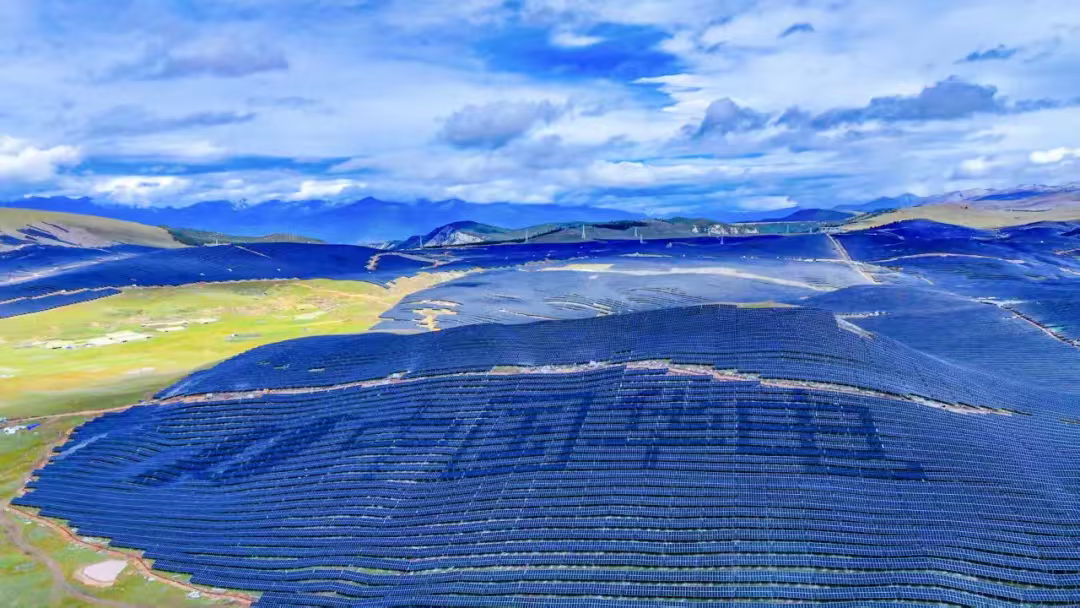
据悉,该项目投产后每年可向华中地区输送绿电21亿千瓦时,节约标准煤约64万吨,减排二氧化碳超 170万吨,对保障国家能源安全、优化能源结构、促进区域协调发展、助力"双碳"目标实现具有重要意 义。 该项目作为金沙江上游清洁能源基地重要组成部分,创新"板上发电、板下牧牛、周边造景、产业富 民"模式,建设期间累计为当地提供超过2000个就业岗位,实现了工程建设与生态保护、民生改善的协 同推进。 12月30日,国家"十四五"规划重点建设的金沙江上游清洁能源基地新能源先导工程——华电巴塘120万 千瓦光伏发电项目正式投产发电。作为我国首个实现"当年开工、当年投产"的百万千瓦级高原山地光伏 工程,该项目的投产不仅为构建新型能源体系筑牢绿色根基,更成为能源强国战略在高原地区落地生根 的生动实践。 华电巴塘光伏项目位于四川甘孜巴塘4000~5100米的雪域高原。217万块光伏组件铺展成2.5万亩"蓝色 海洋",配套建设122千米送出线路及2座220千伏智能升压站。在建设过程中,该项目不仅创下日装1600 组组串、成桩1.58万根的行业纪录,更成功突破高海拔抗冰防震、冻土基础稳定等多项核心技术瓶颈, 为高原大型光伏项目建设积累 ...
我国首个百万千瓦级高原山地光伏工程投运
Zhong Guo Dian Li Bao· 2025-12-30 06:20
Core Insights - The Huadian Batang 1.2 million kW photovoltaic power generation project has officially commenced operation, marking a significant milestone in China's "14th Five-Year Plan" for clean energy development [1][6] - This project is the first of its kind in China to achieve "start and operation in the same year" for a million-kilowatt-level high-altitude photovoltaic project, contributing to the establishment of a new energy system and the implementation of the energy power strategy in high-altitude regions [1][6] Project Details - Located in the snow-capped plateau of Batang, Sichuan, the project features 2.17 million photovoltaic modules spread over 25,000 acres, along with 122 kilometers of transmission lines and two 220 kV intelligent booster stations [3] - During construction, the project set industry records by installing 1,600 string units per day and driving 15,800 piles, while overcoming technical challenges related to high-altitude ice resistance, seismic stability, and frozen soil foundation [3] Economic and Environmental Impact - As a key component of the upper reaches of the Jinsha River clean energy base, the project has created over 2,000 local jobs during its construction, promoting a model that integrates power generation, livestock farming, landscape creation, and local economic development [5] - Once operational, the project is expected to deliver 2.1 billion kWh of green electricity annually to Central China, saving approximately 640,000 tons of standard coal and reducing carbon dioxide emissions by over 1.7 million tons, thereby playing a crucial role in national energy security and the achievement of carbon neutrality goals [6]

甘肃召开全省能源工作会议:加快新型能源体系建设
Zhong Guo Dian Li Bao· 2025-12-30 01:19
Group 1 - The core viewpoint of the news is the emphasis on improving the business environment and advancing energy work in Gansu Province, with a focus on becoming a significant base for new energy and new energy equipment manufacturing [1] Group 2 - The meeting conveyed the spirit of several important conferences, including the Central Economic Work Conference and the Provincial Economic Work Conference, highlighting the importance of aligning local policies with national strategies [1] - In terms of energy work, the meeting called for the implementation of a new energy security strategy, aiming to transition Gansu from an energy-rich province to an energy-strong province [1] - The goal is to accelerate the construction of a new energy system to provide robust energy support for the province's modernization efforts [1]
山东机制电价探索:如何平衡绿色转型与工业经济
Zhong Guo Dian Li Bao· 2025-12-30 00:19
Core Insights - The implementation of the market-oriented pricing mechanism for renewable energy in Shandong Province marks a significant shift towards market-driven cost transmission in the renewable energy sector [1][3][10] - The new pricing mechanism aims to balance the reasonable returns for renewable energy companies while considering the impact of price fluctuations on consumer electricity costs [1][3] Group 1: Market Mechanism and Pricing - The new pricing mechanism allows for the full integration of wind and solar power into the electricity market, with prices determined through market competition [1][3] - The average price for the new energy mechanism in Shandong is reported to be 5.6 cents per kilowatt-hour, the highest in the country [1] - The mechanism shifts the costs associated with the volatility of renewable energy to consumers, impacting their electricity costs directly [3][5] Group 2: Economic Impact and Industry Transformation - The implementation of the mechanism is expected to create structural cost pressures in the short term, particularly affecting high-energy-consuming industries such as non-ferrous metals, building materials, petrochemicals, and steel [5][6] - The pricing mechanism is anticipated to drive investment in energy-saving technologies and encourage industries to move towards higher value-added sectors [6][9] - The long-term effects of the pricing mechanism may lead to a decrease in energy consumption per unit of GDP, promoting a more efficient economic model [6][11] Group 3: Challenges and Future Considerations - The transition to a market-based pricing mechanism raises concerns about potential systemic risks in the electricity market due to price signal distortions [10] - Balancing the dual goals of achieving carbon neutrality and maintaining industrial competitiveness will be crucial in future energy planning [9][11] - The experience in Shandong could serve as a reference for broader national reforms in energy marketization and system transformation [11]
售电量突破3000亿 ——国网福建电力“双满意”工程再谱新篇
Zhong Guo Dian Li Bao· 2025-12-29 03:23
截至12月25日,国网福建省电力有限公司(以下简称"福建电力")年度售电量达3004.38亿千瓦时,同 比增长5.88%,突破3000亿千瓦时;福建全社会用电量达3487.8亿千瓦时,同比增长6.4%。这一数字约 等于3个三峡水电站的年均发电量,标志着福建电力供应保障能力迈上新台阶。 福建,这片自古便有"敢拼会赢"精神的土地上,正在描绘高质量发展的绚丽篇章。 电力是经济社会发展的重要基础和支撑。从2010年1000亿千瓦时到2018年2000亿千瓦时再到目前的3000 亿千瓦时,售电量的快速倍增,不仅折射出福建经济发展总体平稳、稳中有进,更是福建电力深化新时 代电力让党和政府满意、让人民群众满意"双满意"工程,持续推动能源转型,增强保供能力,提升服务 水平的生动注脚。 含"活"因子筑牢增长根基 新落地总投资33亿元的稀土冶炼分离及深加工、总投资15.6亿元的德尔含氟半导体等重大项目……近年 来,龙岩市发挥资源优势,发展县域重点产业链,"矿业+新能源""矿业+新材料"不断延链补链。1~9 月,锂电新能源产值增长17.1%,新材料产值增长24.4%,在新质生产力的推动下,龙岩市不断加快从 原材料大市迈向新材料强市 ...
市场化改革的破局之道与战略前瞻
Zhong Guo Dian Li Bao· 2025-12-29 03:23
随着"双碳"目标的深入推进和新型电力系统的加速构建,电力系统的结构形态、运行特性和平衡机制正 在发生深刻变革。高比例新能源的随机性、波动性特征,对电网的实时功率平衡与频率稳定提出了前所 未有的挑战。在此背景下,作为维系电网安全、优质运行关键环节的调频辅助服务,其市场化改革的重 要性与紧迫性日益凸显。 新型电力系统电网频率稳定对实时功率平衡的要求日益提升,传统以"两个细则"为核心的行政补偿机制 难以适应多元化调频资源的需求。2021年12月,国家能源局印发的《电力辅助服务管理办法》奠定了市 场化改革的顶层设计基础;2024年2月《关于建立健全电力辅助服务市场价格机制的通知》进一步明确 了按市场价格竞争的方向;2025年3月,华中能源监管局印发的《湖北、江西、重庆电力调频辅助服务 市场运行规则》则标志着重庆调频辅助服务全面进入市场化交易新阶段。这一系列政策的核心逻辑,是 通过市场机制精准发现调频资源价值,以最低社会总成本保障新型电力系统安全稳定运行。 重庆电网作为华中区域的重要组成部分,其规模小、外来电占比高、水电季节性波动大等特点,使其成 为研究调频市场改革的典型样本。市场化改革通过价格信号激发储能、水电等灵活 ...