
Jing Ji Wang

Search documents
文旅市场开门红 消费活力加速释放
Jing Ji Wang· 2026-01-06 06:24
Core Insights - The overall cultural and tourism market in China during the 2026 New Year holiday was stable and orderly, with significant consumer activity [1][2] - Domestic travel reached 142 million trips, generating a total expenditure of 84.789 billion yuan [1][2] - Popular travel trends included family trips, small town tourism, and outbound travel, contributing to a strong start for the tourism market [1][2] Domestic Travel Trends - Data from Qunar indicated a 26% year-on-year increase in flight bookings to popular destinations on January 1, with hotel occupancy in domestic hotspots rising by 120% [3] - Consumer spending power increased, with a more than 20% rise in the number of items purchased per person and over 30% growth in average spending [3] - Family travel saw an 80% increase in participation, with families preferring high-star hotels and full-service resorts [3] - Small town tourism remained popular, with significant order growth for destinations like Anji (930%), Qingyuan (774%), and others [3] Outbound Travel Growth - There was a notable increase in outbound travel compared to the previous year, with a 40% rise in the number of travelers visiting popular countries [4] Hainan Tourism Surge - Hainan experienced a significant increase in tourism during the New Year holiday, marking the first holiday after its border reopening [5] - The province welcomed 2.1716 million visitors, a 25.2% increase year-on-year, with total tourism expenditure reaching 3.136 billion yuan, up 28.9% [5] - Duty-free shopping in Hainan saw a remarkable rise, with sales of duty-free goods increasing by 52.4% and total spending reaching 712 million yuan, a 128.9% increase [5][6] International Visitor Trends - The New Year holiday attracted more foreign tourists to China, with a 110% increase in ticket bookings for inbound tourism [7] - Popular destinations for international visitors included major cities like Shanghai, Beijing, and Shenzhen, with significant growth in Hainan [7] - The "duty-free shopping + beach vacation" model has become a key attraction for international tourists, with inbound orders for Sanya increasing by 170% [7]

长江母亲河焕发生机活力
Jing Ji Wang· 2026-01-06 06:24
Core Viewpoint - The Yangtze River Economic Belt has achieved significant progress in ecological protection and green development over the past decade, emphasizing the integration of economic growth with environmental sustainability [1][2]. Group 1: Development Progress - The concept of "coordinated major protection, not major development" has been firmly established in the Yangtze River Economic Belt, leading to a more pronounced ecological foundation [2]. - Technological and industrial innovations have accelerated in the region, with significant achievements such as the "artificial sun" and targeted cancer drugs, showcasing the emergence of competitive innovative enterprises [2]. - The region has seen the establishment of world-class industrial clusters in automotive manufacturing and electronic information, enhancing its economic resilience and dynamism [2]. Group 2: Infrastructure and Transportation - The Yangtze River's shipping is a crucial component of the comprehensive transportation system, with ongoing efforts to modernize and enhance its capacity [4]. - Key projects include the expansion of major shipping channels and the implementation of green and smart transformation initiatives, such as the construction of pollution management facilities and the promotion of green vessels [4]. - The high-grade waterway mileage has reached 11,500 kilometers, significantly improving the navigational capacity for large vessels [4]. Group 3: Green and Low-Carbon Transition - The Yangtze River Economic Belt is a vital area for industrial aggregation, with a focus on promoting green and low-carbon transitions in industries [5][6]. - The establishment of innovation platforms and the development of key technologies in various fields have been prioritized to foster new growth drivers [5]. - Traditional industries are undergoing green transformations, with pilot cities and parks being developed to achieve carbon peak and zero-carbon goals [6].
铁血出征 再启新程——中金科技举行“征战2”主题活动
Jing Ji Wang· 2026-01-05 09:24
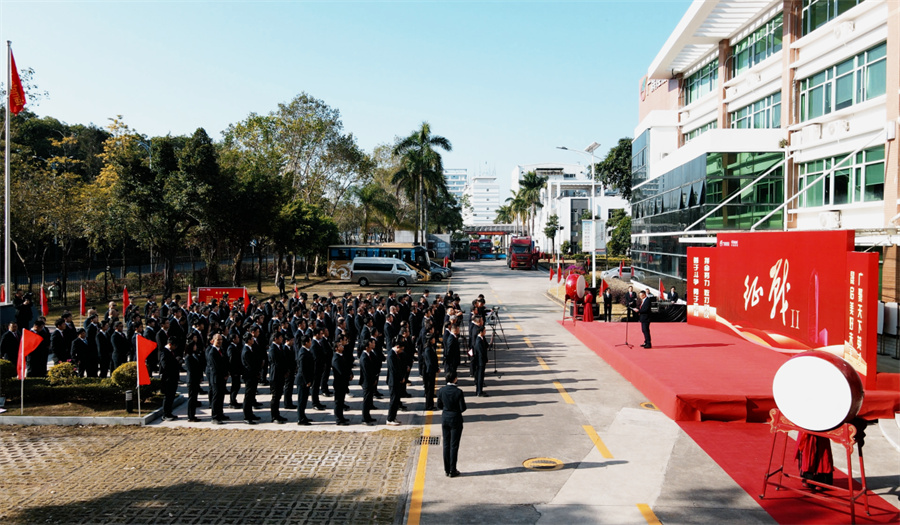
2026年1月3日,深圳市中金岭南下属中金科技在深圳坪山总部举行"征战2"主题活动。公司领导与所属企业班子成员、总部各部 室(中心)的负责人及各业务条线业务骨干、销售人员等182名员工,齐聚于司旗旁,共同总结2025年征战硕果,铿锵吹响2026 年奋进号角,誓师迈向世界一流新材料制造商新征程。 八时整,参会人员精神抖擞、意气焕发迈向"征战2"主题长幅卷轴,挥笔留名,以名为誓。晨曦中,酒红卷轴上的每一笔刻画, 皆承载着中金科技人"使命必达"的坚定意志与"问鼎一流"的崇高追求。 八时三十许,在公司党委副书记、工会主席袁朝雄鼓舞激越的主持声中,活动正式拉开序幕。战鼓声声破长空。随着"催征""征 战""出征"的激昂鼓点一次次擂响,活动高潮迭起。公司党委书记、董事长、总经理周平带领全体将士庄严宣誓:"我们自豪, 我们是忠诚担当、使命必达的中金科技人。我们晟行FAITH,锻造铁军本色;我们坚持党建引领、市场引领、创新引领;拼命 努力,敢打硬仗,善于斗争,勇于胜利;匠心铸魂,品质致胜,誓夺IPO成功,励志成为世界一流新材料制造商!"誓言铮铮, 气冲霄汉,彰显出中金科技人无所畏惧、必达使命的钢铁信念。 为进一步凝聚专业力量, ...

格力回应:家用空调不涨价,暂无“铝代铜”计划
Jing Ji Wang· 2026-01-05 09:17
Core Viewpoint - Gree Electric Appliances has committed to not raising prices for its home air conditioners despite recent market trends of price increases and the adoption of "aluminum instead of copper" technology by some competitors [1] Group 1: Company Response - Gree has received inquiries from investors and media regarding the recent price hikes in air conditioning products and the "aluminum instead of copper" plans from other companies [1] - The company emphasizes its commitment to consumer benefits by adhering to the national subsidy policy for home appliances in 2026 and ensuring that its home air conditioners will not see price increases [1] - Gree currently has no plans to adopt "aluminum instead of copper" technology, as it does not meet the company's quality and technical standards for its ten-year free repair service [1] Group 2: Consumer Assurance - Gree assures that if any future research on "aluminum instead of copper" meets its quality and technical standards, it will be clearly marked to protect consumer rights and choices [1]

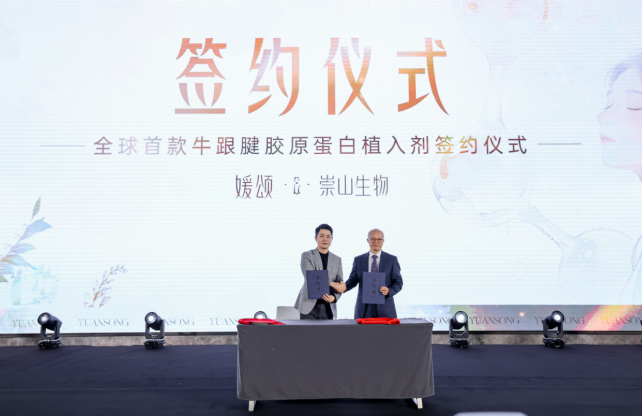
媛颂集团崇山生物达成战略合作 首款源自牛跟腱的胶原蛋白产品上市
Jing Ji Wang· 2026-01-05 08:22
Core Insights - The strategic partnership between Yuansong Group and Chongshan Biotechnology has led to the launch of the world's first collagen product derived from bovine tendons, named "Jiaoyuan Angel," which received Class III medical device registration approval from the National Medical Products Administration on December 10, 2025 [1][3] - The collagen market in China has reached a scale of 200 billion, with projections to grow to 500 billion by 2030, indicating significant growth potential in the industry [3] Product Advantages - "Jiaoyuan Angel" features a high concentration of medical collagen at 45 mg/ml, ensuring strong support [5] - The product is made from high-purity bovine tendon collagen, which guarantees the integrity of the raw material [5] - Advanced application technology allows for precise subcutaneous implantation, providing deeper support for the skin [5] - The development team overcame several technical challenges, establishing 45 mg/ml as the optimal concentration to balance collagen network formation and safety [5] - The product maintains biological activity and structural integrity through meticulous production processes [5] Market Trends - The introduction of "Jiaoyuan Angel" is expected to shift the focus of collagen applications from immediate filling effects to a trend of nutritional tightening in the industry [7] - Yuansong Group has established a strong presence in the medical aesthetics sector with several successful products, positioning itself as a market leader [7] - Analysts predict that "Jiaoyuan Angel" could capture significant market share quickly, potentially becoming a dark horse in the medical aesthetics market by 2026 [7]
外国游客为何喜爱游中国
Jing Ji Wang· 2026-01-05 02:16
Core Viewpoint - The recent announcement by the National Immigration Administration indicates a significant increase in inbound and outbound passenger flow during the 2026 New Year holiday, highlighting the positive impact of China's extended visa-free policies and optimized entry services on international tourism [1][2]. Group 1: Inbound Tourism Growth - The 2026 New Year holiday saw a substantial rise in foreign travelers coming to China, with over 320,000 inbound flight ticket bookings from January 1 to 3, representing an approximately 11% year-on-year increase [2]. - The number of foreign visitors entering China under visa-free policies reached 20.89 million in the first three quarters of 2025, marking a growth of over 50% compared to the previous year [2][3]. - The increasing popularity of "China tours" is attributed to the country's rich cultural resources and improved travel convenience, as highlighted by foreign travelers' positive experiences [2][5]. Group 2: China's Tourism Appeal - China's unique cultural heritage, impressive infrastructure, and relaxed visa policies are key factors driving its attractiveness as a travel destination [5][6]. - A recent survey indicated that China ranked sixth in the "most suitable countries for expatriates to live" list, a significant rise from the nineteenth position in 2024, reflecting high expatriate satisfaction [3]. - The World Travel and Tourism Council's CEO emphasized China's growing role in the global tourism economy, predicting it will become the largest tourism market in the coming years [4]. Group 3: Technological Integration in Tourism - The integration of technology and culture is creating new tourism experiences, such as augmented reality applications and carbon credit systems in Huangshan, enhancing visitor engagement and promoting sustainable practices [7][8]. - Innovative technologies like VR and exoskeleton robots are transforming traditional leisure activities, providing unique experiences that set China apart as a future tourism destination [8].
开年首周44只新基金开售!打响发行“第一枪”
Jing Ji Wang· 2026-01-05 02:16
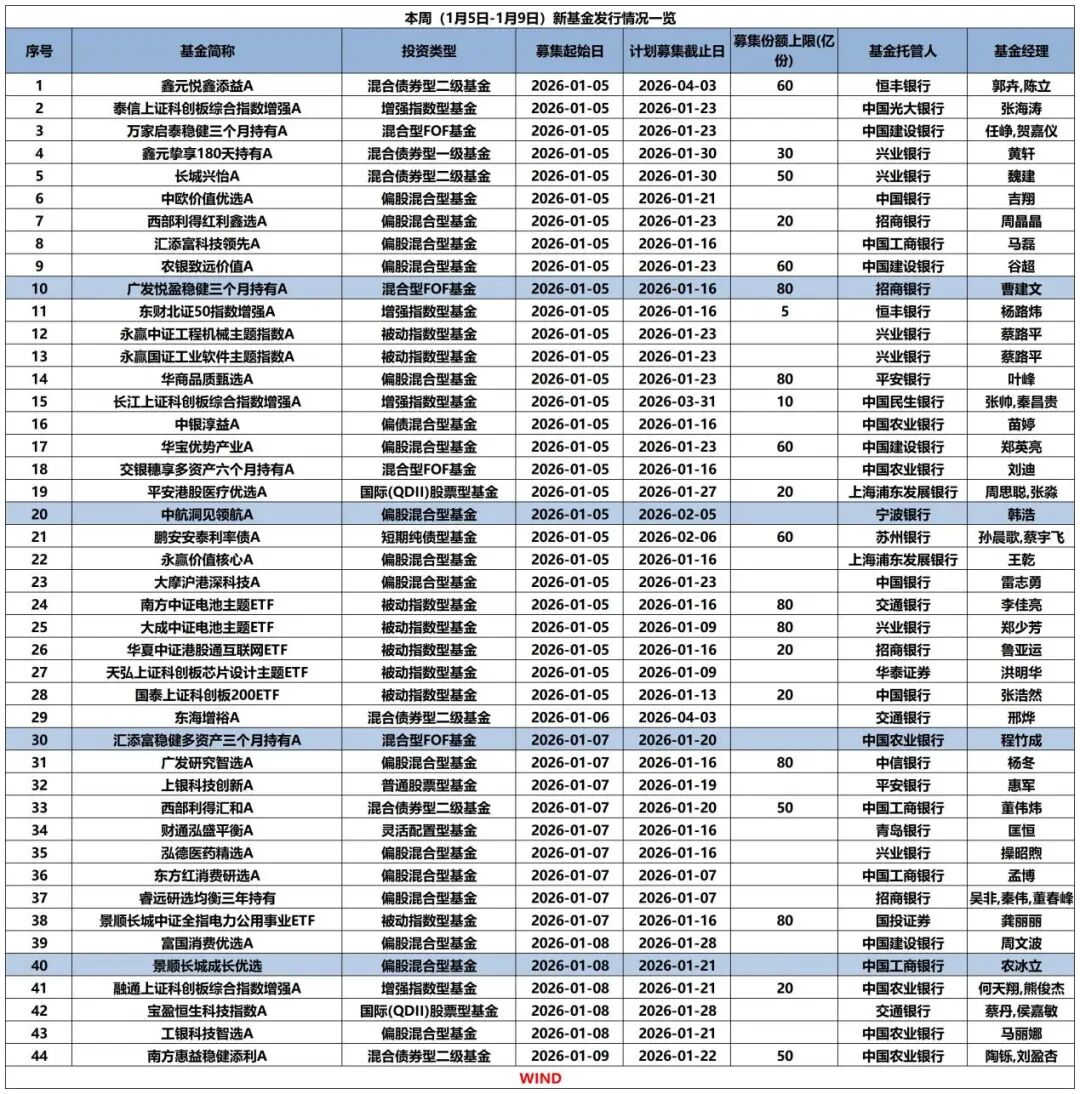
Core Insights - The public fund market has launched 44 new funds in the first week of January 2026, with a focus on equity and index funds, reflecting confidence in future market conditions [1][2][8] - Active equity funds and index funds are the main contributors to this issuance, with 19 active equity funds and 12 index funds launched [3][4] Fund Types and Strategies - Among the new active equity funds, 16 are mixed equity funds, indicating a strong preference for this category [3] - Notable funds include the Huatai-PineTech Leading Technology Fund, which focuses on global AI innovation and Chinese hard technology, and the China Europe Value Selection Fund, which emphasizes quality and value [4][5] - The West China Dividend Fund targets "insurance dividends + overseas dividends," reflecting a shift in financial and real estate sector dynamics [5] Market Trends and Future Outlook - The public fund market in 2025 saw a record issuance of 1,549 funds, with a total fundraising of 1,204.139 billion yuan, primarily driven by equity funds [8] - The outlook for 2026 suggests a continuation of the trend with a balanced focus on equity and fixed income products, driven by the demand for "fixed income +" products and alignment with national strategic directions [9]
收162万元好处费,评级公司总监获刑四年
Jing Ji Wang· 2026-01-05 02:16
Core Points - A case of bribery involving a non-state employee in the financial sector has emerged, highlighting issues of corruption within the industry [1][4] - The convicted individual, Liu, was sentenced to four years in prison and fined 100,000 yuan for accepting bribes totaling 1.62 million yuan [2][3] Group 1: Case Details - Liu, a market director at a rating agency, accepted bribes from a company in exchange for facilitating credit rating assessments, receiving a total of 1.62 million yuan between 2015 and 2017 [2][3] - Liu returned the entire amount of the bribes to the company before being apprehended by authorities in November 2023 [2][3] - The court upheld the conviction, rejecting Liu's claims that the funds were personal gifts and affirming that her actions constituted bribery [3] Group 2: Industry Context - Since 2025, there have been multiple cases of bribery in the financial sector, particularly in banking, securities research, and investment banking [4] - A recent case involved a chief analyst at a brokerage who accepted less than 200,000 yuan in bribes to enhance a company's market visibility, resulting in a ten-month prison sentence [4] - The prevalence of non-state employee bribery is noted to be more concealed, with recommendations for a comprehensive prevention strategy involving corporate governance, industry regulation, and legal enforcement [5]
张朝阳2026跨年演讲:解码太阳系奥秘,用数理公式演算宇宙谜题
Jing Ji Wang· 2026-01-04 08:12
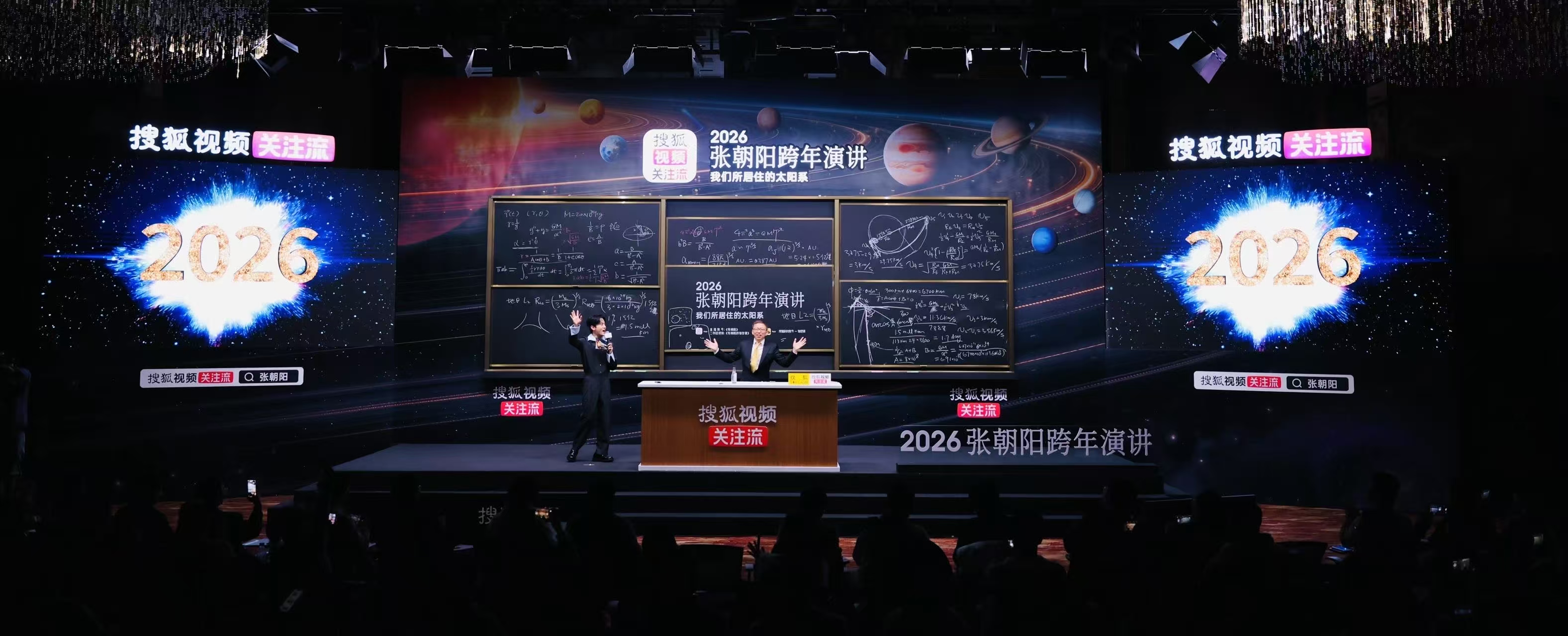
Core Viewpoint - The keynote speech by Zhang Chaoyang, founder and CEO of Sohu, focuses on the exploration of the solar system and its implications for human civilization, emphasizing the importance of understanding the laws governing the solar system as a key to understanding humanity's past and future [3][4]. Group 1: Solar System Exploration - The solar system operates under specific laws, and understanding these laws is crucial for humanity [4]. - Zhang Chaoyang describes the solar system as a "home" that is both distant and close, highlighting the need for exploration and understanding [4]. - The speech is characterized as a "archaeology" of the solar system, using Newton's laws as foundational principles to explore celestial mechanics [4][5]. Group 2: Human Advancement in Space - The development of AI and aerospace technology is propelling humanity towards a "multi-planet civilization" [3]. - Zhang outlines three key stages for human exploration beyond Earth: the escape phase dominated by Earth's gravity, the Hohmann transfer phase dominated by the Sun's gravity, and the capture phase dominated by Mars' gravity [6]. - The concept of Lagrange points is introduced as stable locations for deploying scientific instruments, such as the Webb Telescope [6]. Group 3: Educational Impact and Media Strategy - Zhang emphasizes the value of learning physics, which aids in understanding both macro phenomena like global warming and everyday experiences [9]. - The physics course has conducted 270 live sessions over four years, accumulating over 26,000 minutes of online content, contributing significantly to the knowledge base [9]. - The integration of traditional teaching with new media is seen as a meaningful approach to disseminating knowledge in the current digital age [9].
科兴再获独家大单:中标智利超800万剂流感疫苗订单
Jing Ji Wang· 2026-01-04 08:12
Core Insights - The Chilean government announced the results of the 2026 global tender for flu vaccines, with Sinovac becoming the exclusive supplier, securing orders exceeding 8 million doses [1] - This marks the second consecutive year that Sinovac has been the sole supplier for Chile's flu vaccine needs, indicating the recognition of Sinovac's product quality and international fulfillment capabilities by the country's public health system [1] - In 2025, Sinovac's flu vaccines administered in Chile exceeded 8.3 million doses, achieving approximately 80% coverage of the target population, which laid a solid foundation for the renewal of the contract [1] Group 1 - The first batch of vaccines is expected to arrive in Chile by the end of January 2026, meeting the country's flu season protection needs [1] - Sinovac's collaboration with various partners in Chile has expanded from product supply to research collaboration and evidence building [1] - A multi-center clinical study on the quadrivalent flu vaccine, co-conducted by Sinovac and research partners from Chile and other countries, was published in the journal "Vaccines," confirming the vaccine's good immunogenicity and safety [1] Group 2 - Sinovac's flu vaccine has shown higher antibody titers against four types of influenza viruses compared to foreign control vaccines [1] - A Phase III study evaluating both humoral and cellular immune responses in the adult population in Chile was published in "Nature Communications," further demonstrating the scientific basis for the vaccine's good immunogenicity and safety [1] - Sinovac's flu vaccine continues to expand its global application, having entered nearly 20 countries and regions, with a cumulative supply of over 120 million doses, providing stable support for global flu prevention [2]