Hu Xiu

Search documents
“总怀疑自己ADHD?”6个方法帮你稳住注意力
Hu Xiu· 2025-10-21 11:21
你是不是也有过这样的经历: 我们大多数人所面对的,其实是注意力在现代生活中不断溃散,一种被信息洪流和高压生活共同塑造 的"现代病"。 因此,与其一味自责"我太拖延""我不够自律",不如先承认一个现实:现代生活本身就不鼓励专注。 所以,这篇文章不是教你如何变成高效运转的机器,而是想带你重新练习一件小事:在一个充满干扰的 世界里,找回你的注意力。 找些"观众",激发你的"表演型人格" 越来越多人根据这些表现,"赛博确诊"为ADHD(注意力缺陷多动障碍):总是拖延、容易分心、踩着 DDL完成任务、对刺激上瘾…… 但事实上,ADHD往往要追溯儿童期的发育轨迹,它所带来的影响也常常贯穿整个成长过程,影响学业 表现、人际交往和日常生活等诸多方面。 有时,我觉得我的专注力需要依靠"观众"来维持: 独自工作或学习时特别容易分心,但一旦换到图书馆、咖啡厅,或者进入线上自习室,立马就会产生一 种"被观看"的压力。 事实上,这并不是错觉。 看视频时,不自觉把速度调到三倍,沉迷于"一分钟带你看完一部经典"; 智能手机重度依赖,吃饭、洗澡、睡觉从不离身,担心错过什么消息,害怕一秒钟的 无聊; 打开电脑原本打算工作,却先点进了邮箱,顺手 ...
2025网红保健品排名,你中了哪个?
Hu Xiu· 2025-10-21 11:08
Core Insights - The health supplement market is experiencing a significant increase in popularity, with a notable rise in the variety of products available this year compared to previous years [1] Industry Trends - There is a generational shift in health supplement preferences, indicating that each generation has its own unique set of products that they gravitate towards [1] - The abundance of health supplements available this year suggests a growing consumer interest and demand within the industry [1]
Meme币到底是什么?小白也能看懂的动画讲解
Hu Xiu· 2025-10-21 11:02
Core Insights - Meme coins, such as Dogecoin and Shiba Inu, have created numerous wealth myths due to their rapid price surges [1] - The volatility of meme coins often leads to quick crashes, raising questions about their fundamental nature [1] - The discussion focuses on the absurdity and appeal of meme coins within the cryptocurrency market [1] Group 1 - Meme coins can experience price increases of over a thousand times in a short period [1] - Many meme coins tend to collapse rapidly after their initial surge [1] - The essence of meme coins is explored, highlighting their unique position in the crypto landscape [1]
平台配送费为何由商家承担
Hu Xiu· 2025-10-21 10:55
Core Insights - The rapid development of the digital economy has led to the flourishing of various instant delivery platforms, reshaping the operational logic of businesses while intensifying competition through aggressive promotional tactics [1] Delivery Fee International Differences - In many countries like the US, UK, and India, delivery fees are typically paid directly by consumers at the time of order settlement, often supported by membership systems that enhance consumer perception of delivery costs [2] - In China, however, the burden of delivery fees often falls on merchants, especially small and medium-sized businesses, as platforms encourage them to absorb these costs to boost sales [2][3] Theoretical Origins of Delivery Fees - Delivery fees have evolved from being a basic logistics cost to a critical tool for market competition and profit distribution in the platform economy [4] - Initially, consumers bore the delivery costs, but over time, platforms began to subsidize these costs to attract users, leading to a shift in who pays [5] Shift in Delivery Fee Responsibility - The responsibility for delivery fees has increasingly shifted from consumers to merchants, particularly in competitive sectors where small businesses feel pressured to absorb these costs to remain visible [6][7] Long-term Implications of Delivery Fee Strategies - Relying on delivery fee absorption as a competitive strategy can lead to a "path dependency trap," where businesses neglect product quality and brand building, ultimately increasing customer acquisition costs [8] - Larger brands with established supply chains and brand recognition can better manage delivery costs and maintain order volumes without resorting to price wars [8] Recommendations for Industry Improvement - To address the over-competition in delivery fees, a multi-faceted approach involving platform governance, regulatory oversight, merchant upgrades, and consumer education is necessary [10] - Platforms should shift towards a value-oriented algorithm that prioritizes quality and service over immediate sales metrics, thereby reducing the reliance on price competition [10][11] Consumer and Regulatory Perspectives - Consumers should be educated to value quality and service over the lowest price, fostering a culture of rational consumption [12] - Regulators need to enhance competition rules and transparency in cost allocation, ensuring fair practices in the delivery fee structure [13][14]
从“少女的白月光”到“时代的眼泪”:潘多拉在中国的黯然退场
Hu Xiu· 2025-10-21 10:30
潘多拉,曾是中国年轻女孩的"轻奢入门",如今却宣布关闭100家门店,大规模裁员,昔日市场宠儿变 成时代的眼泪,那么潘多拉为何会遭遇这场现实的 "降温"? ...
150亿美元股权蒸发背后:“幽灵信托”
Hu Xiu· 2025-10-21 10:30
管家自杀,豪门暗战,百亿财富凭空蒸发?一起跨境股权迷案,揭秘顶级富豪圈层利用法律漏洞"合法 洗股"的惊人操作,背后机制细思极恐。 ...
比特币“安全神话”破灭了?
Hu Xiu· 2025-10-21 10:23
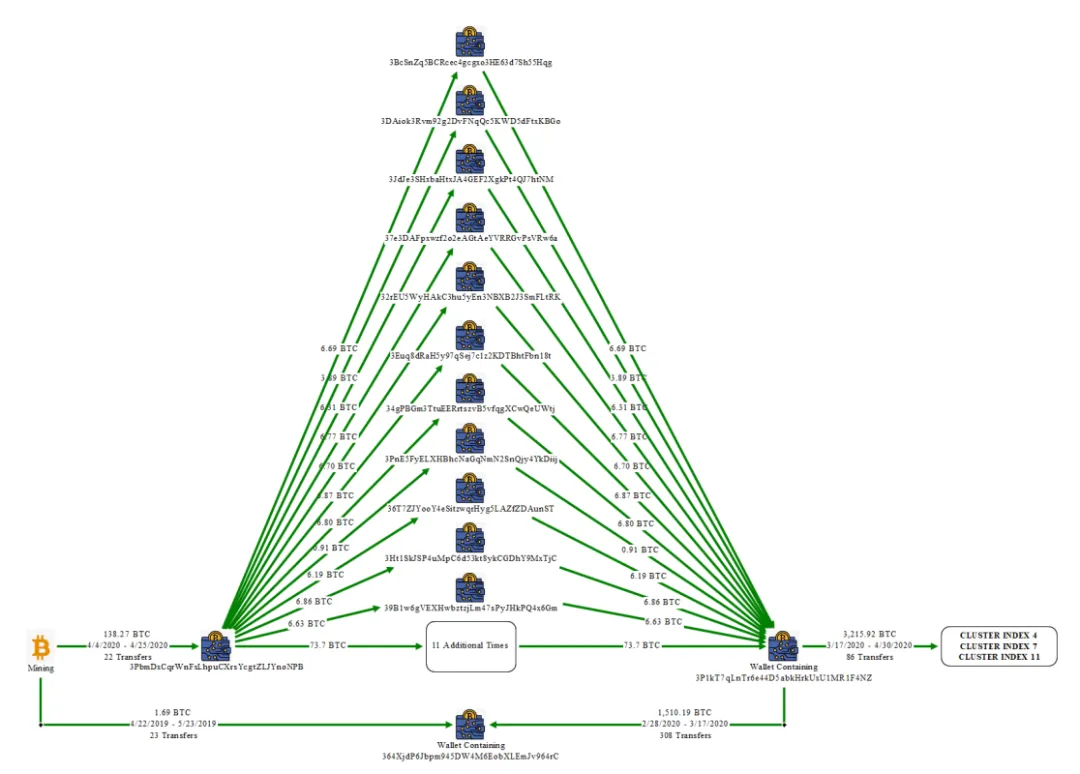
Core Viewpoint - The U.S. Department of Justice has filed criminal charges against Chen Zhi, founder and chairman of Prince Holding Group, and initiated a civil forfeiture lawsuit to seize approximately 127,271 bitcoins valued at up to $15 billion, linked to illegal activities such as telecom fraud and money laundering [1][4]. Group 1: Case Overview - The case has garnered significant attention due to the large amount of bitcoins being stored in 25 unhosted wallets controlled by Chen Zhi, rather than regulated centralized exchanges [2][30]. - This marks one of the largest financial crackdowns in U.S. history, with the seized bitcoins being the highest quantity ever recovered in a single case [5]. Group 2: Criminal Activities - Chen Zhi allegedly used Prince Holding Group's extensive business network across over 30 countries to operate at least ten forced labor scam centers in Cambodia, where workers were deceived, imprisoned, and forced into large-scale cryptocurrency investment scams, resulting in losses of billions [5][6]. - The U.S. Treasury reported that losses from online investment scams have steadily increased, exceeding $16.6 billion, with an estimated $10 billion lost in 2024 alone due to Southeast Asian scams, a 66% increase from the previous year [6]. Group 3: Money Laundering Techniques - Chen Zhi established a complex money laundering system, utilizing "money houses" to process illicit funds through techniques like "spraying" and "funneling" to obscure the flow of money [7][8][10]. - The "spraying" technique involves rapidly splitting large sums into numerous smaller amounts across many new bitcoin addresses, while "funneling" consolidates these dispersed funds back into a few core addresses, complicating blockchain tracking [10][11][12]. Group 4: Seizure of Assets - The DOJ has confirmed that the seized bitcoins are derived from illegal activities, and a civil forfeiture lawsuit has been filed to formally claim these assets [4][19]. - The FBI's successful identification of the wallets was attributed to advanced blockchain analysis techniques, including the use of graph neural networks to detect abnormal transaction patterns and the integration of various data sources for comprehensive analysis [22][23]. Group 5: Implications for Cryptocurrency Security - The case challenges the notion that unhosted wallets are immune to government intervention, demonstrating that even decentralized assets can be traced and seized through a combination of on-chain tracking and off-chain evidence collection [30][31]. - Experts emphasize that the security of cryptocurrency assets relies on the integrity of the entire cryptographic implementation chain, indicating that weaknesses in any part can lead to vulnerabilities [31]. Group 6: Regulatory Recommendations - The case highlights the need for a comprehensive regulatory framework that includes virtual asset service providers (VASPs) under anti-money laundering laws, enhanced identity verification for transactions above $3,000, and the development of advanced monitoring tools to preemptively identify risks [33][34]. - There is a call for international collaboration in law enforcement actions targeting regions with concentrated criminal activities, as well as the establishment of self-regulatory mechanisms within the industry to enhance compliance and risk management [34][36].

起底陈志:从辍学少年到千亿电诈大佬
Hu Xiu· 2025-10-21 10:17
Core Points - The article discusses the rise and fall of Chen Zhi, who controlled a criminal organization involved in fraud and money laundering across over 30 countries, culminating in the seizure of 127,271 bitcoins valued at approximately $15 billion by U.S. authorities [1][2]. Group 1: Background and Early Life - Chen Zhi was born in Xiaoxing Village, Lianjiang County, Fujian Province, in December 1987, and had a modest upbringing with a low educational background, dropping out after junior high school [1][2]. - After dropping out, he worked as a network administrator in local internet cafes, which were often associated with illegal gambling activities [5][6]. Group 2: Initial Ventures - Chen Zhi made his first significant earnings by creating private servers for online games, particularly "Legend," which involved illegal activities such as charging players for in-game items [7][8]. - Following issues with his gaming ventures, he moved to Cambodia in 2009, where he initially claimed to have started a real estate company, although evidence suggests it was more of a shell company [9][10]. Group 3: Transition to Gambling - In 2014, the Cambodian government legalized gambling, which allowed Chen Zhi to obtain a gambling license and establish a significant presence in the gambling industry [13][14]. - He capitalized on the decline of the internet cafe business in China, attracting many fellow Lianjiang residents to work in his gambling operations [19][20]. Group 4: Business Expansion - Chen Zhi's operations expanded to include a variety of businesses, including real estate and small loans, while his gambling operations became increasingly sophisticated, involving a model known as "killing pigs" [22][23]. - By 2017, he had formed partnerships with influential figures in Cambodia, which helped solidify his position in the gambling industry [26][30]. Group 5: Legal Troubles and Decline - In 2019, the Cambodian government announced a crackdown on online gambling, leading to a mass exodus of Chinese nationals and a significant decline in Chen Zhi's operations [36][37]. - Following the crackdown, Chen Zhi's business model shifted, and he faced increased violence and criminal activities within his operations, including kidnappings and extortion [45][46]. Group 6: Final Downfall - In October 2025, U.S. authorities indicted Chen Zhi, linking him to a major money laundering operation and leading to the seizure of a record amount of bitcoins [1][2][54]. - The article concludes with the implication that Chen Zhi's extensive criminal network and operations were ultimately dismantled by international law enforcement efforts [54].
稀土大战2.0:中国稀土的3个致命漏洞,这次终于全堵上了
Hu Xiu· 2025-10-21 10:04
Core Viewpoint - The latest rare earth export control policy introduced on October 9 is a significant measure aimed at closing existing loopholes in China's rare earth industry, which have been described as critical and increasingly harmful [1] Group 1 - The article highlights three major illegal gaps in China's rare earth industry that pose serious risks [1] - The new policy is compared to a high-grade concrete that effectively seals these loopholes, indicating a strong regulatory approach [1] - The implications of this policy are said to impact not only the domestic market but also international relations, particularly with the United States [1]

医生在我脸上刺了274下,然后说这事儿没完
Hu Xiu· 2025-10-21 09:38
Core Insights - The South Korean cosmetic surgery industry is experiencing rapid growth, particularly in non-invasive procedures such as injectables and laser treatments, which are becoming increasingly popular among consumers [4][13][14] - New injectables like "Rejuran," which uses salmon DNA to enhance skin elasticity, are gaining traction, showcasing the innovative nature of the industry [5][14] - The competitive landscape in South Korea allows for a wide variety of injectables and treatments, often at lower costs compared to other countries, leading to a surge in demand [13][14] Industry Trends - The use of injectables in South Korea has become a mainstream practice, with many clinics offering a plethora of options, including "pink injections" and various types of botulinum toxin [14][19] - There is a notable difference in the regulatory environment between South Korea and the United States, with South Korea allowing more experimental procedures and a broader range of products available to consumers [13][14] - The trend towards non-invasive procedures reflects a shift in consumer preferences, as many seek less painful and lower-risk alternatives to traditional surgeries [13][15] Consumer Behavior - Consumers in South Korea are increasingly viewing cosmetic procedures as a routine part of self-care, leading to a normalization of injectables and other treatments [16][19] - The pressure to conform to beauty standards is significant, with individuals often feeling compelled to undergo procedures to meet societal expectations [16][19] - Despite the risks associated with cosmetic procedures, many consumers accept these as part of the experience, indicating a complex relationship with beauty and self-image [14][19] Medical Practices - The prevalence of cosmetic procedures has raised concerns about safety and the potential for medical errors, with reports of increasing complaints related to cosmetic surgeries [14][15] - Surgeons in South Korea often perform multiple procedures in a day, which may increase the likelihood of mistakes, highlighting the need for careful consideration of patient safety [14][15] - Some medical professionals advocate for a more cautious approach, encouraging patients to reconsider unnecessary procedures and emphasizing the importance of informed decision-making [19][20]