
Hu Xiu

Search documents
退回河南的年轻人,感到了北上广没有的松弛
Hu Xiu· 2025-10-21 23:15
Core Insights - The article discusses the trend of young people returning to their hometowns in Henan province, driven by changes in the labor market and work-life balance in first-tier cities [1][3][18] - It highlights individual stories of returnees who have successfully established businesses or community initiatives, reflecting a shift in lifestyle and values [2][18][36] Group 1: Returnees' Experiences - Zhao Chaohui returned to his hometown in 2019 and transformed a struggling bookstore into a thriving business, leveraging his urban experiences [2][8][12] - Yi Fei, who returned in 2021, created a social dining event to connect with other returnees, addressing the challenges of adapting to life back home [18][20][23] - Both individuals illustrate how returning to their roots has allowed them to redefine their careers and personal lives, finding fulfillment in local culture and community [3][36][38] Group 2: Business Development - Zhao's bookstore, located in a small town, has become a cultural hub, attracting diverse visitors and generating significant monthly revenue [12][15][17] - Yi's outdoor project, "Fun Wave Plan," caters to young people seeking local experiences, showcasing the potential for community-driven tourism [22][24][23] - The rise of social media and e-commerce has facilitated the growth of these businesses, allowing returnees to tap into new markets and customer bases [16][24][36] Group 3: Cultural and Social Dynamics - The return of young professionals has led to a cultural renaissance in Henan, with increased interest in local heritage and community activities [31][37] - The article emphasizes the importance of social connections and shared experiences among returnees, fostering a sense of belonging and purpose [20][23][36] - The transformation of local environments, such as improved infrastructure and cultural initiatives, reflects a broader trend of revitalization in rural areas [33][38]


半年出手5次,美国国资到底投了啥?
Hu Xiu· 2025-10-21 23:15
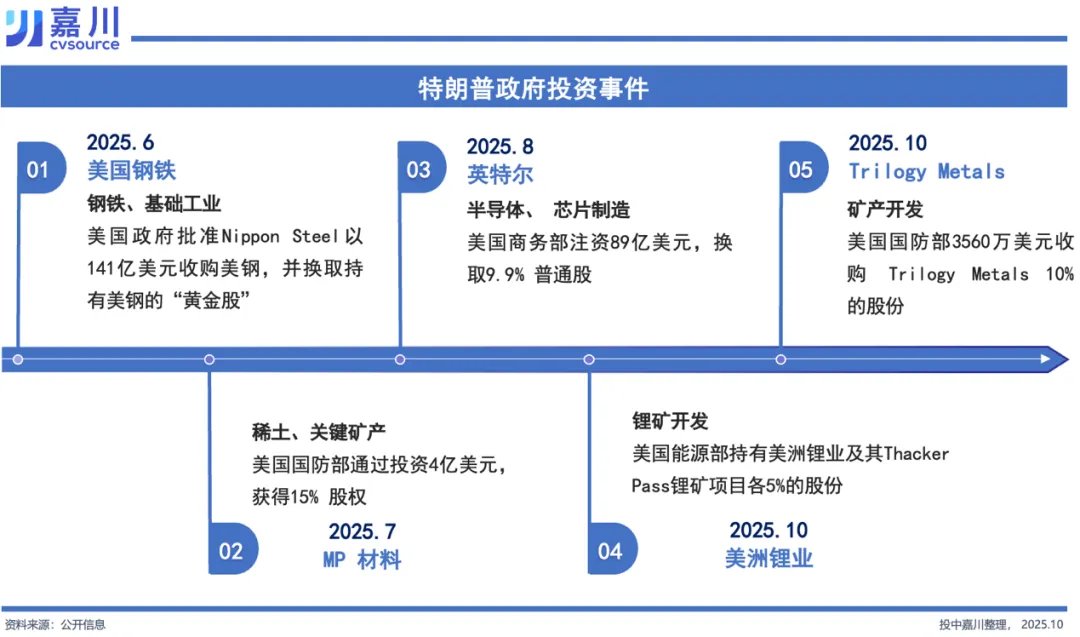
Core Viewpoint - The U.S. government, under Trump's administration, has shifted its approach to industrial policy by directly acquiring equity stakes in private companies, particularly in critical sectors like semiconductors, rare earths, and steel, as a strategic response to geopolitical challenges [2][4][17]. Group 1: Government Investments - Since January, the Trump administration has made five significant investments in key manufacturing sectors, marking a transition from traditional subsidies to direct equity stakes [4][13]. - The first transaction occurred in June, where the U.S. government approved Nippon Steel's $14.1 billion acquisition of U.S. Steel, gaining "golden shares" that provide control over critical decisions [8]. - In July, the government invested $400 million in MP Materials, acquiring 15% of the company, which is the only U.S. firm capable of rare earth mining and processing [9][14]. - In August, the government invested $8.9 billion in Intel for a 9.9% stake, aiming to bolster domestic chip production [10][11]. - In October, the government acquired 5% stakes in Lithium Americas and Trilogy Metals, focusing on lithium mining to support the electric vehicle industry [12][13]. Group 2: Funding Sources - The funding for these investments primarily comes from previously approved budgets, such as the $400 billion Inflation Reduction Act, which allocated $53 billion for semiconductor support [14][16]. - The Department of Commerce, Department of Energy, and Department of Defense have emerged as the main federal agencies facilitating these equity investments [16]. - The funds utilized are not new but rather reallocated from existing congressional appropriations, indicating a strategic shift in how government support is structured [16]. Group 3: Strategic Implications - The investments reflect a broader strategy to reduce reliance on foreign supply chains, particularly from China, by securing domestic production capabilities in critical materials and technologies [17][20]. - The U.S. aims to establish a complete supply chain for rare earths and lithium, which are essential for defense and clean energy technologies, thereby enhancing national security [18][19]. - The investment in Intel is particularly significant as it seeks to ensure that the U.S. retains control over advanced semiconductor manufacturing, which is currently heavily reliant on foreign production [19].




越来越多女性,确诊PMS
Hu Xiu· 2025-10-21 15:02
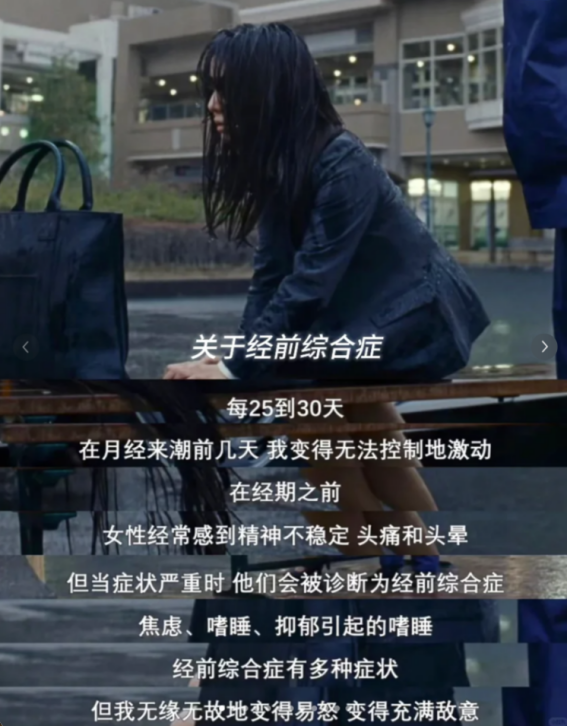
在月经来潮前,你是否曾有过这样的感受? 心情莫名低落,不想说话也不想工作。与此同时,身体发出信号:心悸、失眠、多梦、暴饮暴食、爆痘、记忆力下降……那几天,你常常觉得"世界和我 只能活一个"。 许多人对此已经习以为常。"每个月都有那几天啦""她就是情绪不好,过几天就好了"。这些轻描淡写的话语掩盖了一个事实:不适的感受并非"作"或"矫 情",而是一种真实的疾病。 医学研究表明,早在月经来潮前的1~2周,一系列生理、心理及行为症状便可能接踵而至:情绪低落、失眠、食欲变化、疲乏无力…… 从月经周期图来看,在一个平均28天的周期中,女性真正不受干扰、可以正常生活的时间只有约一周。其余的日子,我们要么在忍受痛经,要么在与PMS 对抗。 | 阶段名称 | 英文 | 起止天数 | 核心事件 | | --- | --- | --- | --- | | 月经期 | Menses | 第1~4天 | 子宫内膜脱落出血 | | 卵泡期(增殖期) | Follicular / Proliferative | 第 1~13 天 | 卵泡募集→选择→优势化;内膜增生 | | 排卵期 | Ovulatory | 第 14天 ±1 | LH ...
《繁花》维权事件,浮华背后是封建与腐朽
Hu Xiu· 2025-10-21 13:05
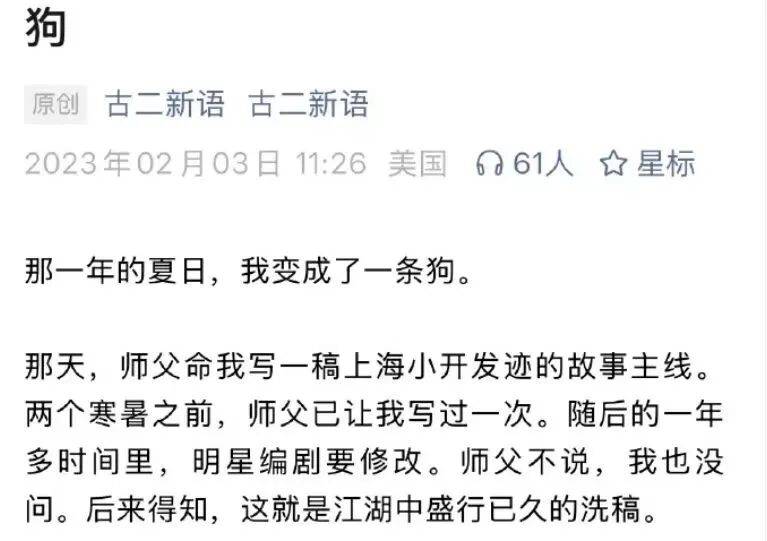
Core Viewpoint - The article discusses the ongoing conflict between screenwriter "Gu Er" and the production team of the series "Blossoms," highlighting issues of authorship, industry respect for writers, and the broader implications of the director-centered system in the film industry [1][2][19]. Group 1: Industry Dynamics - The incident involving Gu Er is a reflection of a common issue in the industry where screenwriters frequently seek to assert their rights, indicating a persistent struggle for recognition and respect [8][21]. - The film industry operates on a director-centered model, which often marginalizes the contributions of screenwriters, leading to a lack of acknowledgment for their creative labor [12][19]. - The lack of a strong union or regulatory framework for screenwriters exacerbates their vulnerability, making it difficult for them to protect their rights and contributions [17][21]. Group 2: Educational and Professional Challenges - The traditional apprenticeship model in screenwriting education fails to equip aspiring writers with the necessary skills to navigate the industry, leading to a perception that their work is undervalued [9][10]. - The industry's project-based compensation system contributes to a culture where screenwriters are seen as expendable, further diminishing their perceived value [21][24]. - Many talented screenwriters are leaving the industry due to its unfavorable working conditions and lack of recognition, indicating a significant talent drain [25][26]. Group 3: Cultural and Social Implications - The ongoing debate around Gu Er's claims highlights a broader cultural issue within the industry, where the contributions of screenwriters are often overshadowed by the prominence of directors and stars [26][29]. - The prevailing narrative in the industry tends to favor established figures, reinforcing a cycle of power dynamics that marginalizes emerging talent and their contributions [28][29]. - The article suggests that the industry's current trajectory, characterized by a lack of respect for creative labor, may lead to a decline in the quality and diversity of storytelling in film and television [24][30].
内娱男演员,开始贩卖“易碎感”
Hu Xiu· 2025-10-21 13:05
Core Viewpoint - The article discusses the evolving aesthetic trend in the entertainment industry, particularly the "嬷化" phenomenon, where male actors are increasingly portrayed with delicate and fragile characteristics, challenging traditional masculinity [1][10]. Summary by Sections Stage 1: Economic Suitable Men - The early 2010s saw the dominance of the "economic suitable man" archetype, represented by actors like Tong Dawei, who portrayed stable, warm, and reliable characters [3][4]. - These characters reflected a societal shift towards valuing stability and emotional support in relationships, resonating with female audiences seeking reliable partners [5]. Stage 2: The "Wimp" Archetype - As societal pressures increased and women's self-awareness grew, the "economic suitable man" image became less relatable, leading to the emergence of the "wimp" archetype, exemplified by actors like Lei Jiayin and Guo Jingfei [6][7]. - These characters, often flawed and vulnerable, allowed female viewers to empathize with their struggles, reflecting a more complex understanding of masculinity [7]. Stage 3: The "Good Husband" Trend - The "wimp" archetype evolved into the "good husband" trend, represented by actors like Bai Ke, who embody a service-oriented, emotionally supportive male figure [8][9]. - This character type provides a sense of security and emotional stability, appealing to audiences in uncertain times [9]. Stage 4: The "嬷化" Trend - The "嬷化" trend marks a significant shift where male actors and their teams actively design and market a more delicate and feminine image, moving from passive acceptance to proactive engagement with audience expectations [10][16]. - This trend is characterized by a collaborative effort to redefine male aesthetics, allowing actors to gain empathy and increase their appeal in a competitive market [16]. Notable Examples - Actors like Cheng Yi and Luo Yunxi exemplify the "嬷化" aesthetic through their roles and public personas, emphasizing fragility and beauty in their portrayals [2][12]. - The trend is not limited to television but extends to idol groups and other entertainment forms, showcasing a broader cultural shift towards embracing softer male images [15].
为什么内娱老是出现那几张脸?
Hu Xiu· 2025-10-21 13:05
为什么内娱老是那几张脸?吴京、张译、黄景瑜、雷佳音......反复刷屏,角色高度重复,观众连戏都快 认不出来。原因是什么? ...
一人卖保险,全家不要脸?
Hu Xiu· 2025-10-21 13:05
Core Insights - The article narrates the journey of a former journalist who transitioned into the insurance industry, highlighting the challenges and experiences faced in this new role [5][34]. Group 1: Transition to Insurance - The individual initially worked as a journalist but later became an insurance agent after a period of unemployment [3][4]. - The transition involved signing an agency contract, which meant working independently rather than as a company employee [6]. Group 2: Training and Team Dynamics - The training program for new agents included rigorous attendance policies and team competitions, fostering a collaborative environment [11][12]. - The training covered various aspects of insurance, including product knowledge and communication techniques, which were essential for selling policies [13][14]. Group 3: Sales Techniques and Challenges - The sales training emphasized using anxiety-inducing language to persuade clients, which created discomfort for the individual [18][19]. - Despite a genuine approach to selling, the individual struggled to close sales, indicating a disconnect between personal values and sales tactics [25][27]. Group 4: Ethical Concerns and Departure - An incident involving aggressive sales tactics led to ethical concerns, prompting the individual to leave the insurance company [33]. - The experience in the insurance industry was ultimately viewed as a learning opportunity, with the individual applying knowledge gained to personal insurance needs [34].
我的日本“保活”经历
Hu Xiu· 2025-10-21 11:47
Group 1 - The article discusses the process of finding a suitable nursery for children in Japan, highlighting the importance of early planning and information gathering [1][3][4] - Various types of childcare institutions in Japan are outlined, including nurseries (保育园), kindergartens (幼稚园), and certified kindergartens (認定幼儿园), each serving different age groups and purposes [4][6][7] - The article emphasizes the growing trend of parents seeking nurseries for their children at younger ages, reflecting societal changes and the need for childcare support [2][3][20] Group 2 - The article describes the experience of visiting a nursery, including the welcoming atmosphere and the interactions between staff and children, which are crucial for parents' decision-making [8][10][11] - It details the application process for nurseries, including the importance of submitting multiple applications to increase the chances of acceptance [12][13][14] - The article highlights the daily routines and activities of children in the nursery, showcasing the balance between play and learning, as well as the communication between parents and staff through a contact book [20][22][23]

老登们的春天还会远吗?
Hu Xiu· 2025-10-21 11:34
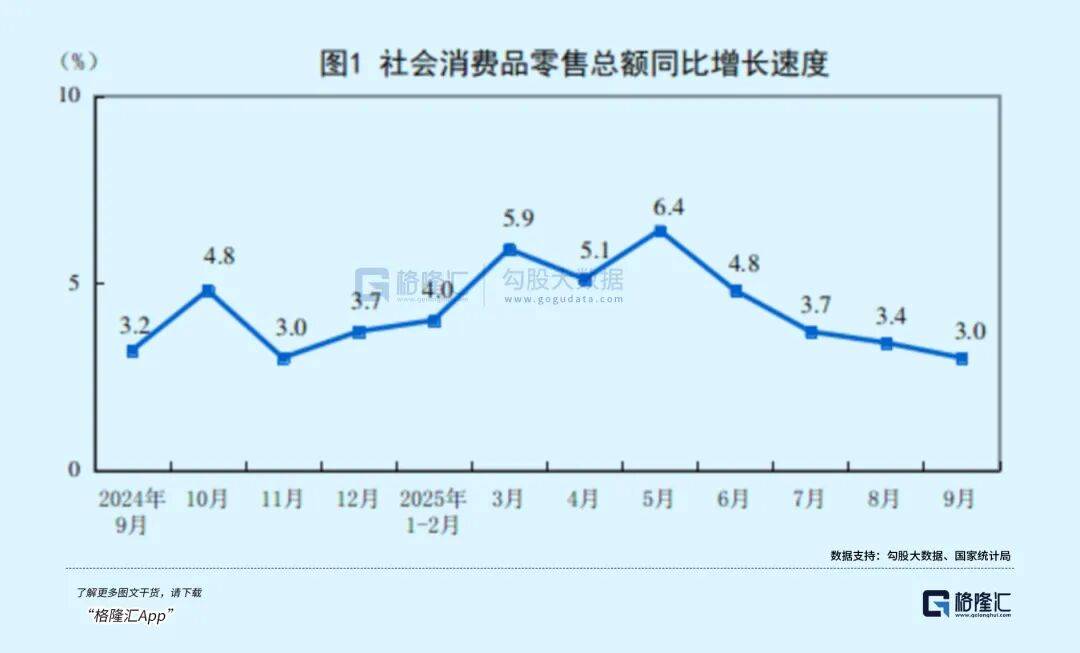
Core Viewpoint - The article discusses the current state of the Chinese stock market, particularly the contrasting sentiments between "old investors" and "new investors," highlighting the lack of fundamental support for the market's performance and the challenges facing consumer sectors [1][2][5]. Economic Data - The September retail sales growth rate was 3%, continuing a downward trend from a peak of 5% in May [7]. - The restaurant industry, closely related to "old investors," saw a significant decline, with growth at only 0.9% in September, and revenue from large-scale restaurant enterprises dropping by 1.6% [9]. - The liquor industry, particularly high-end brands like Moutai, experienced a nearly 20% decline in sales during the Mid-Autumn Festival and National Day period, indicating a broader economic slowdown [11]. Consumer Confidence - The decline in housing prices has severely impacted household wealth, contributing to weakened consumer spending intentions [13][14]. - The article notes that the current consumer spending as a percentage of GDP in China is around 30%, significantly lower than in developed countries like the U.S., where it is about 70% [19]. - There is a call for policy measures to increase the share of consumer spending in GDP, which is essential for long-term economic growth [22]. Long-term Outlook - The article emphasizes the need for a catalyst to restore long-term confidence in the market, as current sentiments are heavily influenced by pessimism regarding demographic trends and economic conditions [15][17]. - It suggests that improving the income distribution structure could mitigate the negative impacts of population decline on consumption [20][21].
“总怀疑自己ADHD?”6个方法帮你稳住注意力
Hu Xiu· 2025-10-21 11:21
你是不是也有过这样的经历: 我们大多数人所面对的,其实是注意力在现代生活中不断溃散,一种被信息洪流和高压生活共同塑造 的"现代病"。 因此,与其一味自责"我太拖延""我不够自律",不如先承认一个现实:现代生活本身就不鼓励专注。 所以,这篇文章不是教你如何变成高效运转的机器,而是想带你重新练习一件小事:在一个充满干扰的 世界里,找回你的注意力。 找些"观众",激发你的"表演型人格" 越来越多人根据这些表现,"赛博确诊"为ADHD(注意力缺陷多动障碍):总是拖延、容易分心、踩着 DDL完成任务、对刺激上瘾…… 但事实上,ADHD往往要追溯儿童期的发育轨迹,它所带来的影响也常常贯穿整个成长过程,影响学业 表现、人际交往和日常生活等诸多方面。 有时,我觉得我的专注力需要依靠"观众"来维持: 独自工作或学习时特别容易分心,但一旦换到图书馆、咖啡厅,或者进入线上自习室,立马就会产生一 种"被观看"的压力。 事实上,这并不是错觉。 看视频时,不自觉把速度调到三倍,沉迷于"一分钟带你看完一部经典"; 智能手机重度依赖,吃饭、洗澡、睡觉从不离身,担心错过什么消息,害怕一秒钟的 无聊; 打开电脑原本打算工作,却先点进了邮箱,顺手 ...