
Bei Ke Cai Jing

Search documents
星河动力:谷神星一号运载火箭发射失利,具体原因正在分析排查
Bei Ke Cai Jing· 2025-11-11 11:09
Core Viewpoint - On November 10, 2023, the launch of the Vesta-1 (Yao 19) rocket by Star River Dynamics Aerospace was unsuccessful, failing to place the satellite into orbit due to an abnormal shutdown during the final flight stage after 510 seconds of flight [1]. Company Overview - Star River Dynamics Aerospace was established in 2018 and primarily provides launch services for domestic and international aerospace clients. Its core products include the "Zhishenxing" series of medium to large reusable liquid rockets and the "Gushenxing" series of small solid rockets [2]. - In late September 2023, Star River Dynamics Aerospace completed a Series D financing round, raising a total of 2.4 billion yuan. The funds will be used to accelerate the development and related production, testing, and launch capabilities of the "Zhishenxing" series of reusable liquid rockets and the "Gushenxing II" medium solid rocket [2].
快手发布民生专项数据报告:70后、80后成民生商品购买主力
Bei Ke Cai Jing· 2025-11-11 11:05
Core Insights - Kuaishou released the "2025 Kuaishou E-commerce Rural Revitalization Plan: Livelihood Special Data Report" highlighting significant growth in the e-commerce sector focused on livelihood products [1] Group 1: E-commerce Performance - From January to September this year, the GMV (Gross Merchandise Volume) of livelihood products increased by over 20% year-on-year [1] - The number of active products sold also saw a year-on-year growth of over 20% [1] - During the Double 11 shopping festival, categories such as flour and noodles showed remarkable performance, with flour GMV increasing by 26% compared to last year's Double 11 and noodle GMV rising by 66% year-on-year [1] Group 2: Consumer Demographics - Users born in the 1980s and 1970s are identified as the solid consumer base for livelihood products [1] - Geographically, consumers from Hebei, Shandong, and Liaoning demonstrate concentrated purchasing power, indicating strong consumption momentum in the northern market [1]

京东科技将全球首发智能眼镜购物应用
Bei Ke Cai Jing· 2025-11-11 11:05
新京报贝壳财经讯(记者程子姣)11月11日,新京报贝壳财经记者从京东科技方面获悉,京东科技旗下 购物智能体JoyGlance将在11月13日Rokid乐奇 x BOLON眼镜新品联合发布会上亮相,京东科技方面 称,这也是全球首款智能眼镜购物应用。 具体而言,上述应用集成"意图识别+智能搜品+声纹支付"技术,用户通过AI眼镜注视商品1-2秒即可完 成搜同款、加购操作,支付功能预计于2026年1月全面开放。 校对 柳宝庆 ...
京东双11成绩单:3C数码AI产品成交额同比增长超100%
Bei Ke Cai Jing· 2025-11-11 11:05
Group 1 - During the Double 11 shopping festival, JD's 3C (information and home appliances) digital AI products saw a transaction value growth of over 100% year-on-year [1] - AI tablets and AI large-screen smartphones ranked among the top five in terms of growth rate within the overall 3C digital category [1] - The C2M (Customer to Manufacturer) customization ratio for large-screen AI smartphones and gaming laptops exceeded 30% and 50%, respectively [1] Group 2 - In the live streaming segment, the order volume from JD's live streaming rooms increased by over 150% year-on-year during Double 11 [2] - The total user viewing time for live streams grew threefold compared to the previous year, with the number of merchants broadcasting live streams tripling [2] - The user viewing time for merchant live streams increased by 2.5 times year-on-year [2] Group 3 - In the dining sector, the "Seven Fresh Kitchen" initiative boosted the order volume from quality restaurants within a 3-kilometer radius by over 12% [2] - The online transaction orders for JD's first dining entity brand, "Seven Fresh Food Mall," increased by over 150% compared to the previous period [2] - The search volume for JD's private label "Seven Fresh Kitchen" surged by over 350%, with order volume increasing by over 400% [2]

智造大变革·智能化丨车企角逐智能驾驶军备赛,寻找下一个增长极
Bei Ke Cai Jing· 2025-11-11 09:21
Core Insights - The Chinese automotive industry is in a competitive race for intelligent driving, with the "14th Five-Year Plan" emphasizing the need for smart and integrated development, accelerating the transition to intelligent and green manufacturing [1][2] - AI capabilities are becoming a new valuation anchor for automotive companies, shifting the focus from mechanical performance to intelligent experiences, with significant implications for investment and market perception [2][4] - The industry is witnessing a shift from hardware competition to software competition, with companies either developing their own chips or forming closer ties with chip manufacturers to define the next generation of computing architecture [4][7] Industry Trends - The integration of AI with manufacturing is expected to create new business models, such as "software-defined vehicles" and service-oriented manufacturing, as highlighted in the "14th Five-Year Plan" [2][4] - The competition in intelligent driving is characterized by a "computing power arms race," with companies investing heavily in AI capabilities both in the cloud and on vehicles [2][3] - The automotive sector is evolving into a comprehensive industry that integrates advanced technologies from AI, energy, chips, and digital services, reflecting a significant transformation in its operational landscape [7][9] Technological Developments - The computational power of in-vehicle intelligent chips is advancing from 500-600 TOPS to over 2500 TOPS, enabling more complex real-time decision-making [3] - The relationship between automotive and chip industries is becoming increasingly symbiotic, with the potential for vehicles to act as distributed computing nodes in the digital economy [8] - The emergence of personalized insurance and services based on user driving behavior data indicates new revenue streams and business opportunities within the automotive sector [8] Strategic Collaborations - The current competitive landscape features three main collaboration models: Huawei's full-stack solutions, Momenta's technology supply approach, and self-research strategies by companies like BYD and Li Auto [7] - The integration of intelligent driving technology is not only reshaping the automotive industry but also connecting it with other sectors, such as robotics, as seen with the development of humanoid robots by companies like Tesla and XPeng [6][7]
智造大变革·电动化|五年销量翻五倍,中国汽车驶入全球主赛道
Bei Ke Cai Jing· 2025-11-11 09:09
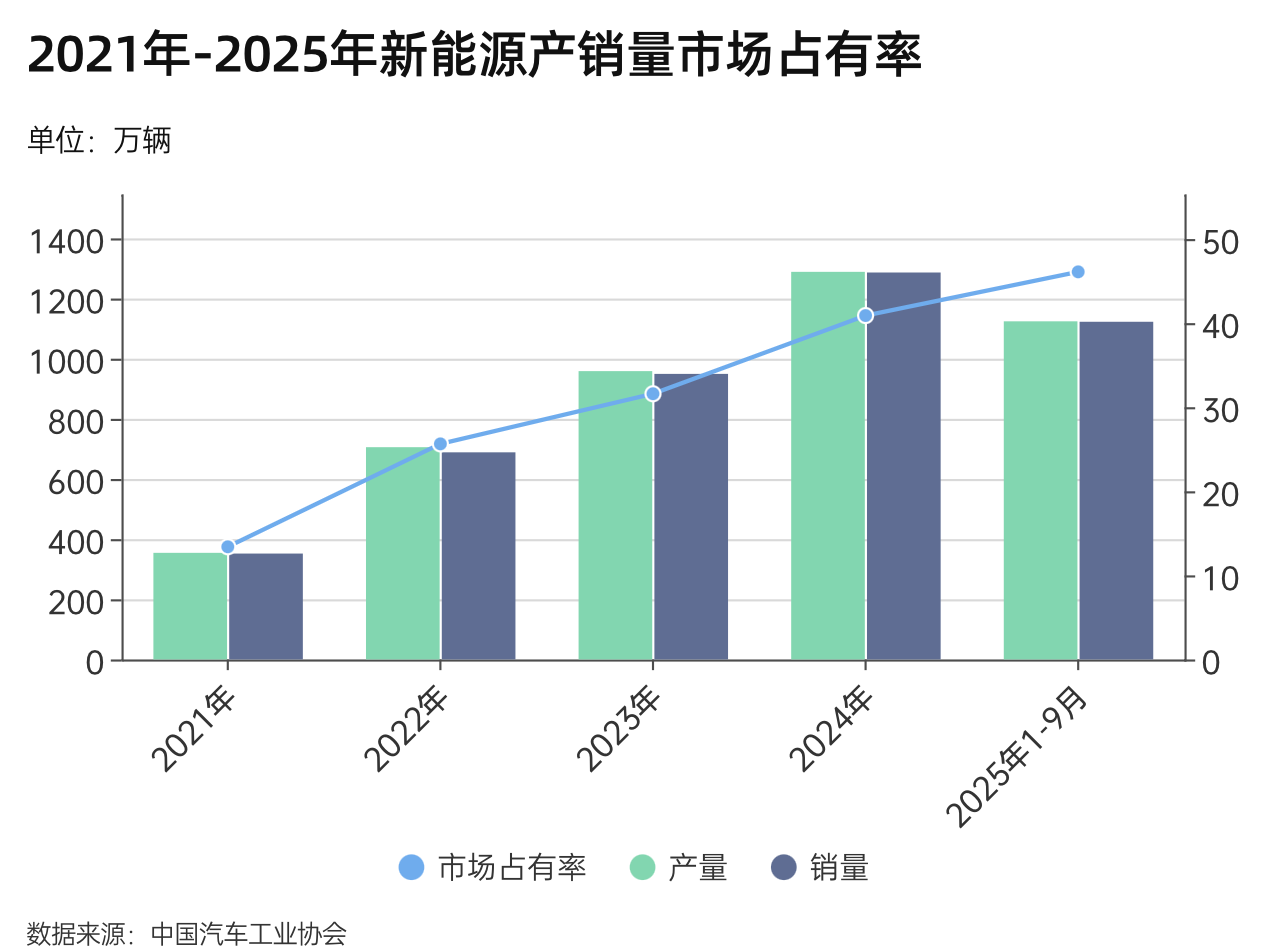
Core Insights - The sales of new energy vehicles (NEVs) in China reached 11.228 million units in the first nine months of the year, marking a year-on-year growth of 35.2% and a market share of 46.1% [1][8] - The China Association of Automobile Manufacturers predicts that the total annual sales of NEVs will exceed 16 million units by 2025 [1][8] - The rapid advancement in NEV technology, particularly in solid-state batteries, is expected to significantly enhance performance, with potential ranges exceeding 1000 kilometers [2][12] Industry Growth - The NEV market in China has seen explosive growth, with sales in 2021 reaching 3.521 million units, a year-on-year increase of 160% and a market share of 13.4% [4] - BYD emerged as the market leader in 2024 with sales of 4.27 million units, attributed to its vertical integration and self-developed core components [7] - The NEV market is expected to maintain a growth trend, with sales in the first nine months of 2025 already at 11.228 million units [8] Technological Advancements - Significant breakthroughs in electric vehicle technology include improvements in battery energy density and fast-charging capabilities, with mass-produced batteries exceeding 300 Wh/kg [12][13] - The introduction of 800V high-voltage platforms is expected to lead to nearly 1 million new energy vehicles equipped with this technology by 2025, with a compound annual growth rate of 270.9% [14] - The charging infrastructure is also expanding, with over 18.063 million charging points in China by September 2025, reflecting a 54.5% year-on-year increase [15] Market Dynamics - Consumer attitudes towards NEVs have shifted from skepticism to acceptance, with a growing trend of actively choosing NEVs during vehicle purchases [10][11] - The transition from policy-driven to market-driven sales is anticipated with the adjustment of the purchase tax for NEVs starting January 1, 2026 [16] - The "14th Five-Year Plan" period has established a dual leap in scale and technology for China's electric vehicle industry, positioning it as a global leader [20] Future Outlook - The "15th Five-Year Plan" is seen as a critical period for the NEV industry, focusing on solid-state battery industrialization and smart technology advancements [19][20] - Companies are planning to innovate and expand their product lines, with several manufacturers announcing new models and technological advancements by 2030 [18]

外用氨糖调查追踪:监管部门已立案,商家修改宣传表述
Bei Ke Cai Jing· 2025-11-11 07:52
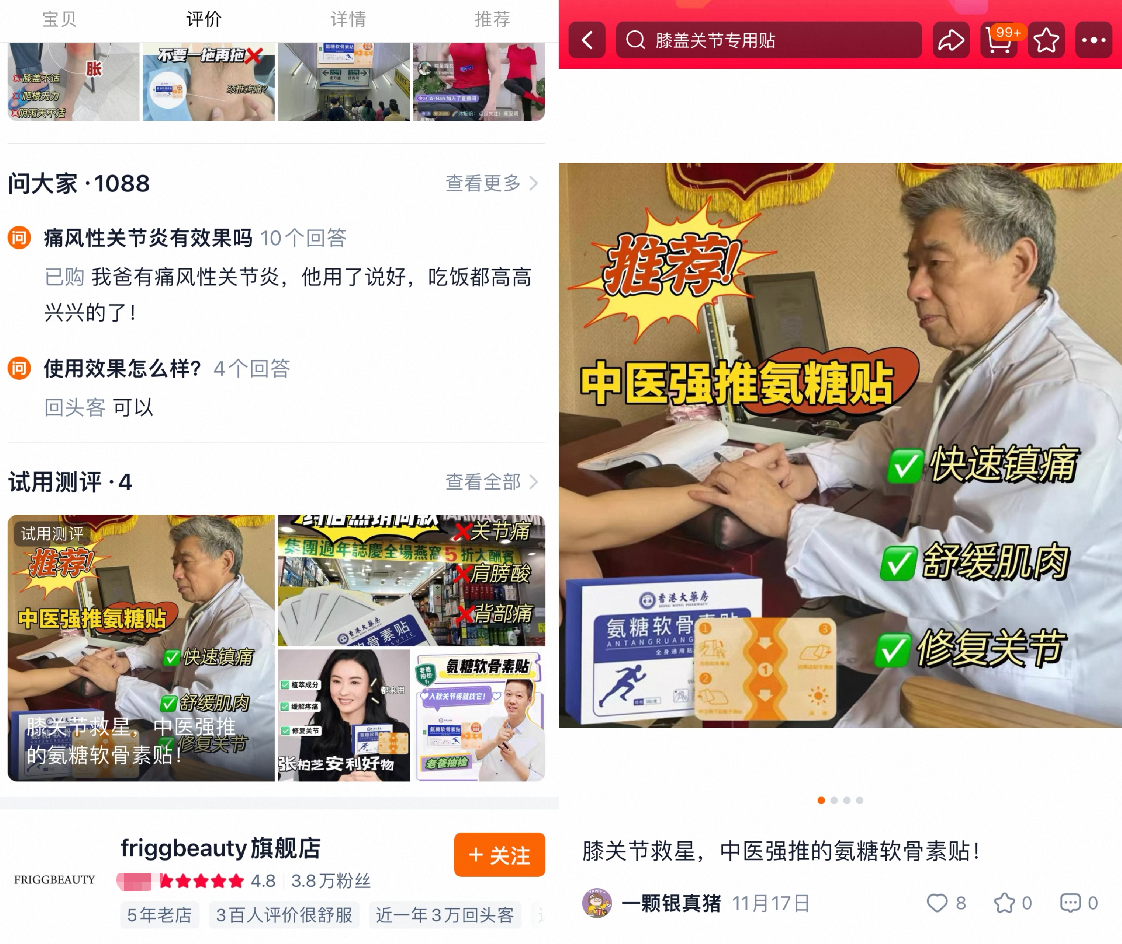
新京报讯(记者张兆慧)近期,新京报刊发《外用氨糖真能修复软骨吗?》消费质量报告,披露了部分外用氨糖产品涉嫌虚假宣传等问题。新京报记者近日 回访发现,报道涉及的香港大药房氨糖软骨素贴已改名,部分图文宣传也已修改,生产企业已被河南省南阳市卧龙区/蒲山市场监督管理所立案;另一款 Dr.pinly鲨鱼氨糖软骨素喷雾的宣传表述也已修改,但仍在利用视频暗示治疗功效。 在前述报道中,记者调查发现,Dr.pinly鲨鱼氨糖软骨素喷雾、香港大药房氨糖软骨素贴两款热销的外用氨糖产品在产地背景、核心卖点、功效宣传等方面 存在诸多问题。骨关节科医生认为,外用氨糖多为概念炒作,其"修复软骨"的说法缺乏科学依据。律师提醒,将虚假或存疑的"洋背景"作为宣传卖点,违反 了《中华人民共和国反不正当竞争法》,或构成"引人误解的虚假宣传"。 针对上述两款产品的宣传问题,记者分别向两款产品生产企业所在地的河南省南阳市市场监督管理局宛城分局、河南省南阳市市场监督管理局卧龙分局留言 咨询。10月13日,河南省南阳市市场监督管理局宛城分局回应,经查,依据《市场监督管理行政处罚程序规定》相关规定,决定不予立案。10月21日,河南 省南阳市卧龙区/蒲山市场监 ...
全球肺癌关注月丨专家科普:规范化诊疗需从“早”到“晚”
Bei Ke Cai Jing· 2025-11-11 07:52
Core Insights - Lung cancer is the most prevalent and deadly malignancy in China, with 1.0606 million new cases and 733,000 deaths reported in 2022 [1] - The five-year survival rate for lung cancer patients in China is gradually improving, with a target of 46.6% set for 2030 as part of national health strategies [2] - Early detection and management of lung nodules are crucial, as they can be early indicators of lung cancer, but not all detected nodules indicate malignancy [2] - Multidisciplinary teams (MDT) are essential for personalized treatment plans, improving patient outcomes through collaborative approaches [4][5] Group 1: Lung Cancer Statistics and Trends - In 2022, China reported 1.0606 million new lung cancer cases and 733,000 deaths, highlighting the disease's significant burden [1] - The five-year survival rate for lung cancer patients is on the rise, with comprehensive cancer prevention measures being implemented across the country [2] Group 2: Early Detection and Management - The detection rate of lung nodules in China is approximately 20%, necessitating public education to alleviate fears associated with these findings [2] - Proper management of lung nodules should encompass screening, follow-up, and intervention to enhance early detection and treatment possibilities [2] Group 3: Treatment Advances - Surgical intervention remains a key treatment for early-stage lung cancer, with minimally invasive techniques improving recovery times and outcomes [3] - For advanced lung cancer patients, treatment goals have shifted from cure to prolonging survival and enhancing quality of life, with new therapies like targeted and immunotherapy showing promise [3] Group 4: Multidisciplinary Approach - MDTs facilitate comprehensive treatment planning by integrating expertise from various medical fields, ensuring personalized and effective care for lung cancer patients [4][5] - The collaboration among specialists allows for optimized decision-making and improved management of the complex clinical presentations of lung cancer [5]
康基医疗私有化退市计划获公司股东批准
Bei Ke Cai Jing· 2025-11-11 07:52
Core Viewpoint - Kangji Medical has received shareholder approval for its privatization plan, which is expected to take effect on December 5, 2025, with the company's shares delisted from the Hong Kong Stock Exchange on December 9, 2025 [1][6]. Group 1: Privatization Details - Knight Bidco Limited's proposal to privatize Kangji Medical has been approved by shareholders, with the share cancellation price set at HKD 9.25, valuing the company at approximately USD 1.4 billion [1]. - The privatization plan is based on the Cayman Islands Companies Law and will make Kangji Medical a wholly-owned subsidiary of Knight Bidco Limited [1][6]. - The plan requires approval from the Grand Court of the Cayman Islands and will be registered before it can take effect [6]. Group 2: Financial Performance - In the first half of 2025, Kangji Medical reported revenue of CNY 497 million, an increase of 8.32% year-on-year, driven by sales growth in disposable products [2]. - The net profit attributable to shareholders was CNY 265.8 million, a slight decrease of 7.03% year-on-year [2]. - Revenue growth from 2018 to 2024 showed significant increases, with annual growth rates of 42.89%, 42.36%, 1.59%, 34.95%, 13.92%, 17.76%, and 8.92% [2]. Group 3: Industry Challenges - The Chinese medical device industry is undergoing significant structural adjustments, with intensified regulatory pressures and challenges from centralized procurement policies affecting product pricing and profit margins [3]. - Kangji Medical faces increased competition and the need for greater investment in research and development to maintain its market position [3]. - The company's stock performance has been volatile, with a significant decline from its initial listing price of HKD 23.679 to a low of HKD 3.803, resulting in a cumulative drop of over 64% [3]. Group 4: Strategic Rationale for Privatization - Kangji Medical believes that maintaining its listing status offers limited benefits and that privatization will reduce costs associated with being publicly listed [4]. - The company aims to alleviate pressure related to short-term performance metrics and focus on broader strategic decisions post-privatization [4]. - The approval of the privatization plan is seen as a significant milestone, reflecting strong support from shareholders [5].
中汽协:前10个月汽车销量2768.7万辆,同比增超12%
Bei Ke Cai Jing· 2025-11-11 07:31
Group 1 - The core viewpoint of the article highlights the growth in China's automotive industry, with significant increases in production and sales figures for both the month of October and the year-to-date period [1][2] Group 2 - In October, the production and sales of automobiles reached 3.359 million and 3.322 million units, respectively, showing a month-on-month increase of 2.5% and 3%, and a year-on-year increase of 12.1% and 8.8% [1] - From January to October, the total production and sales of automobiles were 27.692 million and 27.687 million units, reflecting a year-on-year growth of 13.2% and 12.4% [1] Group 3 - In terms of exports, from January to October, 5.616 million vehicles were exported, marking a year-on-year increase of 15.7%, with over 2 million of these being new energy vehicles [2] - The passenger car market showed steady growth, with production and sales in October reaching 2.995 million and 2.961 million units, respectively, which is a year-on-year increase of 10.7% and 7.5% [2] - For the year-to-date period, passenger car production and sales totaled 24.237 million and 24.209 million units, with year-on-year growth of 13.5% and 12.9% [2]