
投资界

Search documents
徐新上车了
投资界· 2025-11-21 09:18
虽迟但到。 作者/ 杨继云 周佳丽 报道/投资界PEdaily 彭博社报道, 本 周 三 在 多 达 7 家 机 构 激 烈 竞 拍 字 节 跳 动 老 股 中 , 徐 新 所 掌 舵 的 今 日 资 本最终以近3亿美元的出价胜出。 如 此 一 来 , 字 节 跳 动 对 应 估 值 约 4 8 0 0 亿 美 元 。 投 资 界 也 从 字 节 跳 动 投 资 人 处 确 认 这 一 信息。 其实徐新与张一鸣早年间就聊过融资,但她当时对于张一鸣提出的7 0亿美元融资条款感 到疑虑,并未出手。"我明白得太晚了,错过这个机会了。"此后,错失张一鸣成了她心 中一大憾事。 虽然迟到,但终于没有缺席——徐新还是选择上车。这也是一级市场仅剩不多还能够参 与到字节跳动的机会。 投资人抢字节老股 徐新也来了 字节跳动老股有 多 抢手? 根据彭博社披露,此次字节跳动股权交易吸引了多家潜在买家,最多时有7家竞标者共 同参与,因此最终价格也水涨船高—— 这批由字节跳动早期机构投资者中银集团出手的股份,最初定价约为2亿美元(对应字 节跳动估值约3 6 0 0亿美元),最后成交时的价格已攀升至近3亿美元,对应估值4 8 0 0亿 美 ...


博士生数量反超本科了
投资界· 2025-11-21 09:18
Core Viewpoint - The article discusses the significant increase in the number of doctoral students in China, highlighting a shift in educational strategy to meet the demands of innovation and technology development in the country [2][3][9]. Group 1: Doctoral Enrollment Trends - Shanghai Jiao Tong University is projected to enroll 5,000 doctoral students by 2026, surpassing the number of undergraduate students for the first time [2]. - The number of doctoral students in China has exploded, with Tsinghua University having 1.4 times more doctoral students than undergraduates, and the University of Science and Technology of China at 1.6 times [3]. - In 2024, China enrolled 171,100 doctoral students, an increase of 11.6% year-on-year, while master's and undergraduate enrollments grew by only 3.2% and 2.46%, respectively [4]. Group 2: Strategic Reasons for Expansion - The rapid increase in doctoral enrollment is a response to the shift from quantity to quality in economic growth, emphasizing the need for innovative talent amid global technological competition [9][10]. - The demand for doctoral talent is driven by national strategic projects, with over 80% of doctoral enrollments in science and engineering fields, reflecting a direct correlation with innovation needs [10][11]. Group 3: Challenges Faced by Doctoral Students - A survey indicated that Chinese doctoral students have the lowest satisfaction rates globally, with many working over 80 hours a week, leading to high levels of stress [12]. - The employment rate for doctoral graduates in Shaanxi Province was reported at 76.68%, lower than that of undergraduates, indicating challenges in job placement [12][13]. Group 4: Future Outlook and Policy Support - The Chinese government has recognized the importance of doctoral education, with recent policies aimed at expanding graduate education and increasing the proportion of doctoral students [13][14]. - The article draws parallels between the current doctoral expansion and past infrastructure investments, suggesting that successful integration of doctoral training with industry needs is crucial for future innovation [14].

去香港找钱
投资界· 2025-11-21 09:18
Core Viewpoint - The Hong Kong government has launched a HKD 10 billion Innovation and Technology Industry Guiding Fund to attract private investment in key technology sectors, aiming to enhance the local innovation ecosystem and support growth in various industries [5][6][9]. Group 1: Fund Structure and Investment Focus - The Innovation and Technology Industry Guiding Fund is established under the "Innovation and Technology Fund" with a total allocation of HKD 10 billion from the Legislative Council [6]. - The fund will focus on five thematic areas: life and health technology, artificial intelligence and machinery, semiconductors and smart devices, digital transformation, and future sustainable development [6][7]. - Each sub-fund under the main fund will have a target size of at least HKD 400 million, with the government contributing a maximum of HKD 100 million, which cannot exceed 25% of the sub-fund's total size [6][7]. Group 2: Investment Strategy and Requirements - The government aims to attract strategic investors, each contributing no less than HKD 30 million, to co-invest alongside the government in the thematic sub-funds [7][8]. - The fund's investment requirements include: 1. 100% of the fund's size must be invested in enterprises related to Hong Kong's innovation and technology industries [8]. 2. At least 50% must be invested in Hong Kong enterprises or those planning to establish headquarters in Hong Kong [8]. 3. At least 30% must be allocated to companies establishing and operating production bases in Hong Kong [8]. Group 3: Role of Fund Managers - Fund managers will act as general partners (GPs) responsible for establishing sub-funds of at least HKD 20 million, including government contributions, and for managing daily operations and fundraising [8]. - The evaluation criteria for fund managers include their background, team resources, investment strategies, performance, and fundraising capabilities [8]. Group 4: Broader Context and Implications - The launch of the Innovation and Technology Industry Guiding Fund is part of a broader strategy to position Hong Kong as a hub for innovation and technology, emphasizing the importance of attracting talent and investment from overseas [9][10]. - The fund aims to complement existing investment frameworks, such as the HKIC, to create a robust ecosystem for nurturing early-stage and growth-stage technology companies [10].

杭州成立20亿「种子」基金
投资界· 2025-11-20 06:09
Core Viewpoint - The establishment of the Hangzhou Runmiao Fund, with an initial scale of 2 billion yuan and a 20-year duration, aims to address the early-stage investment gap for startups, particularly in the hard technology sector [5][6]. Fund Details - The Runmiao Fund is a government-led initiative, focusing on early-stage investments, specifically targeting companies established for no more than 5 years, with fewer than 100 employees or a valuation under 100 million yuan [6]. - The fund will invest a maximum of 5 million yuan per project, adopting a non-controlling stake approach to support company growth [6]. - The fund aims to create a collaborative investment mechanism with other local industry funds and social investment institutions to facilitate subsequent financing for startups [7]. Investment Strategy - The fund plans to support 6,000 "seed" companies and annually select 1,000 "good seed" companies from a pool of 34,000 technology SMEs in Zhejiang Province, with an average of over 100 projects funded each year [8]. - The focus is on addressing the funding challenges faced by early-stage companies, emphasizing a long-term, patient investment approach [8]. Market Context - The backdrop for this initiative includes a high failure rate among startups, with over 90% struggling to transition from technology to commercialization, highlighting the critical need for early-stage funding [9]. - Other cities, such as Shenzhen and Shanghai, have also launched significant government-backed funds to support early-stage investments, indicating a broader trend towards encouraging innovation and risk-taking in the investment landscape [9][10]. Future Goals - By 2027, the Hangzhou government aims to cultivate 50,000 technology SMEs, 3,000 promising companies, and 20,000 high-tech enterprises, establishing a robust ecosystem for tech startups [7][8].

创·投嘉年华报名从速!
投资界· 2025-11-20 06:09
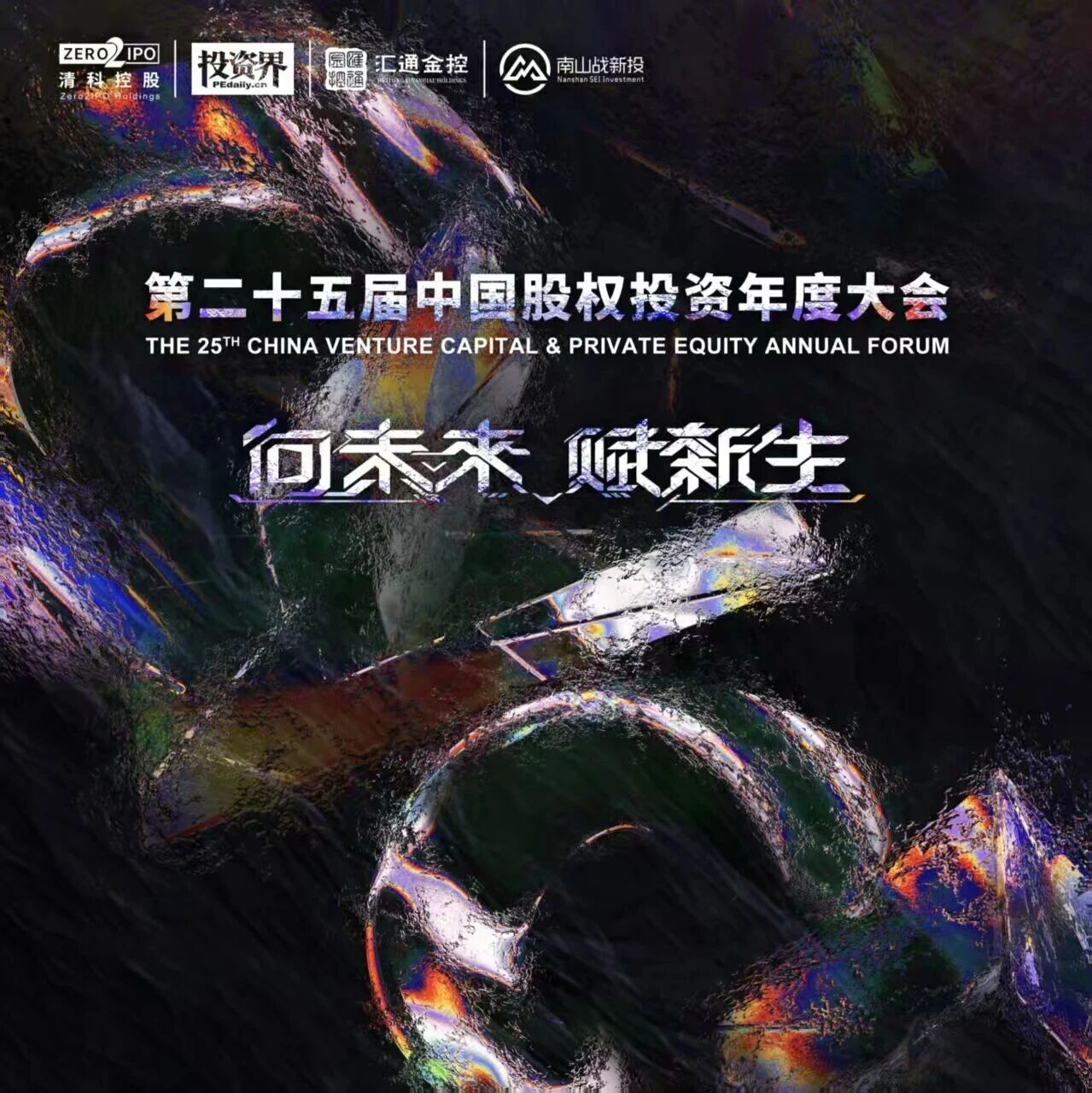
Core Viewpoint - The article discusses the upcoming 25th China Venture Capital & Private Equity Annual Forum, highlighting its significance in the investment landscape and the participation of key industry leaders [2][3]. Event Details - The forum will take place from December 2 to December 5, 2025, in Shenzhen, China [3]. - The event is themed "Innovation and Investment Carnival," featuring a lineup of prominent speakers and industry experts [5]. Key Speakers - Notable speakers include Chen Wei (Chairman and Founding Partner of Dongfang Fuhai), Ni Zhengdong (Founder and Chairman of Qianhai Capital), and other influential figures from various investment firms [6][8][21][24][30][36][40][44][49][66]. Agenda Highlights - The agenda includes a series of keynote speeches, panel discussions, and roundtable dialogues focusing on investment trends, challenges, and opportunities in the venture capital space [129][132][134]. - Specific topics will cover themes such as the future of mergers and acquisitions in China, the rise of corporate venture capital, and the investment landscape in hard technology [134][135]. Special Activities - The forum will also feature special events such as a networking dinner and a sports event, aimed at fostering connections among industry professionals [144][147]. Sponsorship and Support - The event is supported by various sponsors, including prominent investment firms and financial institutions, indicating strong industry backing [151][152].
瑞幸,揭开IDG另一张版图
投资界· 2025-11-20 06:09
Core Insights - Luckin Coffee's remarkable recovery is highlighted, with Q3 2025 total net revenue reaching 15.29 billion RMB, a significant year-on-year increase of 50.2%, and a net profit of 1.28 billion RMB, marking a milestone for the company [2][3] - The investment story behind Luckin Coffee involves key players like Dazhong Capital and IDG Capital, showcasing a successful collaboration to revive the company during its crisis [2][4] Investment Strategy - IDG Capital's entry into Luckin Coffee was well-timed, as they recognized the company's sales growth despite the fraud scandal, indicating a long-term belief in the coffee market's potential [4][5] - The investment approach of IDG Capital has been characterized by a focus on stable, long-term opportunities rather than chasing trends, allowing them to identify undervalued projects [9][10] Historical Context - IDG Capital has a long history of consumer investment, dating back to 2011, when they invested in Moncler during a global economic downturn, demonstrating their confidence in luxury brands [6][8] - The firm has also supported various successful brands, including Heytea and Three Squirrels, while maintaining a cautious investment strategy during market fluctuations [8][9] Globalization Focus - IDG Capital has established a clear globalization strategy, investing in companies that are inherently global rather than merely local brands seeking to expand [10][11] - The success of Chinese brands in international markets is reshaping perceptions of "Made in China," moving away from negative stereotypes towards recognition of quality and innovation [12][13]

5亿元,深圳争抢创始人
投资界· 2025-11-20 06:09
Core Viewpoint - The article highlights the vibrant entrepreneurial atmosphere in Shenzhen, showcasing various innovative startups across multiple sectors, and emphasizes the importance of practical approaches to entrepreneurship in the region [2][7]. Group 1: Event Overview - The "X-Day" special event took place on November 15 at the Shenzhen University Town International Conference Center, featuring six companies from sectors such as cross-border e-commerce AI services, 3D printing, biomedicine, and semiconductor imaging [2]. - This event is linked to the 2025 "Entrepreneur Star" Next Star global competition, which has a strategic direct investment fund of 500 million yuan [2][6]. Group 2: Featured Startups - Xi Ju Data, founded by a Bilibili UP master, focuses on AI solutions for cross-border e-commerce, currently serving 1.9 million sellers on major platforms like Amazon [3]. - Guangyi Precision, co-founded by Ma Jili, targets the metal 3D printing sector, addressing industry pain points related to forming precision and post-processing costs [4]. - Medico Investor, a U.S.-based biotech firm, is developing antibody-drug conjugates for cancer and autoimmune diseases, led by a seasoned expert in translational medicine [4]. - Feituo Xingchi specializes in body-sensing interaction technology, aiming to create an AI sports and entertainment platform [5]. - Aoxiang Ruiying focuses on next-generation radiation detection technology, holding over 20 core patents and has secured angel round financing [5]. - Kaijia Optical Technology, founded by a researcher with multiple academic accolades, develops advanced optical imaging systems and has received two rounds of financing [5]. Group 3: Entrepreneurial Environment - The entrepreneurial spirit in Shenzhen is characterized by a pragmatic approach, with founders focusing on monetization strategies even in long R&D cycles [7]. - Shenzhen attracts nearly 200,000 young talents annually, including high-tech professionals, which is crucial for the growth of new industries [8]. - The "Entrepreneur Star" competition serves as a significant platform for innovation, having selected 56 quality projects from over 2,600 teams, covering fields like AI, biomedicine, and advanced manufacturing [8][9]. Group 4: Support and Funding - The competition offers over 20 million yuan in total prizes, a 500 million yuan direct investment fund, and various support services including zero-rent spaces and housing policies for talents [9]. - The "X-Day" event has facilitated over 2,500 institutional connections, helping 17 companies secure equity financing exceeding 530 million yuan [9].
大疆,投一位潮汕90后
投资界· 2025-11-19 08:18
Core Viewpoint - The article discusses the competitive landscape of the 3D printing industry in Shenzhen, highlighting the investment by DJI in a local company, Smart Pie, and the implications for the market dynamics among key players like Tuo Zhu Technology and Smart Pie [2][5][9]. Group 1: Investment and Market Dynamics - DJI's investment in Smart Pie is based on the potential growth of consumer-grade 3D printing technology and aligns with its innovative technology strategy [2][5]. - Smart Pie, founded in 2015, has rapidly evolved from a cross-border e-commerce company to a significant player in the 3D printing market, with projected revenues of 1.6 billion yuan in 2024 and over 2 billion yuan in 2025 [5][10]. - The global consumer-grade 3D printing market is expected to reach $21.9 billion in 2024, with a compound annual growth rate exceeding 20% [10][11]. Group 2: Company Backgrounds - Smart Pie initially focused on STEM education kits before pivoting to 3D printing in 2017, launching its first printer after transitioning from being a distributor to developing its own products [3][4]. - Tuo Zhu Technology, founded by former DJI employees, has captured a significant market share, with 29% of the global consumer-grade 3D printing market and a shipment volume of approximately 1.2 million units [6][7]. - Both Smart Pie and Tuo Zhu Technology are part of a group of companies in Shenzhen that dominate the entry-level 3D printing market, collectively holding 90% of the market share [9][10]. Group 3: Industry Trends - Shenzhen is emerging as a "hardware Silicon Valley," with a complete 3D printing industry chain that facilitates rapid product development and assembly [9][10]. - The article emphasizes the importance of Shenzhen as a hub for investment in consumer hardware, particularly in the context of AI-related technologies and other innovative products [10][11].

白酒经销商,一年亏3000万
投资界· 2025-11-19 08:18
Core Insights - The white liquor industry is facing significant challenges, with many distributors reporting severe financial losses and cash flow issues due to market saturation and price inversion [3][4][5] - A majority of distributors are struggling to maintain profitability, with over 50% reporting worsening price inversions and more than 40% facing cash flow pressures [3][4] - The relationship between manufacturers and distributors is becoming increasingly strained, as distributors are pressured to make payments for inventory that is rapidly losing value [5][6] Market Conditions - In Q3 2025, 18 out of 20 listed liquor companies reported declining profits, with some experiencing net profit drops exceeding 90% [3] - The market is described as overly saturated, leading to significant price inversions where distributors are forced to sell products at prices lower than their purchase costs [4][5] - Distributors are experiencing a "snowball effect" where the value of their inventory decreases with each new payment made to manufacturers [18][19] Distributor Challenges - Many distributors are reporting that they are unable to sell inventory at profitable prices, with some stating that they are losing money on every sale [4][17] - The pressure to maintain sales volumes is leading to drastic cost-cutting measures, including reducing staff and operational expenses [9][10] - There is a growing trend of distributors considering online sales, but uncertainty about the effectiveness and costs associated with digital marketing remains a concern [9][10] Consumer Behavior - Changes in consumer preferences, particularly among younger demographics, are impacting demand for traditional white liquor, leading to fears about the industry's future [6][11] - The perception of drinking culture is shifting, with younger consumers viewing alcohol consumption as less essential compared to previous generations [11][12] - Distributors believe that the current decline in consumption is temporary and that demand will rebound as younger consumers mature and enter professional environments [21] Financial Outlook - Many distributors are projecting significant losses for the year, with estimates of losses reaching into the millions for some [3][17] - The financial strain is leading to a reevaluation of inventory management and sales strategies, with some distributors opting to reduce their purchase volumes from manufacturers [18][19] - The industry is experiencing a critical juncture where maintaining cash flow and managing inventory effectively are paramount for survival [18][19]

美元PE开了香港办公室
投资界· 2025-11-19 08:18
Core Viewpoint - The establishment of Adams Street Partners' new office in Hong Kong marks a significant expansion in the Asian private equity market, reflecting a growing interest in the region's investment opportunities [2][8]. Group 1: Company Overview - Adams Street Partners, founded in 1972, is recognized as the "mother fund pioneer" for establishing the world's first private equity fund of funds, currently managing approximately $65 billion in assets [6][7]. - The firm has expanded its presence in Asia with this new office in Hong Kong, which is its sixth office in the region, bringing the total number of global offices to 21 [8]. Group 2: Market Insights - The Hong Kong office is strategically positioned to capitalize on opportunities in the Greater Bay Area, which includes Shenzhen and Guangzhou, highlighting the region's potential for private equity investments [7][8]. - The firm has noted an influx of private equity and venture capital firms moving to Hong Kong, indicating a robust growth in the private equity market in the region [8][9]. Group 3: Investment Trends - There is a noticeable resurgence of dollar funds in the Chinese market, driven by a renewed interest from foreign investors in Chinese technology assets [11]. - Recent activities include the establishment of new offices by other prominent investment firms in Hong Kong, signaling a broader trend of increasing investment activity in the region [10][11].
