QYResearch

Search documents
全球与中国雪融机市场现状及未来发展趋势
QYResearch· 2025-11-21 03:14
Industry Overview - The slush machine industry is experiencing growth due to urban consumption upgrades, diverse beverage culture, and the global expansion of fast-food chains. The market has expanded from Europe and North America to emerging markets in Southeast Asia, the Middle East, and China over the past 20 years [2][5]. - The demand for cold beverages is becoming less seasonal, with a noticeable trend towards year-round consumption, particularly in high-temperature regions like China, Southeast Asia, India, and the Middle East [2][5]. Development Trends - Continuous technological innovation is essential for manufacturers to produce high-quality slush machines, requiring upgrades in production technology [3]. - The future of slush machines will focus on smart operations and automation, including features like intelligent temperature control, energy management, and remote monitoring [3]. - Environmental and energy-saving technologies are being adopted, driven by carbon neutrality policies and global energy-saving trends [3]. Market Size and Growth - The global slush machine market is projected to reach USD 317 million in 2024 and USD 435 million by 2031, with a compound annual growth rate (CAGR) of 4.80% from 2025 to 2031 [5]. - The dual-cylinder slush machine is the most popular type, accounting for 45% of the global revenue market in 2024, favored for its efficiency and ability to serve multiple flavors simultaneously [7]. Application and User Segments - Commercial use dominates the slush machine market, representing 92% of the global market share in 2024, primarily in chain tea shops, beverage specialty stores, cinemas, and convenience stores [9][11]. - The European market is the largest consumer region, holding a 35% share of the global revenue market in 2024, driven by stable consumer habits and high demand for diverse products [11]. Competitive Landscape - The global slush machine market is relatively concentrated, dominated by a few leading international companies, including Ali Group, TAYLOR, Bunn, and Milano Dispensers, along with Chinese manufacturers like Dongbei Group and Guangdong Meike Cold Chain [14]. - The top five manufacturers are expected to hold 46% of the market share in 2024, indicating a significant head effect in the industry [14]. Growth Drivers - The increasing acceptance of cold drinks and health beverages among urban residents in China provides a stable demand foundation for slush machines [16]. - The expansion of chain brands and convenience stores is driving the demand for standardized and bulk equipment, with slush machines being a common and attractive item on menus [16]. - Technological advancements and cost reductions in refrigeration efficiency and automation are enhancing the reliability and energy efficiency of slush machines [16].


全球与中国金相光学显微镜市场现状及未来发展趋势
QYResearch· 2025-11-20 02:33
Core Viewpoint - The metallographic optical microscope industry is experiencing a shift towards automation and intelligence, with significant advancements in technology and increasing demand from emerging markets [6][8][10]. Product Definition and Statistical Scope - Metallographic optical microscopes are high-precision instruments designed for observing the microstructure of metal materials, utilizing optical imaging principles to magnify the surface morphology of metal samples [2]. Inverted Metallographic Microscope - The inverted metallographic microscope features a unique structure with the objective lens facing down, allowing for the observation of larger and heavier samples without the need for cutting [4]. Upright Metallographic Microscope - The upright metallographic microscope is the classic form in metallographic observation, suitable for examining thin or standard-sized metal samples with high surface flatness requirements [5]. Integration of Intelligent and Automated Technologies - The industry is rapidly integrating AI and machine vision technologies, enhancing detection efficiency and precision, with automated laboratories emerging to reduce human error [6]. Acceleration of Domestic Production, Facing Core Technology Bottlenecks - Chinese companies have made significant progress in the metallographic microscope sector, but still rely on imports for core components, with high-end markets dominated by international giants [7]. Expanding Application Scenarios and Growing Demand in Emerging Markets - Traditional applications in metal processing and automotive manufacturing are being supplemented by rapid growth in demand from semiconductor packaging and new energy materials [8]. Intensifying Industry Competition and Market Segmentation - The market shows a clear polarization, with high-end segments led by international brands and mid-to-low-end segments facing price wars among domestic companies [9]. Development Trends of Metallographic Optical Microscopes - Future trends include deeper integration of AI and automation, multi-modal imaging capabilities, and high-resolution observation to meet the evolving demands of material science [10][11][12]. Global Market Scale Analysis - The global market for metallographic optical microscopes is projected to reach $373.52 million in 2024, with an expected CAGR of 4.67% from 2025 to 2031, reaching $527.77 million by 2031 [13]. Consumption and Production Insights - North America is the largest consumer market, expected to hold 33.48% of the market share in 2024, while China and Japan are significant production regions, with shares of 29.68% and 26.36% respectively [15].

洞见产业脉络:数据驱动下的材料市场新视野
QYResearch· 2025-11-20 02:33
Core Insights - The materials industry is facing unprecedented complexity due to technological iterations, capacity layout, and global supply chain restructuring, necessitating a clear and precise "industry map" for decision-makers [3] - The demand for comprehensive market insights is shifting from basic strategic direction to a deep understanding of the entire industry chain, market size, competitive landscape, and cost drivers [3] Group 1: Industry Chain Overview - Understanding one's position in the value chain and the interconnections with upstream and downstream partners is crucial for materials companies [4] - QYResearch provides dynamic "industry chain panoramas" to help companies identify potential suppliers, customers, partners, and competitors [5] Group 2: Market Size and Growth Trajectory - Accurate quantification of market size and growth rates is essential for informed decision-making regarding capacity planning and resource allocation [6] - QYResearch transforms vague market prospects into measurable growth trajectories, offering forecasts for market size, growth rates, and driving factors over the next five years [6] Group 3: Competitive Landscape Analysis - Understanding the competitive intensity, market shares, and strategic movements of key players is vital for existing companies and new entrants [7] - QYResearch conducts systematic analyses of major manufacturers, detailing their capacity layouts, product lines, and market shares [7] Group 4: Connecting Macro Trends with Micro Data - QYResearch links macro trends such as "dual carbon," "domestic substitution," and "supply chain security" with micro-level data like product sales and price trends [8] - The goal is to ensure that every decision made by clients is based on comprehensive and credible market insights [8] Group 5: Commitment to Objective Insights - In an era of information overload, QYResearch emphasizes the importance of presenting the most authentic market data and industry analysis [9] - The company focuses on delivering verified market facts to help businesses navigate their decision-making processes confidently [9]

行业聚焦:全球模块化多电平转换器(MMC)行业头部企业市场份额及排名情况
QYResearch· 2025-11-20 02:33
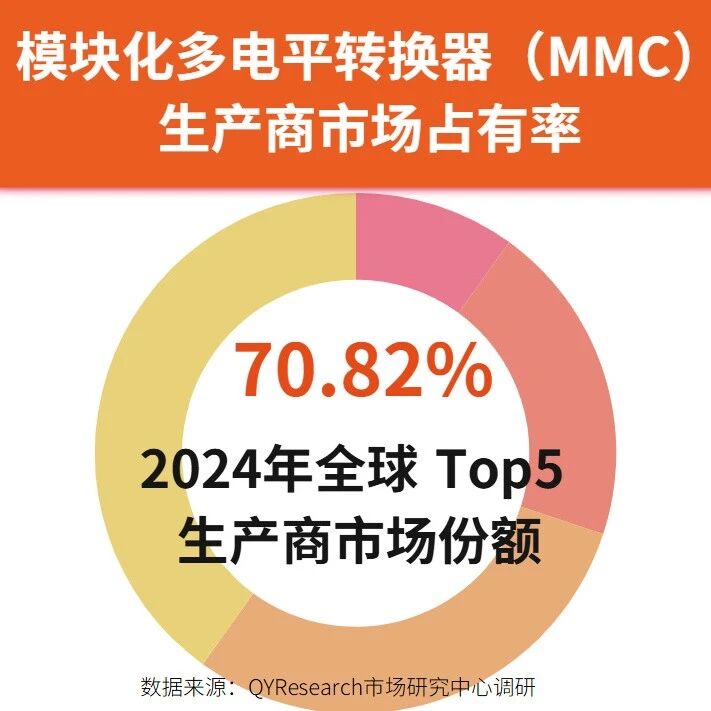
Core Viewpoint - The modular multilevel converter (MMC) market is rapidly growing due to the increasing demand for efficient, flexible, and reliable power conversion technologies, driven by the transition to renewable energy and advanced transmission systems [3][4]. Market Overview - The MMC market is becoming a significant segment within the global power electronics industry, characterized by its modular architecture and high scalability, which allows for superior voltage and current control while minimizing harmonic distortion [3][4]. - The global MMC market is projected to reach approximately $2.33 billion by 2024, with a compound annual growth rate (CAGR) of 7.12% in the coming years [10]. Current Development Status - The MMC technology has matured from experimental applications to widespread use in high-voltage direct current (HVDC) transmission, flexible AC transmission systems, and medium-voltage industrial drives [4]. - Major manufacturers are focusing on enhancing converter efficiency, modular scalability, and fault-tolerant control capabilities to meet the growing demands for grid reliability and flexibility [4][8]. Future Trends - The integration of MMC with renewable energy sources, such as wind and solar, is increasing to efficiently manage variable energy inputs into the grid [5]. - The rise of smart grids and digitalization is driving the deployment of MMC for advanced grid management and real-time monitoring, improving grid stability and operational efficiency [5]. Advantages - MMC systems benefit from advanced modular architecture, offering superior scalability, high efficiency, and low harmonic distortion compared to traditional converter technologies [7]. - They provide excellent flexibility in voltage and power control, enabling stable operation under various grid conditions [7]. Disadvantages - Despite its technological advantages, MMC faces challenges such as high initial costs, complex control systems, and demanding maintenance requirements [8]. - The modular design increases the number of components, complicating fault detection and extending system integration time [8]. Opportunities - The global shift towards renewable energy, electrification, and smart grids presents strong growth opportunities for MMC [9]. - Continuous advancements in semiconductor materials, cooling systems, and control algorithms are expected to drive innovation and reduce costs, expanding market access [9]. Threats - The MMC market faces competitive pressure from alternative power conversion technologies that may offer lower costs or simpler designs for specific applications [9]. - Supply chain disruptions in semiconductor components and economic uncertainties in infrastructure investments could hinder market growth [9]. Regional Insights - North America is experiencing steady growth due to modernization of aging grid infrastructure and expansion of renewable energy projects [19]. - Europe leads in technological innovation and deployment, supported by strong regulatory frameworks and offshore wind expansion [19]. - The Asia-Pacific region is the fastest-growing area, driven by industrialization, urbanization, and significant investments in HVDC systems to enhance grid reliability and integrate renewable energy [21].
行业聚焦:全球重组头蛋白行业头部企业市场份额及排名情况
QYResearch· 2025-11-20 02:33
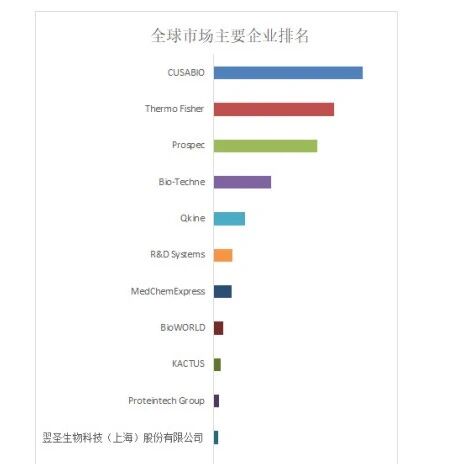
Core Insights - The article discusses the global market for recombinant noggin protein, highlighting its production, applications, and market dynamics, with a projected market size of $110 million by 2031 and a CAGR of 4.6% [3]. Group 1: Market Overview - The global recombinant noggin protein market is expected to reach $110 million by 2031, with a CAGR of 4.6% [3]. - Major manufacturers in the recombinant noggin protein sector include CUSABIO, Thermo Fisher, Prospec, Bio-Techne, and others [5]. - The production of recombinant noggin protein is concentrated in North America, Europe, and Asia, with China leading in large-scale production and export-oriented operations [8]. Group 2: Industry Chain Analysis - The upstream segment includes raw materials such as plasmids containing noggin gene sequences, various expression vectors, and cell culture media [9]. - Equipment used in production includes bioreactors for large-scale cell culture and chromatography systems for protein purification [9]. - Downstream applications of recombinant noggin protein are significant in stem cell research, regenerative medicine, and drug development [9]. Group 3: Policy Analysis - In China, national strategies like the "14th Five-Year Plan for Bioeconomy" prioritize recombinant proteins, providing funding for core technologies [10]. - The EU has established regulatory frameworks to support advanced therapies, while the US FDA offers differentiated regulatory pathways for research and clinical products [10]. Group 4: Development Trends - Technological advancements are enhancing expression and purification processes, with yields exceeding 5g/L in engineered mammalian cell lines [11]. - The market is witnessing a shift towards clinical applications, with recombinant noggin protein entering clinical trials for spinal cord injuries and osteoporosis [11]. - Emerging markets like China and India are focusing on cost-effective research-grade products, while mature markets prioritize clinical-grade applications [11]. Group 5: Opportunities - Breakthroughs in technology are expected to lower production costs by 20-30%, expanding supply capabilities [12]. - The regenerative medicine market is growing rapidly, with a CAGR exceeding 15%, driving demand for clinical-grade noggin protein [12]. - Regulatory incentives are reducing compliance barriers, facilitating market entry for innovative products [12]. Group 6: Challenges - Technical bottlenecks exist in balancing high-yield mammalian cell expression with cost-effectiveness [13]. - High R&D and production costs for clinical-grade noggin protein pose challenges for small and medium enterprises [13]. - Regulatory discrepancies and high clinical trial thresholds complicate cross-border compliance and extend trial durations [13].
行业聚焦:全球企业高可用性服务器行业头部企业市场份额及排名情况
QYResearch· 2025-11-19 01:47
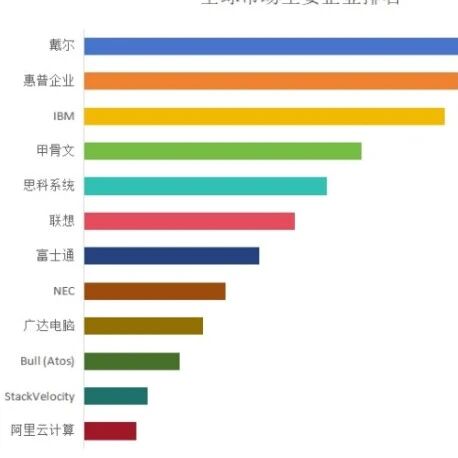
Core Viewpoint - Enterprise high availability servers are essential for ensuring continuous business operations during hardware or software failures, utilizing redundancy, failover, load balancing, and disaster recovery techniques to maximize reliability and service continuity [1][2]. Market Overview - The global enterprise high availability server market is projected to reach approximately $13.3 billion by 2025 and $19.3 billion by 2031, with a compound annual growth rate (CAGR) of 6.40% over the coming years [4]. Industry Chain - The industry chain for enterprise high availability servers includes upstream hardware manufacturers, midstream system integrators, and downstream enterprise users. Upstream suppliers provide processors, memory modules, storage systems, and power supplies, while midstream integrators assemble these components into high availability solutions [8]. Industry Policies - Industry policies focus on data security, operational reliability, and compliance standards, with governments in North America, Europe, and Asia-Pacific emphasizing data protection and disaster recovery guidelines. Policies often require critical sectors like banking and healthcare to adopt high availability infrastructure [9]. Development Trends - Key trends in the development of enterprise high availability servers include: - Intelligent operations and self-healing systems leveraging AI and automation to achieve zero downtime and reduce operational costs [10]. - Transition towards cloud-native high availability architectures to support hybrid and multi-cloud environments [10]. - Emphasis on green energy efficiency and low-carbon technologies to meet sustainability goals [10]. - Evolution from centralized to distributed architectures due to the rise of edge computing and 5G networks [12]. - Movement towards open and standardized industry ecosystems with modular designs and decoupled hardware and software [12]. Obstacles - The industry faces several obstacles, including: - High technical complexity requiring extensive reliability validation and compatibility testing, leading to significant barriers to entry [13]. - Elevated manufacturing and maintenance costs due to expensive components and stringent deployment conditions [13]. - High market concentration dominated by major players like HPE, Dell, and IBM, creating challenges for new entrants [13][14].
行业聚焦:全球透射型光电传感器行业头部企业市场份额及排名情况
QYResearch· 2025-11-19 01:47
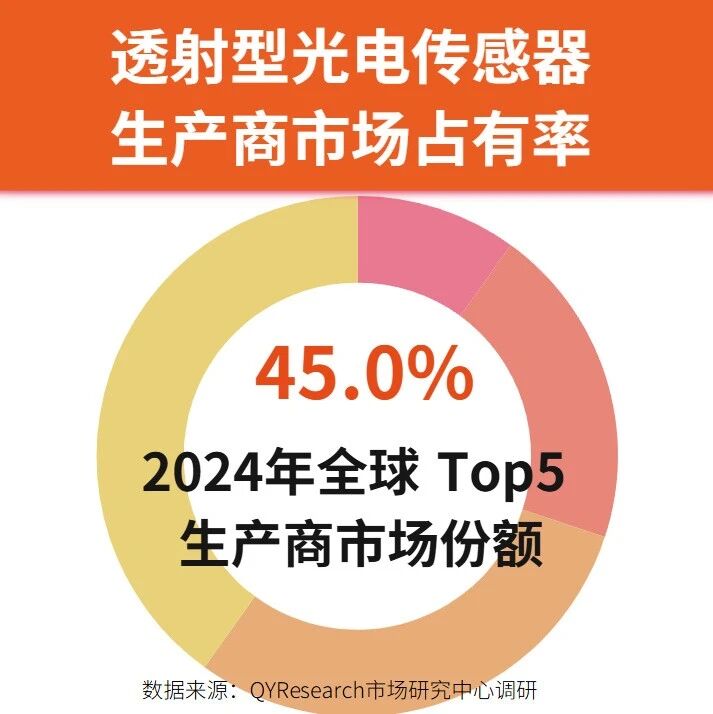
Core Insights - The article discusses the growth and market dynamics of the global through-beam photoelectric sensor industry, highlighting its applications in industrial automation and logistics [4][10]. Market Overview - The global production of through-beam photoelectric sensors is expected to reach 6.1 million units in 2024, with an average selling price of $135 per unit and a gross margin of approximately 30%-40% [3]. - The market size for through-beam photoelectric sensors is projected to reach $1.29 billion by 2031, with a compound annual growth rate (CAGR) of 6.7% over the coming years [4]. Market Segmentation - The supply chain consists of upstream components such as LEDs, photodiodes, optical lenses, precision housings, circuit boards, and signal processing chips. The midstream focuses on the design, assembly, and calibration of emitter-receiver pairs, while the downstream applications span industrial automation, robotics, packaging, logistics, material handling, and safety systems [3][10]. Key Players - Major manufacturers in the global market include Omron, SICK, Panasonic, Keyence, Eaton, Balluff, Baumer, Rockwell, Optex, and Pepperl+Fuchs. The top five manufacturers are expected to hold approximately 45.0% of the market share in 2024 [9]. Market Drivers and Opportunities - The rapid adoption of industrial automation and Industry 4.0 is driving demand for robust through-beam sensors, as optical sensing technology replaces manual inspections to enhance throughput and reliability [10]. - Growth in e-commerce, logistics, and packaging sectors is increasing the need for reliable object detection capabilities provided by through-beam sensors [10]. - The upgrade to smart sensors with features like IO-Link and digital diagnostics is expected to allow suppliers to capture market share in Industry 4.0 projects [10]. Market Trends - Integration of IoT and smart connectivity is becoming prevalent, with more through-beam sensors featuring communication capabilities for remote monitoring and predictive maintenance [12]. - Continuous miniaturization of sensors is enhancing detection range, accuracy, and resistance to environmental interference, with advancements in laser and infrared through-beam sensors [13]. - Demand from logistics, packaging, and electronics industries is growing, particularly in applications for detection, counting, presence/absence detection, and safety [14].
全球与中国滴漏咖啡机市场现状及未来发展趋势
QYResearch· 2025-11-19 01:47
Core Viewpoint - The article discusses the evolution, current status, and future trends of the drip coffee machine industry, highlighting the growing demand driven by consumer preferences for home brewing and the impact of technological advancements on product features and market dynamics [6][11][16]. Product Definition and Scope - Drip coffee machines are defined as classic devices that utilize gravity to filter coffee through a funnel with a filter paper and coffee grounds, making them user-friendly for the general public [2]. Types of Drip Coffee Machines - Automatic drip coffee machines offer convenience and consistency, requiring users to add water and coffee grounds, while the machine handles the rest, including heating water and brewing [4]. - Manual drip coffee machines rely entirely on user operation, requiring manual control of water temperature and pouring techniques [5]. Industry Background and Development - The drip coffee machine industry has evolved alongside global coffee culture and home appliance technology, with its origins tracing back to the early 20th century and significant advancements post-World War II [6]. - The introduction of electric drip coffee machines in the 1950s marked a turning point, leading to widespread adoption in households, particularly in the U.S. during the 1970s [6]. Current Industry Status - The industry exhibits a dual-track growth pattern, with mature markets focusing on brand premiumization and feature upgrades, while emerging markets like China and Southeast Asia experience rapid growth due to rising middle-class consumers [7]. - Key characteristics of the current market include technological micro-innovations, market segmentation, and heightened focus on environmental issues [8]. Future Trends - The industry is expected to see trends such as premiumization, smart technology integration, sustainability, and multifunctional designs that cater to diverse consumer needs [10]. - The global market for drip coffee machines is projected to reach $2.08 billion in sales by 2024, with an expected CAGR of 3.67% from 2025 to 2031 [11]. Market Opportunities and Drivers - Factors driving demand include the expansion of coffee culture, increased home and office consumption due to remote work trends, technological advancements improving user experience, and a growing emphasis on health and sustainability [17]. - The Chinese market is anticipated to grow from $206.17 million in 2024 to $285.71 million by 2031, reflecting a rising share of the global market [15]. Policy Analysis - Recent policies aim to promote smart and green home appliances, enhance after-sales service, and encourage foreign investment in advanced manufacturing, which will benefit the drip coffee machine sector [21].

深度洞察行业趋势,赋能客户战略布局
QYResearch· 2025-11-19 01:47
Core Insights - The Aerial Work Platform (AWP) industry in China is experiencing unprecedented growth opportunities due to the booming infrastructure construction, expanding warehousing and logistics, industrial manufacturing transformation, and steady progress in commercial real estate [4][11]. Research Framework - A comprehensive research framework was established to ensure scientific and systematic results, focusing on multiple dimensions of data collection and analysis [5]. Company Data Analysis - The analysis included a deep dive into the annual reports and financial disclosures of major listed companies in the AWP sector, examining key financial indicators such as revenue, gross margin, R&D investment intensity, and overseas market sales ratio to map the competitive landscape [6]. Collaboration with Authorities - Collaboration with authoritative organizations like the China Engineering Machinery Industry Association Aerial Work Machinery Branch provided critical data on equipment ownership, new machine sales, and product structure evolution over the past three years, reflecting industry dynamics [7]. Trade Data Analysis - Customs trade data analysis was conducted on core products like self-propelled scissor lifts and boom lifts, exploring China's AWP product export destinations, price trends, and regional market penetration [8]. Industry Interviews - In-depth interviews with industry participants, including rental companies, manufacturers, maintenance service providers, and experts, were conducted to gather insights on market cycles, rental market maturity, product iteration directions, and evolving customer needs [9]. Competitive Landscape - A comprehensive competitive assessment model was developed, identifying key players such as Zhejiang Dingli, XCMG, and others, analyzing their product structure, market channel strategies, and international development approaches [10]. Future Development Trends - The AWP industry is expected to see accelerated electrification, innovation in rental models, potential in overseas markets, and the implementation of intelligent applications over the next five years [11][12]. R&D Hotspots - Current R&D hotspots in the industry include lightweight design optimization, energy-efficient electric drive systems, smart safety systems, and integration of remote diagnostics with IoT [13]. Policy and Regulation Trends - Key regulatory trends include the standardization of special equipment management, stricter operational qualification reviews, and a shift towards low-noise, zero-emission equipment in urban projects [14]. Strategic Recommendations - Strategic recommendations for clients include expanding overseas market presence, advancing electrification transitions, and enhancing customer service systems to build a closed-loop ecosystem [15]. Project Value - The successful delivery of the research report has enabled clients to gain a comprehensive understanding of industry dynamics, accurately forecast future trends, and clarify their market positioning [16].

全球及中国家用饮水机行业研究及十五五规划分析报告
QYResearch· 2025-11-18 01:52
Industry Overview and Statistics - The household water dispenser market is transitioning from basic functionality to health-focused, multifunctional, and smart solutions, driven by consumer demand for water quality and safety [2] - The market is expected to reach $1.740 billion in 2024, with a modest growth to $1.793 billion by 2031, reflecting a compound annual growth rate (CAGR) of only 0.58% from 2024 to 2031 [3] - China is a key consumer market, accounting for 22.25% of the global market in 2024, but is projected to decline to 19.35% by 2031 due to structural shifts in consumption [6] Product Type Analysis - Traditional water dispensers still hold a market share of 32.87% in 2024, but are expected to decline at a CAGR of -0.46% from 2024 to 2031 due to shrinking demand and policy changes [7] - Countertop water dispensers are leading the market with a 46.55% share in 2024, benefiting from their "instant filtration and drinking" capabilities, with a projected CAGR of 1.14% [7] Sales Channel Dynamics - Online sales channels have surpassed offline channels, accounting for 50.80% of global sales in 2024, driven by the convenience of e-commerce platforms [8] - Offline channels remain crucial for lower-tier markets, contributing 49.20% of sales through experiential marketing strategies [8] Competitive Landscape - The market is characterized by a concentration of leading brands, with the top three companies (Midea, Angel, and Qinyuan) holding over 20% of the market share in 2024 [8] - Competition is intensifying, particularly in China, as leading firms leverage technology and market expansion while smaller companies focus on cost-effective models [8] Key Industry Features - High-end and smart features are driving industry upgrades, with products increasingly incorporating app connectivity, precise temperature control, and real-time water quality monitoring [10][11] - The market is witnessing a shift towards specialized products catering to specific consumer needs, such as sterilization for infant formula preparation and tea brewing [10][11] Favorable Factors for Development - Rising consumer income and health awareness are significantly increasing demand for safe and high-quality drinking water, pushing the market towards premium and functional products [12] - The implementation of stricter energy efficiency standards is prompting technological upgrades across the industry [12] Challenges Facing the Industry - The rapid growth of the water purifier market poses a direct threat to traditional water dispensers, with purifiers gaining over 50% penetration in high-end residential areas [13] - Quality and safety concerns persist, with a reported 60% compliance rate in product quality checks, highlighting the need for stricter regulations [14] - The industry faces structural overcapacity, leading to intensified competition and profit compression, particularly in the entry-level market [14]