精品化

Search documents
超4400万持有人,这家公司的ETF凭什么?
点拾投资· 2026-03-05 03:33
Core Viewpoint - The article discusses the launch of "Jimu Planet," a dedicated index investment education platform by Huazhang Fund, aimed at transforming the cold, tool-like nature of ETFs into a more engaging and supportive investment experience for users [4][6]. ETF Product Introduction - Investors often feel overwhelmed by the vast array of ETF options available, leading to a sense of isolation despite the wealth of information [3]. - The article highlights the need for a more personalized approach to ETF investment, where investors can feel understood and supported [4]. Jimu Planet Launch - Huazhang Fund launched "Jimu Planet" in early 2025, designed to provide comprehensive information and configuration services for investors [6][8]. - The platform aims to help investors build their own investment portfolios, likening the process to assembling building blocks [8]. Educational Initiatives - By the end of 2025, Jimu Planet had conducted nearly 300 online and offline educational activities across over 30 provinces, engaging with thousands of brokerage firms [8]. - The platform hosted over 200 live sessions, totaling more than 9,000 minutes, equivalent to reading 20 investment books [8]. - Huazhang Fund produced over 700 in-depth research reports, providing insights into the industries and companies behind ETFs [8]. Collaborative Efforts - The fund collaborated with exchanges to host events like "Exploring ETF Component Stocks" and "ETF Lectures," allowing investors to connect with real economic activities [9]. - This approach aims to build trust and a sense of community among investors, moving beyond mere transactions [9]. Growth Metrics - By the end of 2025, Huazhang Fund's index management scale exceeded 250 billion yuan, with ETF assets reaching 195.05 billion yuan, marking an annual growth of nearly 80 billion yuan [11]. - In the first three quarters of 2025, the fund generated over 50 billion yuan in profits for its investors [11]. - The fund has gained the trust of over 44 million investors, reflecting a strong preference for its products in a highly competitive market [11]. Product Offerings - Huazhang Fund offers a diverse range of ETFs, including the first domestic gold ETF, which saw a 58.54% increase in 2025, and the ChiNext 50 ETF, which rose over 57% [12]. - The fund emphasizes a diversified, specialized, and high-quality product strategy, covering various asset classes and market conditions [13]. Ecosystem Integration - Huazhang Fund has integrated deeply into the Guotai Junan ecosystem, leveraging research support and branch collaboration to enhance product visibility and investor engagement [15]. - The company aims to be more than just an ETF provider, positioning itself as a companion and guide for investors [15].


马年春节假期帷幕拉开 “湾区过年”成热门选择
Xin Lang Cai Jing· 2026-02-16 03:38
Group 1 - The tourism market in the Guangdong-Hong Kong-Macao Greater Bay Area is experiencing a surge in visitor numbers during the 9-day Spring Festival holiday, which began on February 15 [1][3] - A family-customized tour group from Hangzhou, Zhejiang, consisting of 16 members, is participating in various activities, including visiting Guangzhou Tower and tasting local cuisine [1][3] - The travel agency, Guangzhou Guangzhilv International Travel Agency, reports a significant increase in the number of tour groups from other provinces, driven by the "Spend the New Year in Guangdong" brand effect, with a trend towards more customized and high-quality travel experiences [3] Group 2 - The travel agency's product offerings for the Spring Festival include group tours, free travel, hot spring direct transfers, and hotel bookings, with an overall product quantity increase of approximately 30% year-on-year [3] - Popular source regions for tourists visiting Guangdong include Zhejiang, Fujian, and Hunan, with a primary demographic of family visitors, particularly those traveling with children [3] - The peak tourist flow is expected to occur from February 17 to 20, indicating a strong demand for local tourism experiences [3]

《冒姓琅琊》走知识小道突围
Xin Lang Cai Jing· 2026-02-14 03:00
Core Viewpoint - The success of the short drama "Mao Xing Lang Ya" demonstrates the diverse aesthetic preferences of short drama audiences, who are willing to pay for depth and cultural content, indicating a shift from mere entertainment to intellectual engagement [1][5] Group 1: Content Innovation - "Mao Xing Lang Ya" offers a narrative that requires cognitive effort from viewers, creating a sense of "intellectual pleasure" rather than relying on emotional stimulation [2] - The protagonist's ability to resolve crises is based on historical knowledge and literary debate, showcasing a shift from passive consumption to active understanding [2] - The production aims to convey the weight of traditional historical dramas within the short drama format, incorporating authentic historical details and dialogues from classical texts [2] Group 2: Historical Context - The story is set in the Southern Qi during a pivotal moment in history, integrating the political and cultural dynamics of the time into the plot [3] - The protagonist's struggles reflect the societal realities of the era, emphasizing the importance of knowledge and logic in navigating complex political landscapes [3] Group 3: Limitations and Challenges - The short drama format presents inherent conflicts with the depth of historical narrative, leading to a compression of complex political dynamics into symbolic fragments [4] - The knowledge-based core of the drama may create barriers to audience engagement, as some viewers may find it challenging to fully immerse themselves without prior knowledge [4] - The adaptation process has resulted in necessary simplifications, which may leave depth-seeking viewers feeling unsatisfied due to the loss of intricate plot developments [4] Group 4: Market Impact - The commercial success and high ratings of "Mao Xing Lang Ya" challenge the stereotype that short drama audiences only prefer mindless entertainment, paving the way for a more nuanced approach to historical narratives in the short drama genre [5]
在“快文化”中积累“慢品味”
Xin Lang Cai Jing· 2026-02-14 03:00
Core Insights - The rise of micro-short dramas is leading to viewer fatigue due to the oversaturation of similar, fast-paced content, prompting a shift towards "quality" productions in the industry [1] - A cultural trend emphasizing "slow appreciation" is emerging, as evidenced by the success of documentaries and historical dramas that resonate deeply with audiences [2][3] Group 1: Industry Trends - The overall user base for short dramas continues to grow, but there are signs of declining user engagement, indicating that simplistic plots may struggle to retain viewers [1] - Documentaries like "Return to the Wolf Pack" and historical dramas such as "The Peaceful Years" are gaining popularity, reflecting a desire for deeper, more meaningful content [1][2] Group 2: Audience Preferences - Young audiences exhibit a duality in content consumption, balancing the fast-paced nature of modern life with a yearning for slower, more reflective narratives that provide emotional solace [2] - The success of programs that focus on everyday life and emotional well-being highlights the audience's need for connection and understanding in a fast-paced world [3][4] Group 3: Cultural Significance - The "slow appreciation" trend is rooted in cultural exploration, moving away from rigid educational narratives to more relatable historical storytelling [3] - Documentaries and cultural programs that resonate emotionally with viewers are seen as essential for providing a sense of comfort and connection to one's roots [4]
2025非货规模“上升榜”揭晓:海富通成最大黑马,摩根、华商等中小公司异军突起
Xin Lang Cai Jing· 2026-01-23 04:21
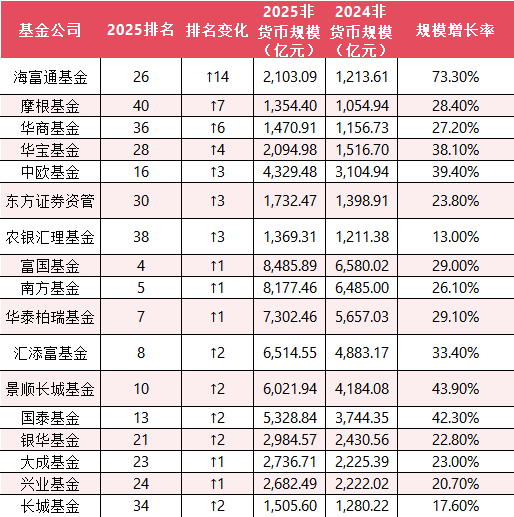
Core Insights - The public fund industry is experiencing significant growth in management scale, with notable disparities in growth rates among companies, indicating a shift from "scale expansion" to "quality and differentiation competition" [1][6][10] Group 1: Company Performance - Hai Fu Tong Fund emerged as the biggest "dark horse," rising 14 places to rank 26th, with a non-monetary scale increase of 73.3% to 210.3 billion yuan, driven by dual efforts in "fixed income +" and equity products, particularly in pension management and customized institutional services [1][7] - China Europe Fund moved up 3 places to 16th, with a scale growth of 39.4%, reinforcing its position as an "active equity expert" [1][7] - Invesco Great Wall Fund and Guotai Fund each rose 2 places, with scale increases exceeding 42%, benefiting from their strategies in ETF and active quantitative fields [1][7] - Huatai-PB Fund improved its ranking by 1 place to 7th, with a scale growth of 29.1%, solidifying its leading position in broad-based and dividend ETFs [1][7] - Huitianfu Fund climbed 2 places to 8th, with a scale increase of 33.4%, as consumer and pharmaceutical-themed products continued to attract capital [1][7] Group 2: Emerging Companies - Among smaller firms, Morgan Fund (China) and Huashang Fund rose 7 and 6 places respectively, reflecting the potential of "boutique" and "specialized" strategies in a competitive market [2][7] - Companies that saw ranking improvements generally exhibited three characteristics: focused product lines in advantageous sectors, dual-driven growth from institutional and retail businesses, and proactive layouts in innovative areas like ETFs and quantitative strategies [2][7] Group 3: Industry Trends - The median growth rate of companies that improved their rankings exceeded 25%, significantly surpassing the industry average, indicating their sustained active management capabilities [2][7] - The dramatic changes in the non-monetary scale rankings serve as a clear "scorecard" of the industry's fierce competition and evolving landscape, primarily reflecting capital flows and market enthusiasm [5][10]
腾讯投资布局生变 二次元游戏市场迎“洗牌”
Mei Ri Jing Ji Xin Wen· 2026-01-21 12:53
Core Insights - The domestic two-dimensional game market in China is experiencing significant turbulence, with major companies like Tencent facing challenges while others like miHoYo and NetEase are preparing to launch new products [1][5] Market Dynamics - The 2025 report indicates that the domestic two-dimensional mobile game market generated a revenue of 28.281 billion yuan, reflecting a year-on-year decline of 3.64%, primarily due to fluctuations in top products' revenue and underperformance of new releases [1] - The market is showing a clear divide, where leading companies maintain growth through quality content and long-term operations, while smaller firms struggle to break through [1][8] Company Adjustments - Tencent's game "White Corridor" has ceased updates, signaling a strategic shift to optimize resources despite holding a controlling stake in the developer [3] - The company has also exited its investment in Guangzhou Mingzhou Technology, indicating a decisive move away from underperforming projects [4][6] Competitive Landscape - Major players like miHoYo and NetEase are intensifying their competition, with miHoYo focusing on technology-driven projects and NetEase's new game "Code: Infinite" generating significant buzz [6][7] - The industry is witnessing a "military competition" as giants aim to capture future market opportunities through strategic investments and product launches [5][6] Industry Trends - The market is shifting towards "premiumization," where high-quality content and user engagement are becoming essential for survival, leading to a significant shake-up in the industry [8] - The success of titles like "Ningchao" from Kuro Game, which saw a 66% revenue increase in 2025, exemplifies the importance of frequent updates and global operations in maintaining product relevance [9]

岳雨婷:“钓系美人”标签不是束缚
Xin Lang Cai Jing· 2026-01-18 18:28
Core Insights - The article discusses the career transition of Yue Yuting from a behind-the-scenes director to a front-line actress, highlighting her achievements and challenges in the short drama industry [3][4][5]. Group 1: Career Transition - Yue Yuting's shift from directing to acting is described as a significant challenge, especially given her non-professional background in acting [4]. - Her first short drama, "Su Xiaomei," marked the beginning of her acting career and allowed her to witness the rapid development of the short drama industry [4]. - The transition required her to start from scratch, acknowledging her lack of formal training and focusing on improving her acting skills through practical experience [4]. Group 2: Industry Insights - Yue Yuting expresses optimism about the rapid updates and iterations in the short drama industry, viewing them as opportunities for growth and quality improvement [6]. - She believes that the trend towards high-quality productions is beneficial for actors, as it allows more time to develop characters and produce better works [6]. - The industry is moving towards a more refined and quality-driven approach, which Yue Yuting is eager to embrace as she continues her career [6]. Group 3: Personal Aspirations - Yue Yuting has clear goals for her career, aiming to excel in every role and explore opportunities in long dramas or variety shows, indicating a desire to step out of her comfort zone [6]. - She shares a personal dream of visiting Turkey in 2026, highlighting her interest in balancing work and life while seeking inspiration for her performances [6].

漫剧正告别“野蛮生长”,长视频动漫即将迎来“冲击波”?
3 6 Ke· 2026-01-16 03:00
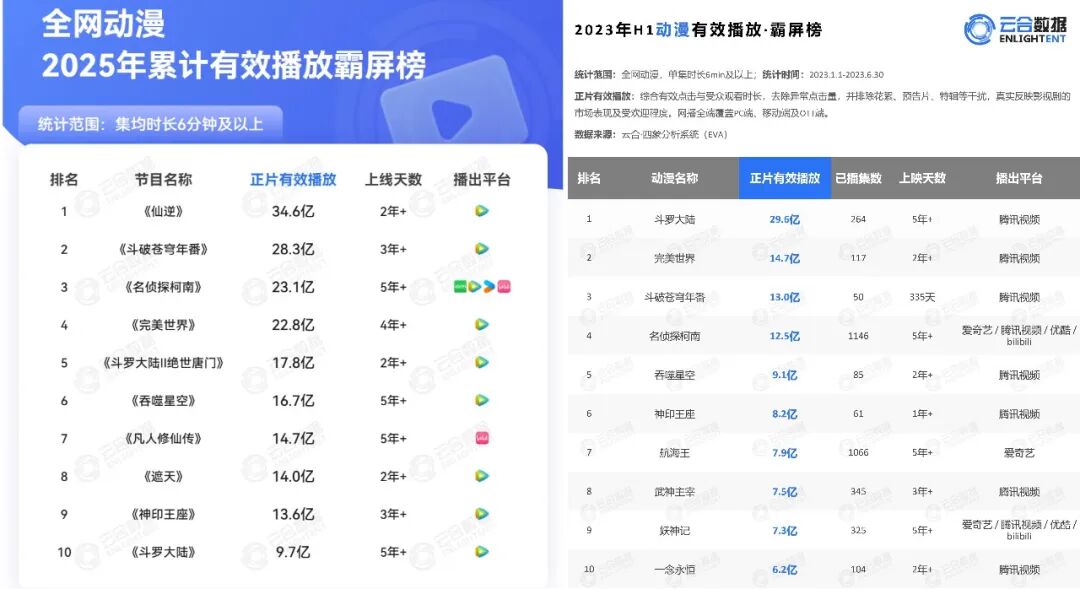
Core Insights - The animation market experienced significant growth in the past year, with monthly online views skyrocketing from 3 billion to 15 billion, and total views exceeding 75 billion, surpassing traditional animation market size within a year [1] - Despite the rise of short animations, long video platforms have not been significantly impacted, as top IP annual series remain stable, indicating a parallel development path [1][2] - The rapid evolution of short animations towards IP and quality production is expected to disrupt the current market equilibrium [1][7] Group 1: Market Dynamics - The domestic drama market faced a notable impact from short dramas, with the top 20 long dramas in 2025 seeing a 20% reduction in effective views compared to previous years [2] - Animation has become a crucial support for long video users, with 6 out of the top 10 new shows on Tencent Video being anime series, enhancing user acquisition and retention [2] - The overall impact of short animations on long-form anime remains limited, as the latter continues to attract substantial viewership [5][6] Group 2: Content Quality and Audience Engagement - Current short animations primarily serve as "fast food" entertainment, lacking the depth and emotional connection found in long-form anime, which continues to dominate viewer preferences [5][6] - The transition of short animations towards quality and IP-driven content is anticipated, with platforms beginning to leverage classic stories to establish emotional connections with audiences [9][10] - The rise of male and female-targeted short animations is expected to cater to diverse audience needs, potentially shifting viewer demographics [10] Group 3: Platform Strategies - Major platforms like Tencent Video and Bilibili are actively engaging in the short animation space, with Tencent Video launching initiatives to support quality content creation [11][19] - Bilibili's unique UGC community is driving the production of short animations, although it faces challenges in upgrading to higher-quality 3D animations [19][21] - Platforms are exploring collaborations with web novel IPs to enhance the quality and appeal of short animations, indicating a shift towards more structured content creation [10][23]



光大证券:短剧与漫剧向“精品化、工业化”转型 建议关注行业产能释放
智通财经网· 2026-01-13 04:00
Core Viewpoint - The short drama and comic drama industry is at a key transformation point towards "quality and industrialization" by 2026, with AI video models like Kexin maturing, leading to comic dramas becoming the main content growth driver for platforms [1] Group 1: Short Drama Market - The domestic short drama market is expected to reach 63.43 billion RMB in 2025, growing by 26% year-on-year, with a projected compound annual growth rate (CAGR) of 19.2% from 2025 to 2027 [2] - The supply of short dramas is increasing, with new releases expected to rise from 34,600 in 2024 to 39,600 in the first half of 2025, although competition for high-quality productions is intensifying [2] - The overseas short drama market is anticipated to see significant growth, with revenues expected to soar to 2.38 billion USD in 2025, marking a year-on-year increase of 263% [2] Group 2: Comic Drama Market - The year 2025 is projected to be the inaugural year for AI comic dramas in China, with a market size expected to exceed 20 billion RMB, and the number of comic dramas launched reaching 46,931 [3] - Major companies are increasingly investing in comic dramas, with the launch of the Hongguo free comic drama app marking a significant event in 2025, prompting platforms like Douyin and iQIYI to enhance communication with content producers [4] - AI technology is expected to enhance production capacity significantly, allowing for the production of 60 episodes in 20 days with a reduced cost of 400 RMB per minute [4]

顶奢酒店攻入下沉市场
21世纪经济报道· 2026-01-10 09:51
Core Viewpoint - The luxury hotel market in major cities like Beijing, Shanghai, Guangzhou, and Shenzhen is becoming saturated, prompting capital to shift towards less saturated markets with rich historical narratives and cultural heritage, such as Dunhuang [1]. Group 1: Market Dynamics - The investment firm, Wanzhong Holdings, has partnered with international hotel brands like Hilton and Marriott to establish luxury hotels in the northwest region of China, including brands like Waldorf, Four Seasons, and Mandarin Oriental [1][3]. - The luxury hotel segment is increasingly focusing on unique cultural experiences and natural endowments in second and third-tier cities, as evidenced by the opening of Ritz-Carlton in Dunhuang, which will be the second of its kind in China [5][8]. Group 2: Financial Performance - International hotel brands are facing challenges in the Chinese market, with Marriott reporting a 5% year-on-year revenue growth globally, but a decline in RevPAR in the Greater China region [7]. - InterContinental Hotels Group also reported a decline in RevPAR, ADR, and occupancy rates in the Greater China region, indicating a broader trend of underperformance in this market [7]. - In contrast, Hilton's global revenue increased by 6%, but recovery in the Asia-Pacific region, particularly China, has been slow [7]. Group 3: Strategic Shifts - The collaboration between local capital and international brands is becoming a clear strategy to capture scarce resources and mitigate investment risks, especially as the luxury hotel market shifts from scale and speed to boutique, destination-focused, and differentiated branding [8][9]. - The focus on culturally rich or naturally unique locations for luxury hotel projects aims to attract high-net-worth individuals seeking distinctive experiences, which may drive the next phase of growth in the industry [8].