量子位

Search documents
Cursor发布首个编程大模型!代码生成250tokens/秒,强化学习+MoE架构
量子位· 2025-10-30 01:06
Core Insights - Cursor has officially released its first in-house coding model, named Composer, as part of the Cursor 2.0 update [1][2] - Composer is reported to complete complex tasks in just 30 seconds, achieving a speed increase of 400% compared to competitors [3][12] Model Features - The new Cursor 2.0 includes a native browser tool that allows the model to test, debug, and iterate code autonomously until achieving correct results [4] - Voice code generation enables users to convert their thoughts into code without typing [5] - The interface has shifted from a file-centric to an agent-centric model, allowing multiple agents to run simultaneously without interference [6][7] Performance Metrics - Composer generates code at a speed of 250 tokens per second, which is approximately twice as fast as the current leading models like GPT-5 and Claude Sonnet 4.5 [19][20] - The model demonstrates enhanced reasoning and task generalization capabilities, comparable to mid-tier leading models [21] Training Methodology - Composer's performance is attributed to reinforcement learning, which allows the model to learn from real programming tasks rather than static datasets [22][26] - The training process involves the model working directly within a complete codebase, utilizing production-level tools to write, test, and debug code [27][28] Practical Application - Cursor 2.0 is designed to provide a practical AI system that aligns closely with developers' daily workflows, enhancing its usability in real-world scenarios [35][36] - The model has shown emergent behaviors, such as running unit tests and autonomously fixing code format errors [31] Transparency and Model Origin - There are concerns regarding the transparency of Composer's foundational model, with questions about whether it is based on pre-existing models or entirely self-trained [37][40] - Cursor has previously developed an internal model named Cheetah, which was used for testing speed and system integration [42]


Sora连更三大新功能!一键打造IP形象,限时免注册码抢占安卓市场
量子位· 2025-10-30 01:06
Core Insights - Sora has introduced three major new features: Character Cameo, video stitching, and community leaderboard [1][12][13] - The app has temporarily lifted the invitation code requirement in the US, Canada, Japan, and South Korea to facilitate direct registration [2][17] - The motivation behind the limited-time opening is attributed to insufficient computing power [3] Feature Summaries - **Character Cameo**: This upgraded feature allows users to maintain consistency with non-human cameo characters, including pets or animated figures, enhancing user engagement [6][9] - **Video Stitching**: Users can now combine two videos if they find the generated content too short, increasing the versatility of video creation [12] - **Community Leaderboard**: This feature categorizes the most used cameo characters and the most remixed videos, fostering community interaction [13] Market Strategy - The temporary removal of the invitation code requirement coincides with the launch of Sora's Android version, aiming to rapidly expand the user base and capture market share [18] - Initially, Sora employed a viral marketing strategy where each activated account could share four invitation codes, creating significant buzz but also a gray market for codes [15][16]

再创历史!英伟达市值一夜突破5万亿美元,今年涨幅56%,黄仁勋晋升全球第八富豪
量子位· 2025-10-30 01:06
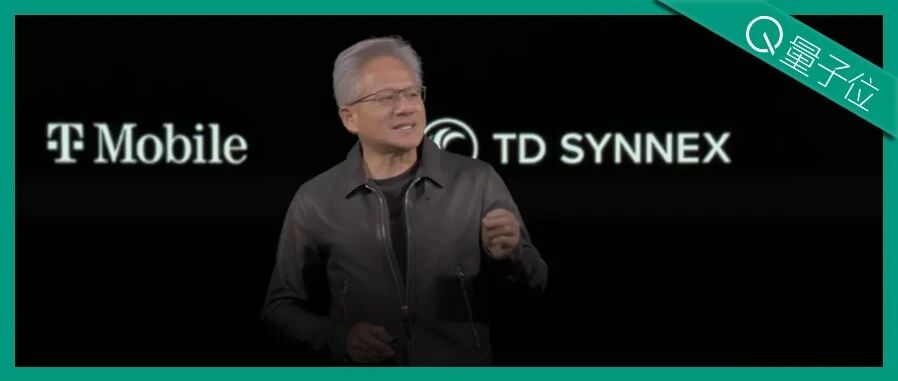
Core Viewpoint - Nvidia has become the first company in history to surpass a market capitalization of $5 trillion, marking a significant milestone in the tech industry [1][10]. Group 1: Market Performance - On October 29, Nvidia's stock price rose by 5.44%, reaching an intraday high of $212.19 per share, and closing at $207.04 per share, resulting in a market cap of $5.03 trillion [2][10]. - Since the beginning of 2025, Nvidia's stock has surged by 56%, showcasing its rapid growth compared to other major companies [5][39]. - Nvidia's market cap now exceeds the combined total of several major tech companies, including AMD, Intel, and TSMC, as well as entire sectors within the S&P 500 [5][6]. Group 2: Growth Trajectory - Nvidia's market value has skyrocketed from $1 trillion to $5 trillion in just two and a half years, a feat unmatched by other tech giants [9][23]. - The company achieved its first $1 trillion valuation in May 2023, followed by $3 trillion in June 2024, and then $4 trillion in just over a year [22][23]. - The growth from $4 trillion to $5 trillion took only three months, highlighting Nvidia's exceptional market performance [23][24]. Group 3: Key Drivers of Growth - The recent surge in Nvidia's market cap is attributed to announcements made during the GTC developer conference, where CEO Jensen Huang unveiled several technological innovations and partnerships [25][39]. - Key highlights from the conference included plans to collaborate with the U.S. Department of Energy to build new supercomputers and the introduction of the Blackwell chip series, which is expected to significantly increase production [26][27][31]. - Nvidia's anticipated revenue from the new products is projected to reach $500 billion by the end of next year, reflecting a major shift in global computing infrastructure towards Nvidia's accelerated computing model [31][33]. Group 4: Competitive Landscape - Nvidia's rapid ascent has created a substantial gap between it and its closest competitor, Microsoft, which has a market cap of $4.03 trillion, and Apple at $4.00 trillion [13][14]. - The company has positioned itself as a key player in the AI boom, with its GPUs being integral to the infrastructure of leading AI companies like OpenAI and Google DeepMind [39][40]. - Nvidia's strategic investments and partnerships, including a potential $100 billion investment in AI data centers, further solidify its leadership in the AI sector [40][41].
14000人原地被裁!亚马逊今日:打工人水深,AI机器人火热
量子位· 2025-10-29 09:30
Core Viewpoint - Amazon has announced a significant layoff plan, cutting approximately 14,000 employees, which represents about 4% of its total workforce of 350,000. This move is part of a broader strategy to streamline operations and invest in AI and robotics to enhance efficiency [10][12][21]. Group 1: Layoff Details - On October 28, Amazon communicated to 14,000 employees about the layoffs through a letter from Senior Vice President Beth Galetti [10]. - The layoffs primarily affect mid to senior-level management, with over 78% of the first 7,500 notified employees being at levels L5 to L7 [17]. - The majority of the layoffs, over 80%, are from Amazon's retail business, including core departments like online shopping and logistics [18]. Group 2: Company Strategy - Amazon's leadership has indicated that the layoffs are part of a cost-cutting initiative aimed at reallocating resources towards upgrading its delivery network and investing in AI technologies [19][22]. - CEO Andy Jassy emphasized the need to reduce headcount in certain areas while increasing staffing in others to adapt to changing market conditions [23][30]. - The company is focusing on automation and AI to improve operational efficiency, with plans to implement highly automated warehouses by 2027 [40]. Group 3: Financial Implications - Despite the layoffs, Amazon's financial performance remains strong, with a reported sales increase of 13% year-over-year, reaching $167.7 billion [28]. - The stock price of Amazon rose by 1% on the day the layoff news was announced, indicating investor confidence in the company's restructuring efforts [5][6]. Group 4: Future Outlook - Analysts predict that Amazon's ongoing automation efforts could potentially replace over 500,000 blue-collar jobs in the coming years [42]. - The company is investing heavily in robotics, having acquired a startup focused on developing intelligent robotic systems, which will enhance its operational capabilities [34][36]. - There are concerns about the long-term implications of such aggressive automation strategies, particularly if the anticipated AI advancements do not materialize as expected [48].


全球首个具身智能开放平台来了!让大模型长出“身体”,像人一样自然表达交互
量子位· 2025-10-29 09:30
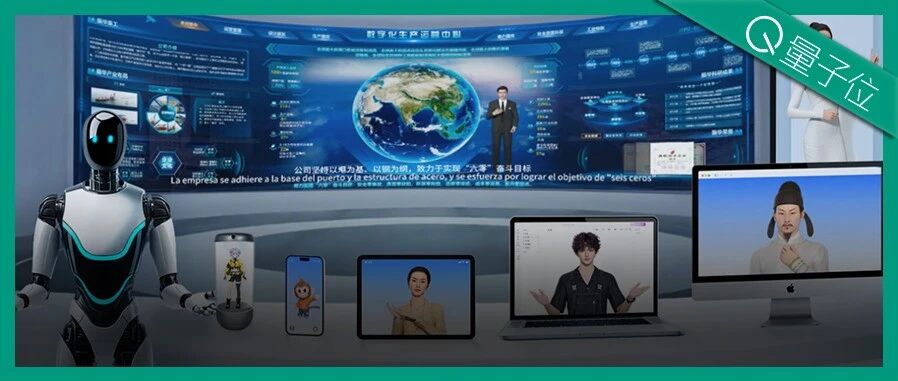
Core Viewpoint - The article emphasizes the expansive potential of embodied intelligence beyond current robotic applications, highlighting the launch of the "Mofa Cloud" platform by Mofa Technology, which enables 3D digital humans to interact naturally with users [1][3][5]. Summary by Sections Introduction to Embodied Intelligence - The concept of embodied intelligence is linked to the development of digital humans, which can enhance interaction capabilities in various applications [2][4]. Mofa Cloud Platform - Mofa Technology has introduced the "Mofa Cloud" platform, the world's first infrastructure for embodied intelligence, aimed at developers [3][4]. - This platform allows large language models to gain physical presence, enabling robots to express emotions and actions naturally [5][6]. Key Features of Mofa Cloud - The platform boasts an end-to-end latency of less than 1.5 seconds, supports millions of concurrent users, and can operate on low-cost computing architectures [6][28]. - It generates real-time 3D digital human expressions, voice, and gestures based on text input, facilitating seamless multimodal interactions across various devices [8][12]. Applications of Mofa Cloud - Mofa Cloud serves three main application directions: enhancing AI models with physical expression, upgrading screens to embodied intelligent interfaces, and enabling humanoid robots to communicate naturally [11][12][15]. - It can be deployed in settings like hotels and government offices for roles such as reception and guidance, providing 24/7 service [17][18]. Developer Accessibility - The platform supports SDK and API integration, allowing developers to embed its capabilities into any terminal or application, creating interactive AI companions [20][34]. Overcoming Challenges - Mofa Cloud addresses the challenges of creating high-quality, low-latency, and cost-effective digital humans, breaking the "impossible triangle" of quality, cost, and scalability [23][27]. - The platform utilizes a cloud-edge architecture that minimizes bandwidth and computational requirements, making it adaptable to various systems and devices [28][30]. Unique Positioning - Unlike traditional digital human platforms, Mofa Cloud focuses on driving interaction rather than merely generating content, allowing for real-time responses and emotional engagement [36][40]. - It integrates the capabilities of digital humans with large models, creating a new category of embodied intelligent agents that enhance human-computer interaction [43][55]. Future Implications - The launch of Mofa Cloud signifies a shift in how embodied intelligence is perceived, emphasizing the importance of physical presence in AI interactions [56][58].
不好美国要捧杀了!新研究:中国正在成为全球科学领导者
量子位· 2025-10-29 09:30
Core Viewpoint - The article discusses a recent study published in the Proceedings of the National Academy of Sciences, which indicates that China is emerging as a global leader in science, particularly in collaboration with the United States [2][4]. Group 1: Research Findings - The study analyzed 6 million papers using machine learning to assess the leadership roles of Chinese scientists in international collaborations, revealing that as of 2023, Chinese leaders in US-China collaborations have increased to 45% and are expected to reach parity by 2027-2028 [4][21]. - By 2030, China is projected to achieve equal leadership status with the US in strategic fields such as AI, semiconductors, energy, and materials science [5][6]. Group 2: Methodology - The research employed a three-step approach to quantify "leadership" in scientific collaborations, defining leadership roles and scoring scientists based on nine predictive features [12][18]. - The nine dimensions for scoring included past citation counts, research overlap with keywords, self-citation rates, years of academic experience, total publications, cumulative citations, unique keyword counts, author order, and institutional academic ranking [15][17]. Group 3: Implications - The findings suggest a significant shift in the global scientific leadership landscape, with China rapidly increasing its share of leadership roles in international collaborations [20][21]. - The study's results have sparked discussions in the West about the potential decline of Western dominance in science, as exemplified by recent funding issues faced by prominent scientists in the US [26][27].

人工智能年度榜单火热报名中!五大奖项,寻找AI+时代的先锋力量
量子位· 2025-10-29 09:30
Core Points - The article announces the launch of the "2025 Artificial Intelligence Annual Awards" to recognize outstanding contributions in the AI industry [1] - The awards will focus on three main categories: companies, products, and individuals, with five specific awards to be given [3] Company Awards - The "2025 AI Leading Company" award will recognize the most comprehensive AI companies in China [4] - Eligibility criteria include being registered in China or primarily serving the Chinese market, and being a leader in the AI industry or applying AI extensively in their main business [5] Product Awards - The "2025 AI Outstanding Product" award will highlight AI products that have achieved significant technological innovation and market impact [12] - Products must be market-ready, have received user feedback, and demonstrate substantial technological advancements in the past year [14] Solution Awards - The "2025 AI Outstanding Solution" award will focus on AI applications across various industries, recognizing solutions that show innovation and industry impact [13] - Solutions must be implemented in real business scenarios, validated by customers, and demonstrate significant breakthroughs in the past year [15] Individual Awards - The "2025 AI Focus Person" award will honor notable individuals in the AI field, including emerging stars and industry leaders [16] - Candidates must have made significant contributions in AI technology or commercialization within the past year [21] Registration and Event Details - Registration for the awards is open until November 17, 2025, with results to be announced at the MEET2026 Smart Future Conference [19] - The conference aims to gather leaders from technology, industry, and academia to discuss transformative changes in the AI sector [23][24]

阿里新研究:统一了VLA和世界模型
量子位· 2025-10-29 09:30
Core Insights - WorldVLA is a unified framework that integrates Visual Language Action Models (VLA) with World Models, proposed by Alibaba DAMO Academy, Lake Lab, and Zhejiang University [1][4] - Experimental results indicate that WorldVLA significantly outperforms independent action models and world models, showcasing a mutual enhancement effect [2] Model Overview - The framework combines three independent tokenizers for encoding images, text, and actions, utilizing a VQ-GAN model for image tokenization with a compression ratio of 16 and a codebook size of 8192 [8] - The action tokenizer discretizes continuous robot actions into 256 intervals, representing actions with 7 tokens [8] Model Design - WorldVLA employs a self-regressive action world model to unify action and image understanding and generation [4] - The model addresses limitations of existing VLA and world models by enhancing action generation accuracy through environmental physical understanding [5][14] Training and Performance - WorldVLA is jointly trained by integrating data from both action models and world models, enhancing action generation capabilities [13] - The model's performance is positively correlated with image resolution, with 512x512 pixel resolution showing significant improvements over 256x256 [21][23] Benchmark Results - WorldVLA demonstrates superior performance compared to discrete OpenVLA models, even without pre-training, validating its architectural design [19] - The model's ability to generate coherent and physically plausible states in various scenarios is highlighted, outperforming pure world models [31][32] Mutual Enhancement - The world model enhances the action model's performance by predicting environmental state changes based on current actions, crucial for tasks requiring precision [25] - Conversely, the action model improves the visual understanding of the world model, supporting better visual generation [17][30]


美国AI公司们,开始青睐Made in China的大模型
量子位· 2025-10-29 08:00
Core Viewpoint - The article discusses the increasing adoption of Chinese AI models, such as GLM and Qwen3, by American companies, highlighting a shift towards cost-effective and efficient solutions in the AI industry [1][14][44] Group 1: Adoption of Chinese AI Models - Windsurf, a leading AI programming product, recently integrated a mysterious model that turned out to be GLM from China [2][7] - Vercel, a company valued at $9.3 billion, announced a partnership with Zhipu to provide GLM-4.6 API services, indicating a trend of American companies utilizing Chinese models [17][19] - Other platforms, such as Featherless, have also begun supporting Chinese models, showcasing a broader acceptance in the AI landscape [22][24] Group 2: Reasons for Adoption - The primary reasons for the shift towards Chinese models are performance and cost-effectiveness, with many companies finding that Chinese models can deliver comparable or superior performance at a lower price [26][27] - Chamath Palihapitiya, founder of Social Capital, noted that while models from OpenAI and Anthropic are good, they are too expensive, making Chinese models a more viable option for scaling businesses [30][34] - The competitive pricing strategies of Chinese AI companies, such as offering significant token allocations and discounts, further enhance their attractiveness to American firms [36][39] Group 3: Industry Implications - The trend indicates a transition in the AI industry from a focus on technical superiority to practical applications, where cost, speed, and scalability are paramount [40][41] - The choices made by companies like Vercel and Social Capital challenge the notion that only the most powerful models are suitable for commercial use, emphasizing the importance of high cost-performance ratios [42][44] - This shift may signal the onset of a more diverse and competitive global AI landscape, where the value of Chinese models continues to rise [47]

单条演示即可抓取一切:北大团队突破通用抓取,适配所有灵巧手本体
量子位· 2025-10-29 05:11
Core Insights - The article discusses the challenges of traditional reinforcement learning (RL) in high-dimensional action spaces for robotic grasping tasks and introduces the DemoGrasp framework as a solution [1][2][4]. Group 1: DemoGrasp Framework - DemoGrasp is a simple and efficient learning method for general robotic grasping, initiated from a single successful demonstration trajectory [2][4]. - The framework transforms multi-step Markov Decision Processes (MDP) into a single-step MDP by editing demonstration trajectories, enhancing learning efficiency and performance transfer to real robots [4][7]. Group 2: Learning Process - The learning process involves editing the robot's actions in the demonstration trajectory to adapt to different objects and poses, focusing on wrist and finger adjustments [9][16]. - DemoGrasp utilizes a simulation environment with thousands of parallel worlds to train the policy network, which outputs editing parameters based on observations [10][11]. Group 3: Training Efficiency - The training efficiency is notable, with a single RTX 4090 GPU achieving over 90% success rate in just 24 hours on a compact action space [12]. - The framework can adapt to various robotic hands without adjusting training hyperparameters, achieving an average success rate of 84.6% across 175 objects [20]. Group 4: Performance Metrics - DemoGrasp outperforms existing methods in the DexGraspNet dataset, achieving a visual policy success rate of 92% with minimal generalization gap [17][18]. - In real-world tests, DemoGrasp successfully grasped 110 unseen objects, maintaining over 90% success rates for regular objects and 70% for challenging flat and small objects [21][22]. Group 5: Future Directions - The framework aims to support more complex tasks such as functional grasping and tool usage, with potential for real-time adjustments and error recovery in future research [25][26]. - DemoGrasp can integrate with multimodal large models for autonomous grasping in open environments [27].