量子位

Search documents
不儿,这谁还能看出是AI演的视频啊
量子位· 2025-12-18 09:26
金磊 发自 凹非寺 量子位 | 公众号 QbitAI 这一次,我真的分不清 视频到底是不是AI生成 的了。 来,咱们先来看一下这段 演技飙升 的视频片段: Prompt:女子泣不成声,说台词:"江辰……你一定要活着回来,好吗?……答应我"。女子边说话边将右手抬起抚摸男子的脸。背景 音乐伤感。影视级。 这台词、这演技、这眼神、这口型,不说是AI生成的,一般人绝对会以为是哪个电影里的片段。 但重点还不是效果的逼真—— 因为这10s的片段,人物对白配音、视频背景音乐和音效,统统都是通过上面的Prompt 一锅出 的。 这就是刚刚 火山引擎 在FORCE原动力大会上推出的最新 豆包视频生成模型Seedance 1.5 Pro 。 主打的就是 音画高精同步,一镜入戏 。 就这个功能一出,打造一个有趣好玩的小短片,那真是分分钟的事情了。 例如我们以这位AI女主角为原型: 然后就可以用Seedance 1.5 Pro搞一个"川剧"—— 《至辣园》 : 从这两个实测案例中,我们不难看出,这次豆包视频生成模型Seedance 1.5 Pro整体亮点可以总结为: 目前,Seedance 1.5 Pro已经上线 即梦AI 和 豆包 ...


港股通用GPU第一股也冲刺了!哈佛博士带队,估值209亿
量子位· 2025-12-18 09:26
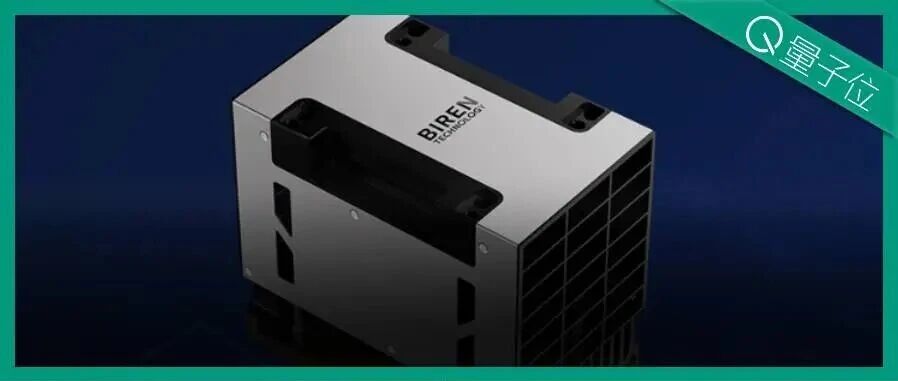
Core Viewpoint - The article highlights the emergence of domestic GPU companies in China, particularly focusing on Birran Technology, which is set to become the first domestic GPU company listed on the Hong Kong Stock Exchange with a valuation of 20.9 billion yuan [1][40]. Company Overview - Birran Technology, founded in 2019 by Zhang Wen, a Harvard Law PhD, specializes in developing general-purpose GPU chips and intelligent computing solutions for AI training and inference, providing full-stack support from cloud to edge [2][3]. - The company has attracted significant investment, completing over 10 funding rounds in six years, with notable investors including Qiming Venture Partners, IDG Capital, and Hillhouse Capital [2][39]. Product Offerings - Birran's core products include a hardware system based on its self-developed GPGPU architecture, designed specifically for AI workloads, and a software platform called BIRENSUPA for developing AI applications [3][10]. - The hardware system consists of various configurations, including PCIe boards and GPGPU servers, with key chips like the Birran 106 and 110 designed for training and edge inference, respectively [5][8]. Financial Performance - The company's revenue has shown significant growth, increasing from 500,000 yuan in 2022 to 337 million yuan in 2024, with a 50% year-on-year increase in the first half of 2023 [19][20]. - The main revenue source is the intelligent computing solutions, which started contributing to revenue in 2023, while the company also generates income from product sales and rental of intelligent computing clusters [20][21]. Profitability and Expenses - Despite revenue growth, Birran Technology remains unprofitable, with losses of 1.474 billion yuan in 2022 and 1.744 billion yuan in 2023, although adjusted net losses have decreased [27][28]. - Research and development expenses are a significant portion of the budget, amounting to 1.018 billion yuan in 2022 and 886 million yuan in 2023, with a notable increase in the first half of 2024 [29][30]. Market Position and Future Plans - Birran Technology aims to launch the second-generation Birran 20X series chips for cloud training and inference by 2026, with further developments planned for 2028 [8]. - The company has established a strong customer base, including major enterprises in high-computing industries, with nine Fortune China 500 companies among its clients [15].
行啊AI PC!现在都能隔空测血压、检测皮肤了
量子位· 2025-12-18 09:26
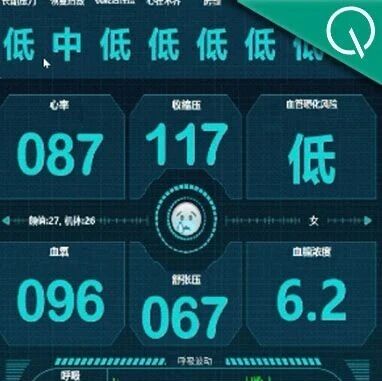
Core Insights - The article discusses the innovative capabilities of AI PCs, particularly in non-contact health monitoring and skin analysis, showcasing how technology can enhance personal health management and beauty care [1][17]. Group 1: Health Monitoring - The AI PC can perform non-contact health assessments, including measuring heart rate, blood oxygen levels, blood pressure, and even blood glucose concentration using a connected camera [5][24]. - The technology relies on remote photoplethysmography (rPPG), which detects subtle changes in skin color due to blood flow, allowing for accurate health metrics without physical sensors [20][24]. - The system can also evaluate vascular health risks and potential heart conditions, providing a comprehensive health overview [25][26]. Group 2: Skin Analysis - The AI PC offers a skin analysis feature that generates a detailed report on skin conditions, including hydration levels and sensitivity, based solely on visual input from the camera [10][30]. - The skin analysis utilizes optical imaging and spectral analysis to assess skin health, identifying issues like redness and pigmentation [29][30]. - Personalized skincare and beauty recommendations are provided based on the analysis, including specific product suggestions for targeted skin concerns [16][30]. Group 3: Technology and Performance - The AI PC's capabilities are powered by Intel's Core Ultra processor, which includes a neural processing unit (NPU) designed for efficient AI tasks, ensuring low power consumption and high performance [31][33]. - The integration of NPU allows for real-time processing of complex algorithms, enabling immediate health and beauty assessments without the need for internet connectivity [38][39]. - This local processing enhances user privacy and security, distinguishing AI PCs from traditional computing devices [39][44]. Group 4: Market Potential - The article highlights the growing ecosystem of AI applications tailored for AI PCs, driven by the unique capabilities of Intel's xPU+ architecture [41][43]. - As more developers create specialized applications for AI PCs, the technology is set to redefine user interaction across various domains, from health management to creative production [44].

量子位编辑作者招聘
量子位· 2025-12-18 09:26
Core Viewpoint - The article emphasizes the ongoing AI boom and invites individuals to join the company "Quantum Bit," which focuses on tracking AI advancements and has established itself as a leading content platform in the industry [1]. Group 1: Job Opportunities - The company is hiring for three main directions: AI Industry, AI Finance, and AI Product, with positions available for both experienced professionals and fresh graduates [2][4]. - Positions are open for various levels, including editors, lead writers, and chief editors, with a focus on matching roles to individual capabilities [6]. Group 2: Job Responsibilities - **AI Industry Direction**: Responsibilities include tracking innovations in infrastructure, such as chips, AI infrastructure, and cloud computing, as well as interpreting technical reports from conferences [6][7]. - **AI Finance Direction**: Focuses on venture capital, financial reports, and capital movements within the AI industry, requiring strong analytical skills and a passion for interviews [11]. - **AI Product Direction**: Involves evaluating AI applications and hardware, engaging with product experts, and monitoring trends in smart hardware and AI applications [11]. Group 3: Benefits and Growth - Employees can expect to gain exposure to the latest AI technologies, enhance their work efficiency through new tools, and build personal influence in the AI field [6]. - The company offers competitive salaries, comprehensive benefits, and a supportive environment for professional growth, including mentorship from senior editors [6][12]. Group 4: Company Overview - As of 2025, Quantum Bit has over 2.4 million subscribers on WeChat and more than 7 million users across platforms, with a daily reading volume exceeding 2 million [12]. - The company is recognized as the top new media outlet in the AI and frontier technology sector according to third-party data platforms [12].

经验记忆黑科技!LightSearcher让AI工具调用减39.6%、推理快48.6%
量子位· 2025-12-18 09:26
Core Viewpoint - The article discusses the "seesaw" dilemma faced by deep thinking large models, where frequent calls to search tools improve accuracy but lead to increased computational costs and inefficiency. The proposed LightSearcher framework aims to address this issue by introducing an efficient RL optimization technique based on experiential memory, allowing for autonomous optimization of tool usage without relying on additional data [1][9]. Group 1 - The LightSearcher framework maintains accuracy comparable to the SOTA baseline ReSearch while significantly reducing search tool calls by 39.6%, inference time by 48.6%, and token consumption by 21.2% [2]. - The DeepSeek-R1 model can handle complex reasoning tasks, with DeepSearch serving as its core searcher, enhancing reasoning depth and factual reliability by accessing the latest domain-specific knowledge [4]. - High-frequency calls to external search tools can improve real-time information accuracy but lead to significant reasoning delays, with wait times reaching up to several minutes [5][7]. Group 2 - The article identifies existing methods' significant flaws, including reliance on manual labeling, excessive tool calls for simple queries, and a lack of balance between accuracy and efficiency [10][11][12]. - The LightSearcher framework introduces three key components: Contrastive Experiential Reasoning for building a dynamic memory library, Adaptive Reward Shaping to balance accuracy and efficiency, and an RL training mechanism to guide the model in generating efficient trajectories [15][18]. - Experimental results show that LightSearcher achieves top-tier accuracy, with an F1 score of 54.1, and demonstrates strong generalization capabilities across different query difficulties [22][23]. Group 3 - The removal of the experiential component led to a 7.2% drop in F1 score, highlighting its critical role in the framework [24]. - The framework successfully addresses key pain points in existing DeepSearch methods, providing a new pathway for building efficient and reliable deep reasoning systems [26][27]. - LightSearcher is expected to expand beyond multi-hop QA to areas such as code synthesis and strategic planning in the future [26].

具身智能的数据难题,终于有了可规模化的解法
量子位· 2025-12-18 04:40
允中 发自 凹非寺 量子位 | 公众号 QbitAI 科技赛道从不缺"造梦者",但能精准击中行业痛点的"破局者"往往寥寥。 在ToB世界里,真正称得上"标杆"的,或许不是那些自称 "通用AI模型玩家"的公司,而是另一类更务实的路径: 把数据整合、数据治理做深做透,帮助企业打破数据壁垒,把零散信息沉淀为可落地、可复用的智能资产。 这种"以数据赋能行业"的逻辑,让它们成为科技领域的独特存在。 如今,这一逻辑正在炙手可热的具身智能赛道被复刻。一家名为 简智机器人 的企业,不下场卷模型、不砸钱堆硬件,而是把精力投在 数据 治理与产线设计 上。 成立4个月就完成 3轮融资 、累计金额 超2亿元 ,服务 30余家 具身智能头部公司, 70%以上收入 来自海外。 要理解这家公司为何在短短数月内被资本和头部玩家集体押注,得先回到一个更底层的问题: 具身智能真正难在什么地方。 具身智能的核心瓶颈:数据困境远比想象中复杂 没人否认具身智能是AI的下一站,但要让机器人像人类一样灵活穿梭于物理世界,光有强大模型和充足算力远远不够。 行业早已形成共识: 数据,才是横亘在面前的强大壁垒。 而且 不同于语义文本可直接从互联网中获取 ,具身 ...
医生版ChatGPT,估值120亿美元
量子位· 2025-12-18 04:40
Core Viewpoint - The article discusses the rapid growth and significant valuation of OpenEvidence, a medical AI company designed for doctors, which has recently raised $250 million in funding, doubling its valuation to $12 billion [1][4][5]. Group 1: Company Overview - OpenEvidence has become a dominant player in the U.S. ToC medical AI market, processing over 60,000 clinical queries daily, with 45% of U.S. doctors as users [2][24]. - The company has experienced a meteoric rise in valuation, from $100 million in its Series A round in February 2025 to $12 billion in its latest funding round [6][5]. - Notable investors include Google Ventures, Sequoia Capital, KKR, and Blackstone [7]. Group 2: Product and Technology - OpenEvidence aims to reduce decision-making costs for doctors by providing a specialized AI that addresses complex clinical cases lacking standard answers [9][19]. - The AI utilizes a curated medical knowledge base, including exclusive content from top medical journals, ensuring high-quality and traceable data sources [20]. - The model is specifically trained for medical tasks, allowing it to perform more accurately in clinical scenarios compared to general-purpose models [21][22]. Group 3: Market Position and Financials - OpenEvidence is reported to generate approximately $150 million annually from advertising, with the potential to exceed $1 billion in annual recurring revenue if fully commercialized [26][29]. - The company boasts a gross margin close to 90%, significantly higher than many AI startups, due to lower training and inference costs associated with its smaller model [29][30]. - OpenEvidence's unique position allows it to leverage its user base to negotiate favorable terms with medical journals, enhancing its competitive edge [30][31]. Group 4: Competitive Landscape - While OpenEvidence leads the market, several domestic competitors are emerging, including Yilian, Baichuan Intelligence, Zero Hypothesis, Yisheng Jiankang, and Lingxi Medical, although none have reached a valuation as high as OpenEvidence [32][33]. - Yilian, for instance, has developed MedGPT, which has been recognized for its clinical safety and effectiveness, serving over 20 million registered users [34][36].

小杯Gemini战胜GPT5.2,1分钟模拟Windows操作系统
量子位· 2025-12-18 04:40
Core Insights - Google has launched Gemini 3 Flash, showcasing a model that combines advanced intelligence, high speed, and lower pricing, setting a new standard in the AI industry [2][12][30] Performance and Features - Gemini 3 Flash is nearly three times faster than Gemini 2.5 Pro, demonstrating superior performance in various tests against top models like Gemini 3 Pro and GPT-5.2 [3][31] - The model excels in complex reasoning and multimodal understanding, maintaining high performance while significantly improving response speed [15][33] - It has been tested successfully in various scenarios, including generating a complete Windows operating system and creating a game, indicating its versatility [17][20][26] Pricing and Cost Efficiency - The pricing structure for Gemini 3 Flash is competitive, with input costs at $0.50 per million tokens and output costs at $3.00 per million tokens, making it more cost-effective compared to previous models [35][36] - Despite being slightly more expensive than Gemini 2.5 Flash, the performance and speed enhancements justify the price increase [36][37] Availability and Accessibility - Gemini 3 Flash is available globally for all users through various platforms, including Gemini applications and Google AI Studio, catering to both general users and professional developers [12][13] - Enterprise clients can access the model through Vertex AI and Gemini Enterprise, expanding its usability across different sectors [13] Competitive Landscape - The launch of Gemini 3 Flash positions Google favorably against competitors, as it combines speed, intelligence, and cost efficiency, potentially reshaping market dynamics in the AI sector [34][37]

紧急吃瓜!英伟达GPU供应要缩水了,第一刀砍向RTX 50系列
量子位· 2025-12-18 02:34
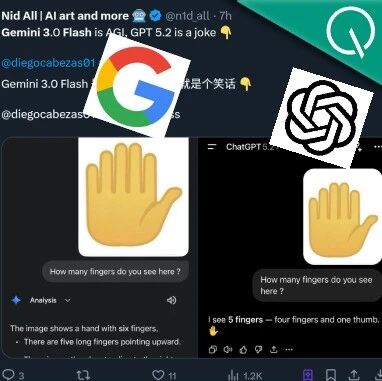
Core Viewpoint - NVIDIA plans to significantly reduce the production of its GeForce RTX 50 series graphics cards by 30%-40% in the first half of 2026, prioritizing high-profit models over mid-range options [1]. Group 1: Production Cuts and Market Impact - The reduction in production will primarily affect the RTX 5060 Ti 16GB and RTX 5070 Ti models, which are popular among mid-range gamers [6]. - Consumers may face a choice between lower-spec 8GB graphics cards or higher-priced models due to the limited availability of 16GB options [9]. - The anticipated increase in NAND and DRAM memory costs could lead to higher overall prices for gaming systems, potentially discouraging consumer purchases [5]. Group 2: Supply Chain Challenges - A shortage of memory, particularly GDDR7, is contributing to the production cuts, as NVIDIA cannot produce at full capacity without sufficient memory supply [4]. - The price of GDDR5 memory has already begun to rise, which, combined with reduced GPU production, may result in a dual impact of shortages and price increases in the GPU market by 2026 [10]. Group 3: Competitive Landscape - The situation has prompted discussions among consumers about switching to AMD as a potential alternative, indicating a shift in competitive dynamics within the GPU market [11].


国产AI芯片看两个指标:模型覆盖+集群规模能力 | 百度智能云王雁鹏@MEET2026
量子位· 2025-12-18 02:34
Core Viewpoint - The article discusses the challenges and opportunities for domestic AI chips, particularly Baidu's Kunlun chip, in supporting large-scale training for next-generation models, amidst the ongoing dominance of Nvidia in the market [1][5]. Group 1: Challenges in Large-Scale Training - The evaluation of chip capabilities has shifted from mere computational power to the ability to stably support training for models ranging from hundreds of millions to trillions of parameters [1][5]. - The first major challenge is cluster stability, where any interruption in a large-scale training system can lead to significant downtime, especially in systems with thousands of GPUs [7][10]. - The second challenge involves achieving linear scalability in large clusters, which requires advanced communication optimization and system-level coordination [10][11]. - The third challenge is the model ecosystem and precision system, where Nvidia's extensive model ecosystem provides a competitive edge in training accuracy [15][19]. Group 2: Solutions and Strategies - To address cluster stability, the company emphasizes the need for detailed monitoring and verification to preemptively identify potential issues [8][9]. - For scalability, the company has developed a communication strategy that bypasses CPU limitations, allowing for optimized task management across different workloads [14][20]. - The company is focusing on a highly generalized operator system to ensure reliability in large-scale training, adapting to various model sizes and shapes [19][27]. Group 3: Current Developments and Future Directions - The company has successfully implemented large-scale training with its Kunlun chip, achieving significant results with models like Qianfan-VL and Baidu Steam Engine, which have demonstrated state-of-the-art performance in various tasks [28][30]. - The future direction includes expanding the capabilities of domestic chips to support even larger clusters and more complex models, aiming for a comprehensive coverage of major model systems [27][31]. - The article highlights the importance of binding advanced self-developed models to the Kunlun chip to enhance its acceptance and performance in the market [29].