合成生物学与绿色生物制造

Search documents
华为牵手万华化学,生物制造领域首个鸿蒙系统问世!
合成生物学与绿色生物制造· 2025-12-11 04:20
关键词 | 底层技术&AI |华为|万华化学 【SynBioCon】 获 悉, 近日,由广州生物岛实验室联合 华为云 、 万华化学 、 华龙讯达等共同研发的"生鸿"工业操作系统发布 , 这是 鸿蒙化工业 系统首次引入生物制造领域 。 生物制造 作为全球科技竞争的战略制高点,正深刻重塑医药、材料、能源等关键产业,是我国发展新质生产力的重要方向。其技术的自主可控,直接关 乎国家产业安全与核心竞争力。然而,长期以来,底层控制系统的依赖与数据孤岛问题,制约着行业的智能化升级。在此背景下, 构建自主可控的数字 技术底座,推进"鸿蒙化"转型 ,成为关乎未来的必然选择。 "生鸿"工业操作系统由生物岛实验室牵头,联合华为云、华龙讯达、万华化学等行业领军力量共同研发 。其命名寓意"生命如鸿,自主翱翔",基于开 源鸿蒙(OpenHarmony)打造,具有完全的自主知识产权,核心目标直指实现底层控制自主可控、设备智能互联与工艺数据安全闭环,旨在为未来数 字化、智能化的生物工厂奠定坚实的技术 底座。 02 从理念到实践 "生鸿"系统已取得阶段性应用成果 由生物岛实验室和万华化学等单位的协同推进下, "生鸿"系统已经在生物制造领域的多 ...

2026报名启动 | “生物基行业的奥斯卡”,什么是新叶奖?
合成生物学与绿色生物制造· 2025-12-11 04:20
Core Viewpoint - The New Leaf Award, organized by DT New Materials, is a prestigious global award focused on innovation in the bio-based industry, aimed at recognizing and showcasing outstanding products and companies in this sector. The fourth edition of the award is set to begin its registration process for 2026, culminating in an award ceremony at the Bio-based 2026 conference on May 21, 2026 [2][22]. Group 1: Award Categories - The New Leaf Award features four main categories: Innovation Materials Award, Innovation Application Award, Innovation Industry Solutions Award, and Most Commercially Valuable Award [4][22]. Group 2: Registration Timeline and Process - Registration for the 2026 New Leaf Award starts on December 1, 2025, and ends on March 13, 2026. The initial online voting phase will take place from March 16 to March 22, 2026, followed by an online competition and expert review from March 23 to March 27, 2026, with the award ceremony scheduled for May 21, 2026 [6][9]. Group 3: Evaluation Criteria - The evaluation criteria for the awards include: - Innovation in Technology (30% for Innovation Materials Award, 10% for Innovation Application Award) - Innovation in Application (10% for Innovation Materials Award, 30% for Innovation Application Award) - Functionality (25% for Innovation Materials Award, 25% for Innovation Application Award) - Commercial Value (20% for Innovation Materials Award, 30% for Innovation Industry Solutions Award) - Sustainability (15% across all categories) [10]. Group 4: Benefits of Participation - Participating companies will receive free publicity, leveraging DT New Materials' extensive network of over 100,000 industry followers and 100+ communication groups, enhancing brand visibility through a professional selection process and media support [11]. - Award-winning companies will also have the opportunity to attend the award ceremony for free, receiving a high-end trophy and certificate in front of a large audience, celebrating their achievements with industry peers [12].

工信部又发文!35项非粮生物制造典型案例上榜,这些企业值得关注!
合成生物学与绿色生物制造· 2025-12-09 11:59
Core Insights - The article discusses the announcement by the Ministry of Industry and Information Technology and the Ministry of Agriculture and Rural Affairs regarding the selection of typical cases for the innovation and development of non-grain bio-based materials, highlighting 25 key technological innovations, 8 application scenarios, and 2 characteristic gathering areas [2]. Group 1: Key Technological Innovations - A total of 25 enterprises have been recognized for their key technological innovations in non-grain bio-based materials, including companies like Shandong Elpai Powder, Wuhan Ruijia Kang Biological, and Guangdong Boxing New Materials [3]. - Shandong Elpai Powder has developed a technology for preparing silicon-carbon anode materials using agricultural straw and organic waste, addressing issues like volume expansion and conductivity [4]. - Wuhan Ruijia Kang Biological has created high-yield industrial strains and efficient genome editing technologies to produce high-purity lactic acid from non-grain biomass [5]. - Guangdong Boxing New Materials has developed high-performance light-cured resin technology from plant oils, enhancing material strength and curing speed [6]. - Heilongjiang Boneng Green Energy has implemented a circular model for processing agricultural waste into biogas, methanol, and organic fertilizers [7]. Group 2: Application Scenario Expansions - Eight enterprises have been recognized for their innovative applications of non-grain bio-based materials, including Shanghai Kaisa Biotechnology and Weifang Xinlong Biological [29]. - Shanghai Kaisa has developed high-strength, lightweight non-grain bio-based polyamide composite materials for cold chain logistics, achieving a weight reduction of 20% compared to traditional materials [30]. - Weifang Xinlong has successfully scaled up the production of inorganic flame-retardant fibers, addressing safety concerns associated with traditional flame-retardant materials [32]. - Suzhou Juwei Yuan Chuang has created green packaging solutions from brewing by-products, significantly reducing carbon emissions [33]. - Anhui Fengyuan has focused on the application of polylactic acid (PLA) in mineral water bottles, promoting environmental benefits [34]. Group 3: Characteristic Gathering Areas - The Anhui Guzhen Economic Development Zone has been recognized for its focus on the comprehensive utilization of biomass, developing a robust industrial chain from straw to polylactic acid [40]. - The Nanle County Advanced Manufacturing Development Zone has established innovation platforms for low-carbon utilization of biomass, creating a collaborative innovation environment for cellulose, hemicellulose, and lignin [42].

力文所完成数千万Pre-A轮融资,自研全原子模型Pallatom跻身英伟达推荐榜单
合成生物学与绿色生物制造· 2025-12-09 11:59
Core Insights - Levinthal Biotech, a leading company in AI-driven protein design, has successfully completed a multi-million RMB Pre-A round financing, led by Jinyumaowu and with participation from JunKedanmu, aiming to accelerate the development of its Pallatom platform and expand its product pipeline [2][3] Group 1: Company Overview - Levinthal Biotech was founded in September 2021, focusing on AI algorithms for protein design, named after Cyrus Levinthal, who proposed the "Levinthal Paradox" regarding protein folding [3] - The company is led by Dr. Wang Haobo, who has a strong background in AI protein design research and has assembled a team of experts from prestigious institutions [3] Group 2: Technology Platforms - Pallatom is a high-performance, all-atom protein design platform that has been recognized alongside models like AlphaFold 3 and ESM3, showcasing its advanced capabilities in precise protein structure design [4][9] - The platform has achieved significant breakthroughs, including solving the design challenges of mixed chirality cyclic peptides, opening new avenues for next-generation cyclic peptide drug development [10] Group 3: Commercial Applications - Pallatom has demonstrated commercial value by overcoming technical barriers in antibody purification, successfully designing a Protein A alternative that surpasses imported products, thus enhancing supply chain autonomy for Chinese biopharmaceutical companies [10] - The Lésign platform integrates evolutionary information and physical potential into AI co-evolution analysis, achieving scalable applications in industrial enzymes and functional proteins [11] Group 4: Business Strategy - Levinthal Biotech has established a comprehensive value chain from molecular design to process development, successfully launching multiple product lines across various sectors, including synthetic biology, new pharmaceuticals, and health foods [13] - The company's innovative approach has significantly reduced the research and development cycle from years to months, drastically lowering experimental validation scales and costs, thereby providing unprecedented momentum for biomedicine and industrial manufacturing [13]
一个县城的"秸秆经济学":南乐如何用20年构建生物基产业闭环
合成生物学与绿色生物制造· 2025-12-08 09:12
Core Viewpoint - The article highlights the transformation of agricultural waste into a thriving bio-based materials industry in Nanle County, Henan Province, showcasing a complete industrial ecosystem that effectively addresses the challenges of technology, supply chain, and cost control [1][4][56]. Group 1: Industry Development - Nanle County has developed the first closed-loop bio-based materials industry chain in China, turning agricultural waste like straw and corn cobs into valuable products over 20 years [1][6]. - The county's wood sugar production capacity reaches 40,000 tons per year, making it the largest wood sugar production base globally [9]. - The county has established a global first non-grain crystalline glucose production line, certified by ISCC, enabling stable and large-scale conversion of non-grain raw materials into high-purity glucose [10]. Group 2: Technological Breakthroughs - Key technological advancements support each stage of the production process, with 34 proprietary intellectual property rights held by local bio-based material companies [19]. - The production of L-lactic acid has positioned Nanle County as the largest high-purity polymer-grade L-lactic acid production base globally [12]. - The county has developed a high-end polylactic acid (PLA) production technology with an annual capacity of 120,000 tons [14]. Group 3: Cost Control Measures - Nanle County has implemented five major guarantees to systematically reduce operational costs for enterprises, including raw material, land, steam, water, and electricity guarantees [21][38]. - The establishment of a steam public network provides three types of steam supply, keeping prices below 200 yuan per ton [30]. - Industrial water costs have been reduced by 60% through a circular system for industrial water, reclaimed water, and wastewater treatment [33]. Group 4: Investment Opportunities - Three key investment areas are recommended: fine chemicals and derivatives, polylactic acid and PEF fibers, and biomass energy, based on the county's industrial foundation and market demand [46]. - The fine chemicals sector has a strong market demand, particularly for bio-based fine chemicals, which are rapidly expanding under carbon reduction goals [47]. - The county's established partnerships with 128 textile and apparel enterprises create a favorable environment for businesses involved in polylactic acid fibers [48]. Group 5: Lessons from Nanle County - The success of Nanle County illustrates the importance of building a competitive industrial cluster through a comprehensive ecosystem rather than relying solely on investment attraction and policy subsidies [54]. - Key factors for success include technological breakthroughs, a closed industrial loop, cost control through public infrastructure, and strong support from technology and finance [56]. - The county's agricultural waste management, resource advantages, and supportive policies position it as a model for other regions aiming to develop similar bio-based industries [55].

重庆大学王丹团队:多酶级联耦合电化学实现从CO2高效合成L-乳酸
合成生物学与绿色生物制造· 2025-12-08 09:12
Core Viewpoint - The article discusses a novel multi-enzyme cascade-electrochemical coupling system developed by Professor Wang Dan's team at Chongqing University, which efficiently synthesizes L-lactic acid from ethanol and CO₂, presenting a new strategy for CO₂ resource utilization and green chemical synthesis [2][20]. Summary by Sections Multi-Enzyme Cascade System - A multi-enzyme cascade system was constructed that does not rely on external NADH, utilizing ADH, PDC, and LDH to convert ethanol to acetaldehyde and CO₂ to pyruvate, ultimately producing L-lactic acid [4]. - PDC was identified as the rate-limiting enzyme, with a high-activity mutant Ptdqy developed through random mutation, resulting in a Kcat/Km value 2.92 times higher than the wild type, leading to a 2.94-fold increase in L-lactic acid production [4][10]. Electrochemical Platform - An electrochemical platform was established to regenerate NADH efficiently at -1.5 V and 0.2 mM NAD⁺, achieving an 18% increase in yield compared to pure enzyme systems, thus addressing the coenzyme regeneration challenge [4][16]. Ionic Liquids - The ionic liquid [CH][His] was selected as a solvent, demonstrating a CO₂ adsorption capacity of 0.57 mol/mol, which enhanced L-lactic acid production by 1.89 times compared to Tris buffer systems, making it the optimal solvent choice [4][19]. Scale-Up Production - The system successfully scaled up to synthesize 22.5 mM (2.03 g/L) of L-lactic acid using 50 mM ethanol as a substrate, with production costs 10% lower than traditional microbial fermentation routes and an atomic utilization rate of 100% [4][22]. Industrial Application Potential - This system not only achieves green production with 100% atomic utilization but also reduces L-lactic acid synthesis costs through scale-up validation and cost control, making it a potential alternative to traditional fermentation routes in food, chemical, and biodegradable materials industries [22]. Future Optimization Directions - Future efforts will focus on reducing the cost of NAD⁺, which currently constitutes a significant portion of production costs, and exploring the application of this coupling platform for synthesizing other high-value chemicals from CO₂ [23]. Concept Learning - L-lactic acid is a key raw material in food, chemical, and material sectors, and this research provides a new pathway for its green production by utilizing CO₂ and ethanol, thus avoiding competition with food resources [24]. - Multi-enzyme cascade reactions allow for high substrate flexibility and efficiency, with the rate-limiting enzyme's activity directly influencing overall reaction rates and yields [25]. - The electrochemical coupling method for NADH regeneration offers a low-cost solution for continuous coenzyme supply, enhancing production efficiency [26]. - Ionic liquids enhance CO₂ solubility and enzyme stability, contributing significantly to the increased yield of L-lactic acid [27].

中粮科技:拟投资8.8亿,建设平凉25万吨/年淀粉糖及1万吨/年阿洛酮糖新建项目
合成生物学与绿色生物制造· 2025-12-04 08:11
Core Insights - The article discusses the recent announcement by COFCO Technology regarding a new investment project aimed at expanding its starch sugar production capacity and entering the functional sugar market [1][2]. Project Progress - COFCO Technology plans to invest 880 million yuan to construct a new facility in Pingliang, Gansu Province, with a production capacity of 250,000 tons/year of starch sugar and 10,000 tons/year of D-alloheptulose [1]. - The construction period for the project is set to be 20 months from the board's approval to trial production [1]. - The project will include various facilities such as starch sugar workshops, D-alloheptulose workshops, bottling workshops, wastewater treatment systems, and finished product warehouses [1]. Strategic Importance - This project aligns with COFCO Technology's "14th Five-Year" development strategy and aims to fill the gap in the starch sugar market in the northwest region of China [2]. - The development of D-alloheptulose products is seen as a key direction for COFCO Technology to cultivate new productive forces and expand into strategic emerging industries [2]. Financial Performance - In Q3 2025, COFCO Technology reported a revenue of 4.449 billion yuan, a year-on-year decrease of 14.65%, and a net loss attributable to shareholders of 28.06 million yuan, an increase of 45.91% compared to the previous year [3]. - For the first three quarters of 2025, the company achieved a revenue of 13.262 billion yuan, down 12.31% year-on-year, while the net profit attributable to shareholders was 79.186 million yuan, a significant increase of 724.42% [3].

破局航空碳减排,共话SAF新未来 | 可持续航空燃油产业交流会在杭举行
合成生物学与绿色生物制造· 2025-12-04 08:11
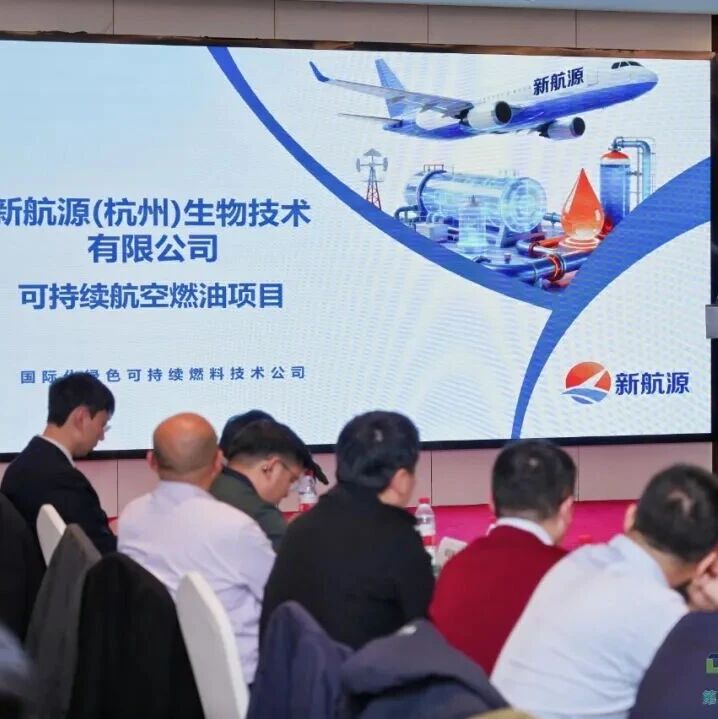
Core Insights - The article emphasizes that the three core challenges for the industrialization of Sustainable Aviation Fuel (SAF) are policy, certification, and raw materials [1][2]. Group 1: Event Overview - The SAF industry exchange conference was successfully held on November 27, 2025, in Hangzhou, organized by the National Key Laboratory of Bio-based Transportation Fuel Technology and DT New Materials [2]. - The conference gathered 30 top experts and representatives from various institutions, including Zhejiang University and China Southern Airlines, to discuss key issues in SAF development [2]. Group 2: SAF Market and Technology - The aviation industry accounts for 12% of carbon emissions in the transportation sector, with annual emissions reaching 1 billion tons. According to IATA, 65% of carbon reduction in aviation must come from SAF by 2050, indicating a trillion-dollar market potential [8]. - The report compares four main technological routes for SAF production: HEFA, AtJ, G+FT, and PtL. The AtJ route is identified as the most investment-worthy due to its wide raw material sources and high emission reduction efficiency of 85%-100% [8][6]. Group 3: Technological Innovations - The new generation AtJ technology developed by Zhejiang University has achieved three core breakthroughs: flexible raw material adaptability, innovative pathways for simultaneous conversion of low-carbon raw materials, and comprehensive utilization of biomass components [9]. - The AtJ technology has transitioned from laboratory to industrialization, leading to the establishment of New航源 (Hangzhou) Biotechnology Co., Ltd. [9]. Group 4: Economic Viability and Market Trends - The AtJ technology significantly reduces SAF production costs, enhancing profit margins. Current market prices in Europe reach $2,950 per ton, with the technology expected to address the economic bottleneck of SAF [11]. - The new PtL technology has completed laboratory development and is rapidly advancing towards scaling up [12]. Group 5: Industry Challenges and Recommendations - Experts agree that the SAF industry faces challenges in policy clarity, certification standards, raw material supply stability, and cost-sharing mechanisms among stakeholders [16][17][18][20]. - A complete ecosystem for SAF, including raw materials, processing, certification, and usage, is essential for industry growth. Investment institutions are particularly interested in the lower fixed asset investment required for the AtJ route [23]. Group 6: Future Outlook - The SAF industry in China is entering a golden period of development, driven by expanding pilot programs, continuous technological breakthroughs, and an improving industrial chain [23].
聚焦“非粮+农业”赛道,中科康源获国投融资,20万吨级生物饲料生产线已完成
合成生物学与绿色生物制造· 2025-12-04 08:11
Core Viewpoint - Zhongke Kangyuan has successfully completed its first round of financing, marking a significant milestone in its development of non-grain biomass manufacturing technology using straw as a raw material, receiving recognition from both state-owned enterprises and local venture capital institutions [1] Group 1: Addressing Straw Conversion Challenges - China generates over 900 million tons of agricultural and forestry waste annually, with about 700 million tons being agricultural straw, but the resource utilization rate remains low [3] - Zhongke Kangyuan focuses on the efficient biological conversion of lignocellulosic biomass, having developed a proprietary continuous controllable temperature oxidation pretreatment process that effectively breaks down the degradation barriers of straw [3][4] Group 2: Supporting Livestock Industry Cost Reduction and Efficiency - The "New Energy Source" digestible sugar and protein products developed by Zhongke Kangyuan have over 55% digestible sugar content and over 8% crude protein content, allowing for a 1:1 replacement of corn in ruminant feed [7] - Trials at a leading domestic enterprise's farm showed an increase of 0.19 kg/day in dry matter intake per cow, with feed costs decreasing by over 0.35 yuan per cow per day, while improving milk fat and protein rates [7][8] Group 3: 200,000 Ton Project Commencement - The 200,000-ton straw bioconversion project in Tangshan has officially commenced production, covering 70 acres with a total investment of 240 million yuan, utilizing proprietary equipment and an intelligent control system [9] - Zhongke Kangyuan is accelerating the replication of this industrialization across major agricultural production areas in China, establishing a resource utilization network covering key straw-producing regions [9] Group 4: Aligning with National Development Goals - The national strategy emphasizes the importance of "biomanufacturing" as a key direction for future industries, focusing on high-value utilization of agricultural and forestry waste and the development of non-grain biomass conversion technologies [10] - Zhongke Kangyuan's technology aligns with these policies, aiming to alleviate feed grain pressure and provide non-grain carbon sources for downstream industries, contributing to China's transition from "catching up" to "leading" in biomanufacturing [10]

聚四海群贤,助非粮启“杭” | 第五届非粮生物质高值化利用论坛在杭州成功举办!
合成生物学与绿色生物制造· 2025-11-30 02:44
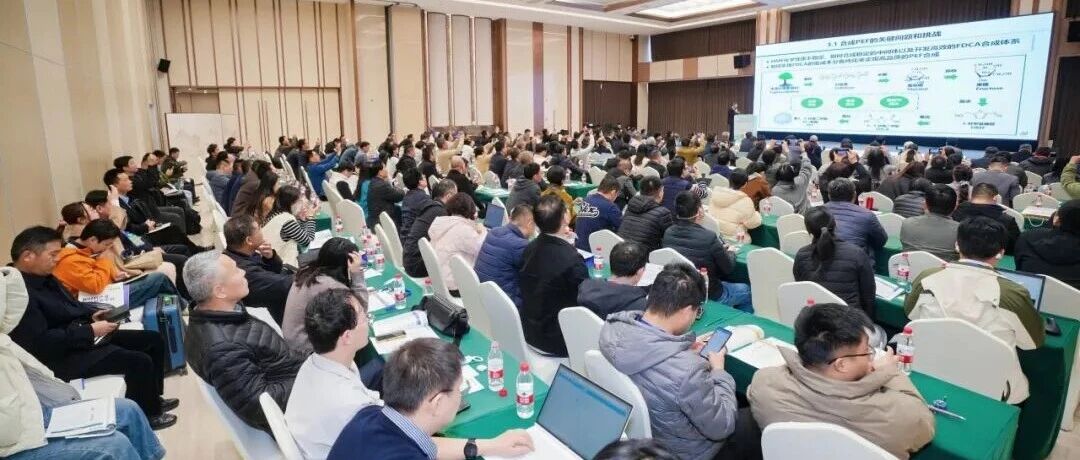
Core Insights - The "5th Non-Grain Biomass High-Value Utilization Forum (NFUCon 2025)" was successfully held in Hangzhou from November 27 to 29, focusing on the economic feasibility of non-grain biomass utilization and its related policies, technologies, and market expectations [1][3]. Group 1: Forum Overview - The forum was co-hosted by Ningbo Detaizhong Research Information Technology Co., Ltd. and the National Key Laboratory of Bio-based Transportation Fuel Technology, with over 400 industry experts and representatives attending [3]. - Key topics discussed included the high-value utilization of non-grain biomass chemicals and materials, clean pretreatment of non-grain resources, and sustainable expansion of non-grain resources [3]. Group 2: Key Presentations - Academician Ren Qilong presented advancements in non-grain biomass research, focusing on functionalization of biomass macromolecules and directed chemical conversion [6][8]. - Academician Xu Chunbao discussed the development of efficient catalytic systems for the selective conversion of glucose and fructose into HMF, which is crucial for producing bio-based chemicals [10]. - Researcher Zhu Jin highlighted the importance of bio-based polymers and recent policy developments in non-grain biomass utilization [12]. Group 3: Industry Applications - Deputy Mayor Yang Shufei introduced a complete bio-based materials industrial chain in Nanle, achieving an annual output value exceeding 3 billion yuan and creating over 12,000 jobs [14]. - Professor Xu Feng presented work on the green and efficient separation of lignin, emphasizing its applications in functional materials [16]. Group 4: Thematic Forums - The first thematic forum on non-grain biomass chemicals and materials featured discussions on biomass conversion strategies and the production of platform compounds [17][19]. - The second thematic forum on non-grain biomass energy focused on the strategic importance of cellulose ethanol and advancements in anaerobic fermentation technology [36][40]. Group 5: Sustainable Aviation Fuel (SAF) - Researcher Zhang Le emphasized that sustainable aviation fuel is a viable path for carbon reduction in the aviation industry, with multiple technological routes being explored [55]. - Manager Tang Xiao shared Axens' leading position in biomass technology and its core SAF technologies, including HEFA and Fischer-Tropsch synthesis [57]. Group 6: Youth Forum and Industry Exchange - The forum included a Youth Forum to promote visibility for young scientists in the bio-based field, featuring 21 researchers sharing their latest work [68]. - An industry exchange meeting on SAF gathered 30 participants to discuss trends, technological routes, and sustainable certification [89].