合成生物学与绿色生物制造

Search documents
谭天伟院士揭秘生物制造:30万亿美元未来产业的三大挑战和趋势
合成生物学与绿色生物制造· 2025-12-17 07:49
Core Viewpoint - The article emphasizes that China is poised to play a significant role in the future of biomanufacturing, which is expected to create an economic value exceeding $30 trillion by 2050, marking it as a core driver of the next industrial revolution [2][7]. Summary by Sections What is Biomanufacturing? - Biomanufacturing transforms living organisms, such as microorganisms and cells, into "smart factories" that produce various substances needed by humans. This process marks a fundamental shift from traditional manufacturing, which relies on fossil resources, to using renewable resources like sugar, straw, and carbon dioxide [2][3]. Importance of Biomanufacturing - Biomanufacturing is crucial for achieving carbon neutrality as it significantly reduces carbon emissions by utilizing renewable resources instead of fossil fuels. It allows for a broader range of raw materials and a greener manufacturing process, making factories resemble ecosystems [3]. - The potential for programmable manufacturing is immense, as scientists can design microorganisms to produce specific molecules, akin to writing code, thus unlocking vast possibilities [3]. Impact on Daily Life - In the food sector, cell-cultured meat and new food ingredients like microbial proteins are becoming mainstream. - The fashion industry is seeing innovations such as bio-silk from bacteria and biodegradable textiles from algae and fungi. - In construction, "bio-bricks" made from fungal mycelium can self-repair and absorb carbon dioxide, potentially transforming buildings into "green life forms." - Transportation is advancing with the production of aviation fuel from carbon dioxide, and biomanufacturing is also contributing to greener lubricants and tire rubbers. - In healthcare, biomanufacturing can streamline drug synthesis, enabling personalized medicine and potentially allowing hospitals to "print" drugs and organs [4]. Challenges and Future Trends - Biomanufacturing faces challenges such as the need for improved foundational capabilities in gene editing and enzyme engineering, difficulties in scaling from lab to industrial production, and the lack of a comprehensive policy and standards framework [5]. - Future trends include the integration of artificial intelligence in biomanufacturing, enabling rapid strain improvement, carbon cycling in manufacturing processes, and cross-industry collaborations that will create new industrial ecosystems [6]. Opportunities for China - China has advantages in fermentation capacity, industrial scale, and engineering experience. The government is actively promoting biomanufacturing as a new growth engine, positioning the country to take a leading role in this transformative industry [7].


定档!4月南京●2026第四届SBC合成生物学产业博览会来了
合成生物学与绿色生物制造· 2025-12-17 07:49
Core Viewpoint - Synthetic biology is recognized as a disruptive force in the life sciences, providing innovative solutions to major challenges in health, energy, and the environment, and is positioned to create a trillion-dollar industry in China as part of the 14th Five-Year Plan [5][6]. Event Overview - The 2026 Fourth Synthetic Biology Industry Expo (SBC2026) will take place on April 17-18, 2026, at the Yangtze River International Conference Center in Nanjing, Jiangsu [2][8]. - The event is organized by BioValley, Bioeconomy, Shandong University, East China University of Science and Technology, and the National Key Laboratory of Microbial Technology at Shandong University [2]. Exhibition and Forum Highlights - SBC2026 aims to integrate deep technology with broad consumer engagement, covering the entire industry chain from strain design to end products, providing a comprehensive platform for industry insights [5]. - The expo will feature five main thematic venues, 14 cutting-edge topics, nearly 100 industry experts, and an exhibition area of 10,000 square meters, expecting 5,000 professional attendees [9][12]. Thematic Sessions - The event will include specialized forums on various topics such as: - Medical beauty and daily chemicals - Agriculture and natural products - Chemicals and materials - Food and nutrition - Medicine and health [12][31][36]. Notable Speakers and Topics - Keynote speakers include academicians and industry leaders discussing trends in DHA oil, food industry innovations, and the transition of synthetic biology from lab to commercialization [15][43]. - The agenda includes discussions on sustainable development in agriculture, innovations in food technology, and advancements in medical applications of synthetic biology [23][36][43]. Consumer Engagement - A unique consumer experience area will be established to showcase innovative products and ingredients directly to the public and distributors, illustrating how synthetic biology technologies are reshaping future consumption [5][6].

2026报名启动 | “生物基行业的奥斯卡”,什么是新叶奖?
合成生物学与绿色生物制造· 2025-12-17 07:49
Core Viewpoint - The New Leaf Award, a prestigious global award in the bio-based industry, has launched its 2026 registration, aiming to recognize and showcase innovative products and companies in the sector [2]. Group 1: Award Categories - The New Leaf Award features four main categories: Innovation Materials Award, Innovation Application Award, Innovation Industry Solutions Award, and Most Commercially Valuable Award [4][22]. Group 2: Registration Timeline & Process - Registration for the 2026 New Leaf Award starts on December 1, 2025, and ends on March 13, 2026. The initial online voting will take place from March 16 to March 22, 2026, followed by online presentations and expert reviews from March 23 to March 27, 2026. The award ceremony will be held on May 21, 2026, during the 11th Bio-based Conference [6][9]. Group 3: Evaluation Criteria - The evaluation criteria for the awards include: - Innovation in Technology: 30% for Innovation Materials Award, 10% for Innovation Application Award, 20% for Innovation Industry Solutions Award - Innovation in Application: 10% for Innovation Materials Award, 30% for Innovation Application Award, 20% for Innovation Industry Solutions Award - Functionality: 25% for Innovation Materials Award, 25% for Innovation Application Award, 30% for Innovation Industry Solutions Award - Commercial Value: 20% for Innovation Materials Award, 20% for Innovation Application Award, 15% for Innovation Industry Solutions Award - Sustainability: 15% across all categories [10]. Group 4: Benefits of Participation - Participating companies will receive free publicity through the award process, which includes access to over 100 industry communication groups and a large audience for brand exposure. Award-winning companies will also be invited to the award ceremony, where they will receive a high-end trophy and certificate in front of industry leaders [11][12].

项目 | 投5.2亿,亿丰嘉泰生物发酵法3万吨/年1,3-丙二醇(PDO)项目
合成生物学与绿色生物制造· 2025-12-16 02:36
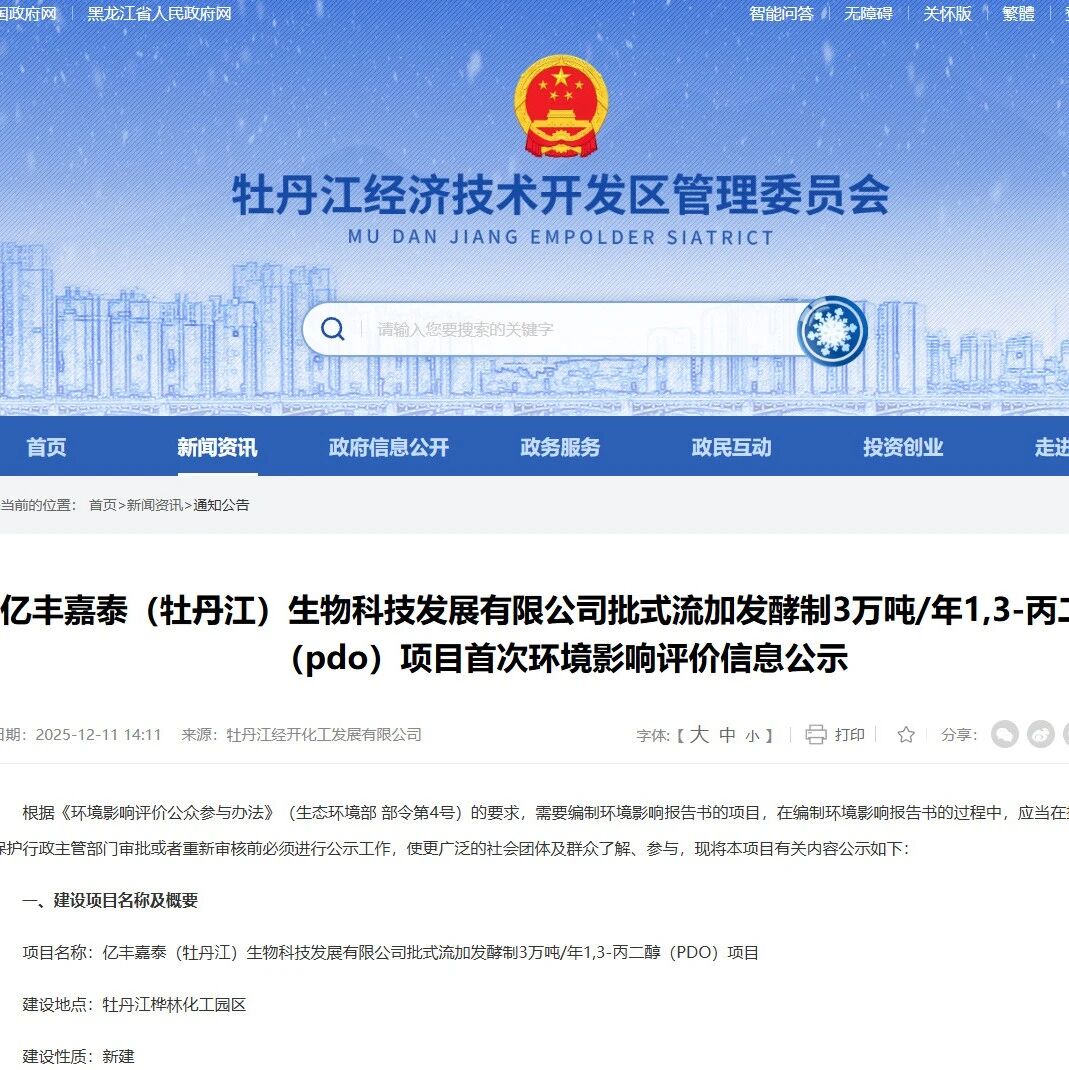
Core Viewpoint - The article discusses the environmental impact assessment (EIA) public announcement for Yifeng Jiatai (Mudanjiang) Biotechnology Development Co., Ltd.'s project to produce 30,000 tons/year of 1,3-propanediol (PDO) through batch fermentation [3]. Project Overview - Project Name: Yifeng Jiatai (Mudanjiang) Biotechnology Development Co., Ltd. Batch Fermentation Production of 30,000 tons/year of 1,3-propanediol (PDO) Project [5] - Location: Hualin Chemical Park, Mudanjiang [5] - Nature of Construction: New construction [5] - Construction Details: The project plans to build two production lines with an annual output of 15,000 tons of 1,3-propanediol each, utilizing batch fermentation technology, with supporting infrastructure to achieve a total production capacity of 30,000 tons/year [5] - Total Investment: 520 million yuan [5] - Company Background: Yifeng Jiatai was established on November 12, 2025, in Mudanjiang, Heilongjiang Province, with a legal representative named Ma Dexiang. The company's business scope includes feed production and various technical services [5].
国内最大中试!生物制造定调未来食品结构
合成生物学与绿色生物制造· 2025-12-16 02:36
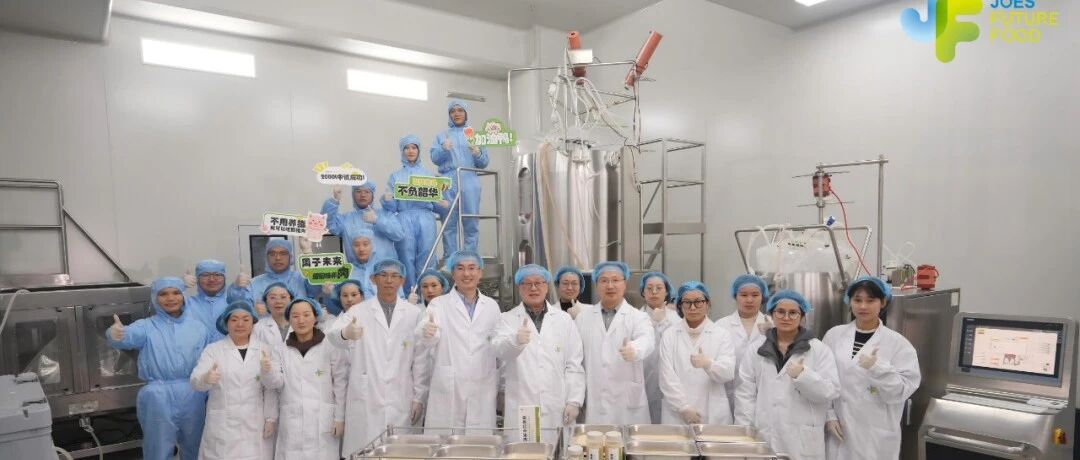
Core Viewpoint - The article highlights a significant breakthrough in China's cell-cultured meat industry, with the establishment of the largest pilot plant for cell-cultured meat by Nanjing Zhouzi Future Food Technology Co., marking a key transition from laboratory research to engineering production [3][6]. Group 1: Company Achievements - Zhouzi Future is recognized as a pioneer in the cell-cultured meat sector in China, having developed the first cell-cultured meat in 2019 and founded in 2020 to advance industrialization [5]. - The company achieved the world's first 2000-liter bioreactor pilot production of cell-cultured pork in December 2025, establishing itself as a leader in this technology on an international scale [5][10]. - The pilot plant integrates various processes, including seed cell creation, serum-free medium development, and a comprehensive food safety system, with an annual production capacity of 10 to 50 tons of cell-cultured meat [6]. Group 2: Technological Innovations - Zhouzi Future has developed a dual research system focusing on both general products and innovative specialties, utilizing 3D printing technology to replicate the texture and flavor of traditional pork [7]. - The company has introduced unique products such as "honeycomb meat" and "meat clear soup jelly with crispy meat slices," showcasing the versatility of cell-cultured meat in various culinary applications [7]. Group 3: Industry Trends - The global cell-cultured meat industry is experiencing a surge in commercialization, with five countries approving products from ten companies, indicating a rapid acceleration in market acceptance [8]. - The regulatory landscape is evolving, with six new cell-cultured meat products gaining approval in 2025 alone, solidifying the foundation for large-scale commercial growth [8][10]. - Zhouzi Future's advancements position it to compete effectively in the global food technology and sustainable protein supply markets [10].
让生物基青年科学家被看见 | 青年论坛 Bio-based Youngs 2026 报告报名启动
合成生物学与绿色生物制造· 2025-12-16 02:36
关键词 | 生物基大会 |青年科学家论坛 当新质 生产力成为高质量发展的关键引擎,当青年科技人才在创新发展中的生力军作用愈发凸显,如何发现青年之智?如何点燃创新之力? 该论坛将收集 80个 创新申请报告,以 " 让生物基青年科学家被看见 " 为主旨,助力行业 10分钟 挖掘一个生物基领域的前沿技术 ,聚集原创,突 破边界, 对接人才与合作搭建一个高效交流平台。同时,为助力创新,青年科 学家论坛设置 现场评选 与奖金颁发 环节 。 扫码报名 | Bio-based 2026 请勾选:青年科学家论坛、科技成果展示 01 青年论坛概况: 主办单位 : 浙江省全省生物基高分子材料重点实验室、 宁波德泰中研信息科技有限公司( DT 新材料) 时间地点 :2026年5月20日下午,上海 DT新材料旗下生物基和生物制造产业科技服务平台, 是行业最重要 的资源和信息枢纽之一 。至今为止,我们在生物基大会、非粮生物质论坛、合成 生物学与绿色生物制造论坛、材视等多场主创活动上举办多届青年主题论坛,已有 500+位 创新青年科学家线上线下分享前沿科技与进展,并促进产 业、投资和科研等多方交流、关注与对接。 往届DT新材料主办青年论 ...
1.2亿!海正药业携手浙江工业大学,共拓生物法合成肝素新赛道
合成生物学与绿色生物制造· 2025-12-12 08:55
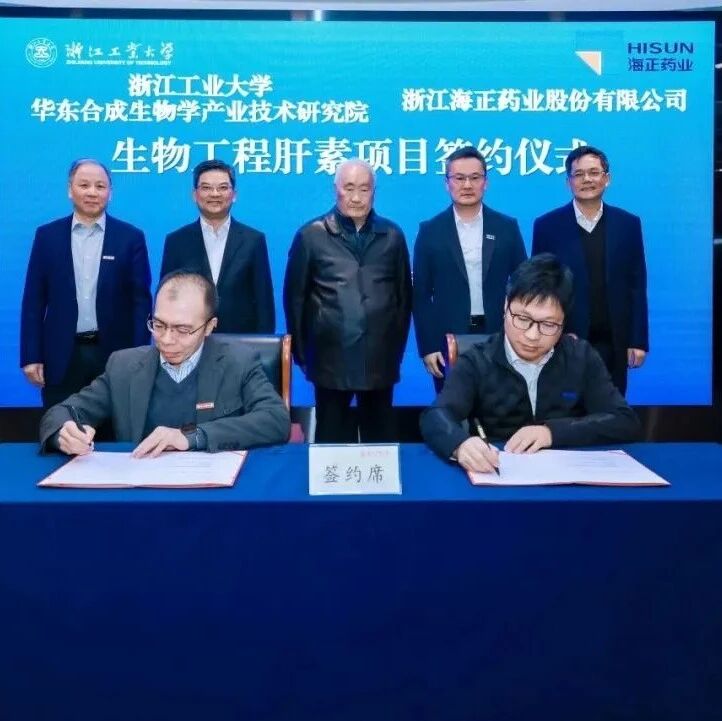
Core Viewpoint - Zhejiang Haizheng Pharmaceutical Co., Ltd. has signed a project agreement with Zhejiang University for the development and industrialization of bio-synthesized anticoagulant heparin, with a total project amount of 120 million yuan, aiming to provide green innovative solutions for the global anticoagulant drug market [1][3]. Group 1: Market Context - The domestic heparin market has nearly reached 30 billion yuan, while the global market has surpassed 10 billion USD [3]. - The demand for heparin drugs is increasing due to factors such as an aging population, rising surgical procedures, and increasing chronic disease prevalence [3]. Group 2: Challenges in Traditional Production - Traditional heparin production relies on pig intestinal mucosa, leading to supply instability, quality fluctuations, and environmental pressures [3]. - The bio-synthesis method using microbial fermentation technology offers a sustainable supply of raw materials and significantly improves quality control [3]. Group 3: Company Expertise and Strategy - Haizheng Pharmaceutical has 69 years of experience in the pharmaceutical field and over 55 years of expertise in microbial technology [3]. - The collaboration will enhance Haizheng's product matrix in the anticoagulant drug sector, optimize existing industrial resources, and improve competitiveness in the high-end biopharmaceutical market [3][4]. Group 4: Project Significance - The bio-engineered heparin project is a core initiative of the research institute, marking a significant transition from laboratory research to industrial application [4]. - The partnership aims to disrupt traditional animal extraction methods for heparin production, facilitating a comprehensive process from laboratory research to mass production [4]. Group 5: Future Aspirations - The collaboration seeks to establish a globally leading research and production platform for anticoagulant drugs, filling the clinical application gap for bio-engineered heparin and providing safer and more effective treatment options for patients worldwide [5].

2026报名启动 | “生物基行业的奥斯卡”,什么是新叶奖?
合成生物学与绿色生物制造· 2025-12-12 08:55
Core Viewpoint - The New Leaf Award, organized by DT New Materials, is a prestigious global award focused on innovation in the bio-based industry, aimed at recognizing and showcasing outstanding products and companies in this sector. The fourth edition of the award is set to begin its registration process for 2026, culminating in an award ceremony at the Bio-based 2026 conference on May 21, 2026 [2][22]. Group 1: Award Categories - The New Leaf Award features four main categories: Innovation Materials Award, Innovation Application Award, Innovation Industry Solutions Award, and Most Commercially Valuable Award [4][22]. Group 2: Registration Timeline and Process - Registration for the 2026 New Leaf Award starts on December 1, 2025, and ends on March 13, 2026. The initial online voting phase will take place from March 16 to March 22, 2026, followed by an online competition and expert review from March 23 to March 27, 2026, with the award ceremony scheduled for May 21, 2026 [6][9]. Group 3: Evaluation Criteria - The evaluation criteria for the awards include: - Innovation in Technology (30% for Innovation Materials Award, 10% for Innovation Application Award) - Innovation in Application (10% for Innovation Materials Award, 30% for Innovation Application Award) - Functionality (25% for Innovation Materials Award, 25% for Innovation Application Award) - Commercial Value (20% for Innovation Materials Award, 30% for Innovation Industry Solutions Award) - Sustainability (15% across all categories) [10]. Group 4: Benefits of Participation - Participating companies will receive free publicity, leveraging DT New Materials' extensive network of over 100,000 industry followers and 100+ communication groups, enhancing brand visibility through a professional selection process and media support [11]. - Award-winning companies will also have the opportunity to attend the award ceremony for free, receiving a high-end trophy and certificate in front of a large audience, celebrating their achievements with industry peers [12].

酶赛生物,获中国人工智能大赛A级荣誉
合成生物学与绿色生物制造· 2025-12-12 08:55
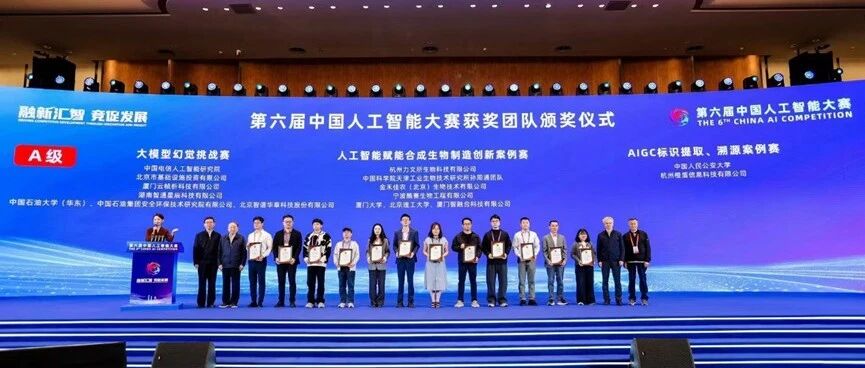
本届大赛赛题设计仍为"技术赛"与"案例赛"相结合的形式,围绕"安全治理"和"创新发展"两大方向设置赛题,吸引了全 国顶尖团队和技术精英参与。酶赛生物报送的案例《人工智能赋能新型酶催化非天然手性氨基化合物合成》从一众高水平 项目中脱颖而出,取得佳绩。 第六届中国人工智能大赛由国家互联网信息办公室、公安部指导,厦门市人民政府主办,旨在进一步推动人工智能技术创 新发展,促进人工智能与实体经济深度融合,加快构建以大模型为代表的人工智能技术应用落地。 【SynBioCon】 获 悉, 12 月 12 日,第六届中国人工智能大赛颁奖典礼在厦门圆满收官。酶赛生物携 AI 驱动的合成 生物制造创新方案 ,从全国强队中突围,斩获人工智能赋能合成生物制造创新案例赛 A 级荣誉,同时获奖的还有中科院 天工所孙周通团队等,再次验证我们在人工智能与产业融合赛道的硬核实力。 Bio-based 2026 第十一届生物基大会暨展览 The 11th Bio-based Industry Conference & Exhibition 跨越新周期 澎湃新生机 7 场行业评选 新叶奖(第四届) 11 场论坛+7 大同期活动 关键词 | 底层技 ...
山东大学祁庆生团队开发新途径解决丁二酸生物制造瓶颈
合成生物学与绿色生物制造· 2025-12-11 04:20
【SynBioCon】 获 悉, 近日, 山东大学微生物改造技术全国重点实验室祁庆生团队 在《 Metabolic Engineering 》上发表题为" Engineered Non-Canonical Reductive TCA Pathway Drives High-Yield Succinic Acid Biosynthesis in Yarrowia lipolytica "的研究论文。博士研究生 陶慧琳为论文第一作者,祁庆生教授和崔志勇副研究员为通讯作者。山东大学微生物改造技术全国重点实验室为第一完成单位和通讯作者单位。 C4-二羧酸是一类具有应用价值的化合物,广泛应用于医药、化工、食品等领域。其中,丁二酸作为多种高价值化学品的平台化合物,可以合成1,4 - 丁二醇、四氢呋喃、聚丁二酸丁二醇酯等产品,在化工以及塑料降解领域具有重要价值。解酯耶氏酵母凭借优异的耐酸性以及对低成本原料的兼容性, 成为丁二酸生物合成的潜力宿主。还原TCA(rTCA)途径由于合成路径短、理论转化率高是目前C4-二羧酸合成的主要途径。但酵母不存在天然的 rTCA途径,异源引入后胞质内NADH不足以满足rTCA途径合成丁二酸所 ...