生物世界

Search documents
拜耳中国“共创·新药”大赛报名进入倒计时!
生物世界· 2025-08-14 04:49
Core Viewpoint - The article emphasizes the significant advancements and opportunities in China's pharmaceutical innovation landscape, particularly through collaborations with multinational companies like Bayer, which aims to discover the next major innovation in the industry [1][3]. Summary by Sections Innovation Landscape - China leads globally in pharmaceutical patent applications with a 43% share in 2024, and the number of drug pipelines in development exceeds 7,000, accounting for approximately 30% of the global total [1]. - The initiation of clinical trials for oncology by Chinese companies represents 39% of the global total, positioning China at the forefront of cancer research [1]. Collaboration and Investment - Chinese companies are increasingly engaging in high-value transactions with multinational pharmaceutical firms, with 37% of transactions involving upfront payments exceeding $50 million originating from China [2]. - In the cardiovascular and metabolic fields, the total upfront payments from Chinese companies to multinational firms have reached $6.85 billion in 2024 [2]. Bayer's Initiative - Bayer is actively investing in China's innovation ecosystem through the "Co-Creation New Drug" competition, which has garnered significant attention and support from the industry since its launch in July 2025 [3]. - The competition invites submissions of innovative drug candidates and technologies, with a focus on areas such as precision oncology, immunology, and gene therapy [4][5]. Competition Timeline and Evaluation - The application deadline for the competition is August 31, 2025, followed by a series of evaluations and presentations leading to the announcement of winners by the end of October [7]. - Submissions will be assessed by a committee of Bayer's R&D and business development experts based on innovation level, key data, and alignment with Bayer's strategic goals [6]. Rewards for Winners - Winners of the competition will receive various benefits, including access to Bayer's Co.Lab, opportunities for face-to-face meetings with global executives, and participation in global roadshows [8][10].



清华大学发表最新Nature论文
生物世界· 2025-08-14 00:00
Core Viewpoint - The research published by Tsinghua University's team reveals a unique "hypertranscription state" in early embryos, highlighting the interplay between chromatin architecture and transcriptional activity, indicating a highly coordinated interaction between chromatin structure and transcription processes [2][5]. Group 1: Chromatin Structure and Dynamics - The study identifies that the conventional chromatin organization, including Topologically Associating Domains (TADs), disassembles after fertilization, followed by a slow re-establishment of three-dimensional chromatin structure during zygotic genome activation [2]. - CTCF, a highly conserved DNA-binding protein, plays a crucial role in regulating chromatin higher-order structures and is continuously present in chromatin during early mouse development, while cohesin's binding ability is weak during the single-cell embryo stage [4]. Group 2: Gene Activation and Cohesin Islands - The research found that genes associated with Genic Cohesin Islands (GCIs) are enriched in cell identity and regulatory genes, showing extensive H3K4me3 modifications in their promoter regions, indicating active transcription [5]. - There is a significant transcriptional activity from the two-cell to the eight-cell stage, which is essential for GCI formation, and induced transcription can directly generate GCIs [5]. Group 3: Interaction Between Chromatin and Transcription - GCIs serve as insulating boundaries that form contact domains with adjacent CTCF sites, enhancing both the transcription levels and stability of GCI-related genes [5]. - The findings emphasize the dynamic remodeling of three-dimensional genome structures and their reciprocal regulation by transcriptional activity, underscoring the close relationship between chromatin conformation and transcription processes in early embryos [5].

重磅发布丨3.0时代毛细管型电转仪:细胞转染更快!更高!更稳!
生物世界· 2025-08-13 07:50
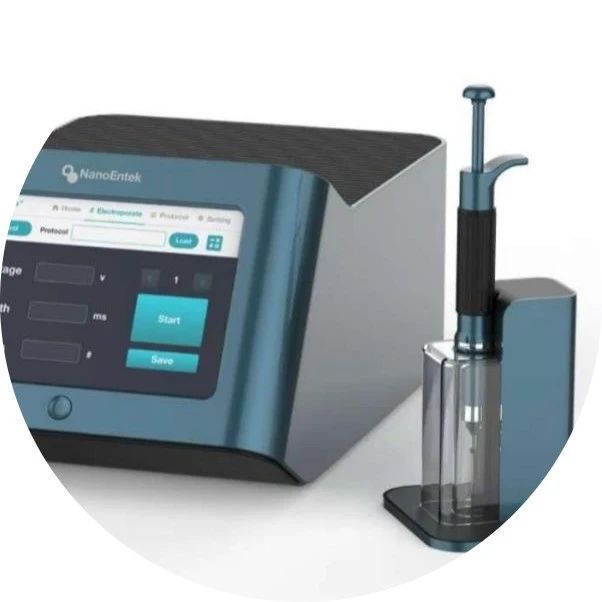
Core Viewpoint - The article introduces innovative solutions for cell transfection challenges, emphasizing breakthroughs in technology that enhance efficiency and success rates in scientific research [2]. Group 1: Innovations in Cell Transfection - The introduction of a capillary-type electric chamber provides a more uniform electric field, resulting in a 2-3 times increase in survival rates for difficult-to-transfect cells such as primary and stem cells [3]. - The third-generation Extransfection™ electroporation device features an intelligent parameter matrix that allows for one-click operation, significantly improving transfection efficiency with over 300 validated transfection conditions [5]. - The device simplifies the transfection process into three steps: sample preparation, electroporation, and cell culture, making it accessible for beginners to produce publishable data [8]. Group 2: Targeting Difficult Transfection Scenarios - The technology effectively addresses challenges in gene editing, achieving a 90% delivery efficiency for Cas9 in CRISPR-Cas9 RNP transfections, thus facilitating advancements in gene research, cell modification, and vaccine development [9]. Group 3: Company Overview - Suzhou Quictek Biotechnology Co., Ltd. is a high-tech enterprise based in the Yangtze River Delta, serving nationwide needs and is the exclusive partner of Korea's NanoEnTek in China [18]. - The company focuses on providing solutions for cell and molecular biology research, offering high-end laboratory consumables and equipment, as well as customized technical services [19]. - Quictek holds a 30% market share in the global cell counting instrument market and has received 11 FDA 510(k) certifications, with products distributed in over 70 countries [20].
张锋最新论文:把“细菌注射器”升级改造为递药系统,实现多种生物分子的靶向递送
生物世界· 2025-08-13 07:50
Core Viewpoint - The article discusses the development of a novel protein delivery system called SPEAR, which enhances the capabilities of the previously established Photorhabdus virulence cassette (PVC) system, allowing for targeted delivery of various biomolecules, including proteins, ribonucleoproteins (RNPs), and single-stranded DNA (ssDNA) [3][4][19]. Group 1: SPEAR System Development - The SPEAR system is an upgraded version of the PVC system, enabling the delivery of not only proteins but also RNPs and ssDNA, targeting specific cell types both in vitro and in vivo [4][10]. - The core innovation of the SPEAR system lies in the modification of the "nanosyringe" structure, allowing for the delivery of pre-assembled RNPs and ssDNA, thus facilitating precise gene editing and gene insertion repair [10][11]. - SPEAR's modular design allows for flexible and rapid customization, enabling the production of various configurations based on specific delivery needs [12][19]. Group 2: Targeting Mechanism - The SPEAR system improves targeting capabilities by incorporating a "universal interface" on the Pvc13 component, allowing for the attachment of antibodies that can recognize specific cell surface proteins, thus achieving precise targeting [13][14]. - Experimental results indicate that the SPEAR system can effectively target specific cells in mixed cell cultures and in mouse models without affecting non-target cells [14][19]. Group 3: Advantages of SPEAR System - The SPEAR system offers diverse delivery options, including proteins, RNPs, and ssDNA, with strong targeting capabilities for any cell type with known surface markers [17]. - The unique delivery mechanism of the SPEAR system allows it to bypass complex cellular pathways, making it suitable for difficult-to-transfect cells, including plant, fungal, or bacterial cells [17]. - Stability tests show that the SPEAR system can maintain activity for 23 months at -80°C, indicating its robustness for long-term storage [17]. Group 4: Future Implications - The research represents a significant breakthrough in the field of biomolecular delivery, addressing long-standing challenges in gene therapy and cell therapy regarding the safe, efficient, and precise delivery of therapeutic molecules [19]. - Although there is still a long way to go from laboratory research to clinical application, the SPEAR technology provides a powerful and flexible new tool for future developments in gene therapy, cell therapy, vaccine development, and basic research [19].

Nature子刊:福建医科大学潘誉/黄鹤光团队等开发新型mRNA疗法,治疗急性胰腺炎
生物世界· 2025-08-13 04:03
Core Viewpoint - The study highlights the critical role of Anxa1 protein in the efferocytosis of macrophages during acute pancreatitis and presents a novel mRNA therapy using nanoliposomes to alleviate the condition by suppressing the STING pathway and promoting efferocytosis [2][8]. Group 1: Acute Pancreatitis Mechanism - Acute pancreatitis (AP) is characterized by necrotic cell death of acinar cells, leading to pancreatic necrosis and the release of damage-associated molecular patterns, pro-inflammatory mediators, and chemokines [5]. - During the acute phase of AP, macrophages rapidly clear apoptotic cells through a process known as efferocytosis, which prevents inappropriate inflammatory responses [5]. - Anxa1 protein plays a significant role in efferocytosis by binding to phosphatidylserine on the surface of apoptotic cells in a calcium-dependent manner, facilitating macrophage phagocytosis [5][6]. Group 2: mRNA Therapy Development - Recent years have seen mRNA-based therapies emerge as a treatment strategy, but their clinical application has been limited due to poor mRNA stability [5]. - Researchers have utilized nanocarriers to enhance the stability and targeting capability of mRNA, with nanoliposomes being used for the delivery of siRNA and mRNA [5]. - The study confirms that the absence of Anxa1 protein eliminates the efferocytosis of pancreatic macrophages, leading to the accumulation and necrosis of apoptotic acinar cells [6]. Group 3: Research Findings - The research team demonstrated that Anxa1 mRNA-loaded nanoliposomes can restore macrophage efferocytosis by inhibiting the cGAMP-cGAS-STING pathway, thereby alleviating the pathological condition of acute pancreatitis [6]. - This study reveals the potential therapeutic value of Anxa1 in the context of acute pancreatitis and showcases a novel nanotechnology approach for treatment [8].

系统解读:5大策略破解抑制性肿瘤微环境,助力CAR-T细胞攻克实体瘤
生物世界· 2025-08-13 04:03
Core Viewpoint - CAR-T cell therapy has achieved significant success in treating hematological cancers, but faces numerous challenges in solid tumors, including T cell exhaustion, off-target toxicity, and the immunosuppressive tumor microenvironment [2] Group 1: Challenges in CAR-T Cell Therapy - T cell exhaustion leads to decreased anti-tumor activity, while "on target off tumor" toxicity can harm normal cells [2] - The solid tumor microenvironment is characterized by hypoxia and immunosuppressive cells and molecules, which inhibit CAR-T cell immune responses and hinder their localization and infiltration [2] Group 2: Advances in CAR-T Cell Therapy - Recent research highlights various strategies to enhance CAR-T cell therapy for solid tumors, including immune checkpoint inhibition, targeted antigen selection, gene editing, dual-targeting, and combination therapies [2] - Blocking PD-1 signaling can enhance CAR-T cell persistence and reduce T cell exhaustion, with methods such as PD-1 antibodies and shRNA showing promise [4] - Combining CAR-T cell therapy with local CD47 blockade can reverse immune suppression in the tumor microenvironment [4] Group 3: Cytokine Engineering - Cytokine engineering of CAR-T cells is a promising strategy to overcome limitations in solid tumors, with membrane-bound IL-12 and IL-15 enhancing anti-tumor efficacy and T cell proliferation [8] - IL-18 can improve T cell and NK cell activity, with engineered CAR-T cells showing significant anti-tumor effects in mouse models [8] Group 4: Targeting Tumor Microenvironment - Targeting the TGF-β pathway can alleviate T cell exhaustion and excessive cytokine release, making it a potential target for optimizing CAR-T cell therapy [9] - The extracellular matrix (ECM) poses a barrier to CAR-T cell infiltration, with new technologies enabling CAR-T cells to degrade ECM and improve their infiltration capabilities [11] Group 5: Gene Editing and Multi-Design Approaches - Gene editing strategies, such as knocking down multiple inhibitory factors, have been shown to enhance CAR-T cell activity against cholangiocarcinoma [13] - The development of dual-target CAR-T cells targeting EGFR and IL-13R α 2 has demonstrated improved survival rates in glioma models [9] Group 6: Industry Support - Companies like Yiqiao Shenzhou provide high-purity and high-activity target proteins to support CAR-T cell development, utilizing advanced membrane protein technology platforms [14]

Cell子刊:我国学者研究证实,微塑料/纳米塑料已全面侵入珠峰生态系统的各个部分
生物世界· 2025-08-13 04:03
Core Viewpoint - Microplastics (MP) and nanoplastics (NP) have infiltrated the ecosystem of Mount Everest, affecting soil microbial communities and potentially entering the food chain through livestock, highlighting the urgent need to address plastic pollution even in remote high-altitude environments [3][17]. Group 1: Research Findings - The study published in Cell Reports Sustainability indicates that microplastics and nanoplastics are present in various components of the Mount Everest ecosystem, including soil, water, atmosphere, snow, yak dung, and road dust [3][17]. - The average concentrations of microplastics in different samples from Mount Everest are as follows: 65.0 particles/kg in soil, 3.8 particles/L in water, 6.9 particles/m²·day in atmospheric deposition, 95.0 particles/L in snow, 36.5 particles/kg in yak dung, and 23.4 particles/kg in road dust [8][13]. - The most common type of microplastic found is polyamide (PA), accounting for 25.1%, followed by polyethylene (PE) at 19.4%, polyethylene terephthalate (PET) at 13.5%, and polytetrafluoroethylene (PTFE) at 7.7% [8][16]. Group 2: Sources and Impacts - The study identifies potential sources of microplastics and nanoplastics as wear from climbers' gear, vehicular traffic, and long-range atmospheric transport, with the Everest Base Camp showing the highest concentration of microplastics [16][17]. - Nanoplastics were quantified for the first time, with average concentrations of 4.9 mg/kg in soil, 1.9 mg/L in water, and 0.13 particles/m²·day in the atmosphere [8][13]. - The presence of microplastics has been shown to alter the diversity and composition of soil microbial communities, indicating a potential risk to high-altitude ecosystems [12][16]. Group 3: Policy Implications - The findings suggest a need for stricter regulations on waste management for climbers and hikers, as well as the implementation of equipment standards to reduce plastic shedding [17]. - The research supports global efforts to address plastic pollution, emphasizing that plastic waste is a challenge that extends beyond urban and marine environments [17]. - The study calls for sustainable outdoor clothing choices and a reduction in single-use plastics to mitigate the impact of plastic pollution on remote ecosystems [17].

中国科学院发表最新Cell论文
生物世界· 2025-08-13 00:00
Core Insights - The article discusses the integration of biotechnology and artificial intelligence (AI) in agriculture, specifically focusing on the development of a robot for cross-pollination to enhance crop breeding efficiency [4][5]. Group 1: Research Overview - The research team from the Chinese Academy of Sciences has developed the world's first intelligent breeding robot named "GEAIR" that can automatically perform cross-pollination [5][6]. - The study introduces the concept of Crop-robot co-design, which involves redesigning crop flower morphology through genome editing to create "robot-friendly" male sterile lines [4][5]. Group 2: Technological Innovations - The GEAIR robot utilizes deep learning and AI to identify and pollinate exposed stigmas of genetically edited tomato plants, achieving efficiency comparable to manual pollination [5][6]. - The research also successfully recreated male sterile flower phenotypes with exposed stigmas in soybeans through multiple genome editing, potentially opening new avenues for robotic hybrid breeding [5][6]. Group 3: Implications for Agriculture - This study highlights the potential of GEAIR in automating and accelerating the breeding of climate-resilient crops, thereby improving efficiency and reducing costs in sustainable precision agriculture [8]. - The integration of biotechnology with AI-driven robotics addresses the bottlenecks in rapid crop breeding, providing a solution for sustainable agricultural practices [6].

华南农业大学发表最新Cell论文
生物世界· 2025-08-12 10:00
Core Viewpoint - The research highlights the role of the nitrate receptor NRT1.1B as a dual receptor for abscisic acid (ABA) and nitrate, revealing a new mechanism for plants to integrate environmental signals and nutrient utilization [3][4][6]. Group 1: Key Findings - Abscisic acid (ABA) response is strictly regulated by nitrogen nutrition [9]. - NRT1.1B acts as a dual receptor, competitively binding both ABA and nitrate [9]. - The NRT1.1B-SPX4-NLP4 cascade mediates ABA signal transduction from the plasma membrane to the nucleus [9]. - NRT1.1B integrates complex environmental signals across different plant species [9]. Group 2: Mechanism Insights - Under high nitrate conditions, ABA transcriptional response is suppressed, while it is significantly enhanced under low nitrate conditions, indicating a close relationship between ABA signaling and nutritional status [6]. - The formation of the NRT1.1B-ABA complex promotes the release of the transcription factor NLP4, initiating ABA transcriptional responses [6]. - The competitive binding of nitrate and ABA to NRT1.1B allows for flexible responses to fluctuating nutrient conditions, showcasing a sophisticated strategy for balancing nutrient use and stress adaptation in plants [6][9].

Cell子刊:房静远/陈萦晅团队临床研究证实,黄连素可长期预防结直肠腺瘤复发及肿瘤发生
生物世界· 2025-08-12 08:00
Core Viewpoint - Berberine shows potential as a long-term preventive agent for colorectal adenoma recurrence after polypectomy, with significant reductions in recurrence and neoplasm occurrence rates observed in clinical studies [4][6][8]. Group 1: Study Findings - A recent study indicated that berberine treatment resulted in a lower adenoma recurrence rate of 34.7% compared to 52.1% in the control group, and a lower tumor occurrence rate of 63.4% versus 71.0% after a follow-up period of at least 6 years [4][7]. - In a previous two-year randomized clinical trial, berberine significantly reduced the recurrence rate of colorectal adenomas to 36% compared to 47% in the placebo group, with no serious adverse events reported [6][9]. - The long-term protective effect of berberine was confirmed in a retrospective cohort study that followed up on participants from the initial trial, demonstrating sustained benefits post-treatment [7][8]. Group 2: Research Background - The study on berberine was conducted by a team from Shanghai Jiao Tong University School of Medicine and published in Cell Reports Medicine, extending the follow-up of a prior clinical trial [4][6]. - The initial trial involved 895 patients, with 781 participants recruited for the follow-up study, which assessed the long-term effects of berberine on adenoma recurrence [7][8].