生物世界

Search documents
Nature Genetics:昌平实验室赵亚杰等揭示肥胖与2型糖尿病新的风险基因
生物世界· 2025-10-12 03:34
编辑丨王多鱼 排版丨水成文 近年来, 以 肥 胖 和 2 型糖尿病 为代表的 内分泌代谢系统疾病已成为严重威胁 人类 健康的重大公共卫生 问题。《 柳叶刀 》的一项研究指出, 2022 年全球肥胖人口已突破 10 亿,占全球总人口的八分之一,且 这一趋势仍在持续上升。肥胖不仅显著增加个体罹患心血管疾病、癌症等多种重大疾病的风险,也给公共 卫生体系带来了沉重负担。 2 型糖尿病在全球范围内 也 呈持续攀升趋势。国际糖尿病联盟 ( IDF ) 数据 显示, 2021 年全球 20–79 岁的成年人中约有 5.89 亿人患糖尿病,占全球成人总数约 10.5% ,预计到 2045 年患者将增至约 7.8 亿人,占比超过 12% ,这意味着几乎每 9 名成年人中就有 1 人受累,其中大 部分为 2 型糖尿病。 随着全球老龄化、城市化、久坐生活方式以及高热量饮食的普及,未来几十年, 2 型糖尿病的患病率还将 持续上升,并将带来更大的心血管、肾脏、神经及眼底疾病负担 。 内分泌代谢系统疾病迫切需要依托大规 模人群遗传学获取高质量证据,识别可用于预防、早筛与精准干预的新分子靶点。 2025 年 10 月 10 日 ,昌平实验 ...


Nature:为何男性和吸烟者更易患膀胱癌?
生物世界· 2025-10-12 03:34
Core Insights - The article discusses a study revealing that both gender (male) and smoking are significant risk factors for bladder cancer, influencing the selection and accumulation of specific somatic mutations in normal bladder tissue long before cancer develops [3][9]. Group 1: Molecular Basis of Gender Differences - The study found that male bladder tissue accumulates significantly more driver mutations in key genes (RBM10, CDKN1A, ARID1A) compared to females, indicating a stronger survival or proliferation advantage for cells with these harmful mutations [7]. - This accumulation of "latent" harmful cell clones in males explains the higher risk of bladder cancer in men [7]. Group 2: Impact of Smoking and Aging - The research identified that TERT promoter mutations, common drivers of bladder cancer, can promote the expansion of clones in normal bladder tissue, showing a strong positive correlation with age and smoking history [7]. - Smoking and aging processes directly enhance the growth of potentially carcinogenic clones in normal tissue, significantly increasing cancer risk [7]. Group 3: Research Methodology - The study utilized ultra-deep double-strand DNA sequencing (approximately 5000× depth) to analyze 79 normal bladder samples from 45 individuals, identifying thousands of clone-driving mutations across 16 genes [8]. - This "Natural Saturation Mutagenesis" approach allows for a more accurate reflection of human biology compared to traditional cell line or animal model experiments, providing insights into precancerous lesions in various tissues [8]. Group 4: Implications for Cancer Risk and Prevention - The findings challenge the traditional dichotomy of "health" and "disease," showing that cancer risk factors like male gender and smoking begin shaping normal tissue cell clone landscapes years before cancer onset [9]. - The study offers new molecular targets and theoretical foundations for high-risk population screening and early intervention for bladder cancer [9].

刚获诺贝尔奖,Treg细胞研究再获突破,来自华人团队
生物世界· 2025-10-12 03:34
Core Insights - The 2025 Nobel Prize in Physiology or Medicine was awarded to Mary Brunkow, Fred Ramsdell, and Shimon Sakaguchi for their discovery and definition of regulatory T cells (Treg cells), highlighting their role in preventing the immune system from attacking its own tissues, thus establishing a new field of Treg-mediated peripheral immune tolerance [2] Group 1: Research Findings on Treg Cells - A recent study published in Nature Immunology by researchers from Yale University and the Memorial Sloan Kettering Cancer Center revealed the context-dependent requirements for the transcription factor Foxp3 in Treg cells, indicating that Foxp3 is essential for newly generated Treg cells but less critical for mature Treg cells, except in stressful environments like severe inflammation or tumors [3][6] - The study utilized a technique called "chemical genetic induction of protein degradation" to precisely degrade Foxp3 in live animals, allowing for a better understanding of its role at specific stages and in specific environments [7] Group 2: Key Roles of Foxp3 - Foxp3 acts as a "training instructor" for newly generated Treg cells, as its removal prevents the establishment of the unique gene expression program and suppressive function characteristic of Treg cells, confirming its foundational role [8] - Mature Treg cells exhibit remarkable resilience; even in the absence of Foxp3 under steady-state conditions, their gene expression and suppressive functions show only minor changes, indicating that their immune suppressive capabilities become largely independent of Foxp3 once fully matured [9] - In stressful environments, such as severe inflammation, the loss of Foxp3 in mature Treg cells leads to significant disruptions in gene expression and cellular fitness, highlighting the renewed dependence on Foxp3 under immune stress [9] Group 3: Implications for Cancer Immunotherapy - Treg cells within tumors are particularly sensitive to Foxp3 degradation; its removal significantly weakens their suppressive function, leading to tumor shrinkage without causing severe autoimmune side effects, suggesting a promising avenue for cancer immunotherapy [10] - The study emphasizes that the role of Foxp3 is not static but varies with the life stage of Treg cells and the external immune environment, providing mechanistic insights into why Treg cells may become "ineffective" in autoimmune diseases and severe infections [10]

Nature子刊:同济大学戈宝学团队等揭示结核杆菌通过增强Treg细胞抑制功能,促进自身存活
生物世界· 2025-10-12 03:34
Core Viewpoint - The recent research reveals that Mycobacterium tuberculosis actively secretes linoleic acid to manipulate host immune responses, enhancing regulatory T cell (Treg) function and promoting bacterial survival within macrophages, thus providing new targets for tuberculosis treatment [3][6][10]. Group 1: Research Findings - The study published in Nature Microbiology identifies a novel mechanism by which Mycobacterium tuberculosis uses linoleic acid to upregulate CTLA-4 expression in Treg cells, thereby suppressing the host's anti-tuberculosis immune response [3][6]. - The research demonstrates that the bacterium is not merely evading the immune system but is actively creating a favorable intracellular environment for its survival by secreting specific metabolites [6][10]. - Increased levels of cytoplasmic calcium ions in Treg cells, triggered by linoleic acid, lead to enhanced CTLA-4 expression, which further inhibits immune responses, allowing the bacteria to persist within macrophages [7][8]. Group 2: Implications for Treatment - The findings suggest that targeting the mechanisms involving Rv1272c, linoleic acid, ATP2a3, and CTLA-4 could lead to the development of new therapeutic strategies against tuberculosis [10]. - This research opens up new avenues for designing drugs that can disrupt the immune suppression caused by Mycobacterium tuberculosis, potentially improving treatment outcomes for tuberculosis patients [10].

Cell系列综述:深圳大学黄鹏/林静团队总结并展望用于肿瘤铁死亡的纳米技术
生物世界· 2025-10-11 10:00
Core Insights - Ferroptosis is a regulated form of cell death characterized by iron-dependent lipid peroxidation, gaining attention for its potential in cancer therapy [2][6] - Despite extensive research on the biological mechanisms of ferroptosis, its anti-tumor effects are significantly limited due to challenges in the precise delivery of ferroptosis inducers to tumor tissues [2][4] Group 1: Biological Mechanisms and Challenges - Cancer remains a major global health challenge and a leading cause of death, with traditional therapies like chemotherapy and radiotherapy facing inherent limitations such as drug resistance and reduced efficacy in hypoxic tumor microenvironments [6] - Ferroptosis, first reported in 2012, offers a promising opportunity to overcome clinical bottlenecks faced by traditional cancer therapies, with its therapeutic effects validated in various cancer types including pancreatic ductal adenocarcinoma, hepatocellular carcinoma, renal cell carcinoma, and triple-negative breast cancer [6][7] - The need to enhance the delivery efficiency of ferroptosis inducers to tumor tissues is a critical theme, as several inducers have shown effectiveness in preclinical models but failed to improve patient survival in clinical trials [7][9] Group 2: Nanotechnology and Delivery Systems - Recent advancements in nanotechnology provide new perspectives for the innovation of tumor ferroptosis, particularly through the development of nanodrug delivery systems (NDDS) that can regulate multiple molecular pathways and enhance tumor-specific delivery [4][8] - Multifunctional nanomaterials can serve as nanocarriers for the synergistic delivery of various therapeutic agents, overcoming ferroptosis resistance in cancer cells and effectively targeting multiple molecular pathways [8][9] - NDDS can be designed to respond to tumor-specific stimuli, allowing for spatiotemporal controlled release of ferroptosis inducers, thereby minimizing off-target damage and enhancing therapeutic efficacy [8][9] Group 3: Future Directions - The review establishes a connection between the biology of ferroptosis and nanomaterial science, elucidating how functional nanoplatforms can enhance ferroptosis by modulating dysfunctional organelles and improving the delivery efficiency of inducers [9][27] - The current limitations of ferroptosis in clinical applications and the future development directions based on nanotechnology are summarized, indicating a significant potential for improving clinical outcomes and patient quality of life through enhanced ferroptosis cancer therapies [9][27]

15亿美元,BMS收购一家in vivo CAR-T公司,诺奖得主与华人学者联合创立,利用环状RNA在体内生成CAR-T细胞
生物世界· 2025-10-11 08:15
Core Viewpoint - The in vivo CAR-T field has rapidly evolved over three years, marked by significant acquisitions and clinical advancements, culminating in major deals such as AbbVie’s $2.1 billion acquisition of Capstan Therapeutics and BMS’s $1.5 billion acquisition of Orbital Therapeutics [3][4]. Group 1: Acquisitions and Market Activity - AbbVie announced the acquisition of Capstan Therapeutics for $2.1 billion in cash, highlighting the growing interest in in vivo CAR-T therapies [3]. - BMS acquired Orbital Therapeutics for $1.5 billion, expanding its portfolio into the in vivo CAR-T cell therapy space [4]. - These acquisitions reflect a broader trend of increasing investment and collaboration in the CAR-T sector, indicating a robust market outlook [3][4]. Group 2: Technological Advancements - BMS's acquisition of Orbital enhances its cell therapy research platform, focusing on a potential best-in-class therapy aimed at autoimmune diseases [6]. - The therapy OTX-201, developed by Orbital, is in the pre-IND research stage and is expected to enter clinical trials in the first half of 2026 [6]. - OTX-201 utilizes optimized circular RNA (circRNA) to generate CAR-T cells in vivo, targeting CD19 to treat B-cell driven autoimmune diseases [7]. Group 3: Research and Development Focus - Orbital Therapeutics aims to develop next-generation RNA drugs that reprogram cells to treat diseases at their source, offering a simpler and safer alternative to current CAR-T therapies [10]. - The company’s platform integrates circRNA, linear RNA, targeted delivery systems, and AI-driven design to create durable and programmable therapies [10]. - In addition to autoimmune diseases, Orbital is also exploring in vivo CAR-T therapies for cancer and developing next-generation mRNA vaccines [12].


Cell子刊:我国学者开发环状RNA疗法,局部递送IL-15和抗PD-L1纳米抗体,治疗冷肿瘤
生物世界· 2025-10-11 04:05
Core Insights - Immune therapy has fundamentally changed the clinical approach to tumor treatment, particularly with PD-1/PD-L1 immune checkpoint inhibitors, which have received continuous FDA approvals for both monotherapy and combination therapy. However, the clinical benefits in advanced tumor patients remain limited due to low somatic mutation rates, few infiltrating lymphocytes, and low PD-L1 expression levels, indicating these tumors are "cold tumors" [2] - Various immune cytokines such as IL-2, IL-7, IL-12, and IL-15 have been identified to regulate T cell proliferation, survival, and function, with the potential to convert "cold tumors" into "hot tumors" and enhance anti-tumor responses when used in conjunction with immune checkpoint inhibitors. Nonetheless, their clinical application faces challenges including technical difficulties, safety concerns, and insufficient efficacy observed in advanced tumors [2] Group 1 - The recent study published in Cell Reports Medicine demonstrates the local delivery of IL-15 and anti-PD-L1 nanobody via in vitro transcribed circILNb, which activates robust anti-tumor immunity in "cold tumors" that are unresponsive to conventional immunotherapy [3][4] - The research team engineered a circCV-B3 vector to achieve scarless circular RNA (circRNA) engineering, allowing circILNb to co-encode IL-15 and anti-PD-L1 nanobody. This circILNb is purified through a biotin-avidin purification system and encapsulated in lipid nanoparticles (LNP) for intratumoral injection, leading to in situ protein expression and activation of existing CD8+ T cells and NK cells for local tumor control [6][8] Group 2 - The study highlights the potential of the circCV-B3 vector and BAPS as circRNA engineering methods, confirming that circILNb can serve as a non-protein therapeutic strategy for tumor immunotherapy [8]

浙大校友一作Nature论文:饮食中的这种氨基酸,能够促进肠道修复和再生
生物世界· 2025-10-11 04:05
Core Viewpoint - The research highlights the role of dietary cysteine in enhancing intestinal stem cell function and promoting tissue repair after gut damage, particularly in patients undergoing cancer treatments like chemotherapy and radiotherapy [4][10]. Group 1: Research Findings - The study published in Nature demonstrates that dietary cysteine stimulates CD8+ T cells to secrete IL-22, which is crucial for intestinal stem cell proliferation and tissue repair [4][10]. - Cysteine enhances the biosynthesis of coenzyme A (CoA) in intestinal epithelial cells, leading to the unexpected secretion of IL-22 by CD8αβ+ T cells, thereby improving gut repair capabilities [7][10]. - The research team confirmed that CoA supplementation can replicate the effects of cysteine, while the absence of specific cysteine transport proteins blocks these effects [8]. Group 2: Clinical Implications - The findings suggest that a diet rich in cysteine could serve as a potential adjunct therapy for cancer patients experiencing gut damage due to treatments, significantly improving recovery rates from intestinal injuries [10][11]. - The study opens avenues for developing nutritional strategies and possible supplement formulations aimed at enhancing gut health and repair during cancer treatments and inflammatory bowel diseases [10][11]. Group 3: Broader Impact - Initial research indicates that cysteine may also promote regeneration in other stem cell populations and organs, suggesting a wider impact on various tissue types [11]. - The study emphasizes the need for human clinical trials to validate the translational potential of these findings, which could revolutionize approaches in oncology, gastroenterology, and regenerative medicine [11].

Cancer Cell:浙江大学梁廷波团队发布序贯新辅助化疗方案治疗胰腺癌的3期临床数据
生物世界· 2025-10-11 04:05
Core Insights - The article discusses a significant advancement in the treatment of resectable pancreatic cancer through a randomized phase 3 trial, highlighting the efficacy of a sequential neoadjuvant therapy compared to direct surgery [2][3][8]. Group 1: Study Overview - The study involved 324 patients with resectable pancreatic cancer, comparing the outcomes of a sequential neoadjuvant treatment regimen against immediate surgery [3][4]. - The neoadjuvant therapy consisted of nab-paclitaxel combined with gemcitabine, followed by modified FOLFIRINOX, aimed at reducing tumor size and improving surgical outcomes [4][5]. Group 2: Results - The neoadjuvant treatment group demonstrated a median event-free survival of 15.3 months, compared to 10.9 months for the direct surgery group, with a hazard ratio of 0.71 [6]. - The median overall survival was 35.4 months for the neoadjuvant group versus 27.2 months for the direct surgery group, with a hazard ratio of 0.73 [6]. - Adverse events of grade 3 or higher occurred in 47.6% of the neoadjuvant group and 30.7% of the direct surgery group, indicating manageable safety profiles for the new treatment [6]. Group 3: Implications - The findings suggest that the sequential neoadjuvant therapy significantly improves event-free survival and offers a new treatment option for patients with resectable pancreatic cancer [8].

广州国家实验室论文登上Cell Stem Cell封面:成功构建高保真人类着床后胚胎模型
生物世界· 2025-10-11 00:00
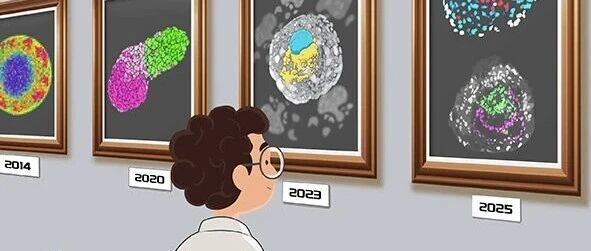
Core Viewpoint - The research led by José C.R. Silva and Chen Chuanxin at Guangzhou National Laboratory presents a significant advancement in human post-implantation embryo modeling through the activation of the STAT3 signaling pathway, achieving high-fidelity models that address previous limitations in efficiency and accuracy [3][4][10]. Summary by Sections Research Background - The study addresses the inefficiencies and limited fidelity of current systems in simulating the post-implantation stage of human embryo development [3][6]. Key Findings - **STAT3 Mediated Pluripotent Stem Cell Reprogramming**: A specialized medium (SAM) enhances STAT3 activity, allowing pluripotent stem cells (PSCs) to be reprogrammed into various early cell lineages within 60 hours, including hypoblast, trophectoderm, naive epiblast, and extraembryonic mesoderm [7]. - **Efficient 3D Self-Organizing Model Construction**: Cells treated with SAM for 60-120 hours can be cultured in 3D, resulting in a significant increase in efficiency to 52.41% ± 8.92% for developing post-implantation embryo-like structures, surpassing current mainstream methods [8]. - **High Simulation of Natural Embryo Development**: The structures formed on day 6 closely resemble Carnegie stages 5-7 (CS5-CS7) human embryos, exhibiting features such as bilaminar disc structure, amniotic cavity formation, mesenchymal cell distribution, chorionic cavity, and trophoblast cell differentiation [8]. - **Successful Formation of Primitive Streak**: The CS6/7 stage embryo-like structures demonstrate key developmental events, including the correct formation and localization of the primitive streak, epithelial-mesenchymal transition (EMT), and differentiation of mesoderm and definitive endoderm [8]. - **Molecular Level Validation**: Single-cell transcriptome analysis shows that the model aligns closely with real CS6/7 human embryo data at the molecular level, confirming its biological relevance and research application value [8]. Implications - The STAT3 activation-induced model represents a breakthrough in overcoming existing efficiency bottlenecks (over 50% generation rate) and provides a more accurate in vitro platform for studying early human embryonic development mechanisms, congenital disease modeling, and drug toxicity testing [10]. This advancement marks a transition from "morphological simulation" to "functional simulation" in embryo modeling, opening new pathways for research in developmental biology and regenerative medicine [10].