机器人大讲堂

Search documents
人形机器人路在何方?顶刊重磅综述,北航、国创中心、浙大等全景解析人形机器人技术现状与趋势
机器人大讲堂· 2025-11-21 10:06
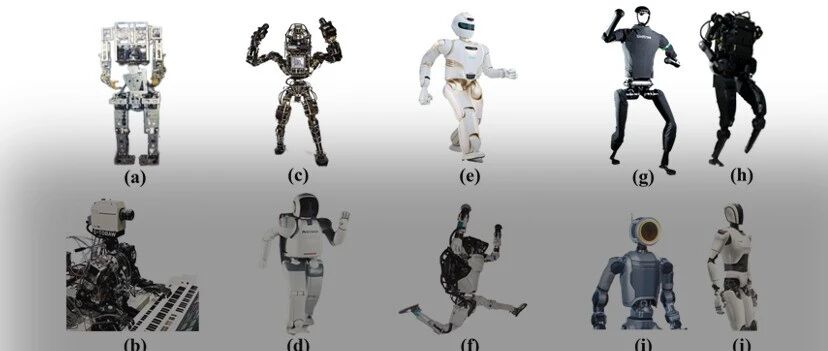
Core Viewpoint - The article discusses the rapid development and potential of humanoid robots, highlighting a significant review published in a top mechanical engineering journal that outlines the current state and future trends of humanoid robot technology [1][3]. Group 1: Development History and Current Status - Humanoid robot technology has evolved through four stages from 1969 to the present, including early development, high integration, dynamic motion and intelligence, and a rapid development explosion since 2022 [7][4]. - Humanoid robots are defined as bio-inspired general-purpose robots that mimic human appearance and functions [4]. Group 2: Global Industry Landscape - Internationally, the humanoid robot sector is led by companies like Tesla and Figure AI, with significant contributions from academic institutions such as MIT and Tokyo University [9]. - In China, despite a later start, numerous innovative companies are emerging, supported by national and local policies, creating a dual-track development model alongside universities [10][11]. Group 3: Key Core Technologies - The article identifies six key technology modules essential for humanoid robots, including body design, core components, high-precision environmental perception, embodied intelligence, human-robot collaboration, and operating systems [14][15]. - The use of lightweight materials and high-performance components is crucial for achieving a balance between weight and durability in humanoid robots [17][21]. Group 4: Typical Applications - Humanoid robots are expected to excel in special service environments, intelligent manufacturing, and eventually in household and healthcare applications [38][39]. - Current applications are primarily demonstration-based, with challenges such as battery life and operational precision still needing to be addressed [42]. Group 5: Challenges and Difficulties - The development of humanoid robots faces five core challenges, including the need for collaborative innovation in hardware and software, high-precision environmental perception, and the establishment of safety standards [43][45]. Group 6: Future Development Trends - Future trends include the deep integration of embodied intelligence with general artificial intelligence, the development of end-to-end multimodal models, and the establishment of large-scale simulation training platforms [46][47].

快讯|智元A2创下吉尼斯世界纪录;Figure 02停产;LG宣布加大押注美国机器人技术等
机器人大讲堂· 2025-11-21 10:06
Group 1 - Zhiyuan Robotics announced that its humanoid robot, Zhiyuan Expedition A2, successfully completed a 106.286 km walking challenge from Suzhou Jinji Lake to Shanghai Bund, setting a Guinness World Record for the longest journey walked by a humanoid robot [2] - The robot achieved this feat without shutting down, thanks to its rapid hot-swappable battery system [2] Group 2 - Figure AI has officially ceased production of its Figure 02 humanoid robot, which had previously assisted in the production of over 30,000 BMW X3 vehicles and handled more than 90,000 metal parts [3][5] - The Figure 02 robot operated with a cycle time of 84 seconds and maintained an accuracy of over 99% during its deployment [5] Group 3 - A report by OpenPR predicts that the humanoid robot market will reach $13.8 billion by 2032, with a compound annual growth rate (CAGR) of 50.2% from 2024 to 2032, driven by advancements in AI, machine learning, and machine vision technologies [6][8] Group 4 - Google DeepMind has hired Aaron Saunders, a former executive from Boston Dynamics, to enhance its robotics capabilities, particularly in integrating AI models into robots [9][11] - This move is part of DeepMind's strategy to advance its Gemini Robotics initiative, enabling AI robots to operate without internet connectivity [11] Group 5 - LG Group is increasing its investment in robotics technology aimed at the U.S. market, including a partnership with Figure AI and potential supply relationships for humanoid robots [12][14] - LG is collaborating with Nvidia to accelerate the development of next-generation technologies, focusing on physical AI and digital twin systems [14]

遨博拿下255台机器人订单?
机器人大讲堂· 2025-11-21 10:06
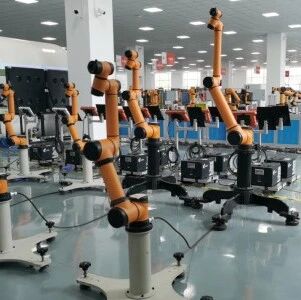
Core Insights - Dongjie Intelligent announced a procurement contract with Aobo (Shandong) Intelligent Robot Co., Ltd. for a total price of 24.325 million yuan, including 50 welding robots and 5 dual-arm coffee robots to enhance automation and employee experience [1] - Aobo was established in 2020 with a registered capital of 200 million yuan, and its legal representative is the same person as Dongjie Intelligent's controlling shareholder [3] - Aobo has transitioned from a startup to a leading player in the collaborative robot market, achieving significant cost advantages and high performance compared to imported robots [4][5] Procurement and Automation Enhancement - Dongjie Intelligent's subsidiary, Taiyuan Dongjie Equipment Co., Ltd., aims to improve its production workshop's automation level, which has been low since its establishment in 2009 [1] - The procurement includes 250 welding robots for various projects, including the Haicheng Heze project and the Malaysia PTT project [1] Aobo's Growth and Market Position - Aobo has grown from a small startup to a company with a global sales volume of over 10,000 collaborative robots by 2021, becoming the second-largest in global shipments from 2022 to 2025 [21][22] - The company has achieved a 98% localization rate for its core components, significantly reducing dependency on imports and enhancing its competitive edge [23] Future Plans and Market Potential - Aobo plans to invest 5 billion yuan to build a robot industrial base in Zibo, aiming for an annual production capacity of 100,000 robots by 2027, which is more than five times the output in 2023 [24] - The Chinese collaborative robot market is projected to grow significantly, with sales expected to reach 124,000 units and a market size exceeding 7 billion yuan by 2028 [24] Technological Innovation and Industry Impact - Aobo's success has spurred the growth of domestic core component suppliers, fostering a symbiotic relationship that enhances the overall Chinese robotics industry [22] - The company has diversified its applications into new sectors such as new energy, retail, and healthcare, showcasing the versatility of its robots [24]
尹周平、李树涛、周志华、胡德文、陈新五位机器人领域专家分别当选2025中国科学院院士、中国工程院院士!
机器人大讲堂· 2025-11-21 07:00
Group 1 - The Chinese Academy of Sciences and the Chinese Academy of Engineering announced the election results for the 2025 academicians, with 73 academicians elected to the Chinese Academy of Sciences and 71 to the Chinese Academy of Engineering [1][2] - In the robotics field, five experts were elected, including four from the Chinese Academy of Sciences and one from the Chinese Academy of Engineering [1] - The average age of the newly elected academicians from the Chinese Academy of Sciences is 57.2 years, with 67.1% being 60 years old or younger, and five female scientists elected [1] Group 2 - Yin Zhouping, a prominent expert in electronic manufacturing equipment, was elected as an academician of the Chinese Academy of Sciences, recognized for his contributions to digital manufacturing and electronic manufacturing technology [3] - Li Shutao, an expert in remote sensing image processing and information fusion, was also elected as an academician of the Chinese Academy of Sciences, with significant achievements in artificial intelligence and information processing [4] - Zhou Zhihua, a vice president of Nanjing University and an expert in artificial intelligence and machine learning, was elected as an academician of the Chinese Academy of Sciences, noted for his impactful research and publications [6] - Hu Dewen, a strategic scientist in control science and cognitive science, was elected as an academician of the Chinese Academy of Sciences, recognized for his work in brain signal analysis and brain-machine interfaces [7] - Chen Xin, a leading expert in high-speed and high-precision electronic manufacturing equipment, was elected as an academician of the Chinese Academy of Engineering, known for his breakthroughs in core technologies for electronic manufacturing [8][11]

重磅!PI 获42亿融资!估值飙升至392亿
机器人大讲堂· 2025-11-21 04:00
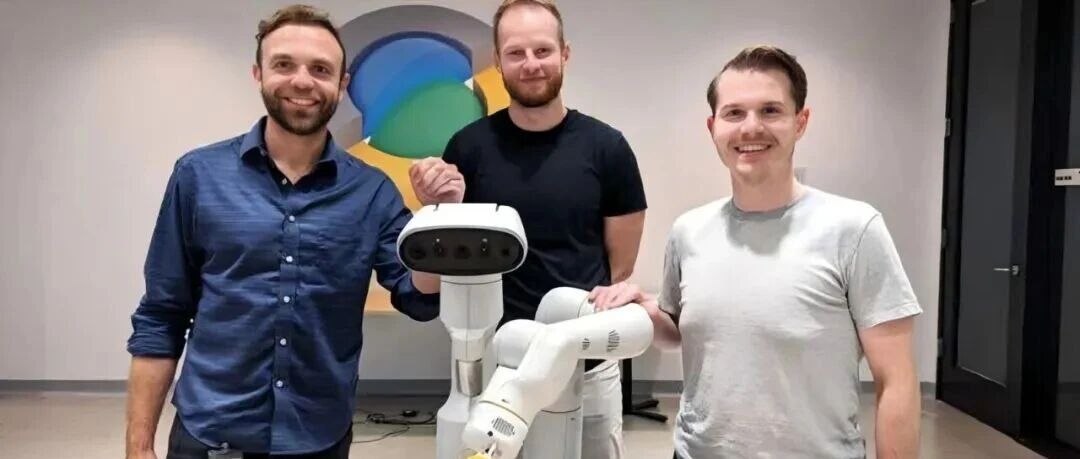
Core Viewpoint - Physical Intelligence (PI), a startup focused on robotics and artificial intelligence, has raised $600 million in its latest funding round, increasing its valuation to $5.6 billion. The funding was led by CapitalG, with participation from existing investors and new entrants [1][9]. Company Overview - PI was founded in 2024 and is headquartered in San Francisco, USA. The team includes notable figures such as CEO Karol Hausman, a former senior research scientist at Google DeepMind, and Sergey Levine, a leader in reinforcement learning [1][3]. - The company aims to develop general-purpose AI algorithms for home robots, with a long-term vision of creating a "general intelligence" system to empower diverse robotic applications [3]. Technology and Product Development - PI addresses the challenges faced by home robots in complex environments by developing general artificial intelligence (AGI) models to enhance multi-tasking capabilities and reduce data dependency [5]. - The company employs a "broad coverage, small data" strategy to improve the model's semantic understanding of various mechanical actions and tasks [5]. - The first model, π-0, was launched in October 2024, capable of performing complex tasks such as folding clothes and operating a microwave [5]. - The subsequent model, π-0.5, released in April 2025, improved adaptability to new environments through heterogeneous data collaborative training [7]. - The latest model, π*0.6, introduced on November 18, 2025, showcased exceptional performance in real-world tasks, achieving over 90% success rates in various activities [7]. Funding and Valuation Growth - Since its inception in 2024, PI has experienced rapid funding and valuation growth. The company raised $70 million in seed funding in March 2024, reaching a valuation of $400 million. By November 2024, it secured $400 million in Series A funding, increasing its valuation to $2.4 billion, marking a sixfold increase [9]. - The recent $600 million funding round has pushed the total capital raised to over $1 billion within just over a year, reflecting strong market confidence in its technology and growth prospects [9].
12月杭州见!与领军企业面对面!第六届中国机器人行业年会整体概况,早鸟票速来
机器人大讲堂· 2025-11-21 01:14
Core Insights - The global robotics industry is entering a golden era characterized by technological leaps, widespread penetration, and ecological collaboration, driven by the deep integration of artificial intelligence and large model technologies [1][2] - In China, the robotics industry is a key driver of manufacturing upgrades and intelligent transformation, with over 50% localization rate in industrial robots and a continuous 12-year position as the largest application market globally [2][4] Event Overview - The 6th China Robotics Industry Annual Conference and LeadeRobot Awards will be held on December 18-19 in Hangzhou, focusing on the theme of witnessing the power of leading Chinese robotics companies and illuminating the new stars of embodied intelligence [2][4] - The conference will feature five major highlights, including cross-industry integration, insights from industry academicians, and the release of authoritative rankings [4][5] Highlights of the Conference - Five-dimensional interaction and cross-industry integration through various modules such as research visits, keynote speeches, roundtable discussions, exhibitions, and award ceremonies [4] - Participation of industry academicians, top scientists, and investors to share cutting-edge trends and practical experiences [4][5] - Release of the "Top 50 Leading Robotics Companies in China" and "Top 50 New Stars in the Era of Embodied Intelligence" to establish benchmarks in technology, market, and brand [5][6] Awards and Recognition - The LeadeRobot awards aim to recognize outstanding contributions in the integration of robotics technology and industry, covering various dimensions such as industrial, service, humanoid, and core components [6][8] - New awards for individuals have been introduced to honor leaders in the robotics field, alongside industry awards for various categories [6][19] Participation and Opportunities - The conference offers opportunities for decision-makers, researchers, investors, and students to connect, learn from leading companies, and explore the future of the industry [5][6] - Early bird tickets are available, and free admission tickets have been opened for registration, providing access to valuable insights and networking opportunities [24][26]

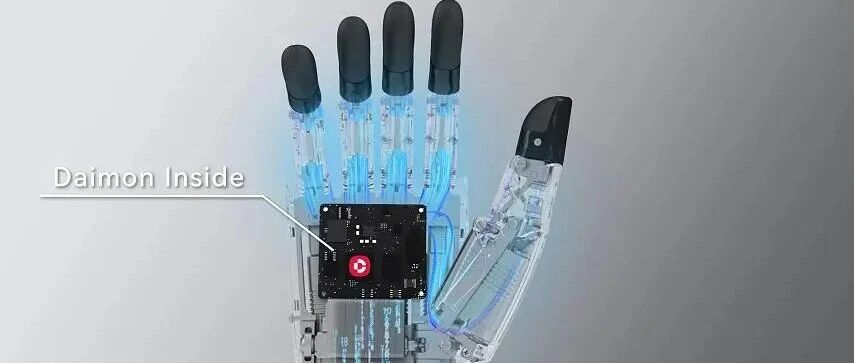
半年两迭代,价格下探1299元,戴盟“自卷”如何撬动机器人触觉感知的千亿市场?
机器人大讲堂· 2025-11-20 10:05
Core Viewpoint - The article highlights the advancements made by Daimeng Robotics in tactile perception technology, addressing the limitations of traditional robotic sensors and redefining the boundaries of robotic perception with innovative solutions [1][16]. Group 1: Technological Breakthroughs - Daimeng Robotics has developed a new generation of tactile sensors that overcome existing technical bottlenecks, such as insufficient resolution, poor durability, and weak anti-interference capabilities [2][4]. - The DM-Tac W2 series is the world's first tactile sensor to exceed the IP65 standard, allowing it to function effectively in wet and dusty environments, which is crucial for both industrial and household applications [2][4]. - The introduction of "micron-level texture recognition" technology enables robots to detect minute defects, such as scratches as small as 0.1mm, significantly enhancing precision in various applications [4]. Group 2: Product Innovations - Daimeng offers a range of tactile sensors in different sizes, including the DM-Tac W2 series for standard applications and specialized models for narrow spaces, enhancing operational flexibility [6]. - The DM-Flux edge AI computing platform acts as a "tactile decision-making brain," providing a closed-loop capability for perception, decision-making, and control, which distinguishes Daimeng from other sensor manufacturers [8][12]. Group 3: Pricing Strategy - The new generation of tactile sensors is priced starting at 1299 yuan, significantly lower than similar international products, positioning it as a high-value option in the market [13][15]. - The cost reduction is attributed to the advantages of the monochromatic light technology, which simplifies production and lowers hardware costs, allowing for a balance between technological upgrades and price reductions [15]. Group 4: Industry Impact - Daimeng's innovations are set to transform various sectors, including smart manufacturing, logistics, household services, and medical rehabilitation, by enabling robots to perform tasks with enhanced precision and adaptability [16]. - The company's vision aims to break the physical limits of perception and foster a harmonious coexistence between humans and machines, with plans to introduce wearable remote operation data collection devices in the near future [16].
因殴打人形机器人,“甲亢哥”被起诉
机器人大讲堂· 2025-11-20 10:05
Core Viewpoint - A popular game streamer, Darren Jason Watkins Jr. (known as IShowSpeed), is being sued for allegedly damaging a robot named Rizzbot during an interaction, with the developer seeking $1 million in damages [3][6]. Group 1: Lawsuit Details - Social Robotics, LLC filed a lawsuit against Watkins on November 17, claiming he intentionally harmed Rizzbot after becoming angry during their interaction [3]. - The lawsuit alleges that Watkins used a chokehold on Rizzbot, struck its face multiple times, and pushed it to the ground, resulting in visible damage [4][6]. - The damages caused by Watkins have led to financial losses for Social Robotics, including the cancellation of collaborations with other influencers and a potential loss of millions due to missed appearances [6]. Group 2: Rizzbot Background - Rizzbot is a humanoid robot designed to engage with the public, featuring a cowboy hat and Nike Dunks, and is controlled by a human operator [7][9]. - The robot, developed by Unitree Robotics, stands over 1.2 meters tall, weighs approximately 35 kg, and is priced starting at $16,000 [9]. - Rizzbot has gained popularity on social media platforms, with its TikTok page amassing over 45 million views through humorous and engaging content [13][15]. Group 3: Industry Context - The incident highlights a growing trend of interaction between humans and humanoid robots, with various influencers creating content around these interactions [17][22]. - The case represents a significant moment in the legal landscape regarding the treatment of robots, potentially setting a precedent for future cases involving human-robot interactions [29].

快讯|Figure已参与3万辆宝马汽车生产;北美机器人订单在2025年第三季度增长;发那科推出食品级洁净机器人等
机器人大讲堂· 2025-11-20 10:05
Group 1 - Oxford City has authorized the purchase of a field marking robot for $39,595, which will be paid over three years. The robot can paint patterns for 50 different sports and is designed for various surfaces, including concrete [1][3] - North American robot orders increased in Q3 2025, totaling 8,806 units worth $574 million, with a year-on-year order growth of 11.6% and revenue growth of 17.2%. The fastest-growing sectors included food and consumer goods (up 105%) and automotive OEM (up 68%) [4][6] - Uber and Shake Shack have launched a robot delivery service in Chicago, enhancing customer experience and expanding Coco's business. The robots can navigate city streets to deliver food directly to customers [7][9] Group 2 - FANUC introduced the LR Mate 10-11A food/cleaning robot, designed for high-speed operations and capable of withstanding frequent washdowns. It features an IP67 protection rating and is optimized for space-saving in busy production environments [10][12] - Figure has participated in the production of 30,000 BMW vehicles using its humanoid robot, Figure 02, which has operated for over 1,250 hours and moved more than 120,000 parts [13][15]


机甲盟友欢乐开局!中关村具身智能机器人应用大赛After Party上演人机共乐盛宴
机器人大讲堂· 2025-11-20 10:05
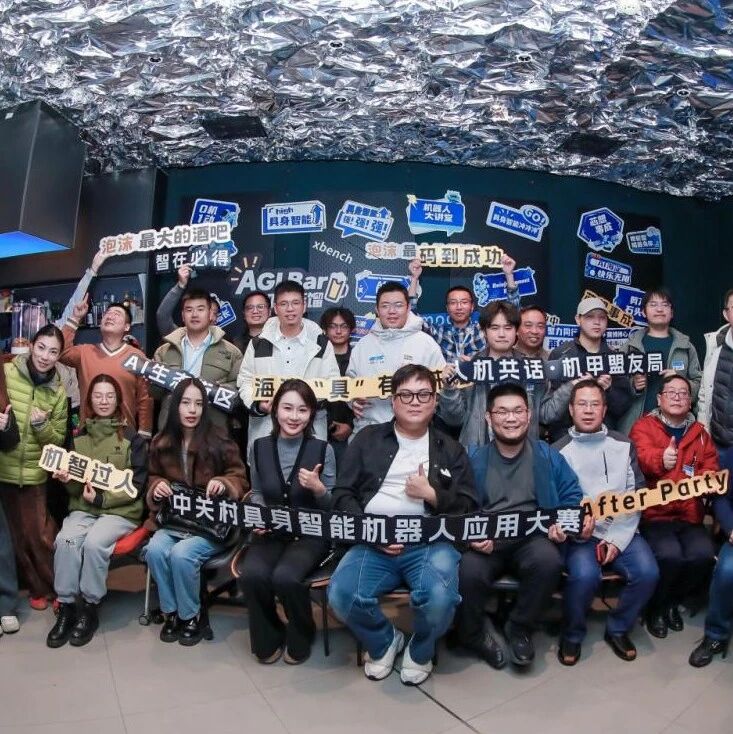
2025 年 11 月 18 日, 第二届中关村具身智能机器人应用大赛赛后闭门 After Party "人机共话・机甲盟友 局" 在中关村科学城创业大街精彩 开局 。刚在大赛中历经激烈角逐的战队 与 " 机甲伙伴 " ,从赛场的紧张氛 围中抽离,在这里开启了一场充满未来感的 " 赛博社交 " 实验。 这场跨界 派对 以趣味互动与深度交流搭建对话平台,持续释放赛事势能,助力海淀具身智能产业生态升级。 下午时分, "机甲盟友" 们沿路互动、驻足感受街区创新氛围,与人类选手并肩漫步,和同类伙伴贴贴互动 , 与萌宠机械狗欢乐迎宾 。 Ta们 一同走进 AGI Bar ,"放松机械臂",碰杯专属 "除锈剂",给高速运转的具身大脑降降温;围坐畅谈时, 还饶有兴致地 "讨论"—— 人类友谊第一,机甲盟友们的友谊究竟排第几? 夜幕降临,沙龙交流环节如期开启。参会嘉宾从 "竞技 对手 "转变为" 聊天搭子 ": 从赛事的精彩瞬间到未来 的合作机遇, 从高校实验室的创新探索到企业的产业化实践,从核心部件研发到未来应用场景构想,思想碰 撞间激活生态活力。 这场打破人机边界的跨界聚会,不仅是大赛的收尾,更是 海淀区 具身智能生态 ...