机器人大讲堂

Search documents
线下活动报名|智源“具身智能新基建”Workshop
机器人大讲堂· 2025-09-16 09:06
Core Viewpoint - The article promotes a workshop on embodied intelligence organized by the Beijing Zhiyuan Artificial Intelligence Research Institute, highlighting the latest advancements in the field and inviting participants to explore the future of embodied intelligence [1]. Event Details - Date and Time: September 24, 2025, from 14:00 to 17:30 [2] - Location: Zhiyuan Building, 1st Floor Auditorium, No. 150 Chengfu Road, Haidian District, Beijing [2]. Industry Participants - The article lists various companies involved in different sectors of robotics, including: - **Industrial Robotics Companies**: Estun Automation, Efort Intelligent Equipment, Feixi Technology, and others [7][8]. - **Service and Special Robotics Companies**: Yijiahe, Jingpin Special Equipment, Qiteng Robotics, and others [8]. - **Medical Robotics Companies**: Yuanhua Intelligent, Tianzhihang, Sizherui Intelligent Medical, and others [8]. - **Humanoid Robotics Companies**: UBTECH Robotics, Yushun, Yundong, and others [9]. - **Embodied Intelligence Companies**: Kuawei Intelligent, Galaxy General, Qianxun Intelligent, and others [10]. - **Core Component Companies**: Lide Harmonic, Yinshi Robotics, Kunwei Technology, and others [11]. - **Educational Robotics Companies**: Silicon Step Robotics, Shihe Educational Robotics, and others [11]. Community Engagement - The article encourages joining the "Robot Lecture Hall" reader discussion group to share insights and discuss topics related to robotics and technology advancements [12].


华科大团队重磅突破!《Science》子刊:磁驱光纤机器人,突破膝关节微创手术难题
机器人大讲堂· 2025-09-16 09:06
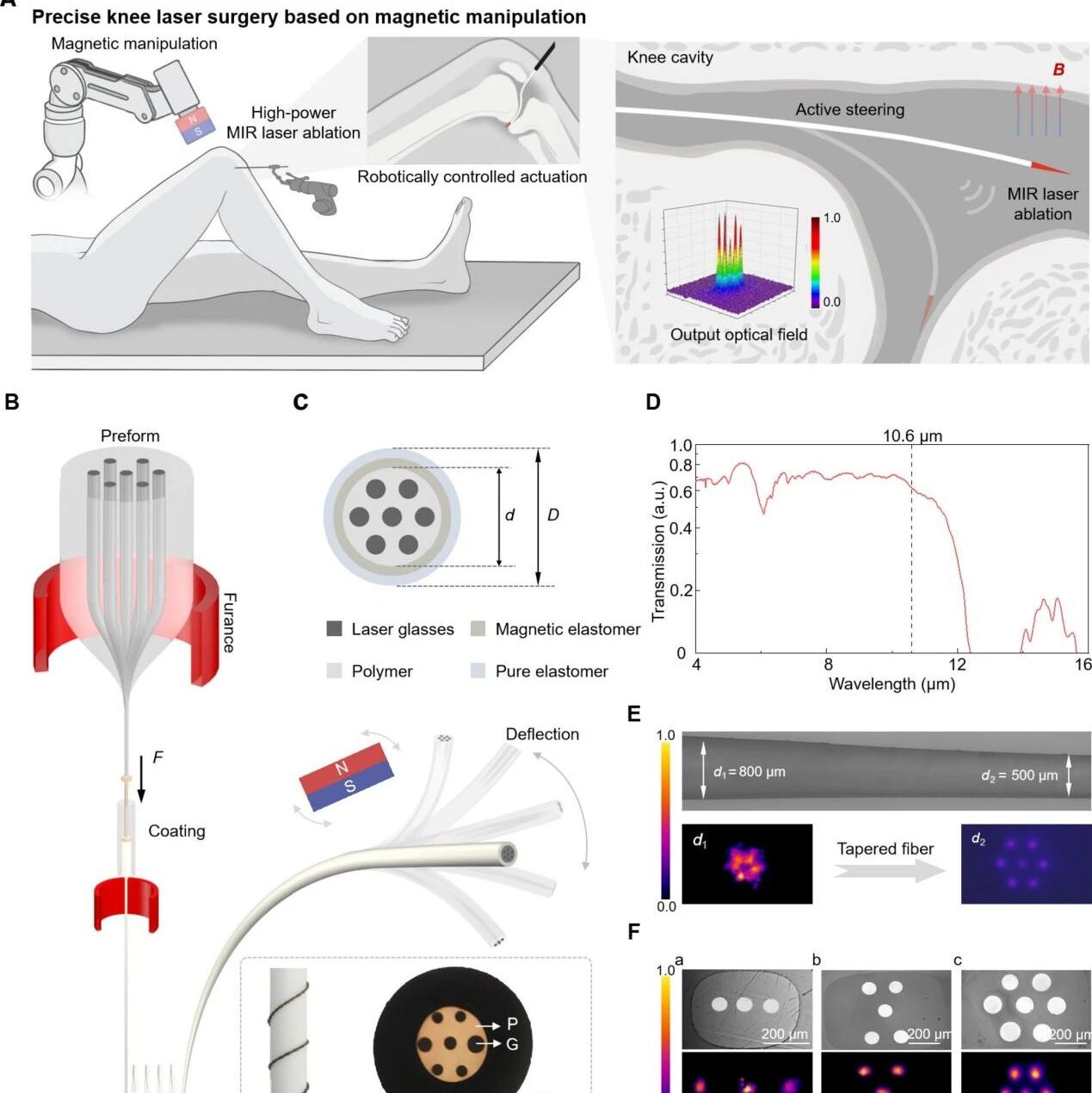
膝关节作为人体最大且最复杂的关节,几乎承担着全身的重量,其健康状态直接决定了人的运动能力。一旦膝 关节发生损伤或退行性病变,如半月板撕裂、软骨磨损或韧带损伤,患者的日常行走、奔跑甚至站立都会受到 严重影响。目前,临床上常见的膝关节手术方式包括开放式手术和关节镜辅助手术,但这些方法在操作精度和 灵活性方面仍存在显著不足。 尤其值得关注的是, 膝关节内部空间极为狭窄,腔隙宽度通常小于 10 毫米,这种复杂的几何结构给微创切 除手术带来了巨大挑战。 传统手术器械如骨钳和磨钻往往需要借助厘米级的切口才能进入关节区域,这类刚 性工具不仅操作范围受限,难以精确定位病灶,还极易对周围的健康软骨、血管及神经造成额外损伤,从而导 致术后恢复周期延长、疼痛增加,甚至对青少年患者的骨骼发育产生不利影响。 ▍ 光纤机器人:破解膝关节手术困境的技术方案 针 对这一临床挑战, 来自华中科技大学陶光明教授的 研究 团队 开发了一种创新的磁驱动多材料光纤机器 人。 这个机器人的设计巧妙结合了多种技术:内部是多芯光纤结构,用于传输中红外激光;外部则包裹着磁 性 弹 性 体 材 料 , 使 机 器 人 能 够 在 外 加 磁 场 控 制 下 灵 ...
快讯|印度公司推出会爬楼的扫地机器人;美国工业机器人国标发布;斗山机器人创新中心启动等
机器人大讲堂· 2025-09-16 09:06
1、 A3发布美国工业机器人安全新国家标准 美国先进自动化协会( A3) 宣布发布 ANSI/A3 R15.06-2025 美国工业机器人和机器人系统国家标准 - 安全 要求,ANSI/A3 R15.06-2025 中的主要增强功能包括增加了更新了机器人分类,协作机器人的分类和应用 指南,并且增加了相应的安全功能和测试方法,目前符合最新安全要求的公司和专业人士可以通过 A3 标 准在线商店购买该标准。起价为 655 美元。 2、 斗山机器人创新中心启动 斗山机器人公司在京畿道盆唐开设了一个新的研发中心,专注于先进的机器人技术和软件。该设施占地 2, 000 平方米,名为斗山机器人创新中心,将容纳该公司约 40% 的员工。该中心将负责机器人和软件开发 以及质量测试,包括极端条件下的耐久性测试。该中心的项目包括人形机器人、机器人专用人工智能软 件、多臂同时控制和防撞技术。与此同时,斗山机器人公司聘请了Toss证券前首席技术官吴昌勋(Oh Cha ng-hoon)担任常务理事,负责领导人工智能和软件的开发工作。 3、 首尔国立大学人工智能机器人像人类一样成功整理桌子 首尔大学工学院电气与计算机工程系教授吴成浩15日 ...

全球瞩目,湖北人形机器人产业生态大会九月启幕!剑指国家级产业高地,重塑机器人创新格局
机器人大讲堂· 2025-09-16 00:00
Core Viewpoint - The year 2025 is seen as a critical year for the industrialization explosion of humanoid robots in China, driven by the deep integration of advanced technologies such as artificial intelligence, multimodal perception, and intelligent control [2] Group 1: Industry Development - Humanoid robots are evolving from initial applications in single scenarios to capabilities for multi-task execution, environmental adaptation, and collaborative operations, marking a new stage of mass production [2] - China has become a core dominant force in the humanoid robot supply chain, leveraging its strengths in hardware manufacturing, algorithm iteration, and market application [2] - Key domestic components such as reducers, servo motors, and dexterous hands are continuously breaking through technical barriers, leading to a rapidly forming industrial ecosystem [2] Group 2: Regional Innovation - Wuhan, as a technological and industrial innovation hub in Central China, showcases unique systemic competitiveness, supported by high-level research institutions like Wuhan University and Huazhong University of Science and Technology [2] - The local accumulation in foundational technology fields such as machine vision, motion control, bionic structures, and embodied intelligence enables rapid construction of a closely linked "industry-university-research-application" innovation ecosystem [2] Group 3: Upcoming Conference - The "2025 Hubei Humanoid Robot Industry Ecosystem Conference" will be held on September 26-27, 2025, in Wuhan, aiming to enhance Hubei's influence and attractiveness in the humanoid robot and embodied intelligence fields [4][5] - The conference will adopt a "forum + product exhibition" model, focusing on cutting-edge technologies, industrial applications, and ecosystem construction [5] Group 4: Conference Highlights - The conference will gather over 100 leading enterprises and 500 experts, establishing a national-level expert committee for humanoid robots in Hubei [6] - Key projects will be signed and capital closed-loop systems formed, with a focus on manufacturing, medical, and emergency sectors [6] - A high-end talent ecosystem called "Chutai Homecoming" will be initiated, along with the release of an industry white paper and disruptive technology report [6] Group 5: Conference Structure - The main forum will focus on comprehensive ecosystem integration, addressing technology open-source, capital closure, policy empowerment, and talent delivery [7] - A product exhibition will showcase the latest products and technologies from over 60 leading enterprises in the humanoid robot sector [7] Group 6: Conclusion - The 2025 Hubei Humanoid Robot Industry Ecosystem Conference represents a pivotal moment for the humanoid robot industry, emphasizing innovation, collaboration, and ecosystem building [8]

登顶《Science》子刊!芝加哥大学最新研究揭示,机器人伴侣能有效缓解儿童朗读焦虑
机器人大讲堂· 2025-09-15 09:08
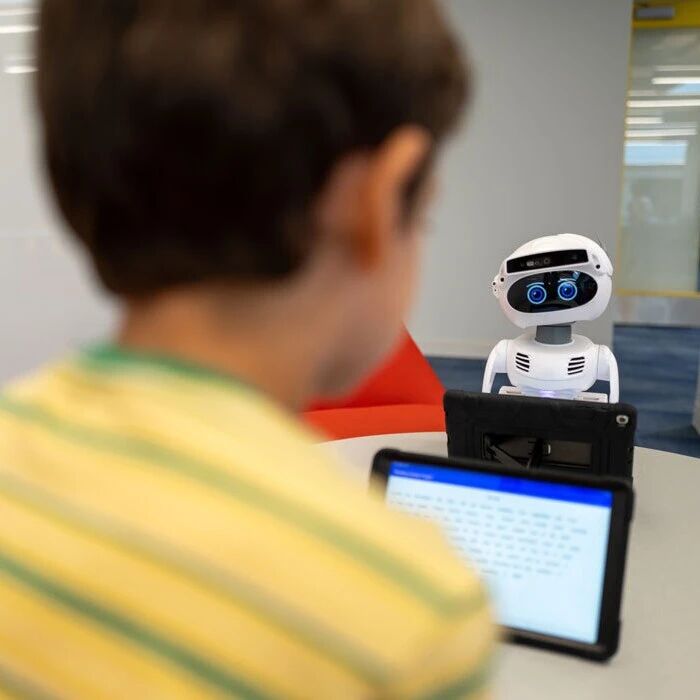
Core Viewpoint - The article discusses a scientific experiment that explores the potential of robots as effective tools to help children reduce anxiety in social reading situations, particularly focusing on "reading anxiety" that affects learning outcomes for children aged 8-11 [5][7][24]. Group 1: Experiment Design and Methodology - The experiment involved 52 children aged 8-11, who participated in three reading sessions: reading alone, reading to a person, and reading to a robot, with the order randomized [9][12]. - Researchers utilized three objective physiological indicators to measure anxiety: voice jitter, facial temperature, and heart rate variability (HRV) [14][15][17]. - The reading materials were scientifically selected to be of moderate difficulty and suitable for approximately 5 minutes of reading, with feedback provided after each page read [18]. Group 2: Findings and Results - Analysis showed that children exhibited significantly less voice jitter when reading to the robot compared to reading to a human, indicating lower anxiety levels [20][21]. - Heart rate variability analysis revealed that while both social situations increased heart rate regularity, reading to a human resulted in a more pronounced stress response than reading to a robot [21][23]. - Children reported feeling less judged and more supported when reading to the robot, expressing that it helped them feel more relaxed and less anxious [22]. Group 3: Implications and Future Directions - The study suggests that social robots can provide emotional value in educational settings without replacing human interaction, serving as practice partners for various activities [24]. - The research opens avenues for further exploration into the long-term benefits of robotic companions in education and their potential to enhance learning experiences [24].
拓斯达入局人形机器人
机器人大讲堂· 2025-09-15 09:08
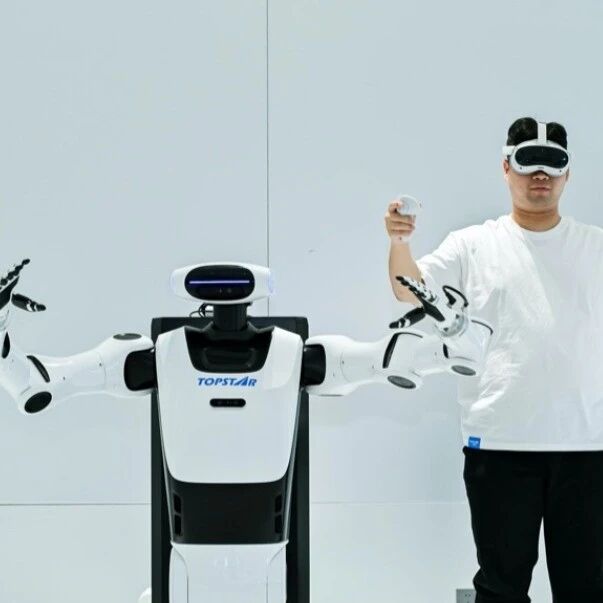
Core Viewpoint - The company has officially launched its first wheeled humanoid robot, "Xiao Tuo," which features a four-wheel design and supports 360-degree omnidirectional movement, leveraging its expertise in high-end servo technology and a pre-trained embodied model for autonomous reasoning and decision-making [1][3]. Group 1: Humanoid Robot Development - The company began its foray into embodied intelligence in 2023, achieving significant progress in high-precision component manufacturing and robot integration, including the validation of dual-arm intelligent robots and embodied intelligent palletizing workstations [3]. - The company has accumulated core technologies such as controllers, servo drives, and vision systems, achieving full coverage from upstream core components to downstream automation system integration [3][4]. - The humanoid robot's hardware, including its multi-joint body and robotic arms, is entirely self-developed, with some components processed using advanced five-axis CNC machines, enhancing customization capabilities [4]. Group 2: Software and AI Integration - The company has collaborated with major AI model providers like Huawei Cloud and Alibaba Cloud to apply real industrial data for training and iterating AI models, facilitating the evolution of robots from merely "capable" to "intelligent" [6]. - By integrating 3D cameras and AI vision detection systems, the robot can autonomously perform tasks such as quality inspection and operation, achieving full-process automation [6]. Group 3: Future Prospects and Ecosystem Development - The company has built a comprehensive service capability covering the entire chain from individual products to solutions, serving over 15,000 clients across various sectors, which supports the large-scale application of humanoid robots in industrial settings [8]. - The establishment of a global R&D headquarters focused on embodied intelligence aims to advance key technologies such as intelligent perception and human-machine interaction [8]. - The company has initiated the "Tuo Star Humanoid Robot Ecological Innovation Alliance" to accelerate the large-scale implementation and innovative applications of humanoid robots across diverse scenarios, targeting the trillion-level market for automated intelligent equipment [8].

快讯|Agility Robotics全身控制基础模型揭秘;印度学校设立达芬奇手术机器人教学;日本7-Eleven试用机器人等
机器人大讲堂· 2025-09-15 09:08
Group 1: 7-Eleven's Robot Initiative - Japan's largest convenience store chain, 7-Eleven, is testing robotic employees to address severe labor shortages in the country [2] - The initial trial is taking place in a Tokyo store, with robots performing tasks such as stocking shelves and cleaning windows [2] - The company aims to enhance productivity and create an environment for new product and service development [2] Group 2: UR Robot's New Model - UR Robotics announced the launch of its latest model, UR8 Long, designed for high-demand and space-constrained industrial applications [4] - The UR8 Long features a working radius of 1750 mm and a payload capacity of 8 kg, with a lightweight and compact design [4] - It incorporates advanced software and improved user guidance for intuitive programming, reducing setup time for complex parts [4] Group 3: Collaboration between Hanwha Robotics and Weia Machine Tool - Hanwha Robotics and Weia Machine Tool signed a memorandum of understanding to develop automation solutions [8] - The collaboration includes providing automation solutions, installation, maintenance, and training support [8] - They plan to create a "turnkey" automation solution integrating collaborative robots and machine tools, along with a shared global distribution network [8] Group 4: Agility Robotics' Full-Body Control Model - Agility Robotics introduced a full-body control model for its Digit humanoid robot, ensuring safety and stability during various tasks [11] - The model functions similarly to the human brain's motor cortex, controlling autonomous and fine motor skills [11] - It utilizes a small LSTM neural network trained in a simulated environment, enabling zero-shot learning for real-world applications [11] Group 5: AIIMS Delhi's Da Vinci Robot Installation - All India Institute of Medical Sciences (AIIMS) in Delhi installed an advanced Da Vinci surgical robot to enhance training in robotic-assisted surgeries [13] - This makes AIIMS Delhi the only institution in India with two dedicated surgical training robots [13] - The introduction of the Da Vinci robot will expand training opportunities across multiple specialties, including urology and oncology [13]



5个月完成两轮大额融资!这家企业25Q2订单量暴涨4倍!超60+项目落地!
机器人大讲堂· 2025-09-15 09:08
Core Viewpoint - "Qingbao Robot" has successfully completed a multi-million Pre-A+ round of financing, indicating strong market recognition and investor confidence in its technology and applications [1][3]. Group 1: Financing and Market Recognition - Qingbao Robot completed a multi-million Pre-A+ round of financing led by Zhejiang Dechuang Enterprise Management Co., with follow-up investments from Baoshan Technology [1]. - The company had previously secured Pre-A round financing from Hanli Capital just five months prior, showcasing rapid capital market acceptance [1]. Group 2: Technology and Product Development - Established in 2021, Qingbao Robot has developed core technologies including a humanoid robot head expression system, flexible joint motion control, and large model-driven autonomous decision-making capabilities [3]. - The company launched the world's first empathetic head system during the 2025 World Robot Conference, capable of simulating human micro-expressions and emotional changes [3]. - Qingbao Robot has achieved significant technical validation and has deployed products across various verticals such as commercial complexes, cultural tourism, hospitals, and coffee chains [3][16]. Group 3: Core Team and Expertise - The CEO, Wang Lei, is a Tsinghua University graduate with a PhD in engineering, previously holding positions at Siemens and Shanghai Xinshi Electric Co. [5]. - The founding team includes experts from Tsinghua University with extensive research backgrounds in artificial intelligence and robotics [5][8]. Group 4: Intellectual Property and Market Growth - Qingbao Robot has secured and is applying for a total of 52 patents, including 28 invention patents, indicating a strong focus on intellectual property [17]. - In the first half of 2025, the company saw a fourfold increase in order volume, with over 60 new projects covering major cities and key industries [18]. Group 5: Application Scenarios and Market Strategy - The robots are deployed in various scenarios, enhancing visitor experiences in tourism, providing emotional support in healthcare, and improving customer engagement in retail [20][22]. - Qingbao Robot's technology supports 24/7 automated testing in industrial applications, showcasing its adaptability and efficiency [22]. - The company aims to become a leading brand in service robots by leveraging its real-world application experience and continuous technological advancements [24][25]. Group 6: Industry Trends and Future Outlook - The service robot market in China is projected to grow from 195.23 billion RMB in 2019 to 850 billion RMB by 2025, with a compound annual growth rate of 30.45% [25]. - Qingbao Robot's approach of integrating technology with real-world applications positions it favorably in the competitive landscape of humanoid robots [25].

Nature Communications发表!北大团队用可解释模态分解方法赋能侧线感知,实现机器鱼高精度、多场景运动估计!
机器人大讲堂· 2025-09-14 04:06
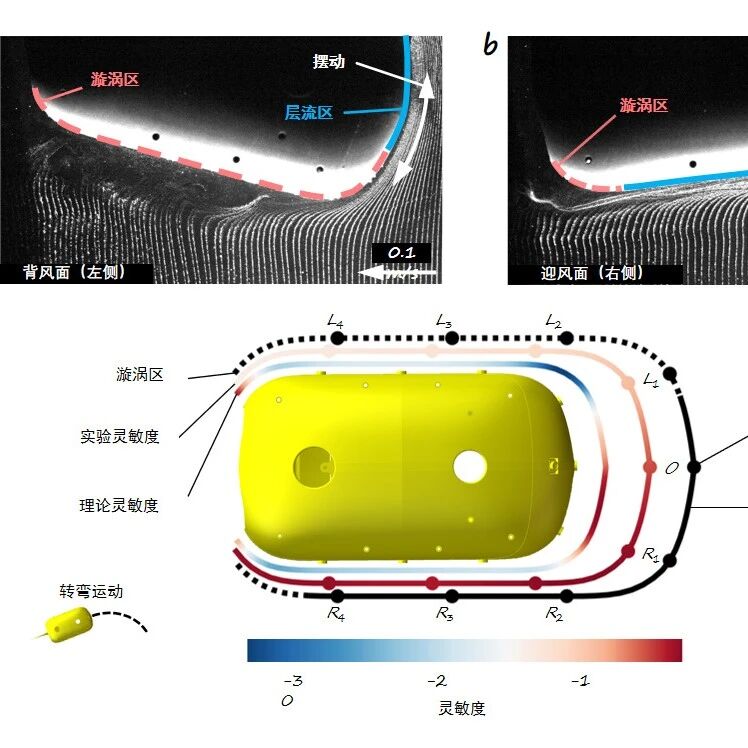
Core Insights - Bionics is driving innovation in intelligent robotic systems, particularly through the design and development of biomimetic robotic fish inspired by the superior maneuverability and perception of fish in complex underwater environments [1][4] - Traditional visual and sonar sensing technologies face performance limitations in challenging underwater conditions, while fish possess a unique lateral line system that provides a new paradigm for underwater robotic perception [1][4] - The research team from Peking University has proposed a novel data-driven framework that integrates modal decomposition and physical modeling for self-motion state estimation in biomimetic robotic fish [1][4] Summary by Sections Introduction to Bionics and Robotic Fish - Bionics connects nature and engineering, leading to advancements in intelligent robotic systems [1] - Fish exhibit exceptional maneuverability and perception in complex underwater environments, inspiring the design of biomimetic robotic fish [1] Challenges in Underwater Robotics - Traditional sensing technologies struggle in low-light and acoustically noisy underwater environments [1] - The unique lateral line system of fish, which senses water flow and pressure changes, offers a new approach for underwater robots [1] Development of Artificial Lateral Line System (ALLS) - Researchers have developed ALLS to simulate fish perception capabilities, applicable in flow field sensing, obstacle avoidance, and multi-fish coordination [1][4] - Accurate estimation of self-motion states, such as speed and trajectory, is crucial for autonomous intelligent robots [1] Proposed Framework for Self-Motion State Estimation - The new framework combines Proper Orthogonal Decomposition (POD) with physical modeling to estimate self-motion states [2][6] - The method extracts dominant modes related to fish movement from spatiotemporal pressure data collected by artificial lateral line sensors [2][6] Results and Validation - The model demonstrates robustness and generalization across various oscillation parameters, fish morphologies, and complex flow fields [4][14] - The research provides an efficient and reliable autonomous perception strategy for underwater biomimetic robots [4][14] Optimization of Sensor Layout - The study reveals redundancy in sensor arrangements and proposes optimized sensor layout strategies to reduce system complexity [11][13] - The optimal sensor distribution is validated through experiments, enhancing the understanding of fluid dynamics principles [13] Generalization to Complex Scenarios - The proposed method shows strong generalization capabilities in dynamic conditions and across different fish models [14] - It maintains robust state perception even in complex flow fields with wake interference, showcasing practical value [14] Conclusion and Future Directions - This research not only offers a solution for motion state estimation in robotic fish but also provides insights into the sensory mechanisms of real fish [16] - The integration of natural intelligence with engineering practices paves the way for the future development of intelligent, autonomous, and collaborative underwater robots [16]
国家专项新突破!中国团队自主研发核磁兼容手术机器人,实现亚毫米级精度!
机器人大讲堂· 2025-09-14 04:06
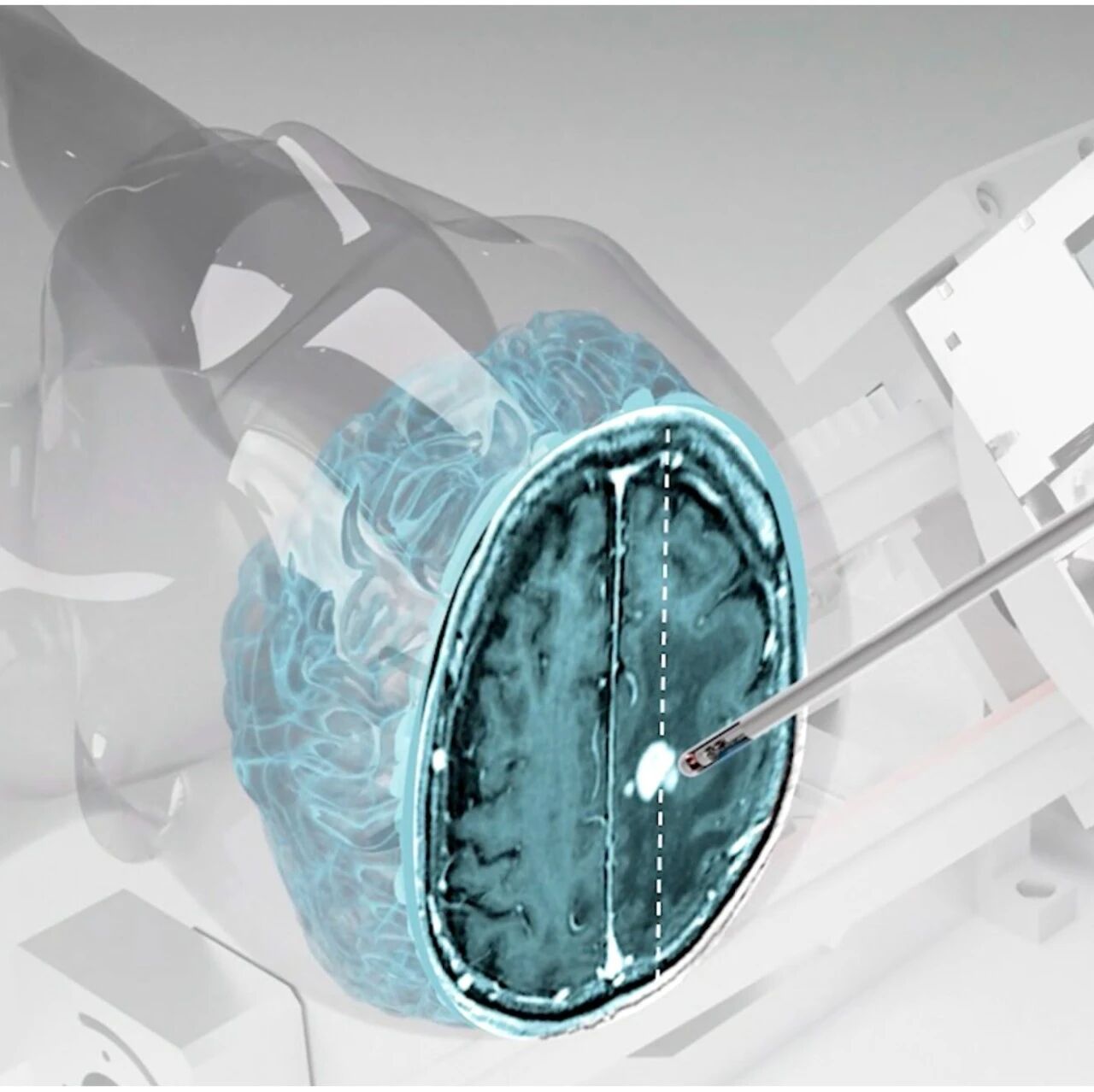
Core Viewpoint - The article discusses the advancements in MRI-guided robotic systems for neurointervention, highlighting the urgent clinical need for precise treatment of neurological diseases and the innovative technologies developed to address existing challenges in this field [1][4][5]. Group 1: Current Challenges in Neurointervention - Neurological diseases have become the second leading cause of death globally, with a significant increase in prevalence among aging populations [1]. - Traditional stereotactic surgery methods are complex and heavily reliant on the surgeon's experience, while existing robotic systems lack real-time imaging capabilities, making them less effective in dynamic surgical environments [3]. Group 2: Technological Innovations - The "Intelligent Robot" project aims to develop a brain intervention MRI-compatible puncture robot, focusing on key areas such as drive systems, perception, imaging navigation, and implantable devices [3][4]. - The project has successfully created the world's first MRI-guided robotic system for neurointervention, featuring high precision and advanced imaging capabilities [5]. Group 3: System Components and Performance - The MRI-guided robotic system consists of an 8-degree-of-freedom pneumatic-hydraulic actuation system and a 2-degree-of-freedom soft robotic driver, enabling precise navigation and control during surgery [7][11]. - The 8-degree-of-freedom system provides extensive coverage of the brain, with a positioning accuracy of less than 1 mm and excellent MRI compatibility [8]. Group 4: Clinical Validation and Results - The robotic system has undergone extensive testing, including experiments on human specimens and live animals, demonstrating high accuracy and clinical applicability [19][22]. - In human specimen tests, the system achieved a final positioning accuracy of 0.68±0.13 mm, effectively adapting to anatomical changes during surgery [23]. Group 5: Future Implications - The advancements in MRI-guided robotic systems are expected to enhance the precision and safety of neurointerventions, contributing to the development of minimally invasive treatment options for neurological diseases [5][24].