机器人大讲堂

Search documents
π0.5宣布开源!这下机器人泛化难题有解了?
机器人大讲堂· 2025-09-14 04:06
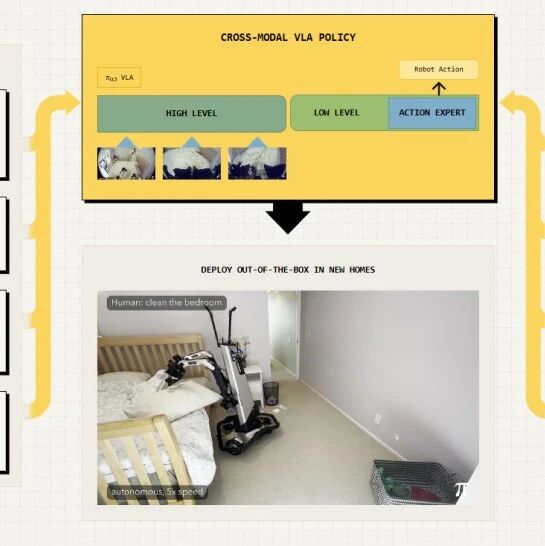
Core Viewpoint - The recent open-source release of the π0.5 model by Physical Intelligence enhances robotic capabilities through heterogeneous data collaborative training and multi-modal data fusion, enabling robots to understand task semantics and execute complex tasks accurately in real-world scenarios [1]. Technical Highlights of π0.5 - π0.5 employs heterogeneous data collaborative training, integrating data from various sources such as multiple robots, advanced semantic predictions, and network data, which enhances the model's generalization ability for real-world robotic tasks [2]. - The model fuses multi-modal data examples, including image observations, language commands, target detection, semantic sub-task predictions, and low-level actions, allowing robots to respond more accurately to instructions [4]. - Built on a general visual language model (VLM), π0.5 optimizes network structures to reduce information loss and improve multi-modal data processing efficiency, utilizing efficient convolutional neural networks for visual information and enhanced structures for understanding long text commands [6]. Addressing Generalization Challenges - Generalization has been a significant challenge for robots, but π0.5 improves performance as the number of training environments increases, achieving performance close to baseline models trained directly in test environments after approximately 100 training environments [7]. Practical Applications - π0.5 successfully completes tasks such as "organizing items in a drawer," "arranging laundry," and "cleaning dishes in a sink" in new real-world home environments, demonstrating its ability to handle complex and time-consuming tasks that require understanding task semantics and interacting with the correct objects [8][9]. Knowledge Transfer and Training Efficiency - The model enhances knowledge transfer from language to strategy through joint training of different modalities, creating a richer and more efficient training scheme for robotic learning systems, allowing for more flexible generalization [11]. Related Companies - Three companies closely associated with π0.5 include: 1. **Guanghe Tong**: Launched the Fibot platform, which integrates high-performance robotic domain controllers and multi-sensor fusion systems for real-time data capture [13]. 2. **Ark Infinite**: Provides hardware support for Physical Intelligence, demonstrating π0.5 in unfamiliar environments [16]. 3. **Stardust Intelligence**: An early partner of Physical Intelligence, contributing to the initial model training with their robots [18].

又一家深圳机器人企业押注“电子皮肤”赛道!CTO拥有南开&国大(NUS)双博士背景!
机器人大讲堂· 2025-09-14 04:06
Core Viewpoint - Zhengyu Industrial has announced the establishment of Shenzhen Feibosen Robot Technology Co., Ltd., marking its entry into the "electronic skin" sector, focusing on flexible tactile sensing technology for robots [1][2]. Company Overview - Zhengyu Industrial, founded in 1998, is one of the early companies in China to produce automotive suspension system shock absorbers, with main products including automotive suspension system shock absorbers, rubber damping products, and engine sealing components [4]. Financial Performance - In the mid-2025 financial report, Zhengyu Industrial reported a revenue of 1.356 billion RMB for the first half of the year, representing a year-on-year growth of 39.62%. The net profit attributable to shareholders was 119 million RMB, a significant increase of 420.67% year-on-year [6]. New Market Entry - The establishment of Feibosen Company aims to accelerate Zhengyu Industrial's strategic layout in embodied intelligence and industrial sectors, ultimately maximizing investment value [2]. Technical Leadership - The company has brought in Dr. Dong Bo, a dual PhD holder, as a core technical leader for Feibosen. Dr. Dong has extensive experience in optical devices and has published over 140 academic papers and filed more than 30 patents [8][11]. Market Potential - The flexible tactile sensing system, commonly referred to as "electronic skin," can simulate human skin perception and has applications in medical monitoring, smart wearables, robotics, and virtual reality. The market for electronic skin is gaining attention as embodied intelligence scenarios mature [2]. Competitive Landscape - The global flexible pressure sensor market is projected to reach 6.8 billion USD by 2033, with a compound annual growth rate (CAGR) of 12.1% from 2025 to 2033. Several listed companies, including Fulei New Materials, Jinghua New Materials, Hanwei Technology, GoerTek, and Shenhao Technology, are competing in the electronic skin market [12][18].

院士领衔!康养机器人研发商「如身机器人」完成天使+轮融资!
机器人大讲堂· 2025-09-13 02:05
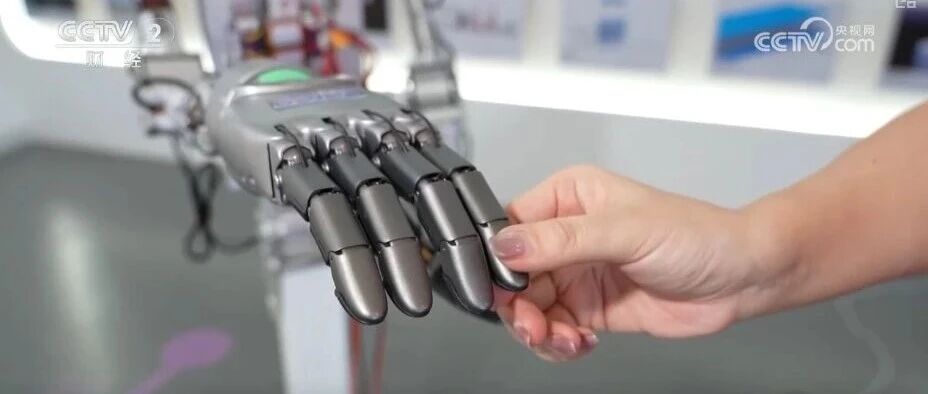
Core Viewpoint - "如身机器人" has recently completed a multi-million RMB angel round financing, which will be used for core technology iteration, product engineering, pilot projects in elderly care scenarios, and early market deployment [1] Company Overview - "如身机器人" (Shanghai Roushen Robot Technology Co., Ltd.) was established in June 2023, focusing on intelligent robots for smart elderly care, aiming to develop robots that can serve the elderly in home settings [1] - The company targets rehabilitation fitness and home service sectors, emphasizing modularity, cost-effectiveness, and human-robot collaboration [1][5] - The headquarters is located in Zhangjiang, Shanghai, with a European R&D and operations center in Munich, Germany, and a production base in Jiaxing, Zhejiang [1] Team Composition - The founding team includes members from top institutions such as the German Academy of Robotics, listed company MicroPort, and European unicorn Agile Robots [3] - The Chief Scientist is a foreign academician of the Chinese Academy of Engineering, and the CEO, Dr. Shi Yunlei, has over 12 years of interdisciplinary experience in medical robotics [3][5] Product Development - The company has developed a product matrix covering various rehabilitation and home service needs, including four main product lines: "格物", "致知", "修身", and "齐家" [5] - The "格物" series targets home rehabilitation, with its first product, 如身 C1, being the world's first home rehabilitation robot covering all joints of the upper and lower limbs [6][8] - The "致知" series is aimed at community rehabilitation institutions, featuring 如身 B1, a robot with seven degrees of freedom for upper and lower limb rehabilitation [8][10] - The "修身" series focuses on upper limb rehabilitation with the 如身 G1 exoskeleton robot, designed to enhance motor coordination [10][11] - The "齐家" series is dedicated to elderly care, with its main product, 齐家Q1, providing various support functions for semi-disabled and elderly individuals [11][13] Market Position and Future Plans - 如身 C1 has been mass-produced and exported to North America, Europe, and Southeast Asia, with positive user feedback and increasing orders [8] - 如身 B1 has established preliminary cooperation with major hospitals, including Huashan Hospital and Tongji Orthopedic Hospital [10] - 齐家Q1 has completed three iterations and is expected to achieve standardized mass production by 2026 [13] - The company has secured seed and angel round financing from various investors, indicating strong market interest and potential for growth [13]

2025中国工博会工业考察报名启动!实地解锁智能制造硬核实力
机器人大讲堂· 2025-09-13 02:05
Core Viewpoint - The article highlights the upcoming 25th China International Industry Fair, featuring an "Industrial Inspection" activity that allows participants to visit manufacturing sites and witness the implementation of smart manufacturing solutions [1][22]. Group 1: Industrial Inspection Activity - The event will take place from September 23 to September 26, 2025, with over 1000 professional manufacturing-related participants expected [1][22]. - Free shuttle buses will be provided to transport participants from the exhibition to the factories, facilitating efficient resource connections [1]. Group 2: Featured Companies and Locations - New Times is a leading company in China's industrial robot market, with a payload range of 1-600KG and expertise in key technologies such as control systems and software [5]. - The company was recognized as a national intelligent manufacturing demonstration unit in 2021 and is a member of the Haier Kaos industrial internet ecosystem [5]. - Advantech's Kunshan Manufacturing Park features smart monitoring and operations across its four production areas, having received multiple awards for its green and intelligent manufacturing practices [9]. - Inovance Technology's Industrial Control Museum showcases the evolution of automation technology and the company's contributions to industrial civilization [12]. - Panasonic's Suzhou facility focuses on the development and manufacturing of general sensors and automation solutions, with a significant portion of its sales coming from the Chinese market [16]. Group 3: Registration and Participation - Registration for the inspection activity is free but requires prior approval to ensure participants are industry professionals [19][20]. - The deadline for registration is September 19, 2025, and notifications will be sent within three working days after the deadline [21].


“滩”上大事了!100+机器人集结,炒菜、按摩、陪伴… 谁先闯进你家?
机器人大讲堂· 2025-09-13 02:05
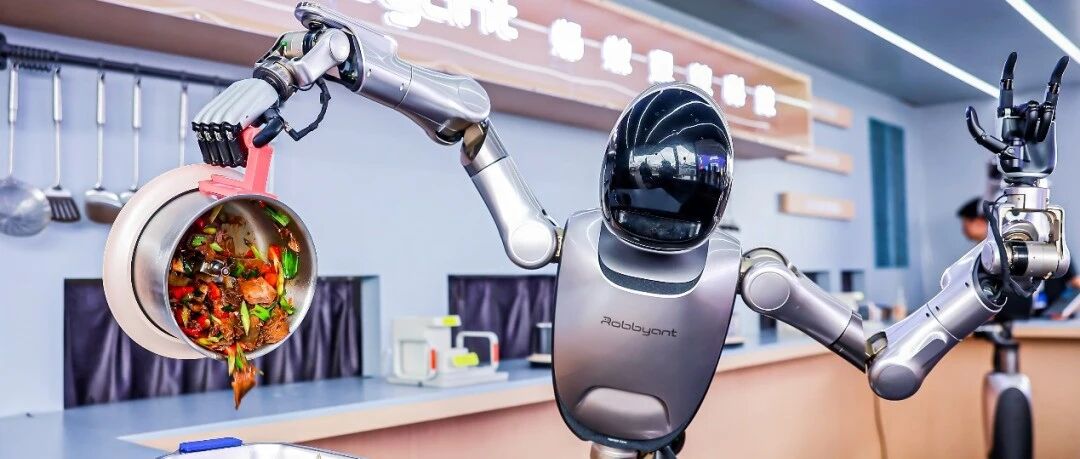
Core Viewpoint - The article highlights the rapid advancements in robotics, particularly in the context of the "2025 Inclusion·Bund Conference" held in Shanghai, showcasing a variety of robots and their applications in daily life, indicating a shift from industrial to service-oriented robotics [1][9][23]. Group 1: Event Overview - The "2025 Inclusion·Bund Conference" featured a large-scale technology exhibition with 10,000 square meters of space and nearly 200 participating companies, showcasing over 30 new technology products [1]. - A "robot town" was created at the conference, featuring 40 well-known embodied intelligence companies, demonstrating the collaborative efforts in the robotics sector [3]. Group 2: Robotics Innovations - The conference showcased various innovative robots, including the Kepler K2 humanoid robot capable of working for 8 hours on a single charge and performing tasks like lifting 30 kg [5]. - Ant Group's Lingbo Technology introduced the R1 robot, which can autonomously cook a variety of dishes, highlighting advancements in multi-modal perception and interaction [7][13]. Group 3: Market Trends and Projections - China has maintained its position as the largest industrial robot market for 12 consecutive years, with service robot production expected to reach 10.519 million units in 2024, a year-on-year increase of 34.3% [14]. - The service robot market in China is projected to grow at a compound annual growth rate (CAGR) of 25%, reaching a market size of $108 billion by 2028 [14]. Group 4: Challenges and Future Outlook - The complexity of real-life scenarios poses significant challenges for robots, as highlighted by industry experts who noted the need for robots to achieve high accuracy in diverse tasks [11][20]. - Predictions suggest that household robots will gradually enter homes, starting with simple tasks and evolving to more complex functions over the next 5 to 10 years [20][21].
特斯拉人形机器人供应链大曝光?
机器人大讲堂· 2025-09-13 02:05
Core Viewpoint - Tesla is intensifying its focus on humanoid robots, integrating artificial intelligence and robotics into its strategic framework, which has sparked renewed interest in its supply chain and potential partners in this sector [1]. Group 1: Companies in Tesla's Supply Chain - Sanhua Intelligent Control is a key supplier for Tesla's humanoid robots, providing essential components such as rotary joint assemblies that enable flexible movement [7]. - Top Group has established a strong position in the automotive sector and is now leveraging its expertise in mechanical and electrical systems to supply linear joint assemblies for Tesla's humanoid robots [10]. - Wuzhou Xinchun is expanding its capabilities in precision manufacturing and has developed new products for humanoid robots, including planetary roller screws, which are critical for joint transmission systems [11][12]. - Zhenyu Technology is actively involved in the development of linear actuators and precision components for humanoid robots, having successfully created products that are currently undergoing supplier integration processes with major clients [16][18]. - Zhao Wei Electromechanical has become a core supplier of dexterous hand modules for Tesla's humanoid robots, focusing on high-precision micro-drive systems [24]. - Mingzhi Electric has positioned itself as a leading supplier of motors for Tesla, particularly in the field of hybrid stepper motors, which are crucial for robotic applications [28]. - Zhejiang Rongtai is enhancing its product offerings for humanoid robots and has established partnerships to accelerate its entry into this emerging market [30][34]. Group 2: Industry Trends and Developments - The humanoid robot market is experiencing rapid growth, driven by advancements in artificial intelligence and robotics, prompting companies to innovate and expand their product lines [1]. - Companies are increasingly focusing on automation and intelligent manufacturing processes to enhance their competitiveness in the humanoid robot sector [15]. - The integration of precision components and advanced manufacturing techniques is essential for the development of high-performance humanoid robots, with firms investing in R&D to meet market demands [19][20].

海洋探索卡脖子?浙大团队新发明让机器鱼“耳聪目明”,流速感知误差压到 0.015m/s!
机器人大讲堂· 2025-09-12 12:18
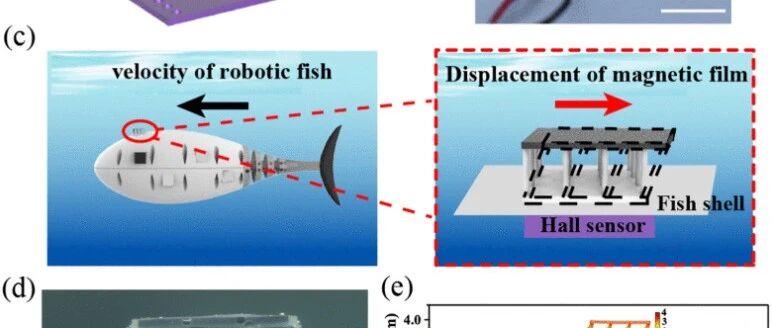
Core Viewpoint - The article discusses the development of a new type of artificial lateral line (ALL) sensor for robotic fish, which enhances their ability to perceive flow velocity in complex underwater environments, thereby improving navigation and control capabilities [4][7][8]. Group 1: Challenges in Underwater Robotics - The complexity of underwater environments poses significant challenges to the perception capabilities of robotic fish, particularly in flow velocity sensing, which directly affects adaptability and task execution [3]. - Existing ALL sensors face interference from the robotic fish's own movements and surrounding turbulence, necessitating the development of a sensor that can effectively decouple flow velocity from noise [3][4]. Group 2: New Sensor Development - Researchers from Zhejiang University proposed a magnetic ALL sensor based on tactile sensing principles, which possesses flow velocity decoupling capabilities [4][6]. - The magnetic ALL sensor utilizes a three-layer composite structure, enabling it to distinguish between true flow velocity signals and noise from the fish's movements and surrounding turbulence [9][12]. Group 3: Experimental Validation - The ALL array system demonstrated an average absolute error (MAE) of 0.0153 m/s for flow velocity measurement during straight swimming and 0.0125 m/s during turning maneuvers, indicating high precision [6][18]. - The sensor array was integrated into a robotic fish prototype, which was tested in a controlled environment, achieving effective flow velocity and trajectory sensing [13][20]. Group 4: Performance Comparison - The ALL array system showed superior performance in both towed and free-swimming states, with MAE values of 0.0076 m/s and 0.0095 m/s for velocity measurements, respectively, indicating minimal impact from the fish's own motion [20][23]. - The integration of multiple sensors improved measurement accuracy and stability, reducing fluctuations in results [18][23].
傅利叶、松延动力狂吸数亿资金!8月机器人融资月报,人形机器人+核心零部件赛道爆发
机器人大讲堂· 2025-09-12 12:18
Core Viewpoint - In August 2025, China's robotics industry financing activities showed a phase adjustment after a high in July, with a total of 39 financing events, a 22% decrease from July's 50 events, indicating a need for improved market transparency [1][2]. Financing Overview - The estimated financing amount in August ranged between 2.8 billion to 4.7 billion yuan, significantly down from July's 8.4 billion to 9.8 billion yuan, reflecting a tightening of capital outflow [1]. - There were 7 financing events exceeding 100 million yuan, with notable amounts such as 500 million yuan for Mech-Mind Robotics and 300 million yuan for Fourier Intelligent Technology, indicating continued focus on leading companies with clear technological barriers and commercialization capabilities [1][2]. Financing Round Distribution - Early-stage financing saw a significant increase, with seed/angel rounds reaching 19 events and A rounds totaling 15 events, together accounting for 87% of the total, up from 66.7% in July [2]. - Mid-to-late stage financing showed structural adjustments, with only 6 events in B rounds and beyond, indicating a high financing threshold and a market trend of "early-stage activity and mid-to-late stage differentiation" [2]. Sector Performance - The humanoid robots and embodied intelligence sector stood out with 14 financing events, estimated to raise 960 million to 1.54 billion yuan, making up about one-third of the total industry financing in August [4]. - Capital is actively investing in both "hardware-software synergy" and "AI large model empowerment," focusing on leading manufacturers like Fourier and Songyan Power, as well as companies like Ruoyu Technology that provide foundational AI large models [4]. Key Companies - **Fourier Intelligent Technology**: Completed a 300 million yuan E+ round investment, marking its entry into the unicorn club with a pre-investment valuation of 8 billion yuan. The funds will support the development of humanoid robot production lines [8][11]. - **Songyan Power**: Announced a multi-hundred million yuan A++ round financing, led by Jinpu Investment, focusing on breakthroughs in motion control and environmental interaction technologies [15][17]. - **Mech-Mind Robotics**: Secured 500 million yuan in D round financing to enhance its embodied intelligence technology and expand its product line and application scenarios [19][23]. - **SpeedBot Robotics**: Completed a 100 million yuan B+ round financing to further develop industrial embodied intelligence products and expand into maritime and lithium battery industries [24][26]. Conclusion - Overall, the financing market in August 2025 for China's robotics industry exhibited characteristics of "total decline, early-stage strengthening, and structural optimization." Capital is increasingly concentrating on projects with core barriers and clear commercialization prospects, indicating a rational layout and value exploration strategy in the long term [7].

快讯|全球首例任命AI机器人出任政府部长;国产数控系统龙头半年报出炉;如身机器人完成数千万元天使+轮融资等
机器人大讲堂· 2025-09-12 12:18
Group 1 - Albania has appointed an AI robot named "Diela" as the Minister of Public Procurement, making it the first country to do so [1][3] - "Diela" is known to Albanian citizens and operates as a virtual assistant on a digital platform that provides access to government services [3] - The AI is responsible for assisting citizens and businesses in obtaining government documents and providing help through voice commands [3] Group 2 - Huazhong CNC, the first listed company in the domestic CNC system industry, reported a revenue of 554 million yuan, a decrease of 11.91% year-on-year [4][5] - The net loss attributable to shareholders narrowed to 81.45 million yuan, showing a 23.54% improvement compared to the previous year [5] - The CNC system and machine tool sector remains the main revenue driver, generating 363 million yuan with a high gross margin of 41.55%, while the industrial robot segment saw a revenue decline of 23.31% [5] Group 3 - Shanghai Roushen Robot Technology Co., Ltd. completed a multi-million yuan angel round financing to advance smart elderly care robots [6][8] - The company aims to develop robots that can assist elderly individuals in their homes, focusing on real care challenges [8] Group 4 - Mendaera announced the global first clinical application of its handheld surgical robot system, Focalist, for kidney stone removal at the Mayo Clinic [10] - The system integrates handheld robotics with real-time ultrasound imaging to assist surgeons in precise procedures [10] Group 5 - The Zhejiang Province Humanoid Robot Industry Technology Alliance was established to focus on technology development, standard setting, and talent cultivation [11][13] - The alliance includes nearly 40 enterprises, universities, and research institutions, aiming to promote deep integration of industry, academia, and research [13]


《Science Advances》发表!西工大顶刊发布可重构机翼驱动方案,实现让扑翼机器人真正像鸟一样起飞、飞行!
机器人大讲堂· 2025-09-12 12:18
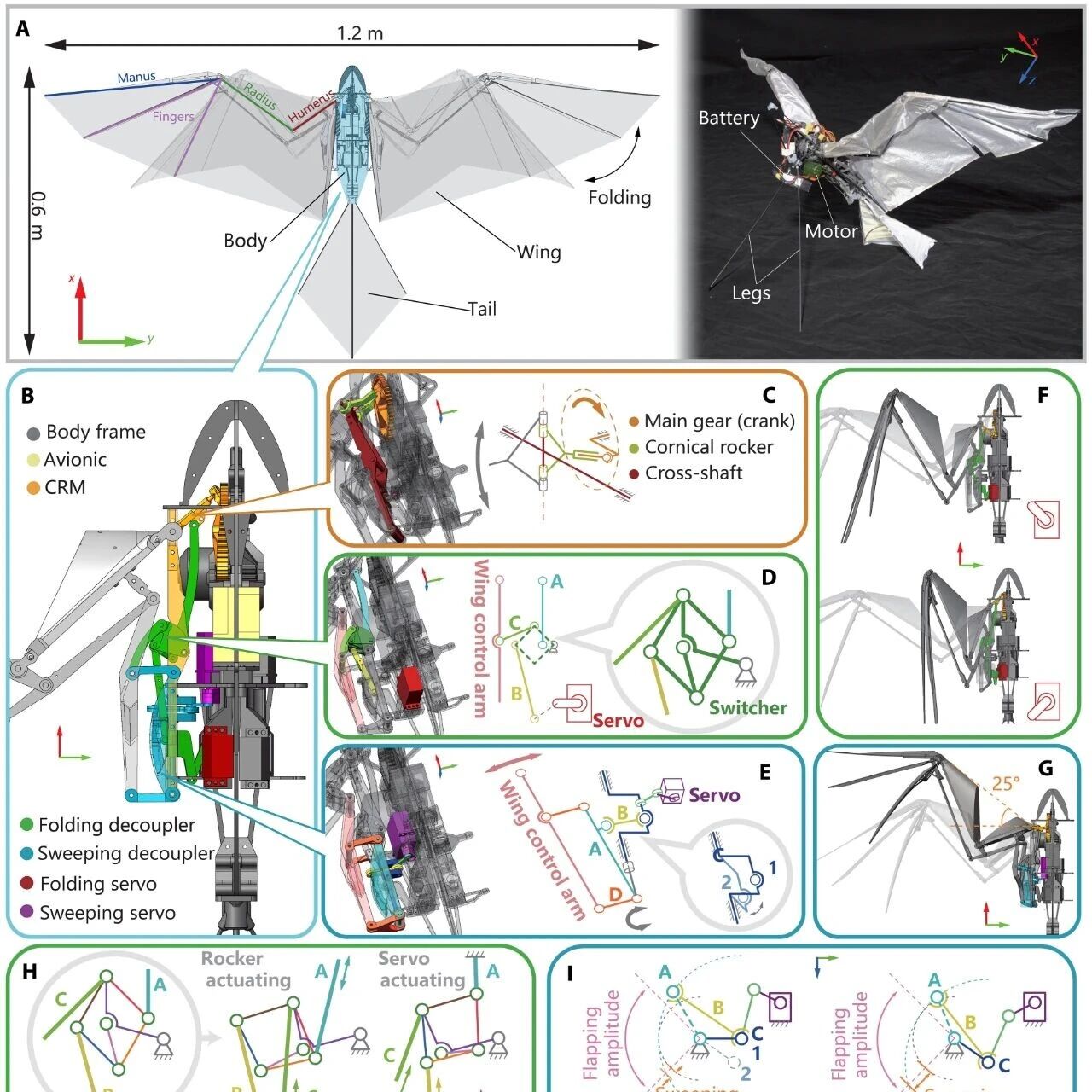
鸟类和蝙蝠等飞行脊椎动物在悬停、起飞和降落等低空速状态下,往往采用与昆虫或蜂鸟不同的飞行策略。它 们通过大幅变形翅膀、调整前后扫掠幅度,在上拍阶段折叠翅膀以减少阻力,并在下拍阶段充分伸展、向前扫 动以产生足够升力。这种被称为 "非对称悬停"的运动模式,尤其在雀形目鸟类和一些中小型蝙蝠中较为常 见,其划动平面明显前倾,与昆虫或蜂鸟近乎水平的对称扑动方式存在显著差异。 目前,大多数仿生扑翼飞行机器人的设计仍主要基于昆虫或蜂鸟的对称悬停模式,难以有效模仿鸟类在低速状 态下的机动特性。尽管已有一些无人机通过引入后掠翼或可折叠机翼来提升巡航或滑翔性能,但在低速飞行尤 其是自主起飞方面,仍面临运动学实现与驱动设计的双重挑战。现有鸟类仿生机器人往往需要借助跳跃或弹射 等辅助方式实现起飞,且多依赖单自由度翼拍机制,无法复现生物翅膀的多自由度协调运动。 ▍受鸟类低速飞行机制启发,提出RoboFalcon2.0 面对上述难题,来自 西北工业大学航空学院 的研究团队,受飞行脊椎动物在慢速飞行和非常规悬停状态下的 翅 膀 拍 动 模 式 启 发 , 在 前 期 开 发 的 巡 航 飞 行 机 器 人 RoboFalcon 基 础 上 ...