中汽协会数据

Search documents
关于下半年经济工作,国务院多部门发声
中汽协会数据· 2025-08-05 09:01
Core Viewpoint - The article emphasizes the importance of stabilizing employment, investment, and consumption while enhancing macroeconomic policy effectiveness to achieve the annual development goals and the tasks outlined in the 14th Five-Year Plan [1][2]. Group 1: Economic Stability and Growth - Focus on stabilizing employment, enterprises, markets, and expectations to strengthen domestic circulation and optimize external circulation, laying a solid foundation for the 15th Five-Year Plan [2][3]. - Implement policies to stimulate private investment and enhance consumption through high-quality infrastructure projects and new policies [3][6]. - Promote the development of new productive forces, particularly in artificial intelligence and the digital economy, to drive innovation [3][4]. Group 2: Green and Coordinated Development - Advance green and low-carbon development through comprehensive carbon emission controls [4][6]. - Implement regional and urban-rural coordinated development strategies, focusing on urban renewal and rural revitalization [4][6]. - Ensure the stability of key sectors such as employment, food security, and energy supply chains [4][6]. Group 3: Fiscal and Monetary Policies - Utilize proactive fiscal policies to support consumption and expand domestic demand, while enhancing social welfare [14][15]. - Implement measures to improve the microeconomic cycle and support traditional and emerging industries [16][18]. - Maintain a moderately loose monetary policy to support technological innovation and stabilize foreign trade [35][36]. Group 4: Employment and Social Security - Focus on expanding job opportunities in key sectors and encourage entrepreneurship, particularly in the digital and green economies [24][25]. - Enhance social security measures, including pension reforms and timely disbursement of social benefits [27][29]. - Promote skills training and support for various demographics, including youth and migrant workers [26][30]. Group 5: Financial Market Regulation - Strengthen market stability and enhance regulatory effectiveness to prevent risks in key areas of the capital market [40][43]. - Promote reforms to invigorate market activity and support long-term capital investment [41][42]. - Address risks associated with real estate financing and support the development of a new model for the real estate market [44][45].


中国人民银行等七部门联合印发《关于金融支持新型工业化的指导意见》
中汽协会数据· 2025-08-05 09:01
为深入贯彻党的二十届三中全会精神,落实全国新型工业化推进大会部署,加快金融强国和制造强国建设,近 日,中国人民银行、工业和信息化部、国家发展改革委、财政部、金融监管总局、中国证监会、国家外汇局联合印发 《关于金融支持新型工业化的指导意见》(以下简称《意见》)。 《意见》以习近平新时代中国特色社会主义思想为指导,坚持把金融服务实体经济作为根本宗旨和防范化解金融 风险的根本举措,聚焦新型工业化重大战略任务,以需求牵引深化金融供给侧结构性改革,强化产业政策和金融政策 协同,为推进新型工业化、加快发展新质生产力提供高质量金融服务,坚持分类施策、有扶有控,推动产业加快迈向 中高端,防止"内卷式"竞争。到2027年,支持制造业高端化智能化绿色化发展的金融体系基本成熟,服务适配性有效 增强。 《意见》加强金融服务能力和长效机制建设,促进保持制造业合理比重投入。健全金融机构服务制造业的内部机 制安排,单列制造业信贷计划,针对细分行业和企业成长阶段特点制定差异化授信政策。双向培养科技产业金融复合 型人才队伍,鼓励金融机构打造复合型的金融管理和服务团队。建立完善跨部门协同推进、政策激励约束、地方政策 配套、风险协同防控等4方面机 ...

宏观数据|2025年6月海关进出口情况简析
中汽协会数据· 2025-08-05 09:01
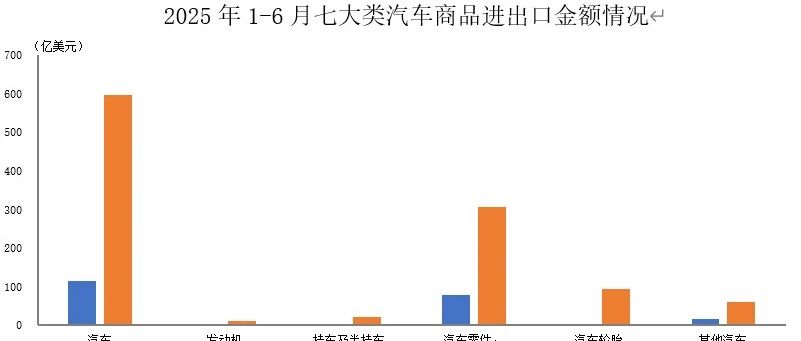
Group 1 - The total import and export value of automotive products in June 2025 was $23.49 billion, showing a month-on-month decrease of 6.3% and a year-on-year increase of 1.2% [2] - The import value in June 2025 was $4.17 billion, with a month-on-month decrease of 4.9% and a year-on-year decrease of 29.5% [2] - The export value in June 2025 was $19.32 billion, reflecting a month-on-month decrease of 6.6% but a year-on-year increase of 11.7% [2] Group 2 - From January to June 2025, the cumulative total import and export value of automotive products was $131.23 billion, representing a year-on-year decrease of 2.6% [2] - The cumulative import value during this period was $21.83 billion, showing a year-on-year decrease of 31.8% [2] - The cumulative export value was $109.4 billion, indicating a year-on-year increase of 6.5% [2]
【数据发布】2025年1—6月份全国规模以上工业企业利润下降1.8%
中汽协会数据· 2025-08-04 08:23
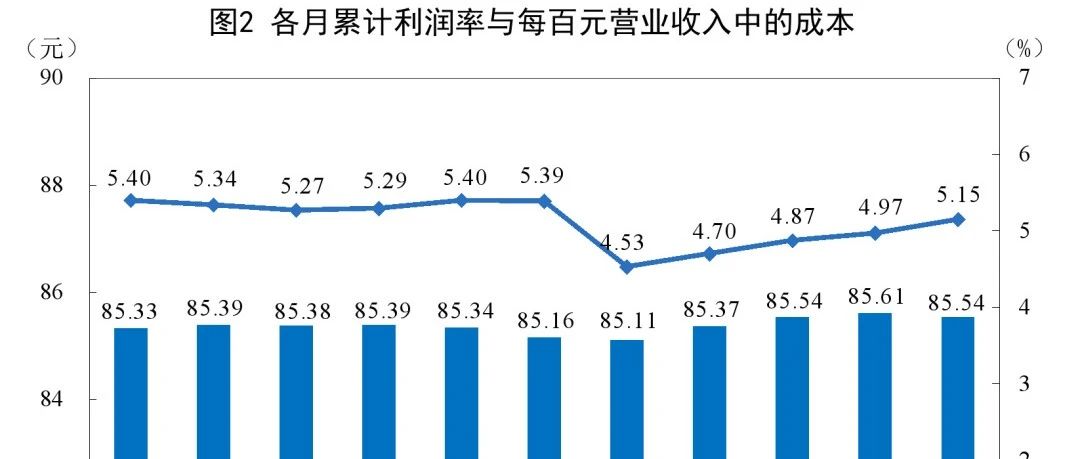
Core Viewpoint - In the first half of the year, the total profit of industrial enterprises above designated size in China decreased by 1.8% year-on-year, indicating a challenging economic environment for the industrial sector [1][4]. Group 1: Profit Performance - In the first half of the year, state-controlled enterprises reported a profit of 1,109.12 billion yuan, down 7.6% year-on-year, while joint-stock enterprises saw profits of 2,533.04 billion yuan, a decline of 3.1% [1]. - Foreign and Hong Kong, Macao, and Taiwan-invested enterprises achieved a profit of 882.31 billion yuan, an increase of 2.5%, and private enterprises reported a profit of 938.97 billion yuan, up 1.7% [1]. - The mining industry experienced a significant profit drop of 30.3%, while the manufacturing sector saw a profit increase of 4.5% [1]. Group 2: Revenue and Cost Analysis - In the first half of the year, industrial enterprises above designated size achieved operating revenue of 66.78 trillion yuan, a year-on-year increase of 2.5%, with operating costs rising by 2.8% to 57.12 trillion yuan [2]. - The operating profit margin was recorded at 5.15%, a decrease of 0.22 percentage points compared to the previous year [2]. Group 3: Financial Health Indicators - As of the end of June, total assets of industrial enterprises above designated size reached 183.17 trillion yuan, a year-on-year growth of 5.1%, while total liabilities increased by 5.4% to 105.98 trillion yuan [3]. - The asset-liability ratio stood at 57.9%, reflecting a slight increase of 0.2 percentage points year-on-year [3]. - Accounts receivable amounted to 26.69 trillion yuan, up 7.8%, and finished goods inventory was 6.60 trillion yuan, an increase of 3.1% [3].
【数据发布】2025年7月中国采购经理指数运行情况
中汽协会数据· 2025-08-04 08:23
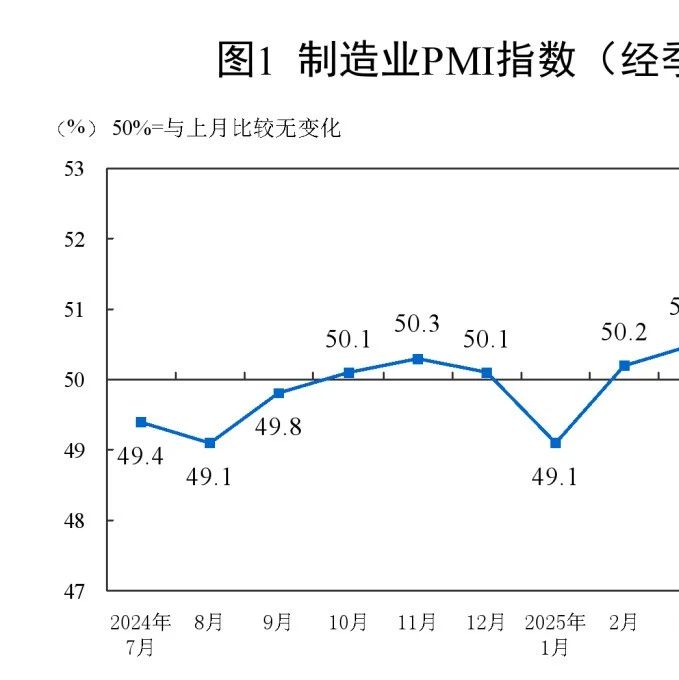
Group 1: Manufacturing PMI Overview - In July, the Manufacturing Purchasing Managers' Index (PMI) was 49.3%, a decrease of 0.4 percentage points from the previous month, indicating a decline in manufacturing activity [1][3] - Large enterprises had a PMI of 50.3%, down 0.9 percentage points, while medium-sized enterprises saw a PMI of 49.5%, up 0.9 percentage points, and small enterprises had a PMI of 46.4%, down 0.9 percentage points [3][4] - The production index was at 50.5%, a decrease of 0.5 percentage points, indicating continued expansion in manufacturing production [3][4] Group 2: Demand and Inventory Indicators - The new orders index was 49.4%, down 0.8 percentage points, suggesting a slowdown in market demand for manufacturing [4] - The raw materials inventory index was 47.7%, down 0.3 percentage points, indicating a continued reduction in major raw material inventories [4] - The employment index was 48.0%, up 0.1 percentage points, showing a slight improvement in employment conditions within the manufacturing sector [4] Group 3: Non-Manufacturing PMI Overview - In July, the Non-Manufacturing Business Activity Index was 50.1%, a decrease of 0.4 percentage points, remaining above the critical point [7] - The construction industry business activity index was 50.6%, down 2.2 percentage points, while the service industry index was 50.0%, down 0.1 percentage points [9] - The new orders index for non-manufacturing was 45.7%, down 0.9 percentage points, indicating a decline in market demand [11] Group 4: Price and Employment Trends in Non-Manufacturing - The input price index was 50.3%, up 0.4 percentage points, indicating an overall increase in input prices for non-manufacturing enterprises [11] - The sales price index was 47.9%, down 0.9 percentage points, suggesting a decrease in overall sales prices [11] - The employment index for non-manufacturing was 45.6%, up 0.1 percentage points, indicating a slight improvement in employment conditions [11] Group 5: Composite PMI Overview - The Composite PMI Output Index was 50.2%, a decrease of 0.5 percentage points, but still above the critical point, indicating overall expansion in production and business activities [15]
一图读懂|我国1—6月汽车产品召回情况
中汽协会数据· 2025-07-25 09:39
Core Viewpoint - The article discusses the recent developments in quality management and product recall systems, emphasizing the importance of these processes in ensuring consumer safety and maintaining industry standards [1]. Group 1: Quality Management - The article highlights the role of quality management in enhancing product reliability and consumer trust, which is crucial for long-term business success [1]. - It mentions that companies are increasingly adopting advanced quality control measures to meet regulatory requirements and consumer expectations [1]. Group 2: Product Recall - The article outlines the procedures involved in product recalls, stressing the need for timely and effective communication with consumers to mitigate risks [1]. - It provides statistics indicating a rise in product recalls, with a noted increase of 15% in the last year, reflecting heightened scrutiny and regulatory oversight [1]. - The importance of having a robust recall strategy is emphasized, as it can significantly impact a company's reputation and financial performance [1].

市场监管总局:着力整治质量领域“内卷式”竞争
中汽协会数据· 2025-07-24 09:07
Core Viewpoint - The article highlights the issue of "involutionary" competition in the quality sector, where companies prioritize short-term market share and profits over brand, quality, and technological competition, leading to a decline in product quality and unfair market practices [1][2]. Group 1: Causes of Involutionary Competition - Structural imbalance in supply and demand is causing some industries to face weak demand and overcapacity, forcing existing companies to compete in a limited market space [1]. - Some companies focus on immediate profits, lacking innovation and differentiation, and resort to cost-cutting and price wars, even engaging in counterfeiting and illegal practices [1]. - Inadequate regulatory mechanisms in certain areas allow some companies to take risks and breach legal boundaries [1]. Group 2: Regulatory Measures - The market regulatory authority is enhancing market access management to address supply-demand conflicts by tightening production licensing for 14 categories of 27 key industrial products, raising market entry thresholds to prevent low-quality competition [2]. - Increased quality safety supervision is planned, with a 70% increase in national sampling inspections for online products in 2025 compared to 2024, alongside initiatives to verify quality safety labels for 10 types of online products [2]. - The authority is providing targeted support to improve product quality through activities like "you point, I help," focusing on specific industries such as wires, steel bars, motorcycles, and energy storage batteries [2]. Group 3: Future Actions - The market regulatory authority will continue to leverage its strengths to advance the rectification of "involutionary" competition, innovate regulatory methods, and enhance publicity of successful cases to foster a positive social atmosphere [3].

数据简报 | 2025年6月中国品牌乘用车销售情况简析
中汽协会数据· 2025-07-24 09:07
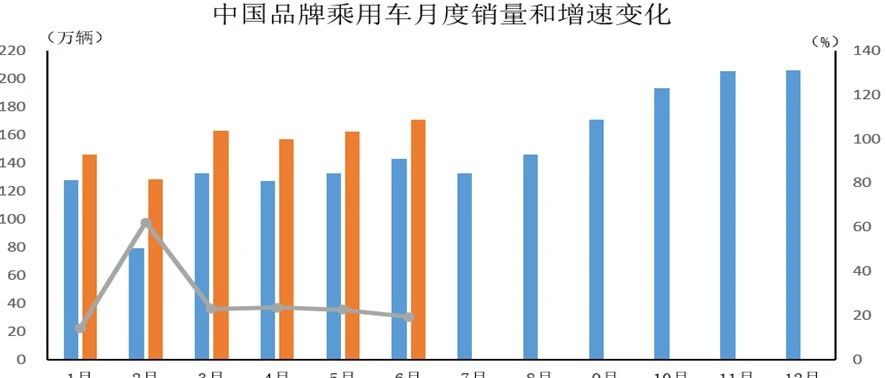
Core Viewpoint - The sales of Chinese brand passenger cars have shown significant growth in both monthly and yearly comparisons, indicating a strong market presence and increasing consumer preference for domestic brands [1][2]. Group 1: Monthly Sales Data - In June 2025, Chinese brand passenger cars sold 1.707 million units, representing a month-on-month increase of 5.3% and a year-on-year increase of 19.3% [1]. - The market share of Chinese brand passenger cars reached 67.3% of total passenger car sales, an increase of 2.7 percentage points compared to the same month last year [1]. Group 2: Year-to-Date Sales Data - From January to June 2025, Chinese brand passenger cars sold a total of 9.27 million units, reflecting a year-on-year growth of 25% [1]. - The market share for the first half of 2025 was 68.5%, which is an increase of 6.6 percentage points compared to the same period last year [1].
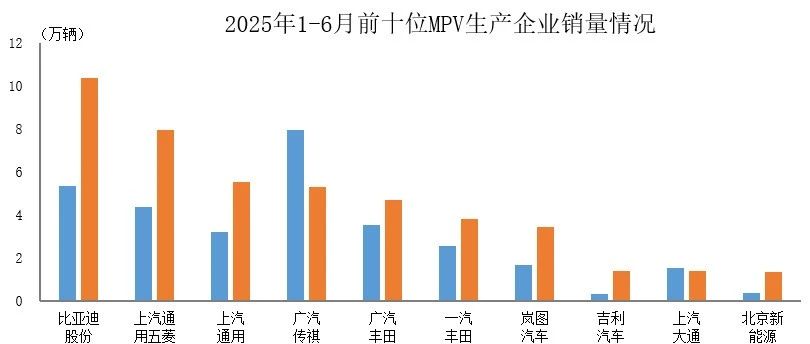
数据简报 | 2025年1-6月前十位MPV生产企业销售情况简析
中汽协会数据· 2025-07-23 09:05
Core Insights - The top ten MPV manufacturers in China sold 453,000 units from January to June 2025, accounting for 78.6% of total MPV sales [1] - Among these ten companies, GAC Trumpchi and SAIC Maxus experienced a decline in sales compared to the same period last year, while other companies saw varying degrees of growth [1] Group 1 - The total sales volume of the top ten MPV manufacturers reached 453,000 units [1] - The market share of these manufacturers is significant, representing 78.6% of the overall MPV sales [1] - GAC Trumpchi and SAIC Maxus are the only companies in the top ten that reported a decrease in sales [1] Group 2 - Other manufacturers in the top ten experienced growth in sales compared to the previous year [1]
关于汽车“智驾”系统,公安部提醒
中汽协会数据· 2025-07-23 09:05
Core Viewpoint - The article emphasizes the importance of understanding the limitations of current "smart driving" systems in vehicles, which are still in the assisted driving phase and do not possess true autonomous driving capabilities [1][2]. Group 1: Strengthening Management - The government will enhance management of automotive companies by urging them to fulfill their responsibilities, conduct comprehensive testing of assisted driving systems, and adhere to advertising laws to prevent exaggeration and false claims [1]. - Companies are expected to provide proper training for new users to ensure they understand the functionalities and limitations of assisted driving systems [1]. Group 2: Legal Framework Enhancement - There is a push to refine the Road Traffic Safety Law and related regulations to clarify the legal status of Level 0 to Level 2 assisted driving systems, promoting the development of reliable technology and safety standards [2]. - The initiative includes integrating autonomous driving classification standards and operational norms into driver education and testing [2]. Group 3: Public Awareness Campaigns - The article highlights the need for public awareness regarding the distinction between assisted driving and autonomous driving, stressing that drivers remain the primary responsible party for safety [2]. - Various forms of communication will be employed to ensure drivers are fully informed about the functionalities and operational boundaries of assisted driving systems [2].