Tsingtao Brewery(00168)

Search documents
花旗:升青岛啤酒股份(00168)目标价至76.1港元 维持“买入”评级
智通财经网· 2026-01-12 06:40
Core Viewpoint - Citigroup has revised down its core net profit forecasts for Qingdao Beer Co., Ltd. for 2025 and 2026 by 2% and 3% respectively, and also lowered its revenue forecast by 1% [1] Group 1 - The valuation benchmark has been adjusted to the 2026 enterprise value/EBITDA [1] - The target price for Qingdao Beer has been raised from HKD 75.2 to HKD 76.1 based on a 12x estimated enterprise value/EBITDA multiple [1] - The "Buy" rating for Qingdao Beer has been maintained [1]
科研成果加速跃上生产线 青岛啤酒两大科技成果通过专家鉴定
Jin Rong Jie· 2026-01-10 17:39
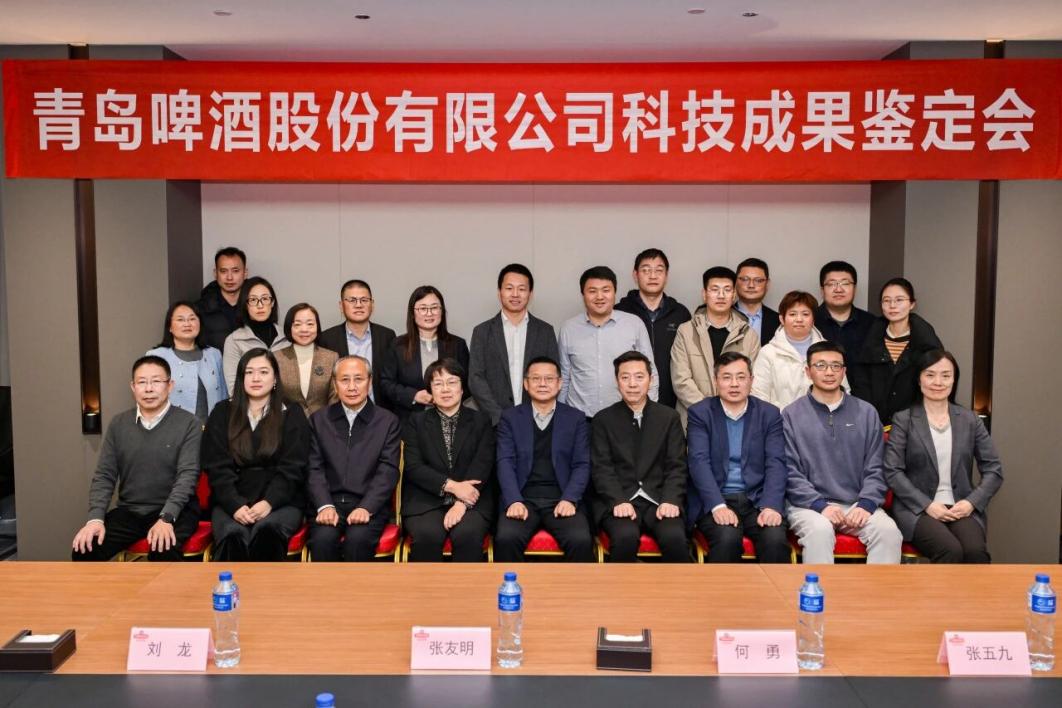
Core Viewpoint - Qingdao Beer has achieved international leading levels in two major technological innovations, marking a significant step in its research and development system that focuses on consumer demand and technological innovation [1][3][5]. Group 1: Technological Innovations - The two recognized technological achievements are "Fresh Beer Full Lifecycle Preservation and Digital Supply Chain System Creation" and "High-Value Green Bio-Manufacturing Key Technologies and Industrialization of Beer By-Products" [1]. - The preservation technology aims to maintain the freshness and flavor of beer throughout its lifecycle, utilizing a digital supply chain for real-time monitoring and optimization [8][9]. - The high-value utilization of brewing by-products, such as saccharification residues and yeast, demonstrates Qingdao Beer's commitment to resource efficiency and sustainability [10][12]. Group 2: Industry Leadership - Qingdao Beer is recognized as a benchmark in the Chinese beer industry, with a history of technological innovation that includes the establishment of the only national key laboratory for beer bio-fermentation [5]. - The company has received the National Science and Technology Progress Award four times, showcasing its leadership in core technologies related to fermentation, flavor control, and green low-carbon practices [5]. - The recent advancements reflect Qingdao Beer's strategic integration of technology and industry innovation, reinforcing its position as a leader in the market [3][10]. Group 3: Market Impact - The innovations are expected to enhance supply chain efficiency and resilience, providing a new paradigm for the industry [9]. - The transition from brewing by-products to high-value functional food ingredients illustrates the company's vision for a sustainable and innovative industry [10][12]. - Qingdao Beer is actively expanding its industrial boundaries into the bio-manufacturing sector, contributing to the "10+1" innovative industrial system in Qingdao [12].

西方营销模式正在失效,中国市场进入“本土规则”时代
Sou Hu Cai Jing· 2026-01-09 15:40
Core Insights - The global floor cleaning robot industry is witnessing a significant shift, with the acquisition of iRobot by its Chinese manufacturing partner, marking the end of an era for the former industry leader [2] - Local brands in China are rapidly gaining market share, forcing international brands like Starbucks, Nike, and Adidas to adapt or face decline [2] - A survey indicates that 85.79% of consumers prefer domestic trendy brands, highlighting the rise of local brands in various consumer sectors [2] Industry Trends - The traditional Western marketing models are becoming ineffective in the Chinese market, as local brands redefine the rules of engagement [4][7] - The previous reliance on mass advertising and standardized marketing strategies is being replaced by personalized and emotionally resonant approaches [9][10] - The emergence of new consumer behaviors emphasizes the importance of emotional connections and personalized experiences over traditional functional marketing [10][11] Brand Strategies - Successful local brands like Qingdao White Beer are leveraging cultural symbols and emotional narratives to resonate with consumers [19][21] - Qingdao White Beer has effectively created immersive experiences that connect with local culture, enhancing brand visibility and consumer engagement [21][22] - The focus has shifted from merely selling products to creating emotional experiences that align with consumers' lifestyles and values [22]




喜获“2025非凡竞争力公司”奖项,这家公司如何做到?
Sou Hu Cai Jing· 2026-01-07 07:25
Group 1 - The global economic landscape is undergoing deep adjustments by 2025, with accelerated technological innovation and vigorous industrial transformation, making it essential for China to cultivate world-class enterprises with global competitiveness to drive high-quality economic development and participate in international competition [2] - Strong competitiveness for enterprises means aligning with national strategies, creating value on a high-quality development track, and possessing the ability to accurately recognize changes, scientifically respond, and proactively seek transformation amid profound changes [2] - The "2025 Eighth Golden Jubilee Award Annual Selection" aims to identify benchmark forces in the business and financial sectors, having been held since 2018, with the award based on comprehensive data analysis and evaluations by third-party research institutions [2] Group 2 - The award recognizes innovative entities focused on technological breakthroughs and model innovations, leading enterprises that drive industrial upgrades, and teams with quality practices in new productive forces, finance, and ESG [3] - Qingdao Beer Co., Ltd. won the "2025 Extraordinary Competitiveness Company" award after intense competition and meticulous selection, highlighting its core competitiveness built on technological innovation, brand development, green low-carbon initiatives, safety resilience, and global expansion [3] - The company has established a forward-looking core competitiveness by leveraging technology for new productive forces, gaining market recognition through brand building, and shaping future advantages with green initiatives [3]

“马茅”开售延续“日期酒”玩法,有人线上喊价过万元;青岛啤酒集团注册资本增至16.30亿元丨酒业早参
Mei Ri Jing Ji Xin Wen· 2026-01-07 00:05
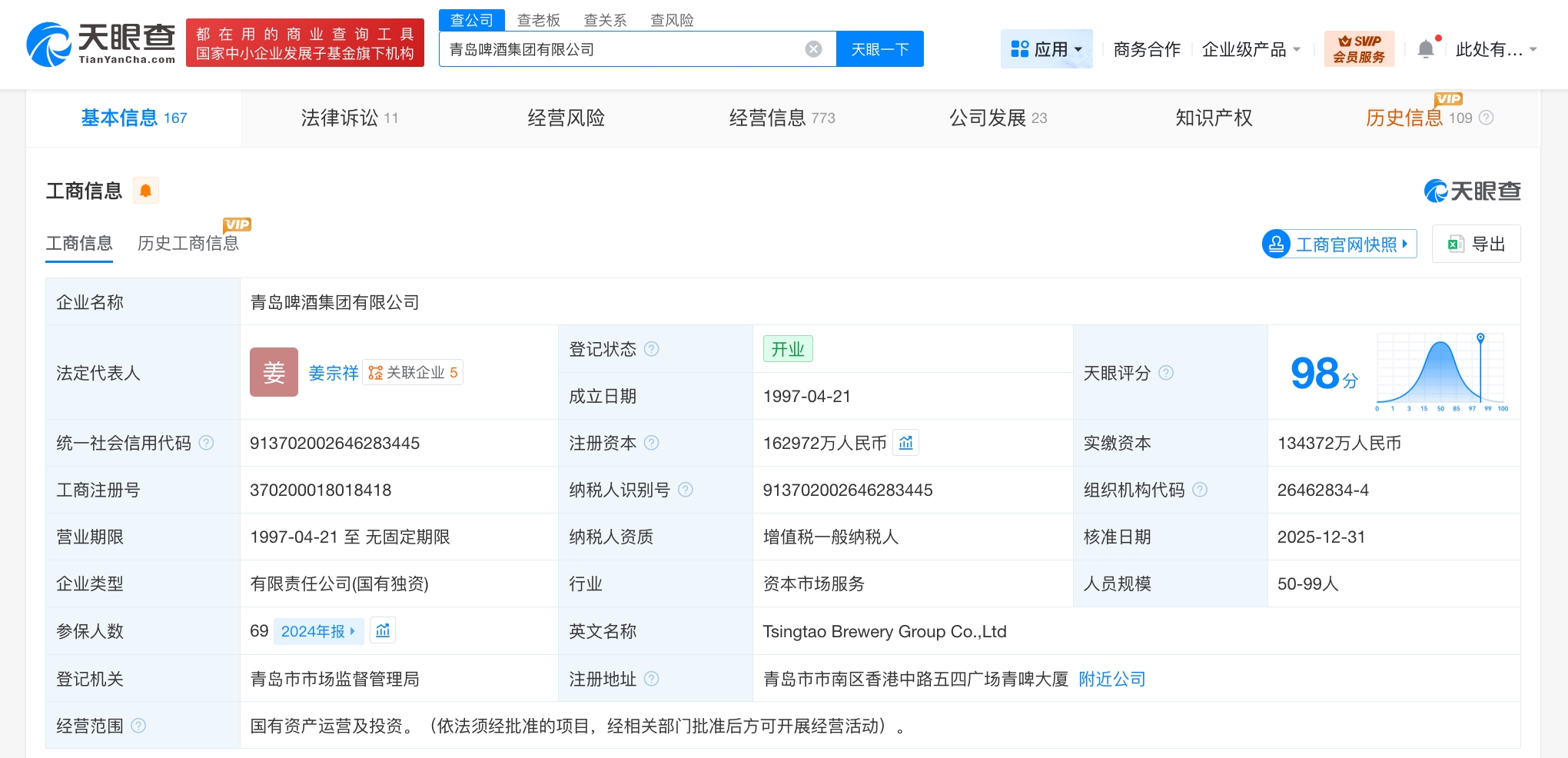
Group 1 - The core point of the article is the launch of "Ma Moutai" which continues the "date wine" sales strategy, allowing consumers to choose production dates for purchase [1] - The classic version of "Ma Moutai" is priced around 2000 yuan per bottle, while the premium version is approximately 3000 yuan per bottle, and gift box prices range from 4000 to 4500 yuan, with some listings reaching as high as 15988 yuan per box [1] Group 2 - Qingdao Beer Group has increased its registered capital from 1.344 billion yuan to 1.630 billion yuan, representing a growth of about 21% [2] Group 3 - Guizhou Xijiu Investment Holding Group aims to achieve steady growth in industrial output value and improve market opening rates by 2025, establishing a solid foundation for future industry adjustments [3] - In 2026, Xijiu plans to focus on three areas: deepening reforms for quality improvement, optimizing market layout, and extending the value of the industrial chain [3]
青岛啤酒集团注册资本增至16.3亿元
Zheng Quan Ri Bao Wang· 2026-01-06 13:45
Group 1 - The core point of the article is that Qingdao Beer Group Co., Ltd. has increased its registered capital from approximately 1.34 billion yuan to about 1.63 billion yuan [1] Group 2 - The change in registered capital indicates a potential expansion or investment strategy by the company [1] - The increase in capital is significant, reflecting a growth trend within the company [1] - This adjustment in capital structure may enhance the company's financial stability and operational capacity [1]
一瓶青岛原浆的自白:用“鲜活”定义消费主张
2 1 Shi Ji Jing Ji Bao Dao· 2026-01-06 05:54
Core Viewpoint - The article highlights the rising popularity of Qingdao Draft Beer, emphasizing its freshness and unique qualities that appeal to consumers, particularly during festive gatherings like the Spring Festival [2][3]. Group 1: Product Definition and Standards - Qingdao Draft Beer is defined as "fresh beer" according to the national standard, which allows for the presence of live yeast and does not undergo pasteurization or sterilization [3][4]. - The introduction of the group standard for "Draft Beer" in 2020, led by Qingdao Beer, provides a specific definition and quality assurance for this product category [3][4]. Group 2: Production and Quality Control - The production process ensures that each milliliter of beer contains a significant amount of live yeast, enhancing its nutritional value [4][5]. - The manufacturing environment is highly controlled, with a 10,000-level sterile filling workshop and strict monitoring of temperature and humidity to maintain product integrity [5][6]. Group 3: Transportation and Distribution - Qingdao Draft Beer employs a cold chain logistics system to ensure that the beer is transported at a constant temperature of 5°C, with real-time monitoring to prevent temperature fluctuations [6][7]. - The company has developed a rapid delivery system, covering over 38 cities and 1,100 stores, allowing consumers to receive fresh beer within 30 minutes of ordering [8]. Group 4: Market Expansion and Consumer Engagement - The company has seen a significant increase in international visitors, particularly from South Korea, with a 63% year-on-year growth in arrivals, leading to higher demand for Qingdao Draft Beer [8]. - Qingdao Beer has launched over 20 new products in the past year, expanding its portfolio to 119 products across various categories, catering to diverse consumer preferences [13][14]. Group 5: Sustainability and Industry Leadership - Qingdao Beer aims to become a leader in sustainability, with a target of 86.8% green electricity usage by 2025 and multiple factories certified for carbon neutrality [14]. - The company has been recognized for its innovative practices and has participated in numerous international events, enhancing its brand visibility and consumer engagement [14].
中国必选消费26年1月投资策略:欲买必选消费,先买乳业中游
Haitong Securities International· 2026-01-05 13:31
Investment Focus - The report emphasizes prioritizing midstream dairy companies for consumer staples exposure in China, suggesting that this sector is expected to recover first in terms of performance and valuation [1][6]. Industry Overview - In December 2025, among the eight tracked essential consumer sectors, four showed positive growth while four experienced declines. The growing sectors included condiments, frozen foods, soft drinks, and dining, while the declining sectors were premium and mass-market baijiu, dairy products, and beer [3][9]. - The report indicates that the overall demand in most sectors remains subdued, with traditional categories like baijiu, beer, and dairy under pressure due to weakened consumer sentiment and competition from substitutes [3][9]. Price Trends - Baijiu wholesale prices mostly stabilized in December, with notable price changes for various brands. For instance, the price for Moutai (飞天) was reported at 1600 RMB for a full box, down 50 RMB from the previous month [4][22]. - Discounts on liquid milk and convenience foods increased significantly, reflecting a lack of demand, while discounts on condiments and soft drinks decreased [4][36]. Cost Analysis - The cost index for six categories of consumer goods showed mixed results in December, with soft drinks and instant noodles experiencing slight increases, while dairy products and beer saw modest declines [4][5]. - The prices of raw materials such as aluminum cans and paper increased year-on-year, impacting overall production costs [4]. Market Capitalization and Valuation - As of the end of December, net inflows into Hong Kong Stock Connect amounted to 20.825 billion RMB, with the consumer staples sector's market capitalization share rising to 5.61% [5]. - The report notes that the historical PE ratio for A-share food and beverage companies was at 16% (20.3x), indicating a decrease of 5 percentage points from the previous month [5]. Recommendations - The report suggests a two-pronged investment strategy for January: focusing on high-risk preference stocks like Luzhou Laojiao and Wuliangye, and on stocks with improving fundamentals and dividend yields such as Yili and Mengniu [6].




青岛啤酒集团增资至16.3亿,增幅约21%
Sou Hu Cai Jing· 2026-01-05 09:07
Group 1 - The core point of the article is that Qingdao Beer Group Co., Ltd. has undergone a significant change in its registered capital and management structure [1] - The registered capital has increased from approximately 1.34 billion RMB to about 1.63 billion RMB, representing a growth of around 21% [1] - The company was established in April 1997 and is wholly owned by the State-owned Assets Supervision and Administration Commission of the Qingdao Municipal Government [1] Group 2 - The legal representative of the company is Jiang Zongxiang, and its business scope includes state-owned asset operation and investment [1] - Several senior management personnel have changed as part of the recent corporate adjustments [1]
青岛啤酒集团增资至16.3亿
2 1 Shi Ji Jing Ji Bao Dao· 2026-01-05 08:43
Core Viewpoint - Qingdao Beer Group Co., Ltd. has recently increased its registered capital from approximately 1.34 billion RMB to about 1.63 billion RMB, marking an increase of around 21% [1]. Group 1: Company Information - Qingdao Beer Group Co., Ltd. was established in April 1997 and is wholly owned by the State-owned Assets Supervision and Administration Commission of Qingdao Municipal Government [1]. - The company operates in the field of state-owned asset management and investment [1]. Group 2: Changes and Updates - The recent changes in the company include alterations in registered capital and multiple executive changes [1]. - The new registered capital is approximately 1.63 billion RMB, reflecting a significant increase from the previous amount [1].