
Tsingtao Brewery(00168)

Search documents
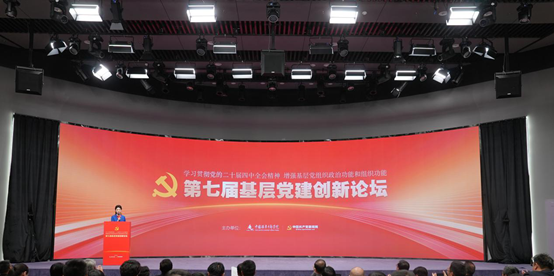
第七届基层党建创新论坛在京举行 青啤集团党建创新案例蝉联殊荣
Xin Hua Wang· 2025-12-31 08:49
Core Viewpoint - Qingdao Beer Group has been recognized for its innovative practices in grassroots party building, winning awards for two consecutive terms, highlighting the effectiveness of its党建 (party building) initiatives and the influence of its "green Qingdao red"党建 brand [4]. Group 1: Awards and Recognition - Qingdao Beer Group was invited as the only state-owned enterprise representative from Qingdao to the 7th Grassroots Party Building Innovation Forum, where its case study was selected as one of the top 126 out of over 3,300 submissions nationwide [3]. - The group’s previous case study, "Constructing a 'Three-Level Linkage' Party Building Mechanism to Lead High-Quality Development of a Century-Old Enterprise," was awarded the best case, marking it as the only state-owned enterprise in Shandong to receive this honor [3]. Group 2: Innovative Practices - The company has implemented a "responsibility chain" to enhance the political and organizational functions of its party organizations, ensuring alignment in goals, standards, and methods across all levels [5]. - A "three-dimensional learning" mechanism has been introduced to improve party members' quality of learning, utilizing various platforms to enhance both collective and self-learning [6]. - The company promotes a culture of contribution among party members, encouraging them to take initiative in solving operational challenges and to be proactive in their roles [6][7]. Group 3: Practical Insights - The organization recognizes that the advanced nature of party members must be cultivated through structured support from the party organization, which provides mechanisms, platforms, and resources [8]. - The establishment of party groups is emphasized to extend the responsibilities of party building from the party branch to smaller units, facilitating comprehensive progress in grassroots党建 [8]. - The company has developed implementation guidelines for the "Regulations on Party Branch Work," contributing to the establishment of a party group work manual and addressing institutional gaps [8].

年度行情收官 10家券商金股组合收益率亮眼超过50%
Zheng Quan Shi Bao· 2025-12-31 01:28
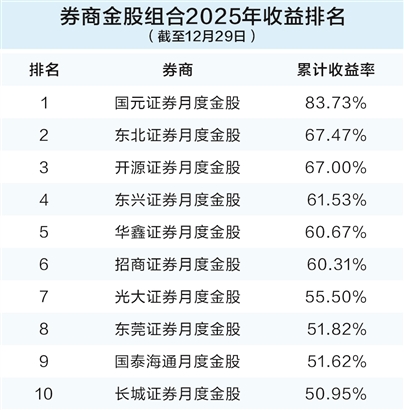
Core Insights - The report highlights the performance of stock recommendations from various brokerages, with 10 brokerages achieving over 50% returns in 2025, showcasing their ability to identify and recommend stocks early in the market cycle [2][3]. Group 1: Brokerage Performance - The highest cumulative return was achieved by Guoyuan Securities at 83.73%, followed by Northeast Securities and Kaiyuan Securities with returns of 67.47% and 67% respectively [2]. - Other brokerages such as Dongxing Securities, Huaxin Securities, and China Merchants Securities also reported returns exceeding 60%, while Everbright Securities, Dongguan Securities, Guotai Junan, and Changcheng Securities had returns above 50% [2]. Group 2: Stock Selection Strategy - The success of these brokerages is attributed to their strategy of identifying stocks at low points and consistently recommending them, which has led to significant gains [4][5]. - For instance, Kaiyuan Securities recommended Xinyisheng for four consecutive months, resulting in a total increase of 440% from May to August [6]. Group 3: Popular Stocks - Tencent Holdings emerged as the most recommended stock, being favored by around seven brokerages each month, making it the most popular stock of the year [7]. - The report indicates that the most popular stocks varied throughout the year, with technology stocks dominating in the first quarter, consumer stocks in the second, financial stocks in the third, and a return to technology stocks in the fourth quarter [7].





年度行情今日收官 十家券商金股组合收益率超百分之五十
Zheng Quan Shi Bao· 2025-12-30 18:19
Core Insights - The article highlights the performance of brokerage firms' recommended stocks, known as "golden stocks," which have achieved over 50% returns in 2025, with some firms excelling by identifying and recommending stocks early in their upward trends [1][3]. Group 1: Performance of Golden Stocks - As of December 29, 2025, 10 brokerage firms' golden stock portfolios recorded returns exceeding 50%, with the highest being 83.73% from Guoyuan Securities [3]. - Other notable performers include Northeast Securities and Kaiyuan Securities, with returns of 67.47% and 67%, respectively [3]. - The golden stock strategy has become a mature business for many brokerage firms, showcasing their research capabilities and market insights [3]. Group 2: Strategies for Success - Early identification of stocks at low prices and consistent recommendations have been key strategies for achieving high returns [4]. - For instance, Kaiyuan Securities recommended Xinyisheng for four consecutive months, resulting in a total increase of 440% from May to August [5]. - Guoyuan Securities focused on sectors like media, pharmaceuticals, and machinery, with significant monthly gains from stocks like Giant Network and JiBit [4]. Group 3: Popularity of Tencent - Tencent Holdings emerged as the most recommended stock, being favored by around seven brokerage firms monthly, making it the top "golden stock" of the year [2][6]. - The popularity of stocks varies by quarter, with technology stocks dominating in the first quarter, consumer stocks in the second, financial stocks in the third, and a return to technology stocks in the fourth quarter [6]. Group 4: Market Trends and Recommendations - The article notes that not all popular stocks achieve high success rates, with less than 40% of the most recommended A-share stocks showing gains in the same month they were recommended [7].


酒业年度盘点:2025热榜事件简述,你最关注的是哪件事?
Sou Hu Cai Jing· 2025-12-26 03:11
Core Insights - The Chinese liquor industry in 2025 is undergoing significant transformation amidst challenges such as a sluggish macro environment, consumption differentiation, production contraction, and weak sales, leading to a reshaping of the industry landscape [2] - The industry is encouraged to innovate and break old rules to find new growth paths, reflecting a mix of pressure and hope [2] Group 1: Industry Developments - The Ministry of Industry and Information Technology has classified liquor production as a "historical classic industry," elevating its status and marking a shift towards high-quality development [3] - A stringent "ban on alcohol" was introduced, impacting high-end liquor sales and indicating a shift from government consumption to market-driven consumption [4] - The launch of "Da Zhen·Zhen Jiu" by Zhen Jiu represents a strategic move towards creating a "super product" in the liquor market, emphasizing quality and innovative packaging [5] Group 2: Market Strategies - The establishment of two platform companies by Wuliangye's distributors aims to enhance market control and stabilize high-end product prices, reflecting a shift towards a dual-driven model of channels and capital [7] - Sichuan Province has released a 21-point action plan to promote the high-quality development of the liquor industry, focusing on production capacity and market expansion [8] - Wuliangye's 12·18 conference emphasized the importance of quality, cultural heritage, and innovation in navigating market changes [9] Group 3: Consumer Engagement - The return of the white liquor milk tea "Drunk Step on the Road" by Tea Baidao highlights the growing trend of "micro-drunk" consumption among younger consumers [13] - The fifth live broadcast by Zhen Jiu's chairman garnered significant attention, showcasing innovative business models and strong consumer engagement [10] Group 4: Awards and Recognition - The 16th China (Dalian) Light Industry Commodity Expo featured a wine exhibition and quality competition, showcasing the strength and cultural appeal of Chinese liquor brands [16] - The announcement of the first batch of Chinese consumer brands included notable liquor brands, indicating recognition of quality and market position [5][6] Group 5: Future Outlook - The liquor industry is expected to continue evolving with a focus on quality, cultural integration, and innovative marketing strategies, as seen in the initiatives from various companies and government bodies [18][19]





扩内需:食品饮料行业投资机会
2025-12-24 12:57
Summary of Key Points from the Conference Call Industry Overview - The food and beverage industry is experiencing systemic opportunities driven by policies aimed at expanding domestic demand and increasing residents' income levels, which are expected to enhance consumption capabilities [1][2] - The liquor industry is undergoing a deep adjustment, with expectations of entering an EPS killing phase by 2025, while high-end liquor brands like Moutai and Lao Jiao are recommended for investment [1][4] - The dairy industry has completed supply-demand adjustments, with anticipated increases in demand for milk powder and liquid milk due to fertility and income policies, highlighting companies like Yili and New Dairy as potential recovery opportunities [1][5] - The snack food sector is benefiting from the "lipstick effect," new channels, and health trends, with recommendations for companies such as Salted Fish, Wei Long, Wan Chen Food, and Qiaqia Food [1][6] - The beverage sector is seeing a clear trend towards health, with non-traditional channels gaining market share, making high-growth companies like Dongpeng Beverage noteworthy [1][7] Key Insights and Arguments - The central economic work conference in 2026 will prioritize expanding domestic demand, which is expected to lead to a series of policies stimulating consumption, positively impacting the food and beverage industry [2] - The food and beverage sector has faced significant changes in volume, price, and channel structure over the past six years, with varying performances across sub-sectors [3] - The liquor sector is expected to see marginal improvements in 2026, driven by policies aimed at boosting business and government consumption [4] - The dairy sector is projected to enter a recovery phase, with increased demand anticipated due to supportive policies [5] - The snack food market is expected to gradually recover, supported by rising incomes and new retail channels [6] Additional Important Content - Cost fluctuations are a significant factor affecting the performance of consumer goods companies, with some agricultural product costs declining, providing investment opportunities [9] - The planting area for sunflower seeds is expected to recover, leading to a projected 10% decrease in the cost of sunflower seeds, which will positively impact Qiaqia Food's gross margin [10][11] - The konjac market is facing supply-demand imbalances, with high prices expected to ease in 2026, alleviating cost pressures for companies like Wei Long and Salted Fish [12] - The sugar molasses market is currently at low prices, providing strong support for Angel Yeast's profitability [13] - Innovative companies are leveraging product and channel innovations to drive growth, with notable examples including Nongfu Spring and Uni-President [14] - Efficient supply chain management is crucial for companies, with Dongpeng Beverage demonstrating strong performance in this area [15] Future Outlook - Dongpeng Beverage is expected to achieve double-digit growth in 2026 through strategic measures and product innovations [16] - Wan Chen is enhancing store quality and accelerating store openings, which is expected to improve profitability in the snack food sector [17][18] - Hai Tian Flavoring has implemented efficiency improvements under new management, resulting in revenue and profit growth exceeding industry averages [19] - The restaurant industry is expected to see a mild recovery, with companies like Yihai International and Tianhe Flavoring showing potential for improvement [20][21] - In the liquor sector, companies like Yanghe and Budweiser are expected to benefit from product and channel improvements, leading to potential breakthroughs in performance [22][23][25] - Gan Yuan Food is focusing on expanding e-commerce and high-end membership stores, with a stable development outlook [26][27] - Overall, companies in the food and beverage sector are expected to experience gradual recovery and growth, making them worthy of investor attention [28]



食品饮料2026年投资策略报告:曙光渐显,在分化中前行-20251224
Hua Yuan Zheng Quan· 2025-12-24 12:13
Group 1: Core Insights - The report emphasizes the recovery stage of consumer spending, highlighting that different sectors exhibit both commonalities and differences in their recovery rhythms, driven by supply-demand dynamics and industry structure [4][5] - ROA (Return on Assets) is identified as a leading indicator for the operational recovery of consumer companies, with a focus on analyzing various sub-sectors [4][13] Group 2: Sector Performance - The current recovery sequence indicates that soft drinks and snacks are leading, followed by the catering supply chain, condiments, dairy products, beer, and finally, liquor [5][25] - The report draws parallels with Japan's 1990s consumption differentiation, noting that sectors addressing consumer pain points and with low penetration rates are likely to succeed [5][6] Group 3: Investment Strategy - The report suggests focusing on sectors where ROA is stabilizing, indicating potential valuation recovery opportunities, particularly in traditional sectors like liquor, beer, and dairy [6][8] - It recommends identifying sub-sectors with either price or volume growth, with a preference for price-driven strategies [6][8] Group 4: Detailed Sector Analysis - The frozen food sector is showing signs of marginal improvement, with leading companies enhancing operational efficiency through product innovation and channel reforms [27][28] - The snack sector is experiencing high demand, driven by new channel developments, although competition is intensifying [33][35] - The beer industry is under pressure, with a focus on high-end products, but overall growth is slowing due to external economic factors [39][41] - The dairy sector is nearing the end of its adjustment phase, with expectations of improved performance as raw milk prices rise [41][42] - The liquor sector is currently in a phase of inventory reduction, with performance risks gradually clearing as channels stabilize [43][48]


青岛啤酒:公司高度重视股东合理投资回报
Zheng Quan Ri Bao· 2025-12-24 12:12
Core Viewpoint - Qingdao Beer emphasizes its commitment to providing reasonable returns to shareholders through a stable profit distribution policy, increasing cash dividends in line with business performance growth [1] Summary by Categories Dividend Policy - The company will distribute a cash dividend of 2.20 yuan per share (including tax) for the fiscal year 2024, representing a 10% increase compared to the 2023 fiscal year [1] - The dividend payout ratio has reached 69%, indicating a strong commitment to returning profits to shareholders [1] Financial Commitment - The total amount allocated for dividends in 2024 is set to be 3 billion yuan [1]
回望“十四五” | 青岛市国资委党委书记、主任王孝芝:青岛国企研发经费“十四五”年均增长15%
Xin Lang Cai Jing· 2025-12-24 10:32
Tax Contribution - During the "14th Five-Year Plan" period, the total tax revenue from state-owned enterprises in Qingdao remained stable at over 14 billion, representing a 46.7% increase compared to the end of the "13th Five-Year Plan" [4][20]. Social Welfare - The construction of transportation hubs has accelerated, including the world's largest and longest underwater highway, the Jiaozhou Bay Second Tunnel, which is being advanced by Guoxin Group [4][23]. - The Jiaodong International Airport has won the Excellent Service Quality Award for airports with over 10 million passengers for the third consecutive year [4][23]. - Public transport improvements have enhanced travel experiences, with annual passenger volume exceeding 940 million [4][23]. - Infrastructure projects, such as the largest LNG receiving station in the country and the comprehensive renovation of old heating pipelines, have been implemented [4][23]. Industry Leadership - Seven enterprises, including Qingdao Beer, Aucma, and Haigang, have been cultivated as "chain leaders" in the food and beverage, smart home appliances, and high-end chemical industries [5][24]. Asset Management - The Qingdao State-owned Assets Supervision and Administration Commission has developed a three-year action plan to revitalize idle assets, establishing an asset ledger and guiding enterprises in formulating revitalization plans [25]. - A dual-driven platform has been created for asset revitalization, including an online cloud platform for asset management and a physical platform for market-driven operations [25][26]. Innovation and Digital Transformation - The Qingdao State-owned Assets Supervision and Administration Commission has implemented a special action plan to cultivate new productive forces, with R&D funding expected to exceed 3.3 billion by 2025, more than doubling from 2020 [28]. - A digital transformation action plan for state-owned enterprises has been established, significantly enhancing digital management capabilities in finance, investment, and procurement [29]. - Notable achievements include the establishment of the first "Lighthouse Factory" in the global beer and beverage industry by Qingdao Beer and the development of the first autonomous train operation system in the country by the Metro Group [29].



用品牌“含新量”提升高质量发展“含金量” 青岛啤酒品牌价值与创新实践再获权威认证
2 1 Shi Ji Jing Ji Bao Dao· 2025-12-24 06:48
Core Insights - Qingdao Beer has been awarded the "Annual Brand Case" at the 2025 New Consumption Conference, highlighting its brand value and market performance [1] - The company is undergoing a transformation from product exportation to cultural integration, aiming to enhance its global brand presence [1] Group 1: Brand Value and Market Performance - Qingdao Beer has received authoritative recognition for its brand influence and market competitiveness, showcasing its status as a leading consumer brand in China [1] - The company has a 122-year history and is committed to enhancing its brand through quality, innovation, openness, and cultural integration [1] Group 2: Product Quality and Innovation - The company emphasizes product quality as the lifeline of its brand, with a mission to "create happiness for life" [2] - Qingdao Beer has developed over 100 new products across nine series, leading the industry in new product launches and sales revenue [2] - The introduction of non-pasteurized, unfiltered, and undiluted "Qing Beer Original" has been well-received by consumers, enhancing their quality of life [2] Group 3: Quality Management - Qingdao Beer has shifted its quality management focus from product-centered to consumer perception-centered, implementing a digital quality management model [3] - The company has the highest number of representatives (52 out of 109) in the national beer tasting committee, demonstrating its commitment to quality [3] Group 4: Consumer Experience and Engagement - The company has implemented a "three-product strategy" focusing on product variety, quality, and brand creation, enhancing consumer engagement through immersive experiences [4] - Qingdao Beer has created various experiential venues and events, such as the Qingdao Beer Museum and Qingdao International Beer Festival, to connect with consumers [4] Group 5: Global Expansion and Cultural Integration - Qingdao Beer has showcased its products at international events, emphasizing its commitment to global market integration and cultural representation [5] - The company has launched traditional Chinese New Year products in overseas markets, incorporating cultural elements to attract consumers [5][6] - Qingdao Beer aims to enhance its brand image on the global stage, participating in high-profile international events and promoting Chinese craftsmanship [6] Group 6: Future Outlook - The company is positioned for steady growth and high-quality development through continuous product structure optimization and technological innovation [6] - With ongoing consumer upgrades, Qingdao Beer is expected to leverage its brand heritage and market insights to further enhance consumer experiences [6]
全球啤酒变革启示:中国的三大战略进阶
Haitong Securities International· 2025-12-22 01:02
Investment Rating - The report assigns an "Outperform" rating to multiple companies in the Chinese staples sector, including Guizhou Moutai, Wuliangye, and Yanjing Beer among others [1]. Core Insights - The global beer industry is undergoing a profound transformation, shifting from cyclical fluctuations to structural changes, driven by health consciousness and generational shifts in consumption [3][10]. - In China, the beer market faces unique challenges, including a transition to value-driven consumption, the failure of traditional distribution models, and intensified cross-industry competition [17][18]. Summary by Sections Global Beer Industry Transformation - Global beer sales are projected to decline by 1% in 2024, remaining below pre-pandemic levels, with significant shifts in consumer behavior noted, particularly among younger generations [10][12]. - Health awareness is leading to a reduction in alcohol consumption, with 49% of American consumers planning to drink less, a trend that is even more pronounced among Generation Z [12][17]. Strategic Directions for Chinese Beer Companies - **Leadership and Efficiency**: Establishing a dominant position in the local market is crucial for global expansion. Companies should focus on high-end product quality, optimizing cost structures, and building strong regional brands before expanding nationally [4][19]. - **Diversification**: Successful diversification should focus on product synergy, channel reuse, and brand extension, with a high success rate in expanding into related categories like low-alcohol and soft drinks [5][37]. - **Internationalization**: Companies should adopt a cautious approach to internationalization, starting with exports and partnerships in Belt and Road countries to mitigate risks [6][7]. Investment Recommendations - The report suggests that Chinese beer companies should enhance operational efficiency, innovate product offerings tailored to local tastes, and pursue diversification and internationalization strategies that are risk-controlled [7][34]. - Key investment lines include operational improvements leading to value reassessment, beneficiaries of structural upgrades, and pioneers in emerging categories [7][34].

