
Tsingtao Brewery(00168)

Search documents
青岛啤酒入选《国资国企社会责任蓝皮书(2025)》 高质量履责实践再树标杆
Zheng Quan Ri Bao· 2025-12-10 09:43
青岛啤酒《百年青啤向"新"提"质"奋楫国企高质量发展新航程》入选《国资国企社会责任蓝皮书 (2025)》产业升级篇优秀案例,青岛啤酒是入选该蓝皮书的行业唯一、山东省地方国企唯一,这也是 青岛啤酒第三次入选该蓝皮书优秀案例。 作为拥有122年历史具有全球影响力的中国品牌,青岛啤酒秉承"为了更美好的世界"的环境理念,多年 来聚焦匠心品质、绿色发展、创新转型、关爱社会,以高质量履责实践驱动企业高质量可持续发展,为 价值链上下游持续创造可分享的价值。 科技创新引领培育新质生产力 依托青岛啤酒科研开发中心国家级创新平台,持续深耕并放大在菌种研究、风味调控、低碳酿造和产品 创新等优势,青岛啤酒加快培育新质生产力。持续强化企业创新主体作用,推动产学研用协同,2024年 再次荣获国家科学技术进步奖二等奖,成为酿酒行业中唯一且四次获得此殊荣的企业。以科技创新驱动 产品矩阵持续丰富与升级,目前已形成9大系列、100多个品类的产品矩阵,以卓越品质和创新口感满足 了消费者的多层次需求。 (文章来源:证券日报) 通过清晰的数字化转型蓝图,青岛啤酒坚定不移地推动组织结构优化、业务流程再造、运营模式革新, 并全面融入技术赋能的力量,实现全 ...

青岛啤酒“十四五”破界而行“新”意十足
Zhong Guo Jin Rong Xin Xi Wang· 2025-12-10 02:38
Core Viewpoint - Qingdao Beer is leveraging technological innovation, experiential upgrades, and green transformation to drive high-quality development amidst a saturated market and evolving consumer demands [1][2][6]. Group 1: Financial Performance - Qingdao Beer has achieved a net profit growth of 200% compared to 2020, with an average annual growth rate of 21% [1]. - In the first three quarters of this year, sales, revenue, and net profit have all increased, with net profit reaching a historical high [1]. Group 2: Technological Innovation - Qingdao Beer has integrated technological innovation into its growth strategy, winning the National Science and Technology Progress Award for the fourth time in five years [2]. - The company has established a "technology cluster" with six core technologies and over 100 peripheral technologies, leveraging a national-level innovation platform [2]. Group 3: Smart Manufacturing - The Qingdao Beer factory has transformed into the world's first industrial internet "lighthouse factory" in the beer and beverage industry, enhancing production efficiency [3]. - The smart production line has increased average daily output by 60% and improved finished product delivery efficiency by 50%, while reducing carbon emissions density by 62% over three years [3]. Group 4: Consumer Experience - Qingdao Beer is adapting to changing consumer preferences by enhancing experiential consumption, particularly among younger consumers [4]. - The company has created a comprehensive "beer+" lifestyle experience mall, integrating various leisure and entertainment services [4]. Group 5: Sustainability Initiatives - Qingdao Beer is committed to sustainable development, implementing key technologies that have reduced overall energy consumption in the industry by over 30% [6]. - The company is actively exploring carbon reduction pathways across its entire value chain, promoting energy-saving and emission-reduction actions among upstream and downstream partners [6]. Group 6: Corporate Responsibility - Qingdao Beer emphasizes its commitment to social responsibility and shared value creation, aligning its practices with the national "dual carbon" strategy [7].
华泰证券-必选消费行业2026年度策略:冬藏伺机,春归可期
Sou Hu Cai Jing· 2025-12-06 03:13
Core Insights - The report from Huatai Securities indicates that the essential consumer sector has entered a favorable left-side layout window, with expectations for a mild recovery in consumption in the second half of 2026 due to stabilizing real estate prices, increased policy stimulus, and the recovery of household balance sheets [1][2]. Industry Overview - The essential consumer sector is currently at historical low valuation levels and public fund allocation ratios, providing a high safety margin and potential upside for investors [1][2]. - Some sub-industries are showing signs of bottoming out, with leading companies shifting focus from price wars to product innovation and adapting to channel changes [1][2][6]. - Structural changes such as the rebalancing of raw milk cycles, recovery in restaurant demand, and stricter regulations on zero additives are optimizing the competitive landscape of the industry [1][2]. Investment Recommendations - The report recommends four categories of stocks: 1. Cyclical high-upside stocks, including Gujing Gongjiu, Luzhou Laojiao, China Resources Beer, Qingdao Beer, Haitian Flavoring, Anjuke Food, and Qianhe Flavoring [2][7]. 2. Companies at fundamental turning points, such as Mengniu Dairy and Master Kong [2][7]. 3. High-dividend blue-chip leaders like Yili and Shuanghui Development [2][7]. 4. Small but promising growth stocks, including Ximai Food, Baoli Food, and Yanjinpuzi [2][7]. Market Trends - The report emphasizes a three-stage market strategy from expectation recovery to performance realization for 2026 [2]. - The essential consumer sector is expected to see a gradual improvement in retail sales growth, projected to reach 4.8% in 2026 [25]. - The consumer confidence index has shown some recovery but remains in a low range, indicating cautious consumer sentiment [26]. Sub-Industry Insights - Specific sub-industries are highlighted: 1. Frozen food is showing signs of bottoming out, with expectations for a reduction in price wars in 2026 [6][10]. 2. The dairy sector is anticipated to see a rebalancing of the raw milk cycle, enhancing domestic substitution logic [6][10]. 3. The beer industry is expected to maintain profit resilience due to rational competition and a diminishing demand dividend [6][10]. 4. Traditional condiment leaders are actively adjusting strategies to capture market share [6][10]. Conclusion - The essential consumer sector is positioned for a potential recovery, with various sub-industries adapting to market changes and focusing on innovation and strategic adjustments to enhance competitiveness [1][2][6].






百威喜力鏖战中国:啤酒生意 要重做一遍|跨国酒企变局2025
2 1 Shi Ji Jing Ji Bao Dao· 2025-12-05 17:35
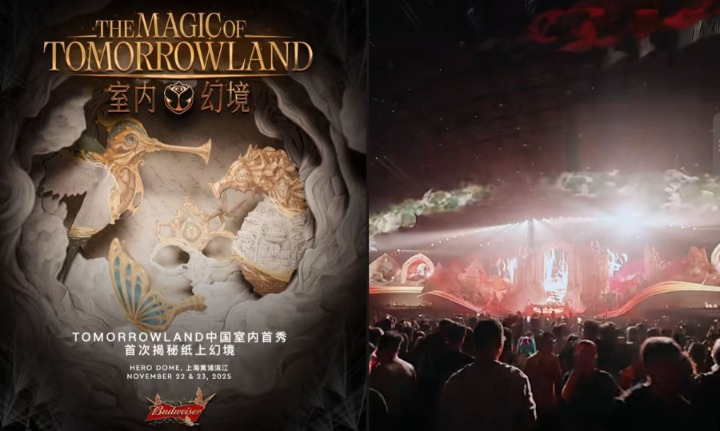
Core Insights - The Chinese beer industry is experiencing a shift towards domestic brands, with a notable recovery in their performance while international brands face challenges [1][2][3] - The overall beer consumption in China is still on a steady rise, despite a slight decline in production in October [1] - The market dynamics have changed, with domestic brands like Qingdao Beer and Yanjing Beer showing growth, while international brands like Budweiser are struggling [1][10] Industry Overview - The Chinese beer market has entered a phase of stock competition, with the industry's scale at about 70% of its peak [1] - The latest statistics show a 1% year-on-year decline in beer production for October, with cumulative production growth for the first ten months at 0% [1] - The industry is now in its twelfth year of stock competition, indicating a mature market environment [1] Brand Performance - Domestic brands such as Qingdao Beer, Yanjing Beer, and Zhujiang Beer have maintained growth in revenue, profit, and sales in the first three quarters of 2025 [1] - Budweiser has reported a double-digit decline in revenue, profit, and sales in the Chinese market for the first three quarters [1][10] - Heineken has shown significant growth, with sales increases of 30% to 70% for its products in recent years, positioning China as its second-largest market globally [11][14] Market Dynamics - The shift in consumer preferences has led to a decline in the dominance of international brands, particularly in the nightlife channel, which has been underperforming [2][24] - Heineken's strategy has focused on expanding into non-nightlife channels, leveraging partnerships with local distributors to enhance market penetration [20][25] - Budweiser's market share in regions like Fujian has decreased significantly, while the combined share of China Resources and Heineken has increased [12] Marketing Strategies - Both Budweiser and Heineken have engaged in high-profile sponsorships and events to enhance brand visibility, with Budweiser sponsoring the Tomorrowland music festival in Shanghai [4][7] - Heineken has also positioned itself as a key player in major events like the F1 China Grand Prix, resulting in a 14% increase in sales during the event [8] - The marketing strategies of both brands have evolved, with a focus on aligning with local consumer trends and preferences [29][30] Consumer Trends - The Chinese beer market is witnessing a shift towards innovative flavors and products, with a growing acceptance of new beer styles such as tea-infused beers [42] - There is a notable preference for higher alcohol content and unique flavors among Chinese consumers, contrasting with trends in Western markets [41][42] - The industry is encouraged to expand its product offerings to include low-alcohol and non-alcoholic options, although these segments remain niche in China [40][41]




百威喜力鏖战中国:啤酒生意,要重做一遍|跨国酒企变局2025
2 1 Shi Ji Jing Ji Bao Dao· 2025-12-05 12:13
Core Insights - The beer industry in China is undergoing significant changes, with multinational companies needing to adapt to a rapidly evolving market where traditional strategies are no longer effective [1][4][24] - Domestic brands are showing strong recovery, while international brands are experiencing mixed results, highlighting a shift in consumer preferences and market dynamics [3][10][17] Industry Overview - The Chinese beer market has entered a phase of stock competition, with overall production capacity at about 70% of its peak [3] - In October, the production of beer by large-scale enterprises in China saw a year-on-year decline of 1%, with cumulative production growth for the first ten months remaining at 0% [2] Brand Performance - Domestic brands like Tsingtao, Yanjing, and Zhujiang have reported growth in revenue, profit, and sales, while international brands like Budweiser and Carlsberg are facing challenges [3][10] - Budweiser's performance in China has been declining for three consecutive years, with double-digit decreases in revenue, profit, and sales in the first three quarters of 2023 [9][10] Market Dynamics - The high-end beer market, traditionally dominated by Budweiser and Heineken, is facing pressure as the on-premise consumption channels weaken and new product categories emerge [4][25] - Heineken has successfully leveraged its partnership with China Resources to expand its market presence, achieving significant sales growth in recent years [10][20] Consumer Preferences - Chinese consumers are increasingly open to new beer categories and flavors, with a notable rise in interest for innovative products like tea-infused beers [32] - The shift in consumer behavior has led to a greater focus on non-on-premise channels, with 60% of beer sales now coming from retail channels [29] Strategic Adjustments - Budweiser is adjusting its strategy by focusing on its Harbin brand to capture growth opportunities in the 8-10 yuan price range, reflecting a broader trend of price adjustments in the industry [26][25] - Both Budweiser and Heineken are recognizing the need to enhance their presence in non-on-premise channels and adapt to changing consumer preferences [28][29]
酒行业周度市场观察-20251205
Ai Rui Zi Xun· 2025-12-05 06:27
Investment Rating - The report indicates a long-term investment value in the high-end liquor industry, particularly for leading brands like Moutai and Wuliangye, despite short-term challenges [4]. Core Insights - The high-end liquor sector is facing short-term challenges but maintains a strong investment logic due to brand moat, high gross margins (85%+), and stable cash flow [4]. - The report highlights the need for liquor companies to balance online and offline strategies, especially in the context of the growing trend of instant retail [4][6]. - The domestic wine industry is experiencing a "bumper harvest but no profit" situation, primarily due to supply-demand imbalances and competition from imported wines [6]. Industry Trends - High-end liquor industry re-evaluation: The core logic remains unchanged despite short-term challenges, with leading companies still showing long-term investment potential [4]. - Instant retail's impact on the liquor industry: Instant retail is rapidly penetrating the market, but the response from manufacturers is mixed due to high costs and low order volumes [4][6]. - The "liquor+" strategy is emerging, integrating liquor with various cultural and lifestyle elements to enhance consumer engagement and brand value [6]. - The domestic wine industry faces significant challenges, including supply-demand imbalances and high production costs, necessitating a shift towards consumer value and brand differentiation [6]. Top Brand News - Young consumers are shifting their purchasing criteria from "value for money" to "emotional value," with brands like Qingdao White Beer successfully tapping into this trend [13]. - Xijiu is promoting a lifestyle approach through its "Xijiu+" strategy, integrating liquor with local culinary experiences to enhance consumer connection [13][26]. - Jian Nan Chun achieved significant sales during the Double Eleven shopping festival, showcasing the effectiveness of its cultural branding and e-commerce strategies [24].




贵州“十五五”拟优化白酒结构;茅台不“唯指标论”|观酒周报
2 1 Shi Ji Jing Ji Bao Dao· 2025-12-01 06:08
Group 1: Industry Overview - The liquor industry is entering a year-end summary and planning phase as the year comes to a close [1] - Guizhou's "14th Five-Year Plan" aims to consolidate the sauce-flavored liquor industry cluster and optimize product structure and marketing strategies, targeting a production value of 160 billion yuan for the liquor industry in 2024 [2] - The beer tasting committee's selection event attracted 384 participants, highlighting the growing importance of sensory evaluation in the beer industry [3][4] Group 2: Company Developments - Moutai's new leader, Chen Hua, expressed confidence in the liquor industry's potential, emphasizing the importance of quality over quantity and a focus on consumer needs [5][6] - Jiuzi Jiu and Shenzhen Airlines signed a strategic cooperation agreement to enhance brand collaboration and customer engagement [11] - Qingdao Beer plans to invest up to 10 billion yuan in financial products over the next 12 months, indicating a strategic move to manage its financial resources [10] Group 3: Market Trends - The low-alcohol fruit juice wine brand "Guoli Fang" has achieved double-digit growth for 26 consecutive months, indicating a strong market demand for innovative products [9] - The 2026 Chengdu Spring Sugar and Wine Fair is set to be the largest ever, with an exhibition area of 325,000 square meters, reflecting the industry's growth and interest [17] - Wuliangye continues its collaboration with CCTV for major events, reinforcing its brand presence in the market [8] Group 4: Product Innovations - Laobai Gan Jiu is launching new products targeting younger consumers, including lemon and dried tangerine peel wines, to adapt to changing market demands [13][14] - Moutai has introduced new products, Moutai Prince Wine (Sauce Color) and Moutai Prince Wine (Black Gold), aimed at enhancing market competitiveness [19][20]


青岛啤酒股份(00168) - 截至2025年11月30日股份发行人的证券变动月报表
2025-12-01 03:07
股份發行人及根據《上市規則》第十九B章上市的香港預託證券發行人的證券變動月報表 截至月份: 2025年11月30日 狀態: 新提交 致:香港交易及結算所有限公司 公司名稱: 青島啤酒股份有限公司 (在中華人民共和國註冊成立之中外合資股份有限公司) FF301 第 1 頁 共 10 頁 v 1.1.1 FF301 II. 已發行股份及/或庫存股份變動 呈交日期: 2025年12月1日 I. 法定/註冊股本變動 | 1. 股份分類 | 普通股 | 股份類別 | A | | | 於香港聯交所上市 (註1) | | 否 | | | --- | --- | --- | --- | --- | --- | --- | --- | --- | --- | | 證券代號 (如上市) | 600600 | 說明 | A股 | | | | | | | | | | 法定/註冊股份數目 | | | 面值 | | | 法定/註冊股本 | | | 上月底結存 | | | 709,127,610 | RMB | | | 1 RMB | | 709,127,610 | | 增加 / 減少 (-) | | | -1,667 | | | | R ...
少了杨瀚森 依旧有信心
Qi Lu Wan Bao· 2025-11-30 22:08
Group 1 - The Qingdao Laoshang Beer Men's Basketball Team officially embarks on the CBA new season with a new sponsorship deal from Laoshang Beer, symbolizing the integration of sports and culture in the city [1][2] - Last season, the team achieved a remarkable 7th place in the league, securing a playoff spot 11 rounds early, with notable players like Yang Hansheng being drafted in the NBA [1] - The team has made strategic roster adjustments, including the signing of new players and retaining key foreign players to enhance tactical diversity for the upcoming season [1] Group 2 - The partnership between Laoshang Beer and the Qingdao Men's Basketball Team represents a cultural resonance between the "City of Basketball" and the "Beer Capital," with Laoshang Beer having a brand value of 77.635 billion yuan [2] - Laoshang Beer has been actively involved in basketball marketing since 2014, promoting the brand through various community events and initiatives aimed at popularizing basketball [2] - The team will host its first home game of the new season on December 15, with affordable ticket prices available through various platforms, reflecting the team's commitment to community engagement [2]
食品饮料行业周报 20251124-20251128:茅台股东会传递务实信号月度金股推荐泸州老窖-20251130
Shenwan Hongyuan Securities· 2025-11-30 12:34
Investment Rating - The report maintains a positive investment outlook for high-quality companies in the food and beverage sector, indicating that it has entered a strategic allocation period [6][8]. Core Insights - The report highlights a significant decline in revenue for major liquor companies, with high-end liquor prices continuing to drop, leading to a search for a balance between volume and price [6][7]. - It emphasizes the need for patience regarding fundamentals and notes that the performance of individual stocks will vary during this adjustment phase [6][8]. - The report anticipates that stock price returns will primarily come from valuation contributions in the upcoming year, suggesting reasonable expectations for price movements [6][8]. Summary by Sections 1. Weekly Overview of Food and Beverage Sector - The food and beverage sector saw a slight increase of 0.07% last week, with the liquor segment declining by 0.73%, underperforming the broader market by 1.33 percentage points [5]. - The top gainers included Hai Xin Food (up 45.38%), Jia Long Co. (up 16.29%), and Yan Tang Dairy (up 15.25%) [5]. 2. Market Performance of Food and Beverage Segments - The report provides detailed pricing data for major liquor brands, noting that Moutai's bottle price is 1570 RMB, down 80 RMB week-on-week, and Wuliangye's price is approximately 825 RMB, down 5 RMB [7][25]. - It discusses the strategic direction of Moutai, focusing on quality over quantity and maintaining stable cash dividend policies [7]. 3. Industry Indicators and Future Outlook - The report predicts a gradual improvement in the Consumer Price Index (CPI) for 2026, which could lead to a recovery for companies with pricing power in various sub-sectors [8]. - It recommends focusing on sectors such as seasoning, frozen foods, and dairy, highlighting companies like Anjiu Food, Qianhe Flavor, and Yili Group as key players [8]. 4. Valuation Levels - As of November 28, the food and beverage sector has a dynamic PE of 20.59x, with a premium rate of 28%, while the liquor segment has a dynamic PE of 19.35x, with a premium rate of 20% [26].

