
BYD ELECTRONIC(00285)

Search documents
太突然!002855,71岁董事长被立案
Mei Ri Jing Ji Xin Wen· 2026-02-27 16:45
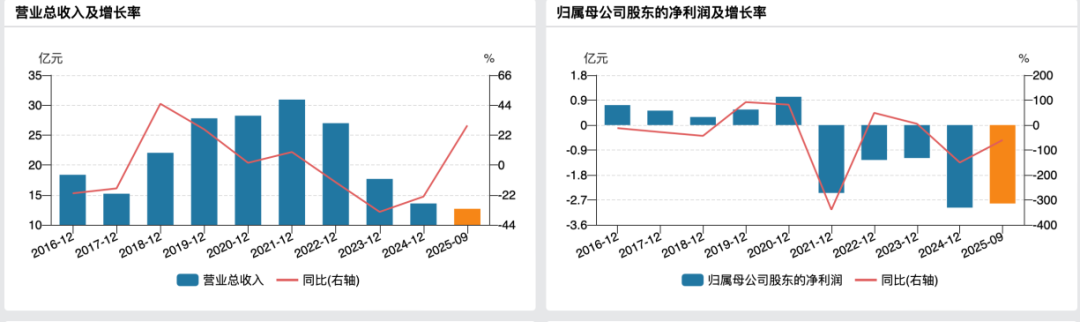
每经记者|蔡鼎 每经编辑|何小桃 董兴生 2月27日晚间,捷荣技术(SZ002855,股价16.4元,市值40.41亿元)公告称,公司、公司控股股东捷荣科技集团有限公司(以下简称"捷荣集团")及实控 人赵晓群于2月26日收到中国证监会出具的《立案告知书》,因涉嫌信息披露违法违规,根据相关法律法规,中国证监会决定对公司、捷荣集团及赵晓群 立案。 赵晓群,资料图。图片来源:捷荣风采微信公众号 2023年超级行情后曾收《关注函》 捷荣技术在公告中称,公司、捷荣集团以及赵晓群将积极配合中国证监会立案调查工作。 立案前夕披露近4亿元亏损预告与高管大换血 《每日经济新闻》记者注意到,1月31日,捷荣技术刚发布了《2025年度业绩预告》。数据显示,公司预计2025年归母净利润为-3.97亿元左右,较上年同 期的-2.98亿元进一步扩大。 伴随着业绩持续承压,捷荣技术的高管变动也极为密集。早在2024年5月,捷荣技术财务总监唐建光就因"个人原因"辞职,且辞职后不在公司担任任何职 务;同月,公司时任总裁牟健也宣布辞职。 更为剧烈的人事震荡发生在立案前三个多月。2025年11月17日晚间,捷荣技术公告称,张守智因工作调整原因申请 ...


002855,72岁实控人被立案
Zhong Guo Ji Jin Bao· 2026-02-27 14:29
【导读】捷荣技术及其控股股东、实控人因涉嫌信息披露违法违规而被立案 2月27日,捷荣技术(002855)公告称,公司控股股东捷荣科技集团有限公司(以下简称捷荣集团)及实际控制人赵晓群,于2026年2月26日收到中国证监 会出具的《立案告知书》。因涉嫌信息披露违法违规,中国证监会决定对公司、捷荣集团及赵晓群立案。 据悉,赵晓群出生于1954年,是捷荣技术创始人、公司第一届至第三届董事会董事长,任职时长近10年。2024年1月,赵晓群退居二线,成为公司名誉董 事长。 2025年11月,时任公司董事长张守智因工作调整,申请辞去公司相关职务。72岁的赵晓群二度"出山",担任捷荣技术董事长,其与公司现任总裁赵小毅为 姐弟关系。 从股权结构来看,赵晓群持有公司控股股东捷荣集团100%的股份,持有持股5%以上股东捷荣汇盈投资管理(香港)有限公司70.59%的股份。 公开资料显示,捷荣技术主要业务为向3C行业客户提供精密模具、精密结构件及高外观需求的硬件组件的设计、研发、制造和销售服务。 业绩方面,捷荣技术近年来深陷亏损,2021年—2024年累计亏损近8亿元,2025年公司预计净亏损额将进一步扩大。 1月31日,捷荣技术发 ...
港股大涨,科网股集体走高,半导体、贵金属板块走强;大模型概念股续跌,智谱跌近24%、MINIMAX跌超10% | 港股早盘
Mei Ri Jing Ji Xin Wen· 2026-02-23 04:38
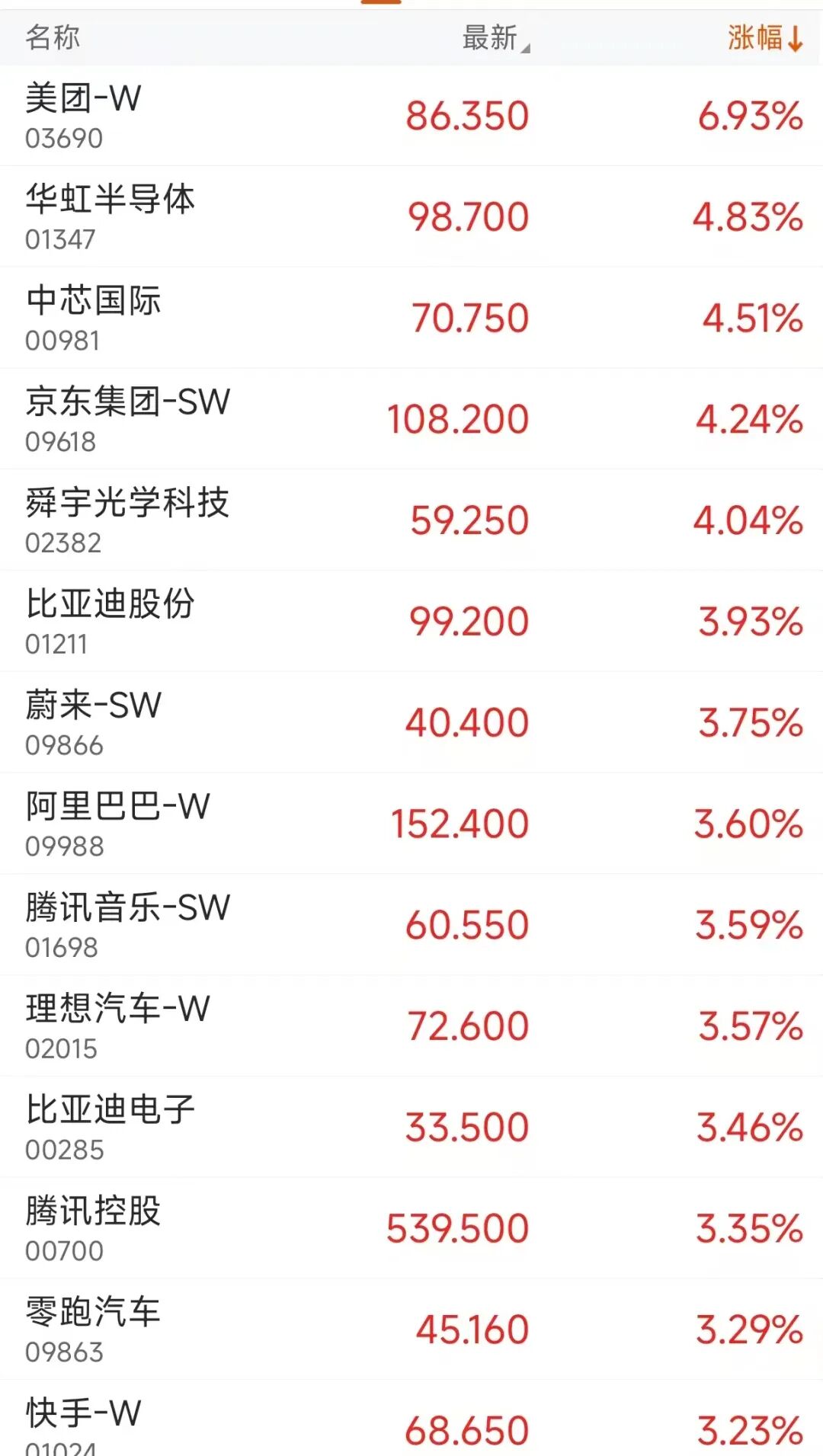
每经记者|杜宇 每经编辑|许绍航 宋思艰 记者|杜宇 编辑|许绍航 宋思艰 校对|文多 | 名称 | 现价 | 涨跌幅 ▼ | 成交量 | 换手率 | 市智率 | 总市值 | 年初至今 | | --- | --- | --- | --- | --- | --- | --- | --- | | 中国大冶有色金属 | 0.185 | 9.47% | 1588万 | 0.09% | -64.0 | 33亿 | 79.61% | | 赤峰黄金 | 39.980 | 8.23% | 74万 | 0.31% | 25.6 | 7941乙 | 34.34% | | 灵宝黄金 | 25.960 | 7.90% | 354万 | 0.32% | 25.2 | 334亿 | 44.95% | | 五矿资源 | 10.570 | 7.86% | 948万 | 0.08% | | 34.0 1283亿 | 20.52% | | 中国黄金国际 | 204.400 | 7.30% | 16万 | 0.04% | 25.5 | 810亿 | 30.27% | | 潼关黄金 | 3.410 | 7.23% | 492万 | 0.09% | ...





【申万宏源研究春节见闻】深圳:科创的咏叹,续写春天的故事
Xin Lang Cai Jing· 2026-02-20 05:32
Core Viewpoint - Shenzhen has transformed from a small fishing village into a global innovation hub, showcasing its technological prowess and commitment to becoming a benchmark for China's socialist development model [1][25]. Group 1: Historical Context and Development - The establishment of the Shekou Industrial Zone in 1979 marked the beginning of Shenzhen's transformation, symbolized by the phrase "Time is Money, Efficiency is Life" to attract investment [2][4][31]. - The founding of Huawei in 1987 by Ren Zhengfei in Shekou highlights the entrepreneurial spirit that emerged during this period, leveraging initial capital from Hong Kong [4][28]. Group 2: Industry Growth and Key Players - Foxconn, established by Terry Gou in 1988, became the world's largest electronics manufacturing services provider, benefiting from Shenzhen's cost advantages and industrial ecosystem [6][31]. - Shenzhen's EMS capabilities have empowered global tech innovation, with companies like Foxconn, Luxshare Precision, and BYD Electronics playing significant roles in the supply chain [9][33]. Group 3: Current Trends and Future Outlook - Shenzhen is positioning itself as a leader in AI and robotics, with over 2,600 AI enterprises and projected revenue of approximately 220 billion yuan by 2025 [15][39]. - The "Robot Valley" in Shenzhen is emerging as a global innovation center for robotics, supported by a robust ecosystem of over 74,000 related enterprises and numerous educational institutions [19][39]. Group 4: Commercial Landscape - Huaqiangbei, known as "China's Electronics First Street," hosts a vast network of businesses and attracts over 7,000 foreign visitors daily, reflecting its significance in the global electronics market [11][35]. - The area is characterized by a practical and efficient business model, enabling startups to thrive, including notable companies like Ugreen Technology and Transsion Holdings [12][36].





港股大型科网股,集体下跌
Di Yi Cai Jing Zi Xun· 2026-02-12 03:43
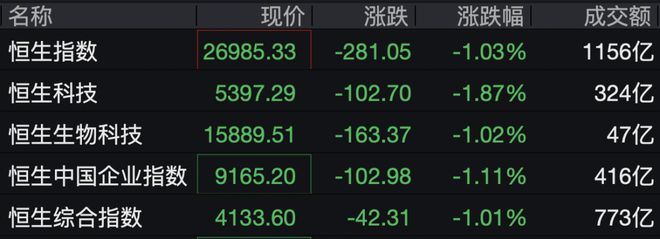
Group 1 - Major tech stocks in Hong Kong experienced a decline, with notable drops of approximately 4% for companies such as NetEase, Meituan, Bilibili, and Trip.com, while Baidu and Tencent fell over 3% [1][2] - The Hang Seng Index saw a broader market downturn, with a decline of 1% and the Hang Seng Tech Index dropping by 1.87% [2] - Specific stock performance included Kingdee International down by 4.98%, NetEase down by 4.15%, and Meituan down by 4.11%, among others [3]


比亚迪电子:产品结构持续升级;智能手机市场低迷限制估值;评级下调至 “中性”
2026-02-10 03:24
Summary of BYDE (0285.HK) Conference Call Company Overview - **Company**: BYDE (0285.HK) - **Market Cap**: HK$76.1 billion / $9.7 billion - **Enterprise Value**: HK$67.1 billion / $8.6 billion - **Industry**: Greater China Technology Key Points Industry and Market Dynamics - The global smartphone Total Addressable Market (TAM) for 2026E/27E has been reduced due to rising memory prices, impacting growth expectations for smartphone manufacturers [1][4] - Global leaders like Apple are expected to outperform due to their scale and consumer purchasing power, while Chinese brands face challenges due to price sensitivity [1][17] - Smartphone shipments are projected to decline by 6% YoY in 2026E, with a recovery of +2% YoY in 2027E [17] Company Performance and Financials - BYDE's revenue estimates have been revised down by 9%/11%/18% for 2025E/26E/27E, primarily due to lower revenues from Android smartphone assembly and casing [19] - Revenue projections for 2025E, 2026E, and 2027E are now Rmb 185,660 million, Rmb 201,492 million, and Rmb 217,307 million respectively [21] - Gross margin is expected to improve from 7.4% in 2025E to 8.9% in 2028E, driven by a shift towards higher-margin components [18][22] Business Segments - **Automotive Electronics**: Expected to grow at a CAGR of 23% from 2026E to 2028E, despite a projected 8% YoY decline in automotive shipments in 2H25 [18] - **Apple Assembly and Casing**: Revenue from Apple is expected to increase, reflecting market share gains despite the overall smartphone market challenges [19] - **Android Smartphone Assembly**: Revenue is expected to decline due to fierce competition and lower demand [19][22] Valuation and Rating Changes - Target price has been reduced to HK$40 from HK$53.08, reflecting slower growth and less relative upside compared to peers [1][26] - BYDE has been downgraded to a Neutral rating from Buy due to underperformance in the competitive smartphone market [1][26] Risks and Opportunities - **Upside Risks**: Better-than-expected smartphone demand, faster expansion into Apple and automotive electronics, and quicker contributions from new AI server businesses [1][26] - **Downside Risks**: Weaker smartphone market demand, increased competition in automotive electronics, and slower-than-expected growth in AI server components [31][32] Financial Metrics - **EPS**: Expected to grow from Rmb 1.89 in 2024 to Rmb 3.01 in 2027 [15] - **P/E Ratio**: Projected to be 15.6 in 2024, decreasing to 10.0 by 2027 [12] - **Dividend Yield**: Expected to increase from 1.9% in 2024 to 3.0% in 2027 [12] Conclusion - BYDE is navigating a challenging smartphone market with a strategic focus on expanding into higher-margin segments like automotive electronics and AI server components. The company faces significant risks from market dynamics but has opportunities for growth through its partnerships with leading brands like Apple. The revised target price and neutral rating reflect a cautious outlook amid these challenges.
算力需求强劲,关注CPO等新技术演进
Orient Securities· 2026-02-07 09:53
Investment Rating - The report maintains a "Positive" investment rating for the electronic industry, indicating an expectation of returns stronger than the market benchmark by over 5% [5]. Core Insights - Strong demand for computing power driven by AI applications is expected to continue, with significant investments from major cloud providers [8]. - The hardware supply-demand imbalance is spreading across various sectors, leading to price increases [8]. - New technologies such as CPO (Co-Packaged Optics) are anticipated to create additional demand [8]. Summary by Sections Investment Recommendations and Targets - Key investment targets include: - Semiconductor manufacturing: SMIC (688981, Buy), Hua Hong Semiconductor (01347, Buy) - Testing and packaging: Changdian Technology (600584, Buy), Tongfu Microelectronics (002156, Buy), and others [9]. - Server storage: Lianqi Technology (688008, Buy) - CPUs: Haiguang Information (688041, Buy), Longxin Technology (688047, Not Rated), and others [9]. - Passive components: Sanhua Group (300408, Buy), Fenghua Advanced Technology (000636, Not Rated) [9]. - Server manufacturing: Industrial Fulian (601138, Buy), Huaqin Technology (603296, Buy) [9]. - Analog and power chips: Naxin Micro (688052, Buy), Sierui Technology (688536, Not Rated), and others [9]. - Semiconductor equipment: Zhongwei Company (688012, Buy), Northern Huachuang (002371, Buy), and others [9]. - Optical devices/chips: Zhishang Technology (301486, Not Rated), Tianfu Communication (300394, Not Rated), and others [9]. AI Applications and Edge Computing - Key targets in edge AI applications include: - AI main control chips: Amlogic (688099, Buy), Hengxuan Technology (688608, Buy) - Edge storage: Zhaoyi Innovation (603986, Buy), Bawei Storage (688525, Buy) [10]. - Terminal manufacturers: Hikvision (002415, Buy), Luxshare Precision (002475, Buy), BYD Electronics (00285, Not Rated), and others [10]. - Core components for AI edge: Huanxu Electronics (601231, Buy), Sunny Optical Technology (02382, Buy), and others [10].





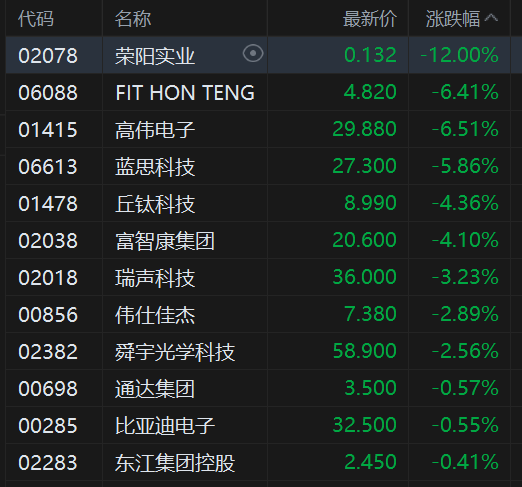
港股异动丨手机产业链股走低 高伟电子跌超6% 高盛指内存涨价下调手机出货量
Ge Long Hui· 2026-02-04 03:23
Group 1 - The Hong Kong stock market for the smartphone supply chain has seen a collective decline, with notable drops including High伟电子 down over 6% and 蓝思科技 down nearly 6% [1] - By December 2025, China's smartphone sales are projected to reach approximately 21 million units, representing a year-on-year decline of about 20% [1] - Major smartphone brands such as 华为, OPPO, 荣耀, vivo, and 苹果 hold market shares of approximately 20%, 17%, 14%, 14%, and 13% respectively [1] Group 2 - Goldman Sachs has revised its global smartphone shipment forecasts for 2026/27 down by 6% and 5% to 1.2 billion units each year, indicating a year-on-year change of -6% and +2% [1] - Counterpoint Research suggests that the smartphone market is unlikely to recover before 2027, with normalization expected in the second half of 2027 or early 2028 [1] - The smartphone industry is expected to seek a balance between cost, performance, and innovation in response to ongoing challenges and rising costs due to memory price increases and technological iterations [1]
比亚迪电子(00285) - 截至2026年1月31日股份发行人的证券变动月报表
2026-02-02 09:40
| 截至月份: | 2026年1月31日 | 狀態: 新提交 | | --- | --- | --- | | 致:香港交易及結算所有限公司 | | | | 公司名稱: | 比亞迪電子(國際)有限公司 | | | 呈交日期: | 2026年2月2日 | | | I. 法定/註冊股本變動 不適用 | | | FF301 第 1 頁 共 10 頁 v 1.2.0 股份發行人及根據《上市規則》第十九B章上市的香港預託證券發行人的證券變動月報表 FF301 II. 已發行股份及/或庫存股份變動及足夠公眾持股量的確認 1. 股份分類 普通股 股份類別 H 於香港聯交所上市 (註1) 是 證券代號 (如上市) 00285 說明 已發行股份(不包括庫存股份)數目 庫存股份數目 已發行股份總數 上月底結存 2,253,204,500 0 2,253,204,500 增加 / 減少 (-) 本月底結存 2,253,204,500 0 2,253,204,500 足夠公眾持股量的確認(註4) | 根據《主板上市規則》第13.32D(1)條或第19A.28D(1)條 / 《GEM上市規則》第17.37D(1)條或第25.21D(1) ...
手机产业链全线走低 12月手机销量同比下滑20% 内存涨价或抑制手机出货量
Zhi Tong Cai Jing· 2026-02-02 04:06
Core Viewpoint - The smartphone supply chain is experiencing a significant downturn, with major companies seeing declines in stock prices and forecasts indicating a drop in smartphone sales in China by approximately 20% year-on-year by December 2025 [1] Group 1: Company Performance - QiuTai Technology (01478) shares fell by 5.91%, trading at HKD 8.75 [1] - BYD Electronics (00285) shares decreased by 4.13%, trading at HKD 32.02 [1] - GoerTek (01415) shares dropped by 3.76%, trading at HKD 29.14 [1] Group 2: Market Forecasts - China's smartphone sales are projected to reach approximately 21 million units by December 2025, reflecting a year-on-year decline of about 20% [1] - Goldman Sachs has revised its global smartphone shipment forecasts for 2026/27 down by 6% and 5% to 1.2 billion units for both years, indicating a year-on-year change of -6% and +2% respectively [1] Group 3: Market Share - The top five smartphone brands in China by market share are Huawei (20%), OPPO (17%), Honor (14%), Vivo (14%), and Apple (13%) [1]
