
HKEX(00388)

Search documents
港交所(00388)陈翊庭:目前排队申请IPO的企业高达230家 年底将就调整每手股数咨询市场
智通财经网· 2025-08-20 11:24
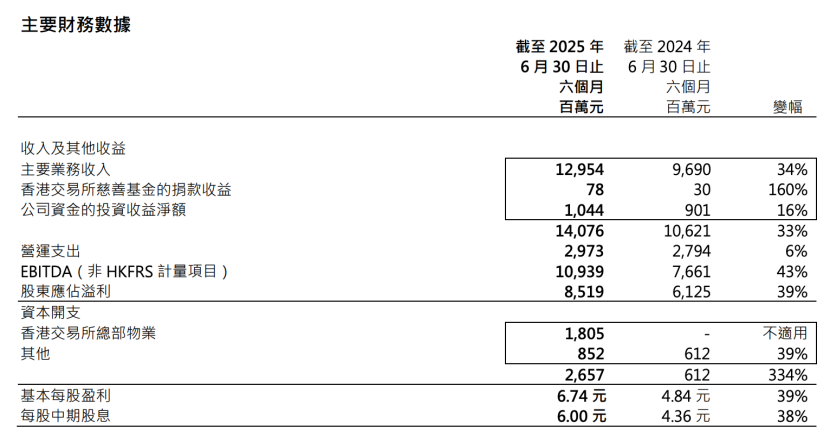
Group 1 - The CEO of Hong Kong Stock Exchange (HKEX) stated that there is no established position on 24-hour trading and emphasized the need for public consultation while considering the potential risks and pressures associated with such a change [1] - Since the launch of the technology company listing channel in May, HKEX has completed over 50 IPO applications, raising nearly $17 billion, leading the global IPO rankings [1][2] - The CEO mentioned that there are currently 230 companies in the pipeline for IPO applications, indicating that Hong Kong remains the preferred international financing market for mainland enterprises [1] Group 2 - The Chief Operating Officer highlighted that many markets, including the UK and EU, are expected to transition to a "T+1" settlement cycle by the end of 2027, which would result in 88% of global trading adopting this cycle [2] - HKEX plans to consult the market on adjusting the trading unit size by the end of this year, as there are currently up to 40 different trading unit sizes [2] - HKEX reported record high revenue and profit for the first half of 2025, with revenue and other income reaching HK$14.076 billion, a 33% increase year-on-year, and a shareholder profit of HK$8.519 billion, up 39% [2] Group 3 - The average daily trading volume in the cash market, derivatives market, and Stock Connect reached a six-month high, with an average daily trading amount of CNY 240.2 billion, a year-on-year increase of 118% [3] - The Hong Kong IPO market continued its strong growth in 2025, with a total fundraising amount of HK$109.4 billion, a 716% increase year-on-year, and 44 new companies listed during the period [3] - The listing of CATL in May 2025 raised HK$41 billion, marking the largest IPO in Hong Kong since February 2021 and the largest globally in 2023 [3]
港交所陈翊庭:港交所将研究24小时交易机制
Shang Hai Zheng Quan Bao· 2025-08-20 11:08
Group 1 - The core viewpoint of the article emphasizes the Hong Kong Stock Exchange's commitment to strategic investments to maintain global competitiveness, particularly in optimizing data platforms and upgrading trading and settlement systems [1] - The CEO of the Hong Kong Stock Exchange, Charles Li, addressed the topic of extending trading hours, noting that the exchange will adopt a cautious and gradual approach, learning from international peers while considering local market conditions [1] - The Hong Kong Stock Exchange is actively discussing shortening the settlement cycle for the cash market, with its technical systems expected to support a T+1 settlement cycle by the end of this year, although the implementation will depend on feedback from market participants [1]
香港交易所(00388) - 2025 - 中期业绩
2025-08-20 10:06
[Introduction and Company Information](index=1&type=section&id=Introduction%20and%20Company%20Information) This section provides an overview of the company's regulatory context and key information regarding its board of directors [Regulatory Disclaimer](index=1&type=section&id=Regulatory%20Disclaimer) This document's content is regulated by the Hong Kong Securities and Futures Commission, which is not responsible for its accuracy or completeness, nor does it bear any loss arising from reliance on its content - The Hong Kong SFC regulates this document but is not responsible for its accuracy or completeness, nor does it bear any losses[1](index=1&type=chunk) [Company and Board Information](index=1&type=section&id=Company%20and%20Board%20Information) Hong Kong Exchanges and Clearing Limited (HKEX) published its condensed consolidated financial statements for the six months ended June 30, 2025, with a Board comprising 12 independent non-executive directors and one executive director (Group Chief Executive) - HKEX published its condensed consolidated financial statements for the six months ended June 30, 2025[2](index=2&type=chunk) - The Board of Directors consists of **12 independent non-executive directors** and **one executive director** (Group Chief Executive)[3](index=3&type=chunk) [Condensed Consolidated Income Statement](index=2&type=section&id=Condensed%20Consolidated%20Income%20Statement) This section presents the Group's financial performance, highlighting significant revenue and profit growth, alongside increased operating and tax expenses [Income Statement Summary](index=2&type=section&id=Income%20Statement%20Summary) For the six months ended June 30, 2025, HKEX's revenue and other income significantly increased, with profit for the period substantially rising year-on-year, driven by growth in transaction and trading system usage fees, clearing and settlement fees, and net investment income, while operating expenses and tax expenses (due to minimum top-up tax) also increased - Revenue and other income increased by **32.5%** from HKD **10,621 million** in 2024 to HKD **14,076 million** in 2025[4](index=4&type=chunk) - Profit for the period increased by **38.4%** from HKD **6,186 million** in 2024 to HKD **8,562 million** in 2025[4](index=4&type=chunk) - Taxation increased by **109.1%** from HKD **766 million** in 2024 to HKD **1,602 million** in 2025, primarily due to the Hong Kong minimum top-up tax[4](index=4&type=chunk) Key Financial Data from Condensed Consolidated Income Statement | Metric | As of June 30, 2025 (HKD Million) | As of June 30, 2024 (HKD Million) | YoY Change (%) | | :--- | :--- | :--- | :--- | | Revenue | 11,034 | 8,062 | 36.9% | | Net investment income | 2,875 | 2,521 | 14.0% | | Revenue and other income | 14,076 | 10,621 | 32.5% | | Transaction-related expenses | (164) | (166) | -1.2% | | Operating expenses | (2,973) | (2,794) | 6.4% | | EBITDA | 10,939 | 7,661 | 42.8% | | Operating profit | 10,196 | 6,963 | 46.4% | | Profit before tax | 10,164 | 6,952 | 46.2% | | Taxation | (1,602) | (766) | 109.1% | | Profit for the period | 8,562 | 6,186 | 38.4% | | Profit attributable to HKEX shareholders | 8,519 | 6,125 | 39.1% | | Basic earnings per share (HKD) | 6.74 | 4.84 | 39.2% | | Diluted earnings per share (HKD) | 6.72 | 4.83 | 39.1% | [Condensed Consolidated Statement of Comprehensive Income](index=3&type=section&id=Condensed%20Consolidated%20Statement%20of%20Comprehensive%20Income) This section details the Group's total comprehensive income, reflecting strong profit growth and a positive shift in other comprehensive income components [Comprehensive Income Overview](index=3&type=section&id=Comprehensive%20Income%20Overview) For the six months ended June 30, 2025, the Group's total comprehensive income significantly increased, primarily due to a substantial rise in profit for the period and a shift from loss to positive gain in other comprehensive income, notably from currency translation differences of overseas subsidiaries and fair value changes of financial assets measured at fair value - Profit for the period increased by **38.4%** from HKD **6,186 million** in 2024 to HKD **8,562 million** in 2025[5](index=5&type=chunk) - Other comprehensive income shifted from a loss of HKD **7 million** in 2024 to a gain of HKD **483 million** in 2025[5](index=5&type=chunk) - Total comprehensive income increased by **46.4%** from HKD **6,179 million** in 2024 to HKD **9,045 million** in 2025[5](index=5&type=chunk) Key Data from Condensed Consolidated Statement of Comprehensive Income | Metric | As of June 30, 2025 (HKD Million) | As of June 30, 2024 (HKD Million) | YoY Change (%) | | :--- | :--- | :--- | :--- | | Profit for the period | 8,562 | 6,186 | 38.4% | | Other comprehensive income | 483 | (7) | Significant growth | | - Currency translation differences of overseas subsidiaries | 198 | (18) | Significant growth | | - Cash flow hedges (net of tax) | 70 | (3) | Significant growth | | - Financial assets measured at fair value through other comprehensive income: fair value changes (net of tax) | 199 | 14 | 1321.4% | | Total comprehensive income | 9,045 | 6,179 | 46.4% | | Total comprehensive income attributable to HKEX shareholders | 9,000 | 6,119 | 47.1% | [Condensed Consolidated Statement of Financial Position](index=4&type=section&id=Condensed%20Consolidated%20Statement%20of%20Financial%20Position) This section outlines the Group's financial position, showing growth in total assets, liabilities, and equity, reflecting a strengthened financial foundation [Financial Position Overview](index=4&type=section&id=Financial%20Position%20Overview) As of June 30, 2025, the Group's total assets and liabilities both increased, with significant rises in cash and cash equivalents, financial assets measured at amortized cost, and liabilities such as margin deposits from participants, while total equity also grew steadily, reflecting the company's continuously strengthening financial foundation - Total assets increased by **11.3%** from HKD **381,629 million** as of December 31, 2024, to HKD **424,872 million** as of June 30, 2025[6](index=6&type=chunk) - Total liabilities increased by **12.3%** from HKD **327,222 million** as of December 31, 2024, to HKD **367,421 million** as of June 30, 2025[6](index=6&type=chunk) - Total equity increased by **5.6%** from HKD **54,407 million** as of December 31, 2024, to HKD **57,451 million** as of June 30, 2025[6](index=6&type=chunk) Key Data from Condensed Consolidated Statement of Financial Position | Metric | June 30, 2025 (HKD Million) | December 31, 2024 (HKD Million) | Change (%) | | :--- | :--- | :--- | :--- | | **Assets** | | | | | Cash and cash equivalents | 173,897 | 134,365 | 29.4% | | Financial assets measured at fair value through profit or loss | 2,842 | 7,558 | -62.4% | | Financial assets measured at fair value through other comprehensive income | 44,117 | 50,704 | -12.9% | | Financial assets measured at amortized cost | 68,662 | 43,610 | 57.4% | | Derivative financial instruments (assets) | 58,848 | 67,747 | -13.0% | | Accounts receivable, prepayments and deposits | 51,681 | 54,497 | -5.2% | | Goodwill and other intangible assets | 19,939 | 19,605 | 1.7% | | Property, plant and equipment | 1,651 | 1,504 | 9.8% | | Right-of-use assets | 2,529 | 1,174 | 115.4% | | **Total assets** | **424,872** | **381,629** | **11.3%** | | **Liabilities** | | | | | Derivative financial instruments (liabilities) | 58,920 | 67,863 | -13.1% | | Margin deposits from participants, Mainland China securities and clearing margins, and cash collateral | 234,508 | 188,857 | 24.2% | | Accounts payable, accruals and other liabilities | 39,561 | 37,584 | 5.3% | | Current tax liabilities | 2,003 | 1,321 | 51.6% | | Participants' contributions to clearing house funds | 28,631 | 27,124 | 5.6% | | Lease liabilities | 873 | 1,294 | -32.6% | | **Total liabilities** | **367,421** | **327,222** | **12.3%** | | **Equity** | | | | | Equity attributable to HKEX shareholders | 56,910 | 53,852 | 5.7% | | Non-controlling interests | 541 | 555 | -2.6% | | **Total equity** | **57,451** | **54,407** | **5.6%** | [Condensed Consolidated Statement of Changes in Equity](index=5&type=section&id=Condensed%20Consolidated%20Statement%20of%20Changes%20in%20Equity) This section presents the changes in the Group's equity, detailing the impact of profit, other comprehensive income, and dividend distributions [Equity Changes H1 2025](index=5&type=section&id=Equity%20Changes%20H1%202025) As of June 30, 2025, equity attributable to HKEX shareholders increased from HKD **53,852 million** at the beginning of the year to HKD **56,910 million**, primarily driven by profit for the period and total comprehensive income, despite the distribution of the second interim dividend for 2024 - Equity attributable to HKEX shareholders increased from HKD **53,852 million** as of January 1, 2025, to HKD **56,910 million** as of June 30, 2025[7](index=7&type=chunk) - Profit for the period was HKD **8,519 million**, and other comprehensive income was HKD **481 million**[7](index=7&type=chunk) - A second interim dividend of HKD **6,193 million** for 2024 was distributed[7](index=7&type=chunk) Overview of Equity Changes H1 2025 | Metric | January 1, 2025 (HKD Million) | June 30, 2025 (HKD Million) | Change (HKD Million) | | :--- | :--- | :--- | :--- | | Equity attributable to HKEX shareholders | 53,852 | 56,910 | 3,058 | | Non-controlling interests | 555 | 541 | (14) | | **Total equity** | **54,407** | **57,451** | **3,044** | | **Key changes:** | | | | | Profit for the period | - | 8,519 | 8,519 | | Other comprehensive income | - | 481 | 481 | | Second interim dividend for 2024 | - | (6,193) | (6,193) | | Share-based employee compensation benefits | - | 190 | 190 | [Equity Changes H1 2024](index=6&type=section&id=Equity%20Changes%20H1%202024) As of June 30, 2024, equity attributable to HKEX shareholders increased from HKD **51,344 million** at the beginning of the year to HKD **52,708 million**, primarily due to profit for the period, partially offset by the distributed second interim dividend for 2023 - Equity attributable to HKEX shareholders increased from HKD **51,344 million** as of January 1, 2024, to HKD **52,708 million** as of June 30, 2024[8](index=8&type=chunk) - Profit for the period was HKD **6,125 million**, and other comprehensive income/(loss) was a loss of HKD **6 million**[8](index=8&type=chunk) - A second interim dividend of HKD **4,944 million** for 2023 was distributed[8](index=8&type=chunk) Overview of Equity Changes H1 2024 | Metric | January 1, 2024 (HKD Million) | June 30, 2024 (HKD Million) | Change (HKD Million) | | :--- | :--- | :--- | :--- | | Equity attributable to HKEX shareholders | 51,344 | 52,708 | 1,364 | | Non-controlling interests | 452 | 512 | 60 | | **Total equity** | **51,796** | **53,220** | **1,424** | | **Key changes:** | | | | | Profit for the period | - | 6,125 | 6,125 | | Other comprehensive income/(loss) | - | (6) | (6) | | Second interim dividend for 2023 | - | (4,944) | (4,944) | | Share-based employee compensation benefits | - | 206 | 206 | [Condensed Consolidated Cash Flow Statement](index=7&type=section&id=Condensed%20Consolidated%20Cash%20Flow%20Statement) This section presents the Group's cash flow activities, showing significant growth in operating cash flow, a shift to net outflow from investing activities, and increased financing outflows for dividends [Cash Flow Overview](index=7&type=section&id=Cash%20Flow%20Overview) For the six months ended June 30, 2025, the Group's net cash inflow from operating activities significantly increased, net cash outflow from investing activities was primarily impacted by the acquisition of HKEX headquarters property, and net cash outflow from financing activities was mainly for dividend payments, resulting in a notable increase in cash and cash equivalents at period-end - Net cash inflow from operating activities increased by **152.7%** from HKD **5,697 million** in 2024 to HKD **14,399 million** in 2025[9](index=9&type=chunk) - Net cash (outflow)/inflow from investing activities shifted from an inflow of HKD **3,572 million** in 2024 to an outflow of HKD **3,457 million** in 2025, primarily due to the payment of HKD **2,559 million** for the acquisition of HKEX headquarters property[9](index=9&type=chunk) - Net cash outflow from financing activities increased by **25.0%** from HKD **5,141 million** in 2024 to HKD **6,427 million** in 2025, mainly for dividend payments of HKD **6,169 million** to HKEX shareholders[9](index=9&type=chunk) Key Data from Condensed Consolidated Cash Flow Statement | Metric | As of June 30, 2025 (HKD Million) | As of June 30, 2024 (HKD Million) | YoY Change (%) | | :--- | :--- | :--- | :--- | | Net cash inflow from operating activities (non-HKFRS measure) | 10,069 | 5,852 | 72.1% | | Net cash inflow from operating activities | 14,399 | 5,697 | 152.7% | | Net cash (outflow)/inflow from investing activities | (3,457) | 3,572 | Significant change | | - Payments for acquisition of HKEX headquarters property | (2,559) | - | N/A | | Net cash outflow from financing activities | (6,427) | (5,141) | 25.0% | | - Dividends paid to HKEX shareholders | (6,169) | (4,923) | 25.3% | | Net increase in cash and cash equivalents | 4,515 | 4,128 | 9.4% | | Cash and cash equivalents at June 30 | 18,470 | 13,334 | 38.5% | [Notes to the Condensed Consolidated Financial Statements](index=8&type=section&id=Notes%20to%20the%20Condensed%20Consolidated%20Financial%20Statements) This section provides detailed notes on the Group's financial statements, covering accounting policies, segment performance, and specific financial items [Note 1 Basis of Preparation](index=8&type=section&id=Note%201%20Basis%20of%20Preparation) These condensed consolidated financial statements are prepared in accordance with HKAS 34 and should be read in conjunction with the 2024 annual consolidated financial statements, with financial information for the year ended December 31, 2024, derived from the statutory annual consolidated financial statements and an unqualified auditor's report - These financial statements are prepared in accordance with HKAS 34 'Interim Financial Reporting' issued by the Hong Kong Institute of Certified Public Accountants[10](index=10&type=chunk) - Financial information for the year ended December 31, 2024, is derived from the statutory annual consolidated financial statements, and the auditor's report was unqualified[10](index=10&type=chunk) [Note 2 Accounting Policies](index=8&type=section&id=Note%202%20Accounting%20Policies) The accounting policies adopted in these financial statements are consistent with those in the 2024 annual consolidated financial statements; new/amended HKFRS accounting standards (e.g., HKFRS 19, HKFRS 7, and HKFRS 9 amendments) are not expected to have a significant impact on the Group, but the impact of HKFRS 18 adoption, particularly on income statement structure and management performance indicator disclosures, is still being assessed - The accounting policies used in preparing these condensed consolidated financial statements are consistent with those in the 2024 annual consolidated financial statements[11](index=11&type=chunk) - Amendments to HKFRS 19, HKFRS 7, and HKFRS 9, along with annual improvements to HKFRS accounting standards, are not expected to have any significant impact on the Group[12](index=12&type=chunk) - HKFRS 18 will replace HKAS 1, introducing new requirements to enhance comparability and transparency of financial performance, with no impact on profit attributable to Group shareholders, and the Group is still assessing its impact on the income statement structure and disclosure of management performance indicators[13](index=13&type=chunk) [Note 3 Operating Segments](index=10&type=section&id=Note%203%20Operating%20Segments) The Group classifies its business into four operating segments—Cash, Equity Securities and Financial Derivatives, Commodities, and Data and Connectivity—based on internal management reports reviewed by the chief operating decision maker, with EBITDA used to assess segment performance; in H1 2025, all segments achieved revenue growth, with the Cash segment contributing the most to EBITDA - The Group's operating segments include: Cash, Equity Securities and Financial Derivatives, Commodities, and Data and Connectivity[14](index=14&type=chunk)[15](index=15&type=chunk) - The chief operating decision maker assesses the performance of each operating segment based on its EBITDA[16](index=16&type=chunk) H1 2025 Segment Revenue and EBITDA Performance | Segment | Revenue (HKD Million) | Revenue Share (%) | EBITDA (HKD Million) | EBITDA Share (%) | | :--- | :--- | :--- | :--- | :--- | | Cash | 6,502 | 58.9% | 6,063 | 55.4% | | Equity Securities and Financial Derivatives | 2,010 | 18.2% | 2,932 | 26.8% | | Commodities | 1,411 | 12.8% | 797 | 7.3% | | Data and Connectivity | 1,103 | 10.0% | 895 | 8.2% | | Corporate Items | 8 | 0.1% | 252 | 2.3% | | **Group Total** | **11,034** | **100%** | **10,939** | **100%** | H1 2025 Segment Revenue and EBITDA YoY Change | Segment | 2025 Revenue (HKD Million) | 2024 Revenue (HKD Million) | Revenue YoY Change (%) | 2025 EBITDA (HKD Million) | 2024 EBITDA (HKD Million) | EBITDA YoY Change (%) | | :--- | :--- | :--- | :--- | :--- | :--- | :--- | | Cash | 6,502 | 4,005 | 62.3% | 6,063 | 3,505 | 73.0% | | Equity Securities and Financial Derivatives | 2,010 | 1,704 | 18.0% | 2,932 | 2,494 | 17.6% | | Commodities | 1,411 | 1,299 | 8.6% | 797 | 816 | -2.3% | | Data and Connectivity | 1,103 | 1,045 | 5.6% | 895 | 840 | 6.5% | | Corporate Items | 8 | 9 | -11.1% | 252 | 6 | Significant growth | [Note 4 Transaction and Trading System Usage Fees](index=12&type=section&id=Note%204%20Transaction%20and%20Trading%20System%20Usage%20Fees) For the six months ended June 30, 2025, total transaction and trading system usage fees significantly increased, primarily driven by a substantial rise in equity securities transaction fees traded on SEHK and through Stock Connect, with derivative warrants, callable bull/bear contracts, and warrants also showing significant growth - Total transaction and trading system usage fees increased by **49.1%** from HKD **3,290 million** in 2024 to HKD **4,906 million** in 2025[18](index=18&type=chunk) - Transaction fees for equity securities traded on SEHK and through Stock Connect increased by **99.6%** from HKD **1,424 million** in 2024 to HKD **2,842 million** in 2025[18](index=18&type=chunk) Composition of Transaction and Trading System Usage Fees | Category | As of June 30, 2025 (HKD Million) | As of June 30, 2024 (HKD Million) | YoY Change (%) | | :--- | :--- | :--- | :--- | | Equity securities traded on SEHK and through Stock Connect | 2,842 | 1,424 | 99.6% | | Derivative warrants, callable bull/bear contracts and warrants traded on SEHK | 307 | 187 | 64.2% | | Futures and options contracts traded on SEHK and HKFE | 991 | 954 | 3.9% | | Commodity contracts traded on LME and Qianhai Mercantile Exchange | 766 | 725 | 5.7% | | **Total** | **4,906** | **3,290** | **49.1%** | [Note 5 Net Investment Income](index=12&type=section&id=Note%205%20Net%20Investment%20Income) For the six months ended June 30, 2025, net investment income increased, primarily due to higher total interest income from financial assets measured at amortized cost and financial assets measured at fair value through other comprehensive income, which offset net foreign exchange swap losses - Net investment income increased by **14.0%** from HKD **2,521 million** in 2024 to HKD **2,875 million** in 2025[19](index=19&type=chunk) - Total interest income from financial assets measured at amortized cost was HKD **3,605 million** (2024: HKD **4,800 million**), and total interest income from financial assets measured at fair value through other comprehensive income was HKD **1,125 million** (2024: HKD **613 million**)[19](index=19&type=chunk) - Net foreign exchange swap losses were HKD **89 million** (2024: HKD **81 million**), offset by interest income from higher-yielding deposits[19](index=19&type=chunk) Composition of Net Investment Income | Category | As of June 30, 2025 (HKD Million) | As of June 30, 2024 (HKD Million) | YoY Change (%) | | :--- | :--- | :--- | :--- | | Total interest income from financial assets measured at amortized cost | 3,605 | 4,800 | -24.9% | | Total interest income from financial assets measured at fair value through other comprehensive income | 1,125 | 613 | 83.5% | | Interest returned to participants | (2,121) | (3,015) | -29.7% | | **Net interest income** | **2,609** | **2,398** | **8.8%** | | Net gains/(losses) from financial assets measured at fair value through other comprehensive income | 72 | - | N/A | | Net gains/(losses) from financial assets mandatorily measured at fair value and derivative financial instruments | 122 | 120 | 1.7% | | Other exchange differences | 72 | 3 | 2300.0% | | **Net investment income** | **2,875** | **2,521** | **14.0%** | [Note 6 Transaction Related Expenses](index=13&type=section&id=Note%206%20Transaction%20Related%20Expenses) Transaction-related expenses, including license fees, bank charges, and other costs directly varying with trading and settlement activities, slightly decreased this period - Transaction-related expenses include license fees, bank charges, and other costs directly varying with trading and settlement activities[20](index=20&type=chunk) - For the six months ended June 30, 2025, transaction-related expenses were HKD **164 million**, slightly lower than HKD **166 million** in 2024[4](index=4&type=chunk) [Note 7 Employee Costs and Related Expenses](index=13&type=section&id=Note%207%20Employee%20Costs%20and%20Related%20Expenses) For the six months ended June 30, 2025, employee costs and related expenses slightly increased, primarily driven by growth in salaries and other short-term employee benefits and termination benefits, while share-based employee compensation benefits decreased - Total employee costs and related expenses increased by **0.8%** from HKD **1,937 million** in 2024 to HKD **1,952 million** in 2025[21](index=21&type=chunk) - Salaries and other short-term employee benefits increased from HKD **1,592 million** in 2024 to HKD **1,604 million** in 2025, while share-based employee compensation benefits decreased from HKD **206 million** to HKD **190 million**[21](index=21&type=chunk) Composition of Employee Costs and Related Expenses | Category | As of June 30, 2025 (HKD Million) | As of June 30, 2024 (HKD Million) | YoY Change (%) | | :--- | :--- | :--- | :--- | | Salaries and other short-term employee benefits | 1,604 | 1,592 | 0.8% | | Share-based employee compensation benefits under HKEX Share Award Scheme | 190 | 206 | -7.8% | | Termination benefits | 32 | 18 | 77.8% | | Retirement benefit expenses | 126 | 121 | 4.1% | | **Total** | **1,952** | **1,937** | **0.8%** | [Note 8 Finance Costs](index=13&type=section&id=Note%208%20Finance%20Costs) For the six months ended June 30, 2025, finance costs decreased, primarily due to a reduction in interest on lease liabilities and negative interest on JPY deposits - Total finance costs decreased by **17.0%** from HKD **59 million** in 2024 to HKD **49 million** in 2025[22](index=22&type=chunk) - Interest on lease liabilities decreased from HKD **28 million** in 2024 to HKD **22 million** in 2025, and negative interest on JPY deposits decreased from HKD **3 million** to HKD **0 million**[22](index=22&type=chunk) Composition of Finance Costs | Category | As of June 30, 2025 (HKD Million) | As of June 30, 2024 (HKD Million) | YoY Change (%) | | :--- | :--- | :--- | :--- | | Interest on borrowings | 2 | 2 | 0.0% | | Interest on lease liabilities | 22 | 28 | -21.4% | | Bank facility commitment fees | 25 | 26 | -3.8% | | Negative interest on JPY deposits | - | 3 | -100.0% | | **Total** | **49** | **59** | **-17.0%** | [Note 9 Taxation](index=14&type=section&id=Note%209%20Taxation) For the six months ended June 30, 2025, tax expenses significantly increased, primarily due to the recognition of Hong Kong minimum top-up tax, leading to a substantial rise in Hong Kong profits tax and total current tax; the Group is objecting to additional tax assessment notices regarding offshore profit exemption for Stock Connect transactions - Total tax expenses increased by **109.1%** from HKD **766 million** in 2024 to HKD **1,602 million** in 2025[23](index=23&type=chunk) - Hong Kong minimum top-up tax was HKD **363 million** (2024: zero), as the effective tax rate for Hong Kong entities was below 15%[23](index=23&type=chunk) - The Group is objecting to additional tax assessment notices issued by the Hong Kong Inland Revenue Department regarding offshore profit exemption for Stock Connect transactions[24](index=24&type=chunk) Composition of Tax Expenses | Category | As of June 30, 2025 (HKD Million) | As of June 30, 2024 (HKD Million) | YoY Change (%) | | :--- | :--- | :--- | :--- | | Hong Kong profits tax | 1,047 | 611 | 71.4% | | Hong Kong minimum top-up tax | 363 | - | N/A | | Taxation outside Hong Kong | 174 | 179 | -2.8% | | **Total current tax** | **1,584** | **790** | **100.5%** | | Deferred tax | 18 | (24) | Significant change | | **Tax expenses** | **1,602** | **766** | **109.1%** | [Note 10 Earnings Per Share](index=15&type=section&id=Note%2010%20Earnings%20Per%20Share) For the six months ended June 30, 2025, both basic and diluted earnings per share significantly increased, reflecting strong performance in profit attributable to shareholders - Basic earnings per share increased by **39.2%** from HKD **4.84** in 2024 to HKD **6.74** in 2025[25](index=25&type=chunk) - Diluted earnings per share increased by **39.1%** from HKD **4.83** in 2024 to HKD **6.72** in 2025[26](index=26&type=chunk) Earnings Per Share Data | Metric | As of June 30, 2025 | As of June 30, 2024 | YoY Change (%) | | :--- | :--- | :--- | :--- | | Profit attributable to shareholders (HKD Million) | 8,519 | 6,125 | 39.1% | | Weighted average number of shares outstanding less shares held for share award scheme (thousand shares) | 1,263,911 | 1,264,558 | -0.1% | | **Basic earnings per share (HKD)** | **6.74** | **4.84** | **39.2%** | | Weighted average number of shares for diluted earnings per share (thousand shares) | 1,267,621 | 1,267,742 | -0.01% | | **Diluted earnings per share (HKD)** | **6.72** | **4.83** | **39.1%** | [Note 11 Dividends](index=15&type=section&id=Note%2011%20Dividends) As of June 30, 2025, declared interim dividends significantly increased, reflecting the company's enhanced profitability - Interim dividend declared as of June 30 was HKD **6.00** per share (2024: HKD **4.36** per share), totaling HKD **7,607 million** (2024: HKD **5,528 million**), an increase of **37.6%**[27](index=27&type=chunk) Interim Dividend Declaration | Category | As of June 30, 2025 (HKD Million) | As of June 30, 2024 (HKD Million) | YoY Change (%) | | :--- | :--- | :--- | :--- | | Interim dividend declared as of June 30 | 7,607 | 5,528 | 37.6% | | Less: Dividends on shares held for share award scheme as of June 30 | (24) | (15) | 60.0% | | **Total** | **7,583** | **5,513** | **37.6%** | [Note 12 Financial Assets](index=16&type=section&id=Note%2012%20Financial%20Assets) As of June 30, 2025, the Group's total financial assets significantly increased, primarily driven by higher cash and cash equivalents for margins and corporate funds, as well as financial assets measured at amortized cost; financial assets are held for specific purposes, and some cannot be used to fund other Group activities - Total financial assets increased by **14.6%** from HKD **303,984 million** as of December 31, 2024, to HKD **348,366 million** as of June 30, 2025[28](index=28&type=chunk) - Financial assets for margins increased by **31.1%** from HKD **168,455 million** as of December 31, 2024, to HKD **220,792 million** as of June 30, 2025[28](index=28&type=chunk) - Certain cash and cash equivalents (e.g., margins, clearing house funds, A-share cash) are held for specific purposes and cannot be used to fund other Group activities[29](index=29&type=chunk) Composition of Financial Assets | Category | June 30, 2025 (HKD Million) | December 31, 2024 (HKD Million) | Change (%) | | :--- | :--- | :--- | :--- | | Cash and cash equivalents | 173,897 | 134,365 | 29.4% | | Financial assets measured at fair value through profit or loss | 2,842 | 7,558 | -62.4% | | Financial assets measured at fair value through other comprehensive income | 44,117 | 50,704 | -12.9% | | Financial assets measured at amortized cost | 68,662 | 43,610 | 57.4% | | Derivative financial instruments | 58,848 | 67,747 | -13.0% | | **Total** | **348,366** | **303,984** | **14.6%** | [Note 13 Derivative Financial Instruments](index=18&type=section&id=Note%2013%20Derivative%20Financial%20Instruments) As of June 30, 2025, the Group's derivative financial assets and liabilities primarily consisted of base and ferrous metal futures and options contracts cleared by LME Clear, with their fair values decreasing; the Group uses forward foreign exchange contracts and foreign exchange swaps for cash flow hedging and optimizing foreign currency cash flows - Total derivative financial assets decreased by **13.0%** from HKD **67,747 million** as of December 31, 2024, to HKD **58,848 million** as of June 30, 2025[30](index=30&type=chunk) - Total derivative financial liabilities decreased by **13.1%** from HKD **67,863 million** as of December 31, 2024, to HKD **58,920 million** as of June 30, 2025[30](index=30&type=chunk) - The fair value of base and ferrous metal futures and options contracts cleared by LME Clear was HKD **58,781 million** for both assets and liabilities (December 31, 2024: HKD **67,629 million**)[30](index=30&type=chunk) Overview of Derivative Financial Instruments | Category | June 30, 2025 (HKD Million) | December 31, 2024 (HKD Million) | Change (%) | | :--- | :--- | :--- | :--- | | **Derivative Financial Assets** | | | | | Base and ferrous metal futures and options contracts cleared through LME Clear | 58,781 | 67,629 | -13.0% | | Forward foreign exchange contracts | 37 | - | N/A | | Foreign exchange swaps | 30 | 118 | -74.6% | | **Total (Assets)** | **58,848** | **67,747** | **-13.0%** | | **Derivative Financial Liabilities** | | | | | Base and ferrous metal futures and options contracts cleared through LME Clear | 58,781 | 67,629 | -13.0% | | Forward foreign exchange contracts | - | 60 | -100.0% | | Foreign exchange swaps | 139 | 174 | -20.2% | | **Total (Liabilities)** | **58,920** | **67,863** | **-13.1%** | [Note 14 Accounts Receivable, Prepayments and Deposits](index=19&type=section&id=Note%2014%20Accounts%20Receivable%2C%20Prepayments%20and%20Deposits) As of June 30, 2025, total accounts receivable, prepayments, and deposits slightly decreased, primarily due to a reduction in settlement reserve funds and clearing margins held by ChinaClear, though accounts receivable for continuous net settlement and prepayments for the acquisition of HKEX headquarters property increased - Total accounts receivable, prepayments, and deposits decreased by **5.2%** from HKD **54,497 million** as of December 31, 2024, to HKD **51,681 million** as of June 30, 2025[33](index=33&type=chunk) - Settlement reserve funds and clearing margins held by ChinaClear decreased from HKD **19,814 million** as of December 31, 2024, to HKD **13,312 million** as of June 30, 2025[33](index=33&type=chunk) - Prepayments for the acquisition of HKEX headquarters property were HKD **754 million** (December 31, 2024: zero)[33](index=33&type=chunk) Composition of Accounts Receivable, Prepayments and Deposits | Category | June 30, 2025 (HKD Million) | December 31, 2024 (HKD Million) | Change (%) | | :--- | :--- | :--- | :--- | | Accounts receivable for continuous net settlement | 33,840 | 31,813 | 6.4% | | Transaction levies, stamp duty and fees receivable | 1,619 | 1,083 | 49.5% | | Settlement reserve funds and clearing margins held by ChinaClear | 13,312 | 19,814 | -32.8% | | Inter-CCP margins held by Shanghai Clearing House | 502 | 828 | -39.4% | | Prepayments for acquisition of HKEX headquarters property | 754 | - | N/A | | Other accounts receivable, prepayments and deposits | 1,061 | 959 | 10.6% | | **Total** | **51,681** | **54,497** | **-5.2%** | [Note 15 Acquisition of HKEX Headquarters Property](index=19&type=section&id=Note%2015%20Acquisition%20of%20HKEX%20Headquarters%20Property) In April 2025, the Group agreed to acquire the HKEX headquarters property for HKD **6.3 billion**, obtaining partial possession and recognizing right-of-use assets and property, plant, and equipment; this transaction resulted in a lease modification and a one-off gain of HKD **76 million** - The Group agreed to acquire the HKEX headquarters property for a total consideration of HKD **6.3 billion**[34](index=34&type=chunk) - As of June 30, 2025, partial possession of the property was obtained, and HKD **1.718 billion** in land lease right-of-use assets, HKD **34 million** in property right-of-use assets, and HKD **53 million** in leasehold improvements (property, plant, and equipment) were recognized[34](index=34&type=chunk) - A one-off gain of HKD **76 million** from lease modification was recognized and included in miscellaneous income[34](index=34&type=chunk) [Note 16 Right-of-Use Assets](index=20&type=section&id=Note%2016%20Right-of-Use%20Assets) As of June 30, 2025, total right-of-use assets significantly increased, primarily due to the recognition of substantial land lease and property right-of-use assets from the acquisition of HKEX headquarters property, partially offset by lease modifications and depreciation - Total right-of-use assets increased by **115.4%** from HKD **1,174 million** as of January 1, 2025, to HKD **2,529 million** as of June 30, 2025[36](index=36&type=chunk) - The acquisition of HKEX headquarters property resulted in an increase of HKD **1,718 million** in land lease right-of-use assets and HKD **34 million** in property right-of-use assets[36](index=36&type=chunk) Changes in Right-of-Use Assets | Category | January 1, 2025 (HKD Million) | Additions (HKD Million) | Lease Modifications (HKD Million) | Depreciation (HKD Million) | June 30, 2025 (HKD Million) | | :--- | :--- | :--- | :--- | :--- | :--- | | Land leases | 15 | 1,718 | - | (1) | 1,732 | | Properties | 1,124 | 34 | (298) | (116) | 765 | | Information technology facilities | 31 | 4 | - | (6) | 29 | | Equipment and motor vehicles | 4 | - | - | (1) | 3 | | **Total** | **1,174** | **1,756** | **(298)** | **(124)** | **2,529** | [Note 17 Margins, Mainland China Securities and Clearing Margins, and Cash Collateral from Participants](index=20&type=section&id=Note%2017%20Margins%2C%20Mainland%20China%20Securities%20and%20Clearing%20Margins%2C%20and%20Cash%20Collateral%20from%20Participants) As of June 30, 2025, total margin deposits, Mainland China securities and clearing margins, and cash collateral from participants significantly increased, primarily driven by substantial growth in margin deposits from Futures Clearing Corporation and SEHK Options Clearing House - Total increased by **24.2%** from HKD **188,857 million** as of December 31, 2024, to HKD **234,508 million** as of June 30, 2025[36](index=36&type=chunk) - Margin deposits from Futures Clearing Corporation clearing participants increased by **70.8%** from HKD **60,030 million** as of December 31, 2024, to HKD **102,513 million** as of June 30, 2025[36](index=36&type=chunk) - Margin deposits from SEHK Options Clearing House clearing participants increased by **93.3%** from HKD **16,906 million** as of December 31, 2024, to HKD **32,684 million** as of June 30, 2025[36](index=36&type=chunk) Composition of Margins and Cash Collateral from Participants | Category | June 30, 2025 (HKD Million) | December 31, 2024 (HKD Million) | Change (%) | | :--- | :--- | :--- | :--- | | Margin deposits from Futures Clearing Corporation clearing participants | 102,513 | 60,030 | 70.8% | | Margin deposits, Mainland China securities and clearing margins, and cash collateral from HKSCC clearing participants | 23,498 | 29,679 | -20.9% | | Margin deposits from LME Clear clearing participants | 62,264 | 65,788 | -5.4% | | Margin deposits from OTC Clearing clearing participants | 13,258 | 15,699 | -15.5% | | Inter-CCP margins provided by Shanghai Clearing House to OTC Clearing | 291 | 755 | -61.4% | | Margin deposits from SEHK Options Clearing House clearing participants | 32,684 | 16,906 | 93.3% | | **Total** | **234,508** | **188,857** | **24.2%** | [Note 18 Accounts Payable, Accruals and Other Liabilities](index=21&type=section&id=Note%2018%20Accounts%20Payable%2C%20Accruals%20and%20Other%20Liabilities) The Group's accounts payable, accruals, and other liabilities primarily consist of accounts payable for continuous net settlement, with most due within two days after the trade date - Accounts payable for continuous net settlement accounted for **87%** of total accounts payable, accruals, and other liabilities (December 31, 2024: **90%**)[37](index=37&type=chunk) - Most accounts payable, accruals, and other liabilities are due within three months[37](index=37&type=chunk) [Note 19 Clearing House Funds](index=21&type=section&id=Note%2019%20Clearing%20House%20Funds) As of June 30, 2025, total clearing house funds increased, primarily driven by higher cash contributions from clearing participants, with the OTC Clearing Interest Rate and Foreign Exchange Guarantee Fund showing significant growth - Total clearing house funds increased by **5.8%** from HKD **28,714 million** as of December 31, 2024, to HKD **30,378 million** as of June 30, 2025[38](index=38&type=chunk) - Cash contributions from clearing participants increased from HKD **27,124 million** as of December 31, 2024, to HKD **28,631 million** as of June 30, 2025[38](index=38&type=chunk) - The OTC Clearing Interest Rate and Foreign Exchange Guarantee Fund increased by **39.0%** from HKD **6,056 million** as of December 31, 2024, to HKD **8,413 million** as of June 30, 2025[38](index=38&type=chunk) Composition of Clearing House Funds | Category | June 30, 2025 (HKD Million) | December 31, 2024 (HKD Million) | Change (%) | | :--- | :--- | :--- | :--- | | Cash contributions from clearing participants | 28,631 | 27,124 | 5.6% | | Contributions to OTC Clearing Interest Rate and Foreign Exchange Guarantee Resources | 156 | 156 | 0.0% | | Clearing house fund reserves | 1,591 | 1,434 | 10.9% | | **Total** | **30,378** | **28,714** | **5.8%** | | **Comprising Funds:** | | | | | Futures Clearing Corporation Reserve Fund | 4,541 | 6,074 | -25.3% | | HKSCC Guarantee Fund | 6,399 | 6,382 | 0.3% | | LME Clear Reserve Fund | 8,736 | 8,728 | 0.1% | | OTC Clearing Interest Rate and Foreign Exchange Guarantee Fund | 8,413 | 6,056 | 39.0% | | OTC Clearing Interest Rate and Foreign Exchange Guarantee Resources | 193 | 191 | 1.0% | | SEHK Options Clearing House Reserve Fund | 2,096 | 1,283 | 63.4% | [Note 20 Borrowings](index=22&type=section&id=Note%2020%20Borrowings) As of June 30, 2025, total borrowings decreased, primarily due to dividend payments by OTC Clearing to non-controlling interests, resulting in a corresponding reduction in the put option amount - Total borrowings decreased by **12.6%** from HKD **452 million** as of December 31, 2024, to HKD **395 million** as of June 30, 2025[39](index=39&type=chunk) - OTC Clearing paid dividends of HKD **59 million** to non-controlling interests, resulting in a corresponding reduction in the put option amount[39](index=39&type=chunk) Composition of Borrowings | Category | June 30, 2025 (HKD Million) | December 31, 2024 (HKD Million) | Change (%) | | :--- | :--- | :--- | :--- | | Put option granted to non-controlling interests | 395 | 452 | -12.6% | | - Non-current liabilities | 52 | 70 | -25.7% | | - Current liabilities | 343 | 382 | -10.2% | [Note 21 Share Capital and Shares Held for Share Award Scheme](index=22&type=section&id=Note%2021%20Share%20Capital%20and%20Shares%20Held%20for%20Share%20Award%20Scheme) As of June 30, 2025, issued share capital remained stable, while the number of shares held for the share award scheme slightly decreased, reflecting the combined impact of share grants and share purchases - Issued and fully paid ordinary share capital was HKD **31,955 million**, consistent with December 31, 2024[40](index=40&type=chunk) - Shares held for the share award scheme decreased from HKD **1,125 million** as of December 31, 2024, to HKD **1,122 million** as of June 30, 2025[40](index=40&type=chunk) - For the six months ended June 30, 2025, the share award scheme purchased **53,767** HKEX shares from the open market for a total of HKD **19 million**, and granted **63,479** HKEX shares at a total cost of HKD **22 million**[40](index=40&type=chunk) Share Capital and Shares Held for Share Award Scheme | Category | January 1, 2025 (HKD Million) | June 30, 2025 (HKD Million) | Change (HKD Million) | | :--- | :--- | :--- | :--- | | Share capital | 31,955 | 31,955 | 0 | | Shares held for share award scheme | (1,125) | (1,122) | 3 | | **Total** | **30,830** | **30,833** | **3** | [Note 22 Employee Share Arrangements](index=23&type=section&id=Note%2022%20Employee%20Share%20Arrangements) The Group uses a share award scheme as an employee benefit, granting shares to employees; for the six months ended June 30, 2025, over **1.44 million** shares were awarded, with some being re-granted forfeited or unallocated shares - The Group uses a share award scheme as an employee benefit, granting shares to Group employees (including executive directors)[41](index=41&type=chunk) - For the six months ended June 30, 2025, a total of **1,441,003** shares were awarded under the employee share award scheme (March 7, 2025), with an average fair value of HKD **301.44** per share[41](index=41&type=chunk) - Of these, **37,239** shares were re-granted forfeited or unallocated shares, and **74,543** shares were awarded to the HKEX Group Chief Executive[41](index=41&type=chunk)[42](index=42&type=chunk) [Note 23 Set-Aside Reserves](index=23&type=section&id=Note%2023%20Set-Aside%20Reserves) As of June 30, 2025, total set-aside reserves increased, primarily driven by growth in clearing house fund reserves - Total set-aside reserves increased by **10.8%** from HKD **1,451 million** as of December 31, 2024, to HKD **1,608 million** as of June 30, 2025[43](index=43&type=chunk) - Clearing house fund reserves increased from HKD **1,434 million** as of December 31, 2024, to HKD **1,591 million** as of June 30, 2025[43](index=43&type=chunk)[44](index=44&type=chunk) Composition of Set-Aside Reserves | Category | June 30, 2025 (HKD Million) | December 31, 2024 (HKD Million) | Change (%) | | :--- | :--- | :--- | :--- | | Clearing house fund reserves | 1,591 | 1,434 | 10.9% | | China statutory reserves | 17 | 17 | 0.0% | | **Total** | **1,608** | **1,451** | **10.8%** | [Note 24 Notes to the Condensed Consolidated Cash Flow Statement](index=24&type=section&id=Note%2024%20Notes%20to%20the%20Condensed%20Consolidated%20Cash%20Flow%20Statement) This note provides a reconciliation of profit before tax to net cash inflow from operating activities and an analysis of changes in financing liabilities; the significant increase in net cash inflow from operating activities reflects the strong cash-generating capability of core businesses - Net cash inflow from operating activities (non-HKFRS measure) increased by **72.1%** from HKD **5,852 million** in 2024 to HKD **10,069 million** in 2025[45](index=45&type=chunk) - The reconciliation of profit before tax to net cash inflow from operating activities shows that the net increase in margin financial assets and liabilities had a significant impact on cash flow[45](index=45&type=chunk) Reconciliation of Net Cash Inflow from Operating Activities | Adjustment Item | As of June 30, 2025 (HKD Million) | As of June 30, 2024 (HKD Million) | | :--- | :--- | :--- | | Profit before tax | 10,164 | 6,952 | | Net interest income | (2,609) | (2,398) | | Finance costs | 49 | 59 | | Depreciation and amortisation | 743 | 698 | | Net increase in margin financial assets | (45,517) | (15,877) | | Net increase in margin financial liabilities | 45,651 | 15,882 | | (Increase)/decrease in accounts receivable, prepayments and deposits | (2,542) | 7,898 | | Increase/(decrease) in other liabilities | 1,774 | (2,022) | | **Net cash inflow from operating activities** | **9,135** | **4,990** | | Interest received on short-term debt securities, time deposits and cash and cash equivalents | 3,844 | 4,763 | | Interest paid to participants | (2,121) | (3,015) | | Income tax paid | (753) | (805) | | **Net cash inflow from operating activities (non-HKFRS measure)** | **10,069** | **5,852** | Reconciliation of Financing Liabilities | Category | Borrowings (H1 2025) (HKD Million) | Borrowings (H1 2024) (HKD Million) | Lease Liabilities (H1 2025) (HKD Million) | Lease Liabilities (H1 2024) (HKD Million) | | :--- | :--- | :--- | :--- | :--- | | As of January 1 | 452 | 447 | 1,294 | 1,604 | | Additions to leases | - | - | 24 | 120 | | Lease modifications/revaluations | - | - | (324) | (181) | | Cash flow (payments) | (59) | - | (155) | (158) | | As of June 30 | 395 | 449 | 873 | 1,412 | [Note 25 Capital Expenditure and Commitments](index=25&type=section&id=Note%2025%20Capital%20Expenditure%20and%20Commitments) For the six months ended June 30, 2025, the Group's capital expenditure significantly increased, primarily due to the acquisition of HKEX headquarters property; future capital expenditure commitments also substantially grew, mainly concentrated on headquarters property, property, plant, and equipment, and intangible assets - For the six months ended June 30, 2025, the Group's capital expenditure was HKD **2.657 billion** (2024: HKD **612 million**), with HKD **1.805 billion** used for the acquisition of HKEX headquarters property[47](index=47&type=chunk) - As of June 30, 2025, contracted but unprovided capital expenditure commitments were HKD **4,201 million** (December 31, 2024: HKD **222 million**), primarily including HKD **4,009 million** for the HKEX headquarters property[47](index=47&type=chunk) Capital Expenditure Commitments | Category | June 30, 2025 (HKD Million) | December 31, 2024 (HKD Million) | Change (%) | | :--- | :--- | :--- | :--- | | **Contracted but unprovided:** | | | | | - HKEX headquarters property | 4,009 | - | N/A | | - Other property, plant and equipment | 16 | 26 | -38.5% | | - Intangible assets | 176 | 196 | -10.2% | | **Approved but not contracted:** | | | | | - Property, plant and equipment | 980 | 662 | 48.0% | | - Intangible assets | 651 | 818 | -20.4% | | **Total** | **5,832** | **1,702** | **242.7%** | [Note 26 Contingent Liabilities](index=26&type=section&id=Note%2026%20Contingent%20Liabilities) As of June 30, 2025, the Group has several contingent liabilities, including potential requirements by the SFC to replenish compensation funds, indemnity undertakings to the Collector of Stamp Revenue, and commitments for HKSCC's winding-up liabilities - May be required by the SFC to replenish the Unified Exchange Compensation Fund, involving an amount not exceeding HKD **71 million**[49](index=49&type=chunk) - Undertaking to indemnify the Collector of Stamp Revenue for underpaid stamp duty by participants, with a maximum total liability of HKD **104 million**[49](index=49&type=chunk) - Commitment to bear HKSCC's winding-up liabilities and costs, limited to HKD **50 million**[49](index=49&type=chunk) [Note 27 Significant Related Party Transactions](index=26&type=section&id=Note%2027%20Significant%20Related%20Party%20Transactions) This note discloses key management personnel compensation; for the six months ended June 30, 2025, total key management personnel compensation decreased, primarily due to a reduction in share-based employee compensation benefits - Total key management personnel compensation decreased by **10.1%** from HKD **179 million** in 2024 to HKD **161 million** in 2025[48](index=48&type=chunk) - Share-based employee compensation benefits decreased from HKD **87 million** in 2024 to HKD **55 million** in 2025[48](index=48&type=chunk) Key Management Personnel Compensation | Category | As of June 30, 2025 (HKD Million) | As of June 30, 2024 (HKD Million) | Change (%) | | :--- | :--- | :--- | :--- | | Salaries and other short-term employee benefits | 100 | 87 | 14.9% | | Share-based employee compensation benefits | 55 | 87 | -36.8% | | Retirement benefit expenses | 6 | 5 | 20.0% | | **Total** | **161** | **179** | **-10.1%** | [Note 28 Assets Charged](index=27&type=section&id=Note%2028%20Assets%20Charged) LME Clear receives securities and gold as non-cash collateral from clearing participants and holds securities as collateral for overnight tri-party reverse repurchase agreements; these non-cash collaterals are not recorded in the Group's condensed consolidated statement of financial position, but some have been re-pledged to investment agents, custodians, and banks - The fair value of non-cash collateral received by LME Clear totaled USD **2.702 billion** (HKD **21.211 billion**), used for margins submitted by clearing participants[50](index=50&type=chunk) - LME Clear holds securities as collateral for overnight tri-party reverse repurchase agreements, with a fair value of USD **7.311 billion** (HKD **57.391 billion**)[51](index=51&type=chunk) - These non-cash collaterals are not recorded in the Group's condensed consolidated statement of financial position[52](index=52&type=chunk) [Note 29 Capital Management](index=27&type=section&id=Note%2029%20Capital%20Management) As of June 30, 2025, the Group allocated HKD **4 billion** from shareholders' funds to support the risk management systems of its clearing houses, with HKD **2.16 billion** injected as capital into HKSCC, SEHK Options Clearing House, and Futures Clearing Corporation - The Group allocated HKD **4 billion** (December 31, 2024: HKD **4 billion**) from shareholders' funds to support the risk management systems of its clearing houses[53](index=53&type=chunk) - Of this, HKD **2.16 billion** (December 31, 2024: HKD **2.16 billion**) was injected as capital into HKSCC, SEHK Options Clearing House, and Futures Clearing Corporation[53](index=53&type=chunk) [Note 30 Fair Value of Financial Assets and Liabilities](index=28&type=section&id=Note%2030%20Fair%20Value%20of%20Financial%20Assets%20and%20Liabilities) This note discloses the classification of financial assets and liabilities measured at fair value and details the valuation methods for Level 3 investments (e.g., equity interests in Fusion Bank, Huakong Qingjiao, Guangzhou Futures Exchange); the carrying amounts of short-term financial assets and liabilities approximate their fair values - Financial assets and liabilities are classified by fair value hierarchy levels (Level 1, 2, 3), with Level 1 using quoted prices in active markets, Level 2 using observable market data, and Level 3 using unobservable data[54](index=54&type=chunk)[56](index=56&type=chunk) - The Group holds unlisted equity interests in Fusion Bank Limited, Huakong Qingjiao Information Technology (Beijing) Co., Ltd., and Guangzhou Futures Exchange, which are classified as Level 3 investments[57](index=57&type=chunk)[58](index=58&type=chunk) - The total fair value of Level 3 investments was HKD **334 million** (December 31, 2024: HKD **329 million**), estimated using market approach[58](index=58&type=chunk) Financial Assets and Liabilities Measured at Fair Value | Category | June 30, 2025 (HKD Million) | December 31, 2024 (HKD Million) | | :--- | :--- | :--- | | **Financial Assets** | | | | Financial assets measured at fair value (Total) | 47,359 | 58,262 | | Derivative financial instruments (Total) | 58,848 | 67,747 | | **Total (Assets)** | **106,207** | **126,009** | | **Financial Liabilities** | | | | Derivative financial instruments (Total) | 58,920 | 67,863 | | **Total (Liabilities)** | **58,920** | **67,863** | Fair Value of Financial Assets and Liabilities Not Measured at Fair Value | Category | June 30, 2025 (Carrying Amount) (HKD Million) | June 30, 2025 (Fair Value) (HKD Million) | December 31, 2024 (Carrying Amount) (HKD Million) | December 31, 2024 (Fair Value) (HKD Million) | | :--- | :--- | :--- | :--- | :--- | | **Assets** | | | | | | Financial assets measured at amortized cost: Debt securities due after one year | 1,411 | 1,459 | 1,439 | 1,443 | | Financial assets measured at amortized cost: Other financial assets due after one year | 78 | 65 | 89 | 67 | | **Liabilities** | | | | | | Borrowings: Put option granted to non-controlling interests | 395 | 402 | 452 | 455 | | Financial guarantee provided to Collector of Stamp Revenue | 20 | 43 | 20 | 35 |
港交所:自“科企专线”推出,新增50家IPO申请
Zheng Quan Shi Bao Wang· 2025-08-20 10:05
Core Viewpoint - The Hong Kong Stock Exchange (HKEX) has seen the addition of 50 new applications under the "Special Route for Technology Companies" since its launch, indicating a growing interest in IPOs from tech firms that are still in the development phase [1] Group 1: IPO Applications - HKEX's CEO, Charles Li, announced that there have been a total of 50 applications for 18A and 18C since the introduction of the special route [1] - The 18A and 18C applications are primarily from companies that have not yet generated revenue or achieved profitability, highlighting the focus on early-stage tech firms [1] Group 2: Confidentiality and Transparency - Submitting IPO applications confidentially is not a new practice globally, as many exchanges allow for such submissions [1] - While HKEX provides a level of confidentiality for these applications, it does not compromise transparency, as companies are still required to disclose information at appropriate times during the IPO process [1]
大摩:维持香港交易所(00388)“增持”评级 看好盈利上行空间
Zhi Tong Cai Jing· 2025-08-20 09:32
智通财经APP获悉,摩根士丹利发布研报称,截至8月19日,港股年初至今的日均成交额为2,440亿港 元,对比2023及2024年同期分别为1,050亿及1,320亿港元。大摩维持对香港交易所(00388)"增持"评级, 看好盈利持续上行潜力,目标价为500港元。 港交所第二季净利润同比增长41%至44.4亿港元,较大摩 及市场预期分别高出7%及8%,主要受惠于较佳的净投资收入及租约调整收益,核心业务一如预期增长 强劲,第二季日均成交额同比增长95%至2,380亿港元,主要受到南向交易的推动,至7月份日均成交额 更高达2,630亿港元。 该信息由智通财经网提供 ...
大摩:维持香港交易所“增持”评级 看好盈利上行空间
Zhi Tong Cai Jing· 2025-08-20 09:27
摩根士丹利发布研报称,截至8月19日,港股年初至今的日均成交额为2,440亿港元,对比2023及2024年 同期分别为1,050亿及1,320亿港元。大摩维持对香港交易所(00388)"增持"评级,看好盈利持续上行潜 力,目标价为500港元。 港交所第二季净利润同比增长41%至44.4亿港元,较大摩及市场预期分别高出7%及8%,主要受惠于较 佳的净投资收入及租约调整收益,核心业务一如预期增长强劲,第二季日均成交额同比增长95%至 2,380亿港元,主要受到南向交易的推动,至7月份日均成交额更高达2,630亿港元。 ...
摩根大通在香港交易所的持股比例于8月15日从6.97%升至7.01%
Mei Ri Jing Ji Xin Wen· 2025-08-20 09:25
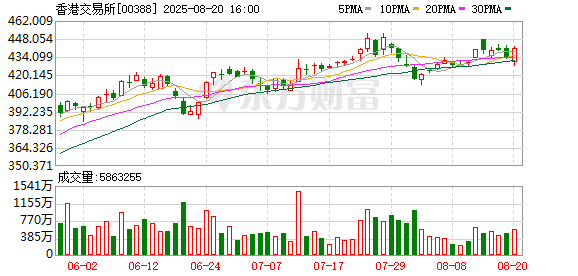
Group 1 - Morgan Stanley's shareholding in Hong Kong increased from 6.97% to 7.01% as of August 15 [2] - The average share price during this period was 436.4319 HKD [2]


港交所最新业绩公布:大增逾三成
Zheng Quan Shi Bao· 2025-08-20 09:21
Core Viewpoint - Hong Kong Exchanges and Clearing Limited (HKEX) reported record high revenue and profit for the first half of 2025, with total revenue and other income reaching HKD 14.076 billion, a 33% increase from the same period in 2024, and shareholder profit rising by 39% to HKD 8.519 billion [1][2][12] Financial Performance - Total revenue and other income for H1 2025 was HKD 14.076 billion, up 33% from HKD 10.621 billion in H1 2024 [2] - Shareholder profit for H1 2025 was HKD 8.519 billion, compared to HKD 6.125 billion in H1 2024, marking a 39% increase [2] - Basic earnings per share increased to HKD 6.74 from HKD 4.84, a 39% rise [2] - Interim dividend declared at HKD 6.00 per share, up 38% from HKD 4.36 in the previous year [2] Market Activity - The average daily trading volume for equity securities reached HKD 222.84 billion, a 122% increase from HKD 100.3 billion in the previous year [7] - The average daily trading volume for derivatives and warrants was HKD 17.4 billion, up 72% from HKD 10.1 billion [7] - The average daily trading volume for Hong Kong Stock Connect was HKD 111.04 billion, a 196% increase from HKD 37.5 billion [7] - The number of new listings in H1 2025 was 44, raising a total of HKD 1.094 billion, a more than sevenfold increase year-on-year [8][9] Strategic Developments - HKEX is focusing on enhancing its product ecosystem, optimizing listing systems, and expanding into new commodity business directions [2][12] - A cooperation agreement was signed with the Hong Kong Monetary Authority to explore improvements in post-trade securities infrastructure, including the development of an international central securities depository [12] - HKEX plans to include Renminbi-denominated stocks in the Stock Connect program to facilitate trading for mainland investors [13] - The introduction of a "Tech Company Fast Track" aims to streamline the listing process for technology and biotech firms [13] Future Outlook - The CEO expressed optimism for the second half of 2025, emphasizing the commitment to enhancing platform infrastructure and product offerings to adapt to the changing global macroeconomic environment [2][12] - The company remains cautious about external uncertainties, including geopolitical risks and interest rate fluctuations, while maintaining a positive outlook for market performance [14]
港交所最新业绩公布:大增逾三成!
证券时报· 2025-08-20 09:14
Core Viewpoint - Hong Kong Exchanges and Clearing Limited (HKEX) reported record high revenue and profit for the first half of 2025, driven by strong market performance and strategic initiatives [1][2][12]. Financial Performance - HKEX's revenue and other income reached HKD 14.076 billion, a 33% increase from HKD 10.621 billion in the first half of 2024 [2]. - Shareholder profit was HKD 8.519 billion, up 39% from HKD 6.125 billion in the same period last year [2]. - The average daily trading volume for equity products was HKD 240.24 billion, a significant increase of 118% year-on-year [7][8]. - The average daily trading volume for Hong Kong Stock Connect reached HKD 111.04 billion, nearly three times that of the previous year [9]. Market Highlights - The number of new listings in Hong Kong surged, with 44 companies raising a total of HKD 1,094 billion, marking a more than sevenfold increase compared to the previous year [8][9]. - HKEX's stock price increased by nearly 50% year-to-date in 2025, reflecting strong market sentiment [3]. Strategic Developments - HKEX is focusing on enhancing its product ecosystem, optimizing listing processes, and expanding its commodity business [2][12]. - A partnership with the Hong Kong Monetary Authority aims to improve post-trade securities infrastructure, which is crucial for the long-term development of fixed income and currency products [12][13]. - The introduction of the "Tech Company Fast Track" aims to facilitate the listing of technology and biotech firms, enhancing market quality and transparency [13]. Future Outlook - HKEX plans to continue improving its platform and product offerings to provide diverse options and liquidity for investors [2][12]. - The company remains cautiously optimistic about the market outlook for the second half of 2025, despite external uncertainties [14].

大行评级|大摩:维持港交所“增持”评级 看好盈利持续上行潜力
Ge Long Hui· 2025-08-20 08:03
Core Viewpoint - Morgan Stanley's report indicates that Hong Kong Exchanges and Clearing Limited (HKEX) experienced a 41% year-on-year increase in net profit for the second quarter, reaching HKD 4.44 billion, exceeding both Morgan Stanley's and market expectations by 7% and 8% respectively [1] Financial Performance - The significant growth in net profit was primarily driven by improved net investment income and rental income adjustments [1] - Core business performance remained strong, aligning with expectations [1] Trading Activity - The average daily trading volume increased by 95% year-on-year to HKD 238 billion, largely fueled by southbound trading [1] - In July, the average daily trading volume further increased to HKD 263 billion [1] Analyst Rating - Morgan Stanley maintains an "Overweight" rating on HKEX, expressing optimism about the potential for continued profit growth [1] - The target price set by Morgan Stanley for HKEX is HKD 500 [1]