Air China(00753)

Search documents
中国国航:旅客周转量同比上升3.2%
Ge Long Hui A P P· 2025-09-15 09:31
Group 1 - The passenger turnover volume of China International Airlines and its subsidiaries increased year-on-year as of August 2025, measured by revenue passenger kilometers [1] - The capacity input for passenger transport, measured by available seat kilometers, rose by 2.3% year-on-year [1] - The overall passenger turnover volume increased by 3.2% year-on-year [1] Group 2 - Domestic passenger capacity input decreased by 1.2% year-on-year, with passenger turnover volume remaining flat [1] - International passenger capacity input increased by 12.6% year-on-year, with passenger turnover volume rising by 12.9% [1] - Regional passenger capacity input decreased by 5.7% year-on-year, with passenger turnover volume declining by 2.2% [1] Group 3 - The average passenger load factor was 83.7%, an increase of 0.8% year-on-year [1] - The load factor for domestic routes increased by 1.1% year-on-year [1] - The load factor for international routes increased by 0.2% year-on-year, while regional routes saw an increase of 2.9% year-on-year [1]

研报掘金丨招商证券:中国国航盈利能力逐步回升,维持“增持”评级
Ge Long Hui A P P· 2025-09-15 09:31
Core Viewpoint - China National Airlines significantly reduced its net loss in the first half of the year, achieving profitability in Q2 2025, with a net profit of 240 million yuan compared to a net loss of 1.11 billion yuan in the same period last year [1] Financial Performance - In the first half of the year, the company reported a net loss attributable to shareholders of 1.81 billion yuan, a year-on-year reduction in loss of 980 million yuan [1] - Q2 2025 saw a net profit of 240 million yuan, marking a turnaround from a net loss of 1.11 billion yuan in the same quarter of the previous year [1] Future Outlook - The company is expected to benefit from the recovery of international flights, declining oil prices, industry supply-demand rebalancing, and improvements in operational efficiency, leading to stabilized revenue levels and gradual recovery in profitability [1] - However, short-term challenges include weak demand for business travel and pressure on peak season ticket prices, prompting a downward revision of the company's net profit forecasts for 2025-2027 to 1.53 billion, 3.47 billion, and 3.89 billion yuan respectively [1] Strategic Positioning - The company has a strong strategic position with its hub at Beijing Capital Airport, covering economically developed and densely populated regions of China, which is expected to continue benefiting from business travel and the recovery of international long-haul routes [1] - The company maintains a "buy" rating, reflecting confidence in its long-term advantages and market positioning [1]

国航已开通“一带一路”航线71条
Bei Jing Ri Bao Ke Hu Duan· 2025-09-15 09:31
Core Points - Air China operates a global route network covering over 1,200 destinations and has launched 71 routes under the Belt and Road Initiative, facilitating global connectivity [1] - The company has introduced a comprehensive inbound tourism solution, offering diverse language, payment, and platform services, along with smart features like AR transfer guidance and real-time luggage tracking [1] - A partnership agreement was signed with the China International Cultural Exchange Center to enhance cooperation in inbound tourism, aiming to integrate aviation services with cultural tourism [1] Summary by Sections - **Global Connectivity** - Air China has established a route network that connects over 1,200 destinations worldwide [1] - The airline has opened 71 routes as part of the Belt and Road Initiative, promoting global interconnectivity [1] - **Inbound Tourism Solutions** - The airline provides a full-process solution for inbound tourism, including multilingual support and various payment options [1] - Smart features such as AR transfer guidance and real-time luggage tracking are part of the service offerings [1] - Benefits for frequent flyers include seamless boarding, expedited customs clearance, and meal selection services through the Star Alliance [1] - **Partnership and Future Plans** - A cooperation agreement was signed with the China International Cultural Exchange Center to establish a long-term partnership [1] - Air China aims to leverage its route network and service advantages to deepen the integration of aviation and cultural tourism [1] - The goal is to create a new ecosystem for inbound cultural tourism through enhanced aviation services and a collaborative tourism system [1]
中国国航:8月客运运力投入同比上升2.3%,旅客周转量同比上升3.2%
Xin Lang Cai Jing· 2025-09-15 09:24
Core Insights - The company announced an increase in passenger turnover volume by 3.2% year-on-year as of August 2025, measured in revenue passenger kilometers [1] - Passenger capacity input rose by 2.3% year-on-year, measured in available seat kilometers [1] - Cargo capacity input increased by 1.5% year-on-year, measured in available cargo ton kilometers [1] - The volume of cargo mail turnover grew by 10.2% year-on-year, measured in revenue cargo ton kilometers [1] - The cargo load factor reached 42.1%, an increase of 3.3 percentage points year-on-year [1] - As of the end of August 2025, the company operated a total of 941 aircraft [1]
中国国航(601111):国际线运力持续修复,Q2淡季扭亏为盈
CMS· 2025-09-14 08:20
Investment Rating - The report maintains an "Accumulate" rating for the company [2][7]. Core Views - The company achieved a revenue of 80.76 billion yuan in the first half of 2025, a year-on-year increase of 1.6%, with a net loss of 1.81 billion yuan, which is a reduction in loss by 0.98 billion yuan compared to the previous year [6]. - In Q2 2025, the company turned profitable with a net profit of 240 million yuan, compared to a net loss of 1.11 billion yuan in the same period last year [6]. - The international flight capacity is steadily recovering, while domestic flight capacity has slightly decreased, supporting an increase in passenger load factor [6]. - The company expects to benefit from the recovery of international flights, declining oil prices, and improved operational efficiency, leading to a stabilization of revenue levels and gradual recovery of profitability [7]. Financial Performance - In H1 2025, the company reported a passenger revenue of 73.2 billion yuan, a slight increase of 0.08% year-on-year, while cargo and mail revenue rose by 7.5% to 3.58 billion yuan [6]. - The unit cost per seat kilometer decreased by 2.2% year-on-year, with fuel costs per seat kilometer down by 13.3% [6]. - The company achieved a gross profit of 2.41 billion yuan in H1 2025, representing a year-on-year increase of 17.4% [6]. Operational Metrics - In H1 2025, the company's available seat kilometers (ASK) and revenue passenger kilometers (RPK) increased by 3.4% and 5.2% year-on-year, respectively, with a passenger load factor of 80.7%, up by 1.4 percentage points [6]. - The international ASK and RPK grew by 16.7% and 17% year-on-year, with a load factor of 76.5% [6]. Future Outlook - The company is positioned to benefit from its strategic hub at Beijing Capital Airport, which covers economically developed and densely populated areas, and is expected to continue to gain from business travel and international long-haul routes [7]. - The report projects a decline in net profit for 2025-2027, estimating 1.53 billion yuan, 3.47 billion yuan, and 3.89 billion yuan, respectively [7].
国产民机“出海”新动作,系列化运营再拓展
Hua Xia Shi Bao· 2025-09-12 14:18
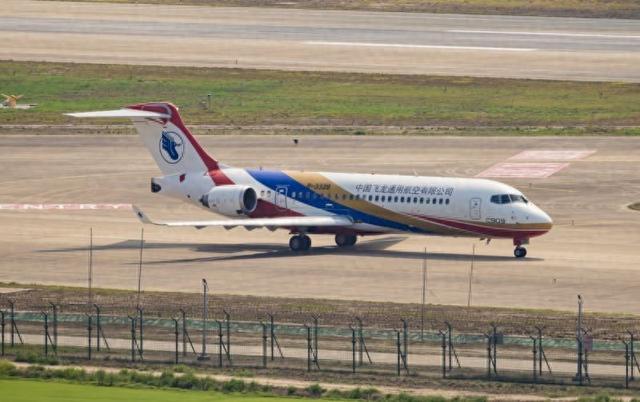
Core Points - The C909 regional jet, a domestically produced aircraft, has successfully delivered over 160 units and is now expanding its operational network, including its first regional route from Nanchang to Macau [2][3] - China Eastern Airlines (CEA) has initiated a direct flight route between Nanchang and Macau, operating three round trips weekly, which enhances connectivity between Jiangxi and Macau [3] - CEA's C909 fleet has grown to 28 aircraft, with over 50,000 flights and more than 3.6 million passengers carried since its commercial launch [3] - The C909 has been adopted by 12 domestic airlines, with Air China having the largest fleet of 35 units, and it has also begun international operations [4] - Internationally, the C909 has made inroads with TransNusa in Indonesia and Laos Airlines, marking its entry into new markets [5] - The C909's operational metrics indicate a need for expanded routes and increased delivery volumes to enhance its market presence [6] - A memorandum of understanding was signed with Air Cambodia for the procurement of 20 C909 aircraft, indicating growing international interest [7] - The C909 is recognized as China's most delivered regional jet, with a total of 166 units delivered by mid-2025, and it serves 143 airports domestically [8] - The C909 has diversified into various platform derivatives, including cargo, emergency rescue, medical, and business aircraft [9] - The delivery of the first C909 medical aircraft marks a significant development in the series' capabilities, aimed at enhancing emergency medical services [10] - The establishment of the C9 Life Wing Aviation Medical Alliance aims to integrate resources across various sectors to improve aviation medical rescue services [11]


机票经济舱均价降至740元
2 1 Shi Ji Jing Ji Bao Dao· 2025-09-10 14:59
Core Viewpoint - The Chinese civil aviation market is experiencing growth in transport scale and competition, with overall transport turnover, passenger transport volume, and seat occupancy rate increasing year-on-year, despite challenges from excessive competition and a complex demand environment [1] Domestic Market - The domestic market is characterized by a "volume increase and price decrease" phenomenon, leading to a decline in operational revenue for most airlines on domestic routes [1][5] - In the first half of 2025, the total transport turnover in the domestic market grew by 11.4%, and passenger transport volume increased by 3.9%, while the average ticket price for economy class fell by 6.9% compared to the same period in 2024 [5] - Major airlines like China Southern Airlines, China Eastern Airlines, and Air China reported varying degrees of revenue growth, with respective revenues of 862.91 billion, 807.57 billion, and 668.22 billion yuan, reflecting year-on-year growth rates of 1.77%, 1.6%, and 4.09% [1][3] Profitability - Despite pressure on domestic route prices, factors like falling oil prices and currency appreciation have alleviated some cost pressures for airlines [2] - Among the three major airlines, China Eastern Airlines had the least net profit loss, while China Southern Airlines saw an increase in its net profit loss [2] - The four major private airlines showed varying degrees of improvement in profitability [2] International Market - The international market saw significant capacity expansion, with a net increase of 123 international routes and a 28.5% year-on-year growth in international passenger transport volume in the first half of 2025 [11] - The three major airlines increased their international route capacity by 24.38%, 16.7%, and 22.5%, respectively, leading to growth in international passenger revenue despite some decline in passenger kilometer revenue [12][14] - Private airlines also expanded their international capacity significantly, with Spring Airlines, Juneyao Airlines, and Hainan Airlines increasing their international capacity by 41.04%, 65.55%, and 60.09%, respectively [13][14] Operational Strategies - Airlines are focusing on expanding international routes, particularly in Northeast Asia and Southeast Asia, with significant capacity increases noted for routes to Japan and South Korea [15][16] - Domestic airlines are also enhancing their route networks, particularly in the Yangtze River Delta region, to improve connectivity and operational efficiency [16][17] Industry Regulations - The "anti-involution" policy has been initiated in the domestic aviation industry, with the release of the "Self-Regulation Convention for Air Passenger Transport" aimed at curbing unhealthy market practices [8][9]


中国国航(00753) - 公告临时股东会之暂停过户期间
2025-09-10 13:58
香港交易及結算所有限公司及香港聯合交易所有限公司對本公告之內容概不負責,對其 準確性或完整性亦不發表任何聲明,並明確表示概不會就因本公告全部或任何部分內容 而產生或因倚賴該等內容而引致的任何損失承擔任何責任。 00753 公告 臨時股東會之暫停過戶期間 中國國際航空股份有限公司(「本公司」)董事會(「董事會」)謹此宣佈,本公司擬於二零二 五年九月三十日(星期二)舉行臨時股東會(「臨時股東會」)。本公司將於二零二五年九月 二十五日(星期四)至二零二五年九月三十日(星期二)期間(首尾兩日包括在內)暫停辦理 本公司H股(「H股」)股份過戶登記,期間不會辦理任何H股股份過戶。為符合資格出席臨 時股東會並於會上投票,H股持有人須於二零二五年九月二十四日(星期三)下午四時三十 分前,將所有過戶文件交回本公司於香港的H股股份登記處香港中央證券登記有限公司, 地址為香港灣仔皇后大道東183號合和中心17樓1712-1716室。於二零二五年九月二十四 日(星期三)營業時間結束時名列本公司股東名冊的H股股東將有資格出席臨時股東會並於 會上投票。 本公司將適時刊發臨時股東會通告。 承董事會命 中國國際航空股份有限公司 公司秘書 肖 ...
机票经济舱均价降至740元
21世纪经济报道· 2025-09-10 13:07
Core Viewpoint - The Chinese civil aviation market is experiencing growth in transport scale and competition, with a notable increase in transport turnover, passenger transport volume, and seat occupancy rate, but facing challenges from excessive competition and a complex demand environment [1][4]. Domestic Market Summary - The domestic market shows a "volume increase and price decrease" trend, leading to a decline in operational revenue for most airlines on domestic routes [1][4]. - In the first half of 2025, the total transport turnover increased by 11.4%, and passenger transport volume grew by 3.9%, while the average economy class ticket price fell by 6.9% compared to the same period in 2024 [4]. - Major airlines reported varying revenue growth: China Southern Airlines, Air China, and China Eastern Airlines achieved revenues of 862.91 billion, 807.57 billion, and 668.22 billion yuan, with year-on-year growth rates of 1.77%, 1.6%, and 4.09% respectively [1][3]. Profitability Situation - Despite pressure on domestic route prices, falling oil prices and currency appreciation have alleviated some cost pressures for airlines [2]. - Among the three major airlines, China Eastern Airlines had the least net profit loss, while China Southern Airlines' losses expanded [2]. - The profitability of the four major private airlines improved to varying degrees [2]. International Market Summary - The international market saw significant capacity expansion, with a net increase of 123 international routes and a 28.5% increase in passenger transport volume compared to the previous year [9]. - Major airlines increased their international route capacity: China Eastern Airlines by 24.38%, Air China by 16.7%, and China Southern Airlines by 22.5% [9][11]. - Despite a decline in passenger kilometer revenue, the increase in international passenger transport volume positively impacted revenue performance for these airlines [9]. Competitive Landscape - The domestic aviation industry continues to face intense competition, characterized by product service homogeneity and insufficient control over sales channels [4][6]. - The "anti-involution" policy has been initiated, with the release of the "Self-Discipline Convention for Air Passenger Transport" aimed at regulating unhealthy market behaviors [6][7]. Specific Airline Performance - Hainan Airlines and Spring Airlines increased their domestic route capacity by 2.67% and 3.61% respectively, while China Southern Airlines and Air China saw declines in passenger kilometer revenue [6]. - Huaxia Airlines significantly increased its domestic route capacity by 21.42%, resulting in a 27.13% increase in passenger turnover and a 12.41% revenue growth [5]. International Route Focus - Airlines are focusing on routes to Japan and Southeast Asia, with Spring Airlines reporting a 116.8% increase in capacity for Japanese routes [12]. - New international routes have been opened by various airlines, enhancing connectivity to Europe and countries involved in the Belt and Road Initiative [13].

航司上半年:国际淘金、国内以价换量,华夏航空“偏远”策略逆袭
2 1 Shi Ji Jing Ji Bao Dao· 2025-09-10 11:16
Core Insights - The Chinese civil aviation market is experiencing growth in transport scale, with key indicators such as total turnover, passenger transport volume, and seat occupancy rate showing year-on-year improvements, despite ongoing over-competition and a complex demand environment [1][4] - The domestic market is characterized by a "volume increase and price drop" phenomenon, leading to a decline in operational revenue for most airlines on domestic routes [1][4] - In the international market, airlines have increased capacity on international routes, resulting in a significant rise in passenger turnover, although some airlines have seen a decrease in revenue per passenger kilometer [1][8] Domestic Market Performance - The overall performance of the domestic market shows a trend of "volume increase and price drop," with the average economy class ticket price dropping by 6.9% year-on-year to 740 yuan [4][5] - Major airlines have adjusted their capacity, with China Eastern and China Southern increasing domestic capacity by 1.07% and 0.44%, respectively, while Air China reduced its capacity by 1.26% [5][7] - The domestic passenger transport volume increased by 3.9%, but operational revenue for most airlines declined due to falling ticket prices [4][5] Financial Performance of Major Airlines - China Southern Airlines reported revenue of 86.291 billion yuan, a year-on-year increase of 1.77%, but a net profit loss of 15.33 billion yuan, widening by 24.84% [3][2] - China Eastern Airlines achieved revenue of 66.822 billion yuan, a 4.09% increase, with a net profit loss of 14.31 billion yuan, improving by 48.30% [3][2] - Air China generated revenue of 80.757 billion yuan, a 1.6% increase, with a net profit loss of 18.06 billion yuan, improving by 35.11% [3][2] International Market Expansion - The international market saw a net increase of 123 international routes, with passenger transport volume growing by 28.5% year-on-year, surpassing pre-pandemic levels [8][9] - Major airlines increased their international capacity significantly, with China Eastern, China Southern, and Air China raising their capacity by 24.38%, 22.5%, and 16.7%, respectively [8][10] - Despite a decline in revenue per passenger kilometer, international passenger revenue for China Southern and Air China increased by 15.74% and 16.09%, respectively [8][10] Strategic Focus and Market Trends - Airlines are focusing on expanding international routes, particularly in Northeast Asia and Southeast Asia, with significant capacity increases noted for Spring Airlines and others [11][12] - The industry is witnessing a shift towards more structured competition, with the introduction of self-regulatory agreements aimed at curbing price dumping and promoting healthy market practices [7][8] - Domestic airlines are enhancing their route networks, particularly in the Yangtze River Delta region, to improve connectivity and operational efficiency [12][13]