HISENSE H.A.(00921)

Search documents
家电行业专题:汇率升值,出海后势如何?
Guolian Minsheng Securities· 2026-02-06 11:37
Investment Rating - The report maintains a "Recommended" rating for the home appliance industry [1] Core Insights - The report highlights that the nominal appreciation of the RMB is expected to have limited impact on export recovery and external sales profitability, as leading brands have strong pricing power, overseas production capacity, and effective foreign exchange hedging [8][11] - The report emphasizes that the home appliance sector is likely to benefit from increased foreign capital inflow due to RMB appreciation, with the sector's valuation and holdings at historical lows, indicating significant upside potential [7][8] Summary by Sections 1. Industry: Nominal Appreciation and Dollar Price Elasticity - Since Q2 2025, the RMB has appreciated approximately 5% due to the easing of trade tensions and economic recovery expectations, with the CFETS index remaining close to its 3-5 year average [11][12] - The report discusses the impact of exchange rates on export volume and pricing, noting that during appreciation phases, exporters may adjust dollar prices or lower RMB prices to mitigate the effects of appreciation [12][22] 2. Financial Statements: External Sales Profitability and Hedging - External sales gross margins have been under pressure, with historical data showing that external sales margins are generally weaker than domestic sales margins [4][6] - The report indicates that major companies have high foreign exchange hedging ratios, which effectively mitigate the impact of exchange rate fluctuations on their financials [4][6] 3. Capital: High Foreign Ownership Proportion - The report notes a strong correlation between RMB appreciation and net inflows of foreign capital, with the home appliance sector consistently attracting significant foreign investment [7][8] - The sector's Northbound trading and public fund holdings are at historical lows, suggesting ample room for upward movement [7] 4. Industry Perspective and Investment Recommendations - The report suggests that under the expectation of moderate appreciation, the competitive edge of leading companies backed by domestic supply chain advantages and proactive overseas capacity expansion will remain intact [8] - Recommended stocks include high-quality white goods leaders such as Midea Group, Haier Smart Home, Gree Electric Appliances, and Hisense Home Appliances, as well as TV leader Hisense Visual and global leaders in robotic vacuum cleaners like Roborock and Ecovacs [8]



海信家电(00921) - 截至2026年1月31日止月份之股份发行人的证券变动月报表
2026-02-05 09:05
FF301 股份發行人及根據《上市規則》第十九B章上市的香港預託證券發行人的證券變動月報表 截至月份: 2026年1月31日 狀態: 新提交 致:香港交易及結算所有限公司 公司名稱: 海信家電集團股份有限公司 呈交日期: 2026年2月5日 I. 法定/註冊股本變動 | 1. 股份分類 | 普通股 | 股份類別 | H | | | 於香港聯交所上市 (註1) | | 是 | | | --- | --- | --- | --- | --- | --- | --- | --- | --- | --- | | 證券代號 (如上市) | 00921 | 說明 | | | | | | | | | | | 法定/註冊股份數目 | | | 面值 | | | 法定/註冊股本 | | | 上月底結存 | | | 459,589,808 | RMB | | | 1 RMB | | 459,589,808 | | 增加 / 減少 (-) | | | | | | | RMB | | | | 本月底結存 | | | 459,589,808 | RMB | | | 1 RMB | | 459,589,808 | | 2. 股份分類 | ...
美加墨足球世界杯6月启幕,重点关注四条投资主线(附概念股)
Zhi Tong Cai Jing· 2026-02-05 00:55
Group 1: Core Insights - The 2026 FIFA World Cup in North America is set to begin in June, with significant pre-event sales of related sports merchandise already observed in Yiwu, China [1] - Yiwu's sports goods and equipment exports reached 11.65 billion yuan in 2025, marking a 20.3% year-on-year increase, with major export markets including the USA, Brazil, and Saudi Arabia [1] - The upcoming World Cup is expected to generate a consumption boom, benefiting local manufacturers and suppliers in Yiwu, which has historically capitalized on major sporting events [1] Group 2: Industry Impact - Analysts predict a surge in demand for sports-related products during the World Cup, directly benefiting the performance of related companies [2] - The commercial value of the World Cup exceeds $30 billion, significantly higher than other sports events, indicating strong economic activity linked to the tournament [2] - Investment opportunities are identified in four main areas: lottery sales and operators, sports venue facilities and equipment suppliers, electronic display providers, and leisure food and beverage suppliers [2] Group 3: Related Companies - Anta Sports (02020) has acquired Puma, a major sponsor of the 2026 World Cup, and holds partnerships with top clubs like Manchester City and AC Milan [3] - Shenzhou International (02313) manufactures football apparel for brands like Nike and Adidas, ensuring stable order flow [3] - Hisense (00921) is a global official sponsor of the 2026 World Cup, marking its third consecutive sponsorship [4] - Yongjia Group (03322) specializes in manufacturing fan scarves and flags, positioning itself as a core enterprise in the Yiwu supply chain [5] - Rainbow International Group (02678) supplies high-quality fabrics for football apparel related to the World Cup [6]

港股概念追踪 | 美加墨足球世界杯6月启幕 重点关注四条投资主线(附概念股)
智通财经网· 2026-02-04 23:49
Group 1: Market Overview - The 2026 FIFA World Cup will commence in June, with significant demand for related sports products already observed in Yiwu, China, starting from May 2025 [1] - Yiwu's exports of sports goods and equipment reached 11.65 billion yuan in 2025, marking a 20.3% year-on-year increase, with major export markets including the USA, Brazil, and Saudi Arabia [1] - Yiwu has historically benefited from major sporting events, with a significant share of the global market for World Cup-related merchandise, accounting for 70% during the last World Cup [1] Group 2: Company Insights - Anta Sports (02020) has acquired Puma, the third-largest sponsor for the 2026 World Cup, and holds resources from top clubs like Manchester City and AC Milan [3] - Shenzhou International (02313) is a stable supplier for Nike and Adidas, producing football apparel with strong order stability [3] - Hisense (00921) is the global official sponsor for the 2026 World Cup, marking its third consecutive sponsorship [4] - Yongjia Group (03322) manufactures fan scarves and flags, positioning itself as a core enterprise within the Yiwu industrial chain [5] - Tianhong International Group (02678) supplies high-quality fabrics for football apparel related to the World Cup [6] Group 3: Investment Opportunities - Analysts suggest that companies related to sports goods will benefit directly from the World Cup, with a focus on four investment themes: lottery sales and operators, sports venue facilities and equipment suppliers, electronic display providers, and leisure food and beverage suppliers [2]
海信家电:公司股价波动受多重因素影响
Zheng Quan Ri Bao Wang· 2026-02-04 11:41
Group 1 - The core viewpoint of the article is that Hisense Home Appliances (000921) acknowledges that its stock price fluctuations are influenced by multiple factors, including capital market funding styles, macroeconomic conditions, and industry changes [1] Group 2 - The company responded to investor inquiries on its interactive platform, indicating transparency in communication regarding stock performance [1] - The mention of various influencing factors suggests that the company is aware of the broader economic environment and its potential impact on performance [1]
港股概念追踪|以旧换新政策带动消费需求释放 机构普遍看好家电产业链估值回暖(附概念股)
Zhi Tong Cai Jing· 2026-02-03 01:32
Core Viewpoint - The "trade-in for new" policy is expected to significantly boost consumer demand in the home appliance sector, with sales revenue for various categories projected to grow substantially by 2025 [1][2]. Group 1: Consumer Demand and Market Trends - The National Taxation Administration's analysis indicates that by 2025, retail sales for home appliances like refrigerators, kitchen appliances, and communication devices are expected to increase by 17.4%, 12.9%, and 18.6% year-on-year, respectively [1]. - A new round of trade-in activities is actively taking place across various regions, with local governments providing subsidies to encourage participation, leading to high consumer turnout [1]. Group 2: Industry Outlook and Valuation - Current valuations in the home appliance sector are at historical lows, presenting a compelling investment opportunity due to stable growth and high dividend characteristics [2]. - Expectations for improved performance are noted, with a projected increase in the proportion of actively managed equity funds invested in home appliances by Q4 2025, although still at low historical levels [2]. Group 3: Key Companies in the Home Appliance Sector - Notable companies in the home appliance industry include Midea Group (00300), Haier Smart Home (06690), Hisense Home Appliances (00921), TCL Electronics (01070), Skyworth Group (00751), and Xiaomi Group-W (01810) [3].



以旧换新政策带动消费需求释放,机构普遍看好家电产业链估值回暖(附概念股)
Zhi Tong Cai Jing· 2026-02-03 01:32
Group 1 - The core viewpoint is that China's consumer market is expected to be active in 2025, driven by the "trade-in" policy, leading to significant sales growth in various retail sectors, including home appliances and communication devices [1] - Retail sales for home appliances are projected to grow by 17.4%, kitchen appliances by 12.9%, and communication devices by 18.6% year-on-year in 2025, indicating a rapid release of consumer demand [1] - A new round of trade-in activities is gaining momentum across various regions, with local governments providing subsidies to encourage participation, resulting in high turnout from residents [1] Group 2 - Current valuations in the home appliance sector are at historical lows, presenting a compelling investment opportunity due to their stable growth and high dividend characteristics [2] - There is an expected recovery in the proportion of actively managed equity funds holding home appliance stocks by Q4 2025, although it remains at a historically low level [2] - The performance of leading home appliance companies is anticipated to remain robust, suggesting a positive outlook for the sector [2] Group 3 - Relevant Hong Kong stocks in the home appliance industry include Midea Group (00300), Haier Smart Home (06690), Hisense Home Appliances (00921), TCL Electronics (01070), Skyworth Group (00751), and Xiaomi Group-W (01810) [3]
闲资寻路 信托产品成上市公司新选择
Zhong Guo Zheng Quan Bao· 2026-02-02 20:45
Core Insights - Trusts have become an important tool for listed companies to enhance capital efficiency and increase profits, with over 50 companies in A-shares allocating nearly 30 billion yuan to trust investments since 2025 [1][2] - The trend reflects a shift in corporate investment preferences and the trust industry's ongoing exploration of business development paths [1] Group 1: Trusts in Corporate Finance - Listed companies are increasingly using idle funds to purchase financial products, with a notable rise in the importance of trust companies in this area [1][2] - Hai Xin Home Appliances has invested over 10 billion yuan in trust products since 2025, indicating a significant commitment to this investment strategy [1] - Trust products are primarily chosen for their ability to enhance returns on idle funds while maintaining low risk [2] Group 2: Diverse Collaboration Models - The collaboration between listed companies and trust companies is expanding to include financing support, employee incentives, and asset revitalization [3] - Trust loans have been utilized by companies like Guocheng Mining, which announced a 2 billion yuan trust loan to refinance existing debts [3] - Trust companies are also engaging in employee incentive programs, such as the employee stock ownership plan trust established by Yirui Technology with a total trust fund of up to 100 million yuan [3] Group 3: Professionalism in Wealth Management - The trust industry is focusing on enhancing its core competitiveness by addressing the increasingly professional and comprehensive financial needs of listed companies [4] - Trust companies are expected to act as professional buy-side advisors, helping clients select quality financial products from the entire market [4] - The development of wealth management service trusts can enhance client loyalty and promote synergy between asset management trusts and asset service trusts [5]
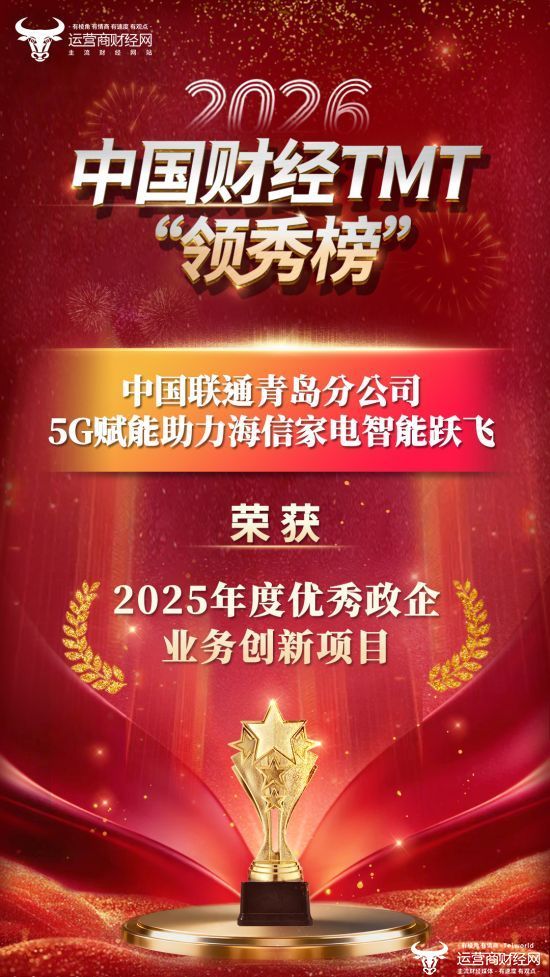
喜讯!2026中国财经TMT“领秀榜”获奖结果出炉!青岛联通斩获“2025年度优秀政企业务创新项目”奖!
Xin Lang Cai Jing· 2026-01-29 13:37
Core Viewpoint - The 2026 China Finance TMT "Leading List" ceremony was held online, showcasing significant annual awards across various industries, highlighting innovation in enterprise business solutions [1] Group 1: Event Overview - The 2026 China Finance TMT "Leading List" ceremony took place on January 29, 2026, and was conducted via online live streaming [1] - This event has been successfully organized for ten consecutive years by the Operator Finance Network [1] Group 2: Awards and Recognition - China Unicom's Qingdao branch received the "2025 Annual Excellent Enterprise Business Innovation Project" award for its 5G empowerment initiative that supports Hisense Home Appliances [1] - The awards attracted widespread attention and active participation from various stakeholders, including operator group companies, provincial companies, specialized companies, research institutes, and local companies [1]

鲍一:如何进入全球品牌TOP阵营|商通世界 贸促未来
Sou Hu Cai Jing· 2026-01-29 12:41
Core Insights - Hisense achieved over 220 billion yuan in global revenue in the past year, with overseas revenue accounting for more than 46% [1] - The company has established a strong presence in international markets through localization strategies and brand development [6][7] Group 1: Global Market Strategy - Hisense has been expanding into overseas markets since the 1990s, utilizing local operations, production, global R&D, capital acquisitions, and sports marketing [6] - The company has a "7+1" regional center model, dividing the global market into eight regions, each with sales, R&D, and manufacturing headquarters [6] - Hisense aims for a localization rate of over 48% in its supply chain to enhance global collaboration [6] Group 2: Product Adaptation and Market Leadership - Hisense tailors its products to meet local preferences, such as gold-colored appliances in the Middle East and energy-efficient products in Europe [7] - The company has achieved leading market shares in various regions, including first place in the refrigerator market in South Africa and Australia, and top three in several ASEAN countries for televisions [7] - Hisense's focus on brand internationalization is seen as essential for long-term growth, with a plan to increase the share of its own brands [7] Group 3: Brand Development and Innovation - Hisense has been a top sponsor of major sports events since 2014, enhancing its brand visibility through partnerships with clubs and events [8] - The company invests 5% of its sales revenue in R&D, employing over 15,000 engineers and holding more than 60,000 patent applications [8] - Innovation and quality are emphasized as key factors for navigating market cycles, with Hisense participating in the development of numerous international and national standards [8]