
CCB(00939)

Search documents
金融科技助力进博会:从智能体验到交易撮合,金融力量贯穿“买与卖”
Di Yi Cai Jing· 2025-11-10 11:10
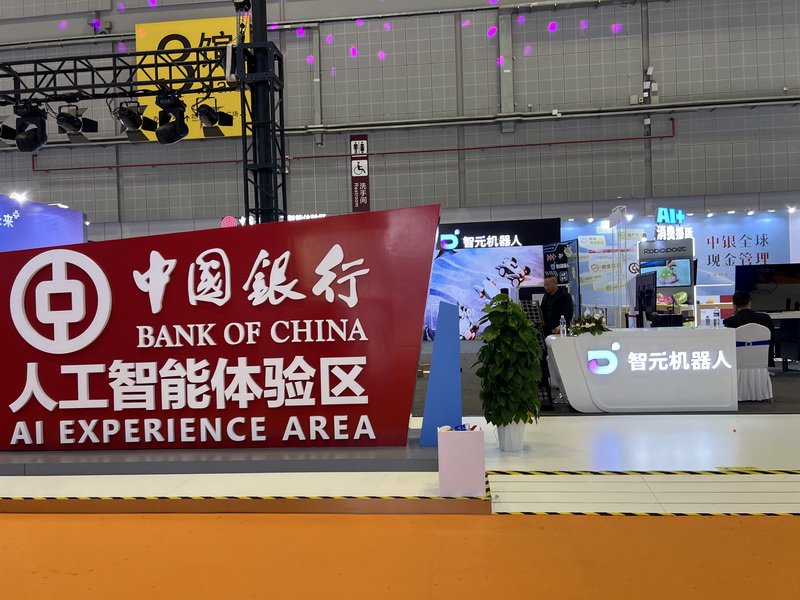
Core Insights - The eighth China International Import Expo (CIIE) concluded with an intended transaction amount of $83.49 billion, marking a record in both the number of participating companies and exhibition area, with 461 new global product launches [1] Group 1: Financial Institutions' Role - Financial institutions played a crucial role in enhancing the exhibition experience through technology and services, creating a seamless "transaction network" for buyers and sellers [1] - The integration of artificial intelligence (AI) and financial technology was highlighted, with various banks showcasing AI-driven experiences, such as China Bank's AI experience zone featuring robots and interactive displays [2][4] - The introduction of digital currency and upgraded payment systems facilitated smoother transactions, with the Industrial and Commercial Bank of China (ICBC) offering a commemorative digital currency wallet for the expo [6][9] Group 2: AI and Interactive Experiences - AI technology was prominently featured, with banks like China Construction Bank presenting humanoid robots capable of natural language interaction and full-service capabilities [5] - Interactive experiences, such as virtual racing and personalized AI portraits, attracted significant visitor engagement, demonstrating the blend of financial services with entertainment [5][6] - The use of AI in financial services was emphasized, with robots not only providing assistance but also marketing financial products effectively [4][5] Group 3: Payment Innovations - The payment system saw significant upgrades, with digital currency becoming a standard for transactions at the expo, allowing for quick and efficient cross-border payments [9][10] - The introduction of "instant buy and refund" services streamlined the tax refund process for international visitors, significantly reducing the time required for refunds [10] - The collaboration between China UnionPay and China Bank to offer integrated payment and tax refund services showcased the evolution of payment solutions at the expo [10] Group 4: Trade Facilitation and Collaboration - Financial institutions positioned themselves as resource hubs, facilitating connections between exhibitors and domestic buyers through various matchmaking activities [11] - The launch of upgraded banking apps by financial institutions aimed to enhance service integration, providing a comprehensive "finance + lifestyle" experience for exhibitors and consumers [13] - The role of financial institutions has evolved from merely providing loans to becoming key players in promoting global supply chain cooperation, as evidenced by the significant growth in cross-border settlement volumes [13]


因业务管理不到位等问题,建设银行、合众人寿、中国银行被罚!
Zhong Guo Neng Yuan Wang· 2025-11-10 10:40
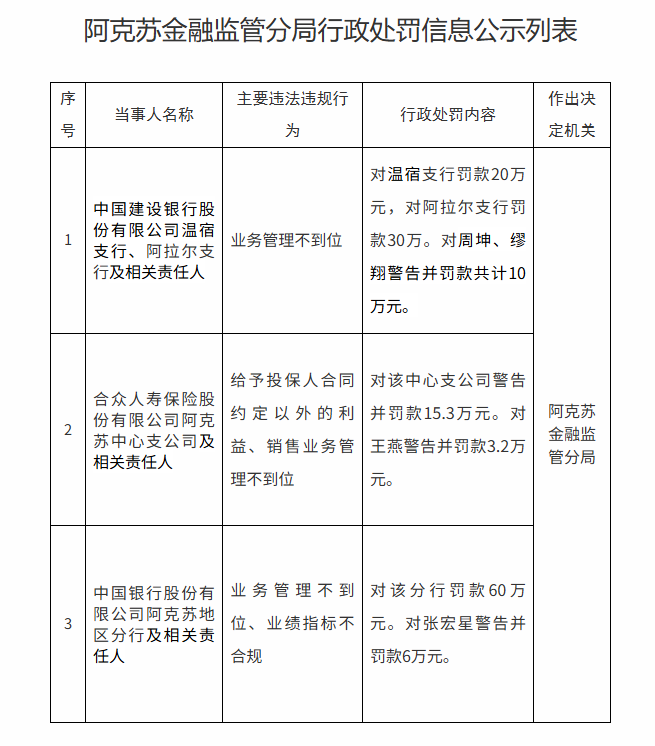
Core Points - Recent administrative penalties were imposed on several financial institutions in the Aksu region due to inadequate business management and non-compliance with performance indicators [1][2] Group 1: Penalties on Financial Institutions - China Construction Bank's Wensu and Alar branches were fined 200,000 yuan and 300,000 yuan respectively for poor business management, with responsible individuals receiving warnings and a total fine of 100,000 yuan [1][2] - Huazhong Life Insurance's Aksu Central Branch was fined 153,000 yuan for providing benefits outside of contractual agreements and inadequate sales management, with the responsible individual fined 32,000 yuan [1][2] - Bank of China Aksu Branch was fined 600,000 yuan for inadequate business management and non-compliance with performance indicators, with the responsible individual fined 60,000 yuan [1][2]


港股主要指数高开高走 恒指涨1.55% 科指涨1.34%




Xin Hua Cai Jing· 2025-11-10 09:35
Group 1 - The Hong Kong stock market saw significant gains on November 10, with the Hang Seng Index rising by 1.55% to close at 26,649.06 points, the Hang Seng Tech Index increasing by 1.34% to 5,915.56 points, and the National Enterprises Index up by 1.90% to 9,443.24 points [1] - The Hang Seng Index opened at 26,319.40 points, fluctuated around this level in the morning, and surged in the afternoon, ultimately gaining 407.23 points with a total turnover exceeding 214.7 billion HKD [1] - The southbound trading under the Stock Connect saw a net inflow of over 6.6 billion HKD on the same day [1] Group 2 - Most sectors experienced upward movement, including biopharmaceuticals, technology, real estate, gold, banking, insurance, brokerage, and new consumption, while sectors like coal, lithium batteries, and building materials showed mixed results, and chips and electricity sectors mostly declined [1] - Notable individual stock performances included Pop Mart rising by 8.11%, China Resources Land increasing by 4.45%, BYD gaining 3.98%, and Ideal Auto up by 2.39%, while SMIC fell by 0.99% [1] - Among the top three stocks by trading volume, Tencent Holdings rose by 2.44% with a turnover exceeding 9.3 billion HKD, Alibaba increased by 2.06% also with over 9.3 billion HKD in turnover, and Xiaomi Group saw a slight increase of 0.28% with a turnover exceeding 6.9 billion HKD [2]
“银行App迎来关停潮”冲上热搜!中国银行等多家银行公告:这些App将关停
Mei Ri Jing Ji Xin Wen· 2025-11-10 08:57
Core Viewpoint - The banking industry is experiencing a wave of app closures, with many banks, including state-owned and city commercial banks, shutting down their independent apps, particularly in the credit card and direct banking sectors [2][3]. Group 1: App Closures and Mergers - Over 10 small and medium-sized banks have completed the shutdown of their credit card apps in 2024, with at least 6 more expected to follow by October 2025, integrating their functions into main mobile banking apps [3]. - China Bank has become the first state-owned bank to close its independent credit card app, "Bountiful Life," migrating all functions to the "Bank of China" app [2][3]. - The trend of closing direct banking apps began earlier, with at least 21 banks ceasing operations of their direct banking apps in 2023, reducing the number of such apps to less than one-tenth of their peak [3][8]. Group 2: Reasons for App Consolidation - The closure of multiple apps is driven by the need to reduce operational costs and improve user experience, as many independent apps have low user engagement and high maintenance costs [7][8]. - Regulatory pressures have accelerated the consolidation process, with financial authorities mandating banks to optimize or terminate apps that have low user activity and high compliance risks [8]. - The credit card industry is entering a contraction phase, with a decline in the number of credit cards issued and overall transaction activity, prompting banks to shut down underperforming apps [8]. Group 3: User Behavior and Market Trends - Users prefer a single app that offers comprehensive financial and lifestyle services, leading banks to recognize the importance of a unified digital experience [7][9]. - The banking sector is transitioning from a phase of aggressive app proliferation to a more rational approach, focusing on enhancing user engagement and operational efficiency [7][9]. - The decline in user engagement is evident, with only a few credit card service apps achieving over 10 million monthly active users, while many others struggle to maintain relevance [6][7].


国有大型银行板块11月10日涨0.61%,建设银行领涨,主力资金净流入3.85亿元
Zheng Xing Xing Ye Ri Bao· 2025-11-10 08:48
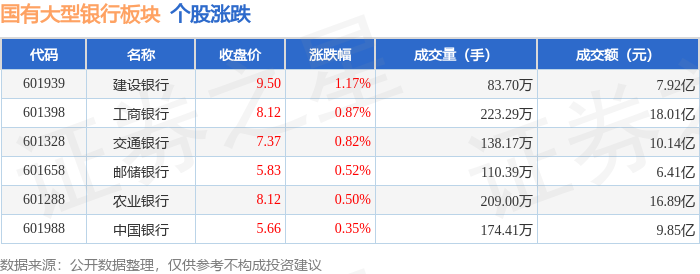
Core Insights - The state-owned large bank sector saw an increase of 0.61% on November 10, with China Construction Bank leading the gains [1] - The Shanghai Composite Index closed at 4018.6, up 0.53%, while the Shenzhen Component Index closed at 13427.61, up 0.18% [1] Bank Performance Summary - China Construction Bank (CCB) closed at 9.50, up 1.17% with a trading volume of 837,000 shares and a transaction value of 79.267 million [1] - Industrial and Commercial Bank of China (ICBC) closed at 8.12, up 0.87% with a trading volume of 2.2329 million shares and a transaction value of 1.801 billion [1] - Bank of Communications closed at 7.37, up 0.82% with a trading volume of 1.3817 million shares and a transaction value of 1.014 billion [1] - Postal Savings Bank closed at 5.83, up 0.52% with a trading volume of 1.1039 million shares and a transaction value of 641 million [1] - Agricultural Bank of China closed at 8.12, up 0.50% with a trading volume of 2.09 million shares and a transaction value of 1.689 billion [1] - Bank of China closed at 5.66, up 0.35% with a trading volume of 1.7441 million shares and a transaction value of 985 million [1] Fund Flow Analysis - The state-owned large bank sector experienced a net inflow of 385 million from institutional investors, while retail investors saw a net outflow of 107 million [1] - The detailed fund flow for individual banks shows that ICBC had a net inflow of 172 million from institutional investors, while it faced a net outflow of 67.16 million from retail investors [2] - Bank of Communications had a net inflow of 133 million from institutional investors, with a net outflow of 34.23 million from retail investors [2] - CCB had a net inflow of 57.239 million from institutional investors, but also faced a net outflow of 53.9629 million from retail investors [2] - Agricultural Bank of China had a net inflow of 10.959 million from institutional investors, while retail investors contributed a net inflow of 60.3273 million [2] - Bank of China experienced a net outflow of 20.5749 million from institutional investors, but had a net inflow of 12.2374 million from retail investors [2]


以文明为翼 筑金融担当 —— 建行吉林省分行机关创建全国文明单位之路
Zhong Guo Jin Rong Xin Xi Wang· 2025-11-10 06:56
Core Insights - The article highlights the efforts of China Construction Bank's Jilin Branch in enhancing financial security through technology and community service initiatives [1][2][3][4][6][7] Group 1: Technological Advancements - The Jilin Branch is migrating its core systems to a domestically developed platform to ensure financial security [1] - The bank has established a "1+2+3+5+X" working system to support the revitalization strategy of Jilin, focusing on retail, corporate, and county-level services [3] Group 2: Community Engagement and Social Responsibility - The bank's financial service teams are actively engaging with local communities, providing assistance and education on financial matters [2] - Initiatives like the "Laborer’s Harbor" and "Veteran Station" have been set up to provide support and services to veterans and local residents [4] - The bank has launched various programs to enhance public awareness about financial safety and fraud prevention, reaching tens of thousands of people [5] Group 3: Support for the Real Economy - The Jilin Branch has provided timely loans to local businesses, significantly aiding their operational capabilities [3] - The bank's green finance initiatives have achieved a loan balance exceeding 30 billion yuan, focusing on ecological and renewable energy projects [3] - The bank has also established a robust agricultural loan portfolio, with nearly 10 billion yuan in loans to support rural development [6] Group 4: Employee Welfare and Organizational Culture - The bank promotes a supportive work environment through various employee engagement initiatives, including interest associations and health programs [6] - Recognition programs for outstanding employees foster a sense of belonging and motivation among staff [6][7]
从增量扩面到提质控险 银行业普惠金融迈向差异化精准服务
2 1 Shi Ji Jing Ji Bao Dao· 2025-11-10 04:21
Core Insights - The report highlights the significant growth and development of inclusive finance in China, particularly focusing on small and micro enterprises and rural areas, with a notable annual growth rate of over 20% in inclusive micro loans during the 14th Five-Year Plan period [1][2] - As of June 2025, the balance of inclusive micro loans reached 36 trillion yuan, which is 2.3 times that of the end of the 13th Five-Year Plan, with a decrease in interest rates by 2 percentage points [1][2] - The average interest rate for newly issued inclusive micro loans was 3.48% as of June 2025, reflecting a decrease of 66 basis points year-on-year [1][2] Group 1: Digital Empowerment - Digital technology has been a key driver for the development of inclusive finance, with banks utilizing big data and AI to enhance loan approval efficiency and reduce financing costs [2][7] - The market structure among banks is changing, with large commercial banks holding a 45.11% share of inclusive micro loans, while rural financial institutions have seen a decline in their market share [2][3] - The average growth rate of inclusive micro loans has been slowing down, with a decrease from 30.9% in 2020 to 12.3% by mid-2025 [2][3] Group 2: Performance of Listed Banks - Among listed banks, Agricultural Bank of China, Industrial and Commercial Bank of China, and Beijing Bank reported the highest growth rates in inclusive micro loans at 18.50%, 17.30%, and 17.27% respectively [3][4] - In contrast, some banks, including Shanghai Bank and Zhengzhou Bank, experienced negative growth rates of -3.97% and -2.06% [3][4] - The performance of different banks varies significantly, with state-owned banks generally showing stronger growth in inclusive micro loans compared to smaller banks [3][4] Group 3: Interest Rates and Risk Management - The interest rates for newly issued inclusive micro loans have decreased across various banks, with the highest rate at 4.20% and the lowest at 2.94% [7][8] - The gap in interest rates between large and small banks is narrowing, with some large banks' rates aligning closely with those of smaller banks [8][9] - The report emphasizes the importance of risk management in the inclusive finance sector, with several banks focusing on improving asset quality and managing non-performing loans [9][10]



南太湖新区:经济生态化和产业绿色化的先行者
Di Yi Cai Jing· 2025-11-10 02:42
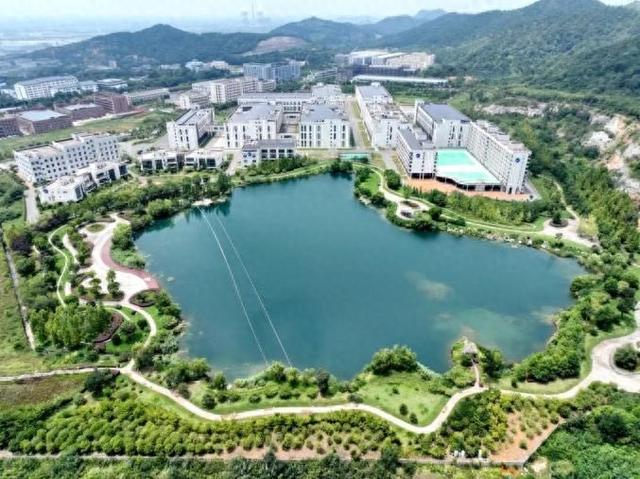
Core Insights - The article highlights the development of the South Taihu New Area as a leader in green finance and ecological economic transformation in the Yangtze River Delta region [1][3][13] Group 1: Economic Development - The South Taihu New Area was officially established in June 2019, with its strategic framework being laid out during the 14th Five-Year Plan period [3] - The area focuses on ecological economic development and green industrialization, positioning itself at the forefront of the Yangtze River Delta [3] - Key industries include new energy, semiconductor and optoelectronics, biomedicine, and leisure tourism, with a notable emphasis on "green manufacturing" [3][5] Group 2: Industry Performance - As of Q3 this year, the main industries in the South Taihu New Area achieved a total output value of 14.15 billion yuan, marking a growth of 14.65% and accounting for 58.8% of the industrial output [5] - The new energy sector has attracted major enterprises such as Hive Energy and Tianneng Lithium Battery, covering various fields including electric vehicles and battery materials [5] Group 3: Financial Support and Innovation - The local financial system emphasizes serving the real economy, focusing on technology finance, green finance, inclusive finance, pension finance, and digital finance [9] - A notable initiative includes the establishment of a "Technology R&D Loan" by the local bank, which supports innovative biopharmaceutical companies with a loan of 70 million yuan based on their R&D capabilities and intellectual property [10] Group 4: Government and Enterprise Interaction - The South Taihu New Area has implemented a "direct communication" mechanism between decision-makers and local entrepreneurs, facilitating feedback and addressing business challenges [11] - The area has held numerous "government-enterprise consultation meetings" to understand and respond to the needs of local businesses [11] Group 5: International Cooperation in Green Finance - The South Taihu New Area aims to become a pilot zone for international cooperation in green finance, leveraging platforms like the G20 Sustainable Finance Working Group [13] - The area encourages financial institutions to adopt long-term plans for green finance and explore new paths for integrating green and open finance [13]
低价“银行直供房”激增,有房产价格低于市价25%
Sou Hu Cai Jing· 2025-11-10 02:36
Core Insights - Recent trends show banks like Agricultural Bank of China and China Construction Bank entering the real estate market with "bank direct supply houses," offering properties at prices up to 25% lower than market value, such as a property priced at 2 million being sold for 1.5 million [1][3] - The low-priced properties are part of banks' strategy to accelerate the disposal of non-performing assets, primarily consisting of collateral obtained through judicial processes, with banks opting for direct sales to quickly recover funds [3][4] - The direct supply houses offer clear property rights, alleviating concerns over hidden debts, but the low prices also indicate challenges in the judicial auction market, where the average discount rate for auctioned properties has been 31% since June, leading to increased instances of unsold properties [4][5] Investment Perspective - From an investment standpoint, bank direct supply houses present potential opportunities for bargain purchases; however, investors should be cautious as these properties are often located in third and fourth-tier cities or non-core areas, which may lead to liquidity issues when reselling [5][6] - Investors should remain patient and monitor price fluctuations, as banks may frequently adjust prices to achieve quick sales, making it essential to understand local real estate markets to ensure successful future transactions [5][6] - Overall, while bank direct supply houses offer potential investment opportunities, careful consideration of property location, liquidity, market trends, and pricing strategies is crucial for minimizing risks [6]
广东:激发大湾区体育消费新活力
Jin Rong Shi Bao· 2025-11-10 01:26
Group 1: Event Overview - The 15th National Games officially commenced on November 9, marking the first time the event is co-hosted by Guangdong, Hong Kong, and Macau, featuring a large scale and diverse participation [1] - Financial institutions have mobilized to support the event, with the People's Bank of China Guangdong Branch leading efforts to implement financial services aimed at enhancing the sports industry [1] Group 2: Green Financing Initiatives - The construction of renovated sports venues in Guangzhou, including the Tianhe Sports Center, was supported by over 100 million yuan in funding from China Construction Bank [2] - A total of 700 billion yuan in credit support has been provided for infrastructure projects related to the National Games, with nearly 200 billion yuan allocated to green infrastructure projects [2] Group 3: Payment Experience Enhancements - The Bank of China Guangdong Branch has upgraded services allowing Hong Kong and Macau residents to open mainland accounts remotely, enhancing accessibility for event participants [3] - A comprehensive payment settlement system has been established, featuring ATMs, currency exchange machines, and POS systems to cater to diverse payment needs for attendees [3] Group 4: Digital Currency Innovations - Agricultural Bank of China has introduced digital RMB self-service devices at event dining locations, allowing for quick and interactive payment experiences [4] - Consumers can purchase tickets for the National Games using digital RMB through the Industrial and Commercial Bank of China's online platform [4] Group 5: Security Financing Support - China Bank provided critical financial support to security service providers for the event, facilitating quick loan approvals and efficient payroll solutions [5] - Agricultural Bank of China offered 1.21 million yuan in funding to a sports development company, aiding in the construction of a new multi-sport facility [6] Group 6: Consumer Market Activation - The Industrial and Commercial Bank of China launched a commemorative credit card for the National Games, offering discounts on tickets and at various merchants [7] - Over 200 billion yuan has been financed for sports-related enterprises, with more than 1 billion yuan allocated for promotional activities to stimulate consumer spending [7]