
CHINA MOBILE(00941)

Search documents
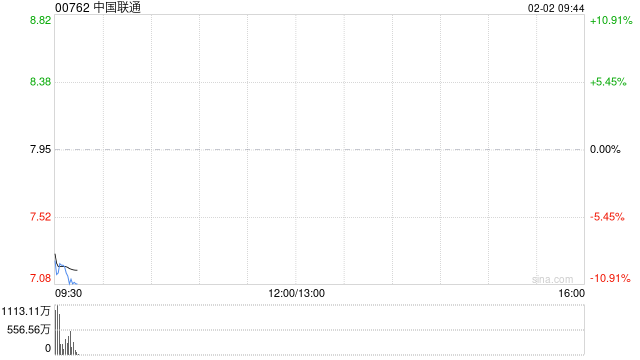
港股电讯服务市场集体下挫 中国联通跌超10% 基础电信服务增值税率上调至9%
Xin Lang Cai Jing· 2026-02-02 01:44
Group 1 - The Hong Kong telecommunications service market experienced a collective decline, with China Unicom falling over 10%, China Telecom dropping over 8%, and China Mobile decreasing over 4% [1][5]. - The total market capitalization of the telecommunications sector is approximately 3.96 trillion [2]. - The trading volume for the sector was 1.46 billion, with a total transaction amount of 22.83 billion [2]. Group 2 - A recent announcement from the Ministry of Finance and the State Taxation Administration stated that starting January 1, 2026, the tax category for services such as mobile data, SMS, and internet broadband will change from value-added telecommunications services to basic telecommunications services, with the VAT rate increasing from 6% to 9% [7].





【公告精选】赛力斯1月汽车销量同比增长104.85%
Xin Lang Cai Jing· 2026-02-02 01:39
Hot Topics - Jia Mei Packaging's stock trading suspension review has concluded, and the stock will resume trading tomorrow [1] - Fenglong Co., Ltd.'s stock trading suspension review has concluded, and the stock will resume trading tomorrow [2] - Hongbaoli does not produce epoxy propylene products, and its subsidiary's related project has entered the preliminary preparation stage for trial production [2] - Hunan Gold's future market price for gold products has uncertainty regarding whether it can continue to rise or maintain high levels [2] - Tongding Interconnection's current operating conditions are normal, with no significant changes in the internal and external operating environment [3] - Tiandi Online's recent operating conditions and internal and external operating environment show no significant changes [4] - Dayue City reports no significant changes in its recent operating conditions and internal and external environment [5] - Huangtai Liquor Industry is not involved in hot concept matters, and its current operating conditions are normal [6] Performance - Leshan Electric Power reported a net profit of 23.4023 million yuan for 2025, an increase of 3.68% year-on-year [7] - Great Wall Motors sold 90,300 vehicles in January, a year-on-year increase of 11.59% [8] - Seres sold 45,900 vehicles in January, a year-on-year increase of 104.85% [9] - GAC Group sold 116,600 vehicles in January, a year-on-year increase of 18.47% [10] - BAIC Blue Valley's subsidiary sold 8,073 vehicles in January, a year-on-year increase of 11.83% [11] Shareholding Changes - Chipone Technology's shareholders plan to reduce their holdings by no more than 1.95% of the company's shares [30] Share Buybacks - Chuzhou Dongfeng's controlling shareholder proposed to repurchase shares worth 50 million to 100 million yuan [31] - GoerTek has increased the total amount for share repurchase from no less than 500 million yuan (inclusive) and no more than 1 billion yuan (inclusive) to no less than 1 billion yuan (inclusive) and no more than 1.5 billion yuan (inclusive) [31] Contract Awards - Jerry Holdings' wholly-owned subsidiary signed a sales contract for gas turbine generator sets worth approximately 1.265 billion yuan with a U.S. client [32] - Fulongma is expected to win four sanitation service projects in January, with a total first-year service fee of 83.5364 million yuan [34] Equity Changes - Yanzhou Coal Mining is transferring 100% equity of Xintai Coal [33] Mergers and Acquisitions - BGI Genomics plans to acquire 100% equity of Sanjian Qifa and 100% equity of BGI Xufeng to integrate two cutting-edge technology platforms in spatial omics and nanopore sequencing [34] Refinancing - Sanjia Technology (rights protection) plans to issue shares to its controlling shareholder to raise no more than 300 million yuan for working capital and repaying bank loans [35] Other - Fushikong's actual controller, chairman, and general manager Chen Yongliang has been placed under detention [36] - China Mobile's VAT tax category adjustment will change the applicable VAT rate from 6% to 9% [37] - China Telecom's VAT tax category adjustment will impact the company's revenue and profits [38] - China Unicom's VAT tax category adjustment will change the applicable VAT rate from 6% to 9% [39] - Nanwang Energy's price policy adjustment for pumped storage and new energy storage will increase uncertainty in revenue and profits from pumped storage power stations [39] - Wanbangde has completed the enrollment of 100 subjects for the clinical trials of Shishan Jianjia controlled-release tablets phases II and III [39] - Penghui Energy has submitted an application for issuing H-shares and listing on the Hong Kong Stock Exchange [40] - Haichuang Pharmaceutical has passed the GMP compliance inspection for drugs [41]




港股三大通信运营商低开
Jin Rong Jie· 2026-02-02 01:34
Group 1 - The three major telecom operators in Hong Kong opened lower, with China Unicom dropping over 7%, China Telecom falling over 6%, and China Mobile decreasing over 2% [1] - The telecom operators announced an adjustment in the value-added tax rate for telecom services, increasing it from 6% to 9% [1]
港股异动 | 三大运营商早盘低开 基础电信服务增值税率上调至9% 将影响公司营收和利润
智通财经网· 2026-02-02 01:29
Core Viewpoint - The recent adjustment in the VAT tax rate for telecommunications services from 6% to 9% is expected to impact the revenue and profits of major telecom operators in China, including China Mobile, China Unicom, and China Telecom, but is seen as a necessary clarification of the tax policy rather than an additional tax burden [1][1]. Group 1: Market Reaction - Major telecom operators experienced significant declines in their stock prices, with China Unicom down 7.04% to HKD 7.39, China Telecom down 6.32% to HKD 5.04, and China Mobile down 2.26% to HKD 78 [1][1][1]. Group 2: Tax Policy Changes - The Ministry of Finance and the State Taxation Administration announced that starting January 1, 2026, the tax category for services such as mobile data, SMS, and internet broadband will change from value-added telecommunications services to basic telecommunications services, with the VAT rate increasing to 9% [1][1][1]. - This adjustment is characterized as a "repositioning" of the tax category, which clarifies the public nature of basic communication services and is expected to enhance operational efficiency within the industry [1][1]. Group 3: Industry Implications - The tax category adjustment is anticipated to encourage telecom operators to focus more on core activities such as network construction and service assurance, reducing homogeneous marketing competition and promoting high-quality development of digital economy infrastructure [1][1][1].
智通港股通持股解析|2月2日
智通财经网· 2026-02-02 00:32
Group 1 - The top three companies by Hong Kong Stock Connect holding ratios are China Telecom (00728) at 70.90%, Green Power Environmental (01330) at 68.72%, and Haotian International Construction Investment (01341) at 67.17% [1] - The latest holding ratio rankings for the top 20 companies in Hong Kong Stock Connect show significant ownership levels, with China Telecom leading at 98.40 billion shares [1] - The largest increases in holding amounts over the last five trading days were seen in Tencent Holdings (00700) with an increase of 3.236 billion yuan, Pop Mart (09992) with 1.836 billion yuan, and China Life (02628) with 867 million yuan [1] Group 2 - The largest decreases in holding amounts over the last five trading days were recorded for the Tracker Fund of Hong Kong (02800) with a decrease of 5.224 billion yuan, China Mobile (00941) with 2.977 billion yuan, and Zijin Mining (02899) with 2.691 billion yuan [3] - The data indicates significant trading activity in the Hong Kong Stock Connect market, reflecting investor sentiment and potential shifts in portfolio allocations [1][3]



新华财经早报:2月2日
Zhong Guo Jin Rong Xin Xi Wang· 2026-02-02 00:21
Group 1: Spring Festival Travel and Tax Policies - The 2026 Spring Festival travel season will begin on February 2 and end on March 13, lasting 40 days, with an expected cross-regional population flow of 9.5 billion people, setting a historical record [1][8] - The State Taxation Administration has announced a new export tax rebate management method to make the export tax rebate application process more convenient and efficient [1][8] - The personal tax threshold for value-added tax has been raised to 1,000 yuan, with specific conditions outlined for certain transactions that will not apply to this threshold [1][8] Group 2: Shipbuilding Industry Performance - In 2025, China's shipbuilding industry maintained its global leadership for 16 consecutive years, with a completed shipbuilding volume of 53.69 million deadweight tons, a year-on-year increase of 11.4%, accounting for 56.1% of the world total [9] - The new orders received amounted to 107.82 million deadweight tons, representing 69.0% of the global total, while the hand-held order volume reached 274.42 million deadweight tons, a year-on-year increase of 31.5%, accounting for 66.8% of the world total [9] Group 3: Telecommunications and Film Industry Updates - China Mobile, China Unicom, and China Telecom announced adjustments to the applicable scope of value-added tax for telecommunications services, with the tax rate changing from 6% to 9% starting January 1, 2026 [9][11] - As of February 1, 2026, the annual box office has exceeded 2 billion yuan, with several domestic films scheduled for release during the Spring Festival [9]

两大牛股今日复牌……盘前重要信息一览
证券时报· 2026-02-02 00:10
Key Points - The core viewpoint of the article highlights significant corporate announcements and market movements, including stock resumption and performance forecasts for various companies [2][5][8]. Group 1: Corporate Announcements - Fenglong Co., Ltd. announced that Yubiqi committed not to inject assets within 36 months, and the stock resumed trading after a suspension [2][9]. - Jiamei Packaging also completed its suspension review and resumed trading [2][10]. - Zhongji Xuchuang projected a net profit increase of 89.50% to 128.17% for 2025 [2][11]. - Xinyi Technology expects a net profit increase of 231% to 249% for 2025, with Q4 performance exceeding expectations [2][12]. - Hanwujing announced an expected net profit of 1.85 billion to 2.15 billion yuan for 2025, marking a turnaround from losses [2][13]. - Wentai Technology anticipates a net loss of 9 billion to 13.5 billion yuan for 2025 [2][14]. - Jerry Holdings signed a sales contract for gas turbine generator sets worth 1.265 billion yuan for a U.S. data center [2][16]. - The actual controller of Fushi Holdings, Chen Yongliang, has been detained [2][17]. Group 2: Automotive Industry Performance - BYD reported January sales of 210,051 new energy vehicles, a year-on-year decrease of 30.11% [2][18]. - Silverson announced January sales of 43,000 new energy vehicles, a year-on-year increase of 140.33% [2][19]. - Xiaomi Auto reported over 39,000 deliveries in January [2][20]. - NIO delivered 27,182 new vehicles in January, a year-on-year increase of 96.1% [2][21]. - XPeng delivered 20,011 new vehicles in January [2][22]. - Li Auto delivered 27,668 new vehicles in January [2][23]. - Leap Motor achieved total deliveries of 32,059 vehicles in January, a year-on-year increase of 27% [2][24].




智通港股通资金流向统计(T+2)|2月2日
智通财经网· 2026-02-01 23:35
Core Insights - Tencent Holdings (00700), Pop Mart (09992), and China Life (02628) ranked as the top three stocks for net inflow of southbound funds, with net inflows of 1.207 billion, 742 million, and 566 million respectively [1] - The top three stocks for net outflow of southbound funds were the Yingfu Fund (02800), Alibaba-W (09988), and Zijin Mining (02899), with net outflows of -2.595 billion, -950 million, and -858 million respectively [1] - In terms of net inflow ratio, Southern East Selection (03441), China Traditional Chinese Medicine (00570), and Baiaosaitu-B (02315) led the market with ratios of 51.51%, 44.99%, and 44.77% respectively [1] Net Inflow Rankings - Tencent Holdings (00700) had a net inflow of 1.207 billion, representing a 7.63% increase, closing at 621.000 (+2.31%) [2] - Pop Mart (09992) saw a net inflow of 742 million, with a net inflow ratio of 14.21%, closing at 231.400 (+7.03%) [2] - China Life (02628) recorded a net inflow of 566 million, with a net inflow ratio of 16.39%, closing at 35.180 (+3.17%) [2] Net Outflow Rankings - Yingfu Fund (02800) experienced the highest net outflow of -2.595 billion, with a net outflow ratio of -7.92%, closing at 28.040 (+2.64%) [2] - Alibaba-W (09988) had a net outflow of -950 million, with a net outflow ratio of -5.41%, closing at 173.500 (+2.12%) [2] - Zijin Mining (02899) faced a net outflow of -858 million, with a net outflow ratio of -12.94%, closing at 44.760 (+3.13%) [2] Net Inflow Ratio Rankings - Southern East Selection (03441) led with a net inflow ratio of 51.51%, with a net inflow of 6.9271 million, closing at 11.410 (+1.42%) [3] - China Traditional Chinese Medicine (00570) followed with a net inflow ratio of 44.99%, with a net inflow of 42.7833 million, closing at 2.090 (-4.57%) [3] - Baiaosaitu-B (02315) had a net inflow ratio of 44.77%, with a net inflow of 44.5882 million, closing at 47.000 (+9.35%) [3] Net Outflow Ratio Rankings - Guangshen Railway (00525) had the highest net outflow ratio of -57.47%, with a net outflow of -8.3198 million, closing at 2.250 (+1.35%) [3] - Huaxin Building Materials (06655) followed with a net outflow ratio of -54.93%, with a net outflow of -26.9041 million, closing at 20.020 (+1.16%) [3] - Kunlun Energy (00135) recorded a net outflow ratio of -53.60%, with a net outflow of -100 million, closing at 8.020 (+0.88%) [3]


新浪财经资讯AI速递:昨夜今晨财经热点一览 丨2026年2月2日
Sou Hu Cai Jing· 2026-02-01 22:52
Group 1: Gold and Silver Market Dynamics - Recent fluctuations in gold and silver prices have led to significant market reactions, with gold experiencing its largest single-day drop since 1983 and silver prices plummeting by as much as 36% in a single day [1] - The Shenzhen Shui Bei market has shown a split response, with some investors engaging in panic selling while others are seizing the opportunity to buy at lower prices, leading to a surge in gold purchases [1][2] - Many banks have issued risk warnings, advising investors to approach the market with caution and avoid impulsive trading behaviors [1] Group 2: Real Estate Sector Outlook - The A-share and Hong Kong real estate sectors have shown strong performance, with several brokerage firms indicating that despite ongoing profit pressures, positive signals are emerging in the market [2] - Factors contributing to this stabilization include a slight decrease in the number of second-hand homes listed in major cities, supportive policy measures, and historically low valuations in the sector [2] - Institutions like CITIC Securities and Shenwan Hongyuan suggest that the most challenging period for the real estate sector may be over, recommending a focus on high-quality companies with core resources and operational capabilities [2] Group 3: Telecommunications Tax Changes - Major Chinese telecom operators, including China Mobile, China Unicom, and China Telecom, announced a tax adjustment that will increase the VAT rate on mobile data, SMS, and broadband services from 6% to 9% starting January 1, 2026 [3] - This change is expected to have a direct impact on the revenue and profit margins of these telecom companies [3] Group 4: Federal Reserve Leadership Changes - The nomination of Kevin Warsh as the new Federal Reserve Chair by Trump has caused significant market turbulence and a reevaluation of the Fed's role [4] - Warsh's reformist stance is anticipated to lead to aggressive interest rate cuts and a reduction of the Fed's balance sheet, aiming to diminish the Fed's power and size [4] - However, his radical approach may heighten tensions within the Fed and the broader market, facing substantial resistance and uncertainty [4] Group 5: Shenzhen Economic Performance - Shenzhen's GDP reached 3.87 trillion yuan in 2025, marking a 5.5% year-on-year growth, the highest among the top five cities [5] - The city is recognized as a leader in industrial output and foreign trade, contributing 10% of the national total [5] - Shenzhen also excels in various key areas, including the total number of business entities, R&D investment intensity, international patent applications, and cross-border e-commerce scale [5] Group 6: Capital Market Regulation - Regulatory authorities have emphasized the need to consolidate the positive momentum in capital markets, focusing on risk prevention, enhanced regulation, and promoting high-quality development [6] - Plans to deepen reforms in the ChiNext board and implement measures to support new productive forces have been outlined [6] - The guidelines for strategic investors indicate a minimum holding ratio of 5%, encouraging long-term capital to engage more deeply in corporate governance [6] Group 7: Banking Sector Adjustments - Ningbo Bank has reduced its interest rate on demand deposits to 0%, with other banks also lowering rates on gold accounts due to increased market volatility [8] - This trend is part of a broader strategy to manage risks and lower funding costs, potentially paving the way for future reductions in loan interest rates [8] Group 8: Silver Market Auction - A silver building in Hunan, constructed with 2.5 tons of silver, is set to be auctioned at a valuation of only 6.88 yuan per gram, significantly below market prices, raising public interest in asset valuation methods [7] Group 9: Oracle's Financial Challenges - Oracle is facing significant financial pressure due to aggressive expansion in AI data centers, leading to considerations of layoffs affecting 20,000 to 30,000 employees and potential divestitures of its Cerner medical software division [10] - The company has seen its stock and bond prices under pressure as several banks have ceased lending to its data center projects, exacerbating its financing challenges [10]
喜娜AI速递:昨夜今晨财经热点要闻|2026年2月2日
Sou Hu Cai Jing· 2026-02-01 22:17
Group 1 - The market is experiencing volatility due to concerns over the nomination of Kevin Warsh as the next Federal Reserve Chairman, which has led to fears of changes in monetary policy [2] - The yield curve issue in U.S. Treasury bonds reflects a broader economic dilemma, and regardless of who leads the Federal Reserve, the current situation is unlikely to change [2] - The A-share market is showing weakness, while global asset performance is mixed, influenced by the Federal Reserve's personnel changes [2] Group 2 - The telecom operators in China, including China Mobile, China Telecom, and China Unicom, will see their value-added tax rate increase from 6% to 9%, impacting their revenue and profits starting January 1, 2026 [3] - Multiple brokerages are optimistic about the A-share market's spring performance, suggesting a focus on technology, consumption, and cyclical sectors such as semiconductors and AI applications [3] - Tencent is accelerating its AI strategy, transitioning to a "smart agent ecosystem," which may lead to a reevaluation of its AI business and partnerships [4] Group 3 - Gold prices have experienced significant fluctuations, with a recent drop of over 12% after briefly surpassing $4500 per ounce, driven by concerns over U.S. liquidity tightening [5] - Local governments in China have set economic growth targets for 2026, with many regions adjusting their CPI and investment growth targets, indicating potential trading opportunities related to policy implementation [5] - The Hong Kong stock market is expected to have upward potential in the medium to long term, with a focus on technology and non-bank financial sectors, as economic stability may attract more investment [5]
