Workflow
KUAISHOU(01024)
icon
Search documents
招商证券国际:智谱及MiniMax在港上市将提升AI互联网短期投资热度
Zhi Tong Cai Jing· 2026-01-08 03:08
Core Viewpoint - The report from China Merchants Securities International highlights the upcoming listings of Zhipu (02513) and MiniMax (00100) in Hong Kong, positioning them as representative companies of pure large models, differentiating them from comprehensive firms like Alibaba-W (09988) and ByteDance [1] Company Summary - Zhipu and MiniMax are set to list in Hong Kong, representing pure large model enterprises [1] - The listings are expected to enhance short-term investment enthusiasm in the AI internet sector [1] - The report emphasizes the competitive landscape, noting that comprehensive cloud firms maintain funding and ecosystem advantages, creating a competitive and cooperative dynamic with pure large model companies [1] Industry Summary - The report maintains a positive outlook on the Chinese internet industry, suggesting a focus on the continuous iteration and commercialization of new models and applications in the long term [1] - Preferred stocks include Alibaba and Tencent Holdings (00700), with additional recommendations for Bilibili-W (09626), Kuaishou-W (01024), Zhipu, and MiniMax [1]
智通港股通资金流向统计(T+2)|1月8日
智通财经网· 2026-01-07 23:35
Group 1 - The top three stocks with net inflows are Yingfu Fund (02800) with 6.826 billion, Hang Seng China Enterprises (02828) with 2.151 billion, and Kuaishou-W (01024) with 1.553 billion [1] - The top three stocks with net outflows are Tencent Holdings (00700) with -0.920 billion, China Mobile (00941) with -0.365 billion, and China Hongqiao (01378) with -0.257 billion [1] - In terms of net inflow ratio, Jiangsu Ninghu Expressway (00177) leads with 68.66%, followed by COSCO Shipping Ports (01199) with 62.64%, and Beijing Enterprises Water Group (00371) with 62.27% [1] Group 2 - The top ten stocks by net inflow include Xiaomi Group-W (01810) with 1.020 billion and Southern Hang Seng Technology (03033) with 0.944 billion [2] - The top ten stocks by net outflow also include China People's Insurance Group (01339) with -0.255 billion and GCL-Poly Energy (03800) with -0.213 billion [2] - The net outflow ratio for China National Building Material (03323) is -48.46%, followed by Gao Xin Retail (06808) at -48.27% and Swire Properties (01972) at -47.79% [3]
南向资金今日净买入91.78亿港元,腾讯控股净买入19.55亿港元
Core Viewpoint - The Hang Seng Index fell by 0.94% on January 7, with southbound capital transactions totaling HKD 134.39 billion, indicating a net inflow of HKD 9.18 billion [2] Group 1: Southbound Capital Transactions - Total southbound capital transactions amounted to HKD 134.39 billion, with buy transactions at HKD 71.79 billion and sell transactions at HKD 62.61 billion, resulting in a net buy of HKD 9.18 billion [2] - The Shenzhen Stock Connect saw total transactions of HKD 53.91 billion, with net buying of HKD 5.69 billion, while the Shanghai Stock Connect had total transactions of HKD 80.49 billion, with net buying of HKD 3.49 billion [2] Group 2: Active Stocks - Alibaba-W had the highest transaction amount among southbound stocks at HKD 15.06 billion, followed by SMIC and Tencent Holdings with HKD 6.48 billion and HKD 6.27 billion respectively [2][4] - Tencent Holdings recorded a net buy of HKD 1.96 billion, while Xiaomi Group-W had a net buy of HKD 1.63 billion, and the Yingfu Fund saw a net buy of HKD 1.47 billion [2][3] - China Mobile experienced the highest net sell at HKD 1.13 billion, with its stock price declining by 0.97% [2][4] Group 3: Continuous Net Buying - Four stocks received continuous net buying from southbound capital for more than three days, with Xiaomi Group-W leading at five days, followed by Alibaba-W at four days, and China Life at three days [3] - The total net buying amounts during this period were HKD 3.61 billion for Xiaomi Group-W, HKD 2.12 billion for Alibaba-W, and HKD 1.25 billion for China Life [3]
快手可灵收入暴增,小摩称其“全球最便宜的AI股之一”!港股互联网ETF回调受资金关注,份额站上240亿份新高
Xin Lang Cai Jing· 2026-01-07 11:37
Market Overview - On January 7, Hong Kong stocks opened strong but turned downward, with the Hang Seng Index and Hang Seng Tech Index closing down by 0.94% and 1.49% respectively [1][11] - Major tech stocks experienced short-term pullbacks, with Alibaba-W dropping over 3% and Kuaishou-W falling more than 2% [1][11] ETF Performance - The Hong Kong Internet ETF (513770) opened lower and closed down by 2.54%, despite showing significant buying interest during dips [1][11] - The ETF has attracted substantial inflows, with 318 million yuan invested over the past five days, and its fund size exceeding 24 billion shares, setting a new historical high as of January 6 [1][11] Market Sentiment and Analysis - Analysts believe that a combination of liquidity and profit recovery is driving a market rebound, indicating that the valuation repair trend is underway despite short-term volatility [3][13] - Citigroup's latest report highlights Tencent Holdings and Alibaba-W as core AI concept stocks, optimistic about Tencent's AI development prospects and Alibaba's cloud revenue growth [4][14] Liquidity and Economic Factors - Expectations for a Federal Reserve interest rate cut in 2026 have increased, with indications that the Fed may lower rates by over 100 basis points this year [5][15] - The easing of external liquidity pressures is expected to provide a "golden window" for the valuation recovery of Hong Kong tech stocks [5][15] AI Sector Developments - The "Pet Dance" AI video has gained significant traction in overseas markets, leading to a 102% increase in daily revenue for Kuaishou's AI mobile platform compared to December 2025 [5][15] - JPMorgan has identified Kuaishou as a leading player in the generative AI sector, labeling it as "one of the cheapest AI stocks globally" [5][15] Investment Strategies - For investors looking to reduce volatility while still engaging with tech stocks, the Hong Kong Large Cap 30 ETF (520560) is recommended, featuring a mix of high-growth tech stocks like Alibaba and Tencent, along with stable dividend-paying stocks [7][17]
智通港股通活跃成交|1月7日
智通财经网· 2026-01-07 11:04
Core Insights - On January 7, 2026, Alibaba-W (09988), SMIC (00981), and Tencent Holdings (00700) were the top three stocks by trading volume in the Southbound Stock Connect, with trading amounts of 83.52 billion, 44.91 billion, and 34.34 billion respectively [1] - In the Southbound Stock Connect for the Shenzhen-Hong Kong Stock Connect, Alibaba-W (09988), Tencent Holdings (00700), and SMIC (00981) also ranked as the top three, with trading amounts of 67.05 billion, 28.31 billion, and 19.91 billion respectively [1] Southbound Stock Connect (Shanghai-Hong Kong) - The top active stocks included: - Alibaba-W (09988): Trading amount of 83.52 billion, net buying of +9.74 billion - SMIC (00981): Trading amount of 44.91 billion, net selling of -10.38 billion - Tencent Holdings (00700): Trading amount of 34.34 billion, net buying of +8.86 billion - Xiaomi Group-W (01810): Trading amount of 23.83 billion, net buying of +8.13 billion - China Mobile (00941): Trading amount of 22.60 billion, net selling of -11.26 billion [2] Southbound Stock Connect (Shenzhen-Hong Kong) - The top active stocks included: - Alibaba-W (09988): Trading amount of 67.05 billion, net selling of -8.50 billion - Tencent Holdings (00700): Trading amount of 28.31 billion, net buying of +10.69 billion - SMIC (00981): Trading amount of 19.91 billion, net selling of -3.20 million - Xiaomi Group-W (01810): Trading amount of 16.55 billion, net buying of +8.19 billion - Meituan-W (03690): Trading amount of 13.07 billion, net buying of +4.48 billion [2]
国信证券:内容分发方式决定平台类型 AI显著赋能社区平台广告变现能力
智通财经网· 2026-01-07 09:24
Core Insights - The current supply-demand relationship in content communities determines the difficulty of platform generalization and commercialization potential [1][2] Group 1: Content Community vs. Information Distribution Platform - The distinction between content communities and information distribution platforms is influenced by content distribution methods, with early content supply being limited and recommendation algorithms being underdeveloped [2] - Platforms like Bilibili, Xiaohongshu, and Kuaishou emerged as content communities due to high creator influence, while ByteDance built products like Toutiao and Douyin around recommendation algorithms, leading to a high platform influence [2] Group 2: Community Generalization Pathways - Bilibili and Xiaohongshu are expected to differentiate themselves in niche markets, with daily active users projected to grow from 120 million to 200-300 million by Q3 2025 [3] - Two evolutionary paths are identified: 1. Douyin transitioned from a trendy short video community to an information distribution platform through external traffic and algorithm-driven content supply [3] 2. Bilibili aims to establish itself as a cultural brand company, focusing on niche segments rather than broad coverage [3] Group 3: Monetization Strategies - Short-term revenue growth for communities relies on advertising, with Xiaohongshu expected to reach an annual advertising revenue of 200 billion by 2030, indicating a fourfold growth potential [4] - Bilibili's advertising revenue is projected to grow at a CAGR of 19% over the next three years, reaching 16.8 billion by 2028, with a long-term potential of 35 billion [4] Group 4: Long-term Revenue Growth - Bilibili's long-term revenue is expected to come from value-added services and gaming, with over 65% of its income derived from ACG (Anime, Comics, and Games) content [5] - The platform's community gaming advantages enhance the likelihood of creating hit games, while anime content monetizes directly through membership [5] Group 5: Impact of AI Technology - AI significantly lowers content creation difficulty and costs, leading to more abundant content supply and higher demands for content review [6] - AI enhances platform traffic distribution efficiency and monetization capabilities, improving content recommendation accuracy and advertising effectiveness [6]
高盛:快手今年营收及估值有望上行
Ge Long Hui A P P· 2026-01-07 07:59
高盛指出,随着快手扩大海外业务拓展团队并引入更多企业客户,企业客户需求将在未来1至2年内继续 成为关键的成长驱动力。 高盛在报告中表示,对可灵AI的营收预测为2025年逾1.4亿美元,2026年约2.3亿至2.4亿美元。行业市场 潜力巨大,人工智能视频生成行业仍处于早期阶段,预计到2033年潜在市场规模将达到390亿美元,相 较2025年预计的10亿美元规模,复合年增长率达56%。 格隆汇1月7日|高盛表示,快手(1024.HK)旗下可灵AI在去年12月的模式升级与新功能上线,料将推动 其在海外市场扩大用户认可并提升营收,从而可能抬升快手2026财年的营收预期,并提振股价。 ...
港股科技股继续走弱
Jin Rong Jie· 2026-01-07 06:17
Group 1 - The Hang Seng Tech Index has declined by 2.3%, indicating a broader downturn in the technology sector in Hong Kong [1] - Tencent Music has dropped over 5%, while Alibaba and BYD have seen declines exceeding 4% [1] - Other companies such as NIO, Bilibili, Xiaopeng Motors, Kuaishou, and Li Auto have all fallen by more than 3%, with Tencent, Meituan, NetEase, and SMIC experiencing declines of over 2% [1]
1月5日【港股Podcast】恆指、快手、藥明康德、友邦保險、小米集團、騰訊控股
Ge Long Hui· 2026-01-07 04:16
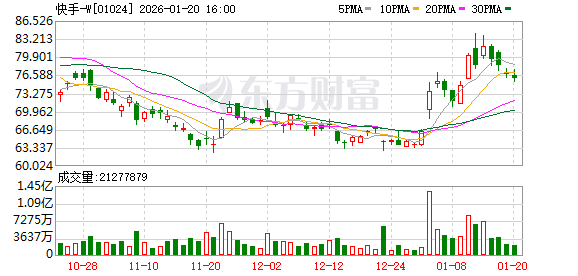
Market Overview - The Hang Seng Index (HSI) showed a positive trend at the beginning of the year, with a significant rise last Friday, breaking through the upper band of the Bollinger Bands, which pleased many investors [1] - Today's performance saw a slight increase in the closing price, but the overall gain was not substantial, leading to some investor disappointment [2] - Despite the stable movement of the HSI, trading volume increased compared to previous periods, which typically suggests a potential for upward movement [2] Technical Signals - The HSI is currently at the upper band of the Bollinger Bands, with 9 sell signals and 4 buy signals indicating a bearish sentiment [3] - Support is estimated around 25,800 points, with a potential drop to 25,500 points if this level is breached, while resistance is at approximately 26,400 points [3] - For bullish investors, buying options below 25,500 points is considered safer, with some options having leverage ratios close to 20 times [4] Individual Stock Analysis Kuaishou (01024.HK) - Kuaishou's stock price has shown significant upward movement, closing at 73.6 HKD, with trading volume breaking previous records [8] - Technical signals indicate 8 sell signals and 5 buy signals, suggesting a bearish outlook in the short term, with a resistance level at 81.4 HKD [9] WuXi AppTec (02359.HK) - WuXi AppTec's stock price reached a high of 104.2 HKD before closing lower, with increased trading volume compared to recent days [13] - The resistance level is identified at 108.2 HKD, with a potential further increase to 112.3 HKD if this level is surpassed [13] AIA Group (01299.HK) - AIA's stock price closed at 89.9 HKD, showing a slight increase, but with a predominance of sell signals (8 sell vs. 6 buy) indicating a cautious outlook [17] - The stock needs to break the resistance at 85 HKD to have a chance of reaching 90.4 HKD [17] Xiaomi (01810.HK) - Xiaomi's stock price closed at 39.3 HKD, with increased trading volume but overall disappointing performance [20] - The support level is around 38.4 HKD, with a potential drop to 35.8 HKD if this level is breached, while resistance is noted at 40 HKD [20] Tencent (00700.HK) - Tencent's stock price saw a slight increase, with a resistance level at approximately 629 HKD, and potential further increase to 657 HKD if this level is surpassed [25] - The technical signals are currently neutral, indicating no clear direction for investors [25]
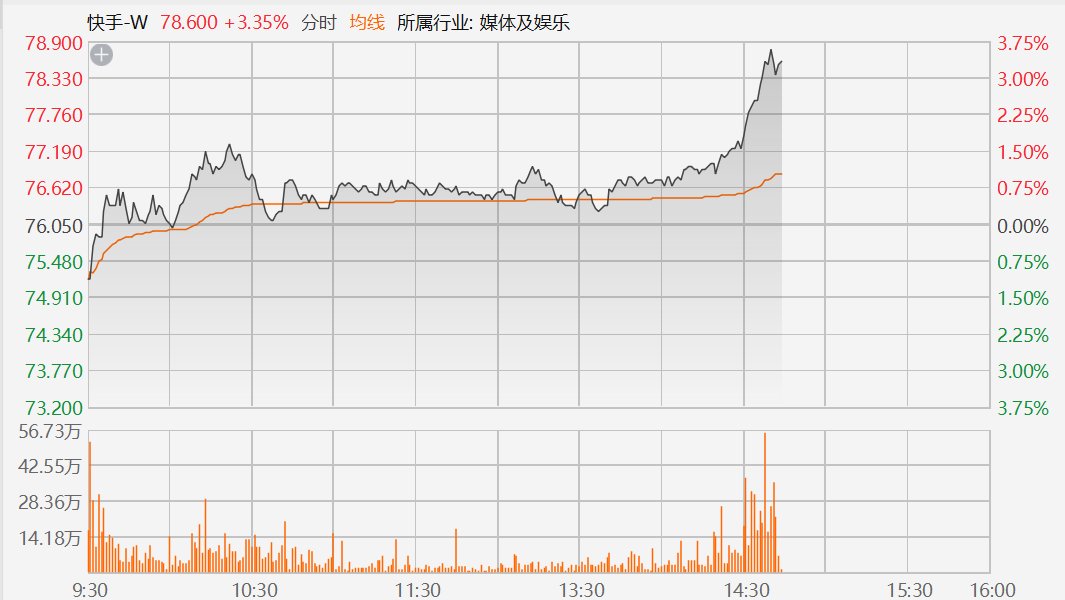
港股科技股普跌,恒生科技指数跌1.5%!腾讯音乐跌5%,阿里巴巴跌3%,比亚迪股份、快手跌超2%,腾讯网易跌2%
Ge Long Hui· 2026-01-07 03:18
Group 1 - The Hong Kong stock market experienced a decline in technology stocks, with the Hang Seng Technology Index falling by 1.5% [1] - Notable declines among major companies include Tencent Music down nearly 5%, Alibaba down over 3%, and BYD, Kuaishou, Xpeng Motors, NIO, Kingdee International, Tongcheng Travel, and Bilibili all down over 2% [1] Group 2 - Tencent Music's stock decreased by 4.72%, with a year-to-date decline of 2.03%, and a total market capitalization of 209.41 billion [2] - Alibaba's stock fell by 3.45%, with a year-to-date increase of 1.96%, and a total market capitalization of 2.78 trillion [2] - BYD's stock dropped by 2.82%, with a year-to-date increase of 1.10%, and a total market capitalization of 878.90 billion [2] - Kuaishou's stock decreased by 2.78%, with a year-to-date increase of 14.78%, and a total market capitalization of 319.98 billion [2] - Xpeng Motors' stock fell by 2.63%, with a year-to-date decline of 2.08%, and a total market capitalization of 148.53 billion [2] - NIO's stock decreased by 2.52%, with a year-to-date decline of 7.47%, and a total market capitalization of 93.39 billion [2] - Kingdee International's stock fell by 2.39%, with a year-to-date increase of 4.29%, and a total market capitalization of 49.20 billion [2] - Tongcheng Travel's stock decreased by 2.35%, with a year-to-date increase of 3.92%, and a total market capitalization of 54.81 billion [2] - Bilibili's stock fell by 2.33%, with a year-to-date increase of 8.55%, and a total market capitalization of 86.64 billion [2] - Tencent Holdings' stock decreased by 1.82%, with a year-to-date increase of 3.67%, and a total market capitalization of 5.66 trillion [2] - NetEase's stock fell by 1.75%, with a year-to-date increase of 4.94%, and a total market capitalization of 712.98 billion [2]