KUAISHOU(01024)

Search documents
淘宝、拼多多迎来新对手
Sou Hu Cai Jing· 2026-01-22 10:35
Core Insights - The rise of shelf e-commerce on platforms like Douyin and Kuaishou is reshaping the landscape, with Douyin's shelf e-commerce GMV surpassing 35% in 2025, a significant increase from previous years [3][15] - Douyin and Kuaishou are competing aggressively, with Douyin focusing on high-margin brands and Kuaishou targeting lower-tier markets, indicating a shift in consumer behavior and brand engagement [12][23] Douyin's Developments - Douyin's shelf e-commerce GMV grew by 49% year-on-year from August 2024 to August 2025, with over 60,000 brands doubling their sales through this channel [3][5] - The platform's independent app launch in March 2025 led to a 211% sales increase during the Double Eleven shopping festival, indicating a successful transition to a more robust e-commerce model [8][22] - Douyin's strategy includes integrating content and commerce, pushing influencers to learn SEO and link integration to enhance sales [8][22] Kuaishou's Strategy - Kuaishou's shelf e-commerce GMV reached 32% in Q2 2025, with a 71% growth during the New Year shopping festival, showcasing its effective market penetration [5][15] - The platform's initiatives, such as the "Hundred Cities, Ten Thousand Stars" plan and zero-cost store policies, have lowered entry barriers for small businesses, increasing monthly active buyers to 121 million [5][8] - Kuaishou's focus on building trust through live streaming and community engagement is proving more effective than traditional low-price strategies [14][23] Market Dynamics - Both platforms are capturing market share from traditional e-commerce giants like Tmall and JD, particularly in non-planned consumer spending and brand advertising budgets [12][15] - Despite their growth, Douyin and Kuaishou still rely heavily on content-driven impulse purchases, with over half of their transactions linked to immediate content engagement [15][16] - The competition has evolved from a simple traffic battle to a deeper engagement with supply chains, indicating a more complex market landscape [8][16] Future Outlook - The e-commerce market is reaching saturation, with future growth expected to come from deeper market penetration and international expansion [18][19] - AI technology is anticipated to play a crucial role in enhancing user experience and search capabilities, potentially transforming the shopping process on these platforms [19][22] - Douyin is likely to continue promoting its independent app and may introduce a price comparison system, while Kuaishou will focus on supporting local brands and enhancing its distribution ecosystem [22][23]



【窩輪透視】如何在快手中性市況下,善用牛熊證作方向部署
Ge Long Hui· 2026-01-22 04:52
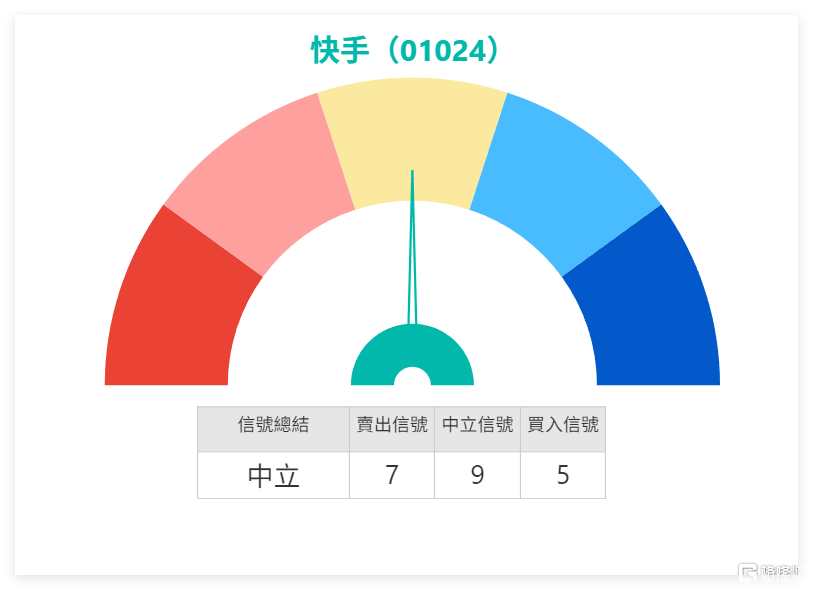
Core Viewpoint - The article discusses the current market conditions for Kuaishou (快手) and related products, highlighting a neutral market sentiment and the performance of various financial instruments linked to the stock [1][4]. Market Performance - On January 20, Kuaishou's stock price slightly decreased by 0.91%, closing at HKD 76.05, with a trading volume of HKD 1.621 billion, indicating a stable consolidation phase without significant volume changes [1]. - Other stocks in the sector, such as JD.com and Netease, showed minor fluctuations, with JD.com receiving a "strong buy" signal despite being near the neutral RSI level of 44 [1]. - Kuaishou's technical indicators suggest it is in a short-term oscillation range, positioned between the 10-day moving average (HKD 77.17) and the 30-day moving average (HKD 70.19) [1]. Technical Indicators - The RSI index is at 60, indicating a neutral sentiment without entering the overbought zone, supported by multiple oscillation indicators that also signal a neutral market [2]. - Resistance levels are identified at HKD 81.1 and HKD 88.9, while support levels are at HKD 70.7 and HKD 63.2, with the former being close to the 30-day moving average, suggesting strong support [2]. Product Review - Kuaishou-related structured products, particularly bear certificates, have performed well, with notable gains of 17% for JPMorgan's bear certificate and 15% for HSBC's bear certificate over the past two trading days [4]. - The article highlights two selected products for different market expectations: a put certificate with a leverage of 8 times and a call certificate with a leverage of 4.3 times, catering to investors with varying outlooks on Kuaishou's price movements [7]. Selected Products - The put certificate (18971) has a strike price of HKD 68.83 and is noted for its low premium and implied volatility, making it suitable for investors expecting a short-term decline [7]. - The UBS call certificate (68382) offers a balanced cost control and profit potential, appealing to those anticipating a rebound after testing support levels [7][8].
研报掘金|招商证券:首予快手“增持”评级及目标价100港元,估值吸引力强
Ge Long Hui· 2026-01-22 03:47
Core Viewpoint - The report from China Merchants Securities initiates a "Buy" rating for Kuaishou with a target price of HKD 100, highlighting its advantages in AI technology and commercialization potential, along with attractive valuation [1] Group 1: AI Technology and Competitive Advantage - Kuaishou possesses a distinct competitive edge in its core business and AI applications compared to AI leaders like Zhipu, MiniMax, OpenAI, and Perplexity, especially following significant upgrades since December last year, which have led to notable growth trends [1] - The company enhances its monetization potential through robust core business growth and a unique community ecosystem, with AI technology upgrades (such as OneRec and OneResearch) driving efficiency improvements in advertising and e-commerce [1] Group 2: Future Revenue Projections - The firm forecasts that Kuaishou's core business revenue from advertising and e-commerce will grow by 12% and 9% respectively in 2026 and 2027, supported by ongoing AI technology upgrades and operational efficiency improvements that will further enhance profit margins [1]

招商证券国际:首予快手-W增持评级 料26-27年经调整净利年增12%及15%
Zhi Tong Cai Jing· 2026-01-22 02:45
Group 1 - The core viewpoint of the report is that Kuaishou-W (01024) has a long-term optimistic trend and strong valuation attractiveness, leading to an initial coverage rating of "Buy" with a target price of HKD 100, indicating a potential upside of 32% [1] - The report forecasts that Kuaishou's adjusted net profit will grow by 12% and 15% year-on-year in 2026 and 2027, reaching RMB 23.1 billion and RMB 26.5 billion respectively, with core business revenue growth from advertising and e-commerce expected to reach 12% to 9% [1] - The report suggests that if AI further enhances commercialization, Kuaishou's main business may undergo a revaluation, with the market valuation of its subsidiary, Kuaishou Ling, generally ranging from 20 to 30 times sales, which is attractive compared to peers listed in Hong Kong and leading AI companies in the US [1] Group 2 - The report estimates that Kuaishou Ling's revenue will reach RMB 1.05 billion, RMB 1.85 billion, and RMB 2.6 billion in 2025, 2026, and 2027 respectively, indicating significant growth potential [1]
招商证券国际:首予快手-W(01024)增持评级 料26-27年经调整净利年增12%及15%
智通财经网· 2026-01-22 02:40
Group 1 - The core viewpoint of the report is that Kuaishou-W (01024) has a long-term optimistic trend and strong valuation attractiveness, leading to a "Buy" rating with a target price of HKD 100, indicating a potential upside of 32% [1] - The report forecasts that Kuaishou's adjusted net profit will grow by 12% and 15% year-on-year in 2026 and 2027, reaching RMB 23.1 billion and RMB 26.5 billion respectively, with core business revenue growth rates of 12% and 9% for advertising and e-commerce [1] - The report suggests that if AI further enhances commercialization, Kuaishou's main business could be revalued, with its subsidiary Kuaishou's market valuation generally ranging from 20 to 30 times sales, which is attractive compared to peers listed in Hong Kong and leading AI companies in the US [1] Group 2 - The report anticipates that Kuaishou's subsidiary Kuaishou will achieve revenues of RMB 1.05 billion, RMB 1.85 billion, and RMB 2.6 billion from 2025 to 2027 [1]
智通港股通持股解析|1月22日
智通财经网· 2026-01-22 00:31
Group 1 - The top three companies by Hong Kong Stock Connect holding ratios are China Telecom (00728) at 70.91%, Green Power Environmental (01330) at 69.45%, and Tianjin Chuangye Environmental (01065) at 67.62% [1][2] - The largest increases in holding amounts over the last five trading days were seen in Alibaba-W (09988) with an increase of 2.229 billion, SMIC (00981) with an increase of 1.693 billion, and Huahong Semiconductor (01347) with an increase of 1.379 billion [1][2] - The largest decreases in holding amounts over the last five trading days were recorded for China Mobile (00941) with a decrease of 2.613 billion, UBTECH (09880) with a decrease of 787 million, and Kuaishou-W (01024) with a decrease of 739 million [1][3] Group 2 - The latest holding ratio rankings for Hong Kong Stock Connect show that China Telecom holds 9.842 billion shares, Green Power Environmental holds 0.281 billion shares, and Tianjin Chuangye Environmental holds 0.230 billion shares [2] - The top ten companies with the largest increases in holdings over the last five trading days include Tencent Holdings (00700) with an increase of 917 million and China Construction Bank (00939) with an increase of 866 million [2] - The top ten companies with the largest decreases in holdings over the last five trading days also include Alibaba Health (00241) with a decrease of 665 million and China Hongqiao (01378) with a decrease of 647 million [3]



智通ADR统计 | 1月22日
智通财经网· 2026-01-21 22:19
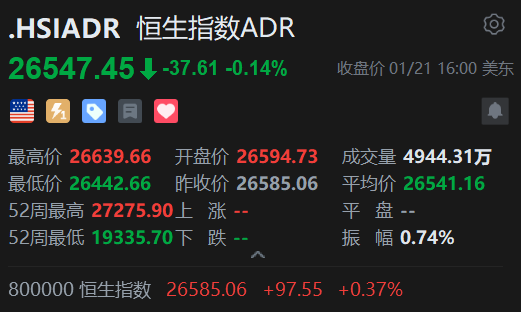
Market Overview - The Hang Seng Index (HSI) closed at 26,547.45, down by 37.61 points or 0.14% [1] - The index reached a high of 26,639.66 and a low of 26,442.66 during the trading session [1] - The average price for the day was 26,541.16, with a trading volume of 49.443 million shares [1] Blue-Chip Stocks Performance - HSBC Holdings closed at 129.700 HKD, up by 1.17% compared to the previous close [2] - Tencent Holdings closed at 599.924 HKD, down by 0.43% compared to the previous close [2] - Alibaba Group (ADR) saw an increase of 2.19%, closing at 163.200 HKD [3] - Notable declines included NetEase, which fell by 3.70% to 208.000 HKD [3] Individual Stock Movements - Tencent Holdings (ADR) was priced at 599.924, reflecting a decrease of 0.43% compared to its Hong Kong price [3] - Alibaba's ADR was at 164.396, showing an increase of 0.73% compared to its Hong Kong price [3] - HSBC's ADR was at 129.700, indicating an increase of 1.17% compared to its Hong Kong price [3] - Other notable movements included Baidu Group, which increased by 3.29% to 153.700 HKD [3]





可灵AI月活突破1200万,日均收入较去年12月提升约30%
Xin Lang Cai Jing· 2026-01-21 12:20
1月21日,智通财经记者获悉,快手旗下视频生成大模型可灵AI月活跃用户数(MAU)已突破1200万。 今年1月截至目前,可灵AIApp端付费用户规模较去年12月增长约350%,日均收入水平较12月日均提升 约30%。SensorTower数据显示,可灵AI在GooglePlay与AppleStore的艺术/设计类目中,在40余个国家和 地区下载量排名第一。(智通财经记者 范佳来) ...
北水动向|北水成交净买入139.3亿 北水再度加仓港股ETF 抢筹盈富基金(02800)超41亿港元
Zhi Tong Cai Jing· 2026-01-21 10:08
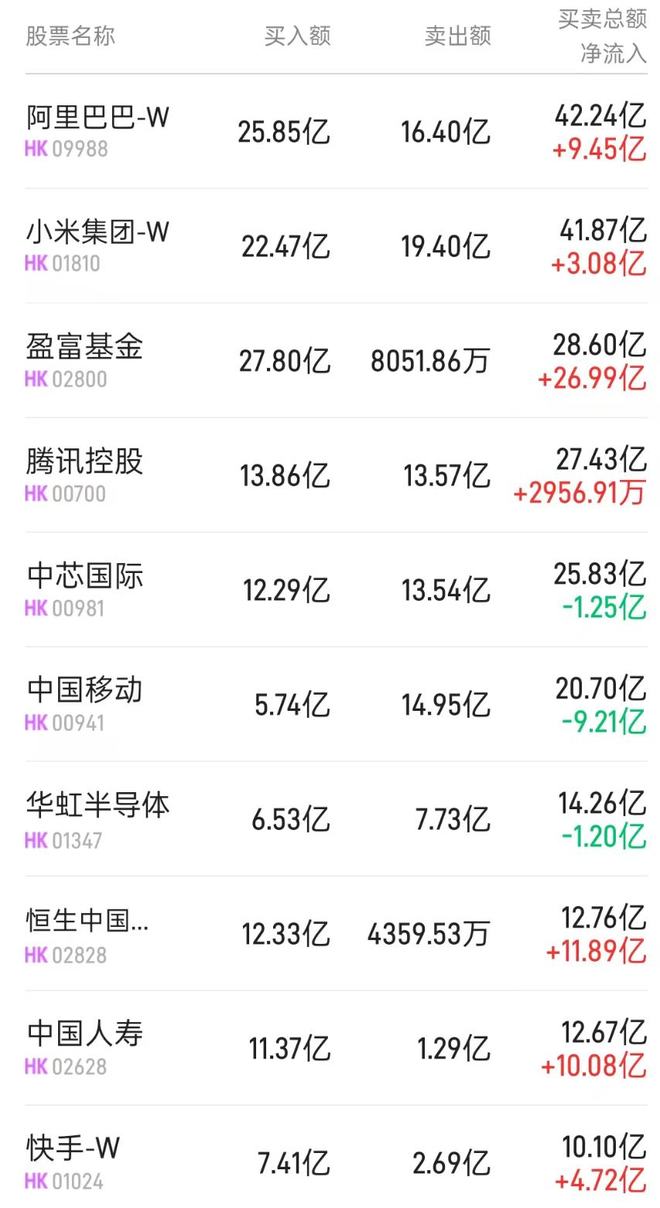
Group 1 - Northbound capital recorded a net buy of HKD 139.3 billion on January 21, with HK Stock Connect (Shanghai) contributing HKD 77.89 billion and HK Stock Connect (Shenzhen) contributing HKD 61.41 billion [1] - The most bought stocks included the Tracker Fund of Hong Kong (02800), Hang Seng China Enterprises (02828), and Alibaba-W (09988), while the most sold stocks were China Mobile (00941), Tencent (00700), and Hua Hong Semiconductor (01347) [1] - Alibaba-W received a net buy of HKD 10.77 billion, with significant growth in its AI model downloads, surpassing 100 million downloads [5] - China Life (02628) saw a net buy of HKD 10.07 billion, driven by positive expectations in the life insurance sector [5] - Kuaishou-W (01024) gained a net buy of HKD 7.33 billion, with its AI product showing a 350% increase in paid user growth [5] Group 2 - Semiconductor stocks showed divergence, with SMIC (00981) receiving a net buy of HKD 3.87 billion, while Hua Hong Semiconductor (01347) faced a net sell of HKD 1.2 billion [6] - TSMC's increased capital expenditure forecast indicates strong long-term demand driven by AI [6] - Shandong Gold (01787) received a net buy of HKD 3.03 billion, with gold prices hitting historical highs amid geopolitical tensions [7] - CNOOC (00883) saw a net buy of HKD 3.64 billion, with ongoing geopolitical tensions affecting oil prices [7] - Xiaomi Group-W (01810) and Meituan-W (03690) received net buys of HKD 5.89 billion and HKD 2.04 billion, respectively, while China Mobile (00941) and Tencent (00700) faced net sells of HKD 9.21 billion and HKD 2.71 billion [7]




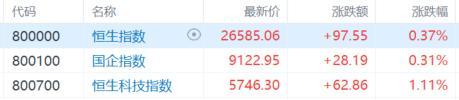
港股收评:恒指涨0.37%,黄金、半导体芯片股大涨
Ge Long Hui· 2026-01-21 08:34
Market Performance - The Hong Kong stock market showed resilience, with the Hang Seng Index and the Hang Seng Tech Index recovering from previous declines, closing up by 0.37% and 1.11% respectively [1][2] - The overall market remained stable despite a significant drop in US stocks overnight [1] Sector Performance - Major technology stocks saw gains, with notable increases in shares of Hua Hong Semiconductor (up over 5%) and SenseTime (up over 4%) [4][5] - Semiconductor stocks were active, driven by positive sentiment in the AI-driven storage cycle, with companies like Zhaoyi Innovation reaching new highs [2][7] - Gold stocks surged, led by Chifeng Jilong Gold (up over 9%) and Lingbao Gold (up over 8%), as spot gold prices broke through $4,880 [6][8] Individual Stock Movements - The stock of Skyworth Group soared over 37% after announcing a distribution of shares in Skyworth Photovoltaic and plans for a mainboard listing [16] - Southbound funds recorded a net inflow of HKD 13.93 billion, indicating strong investor interest [19] Future Outlook - Analysts predict that the Hang Seng Index could challenge the 30,000 to 31,000 point range by 2026, as current valuations remain below historical averages [21]