KUAISHOU(01024)

Search documents
快手-W(01024):——快手-W(1024.HK)25Q4业绩点评:AI投入阶段性影响利润水平,关注可灵商业化进展
EBSCN· 2026-03-26 08:48
Investment Rating - The report maintains a "Buy" rating for Kuaishou Technology (1024.HK) [4] Core Insights - Kuaishou's Q4 2025 revenue reached 39.568 billion RMB, representing a year-over-year increase of 11.8%, surpassing Bloomberg's consensus estimate of 38.864 billion RMB [1] - The company's gross profit was 21.819 billion RMB, with a gross margin of 55.1%, slightly above the previous year [1] - Adjusted net profit for Q4 2025 was 5.463 billion RMB, reflecting a year-over-year growth of 16.2% [1] - The growth in revenue was driven by improvements in online marketing services, e-commerce, and AI-driven services [1][2] Revenue Breakdown - Online marketing services generated 23.618 billion RMB, up 14.5% year-over-year, primarily due to AI-driven promotions [1] - Other services, mainly from e-commerce and AI, contributed 6.3 billion RMB, with a significant year-over-year growth of 28.0% [1] - Live streaming revenue was 9.7 billion RMB, showing a slight decline of 1.9% year-over-year due to platform governance efforts [1] Financial Forecasts - Revenue projections for 2024 to 2028 indicate steady growth, with 2026 expected to see a slight increase to 149.071 billion RMB [3][8] - Non-IFRS net profit estimates for 2026 have been revised down to 17.416 billion RMB, reflecting a decrease of 15.6% compared to the previous year [3][8] - The company plans to increase capital expenditures significantly to support AI development, with a forecasted Capex of 26 billion RMB in 2026 [2] AI and Commercialization - Kuaishou's AI technology is advancing, with significant revenue growth expected from its AI services, projected to increase by 250%-260% year-over-year in Q1 2026 [2] - The company is committed to investing in AI training and infrastructure, which is expected to impact profit levels in the short term but is seen as essential for long-term growth [2]

里昂:维持快手-W跑赢大市评级 料可灵将成为新增长引擎
Xin Lang Cai Jing· 2026-03-26 08:42
Group 1 - The core viewpoint of the report is that Kuaishou-W (01024) exceeded expectations in its Q4 2025 financial results, with total revenue and adjusted EBIT growing by 12% and 20% year-on-year, reaching 39.6 billion and 6 billion RMB respectively, which is 2% higher than the firm's estimates [1][3] - The annualized revenue for Kuaishou as of December has reached 240 million USD, and it is expected to more than double in 2026, indicating that Kuaishou will become a new growth engine [1][3] - The firm maintains an "outperform" rating on Kuaishou, reflecting confidence in its future performance [1][3]

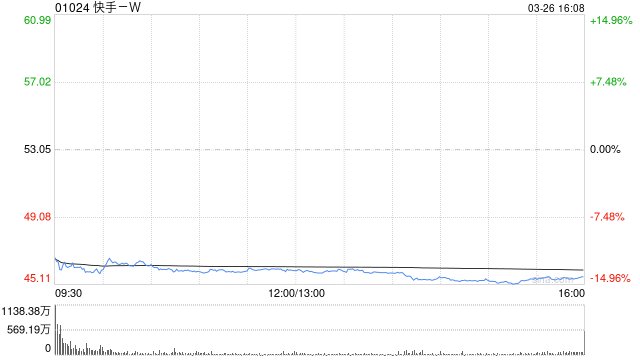
亚太主要股指飘绿,港股科网股重挫,快手大跌14%,油气股逆势领涨
2 1 Shi Ji Jing Ji Bao Dao· 2026-03-26 07:54
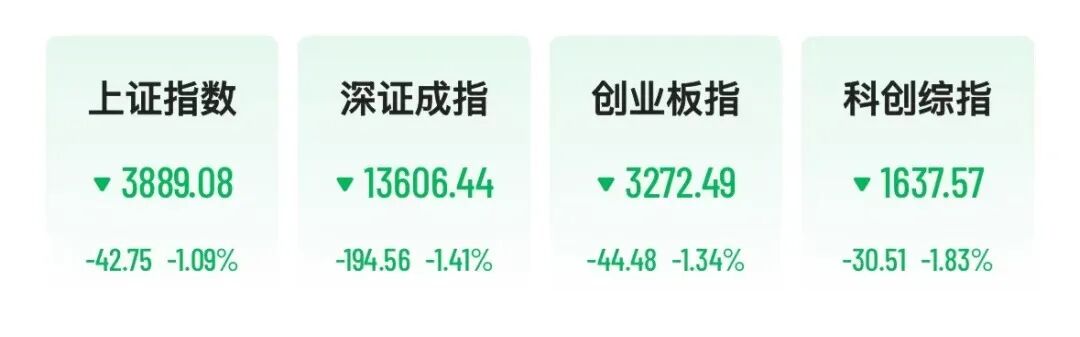
Group 1 - The Asia-Pacific stock markets experienced a widespread decline, with Japan's Nikkei 225 index falling by 0.27% and South Korea's KOSPI index dropping by 3.22% [1] - The A-share market saw a pullback, with all four major indices declining over 1%, and the Shanghai Composite Index falling below 3900 points, with nearly 4500 stocks declining across the market [1] Group 2 - Oil and gas stocks showed strength in the afternoon, with Blue Flame Holdings surging to the limit, and Shouhua Gas rising over 6%. International oil prices increased by approximately 2% for both New York and Brent crude [5] - Coal and chemical stocks experienced short-term gains, with Jinmei Technology hitting the limit and Haixing Co. rising over 8% [5] - The power sector was active, with Huadian Energy achieving four limits in six days, and Hunan Development achieving three consecutive limits [5] - Lithium battery material stocks showed repeated strength, with Rongjie Co. achieving three consecutive limits [5] - The commercial aerospace concept saw renewed activity, with Shenjian Co. and Zhongchao Holdings hitting the limit, and Xice Testing rising over 16% [5] Group 3 - The photovoltaic sector continued to weaken, with Guosheng Technology hitting the limit down, and Yubang New Materials and Shouhang New Energy both declining over 9% [6] - The Hong Kong stock market also faced declines, with the Hang Seng Index dropping over 2% and the Hang Seng Technology Index falling by 3.4% [6] Group 4 - Technology stocks collectively fell, with Kuaishou dropping over 14%, and major companies like Huahong Semiconductor and SMIC declining over 6% [7] - The consumer sector led the declines, with Pop Mart falling 11% [7] - Oil and gas stocks rose against the trend, with Baijin Oil Services increasing over 9% [7]
里昂:维持快手-W(01024)跑赢大市评级 料可灵将成为新增长引擎
智通财经网· 2026-03-26 06:58
Group 1 - The core viewpoint of the article is that Kuaishou-W (01024) reported better-than-expected financial results for Q4 2025, with total revenue and adjusted EBIT increasing by 12% and 20% year-on-year, reaching 39.6 billion and 6 billion RMB, respectively, exceeding the bank's estimates by 2% [1] - Kuaishou's annualized revenue as of December has reached 240 million USD, and it is expected to more than double in 2026, indicating that Kuaishou will become a new growth engine for the company [1] - The report maintains an "outperform" rating for Kuaishou, reflecting confidence in its future performance [1]
恒生科技指数跌逾3% 快手跌逾13%
Shang Hai Zheng Quan Bao· 2026-03-26 06:45
Group 1 - The Hang Seng Tech Index experienced a decline of over 3% in the afternoon of March 26 [2] - Among the constituent stocks, Kuaishou fell by more than 13%, while Meituan, Alibaba, and BYD Electronics dropped over 4% [2]


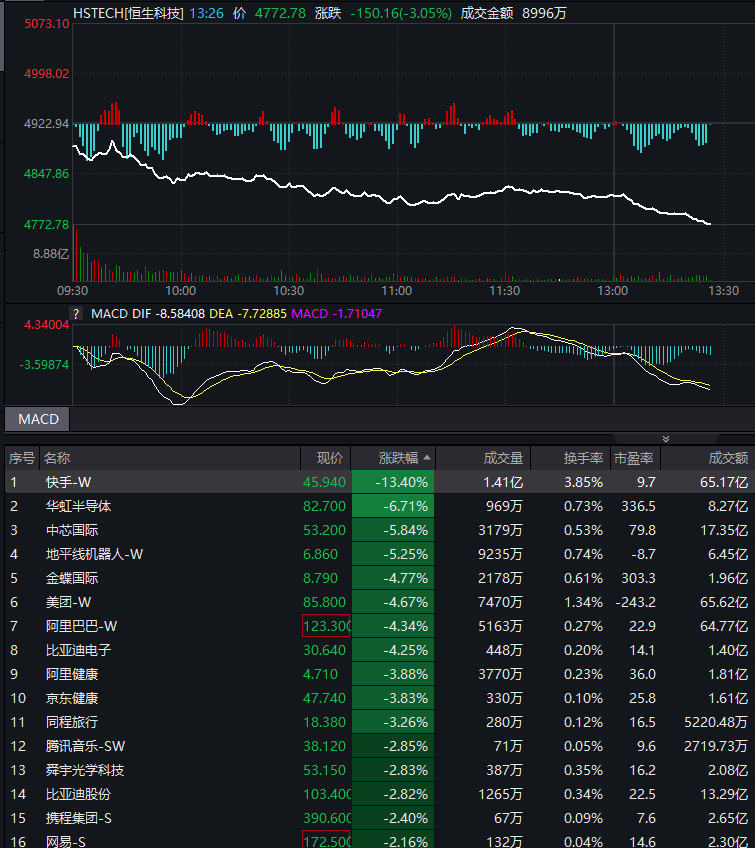
快手下挫拖累恒科指数,成分股绩后轮番大跌
Di Yi Cai Jing· 2026-03-26 06:04
Core Viewpoint - Kuaishou's stock experienced a significant drop of over 13% following its earnings report, reflecting broader investor anxiety in the Hang Seng Tech Index regarding tech stocks' performance and AI investment returns [1][2][4] Company Performance - Kuaishou reported an average daily active user count of 410 million for 2025, with total revenue increasing by 12.5% year-on-year to 142.8 billion yuan, and adjusted net profit reaching 20.6 billion yuan, a 16.5% increase [2] - In Q4 of the previous year, Kuaishou's revenue grew by 11.8% to 39.6 billion yuan, with adjusted net profit rising by 16.2% to 5.46 billion yuan, and users spending an average of 126 minutes daily on the app [2] Market Reaction - Following the earnings release, Kuaishou's stock fell sharply, mirroring the trend seen in other tech stocks like Tencent and Alibaba, which also faced declines after their earnings reports [1][4] - Analysts noted that the market's reaction was driven by a "good news fully priced in" sentiment, as high growth expectations for 2025 and 2026 had already been factored into stock prices [2][4] Investment Sentiment - Concerns about Kuaishou's capital expenditures, particularly in AI, have led to uncertainty regarding the returns on these investments, contributing to the stock's decline [3][5] - The overall sentiment in the tech sector is cautious, with investors focusing on companies with more predictable growth, while geopolitical risks and high oil prices have made tech stocks a target for sell-offs [4][5]
快手-W:26年电商广告和利润或承压-20260326
HTSC· 2026-03-26 05:45
Investment Rating - The report maintains a "Buy" rating for Kuaishou-W (1024 HK) with a target price of HKD 68.58 [1][11]. Core Insights - Kuaishou's revenue growth and profits are expected to face pressure due to regulatory changes and increased capital expenditures, particularly in AI investments [6][11]. - The company anticipates a significant increase in capital expenditures to HKD 26 billion in 2026, primarily for AI-related infrastructure [15]. - The report highlights a slowdown in revenue growth, projecting a 2.5% year-over-year increase in Q1 2026 and a 4.5% increase for the full year [7][11]. Financial Performance - Kuaishou's revenue for 2025 is projected at RMB 142.776 billion, with a growth rate of 12.51%, while 2026 revenue is expected to be RMB 149.159 billion, reflecting a slower growth of 4.47% [5][25]. - The adjusted net profit for 2026 is forecasted to decline by 22.38% to RMB 14.456 billion, with a subsequent recovery expected in 2027 [5][25]. - The report indicates that the adjusted EPS for 2026 will be RMB 4.04, with a PE ratio of 11.57 [5][11]. Business Segments - Advertising revenue is projected to grow by 7% in 2026, while e-commerce revenue is expected to increase by 15% [30]. - The report notes that Kuaishou's live streaming revenue is forecasted to decline by 6% in 2026, reflecting challenges in the regulatory environment [30]. - The company is enhancing its AI capabilities with the launch of the OneMall recommendation framework, which aims to improve e-commerce performance [17][16]. Market Position - Kuaishou's market position in AI video generation is highlighted, with the launch of the upgraded KuaLing 3.0 model, which significantly enhances content generation capabilities [18][9]. - The report emphasizes Kuaishou's competitive edge in the AI video market, despite concerns about potential competition from other players like Seedance [9][10]. Valuation - The report employs a Sum-of-the-Parts (SOTP) valuation method, assigning a target price of HKD 68.58, reflecting a discount due to slower revenue growth compared to peers [29][30]. - The valuation breakdown includes HKD 59.74 per share for advertising, HKD 6.08 for e-commerce, and HKD 2.76 for live streaming [29][30].
恒指收升272点,两日累涨953点
Guodu Securities Hongkong· 2026-03-26 05:21
Group 1 - The Hang Seng Index rose by 272 points, closing at 25,335 points, marking a two-day cumulative increase of 953 points or 3.91% [3][4] - The market experienced a high of 25,390 points during the day, with a total trading volume of 350.93 billion [3] - Notable stock performances included Meituan, which surged by 13.9% to HKD 90, and Alibaba, which increased by 4.6% to HKD 128.9 [4] Group 2 - The Hong Kong Monetary Authority announced a salary increase of 2.65% for its employees, along with a performance-based bonus amounting to 20.04% of total salaries [7] - The appointment of Liang Fengyi as the chair of the Asia-Pacific Committee of the International Organization of Securities Commissions was confirmed, aiming to enhance regional market resilience [8] - China’s Ministry of Commerce emphasized the importance of maintaining stable semiconductor supply chains during a meeting with Samsung's leadership, highlighting opportunities for investment cooperation [10] Group 3 - Conch Venture's annual profit increased by 11.17% to RMB 2.245 billion, with a revenue rise of 4.42% to RMB 6.548 billion [11] - New World Development secured a HKD 20 billion syndicated loan for refinancing, with a competitive interest rate [12] - China Eastern Airlines signed a purchase agreement for 101 A320NEO aircraft, with a total catalog price of approximately USD 15.802 billion, indicating significant investment in fleet expansion [13] Group 4 - Kingsoft Cloud reported a narrowed annual net loss of RMB 936 million, with total revenue increasing by 22.78% to RMB 9.559 billion [14]


快手-W(01024):Q4营收好于预期,坚定推进AI战略
GF SECURITIES· 2026-03-26 04:27
Investment Rating - The report assigns a "Buy" rating to the company with a current price of HKD 53.05 and a fair value of HKD 76.49 [9]. Core Insights - The company's Q4 revenue exceeded expectations, reaching RMB 39.6 billion, with a year-over-year growth of 12% and a quarter-over-quarter growth of 11% [9]. - The company is firmly advancing its AI strategy, which is expected to enhance its commercial capabilities [9]. - The report anticipates total revenue for 2026 and 2027 to reach RMB 1,484 billion and RMB 1,579 billion, representing growth rates of 4% and 6% respectively [18]. Financial Projections - Revenue projections for the company are as follows: - 2024: RMB 126,898 million - 2025: RMB 142,776 million - 2026: RMB 148,357 million - 2027: RMB 157,887 million - 2028: RMB 168,481 million - The expected growth rates for these years are 11.8%, 12.5%, 3.9%, 6.4%, and 6.7% respectively [4]. - Non-GAAP net profit is projected to be: - 2026: RMB 17,186 million - 2027: RMB 18,918 million - 2028: RMB 22,194 million - The growth rates for net profit are expected to be 72.5%, 16.5%, -16.8%, 10.1%, and 17.3% respectively [4]. User Metrics - The average monthly active users (MAU) for the main app are projected to be: - 2024: 710 million - 2025: 725 million - 2026: 732 million - 2027: 732 million - 2028: 732 million - The year-over-year growth rates for MAU are expected to decline from 5% in 2024 to 0% by 2027 [14]. Revenue Breakdown - The revenue breakdown for 2026 is projected as follows: - Advertising: RMB 86,700 million - Live streaming: RMB 36,225 million - Other services: RMB 25,432 million - E-commerce GMV: RMB 1,708,586 million [15]. - The report highlights that the advertising revenue is expected to grow at a slower pace due to market conditions, while AI applications are anticipated to drive growth in other segments [18].
600396,9连板!两大板块,逆势活跃!
证券时报· 2026-03-26 04:18
Market Overview - The A-share market experienced an overall adjustment on March 26, with major indices declining slightly. The Shanghai Composite Index fell by 0.58%, the Shenzhen Component Index by 0.38%, the ChiNext Index by 0.07%, and the Sci-Tech Innovation Index by 0.96% [4] - The Hong Kong stock market also saw a decline, with the Hang Seng Index dropping below the 25,000-point mark, experiencing a decline of over 1% [11] Active Sectors - The lithium mining and electric power sectors were notably active during the morning session of the A-share market, standing out as key highlights [2][4] - In the electric power sector, Huadian Liaoning Energy (600396) achieved a consecutive nine trading days of涨停 (trading limit up), along with nearly ten other stocks such as Huitian Thermal Power and Guangxi Energy also hitting涨停 [6] - The lithium mining sector saw significant gains, with Rongjie Co. hitting涨停 for the third consecutive trading day. Other lithium stocks like Zhongmin Resources and Shengxin Lithium Energy rose by over 6% [8] Notable Stock Performances - In the A-share market, the non-bank financial sector led the decline, with a drop of over 2%. Stocks such as China Life and Ruida Futures saw declines of over 5% and nearly 6%, respectively [4] - The environmental protection sector also faced declines, with a drop close to 2%. Notable declines included Xuelang Environment down by 12.01% and Haixia Environmental hitting the limit down [5] - In the Hong Kong market, Kuaishou-W led the decline among Hang Seng Index constituents, with a drop of over 13% following its earnings announcement [11] Earnings Announcements - Kuaishou reported a total revenue of RMB 142.8 billion for 2025, reflecting a year-on-year growth of 12.5%, and an adjusted net profit of RMB 20.6 billion, up 16.5% [11] - Bubble Mart's 2025 financial report indicated a revenue of RMB 37.12 billion, a significant year-on-year increase of 184.7%, and an adjusted net profit of RMB 13.08 billion, up 284.5% [12] - Kingsoft's 2025 revenue was RMB 9.683 billion, a decrease of 6% from the previous year, with its office software and services contributing 61% to total revenue [14]