PSBC(01658)

Search documents
证监会批了:同意!国有大行增资迎来重要进展
Zhong Guo Ji Jin Bao· 2026-02-11 06:33
具体来看,中国银行拟募集资金规模不超过1650亿元,发行对象为财政部;建设银行拟募集资金规模不 超过1050亿元,发行对象为财政部;交通银行拟募集资金规模不超过1200亿元,发行对象为财政部、中 国烟草和双维投资;邮储银行拟募集资金规模不超过1300亿元,发行对象为财政部、中国移动集团和中 国船舶集团。 (原标题:证监会批了:同意!国有大行增资迎来重要进展) 国有大行增资迎来重要进展! 5月23日晚间,中国银行、交通银行、邮储银行相继发布公告称,向特定对象发行A股股票申请已获得 中国证监会同意注册批复。 今年政府工作报告明确提出,拟发行特别国债5000亿元,支持国有大型商业银行补充资本。 3月30日,中国银行、建设银行、交通银行、邮储银行相继发布公告称,董事会已通过了向特定对象发 行A股股票的议案。四家银行合计募集金额不超过5200亿元。 募资用途上,四大行均表示,在扣除相关发行费用后将全部用于补充核心一级资本。 截至2024年末,六家国有大型银行的核心一级资本充足率均高于监管最低要求。其中,中国银行、建设 银行、交通银行、邮储银行的核心一级资本充足率分别为12.2%、14.48%、10.24%、9.56%, ...



贵金属风控升级 金店暂停节假日回购 银行清退“三无”客户
2 1 Shi Ji Jing Ji Bao Dao· 2026-02-10 23:14
Core Viewpoint - The recent volatility in gold prices has led to significant adjustments in gold repurchase policies by various gold retailers and banks in China, aimed at risk management and operational efficiency [1][2][3]. Group 1: Adjustments in Gold Repurchase Policies - China Gold announced the suspension of gold repurchase services on non-trading days starting February 7, 2026, to manage risks associated with price volatility [1][2]. - Beijing Caishikou Department Store has also updated its gold repurchase rules, halting services on weekends and holidays, and reducing the daily gold repurchase limit from 200 kilograms to 100 kilograms [2]. - The adjustments include limits on repurchase amounts for individual customers, requiring advance reservations, with the limits dynamically adjusted based on market conditions [2][3]. Group 2: Market Conditions and Risk Management - The sharp increase and volatility in gold prices have made it difficult for retailers to establish fair repurchase prices, leading to potential disputes and financial pressure [3]. - Analysts expect more gold retailers to follow suit in tightening repurchase policies, focusing on risk control and operational cost management as high volatility becomes the norm [3]. - The Shanghai Gold Exchange has raised margin requirements and adjusted trading limits for gold contracts in response to market conditions, indicating a proactive approach to risk management [4]. Group 3: Banking Sector Adjustments - Several banks have begun to limit services for "three no" clients (no holdings, no inventory, no debts) in the gold trading sector, reflecting a broader trend of tightening regulations in response to market risks [4][5]. - Since September 2025, at least 11 banks have announced adjustments to their gold trading services, including suspending new trades and closing online trading channels for inactive clients [5][6]. - The banking sector's adjustments are part of a larger strategy to mitigate risks associated with market volatility, with a focus on compliance and operational integrity [6].




平安基金管理有限公司关于新增北京创金启富基金销售有限公司为旗下基金销售机构的公告
Shang Hai Zheng Quan Bao· 2026-02-10 18:28
Group 1 - The company announced that starting from February 11, 2026, investors can open accounts, subscribe, redeem, and perform regular investment and conversion operations for certain funds through Chuangjin Qifu [1] - The company has signed a supplementary sales agreement with Beijing Chuangjin Qifu Fund Sales Co., Ltd. to enhance service offerings to investors [1] - Investors can enjoy fee discounts when subscribing or performing regular investment and conversion operations through Chuangjin Qifu, with the specifics determined by Chuangjin Qifu [2] Group 2 - The company will suspend subscription, conversion, and regular investment operations for the Ping An Jin Guanjia Money Market Fund from February 12 to February 23, 2026, while redemption and conversion out operations will continue [4][6] - The Ping An Zhongzheng Interbank Certificate of Deposit AAA Index 7-Day Holding Period Securities Investment Fund will also suspend similar operations during the same period [8][10] - The company will resume these operations on February 24, 2026, and will not issue further announcements regarding this resumption [4][8] Group 3 - The company has appointed Fangzheng Securities Co., Ltd. as a liquidity service provider for the Ping An Hang Seng Hong Kong Stock Connect Technology Theme ETF, effective February 11, 2026 [12] - The company has announced the establishment of the Ping An New Sharp Quantitative Stock Selection Mixed Fund, with the fund contract becoming effective on February 11, 2026 [21][22] - The company will handle subscription and redemption operations for the new fund within three months of the fund contract's effectiveness [22]




中国邮政储蓄银行发表新春畅想
Xin Lang Cai Jing· 2026-02-10 07:29
Core Viewpoint - China Postal Savings Bank expresses gratitude to readers and stakeholders while highlighting its commitment to high-quality development and service to the economy as it enters the new year [2][5]. Group 1: Economic Context and Development Goals - The year 2025 marks the completion of the "14th Five-Year Plan," showcasing China's economic resilience and vitality, with a strong start towards the second centenary goal [2][5]. - The bank emphasizes its role in supporting national strategies, including expanding domestic demand and effective investment, contributing to a robust domestic circulation [2][5]. Group 2: Strategic Focus and Initiatives - The bank is committed to integrating the Party's leadership into all aspects of its development, aligning its strategies with the broader goals of national modernization and rejuvenation [2][5]. - It aims to deepen its focus on serving agriculture, rural areas, and small and medium-sized enterprises, while actively responding to diverse financial needs of the public [3][5]. Group 3: Future Outlook and Plans - The year 2026 will be significant as it marks the 105th anniversary of the Communist Party of China and the beginning of the "15th Five-Year Plan" [3][6]. - The bank plans to enhance its operational focus through six key upgrades, including specialization, lightness, comprehensiveness, ecological sustainability, precision, and digital intelligence [3][6]. - It aims to tackle six critical battles related to optimizing asset-liability structures, improving capital quality, enhancing income quality, controlling costs, boosting customer management, and strengthening risk control capabilities [3][6].


重庆金融监管局核准钟刚邮政储蓄银行重庆高新分行副行长任职资格
Jin Tou Wang· 2026-02-10 03:16
2026年2月4日,重庆金融监管局发布批复称,《中国邮政储蓄银行重庆分行关于钟刚同志高管任职资格 核准的请示》(渝邮银请〔2026〕1号)收悉。经审核,现批复如下: 一、核准钟刚中国邮政储蓄银行重庆高新分行副行长的任职资格。 二、中国邮政储蓄银行应要求上述核准任职资格人员严格遵守金融监管总局有关监管规定,自中国邮政 储蓄银行政许可决定作出之日起3个月内到任,并按要求及时报告到任情况。未在上述规定期限内到任 的,本批复文件失效,由决定机关办理行政许可注销手续。 三、中国邮政储蓄银行应督促上述核准任职资格人员持续学习和掌握经济金融相关法律法规,牢固树立 风险合规意识,熟悉任职岗位职责,忠实勤勉履职。 ...
富达基金携手邮储银行 “科创+绿色”双主题基金启新篇
Zhong Zheng Wang· 2026-02-09 12:49
中央国债登记结算有限责任公司总经理徐良堆表示,中央结算公司立足国家金融基础设施定位,多措并 举支持科创债券发展,完善绿色金融数据库与担保品管理机制,并以北京总部为核心统筹服务布局,助 力宏观政策落地和北京国家金融管理中心建设。本次联合多方推出"科技+绿色"双主题指数及基金产 品,旨在为市场提供便捷配置工具,提升相关债券流动性与定价效率,引导资金精准支持关键领域,助 力国家战略转化为发展实效。 该产品由富达基金携手中国邮政储蓄银行股份有限公司、中央结算公司共同打造。在产品构建过程中, 中央结算公司聚焦科技创新与绿色发展主题,编制具有引领意义的特色债券指数,筑牢产品专业基础; 邮储银行(601658)依托在服务实体经济和落实金融"五篇大文章"方面的实践经验,发挥"自营投资+生 态协同"的特色优势,为产品顺利落地提供重要支撑;富达基金则结合全球资产配置经验与中国债市结 构特征,为投资者提供多样化、前瞻性的创新资产配置解决方案。 与会代表认为,以"科创+绿色"为代表的新质生产力领域,正在成为金融服务实体经济的重要着力点。 未来,金融及市场各方将进一步加强协同探索,通过持续的产品创新和机制优化,引导更多长期资金进 入科 ...
邮储银行林芝市分行揭牌
Xin Hua Wang· 2026-02-09 04:16
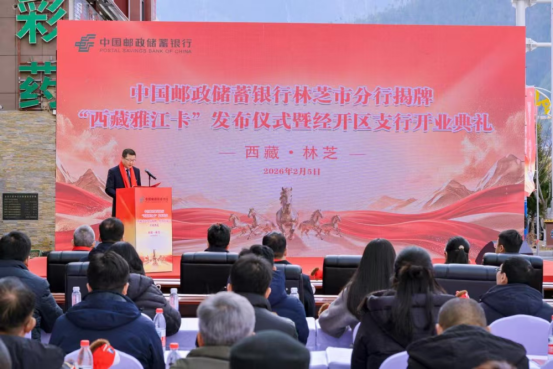
Group 1 - The China Postal Savings Bank has inaugurated its Linzhi branch and launched the "Tibet Yajiang Card" to enhance financial services for modern construction in Linzhi [1][3] - The Linzhi branch will leverage the advantages of the Postal Group's integrated resources and the bank's self-operated and agency network to create a comprehensive financial service system [5] - The newly established Economic Development Zone branch aims to support clean energy and cultural tourism industries, contributing to the construction of a national clean energy base [6] Group 2 - Since the 14th Five-Year Plan, the Tibet branch of China Postal Savings Bank has provided over 73 billion yuan in loans for key areas such as infrastructure and clean energy, playing a significant role in financial services [7] - As of January 2026, the total loan balance of the bank is expected to exceed 43 billion yuan [7]
跨境流动性跟踪20260208:贸易回流比率再度回正,服务逆差大幅收窄
GF SECURITIES· 2026-02-09 01:11
Investment Rating - The industry rating is "Buy" [4] Core Views - The trade return ratio has turned positive again, and the service trade deficit has significantly narrowed [16][18] - The cross-border capital flow is expected to gradually return, positively impacting domestic liquidity [5][19] - The service trade deficit for December 2025 was 966 billion CNY, a year-on-year decrease of 466 billion CNY, with a full-year deficit of 13,760 billion CNY, down 2,544 billion CNY, approximately 16% [18] Summary by Sections 1. Current Observation - The State Administration of Foreign Exchange (SAFE) released data on China's international balance of payments for December 2025, indicating a potential impact on the central bank's willingness to settle foreign exchange [16] - The trade return ratio is at a historical high, with a monthly unconverted trade net outflow of 447 billion CNY, a year-on-year increase of 1,392 billion CNY [17] 2. Arbitrage Trading Returns - The arbitrage trading return rate for 10Y US Treasury bonds in CNY has dropped significantly to -1.77%, indicating a shift in cross-border capital dynamics [17] 3. Service Trade Deficit - The service trade deficit has narrowed significantly, with major contributions from improved policies for foreign visitors, reduced international shipping costs, and enhanced competitiveness in high-tech services [18] 4. Cross-Border Liquidity Outlook - Despite the recent appointment of Kevin Warsh as the next Federal Reserve Chair, the trend of cross-border capital return is expected to continue, influenced by the Fed's monetary policy stance [19][21] - The short-term liquidity in the US remains tight, with limited space for balance sheet reduction, while long-term prospects depend on economic performance [20][21]



邮储银行建湖县支行获金融支持发展先进集体荣誉
Sou Hu Cai Jing· 2026-02-07 12:49
Core Viewpoint - Postal Savings Bank's Jianhu County branch has been recognized as an advanced collective for financial support in high-quality economic development in Jianhu for the year 2025 [1] Group 1: Financial Initiatives - The Jianhu County branch focuses on key areas such as technology, green finance, and inclusive finance, launching specialized credit products for the local petroleum machinery industry to drive industrial upgrades [1] - The branch has implemented the country's first agricultural seed carbon credit loan, coordinating to issue a long-term loan of 130 million yuan to support rural revitalization [1] - The branch promotes inclusive finance by utilizing online products to address financing difficulties faced by small and micro enterprises, leveraging policy-based finance to facilitate local green transformation [1] Group 2: Future Plans - The Jianhu County branch aims to use this recognition as an opportunity to continuously innovate financial products and services, closely aligning with local economic needs to provide stronger financial support for high-quality economic development in Jianhu [1]
银行业周报:银行行情再出发
ZHESHANG SECURITIES· 2026-02-07 10:24
Investment Rating - The industry investment rating is "Positive" (maintained) [4] Core Insights - Bank stocks have outperformed the market, with the banking index rising by 1.70% while the CSI 300 index fell by 1.33%, indicating a shift in market sentiment towards underperforming sectors [1] - Quality city commercial banks have shown superior performance, with city commercial banks increasing by 3.27% compared to state-owned banks at 0.35% and joint-stock banks at 1.84% [1] - The banking sector is expected to enter a growth cycle in 2026, with projected revenue and net profit growth rates of 2.8% and 2.6% respectively, indicating a gradual recovery [3] - The opportunity cost of investing in bank stocks remains low, with a 10-year government bond yield at 1.80% and bank stock dividends around 4.4%, providing a 2.6 percentage point premium [3] - The report emphasizes the importance of new growth drivers, particularly recommending Nanjing Bank for its strong management and market position [3] Summary by Sections Industry Performance - The banking sector ranked sixth among 31 primary industries, with a weekly increase of 1.70% [1] - The performance of various bank types showed that city commercial banks had the highest weekly increase at 3.27% [1] Individual Bank Events - Qilu Bank reported a 5.1% year-on-year increase in revenue and a 14.6% increase in net profit, aligning with market expectations [2] - Ningbo Bank's executive appointment was approved, indicating stability in management [2] Investment Outlook - The report maintains a positive outlook for bank stocks in 2026, suggesting a rebalancing of market styles and a favorable environment for bank valuations [3] - Recommendations include major state-owned banks and a focus on mid-sized banks with new growth potential, particularly Nanjing Bank, Shanghai Bank, and others [4][6]