INNOVENT BIO(01801)

Search documents
超百亿美元大单却带不动股价,创新药BD催化剂失灵?
Di Yi Cai Jing· 2025-10-29 10:00
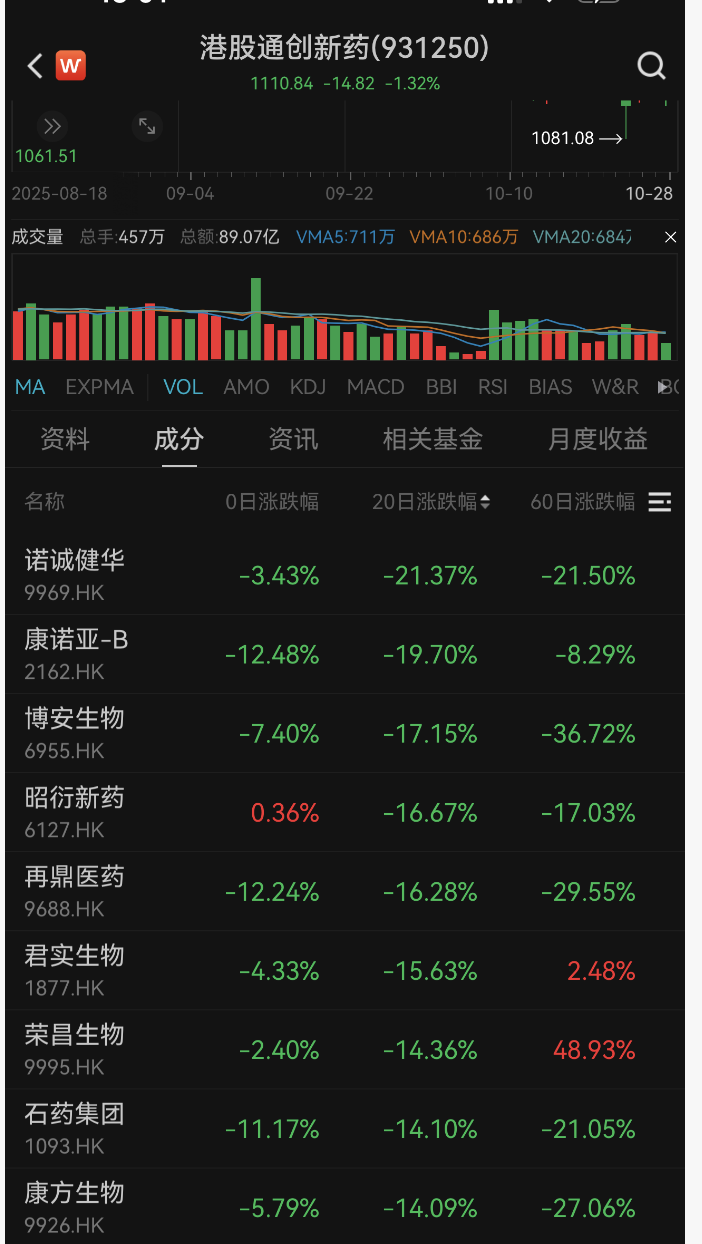
Core Viewpoint - Despite significant business development (BD) agreements exceeding $10 billion, the stock prices of innovative pharmaceutical companies remain sluggish, indicating a disconnect between market expectations and actual performance [1][2]. Group 1: Market Performance - The Hong Kong Stock Connect innovative drug index has declined from over 1240 points on October 9 to 1110 points, reflecting a drop of approximately 10.5% [1][2]. - Notable companies like 信达生物 (Innovent Biologics) have seen their stock prices fall despite announcing major collaborations, with 信达生物's stock dropping 1.96% to 85.2 HKD per share on October 22 [2]. - Over the past month, the innovative drug sector has experienced a 16% decline from a peak of 1326 points on September 8, with several companies like 诺诚健华 (Nocera) and 康诺亚-B (CanSino) seeing stock drops exceeding 19% [2][4]. Group 2: Financial Performance - Many innovative drug companies have reported revenue growth, yet profitability remains a concern, with only four out of the listed companies achieving positive net profits [6][7]. - 康诺亚-B reported a staggering 812.1% year-on-year revenue increase, while other companies like 诺诚健华 and 信达生物 also showed significant revenue growth of over 40% [6][7]. Group 3: Industry Dynamics - The innovative drug sector is characterized by high competition and a high rate of project failure, with a significant percentage of BD agreements facing termination [8]. - The long-term outlook for the Chinese innovative drug industry remains positive, driven by an increase in BD transactions, although the market is becoming increasingly competitive [8][9]. - Analysts suggest that the recent stock price adjustments may be a result of previously overly optimistic expectations regarding BD agreements, and the market may be entering a phase of stabilization [10].

国产减肥药战胜司美格鲁肽
Xin Lang Cai Jing· 2025-10-29 06:51
Core Insights - The head-to-head clinical trial results indicate that the Chinese drug Masitide (玛仕度肽) from Innovent Biologics outperformed Semaglutide (司美格鲁肽) in terms of glycemic control and weight management for Chinese patients with type 2 diabetes and obesity [1][4] Group 1: Clinical Trial Results - The DREAMS-3 trial showed that 48.0% of patients in the Masitide group achieved HbA1c < 7.0% and a weight loss of ≥10% after 32 weeks, compared to 21.0% in the Semaglutide group (P < 0.0001) [1] - The mean change in HbA1c from baseline at week 32 was -2.03% for Masitide and -1.84% for Semaglutide, while the average percentage weight loss was 10.29% for Masitide and 6.00% for Semaglutide (P < 0.05) [1][4] - The trial included 349 participants with an average age of 42.4 years and an average baseline HbA1c of 8.02% [4] Group 2: Market Context - The global market for GLP-1 peptide drugs is projected to reach $165 billion by 2031, with the U.S. market expected to hit $100 billion, where the weight loss indication market will surpass the diabetes market, accounting for 60% [5] - There are nearly 10 similar drugs to Semaglutide in the domestic market awaiting approval [6] Group 3: Drug Development Trends - The development strategies for new generation weight loss drugs include multi-target agonists and combination therapies with Amylin and GIP pathways [8] - The treatment landscape for obesity is still in its early stages, similar to the state of diabetes treatment 40 years ago, indicating significant future potential for drug development [10]



大行评级丨招银国际:微升信达生物目标价至110.62港元 维持“买入”评级
Ge Long Hui· 2025-10-29 06:21
Group 1 - The core viewpoint of the article highlights the global strategic collaboration between Innovent Biologics and Takeda Pharmaceutical, focusing on key oncology assets including the next-generation IO cornerstone therapy IBI363 and licensing agreements for IBI343 and IBI3001 [1] - Innovent Biologics aims to develop into a fully integrated biopharmaceutical company with global R&D and commercial capabilities, targeting at least five assets to enter global Phase III multi-regional clinical trials (MRCTs) by 2030 [1] - The company has established a discovery research laboratory in the United States and plans to expand its U.S. R&D team to 100-200 people by 2026, indicating significant investment expectations [1] Group 2 - As of June 2025, Innovent Biologics has a solid financial position with a cash balance of $2.1 billion, providing a strong financial foundation for its global ambitions [1] - The report expresses optimism for the global development of IBI363 and IBI343, reflecting the new collaboration in the valuation [1] - Based on the discounted cash flow (DCF) method, the target price for Innovent Biologics has been slightly raised from HKD 109.48 to HKD 110.62, maintaining a "Buy" rating [1]
多家生物医药企业三季报业绩亮眼,港股创新药精选ETF(520690)午后震荡拉升
Xin Lang Cai Jing· 2025-10-29 05:38
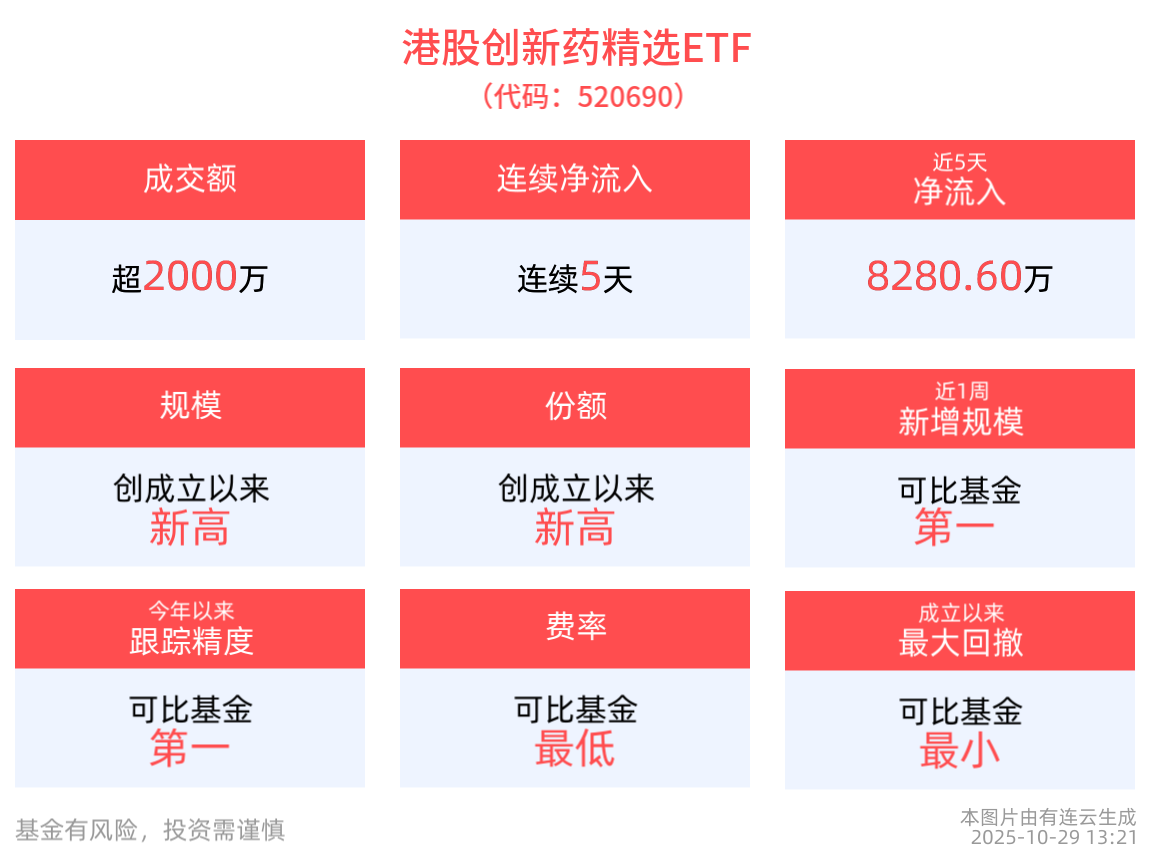
Group 1: Market Performance - The Hong Kong Innovative Drug Selected ETF (520690) increased by 0.22%, with the latest price at 0.89 yuan as of October 29, 2025 [3] - The ETF recorded a turnover of 4.25% during the trading session, with a total transaction value of 21.78 million yuan [3] - Over the past year, the average daily transaction volume of the ETF was 120 million yuan [3] Group 2: Clinical Data and Industry Insights - Grail presented initial data from its multi-cancer early detection product Galleri at the 2025 ESMO annual meeting, showing a positive predictive value of 61.6% and a specificity of 99.6% [3] - Among the detected new cancers, 69.3% were in stages I-III, with a tissue origin accuracy of 91.7% [3] - Guosen Securities views this data as a significant milestone in the multi-cancer early detection field, suggesting Galleri could enhance existing screening systems [3] Group 3: Company Earnings and Trends - Over 280 pharmaceutical and biotech companies, including Heng Rui Pharmaceutical and WuXi AppTec, reported strong Q3 results, driven by advancements in R&D pipelines and new drug launches [3] - The overall industry is exhibiting a positive trend characterized by "innovation as a foundation and overseas expansion" [3] Group 4: CDMO Sector Performance - Lonza, a leading overseas CDMO, reported strong Q3 results, maintaining a revenue growth forecast of 20-21% for the year, with core EBITDA margins between 30-31% [4] - Medpace has seen consecutive growth in new orders for two quarters, indicating a recovering financing environment for U.S. small and mid-sized biotech firms [4] - WuXi AppTec exceeded Q3 performance expectations and raised its full-year guidance, further confirming the positive outlook for the CXO industry [4] Group 5: ETF Size and Inflows - The latest size of the Hong Kong Innovative Drug Selected ETF reached 512 million yuan, marking a new high since its inception [4] - The ETF's share count also hit a record high of 574 million shares [4] - In the past five days, the ETF experienced continuous net inflows, with a peak single-day net inflow of 31.48 million yuan, totaling 82.81 million yuan in net inflows [4]


CXO景气度持续向好,医疗创新ETF(516820.SH)连续5日“吸金”
Xin Lang Cai Jing· 2025-10-29 03:04
Core Viewpoint - The medical innovation sector is experiencing a structural recovery, with significant inflows into the Medical Innovation ETF and positive performance from key companies in the sector [1][2]. Group 1: Market Performance - On October 29, the Medical Innovation ETF (516820.SH) fell by 1.28%, with component stocks showing mixed results; Chuaning Biological (301301) led gains at 5.12%, while Ailis (688578) saw the largest decline at 5.13% [1]. - The Medical Innovation ETF has seen continuous net inflows over the past five days, with a peak single-day net inflow of 38.68 million yuan, totaling 66.42 million yuan and an average daily net inflow of 13.28 million yuan [1]. Group 2: Industry Trends - The pharmaceutical sector has undergone a prolonged valuation adjustment, but a significant structural recovery trend has emerged recently, supported by policies promoting commercial insurance development [1]. - The investment and financing landscape in the pharmaceutical sector is expected to recover, driven by a rebound in the secondary market, with continued positive sentiment in the CXO and upstream segments [1]. - Recent quarterly reports from several CXO companies, including WuXi AppTec, Tigermed, and others, indicate a positive outlook for the industry [1]. Group 3: Future Outlook - The CXO sector continues to show strong performance, with companies like WuXi AppTec and Boteng surpassing expectations in their quarterly results [2]. - The innovative drug sector is on a long-term upward trend, with opportunities arising from both domestic revenue growth and international expansion [2]. - The expectation of interest rate cuts in the U.S. is likely to enhance global liquidity and support the trend in technology stocks, providing an opportunity for investors to capitalize on the rebound in core pharmaceutical assets through the Medical Innovation ETF [2].



港股创新药ETF(159567)跌1.32%,成交额5.88亿元
Xin Lang Cai Jing· 2025-10-28 13:01
Core Insights - The Hong Kong Innovative Drug ETF (159567) closed down 1.32% with a trading volume of 588 million yuan on October 28, 2024 [1] - The fund was established on January 3, 2024, with an annual management fee of 0.50% and a custody fee of 0.10% [1] - As of October 27, 2024, the fund's latest share count was 8.177 billion shares, with a total size of 6.823 billion yuan, reflecting a significant increase in both share count and size compared to the previous year [1] Fund Performance - The fund's share count increased by 1968.15% and its size increased by 1706.06% from December 31, 2023, when it had 395 million shares and a size of 378 million yuan [1] - The fund has recorded a total trading amount of 22.001 billion yuan over the last 20 trading days, averaging 1.1 billion yuan per day [1] - Year-to-date, the cumulative trading amount is 229.668 billion yuan, with an average daily trading amount of 1.166 billion yuan [1] Fund Management - The current fund manager is Ma Jun, who has managed the fund since its inception, achieving a return of 66.90% during the management period [2] - The top holdings of the fund include companies such as BeiGene, CanSino Biologics, Innovent Biologics, and others, with significant percentages of the portfolio allocated to these stocks [2] - The largest holding is BeiGene, accounting for 10.62% of the portfolio, followed by CanSino Biologics at 10.55% and Innovent Biologics at 10.21% [2]

玛仕度肽“头对头”完胜司美格鲁肽,百亿减重药市场格局生变
2 1 Shi Ji Jing Ji Bao Dao· 2025-10-28 09:02
Core Insights - The article highlights the success of the domestic weight-loss drug Mazdutide, developed by Innovent Biologics, in a head-to-head clinical trial against the international product Semaglutide, marking a significant achievement for local innovation in the metabolic disease sector [1][2]. Group 1: Clinical Trial Results - The DREAMS-3 trial demonstrated that 49.7% of patients treated with Mazdutide achieved both blood sugar control (HbA1c < 7.0%) and a weight loss of ≥10%, significantly outperforming the 21.0% in the Semaglutide group [1]. - Mazdutide showed superior results in various cardiovascular metabolic risk factors, including fasting blood sugar, waist circumference, systolic blood pressure, and triglycerides [1]. - The trial was notable for being the first direct comparison of a domestic GCG/GLP-1 dual receptor agonist with Semaglutide in the diabetes treatment field [1]. Group 2: Market Context and Competition - The global market for obesity and metabolic drugs is projected to exceed $100 billion by 2030, with GLP-1 drugs being a key driver of this growth [3]. - The domestic weight-loss injection market is entering an accelerated expansion phase, driven by strong competition from multinational pharmaceutical companies and favorable weight management policies [4]. - The competitive landscape is characterized by a "dual oligopoly" with Novo Nordisk's Semaglutide and Eli Lilly's Tirzepatide dominating the market share [9]. Group 3: Industry Trends and Future Outlook - Domestic pharmaceutical companies are rapidly advancing in GLP-1 drug development, with several firms, including Hengrui Medicine and East China Pharmaceutical, actively pursuing innovative products [2][11]. - The market potential for weight-loss drugs is substantial, with projections indicating that by 2025, the compliant market for weight-loss medications in China could exceed 12 billion yuan [10]. - The increasing number of entrants in the GLP-1 space is expected to intensify competition, with companies needing to focus on differentiation, pricing strategies, and expanding indications beyond type 2 diabetes to capture market share [12][13].


信达生物公布玛仕度肽最新Ⅲ期数据,本土创新药直面对标国际巨头
Jing Ji Wang· 2025-10-28 08:53
Core Insights - The core viewpoint of the articles is that Innovent Biologics' GCG/GLP-1 dual receptor agonist, Mazdutide, has achieved significant efficacy in controlling blood sugar and managing weight in patients with type 2 diabetes (T2D) and obesity, outperforming the international product Semaglutide in a Phase III clinical trial named DREAMS-3 [1][2][3]. Group 1: Clinical Trial Results - In the DREAMS-3 trial, 49.7% of patients treated with Mazdutide achieved both blood sugar targets (HbA1c < 7.0%) and a weight loss of ≥10% over a 32-week treatment period, significantly higher than the 21.0% in the Semaglutide group [1]. - Mazdutide demonstrated superior results in reducing fasting blood sugar, waist circumference, systolic blood pressure, and triglycerides, indicating improvements in multiple cardiovascular metabolic risk factors [1]. Group 2: Market Potential and Strategic Positioning - The global market for obesity and metabolic drugs is projected to exceed $100 billion by 2030, with GLP-1 drugs being a key driver, highlighting the commercial potential of Mazdutide [2]. - The domestic weight management market is entering an accelerated expansion phase, driven by strong positioning from multinational pharmaceutical companies and favorable weight management policies, which may provide a competitive edge for Mazdutide [2]. Group 3: Product Pipeline and Future Outlook - Mazdutide has received approvals for both weight management and diabetes treatment, providing dual market entry opportunities, which is crucial for Innovent's internationalization and valuation restructuring [3]. - With over 140 million diabetes patients and hundreds of millions of overweight and obese individuals in China, the introduction of Mazdutide could disrupt the existing market landscape, presenting both a commercial opportunity and a test of local innovation in the global arena [3].
研判2025!中国TNF-a抑制剂行业发展历程、发展现状、竞争格局及发展趋势分析:行业渗透率不断提升,市场规模达到163亿元[图]
Chan Ye Xin Xi Wang· 2025-10-28 01:12
Core Insights - The TNF-α inhibitor market is experiencing rapid growth due to the increasing prevalence of autoimmune diseases and the urgent treatment needs of a large patient population [1][5][12] - In China, the market penetration rate of TNF-α inhibitors was only 0.31% in 2018, compared to 13.36% in the U.S., indicating significant growth potential for the industry [1][5] - The market size for TNF-α inhibitors in China is projected to reach 16.3 billion yuan in 2024, representing a year-on-year increase of 25.4% [1][5] TNF-α Inhibitor Industry Overview - TNF-α inhibitors are targeted biological agents that reduce inflammation and immune activation, primarily used for various autoimmune diseases [4][5] - The development of TNF-α inhibitors began in the 1990s, with the first drug, Infliximab, approved in 1998, marking the start of a new era in treating autoimmune diseases [4][5] Current Market Status - The TNF-α inhibitor market is expanding rapidly, attracting numerous domestic pharmaceutical companies, which has led to increased market penetration and growth [1][5] - The leading TNF-α inhibitors in the market include Adalimumab, Etanercept, and Infliximab, with Adalimumab holding a market share of 48.83% [6][7] Competitive Landscape - The TNF-α inhibitor industry is characterized by a dominance of foreign pharmaceutical companies, with local companies like Innovent Biologics and Junshi Biosciences rapidly gaining market share [7][9] - The competition is intensifying as more companies enter the market, leading to price reductions and increased pressure on profit margins [12] Future Trends - Future developments in the TNF-α inhibitor market will focus on improving therapeutic efficacy and reducing side effects through structural modifications and personalized treatment approaches [10][11] - The industry is expected to see increased competition, with many companies entering the market, leading to potential market consolidation as some may exit due to pricing pressures [12] - There is a growing opportunity for domestic companies to expand into international markets, particularly in North America and Europe, where demand for TNF-α inhibitors is rising [13]


114亿美元交易背后的野心,没换来股价上涨
36氪· 2025-10-28 00:10
Core Viewpoint - The article discusses a significant licensing deal between Innovent Biologics and Takeda Pharmaceutical, valued at $11.4 billion, which includes an upfront payment of $1.2 billion and potential milestone payments of $10.2 billion. This deal is seen as a pivotal moment for the Chinese innovative drug sector, particularly in the context of the global oncology market [5][9]. Group 1: Transaction Details - The deal includes three drug candidates: IBI363, IBI343, and IBI3001, with the majority of the payment focused on IBI363 and IBI343. IBI3001 is only sold under an option agreement [7][9]. - IBI363 is a PD-1/IL-2α-bias dual antibody currently in the registration clinical development phase, targeting non-small cell lung cancer (NSCLC) [8]. - IBI343 is an ADC targeting CLDN18.2, with ongoing clinical studies for gastric and pancreatic cancers [8]. - IBI3001 is an ADC targeting EGFR/B7H3, currently in Phase I clinical trials [8]. Group 2: Strategic Implications - The unique "Co-Co" collaboration model allows Innovent to remain deeply involved in the global development of IBI363, sharing both costs and future profits with Takeda, which is a departure from traditional licensing agreements [11][12]. - This partnership is expected to enhance Innovent's capabilities in global clinical development and commercialization, aligning with its goal to become a leading global biopharmaceutical company by 2030 [13][16]. - The collaboration with Takeda, a well-established player in the oncology market, is seen as a strategic move to access the U.S. market and leverage Takeda's expertise [15][16]. Group 3: Product Potential - IBI363 is positioned as a potential cornerstone drug for next-generation cancer immunotherapy, with the ability to address PD-1 resistance and target "cold tumors" [18]. - The market potential for PD-1 resistant therapies is projected to reach billions, with IBI363 showing promising clinical data, including an objective response rate (ORR) of 36.7% in a specific dosage group [19][20]. - The drug's broad-spectrum applicability across various cancers, including colorectal and gastric cancers, further enhances its market potential [21].