CMBC(01988)

Search documents
港股红利低波ETF(159569)涨0.44%,成交额7181.18万元
Xin Lang Cai Jing· 2025-07-23 07:15
规模方面,截止7月22日,港股红利低波ETF(159569)最新份额为1.61亿份,最新规模为2.18亿元。回 顾2024年12月31日,港股红利低波ETF(159569)份额为1.13亿份,规模为1.29亿元。即该基金今年以 来份额增加42.42%,规模增加68.83%。 流动性方面,截止7月23日,港股红利低波ETF(159569)近20个交易日累计成交金额11.42亿元,日均 成交金额5711.30万元。 来源:新浪基金∞工作室 7月23日,景顺长城国证港股通红利低波动率ETF(159569)收盘涨0.44%,成交额7181.18万元。 港股红利低波ETF(159569)成立于2024年8月14日,基金全称为景顺长城国证港股通红利低波动率交 易型开放式指数证券投资基金,基金简称为景顺长城国证港股通红利低波动率ETF。该基金管理费率每 年0.50%,托管费率每年0.08%。港股红利低波ETF(159569)业绩比较基准为国证港股通红利低波动率 指数收益率(使用估值汇率折算)。 最新定期报告显示,港股红利低波ETF(159569)重仓股包括东方海外国际、中远海控、兖煤澳大利 亚、兖矿能源、海丰国际、中国宏桥 ...


24.6万亿私人银行进入存量时代
3 6 Ke· 2025-07-23 05:47
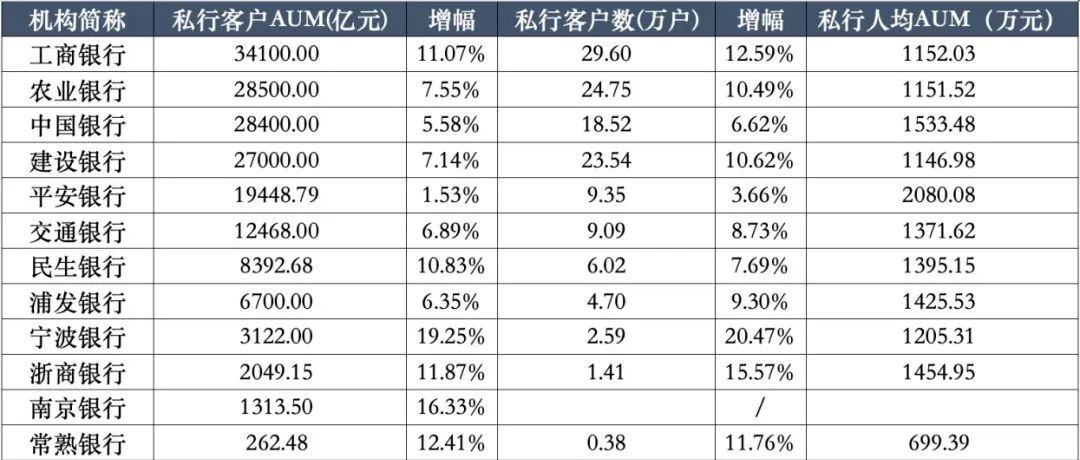
Core Insights - The private banking sector is experiencing intense competition among major banks, with a focus on high-net-worth clients and asset management growth [2][19] - Recent developments, including the "internship monetization" controversy involving Industrial Bank, have sparked discussions about the boundaries of value-added services in private banking [1][7] Group 1: Private Banking Market Overview - The total Assets Under Management (AUM) in the private banking sector has reached 24.6 trillion yuan, with many banks reporting double-digit growth in client numbers and AUM [2][6] - Major banks like Industrial Bank, Agricultural Bank, and Bank of China have surpassed 3 trillion yuan in AUM, with significant year-on-year growth rates of 18.87% and 16.73% respectively [6][12] Group 2: Client Growth and Performance - As of the end of 2024, Industrial Bank had 289,000 private banking clients, an increase of 9.9% from the previous year, while Agricultural Bank and Bank of China also reported substantial client growth [4][6] - The average AUM per private banking client varies, with Industrial Bank at 11.52 million yuan and Agricultural Bank at 11.51 million yuan [3][6] Group 3: Competitive Strategies - Banks are adopting differentiated strategies to attract high-net-worth clients, with a focus on comprehensive services that include financial and non-financial resources [9][12] - The competition is not only about asset size but also about the quality of services offered, with banks like Industrial Bank and Construction Bank emphasizing tailored solutions for entrepreneurs [14][18] Group 4: Challenges and Future Directions - The private banking sector faces challenges such as product homogenization and intense competition, which may impact the effectiveness of non-interest income growth [4][19] - Moving forward, the industry is expected to shift from a scale-oriented approach to one focused on the health of client assets, aiming for a transformation from "scale competition" to "value management" [20]





中证香港上市可交易内地银行指数报1245.77点,前十大权重包含工商银行等
Jin Rong Jie· 2025-07-22 14:28
Group 1 - The core index of the China Securities Index for Hong Kong-listed tradable mainland banks (HKT Mainland Banks, H11145) opened high and rose, reporting 1245.77 points [1] - The HKT Mainland Banks index has increased by 1.56% in the past month, 16.29% in the past three months, and 22.87% year-to-date [1] - The index series includes three indices: HKT Hong Kong Real Estate, HKT Mainland Consumption, and HKT Mainland Banks, reflecting the overall performance of related theme securities in the Hong Kong securities market [1] Group 2 - The top ten weights in the HKT Mainland Banks index are: China Construction Bank (31.83%), Industrial and Commercial Bank of China (23.51%), Bank of China (17.4%), China Merchants Bank (10.52%), Agricultural Bank of China (7.24%), CITIC Bank (3.48%), Postal Savings Bank of China (2.55%), Minsheng Bank (1.52%), Chongqing Rural Commercial Bank (0.75%), and China Everbright Bank (0.66%) [1] - The market segment of the HKT Mainland Banks index is entirely represented by the Hong Kong Stock Exchange, with a 100.00% share [1] Group 3 - The financial sector accounts for 100.00% of the industry represented in the HKT Mainland Banks index sample [2] - The index sample is adjusted every six months, with adjustments implemented on the next trading day after the second Friday of June and December [2] - Weight factors are generally fixed until the next scheduled adjustment, with temporary adjustments made under special circumstances [2]

消失的信用卡分中心
Bei Jing Shang Bao· 2025-07-22 12:47
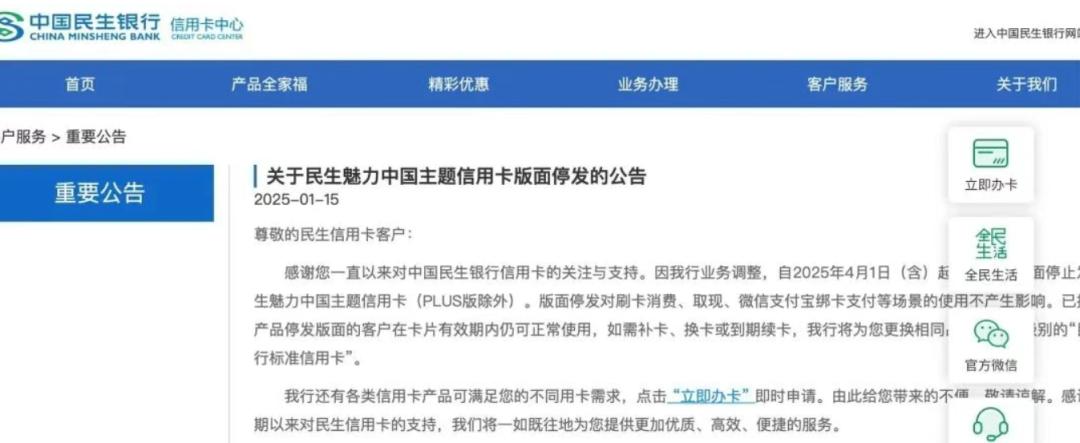
Core Viewpoint - The credit card sector is undergoing significant restructuring as 40 credit card centers have ceased operations in 2025, reflecting a shift from an incremental growth phase to a competitive, saturated market [1][3][4] Group 1: Industry Trends - The credit card industry is transitioning from rapid growth to a focus on existing customer bases, necessitating operational efficiency and cost reduction [4][5] - The number of credit cards and combined credit and debit cards in circulation has decreased for ten consecutive quarters, indicating market saturation [6] - The industry is expected to evolve towards digitalization and ecosystem integration, enhancing service quality and customer experience [9][10] Group 2: Bank Actions - Major banks, including Bank of Communications, Minsheng Bank, and Guangfa Bank, have closed multiple credit card centers to optimize resources and reduce operational costs [3][4] - The restructuring aims to consolidate operations under branch management, improving efficiency and aligning with regulatory expectations for enhanced operational quality [5][6] - Banks are increasingly adopting localized strategies to better meet customer needs while leveraging centralized resources for efficiency [8][10] Group 3: Future Outlook - The credit card industry is entering a new cycle characterized by heightened competition and a focus on quality over quantity in customer acquisition [9][10] - Future strategies may include integrating credit card services with wealth management and loan products to create a comprehensive financial service ecosystem [9][10]



公募二季度重仓股出炉:宁德、茅台、腾讯蝉联前三重仓股 招行、中国平安位列四五位
news flash· 2025-07-22 02:06
公募二季度重仓股出炉:宁德、茅台、腾讯蝉联前三重仓股 招行、中国平安位列四五位 智通财经7月22日电,公募二季度重仓股披露。Choice数据显示,公募二季度末重仓股前三位环比保持 一致,依次为宁德时代、贵州茅台、腾讯控股,三大重仓股均被减持,持股市值分别回落至1427亿元、 1265亿元、1020亿元。招商银行、中国平安的持股数增加,分别被增持至重仓股的第四、第五位。二季 度公募增持最多的5只个股分布在创新药、银行等领域,民生银行被增持股数最多,增持了5.83亿股; 徐工机械被减持最多,减持了3.88亿股,中国银行二季度也减持了3.7亿股。(记者 周晓雅) ...




2025Q2末银行股机构筹码追踪:主动筹码增幅有限
ZHESHANG SECURITIES· 2025-07-21 10:08
Investment Rating - The industry investment rating is "Positive" (maintained) [8] Core Viewpoints - As of Q2 2025, institutional holdings in bank stocks have increased, primarily driven by passive investments, with limited growth in active public fund holdings. The overall chip structure remains healthy, with shares of state-owned banks and city commercial banks favored due to their low valuations or strong fundamentals [1][2] - The report suggests a continued positive outlook for the banking sector, emphasizing a long-term bullish trend rather than a mid-cycle correction. It recommends focusing on state-owned banks in 2024 and improving banks in economically developed regions in 2025, while also highlighting value-oriented banks with state-owned enterprise backgrounds in the Hong Kong market [5][6] Summary by Sections Overall Holdings - By the end of Q2 2025, the proportion of bank stocks held by public funds and northbound funds increased by 8.5% compared to Q1 2025, with a 0.7 percentage point rise in the proportion of free-floating shares. The main contributors to this increase were passive funds, while active public funds showed limited growth [1] - The holdings of small and medium-sized banks increased, with state-owned banks, joint-stock banks, city commercial banks, and rural commercial banks seeing respective increases of 0.1, 1.2, 1.0, and 0.6 percentage points in their institutional holdings [1] Individual Bank Performance - The banks with the largest increases in institutional holdings include Minsheng, CITIC, Ping An, Chongqing, and Yunnan Agricultural Bank, with respective increases in the proportion of free-floating shares of 3.2, 2.9, 2.7, 2.6, and 2.6 percentage points [2] Northbound Funds - Northbound funds maintained stable holdings, with a 2.3% increase in the number of shares held by the end of Q2 2025. The proportion of holdings in state-owned banks and joint-stock banks increased, while rural commercial banks experienced a notable outflow [3] Passive Public Funds - Passive holdings continued to rise, with a 39.0% increase in the number of bank stocks held by index funds by the end of Q2 2025, driven by index expansions and weight adjustments [4] Active Public Funds - Active public fund holdings increased by 6.3%, with a slight rise in the proportion of free-floating shares. However, the overall growth was below expectations, with significant increases in holdings of low-valuation or fundamentally strong joint-stock banks and city commercial banks [5]



工银财富A,工银财富B: 工银瑞信财富快线货币市场基金2025年第2季度报告
Zheng Quan Zhi Xing· 2025-07-21 05:18
Core Viewpoint - The report provides an overview of the performance and management of the ICBC Credit Suisse Wealth Fast Track Money Market Fund for the second quarter of 2025, highlighting its investment strategies, financial indicators, and market conditions affecting fund performance [1][14]. Fund Product Overview - The fund is a contract-based open-end money market fund, with a total share of approximately 17.98 billion units at the end of the reporting period [2]. - The investment objective is to achieve returns exceeding the benchmark while controlling risks and maintaining asset liquidity [2]. - The fund employs various investment strategies, including interest rate strategies, credit strategies, and relative value strategies, to capitalize on market imbalances [2]. - The benchmark for performance comparison is the after-tax interest rate of the seven-day notice deposit published by the People's Bank of China [2]. Financial Indicators and Fund Performance - For the reporting period from April 1 to June 30, 2025, the fund's A share net yield was 0.3209%, while the B share net yield was 0.3809% [15][7]. - The fund's performance over different time frames shows a net yield of 1.3989% for the past year for A shares and 1.6425% for B shares [5][7]. - The fund's total assets are primarily invested in bonds, accounting for 58.53% of the total assets [16]. Management Report - The fund manager has maintained a neutral to high level of remaining maturity in the portfolio, adjusting liquidity reserves and leverage based on market conditions [14]. - The report indicates that the fund has adhered to legal regulations and internal guidelines to ensure fair treatment of all investors and prevent conflicts of interest [11][12]. Investment Portfolio Report - The average remaining maturity of the investment portfolio was 114 days during the reporting period, with no instances exceeding 120 days [18]. - The fund's investment strategy focuses on maintaining high credit quality and controlling interest rate risk exposure [14]. Fund Share Changes - The total number of shares for A shares increased from approximately 17.04 billion to 17.26 billion, while B shares totaled approximately 720.36 million at the end of the reporting period [23].
左手增持右手质押,透视深圳前首富林立的资本腾娜“棋局”
Sou Hu Cai Jing· 2025-07-21 04:51
Core Viewpoint - Despite ongoing pressure on net profit metrics, Minsheng Bank's stock price continues to reach record highs, driven by strategic moves from major shareholders like Shenzhen Liyue Group, which has significantly increased its stake in the bank [2][25]. Group 1: Shareholder Dynamics - Shenzhen Liyue Group has acquired approximately 199 million shares of Minsheng Bank's H-shares, raising its total holdings to 2.166 billion shares, which constitutes 4.945% of the bank's total equity, nearing the 5% threshold for mandatory disclosure [2][24]. - Lin Li, the controlling figure of Shenzhen Liyue Group, has gained attention as he becomes the fourth-largest shareholder of Minsheng Bank, reflecting a shift in the bank's shareholder structure [2][25]. Group 2: Lin Li's Investment Strategy - Lin Li's investment acumen is highlighted by his history of successful capital operations across various sectors, including finance, new energy, and pharmaceuticals, establishing a diversified business empire [5][19]. - The strategy of "industry + finance" has been pivotal for Lin Li, allowing for high returns from financial investments while ensuring stable cash flow from industrial operations [19][21]. Group 3: Financial Maneuvering - The frequent use of equity pledges by Shenzhen Liyue Group, including pledging approximately 60% of its Minsheng Bank shares, raises questions about potential risks associated with high leverage [24][25]. - Lin Li's past investments, such as acquiring shares in Ping An Insurance and Micro Bank, demonstrate his ability to capitalize on market opportunities, often resulting in substantial returns [11][12]. Group 4: Market Implications - The recent surge in Minsheng Bank's H-share price, which has increased by over 60% in three months, suggests a potential overvaluation, raising concerns about the sustainability of this growth [25][26]. - The ongoing adjustments in Minsheng Bank's major shareholder lineup, particularly with Lin Li's increasing influence, could lead to significant changes in the bank's governance and strategic direction [25][26].

为什么联名信用卡越来越少?
3 6 Ke· 2025-07-21 04:38
Core Viewpoint - The credit card industry in China is experiencing a significant transformation, shifting from expansion to a focus on quality and efficiency, as evidenced by the increasing number of banks discontinuing co-branded credit card products [12][19]. Group 1: Market Trends - Since January 1, 2025, at least seven major banks have announced the discontinuation of at least 22 co-branded credit card products, indicating a trend of product adjustments in the credit card market [2][6]. - Major banks, including China Bank and Citic Bank, have stopped issuing various co-branded credit cards, with reasons primarily cited as "business adjustments" or "contract expiration" [4][6]. Group 2: Product Adjustments - Co-branded credit cards, which are partnerships between banks and profit-oriented institutions, are being phased out due to their unsustainable cooperation models and imbalanced overall returns [9][10]. - Banks are transitioning to standard credit cards for existing co-branded cardholders, with changes in reward structures and benefits [4][6]. Group 3: Regulatory Environment - The regulatory framework has tightened, with new guidelines from the former CBIRC and the People's Bank of China mandating banks to focus on quality over quantity in credit card issuance [10][12]. - The new regulations require banks to limit the ratio of dormant credit cards to no more than 20%, prompting a reevaluation of credit card strategies [10][12]. Group 4: Consumer Behavior - The credit card market is increasingly catering to younger consumers, who have diverse interests and consumption needs, necessitating banks to innovate and tailor products accordingly [18][19]. - The decline in credit card issuance and usage reflects a broader trend of market saturation and the need for banks to refine their customer engagement strategies [12][13]. Group 5: Future Outlook - The discontinuation of co-branded credit cards is seen as a necessary step towards a more refined and efficient credit card business model, focusing on high-value customer segments and innovative product offerings [15][19]. - The industry is expected to evolve towards precision marketing and enhanced customer experiences, leveraging digital technologies and data analytics [7][19].



民生银行潍坊寿光支行开展“警惕诈骗新手法不做电诈工具人”宣传进企业活动
Qi Lu Wan Bao· 2025-07-21 03:26
Group 1 - The core message of the news is the proactive approach taken by Minsheng Bank's Weifang Shouguang branch to enhance public awareness and capability in preventing telecom network fraud through targeted educational activities [1][2][4] - The bank organized a promotional event titled "Beware of New Fraud Techniques, Do Not Become a Tool for Fraud" aimed at educating employees of a local salt chemical company about prevalent fraud methods [1] - The event focused on three major types of telecom fraud: impersonation scams, part-time brushing scams, and false investment scams, providing detailed explanations and practical prevention measures [1] Group 2 - The bank staff demonstrated the installation and usage of the National Anti-Fraud Center APP, encouraging employees to report suspicious information and share the app with family and friends [2] - An interactive segment included a quiz and scenario simulation games to reinforce employees' understanding of fraud techniques, which was well-received and increased their sense of responsibility to inform others [4] - The branch plans to continue its "Anti-Fraud Promotion in Enterprises" series, customizing educational efforts based on different industry characteristics to fulfill its social responsibility [4]