PING AN OF CHINA(02318)

Search documents
再CALL非银板块 - 政策松绑吹响新一轮反攻号角
2025-12-08 00:41
Summary of Conference Call on Non-Banking Sector Industry Overview - The conference call focused on the non-banking sector, particularly the insurance and brokerage industries in China for the year 2025 [1][2][3]. Key Points and Arguments 1. **Market Activity and Performance**: The non-banking sector's performance in 2025 is driven by market trading activity, benefiting brokerage businesses, proprietary trading, and insurance companies' equity investment returns. The sector is expected to see a significant inflow of approximately 1,000 billion CNY due to new policies encouraging long-term holdings [1][2][8]. 2. **Regulatory Changes**: The China Securities Regulatory Commission (CSRC) has optimized the equity allocation coefficient for insurance funds, potentially releasing around 108.6 billion CNY into the market. This policy encourages long-term stock holdings, particularly benefiting the CSI 300 and the CSI Dividend Low Volatility Index [1][4][10]. 3. **Insurance Companies' Position**: China Life is highlighted as having a high capital ratio for domestic equity price risk, suggesting significant potential for benefit from policy adjustments. China Ping An and New China Life, which have actively acquired bank shares, are also expected to gain from the optimized equity allocation [1][5][10]. 4. **Brokerage Recommendations**: The call recommends several brokerage firms, including Huatai Securities, Tonghuashun, and Dongfang Caifu, as they are well-positioned to perform well in the current market environment [1][6][12]. 5. **Challenges in the Insurance Sector**: The insurance industry faces a triangular dilemma involving solvency, equity allocation, and a low-interest-rate environment. Solutions include regulatory adjustments or capital increases. It is anticipated that insurance companies will increase capital in 2026 primarily due to regulatory encouragement to boost stock allocations [1][9][10]. 6. **Market Trends**: The performance of the non-banking sector can be divided into two phases in 2025. The first phase saw low trading volumes and declining long-term interest rates, leading to weaker performance in insurance and brokerage sectors. The second phase, particularly from May to August, experienced a rebound driven by strong mid-year reports from insurance companies and increased trading volumes [2][3][11]. 7. **Future Outlook**: The non-banking sector's future development will continue to be influenced by policy optimization and increased market trading activity. The focus will remain on long-term holdings, with specific recommendations for China Life, China Ping An, Huatai Securities, Tonghuashun, and Dongfang Caifu [1][8][12]. Additional Important Insights - The CSRC's recent policy changes signal a stronger commitment to supporting the A-share market, particularly for the CSI 300 and CSI Dividend Low Volatility Index components [4][10]. - The insurance sector's increasing involvement in the stock market is expected to enhance their market influence and performance metrics, particularly for China Life and China Ping An [10][11]. - The brokerage sector's performance has lagged behind expectations, with opportunities arising from regulatory easing and potential mergers and acquisitions among leading firms [3][11][12].

底部强call非银:曙光初现
2025-12-08 00:41
底部强 call 非银:曙光初现 20251207 摘要 券商板块 2025 年表现不佳,大幅跑输上证综指,但估值处于历史低位, PB/ROE 指标显示其具备向上空间,若 2026 年 ROE 提升,PB 有望突 破两倍。 证监会释放积极信号,表示将适当提升优质券商杠杆水平并鼓励金融创 新,这在当前估值较低、基础良好的情况下,可能放大政策利好效果。 若券商板块近期回调,应采取左侧交易策略,把握投资机会。当前市场 类似于 2025 年 4 月,券商股或将在短期内迎来上涨。 推荐关注东方证券和兴业证券,因其估值较低、基本面弹性较好、资管 业务强劲,且有并购预期。中信证券和国泰君安可作为板块走势参考。 判断减仓或清仓时机,需关注两市成交额和个股表现。成交量萎缩至 2.5 万亿以下或涨停个股数量减少是减仓信号。预计 2026 年一季度或 有明显行情。 2026 年市场风格预计均衡化,一季度首选券商,全年来看保险板块更 具持续性和配置价值,受益于红利股票增配和自身红利逻辑。 非车险报行合一政策全面落地将压降保险行业费用率,利好头部险企。 A 股首推中国太保,H 股首推中国平安,关注中国太平、中国人寿等低 估值 H 股。 ...

看好证券保险岁末年初行情!
2025-12-08 00:41
Summary of Key Points from Conference Call Records Industry Overview - The conference call discusses the securities and insurance sectors, highlighting regulatory encouragement for broker consolidation and mergers to enhance industry concentration and competitiveness [1][2][4][7]. Core Insights and Arguments - Regulatory bodies are promoting a shift from price competition to value competition, emphasizing high-quality service to attract clients and stabilize fees, which is expected to foster healthy industry development [1][6][7]. - The new solvency regulations for insurance companies have adjusted risk factors, reducing the risk weights for certain stocks, which supports long-term capital market entry and alleviates capital pressure on smaller insurance firms [1][10][13]. - As of September 2025, the equity allocation scale of insurance funds in the secondary market reached 5.59 trillion yuan, an increase of 1.49 trillion yuan from the end of 2024, with a configuration ratio nearing 15%, reflecting an accelerated entry of insurance capital into the market [1][14]. Specific Regulatory Changes - The adjustments in risk factors for insurance companies include: - Risk factor for stocks held over three years in the CSI 300 index reduced from 0.3 to 0.27 - Risk factor for stocks held over two years in the STAR Market reduced from 0.4 to 0.36 - Risk factor for export credit insurance business reduced from 0.467 to 0.42 [10]. Market Performance and Future Expectations - Recent market movements in the securities and insurance sectors were influenced by the reduction of stock investment risk factors, which injected confidence into the market [2][3]. - The insurance sector is expected to see a valuation uplift, supported by long-term interest rates and ongoing capital market entry, with a focus on asset-liability matching and core business indicators [3][17]. - The anticipated increase in equity allocation in the secondary market over the next three years is projected to reach between 1.34 trillion yuan and 1.7 trillion yuan, with an average annual growth rate of 5% [16]. Investment Recommendations - Recommended stocks include: - Guangfa Securities for its financial management and asset management benefits - Dongfang Securities for its flexibility in financial management - Guotai Junan for its significant integration effects and limited downside potential [8][9]. - Other notable companies with investment potential include China Galaxy, CICC, and various securities firms with strong international business [9]. Additional Insights - The transition from price to value competition is a significant trend, with policies aimed at enhancing service quality rather than competing on fees [6][7]. - The overall solvency of insurance companies is crucial, with core solvency ratios expected to improve due to regulatory adjustments, thereby enhancing capital adequacy and supporting further market entry [11][12][15].





智通港股沽空统计|12月8日
智通财经网· 2025-12-08 00:25
Group 1 - The top three stocks with the highest short-selling ratios are New World Development Co. Ltd. (100.00%), China Resources Beer (100.00%), and AIA Group Ltd. (100.00%) [1][2] - The stocks with the highest short-selling amounts are Xiaomi Corporation (2.196 billion), Ping An Insurance (1.956 billion), and Alibaba Group (1.160 billion) [1][3] - The stocks with the highest deviation values are Bank of China (52.21%), China Mobile (41.86%), and Café de Coral Holdings (40.03%) [1][2] Group 2 - The top ten short-selling ratio rankings include New World Development Co. Ltd. (100.00%), China Resources Beer (100.00%), and AIA Group Ltd. (100.00%) [2] - The top ten short-selling amounts include Xiaomi Corporation (2.196 billion), Ping An Insurance (1.956 billion), and Alibaba Group (1.160 billion) [3] - The top ten deviation values include Bank of China (52.21%), China Mobile (41.86%), and Café de Coral Holdings (40.03%) [3]




调整险企风险因子,或撬动超千亿增量资金入市
Zheng Quan Shi Bao· 2025-12-07 23:44
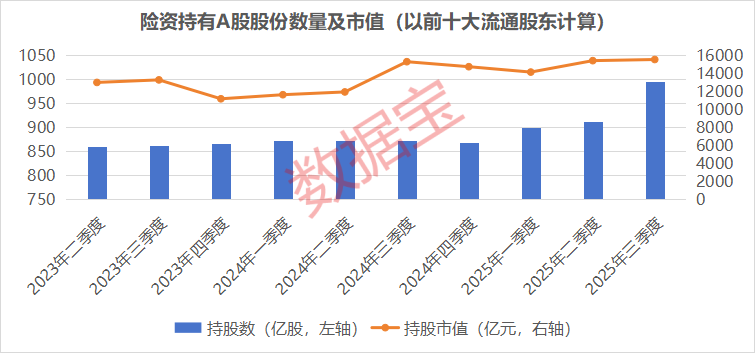
受上述消息刺激,A股保险指数上周五(12月5日)尾盘大涨,中国太保、中国平安当日涨幅均超过5%。 多次优化风险因子 险资长钱加速入市可期 事实上,这并非首次对保险公司风险因子的优化。2023年9月,国家金融监督管理总局发布《关于优化保险公 司偿付能力监管标准的通知》,其中提出,对于保险公司投资沪深300指数成份股,风险因子从0.35调整为 0.3;投资科创板上市普通股票,风险因子从0.45调整为0.4。 今年5月,央行、金融监管总局和证监会在国新办发布会上宣布一揽子金融政策,其中有关保险行业的增量政 策包括:进一步扩大保险资金长期投资试点范围,为市场注入更多增量资金;调整偿付能力监管规则,将股 票投资风险因子进一步下调10%。 招银国际今年5月研报指出,经测算,若将股票投资风险因子对应释放的最低资本全部用于配置沪深300股 票,有望带来逾1500亿元增量入市资金,险资长钱加速入市可期。 从A股市场来看,以前十大流通股东的持股情况来看(保留中国人寿、平安银行两只大股东为险资的个股), 截至2025年三季度末,险资持股数量接近996亿股,持股市值(期末收盘价)达到1.56万亿元,持股数量及持 股市值均创近10个季 ...


抢跑——A股一周走势研判及事件提醒


Datayes· 2025-12-07 14:12
摘要 / 创造新的增量 嘿嘿,周五没什么好的段子,就没发文,唯一一个我觉得好笑的就是,保险券商 异动股的时候,群里传出小作文,说"会议重提jzjx"! 盘后保险业务相关因子调整的文件出来了,谁又知道内幕抢跑了! 《通知》明确: 1)险资持仓时间超过三年的沪深300指数成分股、中证红利低波动100指数 成分股的风险因子从0.3下调至0.27,持仓时间根据过去6年加权平均持仓时 间确定。 2)险资持仓时间超过两年的科创板上市普通股的风险因子从0.4下调至 0.36,持仓时间根据过去4年加权平均持仓时间确定。 3)保险公司出口信用保险业务和中国出口信用保险公司海外投资保险业务的 保费风险因子从0.467下调至0.42,准备金风险因子从0.605下调至0.545。 根据申万宏源,以9月末水平静态测算,本次调降险资股票投资风险因子合计给A 股上市险企带来200亿元最低资本优化,调整后核心/综合偿付能力充足率平均提 升1.5/2.1pct。假设调整风险因子后,A股上市险企维持偿付能力充足度不变, 沪深300成分股(持有3年以上)的潜在增配空间达789亿元。 没有增量,创造增量也要上! 这个拼音缩写大概率是降准降息,哈哈哈 ...
金融监管总局再放大招 引导险企助力资本市场发展
Mei Ri Jing Ji Xin Wen· 2025-12-07 13:26
Core Viewpoint - The Financial Regulatory Administration has announced a reduction in risk factors for insurance companies' related businesses to enhance their capital efficiency and support the real economy [1][2]. Group 1: Adjustments to Risk Factors - The notification primarily focuses on two areas: adjusting risk factors for investments in stocks and for export credit insurance businesses, encouraging insurance companies to support foreign trade enterprises [2][3]. - The risk factor for stocks held for over three years in the CSI 300 index has been reduced from 0.3 to 0.27, while for stocks held over two years in the STAR Market, it has been lowered from 0.4 to 0.36 [2][3]. - The risk factor for export credit insurance premiums has been decreased from 0.467 to 0.42, and the reserve risk factor from 0.605 to 0.545 [2]. Group 2: Implications for Insurance Companies - The reduction in risk factors is intended to guide insurance funds into the equity market as long-term capital, thereby alleviating the solvency pressure on insurance companies [3][4]. - Insurance companies are expected to enhance their internal controls and accurately measure investment holding periods to improve long-term capital management capabilities [3][4]. - Following the announcement, insurance stocks saw significant gains, with China Pacific Insurance rising by 6.85% and Ping An Insurance by 5.88% [3]. Group 3: Historical Context and Future Outlook - This is not the first time the Financial Regulatory Administration has lowered risk factors; previous adjustments were made in September 2023 and May 2023 to encourage insurance companies to support the capital market [5][6]. - The adjustments are seen as a means to optimize capital allocation, allowing insurance companies to invest more in quality assets and enhance overall operational efficiency [6][7]. - The policy changes are expected to facilitate greater investment in strategic industries and high-tech enterprises, thereby promoting innovation and economic development [7].
金融行业周报:险资股票因子下调,看好券商板块盈利修复-20251207
Western Securities· 2025-12-07 12:26
Investment Rating - The report indicates a positive outlook for the insurance sector, with a recommendation to focus on strong insurance companies such as New China Life Insurance, China Ping An, China Life Insurance H, and China Taiping [2][17] Core Insights - The non-bank financial sector (Shenwan) index increased by 2.27%, outperforming the CSI 300 index by 0.99 percentage points, while the insurance sector saw a significant rise of 5.08% [1][9] - The insurance sector's growth is attributed to several factors, including a reduction in long-term stock holding risk factors, expected strong performance in dividend insurance products, and improved global liquidity due to anticipated interest rate cuts in the US [2][16] - The brokerage sector is expected to experience a valuation correction, with a current price-to-book (PB) ratio of 1.36x, indicating potential for recovery in profitability and valuation [2][19] - The banking sector has underperformed, with a decline of 1.18%, and is currently undervalued with a PB ratio of 0.55x, suggesting room for future valuation improvement [3][20] Summary by Sections Insurance Sector - The insurance index rose by 5.08%, significantly outperforming the CSI 300 index by 3.80 percentage points, driven by regulatory adjustments that lowered risk factors for long-term stock holdings [1][13] - The sector is expected to benefit from a favorable environment for dividend insurance products, with strong growth anticipated in the coming year [2][16] - Key recommendations include focusing on companies like New China Life Insurance and China Ping An, which are positioned for growth [17] Brokerage Sector - The brokerage index increased by 1.14%, with a current PB ratio of 1.36x, indicating a potential mismatch between profitability and valuation [2][19] - Regulatory changes are expected to enhance capital efficiency for leading brokerages, creating opportunities for investment in firms with strong fundamentals [2][18] - Recommended stocks include Guotai Junan, Huatai Securities, and Orient Securities, particularly those involved in mergers or restructuring [19] Banking Sector - The banking sector saw a decline of 1.18%, with a PB ratio of 0.55x, indicating that banks are currently undervalued [3][20] - Concerns about asset quality, particularly related to real estate and local government debt, have affected market perceptions, but there is potential for recovery as regulatory support continues [23][24] - Recommendations include focusing on high-quality city commercial banks in economically developed regions, such as Hangzhou Bank and Ningbo Bank [20][24]



非银金融行业周报(2025/12/1-2025/12/5):券商板块信心提振,补涨逻辑有望逐步兑现-20251207
Shenwan Hongyuan Securities· 2025-12-07 08:24
Investment Rating - The report maintains a positive outlook on the brokerage sector, indicating a potential for gradual realization of the sector's rebound logic [3]. Core Insights - The recent speech by the chairman of the China Securities Association has shifted market expectations positively for the brokerage sector, with a strong certainty of an upward adjustment in the long-term ROE central [3]. - The report highlights three main investment themes: 1. The attractiveness of the equity market will benefit wealth management and asset management businesses of brokerages, with a specific recommendation for Dongfang Securities [3]. 2. Companies benefiting from an improved competitive landscape, with key recommendations including Guotai Junan, GF Securities, and CITIC Securities [3]. 3. Valuation mismatches in Huatai Securities A+H and strong international business competitiveness in China Galaxy and CICC [3]. Market Review - The Shanghai and Shenzhen 300 Index closed at 4,584.54, with a weekly change of +1.28%. The non-bank index closed at 1,975.96, with a weekly change of +2.27%. The brokerage, insurance, and diversified financial sectors reported changes of +1.14%, +5.08%, and +0.49%, respectively [6]. - The average daily trading volume for the Shanghai and Shenzhen markets was 16,962.89 billion, with a year-to-date increase of 61.08% compared to the previous year [17]. Non-Bank Industry Data - As of December 5, 2025, the 10-year government bond yield was 1.85%, with a weekly change of +1.14 basis points. The credit spread for corporate bonds was 0.54%, with a weekly change of +3.61 basis points [11]. - The insurance sector's original premium income for the first ten months of 2025 reached 5.48 trillion, reflecting a year-on-year growth of 8% [28]. Individual Stock Highlights - In the insurance sector, notable A-share performances included China Pacific Insurance (+8.23%), Ping An (+5.09%), and China Life (+4.32%) [8]. - In the brokerage sector, the top performers included Zhongyin Securities (+7.89%) and Xingye Securities (+6.35%) [8].

中国平安:发挥金融及科技优势 实现可持续高质量增长
Xin Hua Wang· 2025-12-06 02:43
Core Insights - The article highlights Ping An Group's commitment to sustainable development and innovation in the context of China's "dual carbon" goals and the 14th Five-Year Plan for green transformation [1][2] Group 1: Sustainable Development Initiatives - Ping An is transitioning from a focus on carbon reduction to becoming a practitioner and enabler of green practices, leveraging its financial and technological strengths for high-quality growth [1] - During the 14th Five-Year Plan, Ping An has served as the chief underwriter for major projects like the Baihetan Hydropower Station and provided risk coverage for the Huizhou Nuclear Power Station and Hainan Danzhou Offshore Wind Power Project, the latter being China's first zero-carbon offshore wind project [2] Group 2: Green Insurance and Financial Products - In the first half of 2025, Ping An's green insurance business saw a premium income of 35.836 billion yuan, marking a 51.8% year-on-year increase [2] - The company has developed an ancient tree insurance product, providing over 1 billion yuan in risk coverage and restoration funds for more than 55,000 ancient trees nationwide by the end of October this year [2] Group 3: Technological Innovations for Climate Resilience - Ping An's self-developed Eagle Eye system has completed 259,000 disaster warnings and sent 4.26 billion messages, aiding in risk reduction [3] - The Agricultural Disaster Model has provided comprehensive services to farmers, including pre-disaster warnings and post-disaster compensation, resulting in a reduction of agricultural losses by 780 million yuan [3] Group 4: Commitment to Low-Carbon Operations - Ping An has set a target for carbon neutrality in operations by 2030 and launched an AI-ESG system to quantify and visualize low-carbon behaviors among employees [3] - The company has introduced the first Sustainable Supply Chain Initiative in the industry, establishing clear "green thresholds" for partner companies [3] Group 5: Recognition and Ratings - Recently, Ping An's MSCI ESG rating was upgraded to the highest AAA level, maintaining its position as the top company in the Asia-Pacific region for the insurance and brokerage industry for four consecutive years [4]