PING AN OF CHINA(02318)

Search documents
再度举牌,平安持有中国人寿H股突破10%
Huan Qiu Lao Hu Cai Jing· 2026-02-06 08:18
Group 1 - China Ping An increased its stake in China Pacific Insurance (CPIC) by acquiring approximately 10.89 million H-shares at an average price of about HKD 33.26 per share, totaling around HKD 362 million, raising its holding to approximately 753 million shares, which is 10.12% of the total [1] - China Ping An has been consistently increasing its stake in China Life Insurance since it first acquired shares in August 2025, recently purchasing 11.89 million H-shares for about HKD 381 million, bringing its stake to 9.14%, close to the 10% threshold [1] - China Life Insurance reported a total revenue of CNY 1.28 trillion in 2025, a year-on-year increase of 11.3%, with combined premium income of CNY 887.4 billion, up 7.4%, and total assets of CNY 8.56 trillion, reflecting a 14.4% growth [1] Group 2 - Foreign investment institutions are optimistic about the insurance sector, with Citigroup indicating that retail investors will seek higher reinvestment yields as bank deposits mature, predicting a historic opportunity for life insurance stocks, particularly for leading companies like China Life [2] - China Ping An has also been actively increasing its holdings in state-owned banks, with over 10 instances of increasing stakes in Agricultural Bank, China Merchants Bank, and Postal Savings Bank since 2025, with its stake in Agricultural Bank rising from 5% in February last year to 20.1% by year-end [2] - The trend of increasing equity asset investments by insurance funds is driven by multiple factors, including declining market interest rates and regulatory guidance, making bank stocks attractive due to their large asset sizes and stable dividend returns, similar to the investment logic for insurance stocks [2]


中国平安再度举牌中国人寿H股
Shang Hai Zheng Quan Bao· 2026-02-06 06:43
Group 1 - Ping An Insurance has increased its stake in China Life Insurance H-shares by approximately 10.895 million shares at a price of about HKD 33.2588 per share, totaling around HKD 362 million [2] - Following this acquisition, Ping An now holds approximately 10.12% of China Life's total H-share capital, triggering a mandatory disclosure under Hong Kong market rules [2] - This is the second time Ping An has raised its stake in China Life within a short period, having previously invested about HKD 469 million in late January [2][3] Group 2 - The practice of insurance companies increasing their stakes in peer companies, known as "insurance capital stake increases," reflects a positive outlook on the insurance industry's fundamentals [4] - The recent trend of insurance companies acquiring shares in their peers indicates a strong demand for quality assets, driven by factors such as declining market interest rates and regulatory encouragement for insurance capital to enter the market [4] - The insurance sector is expected to experience a favorable market environment in 2026, with anticipated growth in new business value (NBV) driven by strong demand for insurance savings products [5]



【窩輪透視】平保技術指標背馳,窩輪策略如何攻守兼備?
Ge Long Hui· 2026-02-06 06:30
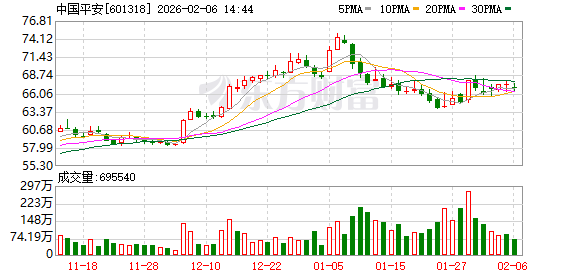
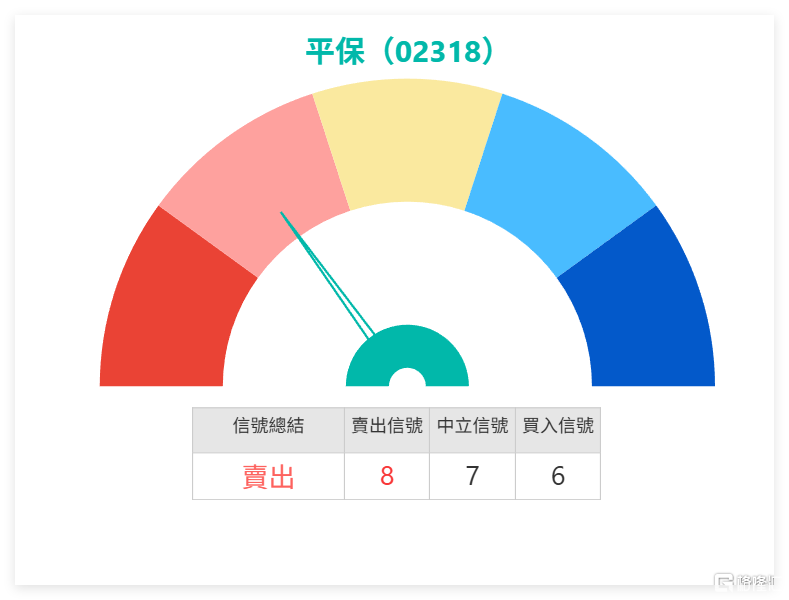
Core Viewpoint - The Hong Kong insurance sector experienced a broad increase on February 4, with significant capital inflow and an optimistic market sentiment, although there is a notable divergence between stock price movements and technical indicators [1] Group 1: Market Overview - The insurance sector saw widespread gains, with most stocks closing higher and a clear indication of capital inflow [1] - Despite the positive price movements, key stocks like China Ping An, China Taiping, and China Life showed "sell" signals in their technical indicators, with strength ratings of 8-9, indicating potential weakening momentum [1] Group 2: Technical Analysis of China Ping An - On February 4, China Ping An closed at HKD 72.05, with a daily increase of 1.05% and a trading volume of HKD 2.018 billion, reflecting normal trading activity [2] - The stock price is above the 10-day moving average (MA10) of HKD 70.27 and the 30-day moving average (MA30) of HKD 68.92, indicating a short-term bullish trend [2] - The Relative Strength Index (RSI) is at 63, suggesting a strong buying force without entering the overbought territory, while the Commodity Channel Index (CCI) has issued a buy signal [2] Group 3: Other Insurance Stocks Analysis - AIA Group closed at HKD 90.70 with a 1.40% increase and an RSI of 68, indicating a strong short-term trend but caution is advised for potential technical corrections [2] - China Taiping closed at HKD 39.48 with a 2.76% increase and an RSI of 60, but the technical summary indicates a sell signal, highlighting a divergence [2] - China Life closed at HKD 35.16 with a 2.03% increase and an RSI of 65, showing a clear upward trend but potential difficulty in sustaining momentum [2] - New China Life closed at HKD 62.45 with a 2.46% increase and an RSI of 56, indicating a need for further observation of the mid-term trend [2] Group 4: Recent Performance of Derivative Products - Selected call options for China Ping An showed significant profit potential, with HSBC and Bank of China call options both rising by 19% over two days, outperforming the underlying stock's 1.91% increase [6] - Bull certificates from JPMorgan and UBS also performed well, each increasing by 11% over the same period, confirming the short-term upward trend [6] Group 5: Selected Derivative Products - Two selected call options for China Ping An include: - Morgan Stanley call option (22565) with a leverage of 7.2 times and a strike price of HKD 72.99, suitable for investors expecting a breakout above the resistance level of HKD 73.9 [9] - JPMorgan bull certificate (54582) with a leverage of 17.6 times and a recovery price of HKD 68.5, appealing to investors who can tolerate some volatility [9]
做好金融“五篇大文章”,平安融易助力激活大湾区经济
Jin Rong Jie· 2026-02-06 01:44
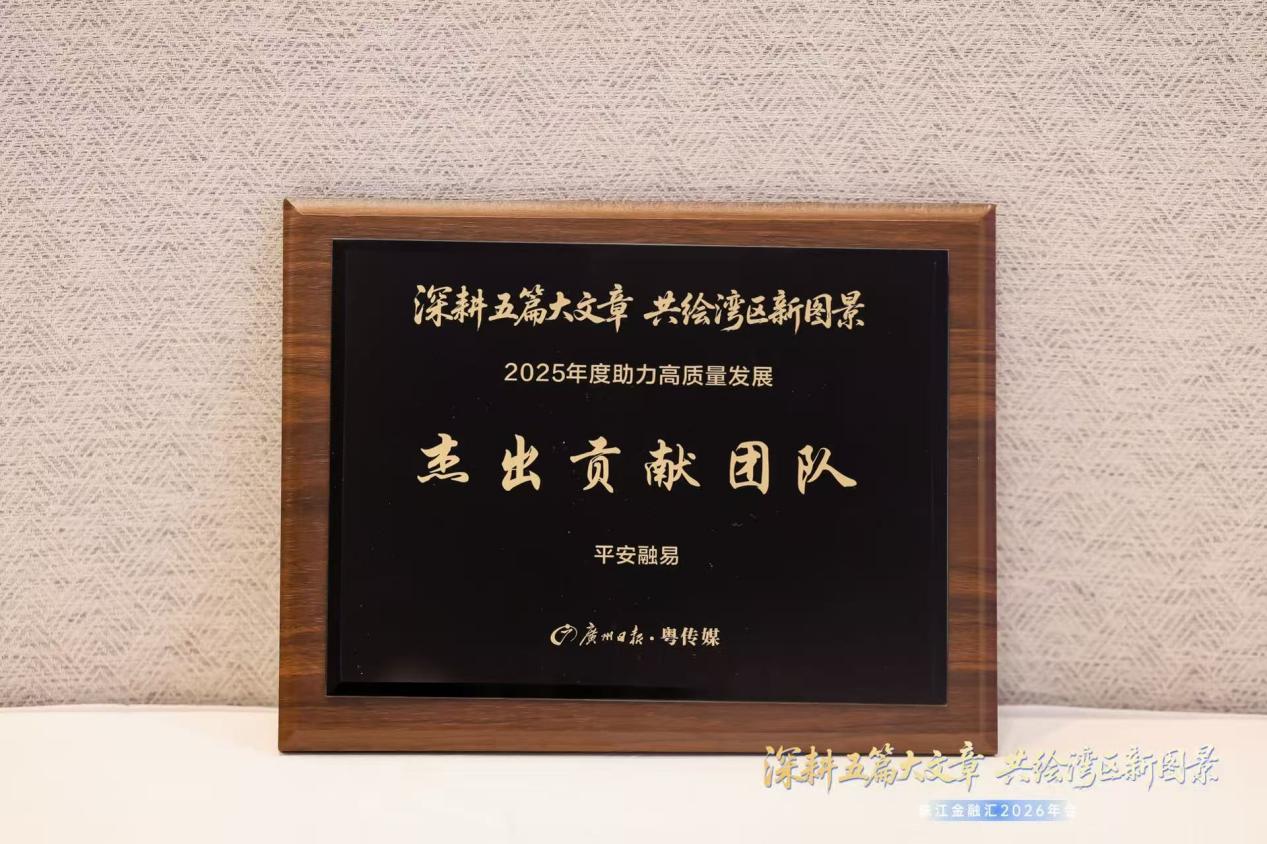
Core Insights - The "Pearl River Financial Summit 2026" was held, focusing on the theme of "Deepening the 'Five Major Articles' to Paint a New Picture for the Bay Area," attracting over 200 guests from regulatory bodies, academia, and financial institutions to explore new financial opportunities in the first year of the 14th Five-Year Plan [1][8] Group 1: Awards and Recognition - Ping An Rongyi, a micro-financing service under Lufax Holding, won the "2025 Outstanding Contribution Team Award for High-Quality Development" for its support and innovative models for small and micro enterprises in the Greater Bay Area [3] - The award signifies recognition of its achievements in inclusive finance and the expectation to continue empowering the real economy during the new journey of the 14th Five-Year Plan [3][9] Group 2: Financial Strategies and Innovations - Inclusive finance is highlighted as a crucial link between financial resources and the real economy, playing an irreplaceable role in stabilizing employment and promoting livelihoods [4] - Ping An Rongyi has been deeply engaged in inclusive finance since 2005, focusing on addressing the financing challenges faced by small and micro enterprises in the Bay Area, which are often hindered by difficulties in obtaining financing [5] Group 3: Service Model and Technology Integration - The company has developed a Bay Area-specific service model that emphasizes speed, precision, and a human touch, utilizing AI for rapid loan approvals and remote consultations [6][7] - The "Prism" project aims to provide customized financial solutions based on in-depth research of local industries, enhancing the accessibility and efficiency of financial services for small enterprises [11][12] Group 4: Future Outlook - Experts at the summit believe that during the 14th Five-Year Plan, the Greater Bay Area will accelerate its development towards becoming a world-class bay area, with a shift from quantitative expansion to qualitative improvement in the financial sector [8] - Ping An Rongyi plans to deepen its digital finance applications and enhance its service coverage while focusing on technology finance, inclusive finance, and green finance through the "Prism" project [10][11]

SpaceX 100万颗卫星申请获受理,马斯克否认将推出星链手机;李斌兑现承诺!蔚来:2025年Q4经营利润至少7个亿;千问APP启动30亿免单
雷峰网· 2026-02-06 00:46
Key Points - SpaceX's application to launch 1 million satellites has been accepted by the FCC, aiming to create a data center network in orbit to support advanced AI models [4][5] - NIO has announced a profit forecast for Q4 2025, expecting an adjusted operating profit between RMB 700 million (approximately $100 million) and RMB 1.2 billion (approximately $172 million), marking its first quarterly profit [7][8] - The 2025 Hurun China 500 list shows TSMC retaining the top position with a value increase of RMB 3.5 trillion, while Xiaomi enters the top ten for the first time with a valuation of RMB 1 trillion [13][14] - Alibaba has unified its AI model branding under "Qwen" and launched a promotional campaign offering 3 billion RMB in discounts through its Qwen app [15][16] - Baidu plans to distribute dividends for the first time in 2026 and has authorized a share buyback program of up to $5 billion [16][17] - Li Auto is set to implement a "store partner" program to enhance operational efficiency and market responsiveness, giving store managers greater decision-making power [19] - Intel has appointed a new chief GPU architect, while Qualcomm has lost three key executives in a month [45][46] - Coupang has reported an expansion of a personal information leak affecting an additional 165,000 accounts, following a previous incident [53][54]





寿险银保渠道保费增速榜 透视三大阵营分化
Nan Fang Du Shi Bao· 2026-02-05 23:13
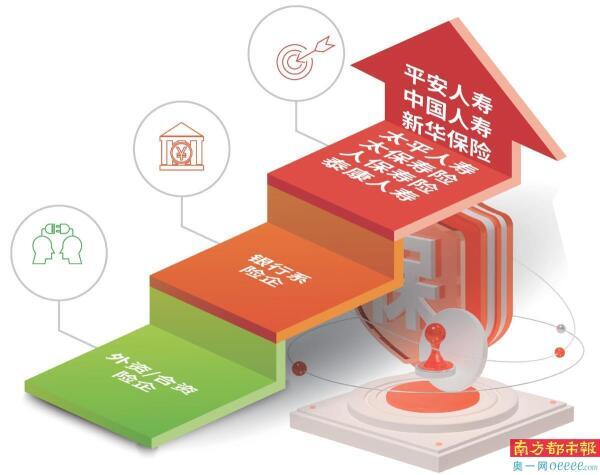
Core Insights - The article discusses the increasing trend of banks promoting insurance products, driven by the ongoing "deposit migration" and the urgent need for banks to boost their intermediary business revenue [2][6] - The insurance industry is witnessing a competitive landscape in the bancassurance channel, with significant growth in premium income, particularly among leading insurance companies [3][6] Group 1: Industry Trends - In 2025, the bancassurance channel for life insurance is expected to see an overall premium growth rate of approximately 10%, with leading insurers outperforming the industry average [3] - The "old seven" life insurance companies (including Ping An Life and China Life) achieved over 40% growth in bancassurance premiums, with Ping An Life leading at a remarkable 163% year-on-year increase [3][6] - The total premium income of the insurance industry surpassed 6 trillion yuan in 2025, marking a 7.4% year-on-year growth, with life insurance companies contributing significantly [6] Group 2: Competitive Landscape - There is a clear division among bank-affiliated insurance companies, with some experiencing significant growth while others face declines; for instance, Everbright Life Insurance saw a 111% increase, while others like China Merchants Life faced negative growth [4][5] - Foreign and joint venture insurers, although smaller in size, are achieving impressive growth rates by focusing on high-net-worth clients and long-term value services [5] Group 3: Strategic Developments - The removal of restrictions on the number of insurance companies a single bank branch can partner with has expanded product selection and improved matching with customer needs [7] - Insurers are actively enhancing their bancassurance channel strategies, with predictions indicating that new business value growth will be primarily driven by this channel in 2026 [8][11] - Major insurers are establishing extensive partnerships with banks, with China Life collaborating with over 100 banks and other companies also expanding their banking partnerships [9][11]
警保联动护航春运安全
Xin Lang Cai Jing· 2026-02-05 22:20
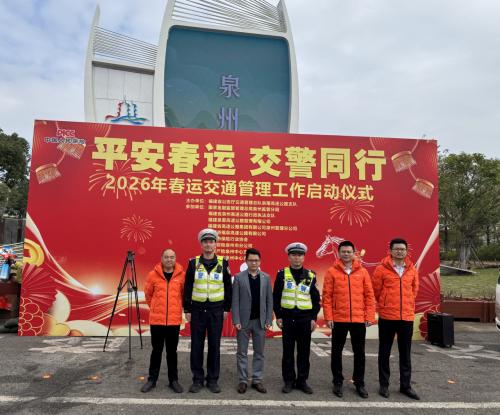
Core Viewpoint - The article highlights the launch of a traffic safety education campaign during the national Spring Festival travel season, emphasizing the collaboration between Ping An Insurance and local traffic management authorities to ensure safe travel for the public [1][2]. Group 1: Event Overview - The national Spring Festival travel season officially began on February 2, with a focus on safeguarding public travel safety [1]. - Ping An Insurance's Harbin branch collaborated with the Harbin Traffic Management Bureau to conduct the "Safe Spring Festival, Traffic Police Together" themed traffic safety education activity at two major bus stations [1]. Group 2: Activities and Services - The campaign included setting up promotional consultation booths, safety warning displays, and convenient service points at both bus stations [1]. - The promotional team provided concentrated education on driving techniques for icy roads, dangers of fatigue driving, and vehicle safety checks, using typical accident cases to reinforce the importance of adhering to traffic regulations [1]. - Volunteers distributed traffic safety manuals and New Year safety gift packages, educating passengers on practical knowledge such as wearing helmets and seat belts, avoiding overloaded and illegal vehicles, and self-rescue in emergencies [1]. Group 3: Impact and Future Plans - The dual-site campaign effectively reached over 1,500 travelers and drivers, enhancing their awareness of traffic safety and emergency response capabilities [1]. - Ping An Insurance plans to continue supporting safety measures throughout the Spring Festival travel period, extending services and diversifying promotional methods to protect every journey home [2].
一路平安行,守护团圆路 平安产险福建分公司全面启动2026春节“双行护航”计划
Zhong Jin Zai Xian· 2026-02-05 13:23
随着2026年春运大幕正式拉开,2月2日,平安产险福建分公司全面启动"2026年春节风险减量行 动"暨"万家灯火平安行公益行动",聚焦交通风险防控核心任务,以"风险减量前置守护"为核心,联合 多地交警部门在全省八地市设立"风险减量点",通过现场疏导、安全宣教、车辆检测等举措,为广大返 乡车主筑牢全方位安全防线。 本次行动以党建为抓手,深度融合"平安红绿灯"道路安全风险减量公益项目,依托历史理赔数据识别事 故易发路段,联合交警开展靶向治理。2025年启动以来,截至2026年1月,平安产险福建分公司已在全 省推进91个高风险路段的改造工作(其中51个路段已完成竣工验收),通过增设减速垄、爆闪灯、广角镜 等安全设施,有效优化道路通行秩序,切实提升道路安全保障能力。 春运期间,平安产险福建分公司党员干部带头组织志愿服务团队,在各地市的高峰路段和热门景区路口 开展驻点服务,协助交警部门做好交通疏导工作,同时通过发放宣传手册、组织有奖知识问答、案例展 板讲解等方式,开展交通安全宣教,普及酒驾危害、交通法规,强化文明出行理念,并结合典型事故场 景,重点面向返乡车主群体普及防御性驾驶技巧,提升公众"知危险、会避险"的交通安全 ...
全国第十!宁波11家企业入围“胡润中国500强”
Xin Lang Cai Jing· 2026-02-05 12:25
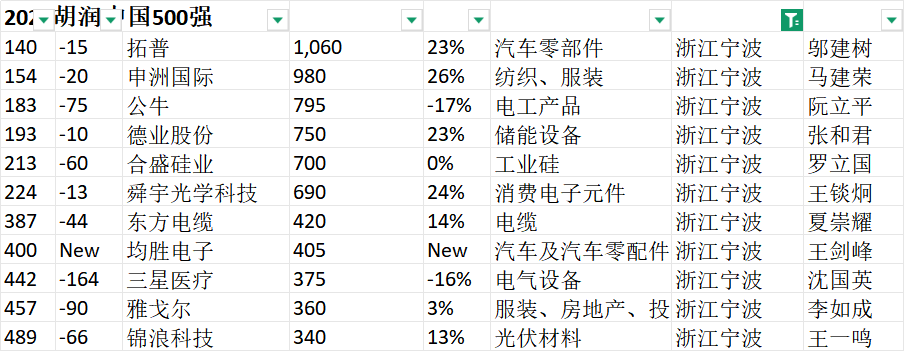
榜单显示,中国500强总价值达77万亿元,较上年增长38%;上榜门槛提升至340亿元,386家企业实现价值增长,95家新面孔入 围。 头部阵营中,台积电以10.5万亿元蝉联榜首,腾讯、字节跳动分别稳居第二、第三;字节跳动以109%价值涨幅成为黑马,小米 跻身前十。 2月5日,胡润研究院发布《2025胡润中国500强》榜单。这份聚焦中国最具价值非国有企业的权威榜单,折射出2025年民营经济 的强劲活力。 值得关注的是,本次共有11家宁波企业入围,合计市值达6875亿元。宁波入围企业数量居全国城市第10位,大陆第6位,成为长 三角民营经济的重要力量。 宁波入围企业数量居全国第十 宁波11家企业入围,数量与上年持平,位居全国第10(含港澳台)、大陆城市第7。同时,宁波也成为全国最受企业欢迎的研发 基地(第7)、制造基地(第10)。 | | 201▼ 胡润=国500强 | | ▼ | ▶ V | | レ | T: | ▲ | | --- | --- | --- | --- | --- | --- | --- | --- | --- | | 140 | -15 | 拓普 | 1,060 | 23% | 汽车零部件 | ...



反套路 | 谈股论金
水皮More· 2026-02-05 10:18
Market Overview - A-shares experienced a collective pullback today, with the Shanghai Composite Index down 0.64% closing at 4075.92 points, the Shenzhen Component down 1.44% at 13952.71 points, and the ChiNext Index down 1.55% at 3260.28 points [3][4] - The trading volume in the Shanghai and Shenzhen markets was significantly reduced to 2.19 trillion yuan, a decrease of 309 billion yuan compared to the previous day [3][4] Sector Performance - The consumer sector, particularly represented by "two bottles of liquor," led the gains, driven by expectations of increased consumption during the Spring Festival [4] - The beauty and personal care sector ranked first in gains, followed by tourism and hospitality, with significant contributions from Kweichow Moutai and Wuliangye to the market indices [4] Declining Sectors - Precious metals, including gold and silver, saw significant declines, impacting related sectors such as energy metals and non-metallic materials [5] - The coal and mining sectors also faced notable declines, influenced by previous gains due to production cuts in Indonesia [5] Technology Sector Insights - The technology sector's performance is closely linked to the U.S. market, with significant drops in major tech stocks like AMD and Nvidia, raising concerns for A-share tech stocks, particularly in the semiconductor sector [6] - The potential for a turning point in A-share tech stocks is highlighted, especially if U.S. tech stocks continue to decline due to high valuations and decreasing demand [6] Market Dynamics - The market saw a rebound led by bank stocks in the morning, followed by a surge in the securities sector, which contributed to the formation of a market bottom [6] - The insurance sector's performance in the afternoon further solidified the rebound, with notable performances from companies like China Ping An [6] Hong Kong Market Trends - The Hong Kong market also exhibited a rebound, with the Hang Seng Index closing up 0.14% and a significant increase in trading volume [7] - Notable individual stock performances included Tencent rebounding from a 3% drop and Baidu's strong performance following a share buyback announcement [7]