GIANT BIOGENE(02367)

Search documents
巨子生物胶原蛋白“缺量罗生门”追踪
Hua Er Jie Jian Wen· 2025-05-29 14:50
Core Viewpoint - The controversy surrounding the collagen content in the product "Human-Like Recombinant Collagen" from the brand Kefu Mei, owned by the company Giant Bio, has raised significant concerns regarding product integrity and testing methods [1][2][3]. Group 1: Controversy Details - KOL "Dr. Big Mouth" (Hao Yu) claimed that tests showed the collagen content in Kefu Mei's product was only 0.0177% using HPLC amino acid quantification [1]. - Giant Bio responded by stating their tests indicated collagen content greater than 0.1%, contradicting the claims made by Hao Yu, but third-party test results are still pending [2]. - Hao Yu further questioned Giant Bio's testing methods, suggesting that the use of the biuret method could lead to inflated results due to the presence of sodium polyglutamate in the product [3]. Group 2: Previous Issues and Impact - This is not the first controversy for Kefu Mei in 2023, as the brand was previously accused of illegally adding epidermal growth factor (EGF), which led to a public trust crisis [4][5]. - The Shaanxi Provincial Drug Administration investigated the previous claims and found no violations after sampling [6]. - The outcome of the current controversy is crucial for Giant Bio's future performance, as Kefu Mei is projected to generate revenue of 4.542 billion yuan in 2024, contributing over 80% to the company's total revenue [6]. Group 3: Market Reaction - Despite the unresolved testing results, the controversy has significantly impacted Giant Bio's stock price [7]. - As of May 29, Giant Bio's market capitalization was 72.9 billion HKD, having lost 12.8 billion HKD since early May [8].
华熙生物“大战”巨子生物,这场公关战到底有多惨烈?
阿尔法工场研究院· 2025-05-29 13:40
Core Viewpoint - The public relations battle between Huaxi Biological and Juzhi Biological has led to a significant market value loss for Juzhi Biological, amounting to 17.4 billion yuan in just 10 days [4]. Group 1: Public Relations Battle - Huaxi Biological publicly criticized the capital market's behavior of favoring collagen while disparaging hyaluronic acid, directly naming Juzhi Biological and several brokerage firms [3][4]. - Juzhi Biological's market value dropped from 90.9 billion yuan to 73.5 billion yuan within 10 days, a decrease of 17.4 billion yuan [4]. - The negative publicity may impact consumer sentiment and Juzhi Biological's performance during the upcoming 618 promotional event [4]. Group 2: Controversial Testing Methods - The primary controversy revolves around the testing methods used to assess the collagen content in Juzhi Biological's products [5][6]. - A beauty blogger claimed that the actual collagen content in Juzhi Biological's product was only 0.0177%, significantly below the stated standard of ≥0.1% [9]. - Juzhi Biological defended its testing methods, stating that the blogger's approach lacked industry standards and that they were involved in formulating these standards [11]. Group 3: Timeline of Events - On May 17, Huaxi Biological published a critical article targeting Juzhi Biological and brokerage firms [18]. - Juzhi Biological did not respond initially, leading to perceptions of a "pillow fight" in the public relations battle [18]. - The timeline of events suggests a coordinated effort by the blogger to raise questions about Juzhi Biological's products, particularly before the 618 sales event [22][23]. Group 4: Industry Implications - The incident serves as a cautionary tale for other beauty and skincare brands regarding the importance of protecting their core assets, particularly product ingredients and their efficacy [33]. - Companies are urged to establish robust standards and testing methods to safeguard against potential public relations crises [34]. - The need for a credible third-party testing framework is emphasized, as the absence of such standards can lead to consumer distrust and brand damage [30].



美护618第一阶段结果出炉!来看品牌排名变化
智通财经网· 2025-05-29 11:58
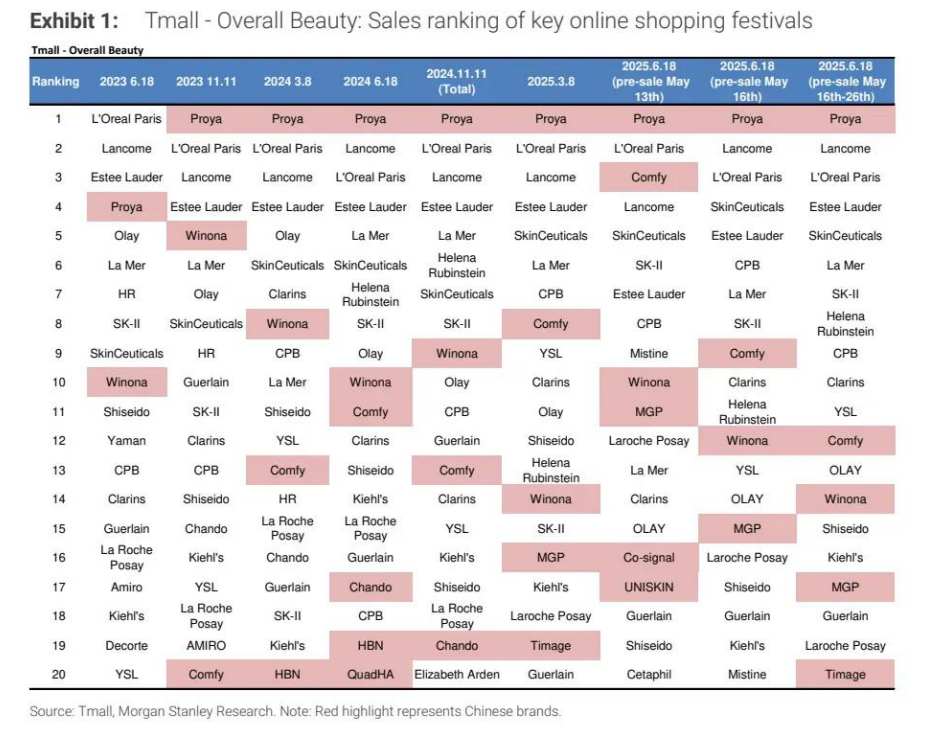
Core Insights - Morgan Stanley reported that during the 618 promotional period from May 13 to 26, 2023, promotional efforts varied significantly among brands, with Proya leading in Tmall beauty and Caitang ranking first in Douyin makeup [1][5] Tmall Rankings - Proya maintained the top position in Tmall beauty rankings during the 618 event, with L'Oreal Paris and Estee Lauder following in the top three [2] - Comfy, a brand under Giant Bio, ranked 3rd on May 13, dropped to 9th on May 15, and fell to 12th from May 16 to 26 in Tmall beauty rankings [1][6] Douyin Rankings - In Douyin makeup, Caitang ranked first, while Comfy's performance fluctuated, indicating a preference for balancing sales growth and profit margins rather than pursuing high rankings [1][5] - High-end skincare brands showed increased focus on Douyin, with seven brands entering the top ten during the promotional period [5] Comfy Brand Insights - Comfy's initial high rankings during e-commerce shopping festivals tend to decline, a pattern observed in previous events like Double 11 [1][6] - The brand's strategy includes collaborating with less promotional-driven key opinion leaders (KOLs) and limiting supply on heavily discounted packages [6] - Recent consumer concerns regarding Comfy products on social media may impact consumer confidence, although the company is expected to address these issues with independent testing results [6] Market Outlook - Morgan Stanley estimates that the recent decline in Giant Bio's stock price to a forward P/E ratio of approximately 22x reflects the market's absorption of some earnings downside risks from consumer feedback [7] - Despite short-term uncertainties, Morgan Stanley maintains a buy rating and advises investors to build long-term positions during stock price weaknesses [7]

知名医美龙头,配方被质疑造假!涉事产品1.0版本多平台下架,省、市监管部门最新回应
21世纪经济报道· 2025-05-28 08:44
Core Viewpoint - The article discusses allegations against Juzhi Biotechnology regarding potential fraud in their collagen products, specifically questioning the accuracy of the testing methods used to measure collagen content [1][10]. Group 1: Allegations and Testing Methods - A video and post alleging that Juzhi Biotechnology's collagen product cannot be detected for collagen content have sparked significant discussion [1]. - The controversy centers around the testing method used, with the blogger claiming that the "biuret method" (双缩脲法) is flawed for complex cosmetic formulations, as it may yield inflated results due to interference from other ingredients [3][8]. - Juzhi Biotechnology claims to have used the biuret method as per the Chinese Pharmacopoeia and relevant industry standards to test their product [7]. Group 2: Product Versions and Consumer Impact - The blogger pointed out discrepancies between the product versions sent for testing, indicating that Juzhi Biotechnology submitted a 2.0 version while the blogger tested a 1.0 version, which has since been reportedly "shelved" [8][9]. - Consumers have reported that the 1.0 version of the product is no longer available on major e-commerce platforms, while the 2.0 version remains for sale [10]. Group 3: Regulatory Attention - The incident has attracted regulatory scrutiny, with local market supervision authorities acknowledging the situation and beginning investigations [10]. - The ongoing controversy has led to a notable decline in the company's stock price, with reports of a 10% drop following the allegations [10].
巨子生物“成分争议”最新进展:争议产品1.0多平台下架,省、市监管部门官方回应
2 1 Shi Ji Jing Ji Bao Dao· 2025-05-28 07:24
Core Viewpoint - The controversy surrounding the authenticity of collagen content in a product by Juzhi Biotechnology has sparked significant discussion, particularly regarding the testing methods used to measure collagen levels [1][2]. Group 1: Testing Methods and Controversy - The testing method used by Juzhi Biotechnology, known as the Biuret method, has been questioned for its reliability in complex cosmetic formulations, as it may yield inflated results due to interference from other ingredients [5][7]. - A blogger has raised concerns that the Biuret method cannot accurately distinguish between collagen and other peptide components, such as sodium polyglutamate, which could lead to misleading results [5][6]. - The blogger also highlighted discrepancies between the product versions sent for testing by Juzhi Biotechnology and their own submissions, indicating potential inconsistencies in the testing process [6]. Group 2: Regulatory Attention and Market Impact - The controversy has attracted regulatory scrutiny, with local market supervision authorities acknowledging the issue and beginning investigations [9][10]. - Following the controversy, the 1.0 version of the product has reportedly been removed from major e-commerce platforms, while the 2.0 version remains available for sale [10].
巨子生物明星产品遭美妆博主质疑 可复美连夜公开回应
Xi Niu Cai Jing· 2025-05-28 06:44
Core Viewpoint - The controversy surrounding the collagen content in the "可复美重组胶原蛋白肌御修护次抛精华" product has raised significant concerns regarding the accuracy of its labeling and the validity of the testing methods used to assess its ingredients [2][5]. Group 1: Product Testing and Claims - A beauty influencer claimed that the collagen content in the product was only 0.0177%, which is below the national standard minimum of 0.1% for non-trace ingredients [2]. - The influencer's testing method, HPLC, is not recognized by current industry standards, leading to questions about the reliability of the results [5]. - 可复美's internal tests reportedly show collagen content between 0.27% and 0.28%, which complies with the labeling regulations [5]. Group 2: Regulatory Compliance and Labeling - According to the "Cosmetic Labeling Management Measures," non-trace ingredients must be listed separately if they are present in amounts greater than or equal to 0.1% [5]. - 可复美 asserts that "soluble collagen" is listed seventh in the ingredient order, which aligns with regulatory requirements [5]. - The influencer's claim that the actual collagen content is 0.0177% raises concerns about potential false labeling practices [5]. Group 3: Market Impact - The product, known as "胶原棒," is a top-selling item for 可复美, with over 1 million units sold through a single link on its flagship store [5]. - The timing of the controversy, just before the "618" shopping festival, could lead to increased returns and cautious behavior from distributors [5].

各方都在等待巨子生物第三方检测报告之际,大嘴博士再曝质疑
Jing Ji Guan Cha Wang· 2025-05-28 04:43
Core Viewpoint - The controversy surrounding the product testing methods and results of Juzhibio has raised significant consumer trust issues, particularly affecting its KefuMei brand ahead of the critical 618 shopping festival [2][3] Group 1: Allegations and Responses - Beauty influencer "Big Mouth Doctor" has publicly questioned the testing methods used by Juzhibio, specifically the "biuret method," claiming it could lead to inflated results due to the presence of sodium polyglutamate in the products [2] - Juzhibio has denied the allegations and stated that they have commissioned a third-party organization for further testing [2] - The influencer has raised three key scientific questions regarding the presence of recombinant collagen in the products and the absence of glycine, a critical component [2] Group 2: Consumer Impact - The negative publicity has led to a noticeable decline in consumer trust towards KefuMei products, with many consumers expressing doubts in the comments section of major e-commerce platforms [2] - As the 618 shopping festival approaches, the potential impact on KefuMei's sales performance is significant, with concerns that consumer hesitation may persist until third-party test results are released [2][3] Group 3: Urgency for Resolution - The internal testing by Juzhibio was completed on May 24, but the results from the third-party testing have not yet been disclosed, leading to increased public scrutiny [3] - The need for authoritative testing results and clear explanations is critical for restoring consumer confidence and resolving the ongoing controversy [3]
巨子生物20250527
2025-05-27 15:28
Summary of the Conference Call for Juzi Biotechnology Company Overview - **Company**: Juzi Biotechnology - **Key Brands**: Kefu Mei and Keli Jin Industry Insights - **Market Trends**: The recombinant collagen market continues to show strong growth potential, with no signs of slowing down. The demand for products in this category remains robust, as evidenced by the high growth rates of key products and positive feedback from new product launches [4][10]. Core Points and Arguments - **Product Innovation**: Juzi Biotechnology is driving growth through product iterations, such as the upgrade of collagen peptide to version 2.0, and the introduction of new products like Focus Cream and Honey Repair Cream. These new products have received positive feedback from distribution channels and are expected to become new growth drivers [2][5]. - **Kefu Mei Brand Strengths**: Kefu Mei focuses on efficacy and safety, having established professional trust through medical device certification. The brand is expanding its product line into niche areas such as acne treatment and thermal injury repair, while also enhancing offline direct store presence to improve market performance [2][9]. - **Sales Performance**: Kefu Mei's collagen stick accounts for approximately 30% of total sales and continues to grow rapidly. The new customer acquisition rate is close to 50%, with a repurchase rate significantly higher than the industry average [2][12]. - **Keli Jin Brand Dynamics**: Keli Jin has achieved short-term growth through organizational restructuring and product line optimization. However, long-term growth may face challenges due to potential limitations in collagen technology for anti-aging effects [2][20]. - **Regulatory Challenges**: Sales of Class II medical device products are growing steadily, but the approval process for Class III medical devices is slow, with uncertain timelines for specific approvals despite receiving priority review qualifications for collagen fillers [2][21]. Financial Performance - **Revenue Growth**: Juzi Biotechnology has experienced rapid revenue and profit growth, although the sales expense ratio has increased. The company plans to control this ratio through product combination sales and customer referral strategies [6][7]. Marketing and Competitive Landscape - **Competitive Positioning**: Kefu Mei differentiates itself from competitors by emphasizing safety and efficacy. The brand has established a strong medical aesthetic image through partnerships with hospitals and medical institutions, contrasting with competitors that rely on celebrity endorsements [17][25]. - **Market Competition**: While other brands have launched collagen products, Kefu Mei's unique positioning and established trust in safety and efficacy mitigate significant competitive threats. The market is expanding collectively rather than through direct competition [25]. Product Strategy - **Product Development**: Kefu Mei's strategy includes launching successful single products and then expanding related skincare offerings. The brand also targets various consumer needs with different product forms [11][12]. - **New Product Launches**: The Focus Cream and Zhenyu Secret Repair Cream have distinct market positions, with the latter targeting a high-end consumer segment and addressing specific skin repair needs [18]. Future Outlook - **Growth Projections**: Kefu Mei is expected to achieve a growth rate of 40% to 50% in Q1 2025, with an annual performance forecast of 25% to 28%. The overall performance is anticipated to remain stable due to new product launches and marketing strategies [10][19]. Additional Considerations - **Consumer Sentiment**: Recent controversies regarding product ingredient content are not expected to significantly impact the company's fundamentals, as consumer recognition of product efficacy remains high [3][24]. - **Offline Expansion**: Kefu Mei has begun establishing offline direct stores, with plans to open 40 new locations in 2025. This strategy aims to enhance member interaction and improve market performance [22][23].
可复美产品含量遭质疑,胶原蛋白龙头巨子生物陷“造假”危机
Guan Cha Zhe Wang· 2025-05-27 12:38
Core Viewpoint - The domestic medical beauty industry is facing significant scrutiny due to allegations regarding the quality and labeling of collagen products, particularly targeting the leading company, Giant Bio, and its flagship product, "Collagen Stick" [1][5][6]. Industry Overview - The controversy highlights the lack of national standards for the testing of recombinant collagen in cosmetics, leading to significant discrepancies in test results as companies rely on self-defined methods or pharmaceutical industry standards [5][6]. - The National Medical Products Administration has initiated the establishment of industry standards for recombinant collagen and its testing methods, with companies participating in the process [5]. Company-Specific Issues - Giant Bio's "Collagen Stick" was accused of having a collagen content of only 0.0177%, which is below the national cosmetic labeling requirement of 0.1% for non-trace additives, and the key amino acid glycine was reportedly not detected [6][8]. - In response to the allegations, Giant Bio issued a statement denying the claims, asserting that their products meet the required standards and have been approved by regulatory authorities [8]. Testing Method Discrepancies - The testing methods used by the parties involved differ significantly; the blogger employed a high-precision HPLC method, while Giant Bio referenced outdated national standards that have been criticized for their ineffectiveness in the current complex cosmetic landscape [9][10]. - The HPLC method is noted for its high sensitivity and ability to accurately quantify amino acids, while the methods referenced by Giant Bio have been deemed inadequate for testing collagen in cosmetics [10][15]. Market Impact - Following the allegations, Giant Bio's stock price fell over 8% on the Hong Kong Stock Exchange, closing down 4.04%, reflecting market concerns over the credibility of its products [8].

以合成生物学驱动产业创新,可复美如何重塑皮肤健康管理新范式?
Zhong Jin Zai Xian· 2025-05-27 12:01
在皮肤健康管理领域,基底膜的重要性早已被学界广泛认知,它堪称皮肤的"地基",维系着表皮与真皮间的稳固连 接。而作为基底膜核心支撑结构的IV型胶原蛋白,不仅主导皮肤屏障修护进程,更在痤疮、瘢痕增生等皮肤健康问题 上具有关键作用。 在全球化妆品科学领域不断追求创新突破的当下,合成生物学正成为驱动产业发展的核心力量。近期,ICIC2025国际 化妆品创新大会在上海圆满落幕,这场汇聚世界权威皮肤学专家的高规格盛会,聚焦前沿科技成果,为产业发展注入 新动能。作为全球重组胶原蛋白领导者,巨子生物携旗下品牌可复美深度参与大会,不仅举办《合成生物学驱动产业 发展新技术》学术交流分论坛,还成功召开「巨子生物独家专利重组IV型胶原蛋白」发布会,充分展现了以合成生物 学驱动产业创新的强劲实力。 学界洞见:合成生物学重塑皮肤健康管理新范式 巨子生物搭建起以生物活性成分为基础的合成生物学平台,成为全球首家实现量产并商业化生产重组胶原蛋白的企 业。依托前沿合成制备技术,企业突破性实现重组IV型胶原蛋白的研发与规模化量产,并在中国首次实现重组IV型胶 原蛋白与基底膜屏障完整性作用机制的系统性科学验证。大量实验数据证实了其褪红与修护双通路作 ...