CPIC(02601)

Search documents
国际知名投行最新研判:保险股再迎“戴维斯双击”!
Xin Lang Cai Jing· 2026-01-19 06:29
Core Viewpoint - The insurance sector is poised for strategic investment opportunities due to the growth in net assets and investment returns, supported by shifts in resident savings towards insurance assets, alongside favorable policies [1][9]. Group 1: Performance Metrics - The insurance index is projected to rise by 31.31% in 2025, outperforming other financial sectors such as banking (12.04%) and brokerage (4.05%) [1]. - Individual stocks like New China Life, Ping An, China Pacific Insurance, China Life, and China Property & Casualty are expected to see significant increases in their stock prices, with respective gains of 46.03%, 35.87%, 26.6%, 21.21%, and 10.39% in 2025 [1]. - The A-share insurance sector is anticipated to maintain strong performance into 2026, with continued growth in the liability side and improved investment returns on the asset side [1]. Group 2: Liability Side Developments - The transformation of participating insurance products is enhancing competitiveness, attracting funds due to their "guaranteed + floating" return characteristics amid declining bank deposit rates [2][10]. - The ongoing shift in resident deposits and the reduction in large bank certificates of deposit are expected to further expand the growth of the insurance liability side [2][11]. - The demand for pension and health protection is driving the appeal of insurance products, which are expected to capture a larger share of resident savings and fixed-income investments [2][12]. Group 3: Asset Side Strategies - Insurers are increasing their allocation to equity assets due to pressure on interest margins and the challenges of bond yields not covering the costs of new premium inflows [5][14]. - The need for higher investment returns is pushing insurers to enhance their equity investment capabilities, especially as the industry transitions to a full-scale transformation of participating insurance by 2027 [5][15]. - The long-term trend indicates a significant increase in the proportion of equity investments within insurance portfolios, driven by the need for better returns [5][15]. Group 4: Policy Environment - Regulatory policies since September 2024 have encouraged insurance capital to enter the market, with expectations of substantial annual inflows into A-shares [7][16]. - The introduction of structural easing policies aims to optimize asset allocation and reduce capital requirements for insurance companies, supporting long-term market stability [7][16]. - The focus on nurturing patient capital and guiding long-term investments is expected to stabilize the capital market, with a particular emphasis on technology sectors for potential high returns [8][17].





中金港股通与恒指调整预览:紫金黄金国际(02259)等有望纳入恒指 预计44只公司有望入港股通
智通财经网· 2026-01-19 06:20
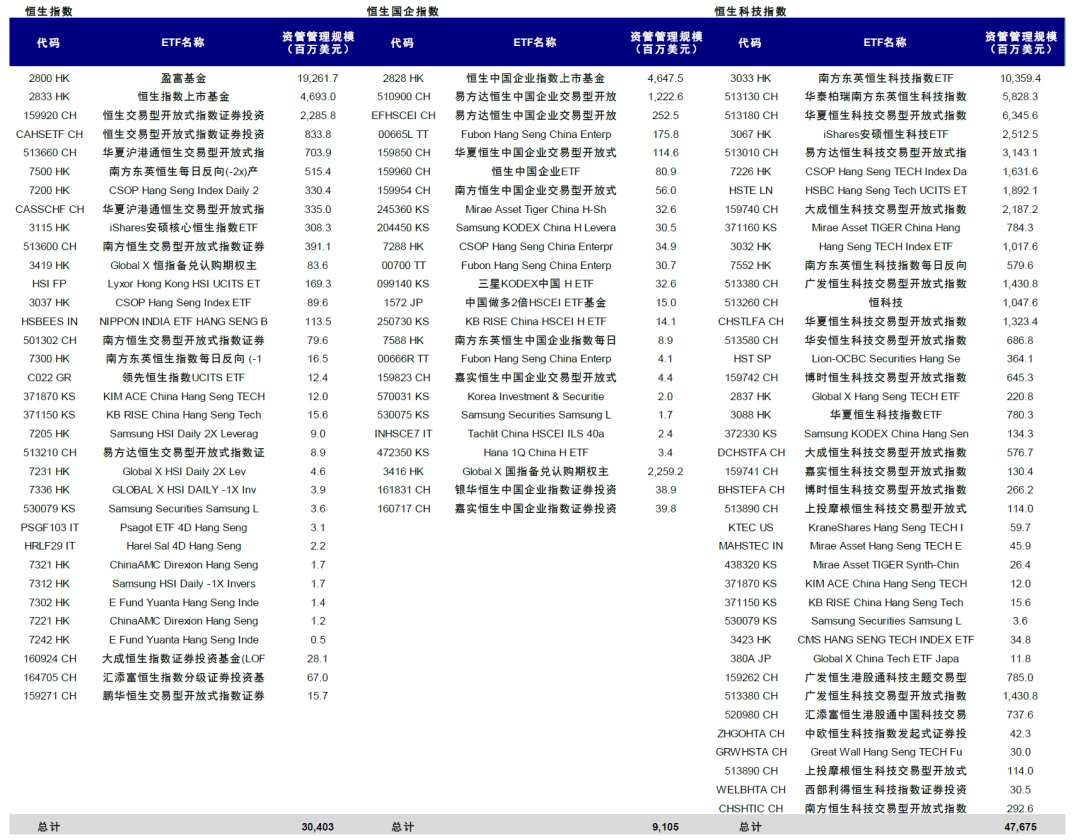
Core Viewpoint - The Hang Seng Index Company will announce the results of the Hang Seng Index adjustments on February 13, 2026, with implementation on March 9, 2026. This adjustment will affect the investment scope of the Stock Connect program between Shanghai, Shenzhen, and Hong Kong [1][7]. Group 1: Hang Seng Index Adjustments - Companies such as Zijin Mining International, BeiGene, Yum China, Xpeng Motors, China Pacific Insurance, CanSino Biologics, and Laopuqin Gold are potential candidates for inclusion in the Hang Seng Index based on market capitalization and industry representation [2][3]. - Historical data indicates that actual results may differ from quantitative predictions, as seen with Yum China and BeiGene, which were previously forecasted to be included but were not due to subjective criteria in the index inclusion standards [2][3]. Group 2: Impact on Stock Connect - The adjustments to the Hang Seng Index will directly influence the investment scope of the Stock Connect program, with an estimated 44 stocks expected to be eligible for inclusion, including JD Industrial, East Asia Bank, and Dippu Technology [4][6]. - The methodology for calculating the average market capitalization for index adjustments has been optimized, which may affect the eligibility of stocks for inclusion in the Stock Connect [4][5]. Group 3: Exclusions from Stock Connect - Approximately 25 stocks may be removed from the Stock Connect due to low market capitalization or other factors, including Youbao Online and Automotive Street [6]. - Companies expected to delist from the Hong Kong Stock Exchange will also be removed from the Stock Connect trading [6].

本周热点前瞻20260119
Qi Huo Ri Bao Wang· 2026-01-19 01:08
Group 1 - The monthly report on residential sales prices in 70 large and medium-sized cities in China will be released on January 19, 2025, at 9:30 AM, by the National Bureau of Statistics, which is expected to impact related commodity futures prices [1] - A press conference on the national economic operation for 2025 will be held on January 19, 2025, at 10:00 AM, where the National Bureau of Statistics will present the economic data, including a projected GDP growth of 4.5% for Q4 2025, down from 4.8% [2] - The expected GDP growth for the entire year of 2025 is 5.1%, with a forecasted retail sales growth of 1.2% in December 2025, slightly down from 1.3% [2] Group 2 - The People's Bank of China will announce the Loan Prime Rate (LPR) on January 20, 2025, with expectations of the 1-year LPR remaining at 3.00% and the 5-year LPR at 3.50%, indicating a neutral impact on commodity futures and stock index futures if unchanged [3] - The International Energy Agency (IEA) will release its monthly oil market report on January 21, 2025, which is anticipated to influence oil and related commodity futures prices [3] Group 3 - The U.S. Department of Commerce will publish the final GDP for Q3 2025 on January 22, 2025, with an expected annualized quarterly growth rate of 4.3%, consistent with the initial estimate [4] - The U.S. Department of Labor will report the initial jobless claims for the week ending January 12, 2025, with an expectation of 200,000 claims, slightly up from 198,000, which may suppress industrial commodity prices excluding precious metals if the data exceeds expectations [5] Group 4 - The EIA will announce the weekly change in crude oil inventories for the week ending January 16, 2025, on January 23, 2025, with a previous increase of 3.391 million barrels, and further increases may hinder oil and related commodity prices [6] - The Eurozone's consumer confidence index for January is expected to be -12.5, an improvement from -13.1, with the announcement scheduled for January 23, 2025 [7] Group 5 - The U.S. S&P Global Manufacturing PMI for January is expected to be 52.0, slightly up from 51.8, with the announcement on January 23, 2025, which may support industrial commodity prices if the data exceeds expectations [8] - The National Bureau of Statistics of China will release important production material market prices for mid-January on January 24, 2025, covering nine categories and 50 products, which may influence market dynamics [8]
衍生品新规释放积极信号,关注板块发布业绩预增机遇
GF SECURITIES· 2026-01-18 10:26
Core Insights - The report highlights that new regulations in derivatives are expected to release positive signals for the non-bank financial sector, with a focus on companies likely to announce performance increases [1][5]. Group 1: Market Performance - As of January 16, 2026, the Shanghai Composite Index closed at 4101.91, down 0.45%, while the Shenzhen Component Index rose by 1.14% to 14281.08 [10]. - The average daily trading volume in the Shanghai and Shenzhen markets reached 3.47 trillion yuan, an increase of 21.50% month-on-month [5]. Group 2: Industry Dynamics and Weekly Commentary Insurance Sector - Listed insurance companies are expected to continue high growth, with improvements in long-term interest rate spreads anticipated [12][16]. - As of January 12, 2026, the total scale of private equity securities investment funds by insurance capital reached 184.5 billion yuan, with 11 funds established [16]. - The report suggests focusing on companies such as China Ping An, China Life, and New China Life for potential investment opportunities [16]. Securities Sector - The China Securities Regulatory Commission (CSRC) emphasized stability and quality improvement in its 2026 work meeting, aiming to prevent market volatility and enhance internal stability [17][18]. - The CSRC's new derivatives regulations aim to standardize the market, encourage risk management, and improve the income structure of brokerage firms [25][26]. - The report indicates that the derivatives market is expected to grow significantly, with the scale of over-the-counter derivatives increasing from 0.32 trillion yuan in 2015 to 2.38 trillion yuan in 2023, reflecting a compound annual growth rate of 29% [26]. Group 3: Key Company Valuations and Financial Analysis - China Ping An (601318.SH) has a current price of 66.33 yuan, with a target value of 85.17 yuan, indicating a buy rating [6]. - New China Life (601336.SH) is rated as a buy with a current price of 82.09 yuan and a target value of 94.21 yuan [6]. - China Life (601628.SH) is also rated as a buy, with a current price of 47.52 yuan and a target value of 55.47 yuan [6].
险企破圈新方向!银发浪潮下 “保险+养老”成风口
Zhong Guo Zheng Quan Bao· 2026-01-18 05:49
Core Insights - The insurance industry is accelerating the entry of pension communities by the end of 2025, transitioning from early single-point exploration to large-scale, networked operations, with "insurance + pension" integration becoming mainstream [1][3] - The industry is facing challenges such as long capital return cycles and insufficient inclusivity, which need to be addressed for further growth [1][6] Group 1: Industry Developments - By the end of 2025, over 10 pension community projects are expected to be launched by insurance companies, with major players like China Pacific Insurance and Ping An leading the way [3][4] - China Pacific Insurance's "Taibao Home" has already established 14 communities across 12 cities, serving over 3,000 long-term residents and achieving 130,000 short-term stays in a year [3][4] - Ping An's home-based elderly care services have reached 85 cities, with nearly 240,000 clients qualifying for services, and they have launched six high-quality pension community projects across five cities [4] Group 2: Strategic Upgrades - China Pacific Insurance is upgrading its strategy from "big health" to "big pension and health," aiming to create a comprehensive ecosystem covering various aspects of elderly care [3] - The industry is entering a phase of scale explosion, with commercial pension and health insurance reserves reaching 11 trillion yuan during the 14th Five-Year Plan period [4] Group 3: Challenges and Solutions - The long capital return cycle is a significant challenge, with some insurance companies indicating that it takes over 10 years to achieve profitability in heavy-asset pension communities [6] - High occupancy rates are essential for profitability, with a threshold of 60% occupancy needed for stable operations [6] - The industry faces issues with inclusivity, as many pension communities have high entry barriers, making it difficult for middle and low-income groups to access services [6] - A shortage of professional talent is a common pain point, with difficulties in retaining staff due to low wages and challenging working conditions [6] Group 4: Policy Support - Recent policy initiatives from the National Financial Regulatory Administration aim to enhance the integration of long-term care and community pension services, promoting the expansion of insurance companies into home-based care [7] - The application of financial tools like REITs is expected to improve funding exit channels for the pension industry, alleviating capital pressure [7] - The competition in the pension community sector is anticipated to intensify, with ecological, inclusive, and technological advancements being key directions for industry breakthroughs [7]
险企破圈新方向 银发浪潮下,“保险+养老”成风口
Xin Lang Cai Jing· 2026-01-18 04:34
Core Viewpoint - China Pacific Insurance (CPIC) is upgrading its health and elderly care strategy, transitioning from a "big health" to a "big elderly care" approach, aiming to create a comprehensive ecosystem covering various aspects of elderly care, health, and rehabilitation [1] Group 1: Strategic Upgrades - CPIC's President Zhao Yonggang announced the strategic upgrade path, focusing on building a service loop that integrates prevention, diagnosis, treatment, rehabilitation, and care throughout the entire lifecycle [1] - The company plans to launch over 10 elderly care community projects in 2025, marking a significant year for the insurance industry in this sector [1] Group 2: Project Launches and Operations - By the end of 2025, CPIC's elderly care community, Taibao Jiayuan, will operate in 14 communities across 12 cities, with over 3,000 long-term residents and 130,000 short-term stays [1] - Other major players like Ping An are also expanding their elderly care services, with Ping An's home care services covering 85 cities and nearly 240,000 clients by September 2025 [1] - Ping An has established high-quality elderly care community projects in five cities, with the Shanghai project "Jingan No. 8" already in operation and a Shenzhen project expected to trial by the end of 2025 [1]
险企破圈新方向!银发浪潮下,“保险+养老”成风口
Zhong Guo Zheng Quan Bao - Zhong Zheng Wang· 2026-01-18 04:24
Core Insights - The insurance industry is accelerating the entry of pension communities by 2025, transitioning from early single-point exploration to large-scale, networked operations, with a focus on the integration of "insurance + elderly care" as a mainstream model [1] - The industry is experiencing a significant expansion, with over 10 pension community projects launched by insurance companies in 2025, including major projects from leading firms like China Pacific Insurance and Ping An [2] Group 1: Industry Developments - By the end of 2025, China Pacific Insurance's "Tai Bao Home" will operate 14 communities across 12 cities, serving over 3,000 long-term residents and achieving 130,000 short-term stays [2] - Ping An's home-based elderly care services have reached 85 cities, with nearly 240,000 clients qualifying for services, and their high-quality elderly care community projects are underway in five cities [2] - The insurance sector has seen significant growth in the third pillar of pension insurance, accumulating reserves of 11 trillion yuan, with 130 pension community projects developed [2] Group 2: Challenges and Solutions - The long capital return cycle is a major challenge, with large asset-based pension communities taking over 10 years to become profitable, requiring a minimum occupancy rate of 60% for stable operations [3] - The high entry barriers for pension communities, such as a minimum premium of 3 million yuan and monthly fees starting at 11,500 yuan, limit accessibility for middle and low-income groups [3] - A shortage of professional talent in the industry is a common issue, with difficulties in retaining staff due to low salaries and challenging resident behaviors [3] Group 3: Policy and Innovation - The National Financial Regulatory Administration has issued guidelines to enhance the integration of long-term care and community elderly services, promoting the expansion of insurance companies into home-based care [5] - Companies like Fude Life Insurance are exploring new development paths through financial products that connect physical services, aiming to facilitate home-based elderly care with smart home equipment [4] - The application of financial tools like REITs is expected to improve funding exit channels for the pension industry, alleviating financial pressures [5]
保险行业周报(20260112-20260116):险资举牌再启,”长钱长投“夯实投资端-20260117
Huachuang Securities· 2026-01-17 15:01
Investment Rating - The report maintains a "Recommended" rating for the insurance industry, expecting the industry index to outperform the benchmark index by over 5% in the next 3-6 months [19]. Core Insights - The insurance sector index decreased by 3.64% this week, underperforming the broader market by 3.07 percentage points. Individual stock performances varied, with notable declines in major companies like Ping An and China Pacific [1][3]. - China Pacific Life Insurance increased its stake in Shanghai Airport to 5% through block trading, marking the first significant acquisition by insurance capital in 2026. This trend reflects a growing interest in high-dividend assets amid a low-interest-rate environment [2][3]. - The report highlights a shift towards long-term investments by insurance capital, focusing on stable cash flow and high dividend yield assets, particularly in sectors like banking and public utilities [3]. - Regulatory support for long-term capital market participation is emphasized, with expectations of continued downward pressure on long-term interest rates, prompting insurance companies to seek dividend assets as a strategic choice [3]. Summary by Sections Market Performance - The insurance index fell by 3.64%, with significant declines in major stocks such as Ping An (-3.87%) and China Pacific (-4.97%). The 10-year government bond yield is at 1.84%, down 4 basis points from the previous week [1]. Recent Developments - China Pacific Life's acquisition of 72.424 million shares of Shanghai Airport, increasing its total holdings to approximately 124 million shares, represents a strategic move in the current market [2]. - The establishment of the Honghu Zhiyuan Fund, focusing on well-governed, high-dividend large-cap stocks, indicates a trend towards stable investment strategies among insurance companies [2]. Investment Recommendations - The report suggests focusing on undervalued stocks like China Pacific, which shows strong operational stability and recovery potential in both A and H shares. It also notes that Ping An's performance is expected to remain resilient despite market pressures [3][8]. - Valuation metrics indicate that major players like New China Life and China Life are trading at PEV multiples of 0.92x and 0.91x, respectively, while Ping An is at 0.80x, suggesting potential for upside [4][8].
ETF主力榜 | 国债政金债ETF(511580)主力资金净流出4.31亿元,居全市场第一梯队-20260116
Xin Lang Cai Jing· 2026-01-16 08:48
Group 1 - The core viewpoint of the article highlights that the government bond ETF (511580.SH) experienced a slight increase of 0.02% on January 16, 2026, despite significant net outflows of main funds [1] - Over the past two days, the fund has seen accelerated outflows totaling 672 million yuan, ranking it among the top tier in the market [1] - The latest trading volume for the fund reached 14.2976 million units, with a total transaction amount of 1.552 billion yuan, indicating that the net outflow of main funds accounted for 27.78% of the transaction amount on that day [1]
保险资管产品打了“翻身仗”:2025年超1500只获正收益,权益类Top20年化突破50%
Hua Xia Shi Bao· 2026-01-16 03:57
Core Insights - The insurance asset management products are expected to perform exceptionally well in 2025, with 90% of the 1,637 products achieving positive returns, totaling 1,500 products [2] - Equity products have shown remarkable performance, with some achieving annualized returns exceeding 90%, such as "ICBC Credit Suisse Cycle Growth No. 1" with a return of 115.37% [2][5] - The average return for equity products reached 24.96%, a significant increase of 16.87 percentage points year-on-year, while fixed income products saw a decline in average returns [5][10] Performance Overview - In 2025, 1,528 out of 1,637 insurance asset management products reported positive returns, representing 93.4% of the total [5] - The overall average return for all products was 8.50%, up by 3.33 percentage points from the previous year, with a median return of 3.47% [5] - Notable equity products include "ICBC Credit Suisse Cycle Growth No. 2" at 76.56%, "Taikang Asset - Cycle Selection" at 69.97%, and several others with returns above 50% [5][6] Market Dynamics - The insurance asset management sector is experiencing a "turnaround" in equity products, outperforming the Shanghai Composite Index's 18% increase [4] - Newer products tend to have higher annualized returns, benefiting from favorable market conditions and timely investment themes [6] - The competition in the insurance asset management industry is expected to intensify in 2026, with the approval of new foreign-funded insurance asset management companies [8] Regulatory Environment - Multiple policies have been introduced to encourage insurance capital to enter the market, including increasing the investment ratio of commercial insurance funds in A-shares [9][10] - The regulatory framework has been optimized to support long-term investments, with pilot programs allowing significant amounts of insurance capital to be allocated [10] - The focus on high-dividend strategies and investments in high-tech, new energy, and advanced manufacturing sectors is anticipated to continue [10]