JD LOGISTICS(02618)

Search documents
京东首次发布自研无人轻卡产品——京东物流VAN
news flash· 2025-07-03 06:01
Core Insights - JD Logistics has launched its self-developed unmanned light truck product, JD Logistics VAN, marking a significant advancement in its logistics capabilities [1] Product Features - The JD Logistics VAN boasts a maximum range of 400 kilometers when fully loaded, showcasing its efficiency for long-distance deliveries [1] - It is equipped with L4 level autonomous driving capabilities for public road operation, indicating a high level of automation and safety [1] - The vehicle can autonomously plan optimal routes, accurately identify obstacles, and flexibly avoid them, demonstrating advanced navigation and obstacle avoidance technology [1] - The product is designed to handle complex traffic environments, including mixed traffic with pedestrians and vehicles, enhancing its operational versatility [1]

趋势研判!2025年中国无人驾驶物流车行业全景速览:在政策与技术的共同驱动下,无人物流车的发展势不可挡,行业有望迎来爆发式增长[图]
Chan Ye Xin Xi Wang· 2025-07-01 01:16
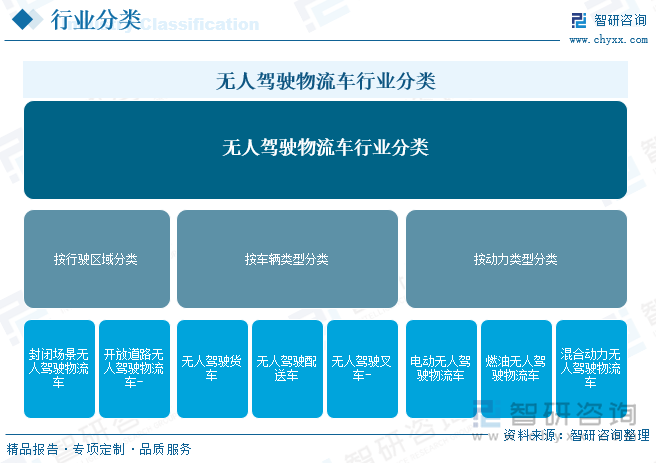
Core Viewpoint - The development of autonomous logistics vehicles in China is expected to experience significant growth, driven by advancements in technology and supportive government policies, with market value projected to reach 594.8 billion yuan by 2030 [1][4][19]. Industry Definition and Classification - Autonomous logistics vehicles are defined as logistics transport tools equipped with self-driving capabilities, utilizing advanced sensor technology, AI, and communication technology for automated driving and delivery [2]. - These vehicles can be categorized based on driving area (closed scene vs. open road), vehicle type (cargo trucks, delivery vehicles, forklifts), and power type (electric, fuel, hybrid) [2]. Current Development Status - The market for autonomous logistics vehicles in China is growing significantly, with an expected industry output increase of 43.9 billion yuan by 2025 and a potential market size of 594.8 billion yuan by 2030 [4][19]. - In 2024, autonomous logistics vehicles are projected to account for approximately 50% of urban logistics delivery, 29% of urban last-mile delivery, 11% in mining transport, and 10% in port transport [6]. Industry Chain - The upstream of the autonomous logistics vehicle industry includes core technologies and components such as LiDAR, cameras, AI chips, and high-precision positioning modules [8]. - The midstream involves the manufacturing and system integration of autonomous logistics vehicles, while the downstream includes applications in traditional express delivery, warehousing, and specific scenarios like ports and airports [8]. Competitive Landscape - The autonomous logistics vehicle market in China is still in a developmental phase, with increasing competition as companies invest in R&D and collaborate with academic institutions [15]. - Key players in the market include New Stone Technology, Hangshen Intelligent, Jiusi Intelligent, JD Logistics, and Yika Intelligent Vehicle [15][17]. Development Environment - Relevant Policies - The Chinese government has introduced various supportive policies to foster the growth of the autonomous logistics vehicle industry, enhancing the environment for its development [12][14]. - Policies have been established to promote the application of autonomous vehicles in logistics, including guidelines for testing and commercial demonstration in specific environments [14]. Development Trends - The Chinese government emphasizes the application of autonomous driving technology in logistics as part of its national strategic planning, indicating a strong future growth trajectory for the industry [19].

京東物流技術分析:轉勢確認後迎來爆發,短線交易機會浮現
Ge Long Hui· 2025-06-27 18:29
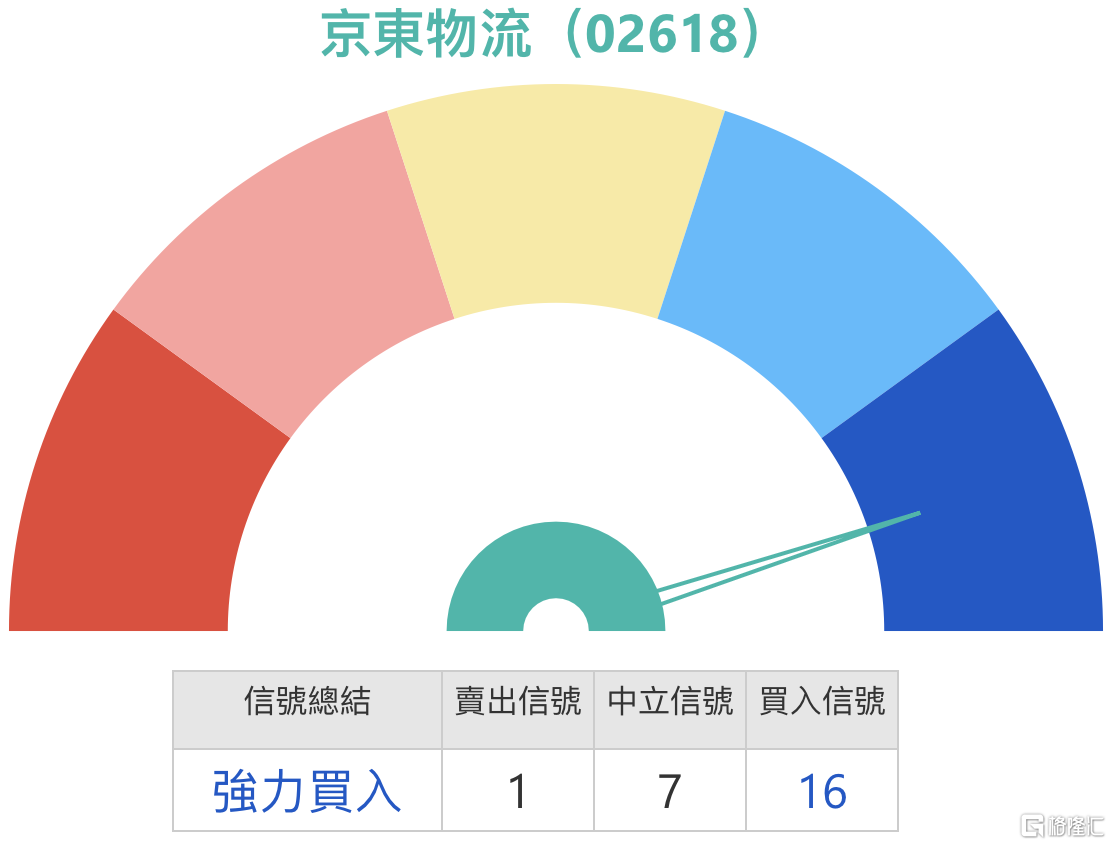
Core Viewpoint - JD Logistics (02618.HK) has shown significant technical strength in a volatile Hong Kong stock market, with a recent increase of 7.15%, indicating strong capital inflow and short-term momentum [1]. Technical Analysis - As of today, the stock price is at HKD 12.98, firmly above the 10-day, 30-day, and 60-day moving averages, with the 60-day line being clearly broken for the first time since March, suggesting a shift from consolidation to an upward trend [1]. - The closing price is well above short-term support levels of HKD 12.3 and major support at HKD 12, approaching the first technical resistance at HKD 14.3. If trading volume increases, the stock may attempt to reach the next resistance at HKD 14.4 or higher [1]. Technical Indicators - The overall RSI index for JD Logistics has risen to 59, indicating strengthening momentum without entering extreme territory. The MACD continues to signal a buy, aligning with the price's upward trend, confirming a strong bullish outlook [2]. - The Bollinger Bands indicate a price breakout above the upper band, reflecting ongoing momentum. The Ichimoku Cloud shows the price has successfully exited the cloud, entering a clear bullish territory, which corresponds with the MACD signal [2]. - Although the Williams %R and Stochastic indicators show short-term overbought signals, they do not indicate a reversal yet, warranting attention for potential divergence or early warning signs of volume contraction [2]. Market Sentiment and Trading Strategy - The combination of oscillators and momentum indicators shows that the CCI and rate of change indicators continue to issue buy signals, with psychological lines and bull-bear strength indicators supporting the ongoing bullish trend. The trading volume reached HKD 742 million, marking a new high for the week, confirming increased market participation [4]. - The technical summary indicates a strong buy signal with a total strength score of 16, placing it among the top in technical buy rankings, providing short-term traders with a clear risk-reward opportunity [4]. - From a trading strategy perspective, if the stock price can maintain above HKD 12.80, it can be seen as a consolidation area before an upward breakout. A successful breach of HKD 14.30 would further open up upward potential, with short-term targets set between HKD 14.4 and HKD 15 [4].
港股午评:恒生指数收涨0.77%
news flash· 2025-06-25 04:06
Group 1 - The Hang Seng Index closed up by 0.77% [1] - The Hang Seng Tech Index increased by 0.81% [1] - JD Logistics saw a rise of over 6% [1] - NIO and SMIC both experienced gains of over 2% [1]


花旗予京东物流目标价18港元 招募全职骑手参与京东外卖配送具协同效应
news flash· 2025-06-25 03:08
Core Viewpoint - Citi's research report indicates that JD Logistics' recruitment of full-time delivery riders may create synergies with its last-mile delivery business due to differing peak hours for both services, potentially driving long-term revenue growth for JD Logistics [1] Group 1: Business Strategy - The recruitment of full-time riders is seen as a strategic move that could enhance operational efficiency by prioritizing traffic allocation to JD Logistics' self-operated platform riders [1] - The initiative is expected to leverage the different peak times of delivery and logistics operations, optimizing resource utilization [1] Group 2: Financial Outlook - Despite the potential for long-term revenue growth, the high cost of riders and limited monetization ability in the food delivery segment may introduce short-term uncertainties regarding net profit [1] - The impact on projected earnings for 2025 is expected to be manageable, with Citi maintaining a buy rating and a target price of HKD 18, which corresponds to a projected price-to-earnings ratio of 12 times for 2025 [1]
京东物流参与京东外卖配送服务;字节跳动Seed前员工因严重违反制度被辞退|未来商业早参
Mei Ri Jing Ji Xin Wen· 2025-06-24 23:16
Group 1 - JD Logistics has announced its participation in JD's food delivery service, recruiting full-time riders to enhance operational efficiency and service capabilities [1] - The move is likely driven by the rapid growth of JD's food delivery business, leveraging JD Logistics' experience in courier management [1] - This collaboration is expected to strengthen the overall competitiveness of JD Group by improving synergies between JD Logistics, JD Instant Delivery, and JD Food Delivery [1] Group 2 - The "2025 New Fortune 500 Rich List" was released, with ByteDance founder Zhang Yiming topping the list with a valuation of 481.57 billion yuan, primarily from his stake in ByteDance [2] - Nongfu Spring founder Zhong Shanshan ranked second with 360 billion yuan, while Tencent's Ma Huateng and Pinduoduo's Huang Zheng ranked third and fourth respectively [2] - The list reflects the distribution of wealth among entrepreneurs and indicates trends in China's market dynamics, particularly in the technology and consumer sectors [2] Group 3 - ByteDance has terminated a former employee from its Seed department for serious violations of company policy, including failing to disclose a conflict of interest [3] - The company emphasized the importance of strict internal management to maintain its image and operational efficiency [3] - ByteDance's enforcement of conflict of interest regulations is aimed at mitigating potential business risks and ensuring healthy development [3]
京东物流招募全职骑手,外卖与快递配送可在高峰时段互补
Nan Fang Du Shi Bao· 2025-06-24 13:12
Core Viewpoint - JD Logistics is expanding its service offerings by recruiting full-time delivery riders for its rapidly growing food delivery business, JD Takeout, which is expected to enhance operational efficiency and synergy within its logistics network [1] Group 1: Recruitment and Workforce Expansion - JD Logistics has begun recruiting full-time riders to support its food delivery service, with over 120,000 full-time riders already onboard [1] - The company anticipates reaching a total employee count of 900,000 by the end of Q2 2024, marking a record increase in quarterly net employees since its inception [1] - As of the end of 2024, JD Logistics is projected to have a total workforce of 499,000, with nearly 80,000 frontline employees added within a year [2] Group 2: Financial Implications - JD Logistics' total human resources expenditure, including both in-house and external personnel, is expected to reach RMB 91.8 billion for the twelve months ending March 31, 2025 [2] - The company is committed to signing formal labor contracts with all frontline employees, including delivery riders, and continues to provide social insurance benefits [2] Group 3: Industry Context and Competitive Landscape - Industry analysts suggest that JD Logistics may explore further collaboration between full-time delivery riders and couriers to enhance service capabilities, particularly during peak delivery times [3] - The success of SF Express in integrating its same-city delivery riders with courier services has shown a revenue increase of 32.5% to RMB 6.625 billion in 2024, highlighting the potential benefits of such synergies [2]
京东物流:开始招募全职骑手参与京东外卖配送服务
news flash· 2025-06-24 09:23
Group 1 - JD Logistics announced the recruitment of full-time delivery riders to support JD Group's expanding food delivery business [1] - This initiative aims to enrich JD Logistics' solutions and service offerings [1] - The move is expected to enhance the synergy in existing operational processes, particularly in last-mile fulfillment, and improve operational efficiency [1]
异动盘点0620|基石药业涨超5%;京东物流涨超3%;顺丰控股涨超6%创新高;泡泡玛特跌超5%
贝塔投资智库· 2025-06-20 03:35
Group 1 - Key Point 1: 基石药业-B (02616) rose over 5% after its drug for lung cancer,舒格利单抗, received long-term survival data recognition in The Lancet Oncology, reinforcing its position as a first-line treatment in Europe [2] - Key Point 2: 海昌海洋公园 (02255) increased by over 4% as a major shareholder, 祥源控股, is set to acquire a 38.6% stake for HKD 22.95 billion, potentially alleviating liquidity pressures [2] - Key Point 3: 冠忠巴士 (00306) surged 27% with a projected 143% increase in annual pre-tax profit to HKD 165 million, driven by revenue growth, reduced fuel costs, and autonomous driving licenses [2] Group 2 - Key Point 1: 东方表行 (00398) fell over 5% due to a 5.2% decline in revenue and a 20% drop in net profit, attributed to weak luxury goods demand amid geopolitical conflicts and interest rate fluctuations [2] - Key Point 2: 北森控股 (09669) plummeted over 17% as its adjusted annual EBITDA was only HKD 28.9 million, with Everbright Securities lowering revenue forecasts by 10%-15% due to growth challenges [3] - Key Point 3: 顺丰控股 (06936) rose over 6% to a new high, with May express delivery revenue increasing by 13.4%, and the scaling of unmanned delivery vehicles potentially opening up future profit opportunities [3] Group 3 - Key Point 1: 中国中免 (01880) increased by over 5% as it accelerates the expansion of its duty-free stores, with 4 already opened and 9 more in preparation, benefiting from favorable policies [3] - Key Point 2: 华虹半导体 (01347) rose over 7% with a capacity utilization rate of 102.7%, and Tianfeng Securities optimistic about future contributions of USD 1.28 billion from its 9th factory [3] - Key Point 3: 网龙 (00777) increased over 3% after showcasing AI digital human presentation technology at a UN conference, launching the "EDA Education Metaverse" strategy, which catalyzed a revaluation of AI [4]


出海速递 | 接棒外卖和生鲜,美团共享充电宝也出海了/京东物流在沙特推出海外快递品牌JoyExpress
3 6 Ke· 2025-06-19 10:54
Group 1 - Meituan is expanding its shared power bank business overseas, indicating a new growth opportunity for the company [2] - The new tea beverage market is intensifying competition in the U.S., with brands like Heytea and Luckin Coffee making significant moves [3] - Shenzhen's energy storage companies are rapidly entering new markets, driven by a flexible supply chain and responsiveness to global demand [4] Group 2 - JD Logistics has launched a new overseas express delivery brand, JoyExpress, in Saudi Arabia, enhancing its service offerings in the region [7][8] - JD Technology is testing a compliant stablecoin in Hong Kong, aiming for a Q4 launch to facilitate cross-border trade [8] - Beijing Yuxin Technology Group has submitted a listing application to the Hong Kong Stock Exchange, indicating a potential IPO [8] Group 3 - UniUni has completed a D1 round financing of over $70 million, aimed at enhancing digital capabilities and logistics automation [9] - Mammotion has released its first pool cleaning robot, SPINO E1, targeting major global markets [9] - Yushu Technology has finalized its C round financing, with significant participation from major investors [10] Group 4 - Alibaba Cloud is set to launch its second data center in South Korea, expanding its infrastructure [10] - Alibaba International Station has seen a 42% year-on-year increase in platform orders, indicating strong growth in cross-border e-commerce [10] - Alipay+ has introduced a global payment solution for smart glasses, marking an innovation in mobile payment technology [10] Group 5 - OpenAI is offering discounts on its ChatGPT enterprise version, anticipating significant revenue growth from enterprise clients by 2030 [11] - Waymo plans to introduce its autonomous taxi service in New York City, expanding its operational footprint [11] - Zoox, an Amazon subsidiary, is ramping up production of autonomous taxis, with plans for a commercial launch in Las Vegas [11] Group 6 - London is actively seeking to attract more Chinese companies to list on its stock exchange amid a shrinking market [12] - The Chinese Ministry of Commerce is advancing its CPTPP membership process, aiming for deeper integration into international trade [13] - A Chinese business delegation recently visited Kazakhstan, resulting in contracts worth approximately $11 billion [13]